Halloween Report 2018: Best of the Swampflix Horror Tag

Halloween is rapidly approaching, which means many cinephiles & horror nerds out there are currently planning to cram in as many scary movies as they can before the best day of the year (except for Mardi Gras, of course) passes us by. We here at Swampflix watch a lot of horror year round, so instead of overloading you with the full list of all the spooky movies we’ve covered since last year’s Halloween report (and the one before that), here’s a selection of the best of the best. We’ve tried to break it down into a few separate categories to help you find what cinematic scares you’re looking for. Hope this helps anyone looking to add some titles to their annual horror binge! Happy hauntings!
Art House Horror

If you’re looking for an escape from the endless parade of trashy slasher movies & want a more formally refined style of horror film, this list might be a good place to start.

Hereditary  (2018) “I wasn’t in ‘critical film theory’ mode while watching Hereditary. From the opening moments, when we swoop in on one of Annie’s miniatures of the home in which the Grahams reside and the tiny dollhouse becomes Peter’s bedroom, the film captivates the width and breadth of your attention. I wasn’t inspecting the music to see if it mixed high and low frequencies to create tension; I was too concerned about the characters and what was going to happen to them to worry about any of those things, and I’ll be processing the ideas and concepts in the film for days to come, but I can’t get into those without telling you too many of the film’s secrets. Just go see it, if you dare.”

Mandy (2018) – “Nic Cage may slay biker demons with a chainsaw & a self-forged axe in his personal war against religious acid freaks in a neon-lit, alternate dimension 1980s, but Mandy is not headbanging party metal. It’s more stoned-and-alone, crying over past trauma to doom riffs metal, where the flashes of fun & cosmic absurdity are only reminders of how cruelly uncaring & meaningless it can feel to be alive.”

Double Lover (2018) – “It’s a narratively & thematically messy film that gleefully taps into sexual taboos to set its audience on edge, then springs a surreal horror film on them once they’re in that vulnerable state. Double Lover is not your average, by-the-books erotic thriller. It’s a deranged masterpiece, a horned-up nightmare.”

Annihilation (2018) – “As a reader, the currency of your imagination is to be spent on giving life to Area X and its beautifully deadly terrain and inhabitants, and using any iota of that brainspace on the members of Expedition 12 is wasted; in this way, the reader becomes the biologist, with a professional detachment that grows more clinical and distant as the plot unfolds (or unravels). That’s something that simply wouldn’t work on screen, and by giving the biologist and her fellow explorers more depth, Garland changes the theme of the novel from that of emotional distance and disconnection, and perhaps the innateness to humanity of that feeling, into a focus on the (perhaps innate) tendency toward self destruction. That compulsion may, and sometimes does, overtake us while in the guise of something more clinically defined, but rebirth requires the complete destruction, the annihilation, of the self that existed before, down to the cellular level.”

Good Manners (2018) – “On a horror movie spectrum, the film is more of a gradual, what-the-fuck mind melt than a haunted house carnival ride with gory payoffs & jump scares at every turn. It’s an unconventional story about unconventional families, one where romantic & parental anxieties are hard to put into words even if they’re painfully obvious onscreen. Anyone with a hunger for dark fairy tales and sincerely dramatic takes on familiar genre tropes are likely to find a peculiar fascination with the subtle, methodical ways it bares its soul for all to see. Just don’t expect the shock-a-minute payoffs of a typical monster movie here; those are entirely secondary, if they can be detected at all.”

Shock Corridor (1963) – “Anything that predated 1975’s One Flew Over the Cuckoo’s Nest generally treated those with these illnesses as villains or obstacles, portrayed asylums as bedlams that protected society from vagrants rather than places where one could ever hope to become well again, and if the protagonist was unwell of mind, such sickness was something that could be overcome with machismo or the love of a good woman, not through medical practice or therapy. Not so in the case of Sam Fuller’s Shock Corridor (released 1963, one year after the publication of Cuckoo’s Nest, although Fuller had been shopping the original screenplay around since the 1940s), in which mental patients are presented as objects not of derision but as people deserving empathy, not as evil madmen but as victims of society who were pushed to the psychic breaking point and beyond.”

Cyber-Horror

The internet is fertile thematic territory for the horrors of the unknown because its mechanics & functions have continued to feel like a novel, depthless mystery to the average user. Here are some above-average horror films that have shrewdly exploited that modern world mystique for eerie scares.

Suicide Club (2002) – “Packed with the creepy atmosphere of haunted hospital ghost stories, the glam rock excess of Velvet Goldmine, the menacing undercurrent of J-Pop & kawaii culture, multiple cults, a river of gore, and my pet favorite subject of the evils of the Internet, Suicide Club feels like three or four imaginative horror scripts synthesized into one delightfully terrifying vision of modern Hell.”

Perfect Blue (1997) – “Unlike other early Evil Internet thrillers like The Net or FearDotCom, it’s remained effectively creepy instead of devolving into a quaint joke precisely because it got the internet exactly right. It perfectly captures our ongoing, collective online nightmare, despite arriving in a time when the internet was mostly a tangle of blogs & message boards.”

Unfriended (2015) – “I’m starting to feel like somewhat of a phony fan of this movie even though I often go out of my way to promote its legacy. I’ve now watched it on the big screen and on my living room television, but I’ve never bothered to screen it with headphones on my laptop for the Pure Unfriended experience, the way I assume it was intended to be seen. This feels like the inverse of the blasphemy of a young brat watching Lawrence of Arabia for the first time on a smartphone. It’s also further implication that I’m an out of touch old man who has no business taking as much pleasure in these teen-oriented, social media-obsessed genre film frivolities as I do.”

Assassination Nation (2018) – “Besides maybe Revenge, I’m not sure I’ve seen another film match the extremity of its gender politics exploration this year, something that feels just as necessary & cathartic as it is unsettling. It’s a topic that’s now inextricable from the tones & tactics of modern life online, something the film was smart to recognize & tackle head-on. Its overall spirit is prankish & prone to bleak humor, but Assassination Nation is less of a comedy than it is a violent uprooting of cultural misogyny & sexual repression in the Internet Age.”

Truth or Dare? (2018) – “As delightfully silly as a haunted truth-or-dare game is for a horror movie premise, though, it’s not the gimmick that most endeared the film to me. It’s Truth or Dare?’s stylistic gimmick as The Snapchat Filter Horror Movie that really stole my trash-gobbling heart. Whenever demonically possessed participants prompt contestants in the titular game to answer ‘Truth or dare?’ their faces are altered with cheap digital effects to display a sinister, impossible grin. It’s a design that unmistakably resembles a Snapchat filter, which is explicitly acknowledged in the dialogue when a character reports, ‘It looked like a messed-up Snapchat filter.'”

Gothic Horror

A literary-minded horror subgenre that’s sadly grown out of fashion in the decades since its heyday in the Hammer horror & the Corman-Poe Cycle era of the 1960s, but still one with a few minor modern attempts to keep its undead spirit “alive.”

Kill, Baby, Kill (1966) – “Like Roger Corman’s intensely colorful nightmare The Masque of the Read Death, Kill, Baby, Kill is an over-the-top stylistic indulgence that plays beautifully into the heightened atmosphere of the Gothic horror template, making the genre appear as ripe for directorial experimentation as any slasher, space horror, or psychedelic subgenre you could name.”

Beast (2018) – “There’s a distinctly literary vibe to Beast, nearly bordering on a Gothic horror tradition, that almost makes its modern setting feel anachronistic. The intense, primal attraction at the film’s core (sold wonderfully by actors Jessie Buckley & Johnny Flynn) and the seedy murder mystery that challenges that passion’s boundaries make the films feel like Wuthering Heights by way of Top of the Lake.”

Marrowbone (2018) – “Because Marrowbone is so obedient to the tropes & rhythms of a long-familiar genre, most audiences will clue into the answers to its central mysteries long before they’re revealed. However, the details of those mysteries’ circumstances and the effect of their in-the-moment dread carry the movie through a consistently compelling continuation of a Gothic horror tradition. Creepy dolls, cursed money, miniatures, bricked-over doorways, a covered mirror, a menacing ghost, a pet raccoon named Scoundrel: Marrowbone excels in the odd specificity of its individual details and the deranged paths its story pushes to once the protective bubble of its central mystery is loudly popped.”

Mainstream and Traditional Horror

It often feels as if we’re living in a substantial horror renaissance where metaphor & atmosphere-conscious indie filmmakers are revitalizing a genre that desperately needs new blood. These films are a welcome reminder that mainstream horror outlets & genre-faithful traditionalists can still deliver just as much of a punch as their art house, “elevated” horror competition.

The First Purge (2018) – “There’s nothing subtle about The First Purge’s political messaging in its depictions of white government operatives invading helpless, economically wrecked black neighborhoods to thin out the ranks of its own citizenry, nor should there be. We do not live in subtle times.”

The Strangers (2008) When asked, ‘Why are you doing this to us?’ the masked assailants only answer, ‘Because you were home,’ a response so succinctly chilling it was eventually marketed as a tagline. That just-because ethos is a powerful source of terror that largely substitutes any need for a fully-developed plot. Likewise, the look of the killers’ masks is distinctly memorable enough on its own to fill in any void left by their oppressively sparse dialogue. The Strangers dwells in the terror of negative space and the absence of intent, a much more satisfactory source of scares than what’s usually achieved with the home invasion template.”

Jennifer’s Body (2009) – “The bond between adolescent female friends drives just as much of the tension in Jennifer’s Body as the kills and the horrors of puberty. That dynamic is not the flashiest or most immediately apparent aspect of the film; it’s often overwhelmed by the demonic kills and leering at Megan Fox’s physique that would typically be expected of most major studio horrors in the film’s position. It’s what makes Jennifer’s Body unique as a feminist text, however, and its positioning as the heart of the film was entirely intentional on the part of Cody and Kusama. They knew what they were doing, even if the studio behind them did not.”

Shadow of the Vampire (2000) – “As an awkward workplace comedy where a madman pervert auteur struggles to maintain order despite his star actor (who may or may not be a vampire) murdering the rest of his crew, Shadow of the Vampire is damn funny. It pretends to deliver the sophisticated, well-behaved tone of a sober biopic, but everything about Dafoe’s squinched-up, bloodthirsty rat faces & Malkovich’s over-the-top exasperation is hilariously absurd.”

A Quiet Place (2018) – “Disregarding Platinum Dunes’s shaky reputation within the horror community and Cinema Sins-style logic sticklers’ nitpicky complaints about its premise & exposition, it’s remarkable how much personality & genuine familial tension Krasinski was able to infuse into this genre film blockbuster; it’s the most distinctive film to bear Michael Bay’s name since Pain & Gain.”

Weirdo Outliers

Halfway between high art & the depths of trash, these titles occupy a strange middle ground that defies categorization. They also are some of the scariest movies on the list in entirely unexpected ways.

Lair of the White Worm (1988) – The Lair of the White Worm is a hallucinatory free-for-all of sex, violence, and religious blasphemy, the only possible outcome of Ken Russell making what’s, at heart, a simple vampire picture. If you want to get a good idea of the director’s aesthetic as a madman provocateur, all you need to do is compare this reptilian, horndog monster movie to any stately Dracula adaptation out there (of which there are too many, whereas there’s only one Ken Russell).”

Upgrade (2018) – Upgrade has an entirely different plot & satirical target than RoboCop, but the way it buries that social commentary under a thick layer of popcorn movie Fun that can be just as easily read at face value is very much classic Verhoeven. It’s a subversive, playing-both-sides tone that’s exceedingly difficult to pull off without tipping your hand, which is what makes the movie so instantly recognizable as a modern genre classic.

Unsane (2018) – “Like Schizopolis & Full Frontal, Unsane is firmly rooted in the required taste end of Soderbergh’s career, far from the bombastic crowd-pleaser territory of an Oceans 11 or a Magic Mike. Respecting its themes of abuse within the bureaucratic capitalist paradigm or of men in power dismissing the claims of women in crisis is not enough in itself. You must also be down with its indulgence in the moral & visual grime of microbudget exploitation horror. That dual set of interests might be a slim column on the Venn Diagram of Unsane‘s genre film experimentation, but I totally felt at home in that position.”

The Children (2008) – “Kids can be cute, but they’re also a nuisance & a terror to anyone who’s looking to have a quiet moment of relief from familial stress. The 2008 British horror cheapie The Children understands that terror deep in its bones and builds its entire story around the evil & the chaos screaming children bring into the already stressful environment of a holiday get-together. It’s not one of the most tastefully considered or slickly produced Christmas-set horror films I’ve ever seen, but it does capture that exact kind of domestic, familial terror better than almost any film I can name, save maybe for The Babadook.”

Ghost Stories (2018) “Following titles like Trick ‘r Treat & Southbound that have been playing with the structure of the horror anthology as medium in recent years, Ghost Stories presents its own disruption of reality by way of disguise. The film boldly masks itself as a middling, decent enough supernatural picture for most of its runtime, exploiting audience familiarity with the horror anthology structure to lure viewers into a false, unearned comfort. I’ve never had a film border so close to outright boredom, then pull the rug out from under me so confidently that I felt both genuinely unnerved & foolish for losing faith.”

Creature Features

Do you want to see some weird/gross/creepy/goofy monsters? Check out these bad boys.

The Fly II (1989) – “Like the better episodes of Tales from the Crypt and other VHS era oddities of its ilk, The Fly II feels like the exact kind of movie that would grab a child’s attention on late-night cable after their parents fell asleep, then scar them for life with nightmare imagery of melted faces, mutated dogs, gigantic bug-beasts, and milk-leaking husk babies. Its tone can be campy at the fringes (as expected, given the material) but it’s also complicated by the severity of its details, especially its dog torture & Eric Stoltz’s lead performance, which is heroically convincing, considering the ludicrous plot it anchors.”

The Shape of Water (2017) – “Although Pan’s Labyrinth wasn’t created with an American audience in mind, U.S. viewers could reject Vidal and his violence as being part of a different time and place, distancing themselves from his ideologies. Not so with Strickland, who lifts this veil of enforced rhetorical distance and highlights the fact that idealizing and period of the American past is nothing more than telling oneself a lie about history. It’s a powerful punch in the face of the fascist ideologies that are infiltrating our daily lives bit by bit to see such a horrible villain (admittedly/possibly a bit of a caricature, but with good reason) come undone and be overcome. It’s a further tonic to the soul to see him defeated by an alliance comprised of the ‘other’: a ‘commie,’ a woman of color, a woman with a physical disability, and an older queer man.”

The Untamed (2017) – The Untamed adopts the gradual reveals & sound design terrors common to ‘elevated horrors’ of the 2010s, but finds a mode of scare delivery all unto its own, if not only in the depiction of its movie-defining monster: a space alien that sensually penetrates human beings with its tentacles. The film alternates between frustration & hypnotism as its story unfolds, but one truth remains constant throughout: you’ve never seen anything quite like it before.”

I Married a Monster from Outer Space (1958) – “The story is familiar, but flows incredibly naturally from scene to scene with an editing room finesse atypical of this genre territory. The special effects also feel above par for the material, from the head-to-toe detail of the rubber monster suits to the distorted faces of the lighting strikes to the weaponized fog the creatures deploy when abducting their victims. All the surface level narrative details of I Married a Monster from Outer Space are exactly what you’d expect from its title; the attention to detail in its craft just happens to be a cut above.”

Blue My Mind (2018) – “If you’re always a sucker for the femme coming of age transformation horror like I am, Blue My Mind is thoughtful & well-crafted enough to earn its place in the pantheon. If you need to see something innovative or novel in your genre narratives for them to feel at all remarkable, you’re going to have to look much closer to find those flashes in its minute details.”

The Giant Claw (1957) – The Giant Claw is a perfect little B-movie gem, an efficient reminder of why throwaway genre trash from half a century ago is still worth digging through. Its creature design is hideous, its dialogue is inane, and its lofty sci-fi ideas aren’t worth even the paper they’re scribbled on, but The Giant Claw is the rare discarded horror schlock that achieves a kind of sublime stupidity that can’t easily be found in its peers.”

Matt Farley’s Backyard Horrors

A microbudget filmmaker who’s been making Roger Corman-style rubber-suit monster movies with friends in New England for decades to little fanfare, despite churning out consistently endearing horror comedies.

Don’t Let the Riverbeast Get You! (2012) “The real centerpiece of Don’t Let the Riverbeast Get You! is not any of its monster attacks in the woods, but rather a lengthy wedding sequence staged in a backyard that starts with a petty argument over potato casserole and ends in a minutes-long dance party. Don’t Let the Riverbeast Get You! is at its core a hangout film, in that it’s a document of friends hanging out & staging gags around the non-existent legend of a non-existent monster & the public triumph of the one man who believed it to be real. It’s the story of Matt Farley’s miniature media kingdom in a microcosm, as it’s the story of a man possessed by a singular obsession finding himself at odds with a world that could not care less.”

Monsters, Marriage, and Murder in Manchvegas (2010) – “The horror genre background setting is a selling point to get eyes on the screen, so that Matt Farley can pursue his true passion with his friends & family (who populate his cast & crew): summertime fun. The slayings are so sparse & delayed that it’s easy to forget you’re watching a microbudget horror film at all. Instead, a weirdly wholesome, D.I.Y. comedy about ‘good natured, harmless pranks’ guide the tone of the film as it gleefully distracts itself with ‘teen’ romances, impromptu basketball games, and frequent visits to the lemonade stand.”

Druid Gladiator Clone (2002) – “A series of non-sequiturs where a shirtless Matt Farley runs wild in unsuspecting New England neighborhoods while trying on various dyed ‘cloaks’ (bedsheets). It’s like an unusually wholesome Tom Green sketch somehow stretched to a 90min runtime.”

Campy Spectacles

If you’re looking for a little irony in your horror comedy yucks, these films tend more towards the so-bad-it’s-funny side of humor, often intentionally. They’re the best we have to offer in terms of bad taste.

Death Spa (1989) – “The movie pushes its evil health spa premise to the most ridiculous extreme it can manage on a straight-to-VHS 80s budget, a dedication in effort & craft I wish Fischer had also poured into My Mom’s a Werewolf. In fact, all movies in all genres could stand to be a little more like the heightened absurdity achieved in Death Spa, not just the ones about health craze fads & pissed-off computer-ghosts.”

Serial Mom (1994) – “There’s a lot to recommend here, but I hesitate to go into more detail for fear of ruining the fun for those who have yet to experience the comic genius. If I had one note to give, it’s that I agree with Roger Ebert’s review of the film; Turner is phenomenal in Serial Mom (that ‘pussywillow’ scene alone manages to be both pure art and pure comedy), but she does play Beverly with such an earnest sincerity that, at times, the sympathy for such an obviously unwell woman supersedes humor, but not always.”

Blood Bath (1966) – “You’d think this cocktail of genres & premises would lead to an incoherent mess, which might partially be true, but the final version of Blood Bath Stephanie Rothman delivered is charming in the way that it’s blissfully insane. Corman threw every one of his tactics on how to cheaply scrap together a picture at the screen in a single go and the result is just as fascinating & amusing as it is creatively compromised.”

All About Evil (2010) – All About Evil is a genuine specimen of gleeful horror fandom. Like with the TV persona of bit part actor Elvira and the stage performances of director Peaches Christ herself, it’s always wonderful when that quality can convincingly intersect with the world & art of drag. For an enthusiastic fan of both like myself, it’s all too easy to get swept up in the joy of that combo.”

She’s Allergic to Cats (2017) – She’s Allergic to Cats hides its emotions behind an impossibly thick wall of ironic detachment. It even goes out of its way to reference infamous so-bad-it’s-good properties like Congo, Howard the Duck, Cat People (’82, of course), and The Boy in the Plastic Bubble to throw the audience of the scent of the emotional nightmare at its core. When its protective walls break down, however, and the nihilistic heartbreak that eats at its soul scrolls ‘I need help’ across the screen, there’s a genuine pathos to its post-Tim & Eric aesthetic that far surpasses its pure shock value peers. It’s a hilarious, VHS-warped mode of emotional terror.”

Mom and Dad (2018) – “Show up for Nic Cage destroying a pool table with a sledgehammer while singing ‘The Hokey Pokey;’ stay for the pitch-black humor about ‘successful’ adults who find their manicured, suburban lives with the right career & the right family bitterly unfulfilling. Nic Cage is literally barking mad in this picture and is destined to steal much of its spotlight, but Selma Blair & Crank director Brian Taylor match his energy admirably at every step. This is a deranged collaboration among that unholy trinity and no family bond, no matter how sacred, is safe in its satirical war path. Mom and Dad may occasionally stumble in terms of pacing or tone, but you have to respect this kind of gleefully taboo social anarchy, especially coming from a comedy.”

Special Features

Every link listed above is for a review we’ve posted on the site. If you’re looking for lists or articles from our horror tag instead, check out our Boomer’s Favorite Horrors by Decade lists, Brandon’s attempt to define the term “A24 horror,” and CC’s comparison of Ken Russell’s Lair of the White Worm adaptation to its Bram Stoker source material.

-The Swampflix Crew
 

Matt Farley’s Druid Trilogy

One of the great mysteries of Matt Farley’s backyard-movie catalog for Motern Media is how many films, exactly, fit under that umbrella. Farley has been making microbudget narrative features with friends & local weirdos for decades, but any “official” list of Motern titles, even when cross-referenced between his IMDb page & Motern’s website, is deliberately incomplete & unclear. Although the full list of titles is seemingly unavailable (outside of asking Matt directly by Twitter or by phone, as he is very available), it is clear that the “official” Motern Media movie catalog is marked as starting with an interconnected series of films Matt & friends produced in the early 2000s about ancient druid cults disrupting modern New England. Like Matt’s frequent impulses to craft triple albums, six-hour marathon concerts, and 20,000 song catalogs, this early Druid Trilogy is a stupefying work of outsized ambition. The plan, as Matt explains it, was to make a 7-part film series on this single druid theme. Only four films were completed before the project was (presumably wisely) abandoned, three of which were released, leaving behind a charmingly imperfect, oddly open-ended trilogy with an absurdly complex mythology. If anyone would have had the prolific energy & single-minded stubbornness to see a 7-part series of supernatural comedies about modern-world druid cults through to completion, it would have been Matt Farley, so I have to trust that jumping ship after the initial trio was the right thing to do. As it stands, though, Matt Farley’s Druid Trilogy is exactly the glimpse of Motern Media’s early stirrings you might want to explore after falling in love with more fully-realized works like Don’t Let the Riverbeast Get You! & Monsters, Marriage, and Murder in Manchvegas.

The first entry in the Druid Trilogy and, thus, the first “official” Matt Farley movie is the 2002 comedy Adventures in Cruben Country. What is sure to play as a fairly standard backyard movie project to the uninitiated will feel like a shocking revelation to already converted Motern devotees. All the way back in the early 00s, when I was but wee high school dweeb, Matt Farley’s pet subjects of walking instead of driving, the novelty songwriting process, the joys of one-on-one basketball, and Halloween costume monsters stalking the woods just outside of town were already fully-formed, lived-in obsessions. In an early, fictional version of what would eventually become The Motern Media Infomercial Podcast, Matt rants at length on a radio broadcast soapbox about how much better the world would be if everyone walked everywhere instead of driving cars, an argument you can still hear him make verbatim in the 2010s. In the film, he’s playing the fictional character of Matt Farley, the Musical Mayor of Thomasville. The film is a kind of fantasy where he can exercise the same auterist control he uses to run Motern in real life while governing an entire city of loyal citizens who have to listen to his official dispatches & novelty songs with rapt attention. True to form, Matt is far more interested in indulging himself with this Musical Mayor fantasy than he is with staging a conflict with the cult of “druids” (black-magic creeps with bedsheets for “cloaks”) who stalk the woods in nearby Cruben Country. When the mayor’s plan oversteps its bounds by proposing that Cruben Country be converted into a massive playground packed with basketball courts, however, the druids encroach to discredit him, threaten his journalist girlfriend, and essentially exile him from Thomasville. The highs of Adventures in Cruben Country never quite match the best of Farley’s work, but it’s still a successfully funny, adorable hangout comedy with strong Adventures of Pete & Pete vibes that telegraph what he’d later accomplish in Manchvegas. The movie is most astonishing in its early glimpses of novelty song-scored basketball games, extensive rants about walking, and Kevin McGee villainy – all of which would be better deployed later in his catalog, but are amazing in the earliness of their arrival here.

Sammy: The Tale of a Teddy and a Terrible Tunnel doesn’t exactly pick up where Cruben Country leaves off. Or does it? There are enough stray elements in common between the two films to suggest that Sammy is a direct sequel: Kevin McGee’s casting as the main evil druid; Matt’s ex-journalist love interest; a series of underground tunnels ostensibly intended to encourage walking; props like frying pans, frozen pizzas, and mystical jars of dirt worshiped by the druids, etc. However, there is no mention of Matt ever having been mayor of his small New England town. Also, I’m 90% sure the film is intended to be a direct parody of the early 80s cult horror The Pit (which I’m reluctant to confirm, since we’ll be discussing it as a Movie of the Month this October and I don’t want to prematurely read too much about it). The complex mythology of dirt-worshipping, government-infiltrating druids is maintained as background detail in this film, which mostly concerns an adult, brain-damaged Matt Farley, who has renamed himself Jamie and spends his days talking to an oversized teddy bear. The bear, named Sammy, issues commands to the infantilized Matt, eventually leading him to feeding human sacrifices to a tunnel-dwelling monster in the woods. If Cruben Country recalls Manchvegas, Sammy is much more prescient of the nastier tones of Freaky Farley, with the teddy bear encouraging some real disturbing Norman Bates/Peeping Tom behavior between non-sequitur gags about misshelved library books & frozen-pizza binges. The narrative of Sammy is just as incongruous with Cruben Country as the tone, as we never see the accident that transforms Matt into Jamie, nor are given direct indication if Matt used to be mayor. Is Sammy even set in Thomasville or are these films only of a series in the sense that they rearrange talisman props & characters into Madlib style configurations? They each feel self-contained enough for the latter to be true. I could easily ask Matt directly for the answer to these questions and for insight into what the unreleased Druids Druids Everywhere & the three unproduced films in the druid series might have been, but I’m honestly having more fun truing to parse out the mess on my own than I would with a clear, direct answer.

The third (and most artistically satisfying) release in Matt Farley’s Druid Trilogy is Druid Gladiator Clone, a film I’ve already reviewed at length & one I quite enjoy for its aesthetic resemblance to early 00s pranksters like Tom Green & the Jackass crew. If you haven’t fully caught the Motern bug, but are still curious about these early druid-mythology comedies, it’s the one to see, as it delves furthest into the unnecessarily complex (even in Motern terms) lore; it’s also, on a basic level, the funniest of the trio. As a trilogy (and abandoned heptalogy), however, this collection of work is remarkable in its microbudget ambition & its deadpan commitment to the silliest of premises. In other words, it’s pure Motern. Matt Farley already had his humor & his pet obsessions fully developed and ready to broadcast to the work in the early aughts. What the Druid Trilogy afforded him & director/co-conspirator Charles Roxburgh was a D.I.Y. film school environment where they could learn the details of comic timing & maxed-out absurdity that would later lead to more substantial (even if just as low-budget) work. This crop of films is the exact Early Motern insight I was looking for. It’s probably for the best that Farley’s earlier attempts at backyard filmmaking (as well as mysteriously unavailable titles from later in the catalog like Obtuse Todd) are still just outside my reach. Much like the disjointed, irreconcilable plots of these three loosely connected films, the Motern movie catalog is all the more fascinating for maintaining a slight air of mystery.

-Brandon Ledet

Slingshot Cops (2016)

Like an MCU film, an episode of a soap opera, or a single match from a months-long pro wrestling angle, it’s almost entirely pointless to review a Matt Farley picture isolated from the larger context of the Motern Media catalog. Outside maybe the holy trinity of Matt Farley’s most accomplished movies (Local Legends; Monsters, Marriage, and Murder in Manchvegas; and Don’t let the Riverbeast Get You!) it’s difficult to imagine someone stumbling upon a Motern production with no prior context and fully appreciating the perversely wholesome experience of what the film represents. Even Matt Farley’s holy trinity benefits from some prior knowledge of his decades of D.I.Y. media production with a stable cast of recurring collaborators, something you can only experience by watching the movies yourself. Motern Media is the definition of cult cinema in this way, as sinking further into the published materials, released over decades of backyard film productions and novelty songs recordings churned out from attics & basements, feels exactly like being indoctrinated into a cult. You don’t casually appreciate a Matt Farley film so much as you’re put under a spell by it, something you don’t realize until you’re six movies deeper into the catalog and conversing with Farley directly on Twitter, by phone, or traveling to see him perform in person at his annual Motern Media Day Extravaganza concerts (i.e. cult member meetups). As such, Slingshot Cops is not a movie I’d readily recommend to the previously unconverted, but rather the latest dispatch from a maniacal mind that has hijacked my own. It’s an aggressively silly comedy with an unnecessarily complex, self-contained mythology (a descriptor most of Farely’s backyard production share), but it’s something best enjoyed as just one piece in a much larger, sillier whole. It’s a continuation of a performance art piece/cultist tome that has only gained strength in the last two decades of under-the-radar development: Matt Farley’s life & career.

To that point, the first thing I noticed in Slingshot Cops is how much older Farley’s crew of Motern regulars has gotten over the years, especially performers who have been around since the early 00s days of films like Druid Gladiator Clone. As much as Farley is staging supernatural hangout comedies & over-the-top horror spoofs around familiar New England haunts, he’s also documenting the life & times of his inner social circle. Druid Gladiator Clone was a snapshot of their lives as late-college age brats adopting the aesthetic of the skateboard videos & MTV prank shows that defined its era. By the time Slingshot Cops catches up with them, you can feel the not-too-distant early signs of middle age creeping in from corners of the frame. Domesticity, grey hairs, and aging bodies appear onscreen as visual reminders of just how long Farley & co. have been hammering at their insular, decades-long collaboration of building a substantive catalog of supernatural, microbudget comedies. This stamina (or stubbornness depending on how you want to look at it) is impressive not only because of the crew’s collective longevity, but also because how of how well they’ve maintained the silliness at their shared objective’s core. Everyone onscreen might be nearly fifteen years older in Slingshot Cops than they were in Druid Gladiator Clone, but they’re just as big of goofballs as ever, fully committed to the nonsensical absurdity they’re tasked to perform. Even though it’s framed through modern digital equipment instead of adopting the earlier film’s MiniDV camcorder look, Slingshot Cops is of the same quality & wholesomely prankish energy as Druid Gladiator Clone. It’s a consistent commitment to a bit I doubt I’ve ever seen from any filmmaker before, even someone working with 100x Farley’s budget. As with all Motern productions, the existence of the film as a completed product is among Slingshot Cops’s most miraculous accomplishments, but it’s now gotten to the point where Motern’s continued existence itself is the larger, more astounding miracle – something that only becomes more heroic with each subsequent picture.

Matt Farley himself stars in this “supernatural buddy cop comedy” as a loose cannon police officer who’s sworn to protect the small New England town of Woodsville Center. He’s a well-meaning cop (as much as that’s good for), but he often finds himself in “quirky predicaments” that jeopardize his place on the force. In particular, his single-minded obsession with ridding Woodsville Center’s streets of illegal fireworks (which are treated in-film with the same gravitas as heroin) often inspires him to cross the good cop/bad cop line, which sees him demoted and reassigned to tutelage under a more even-keeled, old-timer partner. It turns out, though, that the year-round use of “personal explosives” for “amusement and/or atmospheric aesthetics” is not the only threat to civility in Woodsville Center. The town is also terrorized by the arrival of an international archvillain named Sensefoot, who can steal unsuspecting victims’ senses by touching them with his bare foot. Worse, if he touches their bare foot with his own, he kills them immediately. As if that mythology weren’t overly complicated enough already, Farley’s new partner also has the eccentricity of fighting crime with a slingshot (hence the title), which he arms with carefully-selected acorns. The town also has cartoonish obsessions with cupcakes, folk songs, freethrow basketball contests, and a whole list of other absurdist interests that land Farley & crew in “quirky predicaments” throughout the film. A less developed microbudget comedy would have stuck with a singular idea, framing an entire movie around dogs being terrorized by firework noises or the image of the not-so-mysterious Sensefoot’s glowing appendage approaching from offscreen like a straight razor in a gloved hand from a giallo picture.  By contrast, Farley only sees those details as launching points & an excuse to stage non-sequitur gags. Just describing the basic plot & background mythology of Slingshot Cops is exhausting, which is an impressive thing to be able to say about a movie that was pieced together over a series of weekends & downtimes by longtime friends & amateur collaborators.

One of the first things that stood out to me in Don’t Let the Riverbeast Get You!, my first Matt Farley experience, is that characters recount the entire plot of the film in-dialogue every few minutes. It’s a maddening commitment to repetition that only became funnier the more it became punishing. Slingshot Cops similarly goes for broke in its own commitment to repetition. Farley’s protagonist repeats variations of the phrase “Alright, I’ll play it your way” to conclude nearly every conversation. An “Eastern European” character declares his vague nationality at every appearance by declaring “I’m Eastern European!” instead of attempting an identifiable accent. Similarly, cupcakes, dogs’ reactions shots, acorns, and phrases like “thrill-seeking preppie” are repeated at such a consistent rhythm that they can’t help but become funny with time. This repetition is also indicative of Motern’s larger appeal. Slingshot Cops is most impressive as a continuation of good-natured, prankish bit Farley & friends have been repeating onscreen for decades, something that only gets funnier the more you see it echoed in each picture. There’s also a familiarity built into that repetition. These New England nobodies become so familiar as you sink into the Motern catalog that they feel like old friends or even, because you can practically watch them grow up in real time, family. All cults self-brand as welcoming, wholesome families, though, and it’s just as likely that this repetition & familiarity hasn’t become funny to me so much as it’s hypnotized me into a receptive, brainwashed state of joyful compliance. This is usually the point in cult indoctrination where the previously unmentioned orgy breaks out or the cult leader demands access to my (non-existent) life’s savings, a hammer I’m expecting to drop any day now. It can’t be true that Farley & crew are this consistently wholesome & dedicated to friendly collaboration on long-term, absurdly silly art projects without being a secretly evil cult. It’s too good to be true otherwise.

-Brandon Ledet

Local Legends (2013)

For the past few weeks I’ve been unhealthily fixated on the outsider art projects of Matt Farley and his Motern Media brand. Consistent with the other times I’ve found myself newly obsessed with insular worlds like drag, pro wrestling, or Doris Wishman cheapies, I’ve been obnoxiously shoehorning Farley & Motern into every conversation, stray thought, and Google search I can manage, to the point where I’m certain I’ve become an annoyance to everyone around me. Part of the appeal of Farley’s cinematic output in general is that it’s so aggressively localized that it feels unknowable to newcomers outside his dorkily wholesome New England community. The recurring cast of family & friends that populate Farley’s backyard film productions do become gradually familiar as you sink further into his Motern catalog, but there’s also a mystique to the unfathomable consistency of that recurrence. For instance, the weirdly muscly visage of the Tim & Eric-ready Kevin McGee is immediately fascinating, but only becomes more intriguing as you track the “actor’s” physical transformation over the decade between Druid Gladiator Clone (2002) & Don’t Let the Riverbeast Get You! (2012). As much as Farley is making parodically silly horror movies around his new England neighborhood, he’s also documenting the evolution & aging of an insular community of people the outside world knows nothing about. There’s a wealth of material in the Motern catalog, but no immediate context to what you’re watching, so that the only way to fully understand what Farley’s accomplishing with his buddies (most notably his frequent director-of-choice Charles Roxburgh) is to watch all of his available movies. Even though the films are generally short & hosted on easily accessible sites like YouTube, that’s a daunting task, especially in an era where audiences are used to knowing practically everything about a film’s cast, plot, and production history before we experience the finished product for ourselves. Understanding Matt Farley’s work requires obsession, as it requires a hunger for small context clues spread over an untold number of film productions (I can’t even tell you exactly how many movies he’s produced, since even that information is mysteriously inconsistent depending on the source).

It turns out that attempting to piece together the mystery of Matt Farley’s decades-long dedication to microbudget film production through context clues in interviews, Motern Media’s website, and the Important Cinema Club podcast episode where I first discovered his work was essentially a waste of time. In addition to being the most self-aware man alive, Farley is also radically dedicated to existing in the public sphere as an open book; if you want any details about his life’s work, all you have to do is ask. He even frequently includes his phone number (603-644-0048) in the end credits of his films and the lyrics of his songs so that you can call him to ask questions directly. Interviewing Farley about his life & work is also a redundancy in its own way, though, because Farley has already laid out the essential details for all to see in a feature-length narrative film titled Local Legends, available for free on YouTube. Without shame or apology, Local Legends is a 70min infomercial for Matt Farley’s various outsider art projects. The film states in matter-of-fact, brazenly honest terms how & why Farley makes music & movies, as well as where you can find his work & support him financially. In addition to being a feature-length commercial for the Motern Media empire, Local Legends is also an artistic masterpiece, easily my favorite Matt Farley production I’ve seen to date. Any questions I’ve asked myself about his day to day routines, the amount of outside fanfare he’s seen for his work, and the context of where his community of adorable weirdos fits in on his local arts scene are answered plainly in the movie, which triples as a narrative feature, a documentary, and an essay film on the joys & embarrassments of amateur art production in the 2010s. Even beyond the convenient insight it provides into Farley’s Warhol-esque media factory, however, Local Legends is just stunning in its bullshit-free self-awareness as a small-time artist’s self-portrait. Local Legends itself is a kind of paradox, in that it could not exist without decades of back catalog art projects informing what Farley is saying about the nature of outsider art in the film, but it’s also a crowning achievement that feels like a philosophical breakthrough for Farley just as much an outsider’s crash course in his oeuvre. It’s a crass act of self-promotion, but the product being displayed is often about crass self-promotion & amateur hustling, which are necessary for a modern artist’s survival & longevity.

Matt Farley stars in Local Legends as microbudget filmmaker & novelty songwriter Matt Farley. As this is one of the select few of his productions not directed by career-long bestie Charles Roxburgh, Farley’s choice to write, star in, and direct the picture himself with an auteursist omnipresence recalls the unembarrassed narcissism of Woody Allen’s own self-indulgent oeuvre. Farley, of course, blatantly acknowledges this debt to Allen (something that hasn’t aged especially well in the last five years, for extratextual reasons you’re already aware of). He both shoots the film in a digital black & white that recalls Woody Allen‘s visual style and makes verbal references to touchstones like Annie Hall just so you know that the affectation is purposeful. Like with Allen’s works, it’s common for Farley to cast himself as a relatively unexceptional man who has multiple attractive women throwing themselves at him with romantic intent. That trope manifests here in Farley concurrently getting to know two women who are unsubtly interested in dating him, one he mutually cares for and another he finds to be annoying because she “only thinks about herself.” There’s immense irony to that criticism of self-obsession, as the only thing Matt Farley talks about for the entirety of Local Legends is Matt Farley. He recounts, at length, a detailed history of all his various art projects under the Motern Media umbrella, from how they’re painstakingly made to how they’re received and/or ignored, and confesses that he spends a significant portion of his day searching for feedback about his life’s work online (Hi, Matt!). Both the fascination generated by Motern’s backyard productions and the tension that makes Local Legends so rewarding is that Matt Farley pours every waking moment & spare ounce of energy into building a multimedia empire that the world outside his insular social circle of collaborators could not care less about. The Woody Allen-styled romances & flirtations at the film’s center provide a convenient plot structure for Local Legends, but it’s Allen’s narcissism that really provides Farley an interesting lens to put the full scope of his life’s work into perspective in all its magnitude & triviality – sometimes in self-amusement, often in self-deprecation.

My all-time favorite quote about filmmaking is from a Roger Corman interview with the A.V. Club, where the legendary microbudget director explains that cinema is the “preeminent artform of our time” partly because “[movies] are part art and part business. [Movies] are a compromised art form, and we live in a compromised time. And I do believe to be successful over the long run, unless you’re a Federico Fellini or an Ingmar Bergman or a true genius of filmmaking, you have to understand that you’re working in both an art and a business.” I don’t know that I’ve ever seen a film better demonstrate an understanding of that compromise than Local Legends, which is so blatant about the necessity of commercial intent it would make Roger Corman blush. Besides giving out his phone number and mailing address for anyone who wants to contact him with professional prospects, Farley also explains where you can order his physical media online and the exact math of how he pays his bills by streaming tens of thousands of novelty songs on Spotify. In brutal honesty about the search-optimization aspect of his songwriting process, he details how he’ll find a buzzword like “gluten” to use in a song title because it’ll get instant hits for merely existing, regardless if it’s any good. He shrugs, “People don’t care. They just want a song about gluten.” This commercial crassness is a sign of exhaustion more than anything. Farley is entirely disinterested in fretting over artistic integrity. He builds a meta-commentary within the film where a Corporate Asshole version of himself issues executive commands to his subservient Artist’s side on how to improve the profitability of his various projects, including the very film you’re watching. It’s entirely understandable how he became cynical too, as he portrays in brutal self-cruelty all the various, barely concealed insults artists suffer from family & friends who do not understand the significance of their passion, dismissing it as a silly hobby rather than a worthwhile life’s pursuit. By crassly pandering to the sillier aspects of his work that increases his profits (and, thus, makes it possible for him to continue working), Farley only intensifies outsiders’ dismissal of his art as mindless, anyone-could-do-it frivolity. They were never likely to find his backyard horror comedies and novelty songs about diarrhea worthwhile either way, though, so all he does by leaning into the more profitable aspects of his work is help ensure Motern’s longevity, exactly as Corman advises.

I know the self-portrait Matt Farley constructs in Local Legends to be true to life, because the second we (a lowly, amateur film blog from over a thousand miles away) posted reviews of Don’t Let the Riverbeast Get You! & Monsters, Marriage, and Murder in Manchvegas, he was retweeting & promoting them to his dedicated audience of Motern converts and sending us personalized thank you notes. I also know it to be true because I recognize my own life in small-scale art projects (from this blog to long-forgotten punk bands to my dead-end college degree in poetry) in the minor joys & embarrassments that are depicted in all their naked honesty here. No matter how shameless my self-promotion of Swampflix can get or how pointless it may seem to anyone outside my immediate circle, however, I’ve only experienced a microscopic taste of Farley’s commitment to building Motern by hand over the last two decades. There’s a wisdom to Local Legends’s cynicism about the virtue of True Art. It boasts an ingenious shrewdness on how to sustain D.I.Y. media projects over long periods of time by connecting with your audience on a direct, personal level and having no shame in seeking minor financial victories. As much as I can laud the film for being wise, insightful, and admirably honest in its melancholic self-awareness, however, its real selling point is that it’s damn funny. Matt Farley’s art nimbly avoids potential “so bad it’s good” mockery in all of his Motern output by being so deliberately silly & wholesomely earnest that you’d be missing the point entirely by laughing at it. Local Legends confirms that having (and documenting) good-natured, harmless fun with family & friends is most of what he’s seeking to accomplish with Motern and that he’s well-aware of how silly the pictures appear to outsiders. It also confirms that Farley is a genuinely, naturally funny person. He starts the movie delivering punny, Neil Hamburger-style one-liners in a sparsely attended, laughs-light stand-up set, but also peppering the frivolity of that humor with harshly self-depreciating jokes like “I had to break up with my girlfriend because we had nothing in common. For instance, she really likes me and I hate myself.” He then launches into a song about Scarlet Johannsen’s farts, which the audience eats up with an enthusiasm they don’t afford those more artfully constructed, personal observations, which is a perfect sample of the D.I.Y. art project Hell Matt Farey details for the rest of the film to follow.

I’ve been telling anyone who’ll listen in recent weeks that I’ve been obsessed with the impossibly niche world of a backyard filmmaker from New England, but I’ve also been struggling to recommend how they can best join in the fun. Monsters, Marriage, and Murder in Manchvegas & Don’t Let the Riverbeast Yet You! were stand-out titles I could cite as favorites of his backyard horror comedies, but it isn’t until you fully sink into his catalog, taking in years of development over multiple films and sampling dozens of extratextual novelty songs, that the full significance of those crown jewels becomes clear. That’s a lot to ask of someone who’s likely never heard of Matt Farley before, especially in an era where it’s difficult to successfully recommend even a minutes-long YouTube clip. In that way, Local Legends is a godsend. It summarizes everything that is wonderful, daunting, immense, and trivial about Matt Farley as an outsider artist in a single 70min morsel – twenty years of unfathomable dedication to obsessive pet projects made digestible in just over an hour’s time. Miraculously, that infomercial style self-review of Farley’s back catalog also stands as his most substantial, rewarding work to date – a weirdly philosophical meta-commentary on what it looks like to make underseen, underappreciated art in the internet age. We live in a time where it’s more affordable to produce & publish movies & music than it ever has been before, which means that there are so many amateur voices in the game it’s near impossible to get noticed, even for someone as naturally entertaining as Matt Farley. Local Legends captures the essence of Matt Farley & Motern Media, but it also captures the current state of online self-publishing at large and, by extension, what self-funded D.I.Y. art projects look like in the 2010s. If Matt Farley ever “makes it big,” it will be because of decades of stubborn dedication & repetition, a ton of hard work for potentially very little reward. It almost doesn’t matter whether or not that happens, though, because he’s already delivered his masterpiece in Local Legends, a movie of and about our time in amateur pop culture.

-Brandon Ledet

Druid Gladiator Clone (2002)

Slipping further back into the Motern Media catalog of Matt Farley film productions, I was beginning to worry that I was wasting time & energy in search of the initial high I found in standout titles like Monsters, Marriage, and Murder in Manchvegas and Don’t Let the Riverbeast Get You!. A self-funded, microbudget “backyard” filmmaker, Farley has been making movies with his friends & family for decades to little outside fanfare, but something in his D.I.Y. auteurism really clicked when he reached his creative apex in Manchvegas & Riverbeast. It’s difficult to know even where to start when digging through Farley’s pre-Riverbeast titles, as their quality varies wildly (despite their shared financial ceiling). It’s difficult to even discern what qualify as his “official” releases. Most sources cite Freaky Farley as the official Motern Media debut, perhaps because of that film’s (largely unsuccessful) push for film festival submissions. Farley himself lists at least three prior full-length pictures on his own website, all available on YoutTube. IMDb, to the contrary, lists the first Matt Farley production to be Druid Gladiator Clone from 2002, a homemade movie that feels like it was designed for YouTube streams, even though it predates that site by years (and its current form only has about 1,000 views on YouTube to date). Seemingly captured on MiniDV camcorders and boasting special effects work that appears to have been pulled off with Apple’s pre-loaded iMovie software, Druid Gladiator Clone would appear from a distance to be an entirely skippable frivolity, even in Matt Farley’s microbudget terms, something not even worth its IMDb listing. Miraculously, Farley managed to turn it into a bizarre delight decidedly of its era, something as essential to Motern Cinema as the 16mm summertime slasher spoof of Manchvegas or the start of his modern digital era in Riverbeast. Druid Gladiator Clone is a dangerous film, because it’s one that might convince you that all Matt Farley productions are worth giving a chance, even the “unofficial’ castaways.

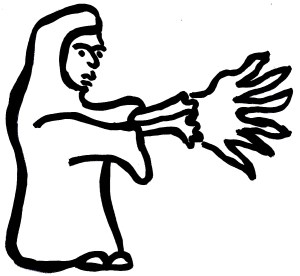
Farley & career-long co-conspirator Charles Roxburgh somehow transform the budgetary limitations of their camcorder equipment by leaning into its significance in early 2000s pop culture. Druid Gladiator Clone is staged with the fish eye lens “tracking” shots & “candid” camera techniques of a late 90s skateboarding video, aligning it with significant MTV media of its time like the Jackass series & The Tom Green Show. The movie is essentially a prank show made entirely harmless because its pranks’ “victims” are featured players who are in on the gag. Matt Farley stars as a modern-day druid named Farley, naturally, who zaps unsuspecting victims with his lightning-like “Beams of Goodness.” It’s initially very difficult to pinpoint exactly what this inane mythology means. Every time Farley shoots cheap CGI lightning out of his fingertips, the unsuspecting recipient of his Beams of Goodness immediately falls unconscious, appearing dead. Farley even lifts & drops the arm of each victim three times with bizarrely methodical repetition to ensure their zonked state. This effect is only temporary, though, and victims of his supernatural pranks tend to recover within a half hour of being struck by his fingertip lightning. In true Motern Media fashion, this mildly sinister set-up is then made weirdly, aggressively wholesome as Farley discovers that his lighting beams can be used to put his victims in a good mood instead of zapping them unconscious. This development contradicts what his druid superior (Motern regular Kevin McGee) trained him to believe. This shift from menacing pranks to learning the power of positivity occurs in the first third of the movie, leaving a full hour of runtime to be eaten up by romantic sitcom mix-ups, “gladiator battles” between fellow druids in latex Halloween masks, and Farley “fighting” the cloned version of himself promised in the title (by challenging him to a round of H-O-R-S-E on the basketball court). Mostly, Druid Gladiator Cone is a series of non-sequiturs where a shirtless Matt Farley runs wild in unsuspecting New England neighborhoods while trying on various dyed “cloaks” (bedsheets). It’s like an unusually wholesome Tom Green sketch somehow stretched to a 90min runtime.

As with all of Matt Farley’s productions, part of the joy of Druid Gladiator Clone is the accomplishment of its own completion. The college setting apartments & classrooms recall the art project ambitions most young twenty-somethings have about making full-length movies with their family & friends. What’s miraculous about Farley & crew is that they had the dedication to follow though on those ambitions and have been making backyard movies on a semi-regular schedule for over two decades running. What’s even more miraculous is that nearly all these pictures, even the ones stretching back to the Motern family’s college days, are not only watchable, but even worth enthusiasm. I wouldn’t suggest anyone begin their Matt Farley journey with Druid Gladiator Clone, but if you already have an affinity for Motern’s house style & find joy in seeing repeat players show up like old pals (this film is particularly humanizing for Kevin McGee, even though he plays a villain), it’s a surprisingly rewarding experience. The idea of a Jackass-style candid camera prank show where everyone’s in on the ruse and no one gets hurt is so weirdly wholesome & earnest, especially once applied to an unnecessarily complex supernatural mythology about “druids” (shirtless, magical boys) learning how to become better people. Structurally, Druid Gladiator Clone is barely held together in a sketch anthology style, recalling horrendous microbudget productions like the Blair Witch Project spoof Da Hip Hop Witch. The main difference is that Farley & crew are naturally, genuinely funny, something that doesn’t require much structure or budget to feel worthwhile. My enjoyment of this wholesome college prank show makes me fear that I’m too deep under the Motern Media spell to effectively watch any of Farley’s output with a critical eye. I’m so on hook for their eternally juvenile antics that I’m in awe of the commitment it took to capture the low-budget spectacle of this camcorder sketch comedy anthology, even with its defiant inattention to basic craft & exploitation of dirt cheap special effects software. Someone send help.

-Brandon Ledet

Freaky Farley (2007)

I’ve gotten to the point in my recent Matt Farley obsession where the only movies I’ve watched in the past week have been Motern Media productions. As I slip further & further into his back catalog of microbudget genre films, it’s getting difficult to remember a time where I wasn’t hanging around the kitchens, backyards, and nondescript shopping districts of New England nowhere with Farley and his recurring cast of friends & collaborators. The initial joy I found in the weirdly wholesome titles Monsters, Marriage, and Murder in Manchvegas and Don’t Let the Riverbeast Get You! did drop slightly when I got to Farley’s “first” signature film, however. Freaky Farley is often reported to be the very first Matt Farley production, but it’s the third title listed in his IMDb credits and Farley himself includes links to two full-length features on YouTube that predate even those (and YouTube) on his own website. It does in some ways feel like an Official Debut, though, one where Farley & friends graduate from staging prankish, small-scale comedies on MiniDV camcorder footage to making a “real,” film fest-ready movie. It also feels like the debut of a since-solidified formula that Farley hadn’t quite yet perfected, just barely missing the sweet-spot of what makes his later works so idiosyncratically enjoyable. Manchvegas & Riverbeast are “horror” movies that do not care about delivering horror, instead functioning as absurdly wholesome hangout films that are occasionally interrupted by monsters & crazed killers. That’s what make them so fun & distinct in comparison with other no-budget “backyard” horror movies, which tend to lean into nastiness & gore in an attempt to transcend their limited means. In that tradition, Freaky Farley is closer to a true horror film, one that does not skimp on blood or kills, which exactly what makes it notably less special than the Motern Media productions that immediately followed.

That’s not to say that Freaky Farley is any less silly than a standard Matt Farley picture. This is a deeply silly movie. Farley stars as the titular killer (duh), a peeping tom who gradually graduates to murderous mayhem. Imprisoned in a mental institution, Farley teases an interviewer (and the audience) with his full backstory, sneering, “You want to figure out how my sick mind works.” The details are absurd, as you might expect, painting a picture of a child driven mad by his overbearing father (Kevin McGee, perhaps Farley’s most committed recurring player; certainly his most muscly), who forces him to pointlessly dig & refill the same backyard hole in perpetuity as punishment for various slights. The repetition of this . . . abuse? drives Farley mad until he becomes widely recognized as a laughable kook, on par with the local witch, the local ninja, and the local “bearded hobo.” His unseemly behavior begins with spying on women through their uncurtained windows as they undress, typical peeping tom behavior. It then graduates to full-on murder spree once his weirdly muscly father pushes him over the edge, devolving the back half of the film into stage blood mayhem that feels jarringly incongruous with Farley’s larger catalog. A series of violent stabbings with a pumpkin carving tool does seem totally at home with the microbudget slasher genre Farley & co. are parodying (or paying homage to, depending on how their tone hits you). However, it feels entirely foreign to the wholesome hangout pictures that would immediately follow in the Farley oeuvre, where murders are a genre inconvenience that get in the way of his oeuvre’s true joys: flatly delivered, overwritten dialogue & novelty song dance parties. What interrupts these murders does feel in-line with Farley’s later works, though; moss-covered woodland monsters called Trogs. Just like the Gospercaps & Riverbeasts that followed in the next two pictures, the Trogs are cheaply costumed beasts that tie the whole picture together in a delightfully inane spectacle, saving Freaky Farley from its own nastier impulses.

The one major advancement Freaky Farley introduced to the Motern Media filmography was a jump from DV camcorder technology to actual 16mm film. The grime & grain of late 70s microbudget slashers is more convincingly staged in this format, especially in sunlit natural environments, pushing Freaky Farley visually closer to the Sleepaway Camp & Friday the 13th sequels territory it reflects in its atypically violent tone. That 16mm visual aesthetic was later put to much better use in Monsters, Marriage, and Murder in Manchvegas, however, where its 70s slasher grime was tempered with the tone of a summer camp slideshow depicting good natured, harmless pranks. It’s that exact good-natured harmlessness that’s missing from Freaky Farley. Without it, the movie feels a little too close in tone with the microbudget horror genre it’s spoofing/lauding. There are still plenty of Farley-specific touches to enjoy here despite that more familiar tone, however. Flatly delivered lines like “I’m suddenly quite ashamed of my nakedness” & “All guys are suckers for a girl in a witch costume” hang in the air with pitch-perfect awkwardness. Similarly, the final cut of each scene drags on just a beat or two longer than it should, subtly affording the film a kind of Tim & Eric anti-humor without fully tipping its hand. Although Farley’s signature novelty songs are sadly infrequent here, there’s an excellent plot-summarizing ballad played over the end credits that make up for some of that lost time. Farley also seems to be genuinely wrestling with condescending parental sentiments like “It’s okay to have dreams, but better to have a regular paycheck” in the film, which offers an interesting self-reflection on his life’s work of making backyard movies about witches, ninjas, and trogs with consistently underwhelming success. I just don’t see much here that wasn’t substantially improved in his next production, Manchvegas, making Freaky Farley one for the Motern Media die-hards only. If you’re new to the Motern catalog, it’s better to instead watch the sweeter, more distinct picture from his two-film 16mm era, the one that immediately followed.

-Brandon Ledet

Monsters, Marriage, and Murder in Manchvegas (2009)

One of the most endearing aspects of Matt Farley’s backyard film productions is how aggressively wholesome they can be. When paying homage to Roger Corman creature features in Don’t Let the Riverbeast Get You!, Farley is far less concerned with gruesome monster mayhem than he is with what is a considerate amount of potato casserole to eat at a backyard wedding and how disputes can be settled with dance parties instead of fisticuffs. His summertime slasher send-up Monsters, Marriage, and Murder in Manchvegas, the Motern Media production that directly precedes Riverbeast, similarly shows very little interest in the violent mayhem promised in its title. The movie doubles the murderous threats presented in Riverbeast, terrorizing its small New England community with both a serial killer who only targets fiancées and a woodland species of yeti-like monsters called Gospercaps. Neither threat is treated with any kind of tonal severity, nor are they allowed to eat up much of Manchvegas’s runtime. The horror genre background setting is a selling point to get eyes on the screen, so that Farley can pursue his true passion with his friends & family (who populate his cast & crew): summertime fun. The slayings are so sparse & delayed that it’s easy to forget you’re watching a microbudget horror film at all. Instead, a weirdly wholesome, D.I.Y. comedy about “good natured, harmless pranks” guide the tone of the film as it gleefully distracts itself with “teen” romances, impromptu basketball games, and frequent visits to the lemonade stand. On the summertime horror spectrum, Monsters, Marriage, and Murder in Manchvegas is much closer to an irreverently spooky episode of The Adventures of Pete & Pete than it is to the nasty violence of a Sleepaway Camp or Friday the 13th sequel. It stubbornly withholds the genre goods, choosing instead to excel as a weirdly wholesome frivolity.

Monsters, Marriage, and Murder in Manchvegas starts with a slideshow of summertime antics befitting of a carefree preteen, but enjoyed instead by three revelers who appear to be in their mid-30s. This juvenile trio is a “gang” known as the Manchvegas Outlaw Society, a small crew of jovial pranksters who have as much fun as they can in the summertime heat before they must deal with the inconvenience of nearby serial killers & woodland monsters (who are essentially 6 foot-tall Ewoks). M.O.S. gleefully operate outside the mechanisms of the film’s true plot, in which an entirely unconnected summertime romance is threatened by both a killer who only targets recently engaged women and the entirely superfluous Gospercap monsters who stalk the woods nearby. Eventually, M.O.S. has to get involved before the killings get out of hand and they save the day through a series of weaponized pranks. For the most part, though, they just live out the slobs vs. snobs routine of a classic 1980s comedy with their most grotesque local nemesis (even going as far as attempting to recruit his butler into their “gang”). It’s very telling that once the crises of widespread deaths wrap up, the harmless pranks & romantic flings continue to their own resolutions, as they were always the film’s main priority anyway. Like with individual entries into the MCU or isolated episodes of a soap opera or pro wrestling show, it’s difficult to assess the value of a specific Matt Farley picture on its own without considering the larger impact of his catalog as a whole. If you have no prior knowledge of Matt Farley’s oeuvre it’s entirely possible that the absurdly wholesome frivolity of Monsters, Marriage, and Murder in Manchvegas will leave you frustrated, especially if you enter it looking for the traditional genre thrills of a microbudget horror film. If you’ve at least seen Don’t Let the Riverbeast Get You! before, if not any of his other films, it’ll feel like reuniting with old friends you only see once a year at summer camp. It’s just a camp that happens to occasionally be invaded by monsters & murderers.

While Manchvegas isn’t quite the crowning achievement Farley later reached with Riverbeast, it does best that film in a couple notable ways. Most immediately apparent, its visual aesthetic is much more distinct. In the early slideshow montage, I assumed a digital filter was added to afford the film a grainy 1970s look, but Manchvegas was actually shot on 16mm film. It was a choice that played beautifully into both the film’s late-70s slasher influence and its general home movies vibe, but it’s also an absurdly labor-intensive, cost-prohibitive choice I respect Farley & co-conspirator Charles Roxburgh for foolishly undertaking. Besides its more distinctive look, Manchvegas also packs its runtime with far more of Farley’s novelty pop songs (which pay his real-life bills through tens of thousands of Spotify streams). Major examples like a plot-summarizing rap song that plays over the end credits (perhaps my all-time favorite movie trope) and a montage set to a chorus of “I’m catching a killer by faking an engagement, yeah!” stick out as notable examples. What I really love, though, is the way Farley scores entirely inconsequential scenes of him playing basketball with his M.O.S. friends with a song that repeats the phrase “basketball fun, basketball fun” for full, carefree redundancy. Manchvegas also leans into Farley’s regionally specific sensibilities even in its title, which is a local, ironic joke about the glitz & glamor of Manchester, New Hampshire. The entire point of including that joke in the title is likely to grab the attention of New England locals who would be delighted that it was a term that somehow made its way into a movie. It’s the same tactic Farley uses when he adopts a creature feature or slasher genre hook to lure horror audiences into watching a backyard movie about harmless summertime pranks, or when he titles his Motern Media pop songs with search-optimized meme terms that will lead you directly to him even if you’ve never heard of him (and you likely haven’t). If you spend too much time with Farley once he has you on the hook, whether it’s with Manchvegas, Riverbeast, or a forty-second song about diarrhea, you might even sink far enough under his Motern Media spell to be convinced that he’s a certifiable genius. Two films into his catalog, I’m already a goner.

-Brandon Ledet

Don’t Let the Riverbeast Get You! (2012)

One film into his self-financed oeuvre, I’ve already come to understand Matt Farley both as a kindred spirit and as a new personal hero. I’m sure he’d be surprised to hear either, as he churns out his weirdo art projects under the Motern Media umbrella from a small apartment in New England, more than a thousand miles from where I’m writing this in New Orleans. As someone who makes zines, podcasts, and runs an amateur film criticism blog in the late 2010s, I recognize myself in Farley’s dedication to his miniature media empire. Producing any kind of online content without a major outlet boosting your signal (even media that would have simply been considered Art pre-internet) is essentially just shouting into the digital void, listening to the hollow sound of your own echo. That’s why it’s essential to collaborate on a personal level, to make and share your projects with your friends. The only reason we’ve been able to keep Swampflix going over the last three years is that we’re our own little community, one that doesn’t necessarily need outside feedback to feel worthwhile. Three years is a minor pittance in Matt Farley time, though. Farley has been producing microbudget “backyard” movies with his own community of collaborators for nearly two decades now. He has an obsessive need to create that has spread from filmmaking to podcasting, making zines about long walks he takes in his Manchester, NH neighborhood, and throwing annual 6 hour-long concerts for an audience of dozens. He’s even managed to turn the music production end of Motern Media into a livable salary, uploading tens of thousands of novelty songs to Spotify with search-optimized titles to make fractions of pennies off every stream. All this effort, yet hardly anyone has ever heard of Matt Farley. I hadn’t heard of him myself until a couple weeks ago; that’s exactly why he’s my new personal hero.

Between writing torrents of novelty songs to support his family, Matt Farley has managed to produce seven “officially” released feature films since 2003. Each star (and are crewed by) family, friends, and fellow employees of the local group home for teens where he used to work. There’s an authentic John Waters energy to his productions as a result. The accents, cultural references, and shooting locations are aggressively local to Farley’s small town New England surroundings, which he treats with a reverence few outsiders could ever understand. Also like with John Waters’s films, much of the joy of his work is in watching these amateur players flatly deliver intentionally-overwritten dialogue, but not with any perceptible winking-at-the-camera irony. They each carry a strange screen presence that cannot be found elsewhere in all of cinema, but they’re earnestly trying to put on a good show, even if a goofy one. There’s also an aggressive dedication to politeness & good manners in Farley’s work that separates it from Waters’s more decidedly nasty aesthetic, but there’s an obsessiveness & localized specificity to their respective works that links them all the same. To fully understand John Waters or Matt Farley fandom is to immerse yourself in their obsessions, to spend multiple films soaking in the isolated worlds they’ve built by hand with family & friends and no outside input. As a result, it can be difficult to know exactly where to start in their respective catalogs or even how to judge an individual film’s merits isolated from the larger whole, as it’s the total, cumulative effect of their lives’ work that makes them so endearing. Much like how Waters’s early career had its Pink Flamingos, though, Motern Media does have its own calling card picture that serves as a gateway to understanding his brand of lovably wholesome amateurism: 2012’s Don’t Let the Riverbeast Get You!.

Matt Farley stars as the protagonist of Don’t Let the Riverbeast Get You! himself (duh), a public pariah in a small Massachusetts town who’s returning after a years’ long absence. He suffers constant ridicule for his past insistence on the existence of a mythical “riverbeast” that stalks the nearby woods. Thanks to a William Castle-style introduction that warns us of exactly when & where the riverbeast will appear, we know the monster’s existence to be “real”, so that his reputation as an embarrassment & a kook is entirely unearned. What’s most charming about this set-up is that the riverbeast itself is almost entirely inconsequential to the movie, only appearing occasionally to interrupt the small-town drama as a kind of Roger Corman-inspired act break. Between the riverbeast’s rubber suit visage and the movie’s warnings of exactly when it will appear, there’s no sense of danger or dread established by the movie’s stubbornly infrequent monster attacks. Matt Farley is barely interested in the conventional thrills of a creature feature, if at all. That genre structure mostly serves as an excuse to pack the screen with small-town weirdos, comedic non-sequiturs, and tangential novelty songs about the river. The real centerpiece of Don’t Let the Riverbeast Get You! is not any of its monster attacks in the woods, but rather a lengthy wedding sequence staged in a backyard that starts with a petty argument over potato casserole and ends in a minutes-long dance party. Don’t Let the Riverbeast Get You! is at its core a hangout film, in that it’s a document of friends hanging out & staging gags around the non-existent legend of a non-existent monster & the public triumph of the one man who believed it to be real. It’s the story of Matt Farley’s miniature media kingdom in a microcosm, as it’s the story of a man possessed by a singular obsession finding himself at odds with a world that could not care less.

If you only watch the microbudget end of genre cinema for MST3k-style, “so-bad-it’s good” heckling, you’re likely to find little joy here. Admittedly, the score is cruelly repetitious, the acting is preposterously amateur, the story is stitched together through voiceover walk n’ talks, the volume varies wildly from scene to scene, and the entire plot is re-explained in the dialogue roughly every three minutes. Still, as with most misunderstood B-pictures, Don’t Let the Riverbeast Get You! is far less valuable as a punching bag for cynics than it is as a genuine example of outsider art. Its bizarre references to a mysterious family activity called “helicopter hamburger,” lengthy lectures on breakdancing & cat litter, and dedication to novelty song dance parties recall the similarly amateurish antics of Tim & Eric Awesome Show, Great Job!, but again with a wholesome earnestness that show could never match. Making fun of Matt Farely’s movies would be entirely beside the point, as the core purpose of his productions in the first place is to have fun with his family & friends (immortalized for all to see, usually at full-length on YouTube). That’s a difficult concept to grasp in just one feature, so I’m not sure the full impact of Don’t Let the Riverbeast Get You! could ever fully sink in on a first viewing without any prior knowledge of Matt Farley’s oeuvre. It’s only after getting more familiar with his insular, hand-built world in a few other movies that Don’t Let the Riverbeast Get You!’s significance as a calling card for the Motern Media empire becomes crystal clear. Of course Farley, perhaps the most self-aware man in the world, knows exactly how significant it is within the larger Motern picture. He even brings out the titular riverbeast (usually his director/collaborator Charles Roxburgh in costume) for dance parties at his annual Motern Day Extravaganza concerts to jive with his crowd (of dozens). He really is a hero, even if he’s one that must suffer mockery to get his outsider art into the world.

Last week I spent four consecutive days in a massive convention hall distributing zine versions of collected Swampflix works to librarians from all over the country. It was a bizarre way to attempt to connect with people, but it was at least a more tactile experience than a typical day of running an amateur film criticism blog in the late 2010s. Over those four days of talking with other zinesters and trying to grab the attention of passersby, I often thought of Matt Farley’s aggressively localized media empire. Out of every dozen or so people who stopped to talk to us about our zines (or to learn about zine culture in general), there were only one or two who enthusiastically got what we were doing and found great joy in talking about movies with a stranger. Similarly, I doubt every person who heard the Important Cinema Club podcast’s (essential listening) episode on Matt Farley followed through to check out his work online, even though most of it is readily available on sites like YouTube. Farley had to chip away at the B-movie, independent film market for over fifteen years before that message even reached me and there was a high chance even I wouldn’t put forth the effort to check out his work once I heard it (the episode did initially get released over a month ago, after all). What I love most about him is that I have no doubt that he would likely continue to make these films with or without a growing, dedicated audience. Like all of Farley’s films, Don’t Let the Riverbeast Get You is a work born solely of passion & dedication, outsider art with no reward beyond seeing its completion and connecting with the few people outside your insular community who get it. I recognize that same stubborn obsessive dedication within myself, which makes me think of him as a kindred spirit. I also know that it will be nearly impossible to keep my own tiny film criticism community going for a full decade, let alone two, which is what makes him a true hero.

-Brandon Ledet