Resident Evil: Apocalypse (2004)

EPSON MFP image

three star

campstamp

When we binged on a small selection of “iconic” video game adaptations for episode #11 of the podcast, I was surprised to see Paul WS Anderson’s name pop up twice in a row as a director of both Mortal Kombat & Resident Evil (2002). Not only is the video game adaptation not a genre you’d typically associate with an auteur’s go-to passion for repeat offerings (outside maybe a stray Uwe Boll-type), but Anderson’s two contributions to our list were actually two of the better films, bested only by 1994’s Super Mario Bros in terms of pure entertainment value. Of his two entries, Resident Evil was the biggest surprise in terms of competency. Mortal Kombat had the narrative upper hand of a ridiculous interdimensional martial arts tournament to boost its camp value (along with a delightfully obnoxious theme song & a scenery-devouring Christopher Lambert). Resident Evil, on the other hand, was a seemingly straightforward zombie picture, so it was downright bizarre that Anderson managed to make it even moderately memorable in the face of a market that’s been overcrowded with similar works for decades. The Milla Jovovich-helmed action vehicle was actually an interesting trifle, however slight, one made novel by a wealth of weird details like A.I. children, genetically mutated beasts, and menacing corporations with dystopian designs on world domination.

What’s even more surprising than Anderson managing to make a watchable film out of the Resident Evil video game franchise is that he did not stop at just one film. The 6th (and supposedly final) entry in the series has just reached theaters over a decade later and both Anderson & Jovovich have shared some level of involvement in the series throughout its entire run, which is a much higher level of consistency than you’d expect for a zombie video game franchise. The second film in the series, Resident Evil: Apocalypse (which obviously didn’t follow through on the finality of its title) wasn’t half bad either. It expands the bunker-confined action of the lower budget first film by bringing its zombie breakout above ground. Its world-building details like the exact nature & temporal location of its Raccoon City setting, its menacing (and hilariously named) villain the Umbrella Corporation, and the exact skills & origins (and even name) of its Ripley stand-in (Jovovich), all remain fuzzy to me after two full-length features. All you need to know to make it through a Resident Evil movie is that zombies & capitalists are bad, while women & guns are good. The rest is all shoot-em-up nonsense and militaristic zombie movie mayhem, a triumph of action horror cinema only in that it should be impossible for Anderson to make something so generic so delightful to watch and, yet, he’s done it at least twice.

I think Resident Evil‘s key to surviving as a notable action horror franchise is its dedication to excess. The film couldn’t logically bring in Jovovich’s hero immediately to deal with the above-ground breakout so it created a second badass with a gun cliché (a cop named Valentine, hilariously) to shoot some undead baddies in her initial absence. There’s some first person POV shooting in a police station and found footage shenanigans with a rogue news broadcaster that helpfully treads plot water until Jovovich can burst onto the scene by flying a motorcycle through a church’s stained glass windows and then turning said motorcycle into a makeshift bomb. Once our two badass ladies join teams everything else is an action-packed blur of knives, grenades, rocket launchers, and the undead bursting out of graves like a cover version of the “Thriller” video. New locations play like video game levels. The film’s Final Boss characer is a new genetic mutant called Genesis (who vaguely resembles the version of Bane in Joel Schumacher’s Batman & Robin). Everything is all very loud and violent and impossibly dumb, to the point where the monotone excess becomes its own artform and your options are either to play along with the film’s buffoonery or to feel like your better senses are constantly being assaulted.

I don’t care to learn any more about this series’ mythology than the little I can catch between explosions and bullets. Jared Harris (Lane from Mad Men) pops up here as some kind of smart programmer type who’s constantly hacking into the mainframe or some such nonsense and Iian Glen (Jorah from Game of Thrones) swoops in at the last minute for some Wolverine-type experiments & mumblings about clone technology, but outside of those actors’ before they were C-list stars pedigree, their presence signifies nothing. No one really matters here outside Jovovich & Anderson. Even the newly introduced & oddly omnipresent character of Valentine is mostly just a place holder until Jovovich can arrive above-ground, guns & motorcycle blazing (and the less I say about the film’s wisecracking pimp comic relief, the better). I’m sincerely amazed that a single filmmaker & a single performer have stuck with such an explosively inane series for as long as Jovovich & Anderson have. I also wonder if there are wholeheartedly dedicated fans of the series out there who care deeply about its AI, genetic monsters, and walking dead mythology enough to have been counting the days until the series wrapped up in its final installment. I can’t imagine being at all invested in Resident Evil’s narrative throughline & overarching themes, but I will admit that these films are much louder, dumber, and more entertainingly chaotic than I expected them to be and I’m curious about how they can keep up that stamina for four more installments.

-Brandon Ledet

xXx: Return of Xander Cage (2017)

EPSON MFP image

three star

campstamp

Grab your cargo shorts and flash art tattoos, folks. Nu metal cinema is back in a big, dumb way. Vin Diesel has briefly stepped away from his long-time role as a Corona-swilling patriarch in the Fast & Furious franchise to resurrect his other embarrassingly dated late 90s action vehicle, xXx. Diesel selflessly returns to his role as Xander Cage, “the rebel the world doesn’t know it needs,” to save the human race with such heroic acts as collecting high-fives while skateboarding downhill, gliding across jungle dirt on snow skis, and bravely bedding entire rooms full of Nameless Babes so that he can turn to the camera and mumble, “The things I do for my country,” like a pilled-out Bugs Bunny. xXx: Return of Xander Cage may not feature a Rammstein concert like its first installment or Family Values Tour ’98 vet Ice Cube like its second, but it is comfortably seated in that same X-treme Attitude nu metal cradle. It’s as if the film acknowledges its status as a far-too-late action sequel by dialing the culture clock all the way back to the early 2000s to accommodate its own wallet chain macho inanity. The results are oddly endearing, even if persistently ugly. Its soundtrack may have been swapped out for dubstep, but Return of Xander Cage still shines as a small scale nu metal miracle, an abrasive rap rock nightmare preserved in the foulest amber.

Does it matter exactly why Xander Cage returned to the international spy game? Actual-talent Toni Collette chews scenery as a menacing G-man/humanoid IKEA monkey who drags Cage back into action by informing him that his former mentor (played by Samuel L. Jackson, naturally) has been murdered via espionage technology that can strategically down orbiting satellites. Cage reluctantly agrees to retrieve this nefarious device, but refuses to do so with the team of untrustworthy supersoldiers Collette’s Evil Bitch government stooge assembles for him. When Cage grills the G.I. Joes about their experiences with X-Treme sports like base-jumping & snowboarding, they retort “We’re soldiers, not slackers.” Wrong response. He nukes the team in what plays like a sincere version of a MacGruber spoof, but decides to forego his past life as a lone wolf, instead borrowing some of his Daddy Dom character’s obsession with “family” in the Fast & Furious franchise to build his own X-treme, rag tag crew of crazed stunt men, EDM DJs, computer geek Millennials, and lesbian snipers. Everything that follows is a loud, dumb blur of shoot-em-up action cinema inanity, with occasional touches like dirt bike/jet ski hybrids and Godsmack-reminiscent nipple tats distinguishing it from any other borderline competent example of its genre. They get the device. They save the day. They put the government in its place and walk away with their collective rebel status intact. There’s even a ludicrous last minute cameo that makes the whole thing feel like a real movie instead of a hazy, bullet-ridden nu metal daydream. It’s all in good fun.

As much as Return of Xander Cage likes to pretend that its team-building exercise is actually important to the plot, the movie is still largely just a loving prayer at the altar of Xander Cage (and, by extension, Vin Diesel himself). It’s right there in the title. No one else truly matters. Entire villages cheer his presence. Little kids look up to him in awe. He delivers every one-liner with a JCVD-style lethargic drawl, as if he’s so pleasantly relaxed in the role that he’s half asleep. When someone hands him a bomb he mumbles, “Oh boy, here we go again,” rising to twirl in a lazy circle while firing a machine gun, yawning, and literally checking his watch. His entire crew is qualified to save the day, but they’re asked to hang back as his cover. Everyone is visibly horny, but only Xander Cage gets to fuck. It’s super cool and totally worth mentioning that this dumb, spiritually-backwards action film has a mostly POC cast (including an over-qualified Donnie Yen among its ranks) and the only scene dominated by white male faces involves an evil boardroom of business pricks threatening to tear the world down. It’s just also funny that the diversity in the crew is mostly for naught, as they’re ultimately no more significant than any one of Xander Cage’s many Tough Guy clip art tattoos.

It may sound like I’m being a little tough on Return of Xander Cage, but it’s a tough customer; it can take the pressure. This is actually a pretty fun version of what it is: mindless shoot-em-up action cinema with a fetish for X-Games style stunts. It’s just impossible not to poke fun at every leering shot of tight leather mini-skirts, every dumb objective like “Get there fast and take this guy down,” and every stupid one-liner like “It’s like finding a needle in a stack of needles.” At this point in modern taste & decency, X-treme action cinema has no comfortable, legitimate home and the xXx franchise addresses that concern by bullheadedly avoiding giving a shit about taste or decency. It’s a nu metal hangover stuck so far out of time that it had to abandon its angst rock roots for an EDM soundtrack that’s also hopelessly outdated, just by a narrower margin. It’s in this overgrown bro cultural faux pas that Return of Xander Cage emerges as cute & oddly quaint in its ironically mild brand of “X-treme” entertainments.

-Brandon Ledet

Hidden Figures (2016)

fourhalfstar

Although it’s a fairly paint-by-numbers historical pic, Hidden Figures stands out as a moving and impressive film, and the Academy has taken notice: Figures has picked up multiple Oscar nods this year in both behind-the-scenes and before-the-camera categories. This is important for a number of reasons, not least of all that it demonstrates that the #OscarsSoWhite backlash has put the old guard on notice. Additionally, it’s worth noting that the current political climate is anti-science, anti-progress, anti-women, and anti-minority, and while this film doesn’t exactly stand in that gap and hold the door, it does serve as a reminder of how far we’ve come and how far we have left to go.

The film follows the story of three real black women who worked for NASA in the 1950s and 1960s as “computers,” numerical analysts who performed and checked the calculations needed to put satellites into orbit, and later to send the first men into the cold vacuum that lies between the stars and bring them down to earth again. Janelle Monáe plays Mary Jackson, a mathematician who becomes an engineer, alongside Octavia Spencer’s Dorothy Vaughn, who leads the “colored women” computing group as a de facto supervisor despite being denied the prestige, title, and remuneration of that position. The cast is largely led by Empire‘s Taraji P. Henson, who plays Katherine Goble (later Johnson), a mathematical and physics genius who is instrumental in the calculations that are used to launch John Glenn (Glen Powell) into orbit and save him from destruction on re-entry. Rounding out the cast are Kirsten Dunst as Dorothy’s foil, an obstructionist gatekeeper, Jim Parsons as Paul Stafford, the head engineer of the Space Task Group, Kevin Costner as Al Harrison, the director to whom both Stafford and Katherine Goble report, Mahershala Ali as Katherine’s love interest Jim Johnson, and Aldis Hodge (so good to see you, Aldis, I’ve missed you so much since Leverage went off the air) as Mary’s husband Levi.

As with all historical films, it’s not wholly clear how precise Hidden Figures is in its details (I must admit that I haven’t read the book on which the film is based), but that’s largely irrelevant to the film’s message. Does it matter whether or not the real-life Al Harrison took a crowbar to the “Colored Ladies Room” sign and declared that “Here at NASA, we all pee the same color,” after learning that his best mathematician had to run a mile to the only such lavatory on the program’s campus every time she needed to relieve herself? Not really. What matters is showing young people (especially young girls) of color that although barriers exist, they can be surmounted. It also reminds the white audience that is, unfortunately, less likely to seek this film out that the barriers that lie in place for minorities to succeed do exist despite their perception of a lack of said barriers. What Harrison initially perceives as a failure in his subordinate’s work ethic is, in reality, a fact of her existence to which he is blind because of his privilege; in fact, his position of power has rendered him so above and outside of this concern that the fact it exists is a shock to him. It’s not exactly subtle, but when the truth has to still be dropped like an anvil from the sky fifty years after the fact, there’s no room for subtlety.

Characters like Stafford and Vivian Mitchell could easily be construed as caricatures, but Hidden Figures reminds us that this same kind of oppression is still ongoing. Post-bathroom-desegregation, Vivian and Dorothy both emerge from bathroom stalls and Vivian (who at this point has blocked Dorothy from a promotion to supervisor and taken no small satisfaction in the way that the goalposts have been moved for Mary’s transition to engineer) tells Dorothy that she has “nothing against [her] kind,” she just does her job. Dorothy gives her the only answer that she can: “I know . . . that you probably believe that.” It’s a stark reminder that “following orders” to maintain an immoral status quo isn’t just used as self-justification for the enablers and perpetrators of genocide in a distant past, it’s something that happens every day, hindering progress at every half-step.

There’s a lot to parse in this film, straightforward though it may seem, certainly far more than can be contained in this review (and, it goes without saying but I’ll say it anyway, this discourse is limited by the horizons of my privilege as a white cisman), but Hidden Figures gets a strong recommendation from me. Catch it in theaters if you can; and, if you can’t, make sure to rent it somehow to show to your ignorant friends and family next holiday. Just be prepared to admit that maybe it is hard to buy Glen “Chad Radwell” Powell as American hero John Glenn.

-Mark “Boomer” Redmond

Split (2017)

EPSON MFP image

fourstar

I left M. Night Shyamalan’s last trashy horror experiment, The Visit, with mixed, but cautiously positive feelings on the director’s redemptive comeback potential. That film’s follow-up, Split, laughs in the face of my caution by revealing a filmmaker who excels as a stylist & a tension-builder on a near-masterful level, a newly confident auteur who’s just starting to get a full grasp on what he can accomplish within his own artistic boundaries two decades into his career. He just happens to be a near-masterful stylist that makes undeniably stupid movies. When an M. Night Shyamalan film is great, it’s brilliantly stupid, combining over-thought & over-stylized art film pretension to an empty, trashy property that doesn’t really deserve it (think Richard Kelly’s The Box as a reference point). When a Shyamalan movie is bad, it’s boringly dumb, the worst kind of limp, undercooked cinematic inanity Hollywood dumps into wide distribution without giving enough thoughtful consideration. Split is brilliantly stupid.

James McAvoy stars as a mentally unstable blue collar worker suffering with the scientifically controversial Dissociative Identity Disorder. While his well-meaning therapist quietly studies him from a distance and tries to build a high-profile career around his exceptional example, the troubled man’s more unsavory personalities begin to dominate his daily actions, keeping his less harmful multiples in the dark. This is not the empathetic, humanist portrait of D.I.D. delivered in United States of Tara, but it’s just as silly & wildly inaccurate. Much like with The Visit, there’s an indelicate genre film cheesiness to the way this movie handles mental health issues that doesn’t exactly deflect criticism, but pushes its depiction so far outside the context of reality that you’d have to reach pretty damn far to be personally offended. McAvoy’s unhinged villain is a scary white man with a debilitating mental disorder who sets in motion a confined space/women-in-captivity thriller plot when one of his most violent alters kidnaps three teenage girls and locks them in a basement for a vague, menacing purpose. The film slowly evolves into a very strange beast in that basement, both asking you to sympathize with the troubled man (an abuse survivor) and to fear the impending revelation of his 24th alternate personality, described as an all-powerful, inhuman monster that will test “the limits of what man can become.” He threatens his captives with ominous declarations like “You are sacred food,” and “The time of ordinary humanity is over,” but nothing could possibly prepare them for the brilliantly stupid weirdness that goes down in the film’s third act.

Of course, the most readily recognizable calling card for M. Night Shyamalan as an auteur is the last minute twist and I’ll do my best to avoid Split‘s ultimate destination out of respect for that trashiest of traditions. I will say, though, that Split‘s best quality is that its Big Twist Ending does not at all cheapen or undercut the plot the film lays out before its arrival. In fact, it at first appears there may be no twist at all. Everything Split introduces as a central theme and a narrative thread, from the therapist’s assertion that D.I.D. might be able to unlock “the full potential of the human brain” & “all things supernatural” to the way privilege can soften competence to the life-long effects of childhood familial abuse to one of the imprisoned teens (The Witch‘s Anya Taylor-Joy) utilizing survivalist skills her father taught her while deer hunting in a Final Girl context, is fully explored in a linear A-B story with very few sharp turns or gimmicks to distract from their impact. Then, when each storyline is fully satisfied & neatly concluded, the Twist Ending arrives to recontextualize everything you’ve seen until that point in a way that expands the film’s scope & somewhat explains its oddly goofy tone instead of shifting its reality entirely. It’s still stupid, but it’s brilliantly stupid.

As genuinely creepy as Split can be in any given scene, especially once it finds itself in the threatened sexual assault territory of generic teens-in-their-underwear horror, it’s also a sublimely silly affair. McAvoy at one point has way too much fun making a show out of his solo bedroom dancing after a character desperately pleads, “I want to hear your Kanye West albums.” He also delivers what is sure to be a strong ironic contender for an MTV Movie Award for Best Kiss. Split‘s D.I.D. premise provides a near-borderless playground for him to chew scenery and he does so admirably, fully committing himself to the film’s brilliant stupidity. I think Split works best when it is genuinely creepy, though. Shyamalan is confidently playful with the film’s tone at every turn (even appearing onscreen to practically wink at the camera), but still mines his pulpy premise for plenty sincere tension & dread in a highly stylized, artfully considered way. Split truly does feel like the director’s return to glory. This is the moment when he loudly broadcasts to the whole world that he can still be highly effective within the pulpy genre box he often traps himself in without having to blow the container open with a last minute twist. Here, the twist is allowed to comfortably exist as its own separate, artfully idiotic treat, another sign that the filmmaker has finally become the master of his own brilliantly stupid game. I don’t think I’ve ever left one of his films this deliriously giddy before and it’s an exciting feeling. I now need to see whatever expertly dumb thing he pulls off next.

-Brandon Ledet

20th Century Women (2016)

EPSON MFP image

fivestar

“How do you be a good man? What does that even mean nowadays?”

I don’t think I’ve ever seen a finer example of why critical Best of the Year lists are absolute bullshit (due to the arbitrary wackiness of release dates) than 20th Century Women. From an official standpoint, Mike Mills’s latest (and greatest) has a December 28, 2016 release date thanks to its limited release screenings in major cities like New York & Los Angeles. It took nearly a month for the film to expand its distribution wide enough to reach cities like New Orleans, though. These Oscar-minded, slow trickle releases usually mean that modest little pleb film bloggers like myself, who don’t have the luxury of festival circuit browsing & For Your Consideration advance screeners, miss a lot of major Best of the Year contenders until weeks after their year-end roundups are published & etched into digital stone. So let me announce right here & now that my personal Top Films of 2016 list is a total sham, a shameful fraud. No disrespect meant to my beloved The Neon Demon, but its crown is made of the flimsiest fool’s gold. The best film of 2016 is, in fact, 20th Century Women.

Just about the last thing I expected when I bought a ticket to this immaculate, miraculous picture was a reach-for-the-fences ambition in narrative structure & visual craft. The advertising leading up to its release did an exceptional job of highlighting its function as an actors’ showcase for its holy trio of talented women: Annette Bening, Greta Gerwig, and Elle Fanning. The movie certainly does not disappoint there and I guess on some level it does function as the kind of insular Awards Season drama about alternative family structures & eternally hurt feelings you might expect based on the trailers. That’s only a fraction of the territory writer-director Mike Mills covers here, though. Although 20th Century Women is constructed on the foundation of small, intimate performances, it commands an all-encompassing scope that pulls back to cover topics as wide as punk culture solidarity, what it means to be a “good” man in modern times, the shifts in status of the American woman in the decades since the Great Depression, the 1980s as a tipping point for consumer culture, the history of life on the planet Earth, and our insignificance as a species in the face of the immensity of the Universe. For me, this film was the transcendent, transformative cinematic experience people found in titles like Tree of Life & Boyhood that I never “got.” Although it does succeed as an intimate, character-driven drama & an actors’ showcase, it means so much more than that to me on a downright spiritual level.

It would be incredibly easy to reduce the plot of this semi-autobiographical work down to a sentence or two. Annette Bening stars as a dream mom, an incredibly intelligent & self-confident woman who had her only child at the age of 40. Concerned that she’s not fully equipped to alone raise her son to be a “good” man, she enlists the tenants of her home (played by Billy Crudup & Greta Gerwig) and the boy’s best friend/biggest crush (Elle Fanning) to raise him as a village, the way a commune would, a plan cited to be inspired by her own communal upbringing during the Great Depression. This coming of age narrative could feel painfully over-familiar, even within the hyper-specific context of its late 70s West Coast punk scene setting, especially since the assumed POV of the narrative would center on the 15 year old boy everyone’s helping “raise.” Mills’s narrative structure is far too non-linear for the story to play as Oscar season convention, though (a fact backed up by the film only earning a single nomination, one for Best Original Screenplay). 20th Century Women engages in an internal tug of war between over-explaining & withholding information. It will introduce a character’s persona by telling their entire life’s story from birth to death in the length of a paragraph, only to double back to fill in the details & color between those lines. It will continually threaten to slip into time-spanning montage, only for the in-the-moment immediacy of a specific image to crash to the surface. It will threaten heartbreaking moments of devastating melodrama only to reveal that life is more often defined by smaller, less obviously significant events & conversations. The film almost plays like a feature-length trailer, but without the lack of depth that descriptor implies. It’s cliché to say so, but 20th Century Women is pure cinema, the art of the moving image; and it confidently, abstractly allows its medium to dictate its narrative in a way that a simple, reductive plot synopsis cannot convey. It’s in so many ways more than a sum of its parts.

A large portion of my rapturous appreciation of this film is undeniably hinged on the way it plays directly into my personal pop culture obsessions. The very first needle drop sound cue (a literal needle drop thanks to Greta Gerwig’s young punk tenant character) is my favorite early-career Talking Heads song, “Don’t Worry About the Government.” From there it takes the time to explore punk culture as a philosophy and an ethos, not just name-dropping niche artists like The Raincoats for cool points, but verbalizing what makes their DIY aesthetic life-affirming & interesting to the ear. It explains how the scene can be paradoxically empowering through a sense of community among outsiders and alienating in its bitter, insular rivalries that arise from things as petty as who’s slept with whom and what bands people associate with as a personal philosophy. The movie also indulges in the beauty of its own imagery the way only cinema can, often functioning as an Instagram or Tumblr account in motion. From its opening shots of calm ocean waves & symmetrically framed car fires to its slideshow photographs of punk scene portraits, outer space imagery, and common objects like cigarette packs & birth control pills isolated in an art studio void, 20th Century Women never shies away from the simple pleasure of a well-constructed image, but always finds a way to make each indulgence thematically significant. Its structure is explained in-film through easy metaphors like a mixtape or a self-portrait series made through photographs of possessions (which is described as “beautiful, but a little sad”), but I think those reference points sell short its command of “movie magic.” Each stylistic choice is a natural extension of its 1979 setting, but feels as if it were speaking to me directly on a much deeper level than pure aesthetic.

It’s a shame I didn’t see 20th Century Women in time to properly cite it as my favorite 2016 release. It’s also a shame that Annette Bening didn’t earn any Academy Awards attention for her deeply endearing role as the film’s matriarch. At the very least, her lines like, “Wondering if you’re happy is a great shortcut to bring depressed,” and “Don’t kiss a woman unless you know what you mean by it,” would’ve made great fodder for an awards show highlight reel. No matter. Long after these end of the year roundups are long forgotten, this film will still be its wonderful, perfect self. Mike Mills has delivered a timeless, masterfully beautiful triumph of humanist filmmaking and no arbitrary release dates or Oscars snubs can delegitimize that accomplishment.

-Brandon Ledet

Episode #22 of The Swampflix Podcast: 2016’s Honorable Mentions & Videodrome (1983)

inaworld

Welcome to Episode #22 of The Swampflix Podcast! For our twenty-second episode, we’re doing a little tidying up. Brandon, CC, and James continue their discussion of the Top Films of 2016 with some Honorable Mentions. Also, Brandon makes CC watch David Cronenberg’s cult classic Videodrome (1983) for the first time, a viewing experience that’s been in the works for years. Enjoy!

-Brandon Ledet, CC Chapman, and James Cohn

I Am Not a Serial Killer (2016)

EPSON MFP image

three star

I’m having a difficult time understanding exactly why I Am Not a Serial Killer works as well as it does. The movie doesn’t ever fully succeed at any of the various genres it touches: horror comedy, murder mystery, familial drama, creature feature. Its story is frustratingly thin for a plot that shows so much potential in its initial ideas. Big character moments & narrative payoffs feel strangely removed, as if there were entire scenes missing from the film (a possible result of being adapted from a more fleshed out novel). Yet, I left I Am Not a Serial Killer with a fairly positive feeling about it, which means I’m either a sucker for the genre territory it touches in its sprawling horror nerdery or that the movie was doing something charming & worthwhile in such a subtle way that I didn’t at all take notice of the mechanics.

I’m at the very least clear on what the movie’s biggest strength is. The lead performances from old-timer Christopher Lloyd and newcomer Max Records (who is competing fairly strongly with Royalty Hightower for best celebrity name I’ve heard in a while) pull a lot of the weight in terms of the film’s entertainment value. Records stars as a teenage recluse & mortician’s son who’s been diagnosed as having predictors for potential serial killer behavior: pyromania, animal cruelty, stalking. He’s never portrayed to be a bad kid, though, just one who’s oblivious to social cues, unable to see why, in some instances, you can’t just gut someone with food utensils when they’re bullying you at school. As the title indicates, our protagonist never does follow through on his brief flashes of murderous impulses. He instead uses his morbid fascination with the true crime profiles of serial killer “celebrities” like Jeffrey Dahmer & Ted Bundy to track & identify a mysterious killer that’s stalking his small town.

Although it eventually finds some unexpected supernatural territory, the murder mystery at the center of the film is never as interesting as Records’s performance. The way he responds to his sociopathy diagnosis with, “That’s kinda cool,” or confesses to a flirtatious girl at a Halloween party, “I was thinking about dressing up as my mother, but I was worried what my therapist would say,” makes for some great slacker humor in a heightened crisis that calls for a more engaged response. For his part, Christopher Lloyd is as charming as ever as a quietly creepy, but tenderly sweet doddering old fool who knows more than he initially lets on. If there’s anything special about I Am Not a Serial Killer lurking under its Buzzard-esque Gen-X shrug of a coming of age thriller, it’s somewhere in those two actors’ performances and the way they interact.

I can’t help but think that this movie might have worked better as a television show. The non-existent law enforcement, the handsoap-pink embalming fluid & practical effects surgery of its morgue setting, the Toby Froud creature design, and organ music soundtrack all feel like they would be more at home on a serialized horror comedy show like a Buffy or an iZombie. Even the mortician’s name, Mrs. Cleaver, feels written for television. There are enough books in this same series that the material could easily support its second life as a weekly TV series, but I’m not at all negative on the version of I Am Not a Serial Killer that we got here. Even if I’m not sure exactly how or why I was charmed by this low ambition genre jumble, I’m still glad to have seen the performances Lloyd & Records deliver within it. They just might’ve been better served if fleshed out to a season long arc of serialized television.

-Brandon Ledet

Evolution (2016)

threehalfstar

The French sci-fi horror Evolution is too deliberately mysterious & quietly still to appeal to a wide audience. If I had to boil my take on the film down to a single adjective it’d be “stubborn.” Evolution presents a cold, discomforting world in which children are put in danger for a supernatural purpose, a circumstance the film has no interest in explaining, only for the camera to quietly, clinically stare at their unlikely predicament. Anyone who might have complained that the obscured, supernatural terrors of 2016’s flagship horror breakout The Witch were too loosely defined & uneager to entertain would cry themselves to sleep watching what director Lucile Hadžihalilović has carefully constructed here. For anyone with a little patience in the way they approach densely puzzling horror cinema with unconventional payoffs, however, it’s an eerie submersion in a stubbornly confounding nightmare, a rare kind of disorientation that’s entirely unfamiliar to the world we live in.

Evolution is a sort of menacing fairy tale about a small island of adult women caring for & grooming young boys for a mysterious purpose. One of the boys slowly gets wise that this false paradise isn’t what it seems to be on the surface. It’s a conspiracy theory ignited by the discovery of a dead body with a starfish attached to its belly and the growing suspicion that the woman who feeds & houses him isn’t actually his mother. Much like the audience, this young child-in-peril protagonist never gets clear answers on what exactly is happening in this nightmare realm of vague menace. What follows is a dreamlike body horror that touches on pregnancy anxiety, Body Snatchers paranoia, and the psychedelic nature imagery of Phase IV slowed down to a glacial whisper. Evolution‘s poorly lit operation rooms, endless stacks of specimen jars, and religious reverence for starfish imagery amount to a strangely abstracted art piece, one with an unnerving refusal to provide easy answers for the questions its imagery raises.

Outside the weightless underwater voids of the film’s starfish habitats, Evolution is largely an exercise in clinical stillness. The film effortlessly crafts memorably horrifying imagery at every turn, but stubbornly lingers on each visual achievement for an uncomfortably long time. As an art piece it’s begging to be dissected & rearranged for a fan edit music video (a couple on-the-nose suggestions might be a down-tempo cover of Bikini Kill’s “Star Bellied Boy” or a trip hop remix of a song from the animated version of Dr. Suess’s “The Sneetches”). As a film, it’s a strange experience, one that’s consistently fascinating, but also deliberately unsatisfying in a conventional sense. I’m not sure I could heartily recommend Evolution to the world at large, because it requires an open & patient kind of temperament not all audiences can command. If you’re in the right mood for this kind of open-ended obfuscation, though, its low-key pleasures can be downright haunting in a strikingly beautiful way.

-Brandon Ledet

Elle (2016)

EPSON MFP image

onehalfstar

In all honesty, I’m probably the last person that should be writing this review. Paul Verhoeven’s latest is the exact kind of fearless, subversive button pusher that I typically enjoy from the director’s back catalog of all-time greats. It just happens to be a button pusher that centers its controversial mode of black comedy on rape. Sexual assault is more or less the only taboo in cinema that actually offends me when it’s treated lightly & without proper thematic consequence. It’s likely that I did not “get” Verhoeven’s Elle because of that personal hangup. The film opens with a brutal rape, which is repeated several times in greater detail and subsequently followed by increasingly crueler acts of sexual violence, but asks you to move on and shrug off the trauma as if it were nothing of any significance. Elle vaguely echoes ideas about what it’s like to mentally relive a trauma once it’s “behind you,” having to encounter your abuser in public social settings without acknowledging the transgression, the ineffectiveness of reporting sexual assault to police, and the misogynistic & sexually repressed aspects of modern culture that lead to rape in the first place, but all of those concepts exist in the film as indistinct whispers. Mostly, the rape is treated like a cheap murder mystery, with all of the typical red herrings & idiotic jump scares you’d expect in a whodunit. It’s a paralyzing trauma that has little effect on the story outside the scenes where it’s coldly detailed onscreen and the real shame is that it sours what is otherwise an excellently performed black comedy & character study by leaving very little room for laughter, if any.

Isabelle Huppert stars as the titular character in this glib rape revenge blood-boiler. Michelle is a video game developer who finds herself at a crossroads in her life with every one of her family members, friends, neighbors, and coworkers. Among these faces is an assailant who repeatedly rapes her in her own home while wearing gloves & a ski mask, a transgression made painfully real to the audience as soon as the credits begin. The movie sets up two mysteries in its early machinations: Who is Michelle’s rapist & what crimes did her father commit in the distant past to make her entire family a dysfunctional band of social pariahs? Only the latter mystery is at all interesting, but the former eats up the majority of the runtime, leaving little room for any other narrative to take hold. It’s difficult to get lost in Elle‘s dark, complexly humorous relationships with her mother, her business partners, her employees, her neighbors, and her son when the film keeps drawing your attention back to the constant threat of sexual assault, which is a much less interesting & more overly familiar dynamic. Worse yet, it asks you to chuckle quietly at the calm, blasé way she processes the trauma, a line of humor that’s never close to being amusing, unlike the character-driven comedy the film sacrifices to pursue it. It’s a credit to the cast, Huppert especially, that Elle is even watchable for the entire length of its bloated, coldly harrowing runtime. Everything from Verhoeven’s detached tone to the screenplay’s core concepts alienate me on such a deeply spiritual level that I’m having a difficult time grasping why people find the film entertaining and how it ended up earning so much critical acclaim, including from mainstream outlets like the Golden Globes.

As I said, I’m the exact wrong audience for this film. If tasked with editing & re-shooting Elle, I’d cut it down to a swift black comedy about a publicly disgraced, wealthy family struggling to put their lives back together; imagine an art film version of Arrested Development and you get the picture. That’s obviously not the film Verhoeven & Huppert set out to make, though, and I have as little interest in engaging with their cruelly detached rape revenge comedy/thriller as the film has engaging with its own themes of sexual assault. It’s not that I think rape is a topic wholly off-limits as a cinematic subject. Two of my favorite films from the last couple years, Felt & The Neon Demon, trafficked heavily in themes of threatened sexual assault. I just think that if you’re going to bring it up (and especially if you’re going to depict it several times in brutal detail with a comedic fallout), you owe it to the audience to make sure the trauma is thematically significant. If Elle fulfilled that requirement in any way, it’s safe to say that I didn’t “get” the film on a fundamental level. I’m totally okay with that being the case.

-Brandon Ledet

Monster Trucks (2017)

fourstar

campstamp

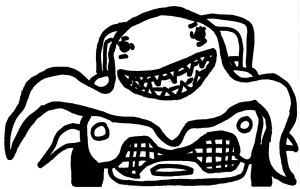
Wanted: Creature Seeking Male Companion – Me: Loves dogs & horses, comforts friends when sad, never says “no” to a spontaneous adventure, always says “yes” to night swimming in moonlight, has tentacles & drinks gasoline. You: A late-20s high school student with a shitty attitude, crippling daddy issues, and a receding hairline. Only selfish, low-energy badboy bores need apply. Serious offers only, please.

God, I love January so much. In what’s often referred to as the cinematic “dumping season,” it’s these first few weeks of the year when studios roll out their wounded animals, a parade of misfit misfires they have no idea how to market. It’s also in these first few weeks when high profile prestige films from the last year’s awards season slowly roll out from their New York & Los Angeles hidey-holes to finally reach The South, which is how I wound up watching both Silence & Monster Trucks at the theater on the same day. It was a glorious day. Not only was I treated to one of the most haunting technical achievements of Marin Scorsese’s career, I also got to see one of Hollywood’s most visually bizarre blunders since the likes of Howard the Duck, Jack Frost, Garbage Pail Kids, and Mac & Me. Monster Trucks is the rare camp cinema gem that’s both fascinating in the deep ugliness of its creature design and genuinely amusing in its whole-hearted dedication to children’s film inanity. It feels like a relic of the 1990s, its existence as an overbudget $125 million production being entirely baffling in a 2017 context (recalling last year’s similarly out of place, but more reasonably priced talking cat comedy Nine Lives). It isn’t often that camp cinema this wonderfully idiotic springs up naturally without winking at the camera; Monster Trucks is a gift to be cherished, a precious early January diamond for those digging for treasure in the trash. There’s no scenario where this film would catch on enough to earn back its ludicrous budget, but we’re not the ones losing money on it, so I say kick back and enjoy the show.

The lore behind Monster Trucks‘s creation & eventual financial blunder is just as fascinating as the movie itself. In 2013, then-president of Paramount Pictures, the since-fired Adam Goodman, conceived the pun-centric elevator pitch for this children’s film (“What if monster trucks were literal monster-operated trucks?”) while watching his toddler play with toy vehicles by smashing them together. The story goes that, after two years of development, a 2015 test screening of the film sent children screaming in fear due to the creature design of its main monster, known simply as Creech. I would kill to see that original “director’s cut” with the initial Creech design. Unfortunately, it’s lost to history, as the studio completely overhauled the monster’s CG-animated form and recut the film to soften the terror of its visage. That’s largely how we arrived at our obnoxious $125 million price tag, but that doesn’t explain exactly why Monster Trucks is such an entertaining mess of a final product. I’m sure somewhere among the film’s legitimately talented actors (Rob Lowe, Thomas Lennon, Danny Glover, Amy Ryan) there’s someone who’s super embarrassed to be involved with this dud of an intended franchise-starter/merchandise-generator. Surely, all of Paramount would love to have the whole fiasco wiped from the record completely. I think the embarrassment is entirely unwarranted, though. Monster Trucks might be an epic financial disaster on the production end, but as an audience member I find its delirious stupidity & grotesque creature design an endless delight. I just can’t honestly say it was worth every penny.

In true 90s relic fashion, Monster Trucks begins with evil oil drilling business men disrupting the order of things with their horrific money-grubbing ways. While fracking for more! more! more! oil in nowhere North Dakota, the Evil Corporation (helmed by a diabolical Rob Lowe) accidentally unearths an ancient population of subterranean, tentacled sea monsters who drink oil for sustenance in their own underground Ferngully utopia. Two of the creatures are detained, but one escapes by hiding in the frame of an out-of-commission truck, eventually winding up in the safe haven of a junkyard, just like in Brad Bird’s The Iron Giant. Without the structural support of a metal truck frame, this poor beast, known simply as Creech, is a useless slob, a pile of soft, melty flesh. Truck frames work as a sort of wheelchair for the unadapted sea creature and it at first operates them like a Flintstones car before getting the hang of properly working the gears. Also like in The Iron Giant, this monster is adopted as a pet by a curious, emotionally stunted little boy struggling with the absence of a father figure. In Monster Trucks, however, the little boy in question is a high school student played by a hilariously miscast Lucas Till, who is well into his 20s and looks it. In an interesting reversal of the lonely outcast trope, everyone who knows our protagonist desperately wants to hang out with him, but he’s too much of a selfish, self-absorbed jerk to give them the time of day. It’s not that he’s too cool for them either, unless you think a near-30 high school student who lives at home, rides the bus, plays racecar when no one’s looking, and whose mom is boinking the sheriff sounds cool. Creech doesn’t teach this bozo a life lesson or improve his shitty attitude in any way. When they have to part ways at the film’s teary-eyed conclusion, all he can muster is, “I’m going to miss you, Creech. You were a good truck.” Selfish prick. He’s almost awful enough to make me root for the oil company’s hired killer goon to succeed in snapping his overgrown-kid neck, but the loss would make Creech too unbearably sad and that’s the last thing I’d want.

Luckily, Monster Trucks isn’t about ugly high school students stuck in an eternal rut learning valuable life lessons or about how greedy oil companies were the true monster (truck) all along. It’s about two much simpler, more universally lovable concepts: monsters & trucks. In the film’s purest, most deliriously idiotic moments Creech drives his truck-shaped mech suit up walls, over lesser vehicles, down mountainsides, and (in my personal favorite bit) through open fields in unison with galloping horses to a country pop soundtrack. This is truck porn about goin’ muddin’ lazily disguised as a kid-friendly creature feature. None of that gear head idiocy would mean a thing without Creech, though, who is paradoxically the cutest & most grotesque CG creation since last year’s realization of Krang in TMNT: Out of the Shadows. Creech is initially played to be scary and is nearly crushed in a hydraulic press before its not made-for-this-world adorability saves its tentacled ass. Your affection for Creech’s design (along with similarly ugly/cute creations in titles like Howard the Duck, Gooby, and Mac & Me) will largely determine how much fun you have with Monster Trucks. It’ll make or break the cuteness of scenes where Creech gargles oil or poses for selfies. It’ll dictate whether you empathize with the Black Fish levels of cruelty in early scenes where its separated from its scrotum-esque parents as well as their inevitable reunion, a endearing Kodak moment that recalls the shunting scene from Society. No matter how much you love trucks on their own (you sick freak), you really have to love Creech’s ugly-cute visage to appreciate Monster Trucks in all of its ill-considered glory.

Unfortunately, I’m not able to capture Creech’s very specific brand of aquatic monstrosity in words. It’s a horror you have to see to believe. Monster Trucks makes several efforts to construct a memorable plot around its visually striking (to put it kindly) truck-creature, but not much sticks. A genuinely creepy villain who legitimately attempts to murder “children”, a few possible goons’ lives lost in the two bigger action set pieces, a Disney Channel love interest (Don’t Breathe‘s Jane Levy, oddly enough) who calls out the selfish prick protagonist for assuming Creech’s gender as male by default, my beloved horse-galloping/truck-muddin’ scene: there are plenty of amusing details that help pad out the film’s unwieldy 105 minute runtime. None of this can surpass the basic joys of gazing at Creech, though. Every minute of Creech content is a blessing, a gift from the trash cinema gods. It may be a good few years before any Hollywood studio goofs up this badly again and lets something as interesting-looking & instantly entertaining as Creech see the light of day, so enjoy this misshapen beast while you can. And I guess the life lesson learned for the next Monster Trucks-type misfire to come down the line would be to try to pull off its low-key chams for $100 million less on the production end. Who knows? They might even accidentally make a profit.

monster-trucks monstertrucks_main screen-shot-2016-06-07-at-4-37-48-pm

-Brandon Ledet