Movie of the Month: The Psychic (1977)

Every month one of us makes the rest of the crew watch a movie they’ve never seen before & we discuss it afterwards. This month Boomer made BritneeBrandon, and Alli watch The Psychic (1977).

Boomer:  Sette note in nero (literally Seven Notes in Black), marketed as The Psychic in the United States (among other missteps in the American marketing, including essentially spoiling the film with the English tag line) is a Lucio Fulci film about a woman who has a psychic vision. Jennifer O’Neill plays Virginia Ducci, a woman who has recently married a rich Italian (Francesco, played by Gianni Garko). When he leaves to go on a business trip, she decides to visit one of his unoccupied properties, intending to renovate. On her way to this farmhouse, she experiences a psychic vision detailing a red room, a tipped-over bust, a point of view of a wall being constructed “A Cask of Amontillado” style, and various other blinking lights and and images. Recognizing one of the rooms in the farmhouse from her vision, she tears down a section of the wall and discovers that there is a dead body behind it. Her husband is, naturally, arrested, but Virginia seeks to clear her husband’s name with the help of her sister-in-law Gloria (Ida Galli) and her parapsychologist friend, Luca (Marc Porel).

Unlike a great deal of Fulci’s ouevre, The Psychic is not a particularly gory or bloody film. Compare this, for instance, to The Beyond, The House by the Cemetery, and the greater part of his body of work, which feature lots of gore in the Romero vein. The film’s bloodiest moment comes at the very beginning, and in fact seems like part of another Fulci film that has been grafted on to the beginning of this one, and serves only to establish that our main character has experienced a psychic vision before. The rest of the deaths that are depicted, while perhaps not bloodless, are fairly restrained in comparison to the rest of the director’s body of work. Instead, Fulci focuses on the anxiety and the terror of the drama that unfolds onscreen. There are a lot of beautiful shots, like the overhead crane shot of our protagonist and her husband riding horses, the blinking red light of a taxicab’s radio, and various shots of the Italian countryside. All of this contributes to a film that is a very different animal from most of Fulci’s work, but is nonetheless my favorite of his films.

Brandon, one of my favorite things about The Psychic it is its score. Unlike the heavily synthesized scores of Argento’s work or the tense scores of other giallo films, this film features a simple seven note leit motif (the titular seven notes in black, or, as in my preferred translation, seven notes in the dark) that is not only haunting, but integral to the narrative as well. How did you feel about this musical arrangement? Do you think that the film would work as well if the score was not so innately tied to the plot?

Brandon: The most immediately noticeable aspect of the music in The Psychic is that it often isn’t noticeable at all. The central seven note theme that intrudes whenever Virginia picks apart the crime scene from her visions is certainly memorable and helps to shape the film’s tone. Otherwise, like Boomer says, the score is not nearly as conspicuous as the aggressively proggy sounds we’re used to hearing in our giallo fare, especially in Argento’s work. Instead, there’s a softness to The Psychic‘s music that often allows it to fade into the background until the central motif, the titular seven notes, presents itself again. This softness reminds me of the swanky opening credits sequence for the last giallo picture we covered as a Movie of the Month selection, Mario Bava’s Blood & Black Lace. This isn’t necessarily because they sound at all similar, but because they’re more tonally at odds with a traditional horror aesthetic than, say, Goblin’s infamous (an oddly spoiler-filled) score for SuspiriaThe Psychic’s score is distinctly feminine to me in a way that matches the film’s overriding Agatha Christie soap opera tone. Blood & Black Lace deviates from giallo’s usual rock n’ roll psychedelia sounds to mirror the high class cocktail party soirees of its fashion world setting; the feminine energy of The Psychic‘s score is closely tied to Virginia’s inner life in a similar way as she mentally unravels the mystery of her visions. It presents a headspace that gets distinctly more haunting in its central motif whenever her mind returns to the details of the room where she discovers the body. It’s difficult to imagine bursts of synthy prog disrupting that insular tone in any way that wouldn’t be annoying, despite that being the traditional mode of the genre.

Speaking of giallo as a genre, it’s something we usually discuss in terms of stylized horror filmmaking, despite it earning its name from pulpy mystery novels. More often than not, the extreme violence & flashy style-over-substance filmmaking craft of giallo pictures outshine any narrative concerns with their central murder mysteries. I didn’t find that to be the case with The Psychic. Instead of flooding the screen with constant murders & psychedelic montages, The Psychic spills all of its (red acrylic) blood & incomprehensible imagery upfront in the form of Virginia’s visions. It then spends the rest of the runtime piecing them out one by one: a magazine, a lamp, a lit cigarette, a mirror, etc. This makes for a much more interesting mystery than a typical whodunnit for me, because it doesn’t only ask the identity of the killer. It also asks who is the victim, whether the crime has even happened yet, and whether it will happen at all. In a broad sense, The Psychic follows a very common horror trope of a woman sensing evil in the world and being told she’s crazy or irrational by the men around her. The structure Fulci uses to tell that story is anything but conventional, however, and I very much appreciated his patience in parsing out the details of how all the individual puzzle pieces fit snuggly together and in what order they did or will arrive.

Britnee, did you also appreciate that the psychedelic flashes of imagery slowed down after Virginia’s initial visions or would you rather that the whole movie had stuck to that exciting style-over-substance energy? Did the film’s unconventional structure & psychic visions conceit make you care about the answers to its central mystery more than you typically would with other giallo films?

Britnee: I haven’t seen many psychic movies, and I’m not even sure that there are many out there, but of those I’ve have watched (mainly The Gift), there’s usually a buttload of psychic visions from beginning to end. By keeping the psychic visions at a minimum, The Psychic really allows viewers to focus on every little detail in Virginia’s few visions. As Brandon stated earlier, the majority of the film is spent examining all these little details from Virginia’s visions and showing their connection to the murder that has yet to happen. I have a pretty short attention span, so being able to see the same visions over and over again without any change helped me really enjoy this movie, because I could keep up with piecing all the clues together. I was able to play detective, even though I completely sucked at it. I thought that her husband was a sex trafficker that would kill young women and hide them in the walls of his huge abandoned mansion. Little did I know the mystery was centered around a stolen painting. So yes, I definitely cared about piecing the puzzle together more than most other giallo films I’ve seen. Giallo films mostly deal with straight up murders, so it’s obvious that the killer will eventually surface, but with The Psychic, not only was I trying to figure out who the killer was, but I was also trying to figure out where the murder took place, if it really took place, and most importantly, what all that sludgy goo in the darkness was (it ended up being cement and bricks).

There’s no doubt that this film is a giallo, but there’s not a whole lot of bloody, slashed-up bodies like in most giallo films. Interestingly enough, the film starts out with a very violent and disturbing scene. Virginia is a schoolgirl and she has a vision of her mother committing suicide by jumping off a cliff; and when I say violent, I mean violent. Usually when someone jumps off a cliff in a movie, it’s understood that that person will die. Sometimes there’s even a shot of the body all smashed up at the bottom. The jumping-off-a-cliff scene in The Psychic was definitely one of a kind. The camera follows her mother’s body as her face chips away against the cliff’s rough, rocky edges. There’s even a fun little crunchy sound that’s made after each hit. For such an intense opening, I thought this was going to be one sick and bloody flick. To my surprise, there would only be a few other bloody scenes (the murder in the vision and the fall in the church).

While I truly enjoyed this film and can’t wait to watch it again, the ending really got under my skin. I usually like movie endings that leave unanswered questions, but I really wanted to know if Virginia would make it out of the wall alive. One would assume that her body would be found since the music of her watch could be heard, but as to whether or not she’ll be found alive or dead is really unclear.

Alli, were you disappointed with the way the movie ended? Would you have liked to see Virginia survive? Or would you rather see Virginia fulfill the prophecy in her visions?

Alli: I really liked the gradual, grim realization that she was the intended victim and watching her slow acceptance of the truth. I wouldn’t say I was disappointed when the movie ended, but I was certainly taken aback. I expected them to dig her out or for Francesco to fight his way through Luca and the ineffectual cops. I guess I was just expecting the typical giallo bloodbath to occur right there at the end, while the rest of the police force and detectives are racing to get out to the palazzo. Ending it right there was a refreshing level of restraint. Boomer already mentioned “A Cask of Amontillado”, but the end had a very “The Tell-Tale Heart” feel with the soft chimes ringing out Francesco’s guilt through the wall. Personally, I’m pro her being found too late. It adds a sense of symmetry, ending the film where it began.

That being said, for once in a giallo movie, except for Phenomena (big soft spot for Jennifer Connelly) or Suspiria, I actually really liked the main character. I feel like she wasn’t the typical blank slate female or wannabe detective male. Yes, she still turns into a bit of a damsel at the end, but she doesn’t let the other people’s skepticism invalidate her hunches. She knocks through a wall. She’s not just out to prove her husband’s innocence; she’s searching for answers. I feel like The Psychic gave its female characters more agency than other movies in this genre do in general. For instance, Bruna, Luca’s secretary, is a research beast, not Luca’s love interest. She is never put through the typical trials giallo movies throw at independent women, nor is she stalked down and killed. She gets respect and credit for her clever work and skills, and has a big part in the investigation.

Boomer, what did you think of the female characters in this movie? Would you agree that they don’t get the usual vaguely/overtly misogynistic treatment giallo movies inflict on them?

Boomer: I’m so glad you mentioned Bruna, who is a delight in this movie. She reminded me a great deal of Gianna, Daria Nicolodi’s character in Profundo Rosso. They have the same bubbly effusiveness, same insightful and inquisitive personality, and even the same haircut and fashion sense. That film is notable in Argento’s canon in that it, too, is more progressive than the usual giallo crop: one scene shows the male protagonist declaring to Gianna that men are more intelligent than women, only for her to correctly point out that she had put together the same conclusion that he had from available clues, and faster; he retorts that men are at least physically stronger. Later in the film, he is knocked unconscious and left in a burning house, only to be rescued and dragged to safety by the diminutive Gianna, showing that she possesses more strength than he credited her as well. Bruna is usually two steps ahead of Luca, who’s surprisingly disinterested in Virginia’s visions until she’s in demonstrable danger, and she has intuitive thought processes (like when she independently researched the history of radio taxis in the area) without which the plot would grind to a halt. Unlike Gianna, Bruna isn’t belittled by her male counterpart.

This unusual-for-the-genre feminism (understated and mild though it may be) is definitely one of the things that most impressed me when I first saw this film. My love for Argento is, I am sure, common knowledge to regular readers of our site; when I think of giallo, Argento’s is the work that first comes to mind. It’s interesting that you and I both went for references to Edgar Allan Poe and to Argento with our analysis of this film, as Poe was widely known influence on Argento and his work, as evidenced by his segment of Two Evil Eyes (you even mentioned Phenomena, my personal favorite!). There’s a connection there that shouldn’t be overlooked, especially with regards to certain misogynistic myths and devices that we see over over again both in Poe’s work and Argento’s work, and the larger society-enshrining machine that we call narrative, like the Madonna/Whore Complex, the sexualization of violence against women, and the infantilization of female intelligence.

Virginia’s role is unusual in that we rarely see women getting to play the everyman role in this genre, either. Genre fiction is overflowing with Neos and Harry Potters and Luke Skywalker: neutral masks unto whom the (presumed male by default) audience can project themselves with no difficulty. We usually only get to see this type of characterization for women in romance novels and rom-coms, usually to the point of insult. In horror, female protagonists are usually unique in characterization, like your Ellen Ripleys, Sidney Prescotts, and Nancy Thompsons. When the two ideals intersect, you usually end up with a Bella Swann. The Psychic is different: despite her fabulous sense of personal dress, Virginia is a bit of a blank slate. She’s recently married to a man she doesn’t know very well, meaning that all of her relationships (save her friendship with Luca) are new and thus still forming; she has no family to speak of. She’s adventurous and engaging, but she’s also generic enough that the viewer slips into the mental space of her character with great ease. It’s definitely not a standard giallo.

Also redefining what it means to be a woman in giallo is Ida Galli’s Gloria, Virginia’s sister in law. Gloria is idly rich, but her haughtiness is more detached than indifferent, and she drops her cold facade when the severity of the danger to her brother’s future becomes clear. She also genuinely cares about Virginia, and is taken aback when Virginia snaps at her and calls her a brat; I almost get the feeling that she was trying to treat this newest member of the family like one of her girlfriends, and Virginia’s interpretation was informed by some culture clash. I also appreciate the fact that Gloria’s promiscuouness is present but never commented upon; she has a lot of “friends” who give her expensive gifts, but she’s never demonized for or endangered by her lifestyle. In a way, she serves to be a mirror of Virginia. So often, when we seek a definition of what makes a Strong Female Character, we find a great deal of discussion about characterization and motivation, with the end goal being to make women on the page as well-defined as their male counterparts; rarely do we see the also important need for ladies as Tabula Rasa, embodied in Virginia here. Gloria is her opposite, a woman with clearly defined attributes and character traits, to balance Virginia onscreen.

In the same vein of unexpected progressivism, something occurred to me on this watch that hadn’t before. I was always struck by how casually Gloria mentions Luca to Francesco. Francesco himself harbors no jealousy for Luca, as if having his wife spend time with her (devilishly handsome) friend is no cause for alarm. Although he should have no compulsions about Virginia’s platonic relationship with Luca, it would be more aligned with his character as betrayed, unless he had reason to assume that Luca is completely harmless. What I’m getting at is that Luca can be read as homosexual, despite their being no confirmation of that textually. Do you think I’m grasping at straws here, Brandon, or did you get that feeling as well? Do you have any of your own extratextual character interpretations you’d like to share?

Brandon: To be honest, that reading of Luca’s sexuality never occurred to me on the first watch, but that might just have been another result of the film’s notably progressive, empathetic character work. I am so used to men who are coded as gay in giallo films (among other vintage exploitation genres) to be such over the top, cartoonish caricatures that their sexual orientation is unignorable, often to the point of being a homophobic joke. Speaking of Argento, I remember Four Flies on Grey Velvet being especially egregious on thaat front. I had interpreted Francesco’s conspicuous disinterest in Luca as an extension of his general self-absorption. This might count as an extratextual character interpretation on my part, but to me Francesco doesn’t seem at all that interested in anything his wife is up to, her friends included. That only changes when her snooping leads to him being suspected for murder. I totally buy that interpretation of Luca as a legitimate possibility, though. It would at the very least fit in with the film’s overall egalitarian, empathetic approach to characters like Gloria & Virginia. It’ll certainly be something I keep in mind in future revisits of The Psychic, as it would be a welcome variation on typical giallo homophobia, but I honestly didn’t pay that much attention to Luca as a character on the first run through. Women like the clairvoyant Virginia & the Cruella de Ville-ish Gloria were much stronger standouts than any of the men in the film, including the one who ended up being the killer.

Besides its refreshing shift away from giallo’s typically macho genre trappings, The Psychic is also notable for the way it plays with time. Virginia’s visions have an A Christmas Carol way of touching on all three sectors of time: past, present, and future. Virginia’s vision of her mother’s suicide as a child was a clairvoyant glimpse of the present (besides being an absurdly grotesque opening to a fairly muted murder mystery). Her visions of the objects in the Murder Room end up being a self-fulfilling prophecy of a future crime that hasn’t even unfolded. At the same time, the curiosity her vision sparks uncovers a victim from a past murder that had somehow gone by uninvestigated. This temporal experimentation follows a much less conventional narrative structure than what I’m used to seeing in most giallo films, which typically function as proto-slasher, body count-focused exploitation pieces, as beautiful as they are to the eye.

Britnee, how did the relationship between Time & Virginia’s visions affect your own experience with The Psychic? What do the inclusion of the opening present-tense suicide & the discovery of the past murder victim add to Virginia’s visions of her future fate?

Britnee: The way Virginia’s visions relate to the past, present, and future caused me to go a little cross-eyed from having my mind blown. Her visions initially leading her to the skeleton in the mansion walls tricked me into truly believing that those violent visions were clues that would lead to solving that poor woman’s murder. Once realizing that the visions were actually intended for Virginia’s own future demise, I began to think of what was the point of having a young woman’s skeleton stuck in wall and how it contributed to completing the puzzle. My light bulb moment in the midst of all this mystery went off at this point; Virginia was intended to find the body because it helped her come to the realization that her visions were of the future and not the past. Her fixation on determining the reason for this young woman’s brutal death led her to one of the most riveting moments in the movie: the discovery of the true date on the magazine that contained a cover photo of the woman in the wall. Poor Virginia was teased by her own visions, thinking she was solving a crime of the past, only to find herself being buried alive in the wall in the end. Having that initial vision of seeing her mother committing suicide at the film’s beginning really leads the audience to assume what Virginia sees is happening in the moment, but I guess that’s not how psychic visions work. Although I have an interest in supernatural phenomena, I don’t know much about psychic visions. How do those with psychic abilities know if they are seeing the past, present, or future? Perhaps if Virginia sought out training for her ability, she would have been able to be more in tune with her gift.

When it comes to figuring out how her vision of her mother’s suicide contributes to her visions of her own death, I’m not exactly sure how that vision contributes to her fate, but it does contribute to the fact that all her visions deal with death. There’s never any indication that she’s had a vision that led to something more positive, like a marriage, birth, etc. Maybe her gift only allowed her to see visions of deaths for those in her bloodline? I think knowing a little more about her mother’s background would have added more to the story. We’re sort of just hit with this intense death/psychic vision with little explanation right at the beginning. Just a little dialogue from the mother as she drove to the cliff would have been great.

Other than the film’s unforgettable plot, I really enjoyed all its artistic aspects, especially the psychedelic close ups of Virginia’s eyes before she has a vision. It’s almost cartoonish, but in the most tasteful way possible. Alli, what are some visuals in the film that you particularly enjoyed?

Alli: I, too, really liked the scenes where she’s about to have a vision. In fact, one of my favorite scenes is in the very beginning when she’s going through the tunnel. There’s all these quick cuts and flashes of light. It builds so much tension. After the gruesome opening suicide, it lured me into thinking her husbands plane was about to crash and that she was going to see visions of that. It wasn’t a let down for there to be an unsolved murder, though. The quick moments when the murder cryptically unfolds are really effective: the blinking red light, the mortar oozing out of the bricks, the dead woman, and the overturned bust.’

In the tunnel, she’s just plunged into darkness with a little spot of glaring light on the other side. There’s also the scene where they’re unveiling the palazzo where everything is dark until the blinding light as the shades are being lifted. The use of that contrast is really great, and maybe a not too subtle metaphor about the world being illuminated and the truth coming to light. Both sort of feel like they’re gradually revealing a new world to her, the tunnel being one where she’s seen a dark secret and the palazzo where she’s introduced to the crime scene.

One of my favorite things about any giallo is the iconic use of red. It’s a standard across the genre, but I love it every time; be it used as a warning symbol, to make it seem like the set is tinted with blood, or just because. I’m just into it. This movie is definitely no exception, and uses it in conjunction with the clues in both rooms where murders happen. The first glimpse of this all red room was gorgeous. The wall paper and chairs and drapery are just spooky and eerie enough for a dead body to fit in there, but there’s also a sense of class. I disagree with Virginia when she says, “Only an old person would live in a room like that.” There’s also the red lamp in the palazzo ex-bedroom. It casts a bit of half light on her face, and I thought that was a great shot.

Lagniappe

Boomer: For what it’s worth, I’ve always read the final scene as ambiguous, but leaned on the side of Virginia being rescued from the wall. Admittedly, I never considered the possibility that she might be discovered too late . . .

Brandon: It makes me somewhat of an asshole, but I have to admit I got a little bit of a laugh out of this film’s opening suicide. It can’t be understated how bizarre of an introduction it is to see that mannequin-esque body double Superman its way down the side of the cliff and smash its bloody face against every rock on the way down. I don’t think I was necessarily laughing at The Psychic for beginning that way, but it was such a bold, unexpected opener that my first reaction was to guffaw at its audacity. Whether or not any humor was intended in that moment, it was certainly an effective way to grab my attention as an audience. I had no idea what was coming next, but that mannequin’s bloodied face promised it would be something memorable.

If I may also briefly weigh in on Virginia’s ultimate fate at the opposite end of the film, I believed her to clearly be dead by the credits, an assumption the tagline on the film’s absurdly spoilery poster seems to support. I do love that its ambiguity has left enough room for that conclusion to be debatable, though.

Alli: I love this movie’s attention to detail. There’s just such a consistency and nothing feels ignored. Like any good murder movie or show, we the audience are expected to pick up on the clues to put things together: the red room, the broken mirror, the changed furniture, the same kind of bricks that were used in the walling, the magazine, the cigarettes, and last but not least the alarm on the watch. Those twelve revealing notes.

Britnee: Almost each time Virginia’s name was stated throughout The Psychic, that horrible yet extremely catchy radio hit, “Meet Virginia” by Train would play in my head. I think it would be so cool if one of those fake music videos on YouTube was made for that song using scenes from this film. Imagine those bloody visions flashing on the screen when the chorus hits. I completely suck at doing anything that tech-heavy, so I’m just putting the request out there hoping that someone has enough free time and talent to make this a reality.

Upcoming Movies of the Month
September: Alli presents Schizopolis (1996)
October: Brandon presents Unfriended (2015)
November: Britnee presents Hearts of Fire (1987)

-The Swampflix Crew
The Last Horror Film (1982)

One of the most exciting things about schlock cinema as an art form is the experimentation that comes with filmmakers working under financial pressure. I’m especially fascinated by old horror cheapies that attempt to incorporate footage or sets from other films produced by the same studio in order to pad out runtimes or increase production value. Sometimes, this can lead to interesting results, like with Peter Bogdanovich’s footage cannibalizing debut feature Targets. It can also lead to complete disaster, as with the set-repurposing Roger Corman production The Raven, which is, objectively speaking, an incomprehensible mess (and, oddly enough, one of the films pilfered for Targets). The Last Horror Film is a proud contribution to this frugal tradition of recycled cinema, an early 80s horror that goes above & beyond in its milking production value out of better-funded films that came before it. It even goes a step beyond the Roger Corman recycling model by including imagery from better-funded horror films’ advertising to boost its own allure. It may not be a formally slick or thematically ambitious horror pic, but the way it gets by using financial shortcuts is honestly nothing short of inspiring.

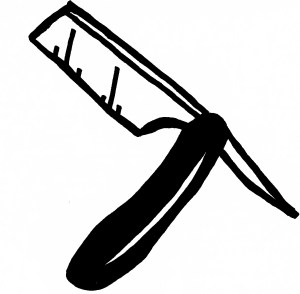
Narratively speaking, The Last Horror Film doesn’t amount to much more than Taxi Driver Goes Giallo. A Travis Bickle-type obsesses over an actress known to the world as the undisputed Queen of Horror Films. Aspiring to leave his service industry life behind & claim his true destiny as a celebrated filmmaker, the sweaty creep follows his beloved scream queen across the ocean to the Cannes Film Festival in France. He films her there in secret, both at public press junkets and in private, voyeuristic settings. Meanwhile, friends & colleagues of the actress are violently killed under extreme, giallo-type lights, with the killer’s face entirely obscured, but heavily indicated to be the weirdo taxi driver. What’s partly so great about The Last Horror Film is that it makes absolutely no attempt to hide its giallo/Scorsese genre mashup. The film namechecks both Taxi Driver & Jodie Foster in the script to clue the audience in on its sense of self-awareness. The giallo-inspired kills include multiple close-up shots of straight razors to drive that point home as well. The film has very little use for subtlety & nuance, but instead focuses on squeezing as much entertainment value as possible out of its extremely limited resources.

Besides the aforementioned inclusion of kills from other horror pictures screening in-film at the Cannes Festival, The Last Horror Film also boosts its production value significantly by playing tourist. Intercutting shots of movie advertisements that line the streets of the festival (with particular attention given to an ad for the masterful Possession) and nude women sunbathing on nearby beaches, the film often plays like a much, much sleazier version of Roger Ebert’s video essays of Cannes from the 90s (clips of which are featured in the documentary Life Itself). The film’s plot & murders are almost treated as unneeded interruptions of its cheap pop music montages, where the main attraction is not murder, but people-watching. It’s in those stretches where The Last Horror Film goes from surprisingly entertaining to nearly invaluable, especially when it takes notice of the film industry weirdos mixing it up with the locals at the discos surrounding the fest. The Last Horror Film set out to make a watchable horror picture armed only with an interesting location and clips from other, better funded works and it did a kind of amazing job of it, fully committing to its blatant acts of tourism and grimy modes of meta film commentary.

There’s an A Night to Dismember quality to this film, especially in its feeling of hastily edited collage, but The Last Horror Film deviates from that Doris WIshman classic in its unexpected success in building a cohesive narrative out of its loosely gathered scraps. Much like the Wishman picture, this giallo pastiche attempts to deliver the goods in terms of cheap gore-for-gore’s-sake thrills: electrocutions, decapitations, melted faces, etc. These blatant, bloody bread & circuses moments are held together by legitimately artful, almost Fellini-esque dream sequences in which our crazed cabbie desperately clutches his make-believe Oscar while his scream queen deity (Hammer horror vet Carolyn Munro) coos at him in encouragement. While it never really reaches the heights of meta-commentary in similarly-minded works like Demons, the film also makes attempts to put its film industry setting to thematic use. There’s especially noteworthy scenes in which the famed horror actress is being hunted down in public, but everyone at Cannes, including the police, brush off her terror as a tasteless publicity stunt.

While maybe not masterful filmmaking in an arthouse sense, The Last Horror Film is a triumph in schlocky alchemy. Its blatant tourism of 1981 Cannes somehow makes a film that would otherwise be a (literal) cut & paste knockoff without it into an invaluable historical document. It’s the kind of scrappy, make-do filmmaking that deserves to be celebrated for its minor successes, even if they’re only employed for cheap horror film shocks & chills. In some ways, it’s miraculous that the film is even watchable at all.

-Brandon Ledet

Halloween Report 2016: Best of the Swampflix Horror Tag

EPSON MFP image

Halloween is rapidly approaching, which means a lot of cinephiles & horror nerds out there are currently trying to cram in as many scary movies as they can before the best day of the year (except for Mardi Gras, of course) passes us by. We here at Swampflix watch a lot of horror films year round, so instead of overloading you with the full list of all the spooky movies we’ve covered since last year’s Halloween report, here’s a selection of the best of the best. We’ve tried to break it down into a few separate categories to help you find what cinematic scares you’re looking for. Hope this helps anyone looking to add some titles to their annual horror binge! Happy hauntings!

Art House Horror

EPSON MFP image

If you’re looking for an escape from the endless parade of trashy slasher movies & want a more formally refined style of horror film, this list might be a good place to start.

The Neon Demon (2016): “The Neon Demon is consistently uncomfortable, but also intensely beautiful & surprisingly humorous. Days later my eyeballs are still bleeding from its stark cinematography & my brain is still tearing itself in half trying to find somewhere to land on its thematic minefield of female exploitation, competition, narcissism, and mystic power. This film is going to make a lot of people very angry and I’m certain that’s exactly the reaction Refn is searching for, the cruel bastard. At the same time it’s my favorite thing I’ve seen all year. I’m caught transfixed by its wicked spell & its bottomless wealth of surface pleasures, even as I wrestle with their implications. This is where the stylized form of high art meets the juvenile id of low trash and that exact intersection is why I go to the movies in the first place. The Neon Demon may not be great social commentary, but it’s certainly great cinema.”

The Witch (2016): “A lot of times when you tell people that you really liked a horror movie the first question they ask is ‘Was it scary?’ Now, that’s not a requirement for me to enjoy myself at a horror showing. Horror can be funny or gruesome or just eccentric or interesting enough to make questions about whether or not it was scary to even be relevant. With The Witch, however, I can actually answer that question bluntly & with enthusiasm. The Witch is a scary movie. It’s a haunting, beautifully shot, impossibly well-researched witchcraft horror with an authenticity that’s unmatched in its genre going at least as far back as 1922’s Häxan, so it has many virtues outside the simple question of whether or not it was a scary movie, but yes, The Witch succeeds there as well. At times it can be downright terrifying.”

High-Rise (2016): “High-Rise is, at heart, a mass hysteria horror, a surreal exploration of a weird, unexplained menace lurking in our modern political & economic anxieties. Instead of simply leaving the titular building when things go horrifically sour, its inhabitants instead party harder and their drunken revelry devolves into a grotesque, months-long rager of deadly hedonism & de Sade levels of sexual depravity. The people of the high-rise are portrayed as just another amenity, one that can malfunction & fall apart just as easily & thoroughly as a blown circuit or a busted water pipe. It only takes weeks for the societal barriers that keep them in line to fully degenerate so that the entire high-rise society is partying violently in unison in their own filth & subhman cruelty. If this is a version of America’s future in consumerism & modern convenience, it’s a harshly damning one, a confounding nightmare I won’t soon forget.”

Tale of Tales (2016): “It’s beautiful, morbidly funny, brutally cold, everything you could ask for from a not-all-fairy-tales-are-for-children corrective. It’s sometimes necessary to remind yourself of the immense wonder & dreamlike stupor a great movie can immerse you in and Tale of Tales does so only to stab you in the back with a harsh life lesson (or three) once you let your guard down. This is ambitious filmmaking at its most concise & successful, never wavering from its sense of purpose or attention to craft. I’d be extremely lucky to catch a better-looking, more emotionally effective work of cinematic fantasy before 2016 comes to a close. Or ever, really.”

The Boy (2015): “Much like the empty, existential trudge through life at its desolate motel setting, The Boy brings its pace down to a slow crawl for most of its runtime. Most of the film plays like a lowkey indie drama that turns the idea of morbid fascination into a mood-defining aesthetic. It isn’t until the last half hour so that the film becomes recognizable as an 80s slasher version of Norman Bates: The Early Years. It takes a significant effort to get to the film’s horror genre payoffs, but allowing the film to lull you into a creepily hypnotic state makes that last minute tonal shift all the more satisfying.”

The Body Snatcher (1945): “The Body Snatcher is surely one of the best of Karloff & Lugosi’s collaborations and a fitting note for the pair to end their work together on. The film’s promotional material promises The Body Snatcher to be, ‘The screen’s last word in shock sensation!’ which might not be true for cinema at large, but is at least literally true in the context of Lugosi & Karloff’s appearances together on film. It was the final word.”

Goodnight Mommy (2015): “Goodnight Mommy is a smart, taut movie that is beautifully composed and cinematically crisp, full of beautiful exterior landscape shots that highlight the isolation of the two boys and contribute to the logic of their slowly building paranoia in a home that no longer feels safe and a caregiver they cannot recognize.”

Silent Horror

EPSON MFP image

If the above list of art-house horror titles is a little too modern for your tastes & you’re curious about the genre’s origins in the 20s & 30s, here are some particularly great examples of horror cinema’s early beginnings.

A Page of Madness (1926): “A whirlwind of rapid edits, bizarre imagery, and an oppressive absence of linear storytelling make A Page of Madness feel like a contemporary with, say, Eraserhead or Tetsuo: The Iron Man instead of a distant relic of horror cinema. It’s an early masterwork of disjointed, abstract filmmaking and it’s one that was nearly lost forever, considered unobtainable for nearly four decades before a salvageable (and significantly shortened) print was re-discovered.“

The Phantom Carriage (1921): “The Phantom Carriage is well worth a watch even outside its massive influence on the likes of Kubrick & Bergman. The film was noteworthy in its time for innovations in its ghostly camera trickery and its flashback-within-a-flashback narrative structure. Those aspects still feel strikingly anachronistic & forward-thinking today, especially the gnarly phantom imagery, but you don’t have to be a film historian to appreciate what’s essentially a timeless story of brutally cold selfishness & heartbreaking remorse.”

The Bat (1926): “The Bat is a must-see work of seminal art. It’s not some antiquated bore with an antagonist that was plucked from lowly ranks for a higher purpose. The film directly influenced the creation of Batman, but it also achieves its own, exquisite Art Deco horror aesthetic that recalls the immense wonders of the Hollywood classic The Black Cat, except with more of a creature feature lean.”

Destiny (1921): “Released in the wake of the seminal Swedish masterpiece The Phantom Carriage, Destiny (sometimes billed as Behind the Wall or Weary Death) offers yet another striking image of Death as he conducts his business of harvesting expired souls (this time depicted as a passenger in a carriage instead of the driver, oddly enough). The early German expressionism landmark expanded the limitations of film as a medium, even cited by legendary directors like Alfred Hitchcock & Luis Buñuel as proof that cinema had potential & merit as an artform. The film’s ambitious special effects, unconventional storytelling, and morbid mix of death & romance all amount to a one of a kind glimpse into modern art cinema’s humble silent era beginnings.”

The Lost World (1925): “The same way the blend of CGI & animatronics floored audiences with “realistic” dinos in Jurassic Park‘s 1994 release, the stop motion dinosaurs of 1925’s The Lost World were an unfathomable achievement at its time. When the source material’s author Sir Arthur Conan Doyle screened test footage for the press (at a magician’s conference of all places) The New York Times even excitedly reported ‘(Conan Doyle’s) monsters of the ancient world, or of the new world which he has discovered in the ether, were extraordinarily life like. If fakes, they were masterpieces.’ Imagine writing that ‘if fakes’ qualifier in earnest & how quickly that writer’s head would have exploded if they got a glimpse of Spielberg’s work 70 years later.”

The Golem: How He Came into the World (1920): “An ancient German Expressionism creature feature about Jewish mysticism, The Golem: How He Came Into the World bounces back & forth from being an incredible work that nearly rivals Méliès’s A Trip to the Moon in sheer beauty & ambition and the most standard issue silent horror you can conjure in your mind.”

Giallo

Dario Argento is one of the all-time horror movie greats, right up there with Mario Bava as one of the masters of the highly-influential giallo genre. His work is a perfect blend of art house cinema & trashy genre fare, the exact formula Swampflix treasures most. Boomer was in the midst of tirelessly covering all of Argento’s films at the time we posted our Halloween Report last year. He’s since finished the project and covered a few non-Argento giallo pictures in its wake. Here’s the best of what’s been posted since.

The Stendhal Syndrome (1996): “What separates art and sculpture from prose, film, drama, and music is that those media incorporate time as an element of the story, progressing in a more or less linear fashion from beginning to end. Paintings and sculptures do not have this luxury, and thus must evoke an emotional rapport and create a rhetorical space through a still image, implying motion with static visuals. The Stendhal Syndrome, in many ways, acts as a series of set pieces that are presented out of order, and must be ordered after viewing. You cannot read The Night Watch from left to right like a sentence; you first see the figures highlighted by chiaroscuro, and then focus on other faces, or the figures’ clothing. Syndrome is much the same, and the attempt to recreate this kind of experience on film is laudable in its audacity and its success. I simply wish that they appeared in a movie that was praiseworthy for the content of its story as well.”

The Church (La chiesa) (1989): “So much is left unexplained that La chiesa fails under minimal scrutiny. That having been said, this is still a very effective and scary film. The gore here is shocking because so much of the terror comes from slowly-building tension of watching possessed people act in eerie and creepy ways toward the unsuspecting innocents they have infiltrated. There are visuals here that I don’t think Argento would have been able to realize with his own skill sets, and there’s a writhing mass of dead bodies at the end that’s truly glorious in all its grotesque hideousness.”

Sleepless (2001): “Sleepless isn’t necessarily a return to form with regards to inventive cinematography, but it does feature several set pieces that effectively ramp up the tension while also being visually dynamic in a way that Argento hadn’t shown an aptitude for in the nineties–not even once. The first of such set pieces, the chase aboard the train, stands out as being particularly remarkable, and may be one of the best from the director’s entire career.”

Body Puzzle (1992): “Body Puzzle is a fun little giallo thriller, with delightful cinematography and a plot that works, for the most part. The tension builds slowly as it becomes apparent that there is no safe place for Tracy no matter where she goes, and the final reveal is foreshadowed in a manner that is utterly unexpected but fits all the clues that we have seen so far, minus a red herring that I am certain made most contemporary reviewers rather pissed, given the film’s overall low aggregate rating.”

The House with Laughing Windows (1976): “There’s a lot to unpack in The House with the Laughing Windows, and I like that the entire village is in on the murders, a la the original Wicker Man or the modern classic Hot Fuzz, although the reason for why the consent to be complicit in the murders requires inspection. As is the case with many gialli from this era, there is a larger cultural context that I am unfamiliar with, and that knowledge may lend itself to a clearer interpretation of the film’s themes.”

Confined Space Thrillers

disaster

One of the more unexpected trends of 2016 is how many high quality confined space thrillers have terrorized filmgoers throughout the year. Here’s some of the best examples of claustrophobic horrors we’ve seen this year.

10 Cloverfield Lane (2016): “10 Cloverfield Lane is less of a ‘sister film’ sequel to the (shrill, annoying, insufferable) 2008 found-footage sci-fi horror Cloverfield & more of a tense, horror-minded thriller about the monstrous spirit lurking within doomsday prepper culture. I’m not sure that it’s the first film to depict the selfish nastiness & misanthropy at the heart of ‘survival’ types in the context of the horror genre, but it’s the first I’ve seen and it’s damn effective.”

The Invitation (2016): “The isolation of the main character’s skepticism makes The Invitation feel just as much like a psychological horror as it does a reverse home invasion thriller (where the victim is invited as a guest to the threatening stranger’s home). With the production value just as cheap as the fictional party’s wine looks expensive, The Invitation has a way of feeling like everything’s happening inside of its protagonist’s head as he works through painful memories in a storied space, as if he’s navigating a nightmare or a session of hypnotherapy. Thankfully, the film goes to a much more interesting & terrifying place than an it-was-all-just-a-dream reveal, but the psychological torment of the film’s nobody-believes-me terror adds a layer of meaning & emotional impact that would be absent without that single-character specificity.”

Don’t Breathe (2016): “Even with all of its flaws, Don’t Breathe is a delightfully wicked and taut horror thriller with great influences from other films in the same genre and outside of it. Beyond the ‘blind person fends off home invaders’ similarities to Wait Until Dark and the superficial similarities to The Edukators, there’s a lot of The People Under the Stairs in Don’t Breathe’s DNA (minus that film’s exploration of the race-related nature of economic disadvantage, which is lacking here).”

Green Room (2016): “Green Room‘s authenticity doesn’t stop at its depictions of D.I.Y. punk culture. The violence is some of the most horrifically brutal, gruesome gore I’ve seen in a long while, not least of all because it’s treated with the real life severity that’s often missing in the cheap horror films that misuse it. Each disgusting kill hits with full force, never feeling like a frivolous indulgence, and the resulting tone is an oppressive cloud of unending dread.”

Emelie (2016): “It’s rare that a thriller can get away with being this tense while showing so little onscreen violence. Emelie knows exactly what buttons to push to sell the discomfort of its children in peril scenario, especially when the kids are forced into exposure to above-their-age-range experiences like witnessing a python’s feeding habits or passionate fornication. If it had somehow worked those same provocations into its desperate-for-distinction conclusion I would’ve been much more enthusiastic about its value as a complete product. I really like Emelie, but with a better third act I could’ve fallen madly in love with it.”

Creature Features

EPSON MFP image

Do you want to see some weird/gross/creepy/goofy monsters? Check out these bad boys.

Alligator (1980): “Campy creature features were a hot commodity around the time Alligator was released (Piranha, Humanoids from the Deep, C.H.U.D., etc.), and usually the film gets thrown into that group. Yes, there are many campy moments in Alligator, but it’s actually an excellent, well-rounded film. I would go as far as to say it’s close to being on the same level as Jaws.”

I Was a Teenage Werewolf (1957): “The main innovation I Was a Teenage Werewolf brings to the table is the very basic idea of a teenage monster. It’s difficult to imagine modern horror cinema without teenage monsters. Transforming into a heinous, bloodthirsty monstrosity is a perfect metaphor for the hormonal powder keg of puberty and has been put to effective use in countless horror pictures. Even the werewolf teenager picture has evolved into its own genre, including titles like Ginger Snaps, Cursed, and, duh, Teen Wolf. In 1957, however, this idea was entirely foreign & even somewhat controversial.”

Pulgasari (1985): “Even without its exceedingly surreal context as a document of unlawful imprisonment under Kim Jong-il’s thumb, Pulgasari would still be highly recommendable as a slice of over-the-top creature feature cinema. I’m far from an expert in the hallmarks of kaiju cinema, but the film felt wholly unique to me, an odd glimpse into the way the genre can lend itself to wide variety of metaphors the same way zombies, vampires, and X-Men have in American media over the years. The titular monster ranges from cute to terrifying, from friend to enemy over the course of the film, which is a lot more nuanced than what I’m used to from my kaiju.”

Yokai Monsters: Spook Warfare (1968): “Perhaps the strangest detail about the ghost monsters in Yokai Monsters: Spook Warfare is just how kid-friendly they look. I don’t use the comparison to the soon-to-follow work of Jim Henson and Sid & Marty Krofft lightly. Many of the creature designs are just aching for plushie doll or action figure merchandise, a sensation backed up by the film’s broad physical comedy & the fact that they befriend children in the film. What’s strange about this is that so much of the film would be a nightmare for certain young audiences. Ghosts take shape from magical, colored mists in spooky swamps. Buckets of giallo-crimson stage blood is spilled in the film’s many brawls. Adult language like ‘damn’, ‘bastard’, and ‘hell’ are liberally peppered throughout the script. This is all jarring at first, but when I think back to staging action figure battles on the living room carpet, that sort of violent crassness actually makes total sense. Children can often be goofy & violent in the same breath, so then it’s really no surprise that Spook Warfare was somewhat of a cultural hit upon its initial release. Even as an (admittedly goofy) adult, the mere sight of the film’s gang of monsters was enough to win me over as a fan, effectively bringing out my inner child enough to sidestep any concerns with plot or general purpose. Sometimes monsters brawling really can alone be enough to make a great film & Spook Warfare stands as a prime example of that maxim.”

Attack the Block (2011): “There are plenty of reasons for sci-fi & horror fans to give Attack the Block a solid chance. It’s a perfectly crafted little midnight monster movie, one with a charming cast of young’ns, a wicked sense of humor, and some top shelf creature feature mayhem. The film doesn’t need John Boyega’s teenage presence to be worthy of a retroactive recommendation & reappraisal, but that doesn’t hurt either.”

Clown (2016): “Without any intentional maneuvers in its fashion, music, or narrative, Clown effortlessly taps into a current trend of reflective 90s nostalgia by lovingly recreating the horror cheapies of that era. It does so by striking a very uncomfortable balance between horror comedy & gruesome misanthropy, forging a truly cruel sense of humor in a heartless, blood-soaked gore fest featuring a killer clown & his tiny tyke victims. You’d have to change very few details of Clown to convince me that it was actually a Full Moon Features release made twenty years ago. Besides small details like cell-phone usage and the inclusion of ‘That guy!’ character actor Peter Stormare, the only noticeable difference is that, unlike most Full Moon ‘classics’, it’s a genuinely great product.”

Daikaijû Gamera (1965): “Gamera is essentially a too-soon remake of Godzilla, but it’s a Godzilla remake that features a gigantic, fire-breathing turtle that can turn its shell into a flying saucer. I don’t think I need to explain any more than that to get the film’s basic appeal across. It’s a concept that pretty much sells itself.”

The Shallows (2016): “The film’s basic 1-shark-vs.-1-woman premise has a campy appeal to it. However, the shark attacks do have a real gravity to them as well. There’s intense gore in the film’s moments of self surgery & genuine heart-racing thriller beats when our hero & her friend the seagull have to stave off real-life dehydration & cabin fever. The Shallows is satisfied relegating itself to a 100% trashy surface pleasure ethos, but it doesn’t let up on the practical results of its central scenario’s violence & confinement and that dual goofy/scary balance is what makes this such effective summertime schlock.”

How to Make a Monster (1958): “Instead of staging a logical physical altercation of the Teenage Werewolf & Teenage Frankenstein from the previous pictures, How to Make a Monster instead depicts a movie production of that altercation. Set on the American International Pictures movie lot, the film centers on the make-up artist who created the look of the Teenage Werewolf & Teenage Frankenstein and his mental unraveling during the production of a film where the two monsters meet onscreen. It’s the exact kind of meta horror weirdness I was a huge sucker for in Wes Craven films like New Nightmare (except maybe a little cheaper & a little goofier) and it works like gangbusters.”

Weirdo Outliers

Halfway between high art & the depths of trash, these titles occupy a strange middle ground that defies expectations. They also are some of the scariest movies on the list in completely unexpected ways.

Tourist Trap (1979): “Tourist Trap instantly became one of my favorite horror films of all-time. I literally got goosebumps several times throughout the film, and I’m not one who gets scared easily. I highly recommend Tourist Trap for anyone remotely disturbed by mannequins or psychopaths.”

#horror (2015): “An explosion of emojis, group texts, cyber-bullying and, oddly enough, fine art, #horror is an entirely idiosyncratic film, a sort of modern take on the giallo style-over-substance horror/mystery formula, with its stylization firmly in line with the vibrant vapidity of life online in the 2010s. It’s such a strange, difficult to stomach experience that it somehow makes total sense that the film premiered as The Museum of Modern Art in NYC before promptly going straight to VOD with little to no critical fanfare.”

Hardware (1990): “The onslaught of roboviolence that dominates the final 2/3rds of Hardware is a chilling glimpse into Cronenberg’s America. Hardware‘s basics are very simple: a damsel in distress is trapped by a scary monster (robot) and any attempt to rescue her leads to more bloodshed. As trashy & campy as these genre films can be, however, Stanley manages to make them uniquely terrifying & unnerving. Hardware is both exactly just like every other creature feature I’ve ever seen before & not at all like any of them. I don’t know what to say about the film’s particular brand of horror other than it subliminally dialed into a part of my mind I prefer to leave locked up & hidden away. Stanley’s debut feature is both a schlocky horror trifle & an unholy incantation that puts the ugliest aspects of modernity to disturbing, downright evil use.”

The Nightmare (2015): “Ascher’s follow-up applies Room 237‘s judgement-free presentations of wild supposition to a different subject entirely: the phenomenon of sleep paralysis. Halfway between the late night paranormal radio broadcast Coast to Coast AM & the hyper-artificial dramatic re-enactments of Rescue 911, The Nightmare pushes the boundaries of what a documentary even is & what it possibly could be. Ascher’s approach has little concern for evidence or context, but instead builds narratives from the oral history end of anthropology.”

Trick ‘r Treat (2007): “Although Trick ‘r Treat is far from perfect in terms of consistency & tone, its reverence for Halloween as a social & spiritual institution makes it a perfect candidate for the annual revisits I usually reserve for The Monster Squad & The Worst Witch. As soon as one of the first characters introduced is brutally murdered for offense of griping, ‘I hate Halloween,’ and talking down their decorations a day early, the film establishes its mission statement: to protect the sanctity of dressing up in costumes & eating candy at all costs.”

Bone Tomahawk (2015): “Bone Tomahawk strikes a satisfying balance between living out a (possibly outdated) genre (or two)’s worst trappings & subverting them for previously unexplored freshness. Part of what makes it work as a whole is the deliciously over-written dialogue, like when David Arquette’s ruffian thief complains to the sheriff, ‘You’ve been squirting lemon juice in my eye since you walked in here,’ but mostly it’s just nice to see Kurt Russell back in the saddle participating in weird, affecting genre work.”

Southbound (2016): “As a modern horror anthology, Southbound mostly delivers both on its genre-specific surface pleasures & its interest in boundary-pushing narrative innovation, which is more than you can say for most modern horror films it resembles. Besides, it features David Yow wielding a shotgun like a raving lunatic. Where else are you going to find that? (Please don’t ever tell me there’s an answer to that question.)”

Horror Comedy

EPSON MFP image

Here’s some recommendations in case you’re looking to have some yucks along with your scares.

Goosebumps (2015): “I personally would’ve preferred if Goosebumps had been anchored more by practical effects rather than its somewhat tiresome CGI (although there were some genuinely effective visual cues like a beautiful funhouse mirror sequence & a sad little box labeled ‘Dad’s Stuff’ in the film) but the younger generation of kids in the audience are highly likely not to care about that distinction. For them, the film is more or less perfect as a primer for horror & horror comedy as a genre, CGI warts & all and, honestly, that’s all that really matters.”

Krampus (2015): “Other than it being a horror film about a murderous Christmas beast, one of the weirdest things about Krampus is that it made it to the big screen. Most Christmas horror movies go straight to DVD. I can’t even remember the last time a Christmas horror film was in theaters. It may have been the 2006 remake of Black Christmas, but I’m not quite sure. Anyway, it’s always a good sign when a campy movie makes it to theaters. Krampus brought in over $16,000,000 on its opening weekend, which is pretty impressive considering its campy reputation. Bad taste is alive and well!”

Ghostbusters (2016): “It’s subtle, but there’s a lot of love and respect for Ghostbusters as a franchise in this film, no matter what you’ve heard. Some of the more slapsticky moments went on a little long for me, but there’s too much fun to be had to stick your head in the sand and ignore this movie just because the ‘Busters aren’t the same ones that you grew up with. And, hey, if Dave Coulier replacing Lorenzo Music as the voice of Venkman in The Real Ghostbusters or the creation of the Slimer! shorts to pad out the Slimer and the Real Ghostbusters hour didn’t destroy the Ghostbusters legacy, this certainly won’t either.”

The Final Girls (2015): “If you happen to be a fan of 80s ‘camp site slasher films’ like Friday the 13th & Sleepaway Camp and you enjoy meta genre send-ups like Scream & The Last Action Hero, please check out The Final Girls as soon as you can. Save reading reviews (like this one, for instance) for after you give the film a chance. It’s best to go into this movie cold if you can manage it. I wish I had, anyway.”

Deathgasm (2015): “On the surface, Deathgasm has a lot more in common with the chaotic 1980s horror franchise Demons than it does with zombie fare like Dead Alive. It’s just that the films’ eye-gouging, throat-slitting, head-removing, blood-puking mayhem is played almost entirely for grossout humor instead of the discomforting terror inherent to films like Demons. This is especially apparent in the gore’s juxtaposition with rickroll gags & the goofy image of kids in corpse paint enjoying an ice cream cone. The horror comedy of Deathgasm is far from unique, though. What truly makes Deathgasm stand out is its intimate understanding of metal as a subculture. It’s easily the most knowledgeable movie in that respect that I’ve seen since the under-appreciated Tenacious D road trip comedy Pick of Destiny. I mean that as the highest of compliments. The difference there is that Pick of Destiny (besides being relatively violence free) got a lot of the attitude right, but didn’t have bands with names like Skull Fist, Axeslasher, and Beastwars on the soundtrack. Deathgasm not only looks & acts the part; it also sounds it, which is a rare treat.”

Campy Spectacles

If you’re looking for a little irony in your horror comedy yucks, these films tend more towards the so-bad-it’s-funny side of humor, sometimes intentionally and sometimes far from it. They’re the best we have to offer in terms of bad taste.

My Demon Lover (1987): “I honestly didn’t expect My Demon Lover to be much different than the other hundreds of campy 80s comedies out there, but it actually does a great job standing out on its own. At first, the film didn’t seem like it was going to be anything but a cheeseball comedy about a fruit burger-eating airhead that falls for a perverted homeless guy who may or may not be a killer demon. Thankfully, things become much more interesting as the film goes on. The monster movie and romcom elements of My Demon Lover come together to create a rare combination that makes for one hell of a memorable flick.”

Slumber Party Massacre 2 (1987): “The Slumber Party Massacre II gets everything right on its approach to slasher-driven mayhem. The origins & specifics of its killer rock n’ roll sex demon are just flat out ignored. All you know, really, is that he kinda looks like Andrew Dice Clay (although I’m sure they were aiming for Elvis) with a Dracula collar on his leather jacket & a gigantic power drill extending from the neck of his electric guitar (or ‘axe’ in 80s speak). He mercilessly disembowels & impales teen victims on his monstrously phallic weapon/musical instrument all while shredding hot licks & doling out generic rock ‘n roll phrases like ‘This is dedicated to the one I love’ & ‘C’mon baby, light my fire’ before each kill.”

The Flesh Eaters (1965): “The Flesh Eaters is horrifically violent for a mid-60s creature feature, paying great attention to the special effects of its blood & guts make-up. Many credit the film as being the very first example of gore horror & it’s difficult to argue otherwise. The anachronistic-feeling intrusion of extreme violence in what otherwise feels like a standard Corman-esque B-picture is beyond striking. Although I’ve seen far worse gore in films that followed in its wake, the out-of-place quality the violence has in The Flesh Eaters makes the film feel shocking & upsetting in a transgressive way.”

The Boy (2016): “I expected The Boy to play out more or less exactly like the last PG-13 evil doll movie to hit the theaters, the largely disappointing Rosemary’s Baby knockoff Annabelle, but the film sets its sights much higher than that light supernatural tomfoolery. It’s far from wholly original as a horror flick, but instead it pulls enough wacky ideas from a wide enough range of disparate horror movie sources that it ended up being an enjoyably kooky melting pot of repurposed ideas.”

Mother, May I Sleep with Danger? (2016): “It’s a well-informed balance between heady subject matter & campily melodramatic execution that makes Mother, May I Sleep with Danger? such a riot, a formula that holds true for all of Lifetime’s most memorable features whether they focus on co-ed call-girls, wife-mother-murderers or, in this case, lesbian vampires. This film has the gall to approach topics as powerful as grieving over familial loss, coming out to your parents, and the horrors of date rape, but does so only as a means to a tawdry end, namely inane mother-daughter shouting matches & young, lingerie-clad girls making out in spooky graveyards. It’s wonderfully trashy in that way, the best possible prospect for made-for-TV dreck.”

Cursed (2005): “I wouldn’t rank Cursed up there with Wes Craven’s best or anything like that, but I don’t think the director was aiming for that kind of accolade with this film anyway. Cursed finds Craven relaxed, having fun, and paying tribute to the monster movies he grew up loving. Throw in a time capsule cast & some classic werewolf puppetry/costuming from special effects master & John Landis collaborator Rick Baker (when the film isn’t indulging in ill-advised CGI) and you have a perfectly enjoyable midnight monster movie pastiche.”

Victor Frankenstein (2015): “Victor Frankenstein‘s latent homosexuality (which really does stretch just beyond the bounds of bromance), laughable atheism, and grotesque body humor all play like they were written in a late-night, whiskey-fuelled stupor, the same way the film’s monster was constructed by the titular mad scientist drunk & his perpetually terrified consort. I know I’m alone here, but my only complaint about this film is that it could’ve pushed its more ridiculous territory even further from Mary Shelly’s original vision, with Victor planting wet kisses on Igor’s cheeks & Rocky Horror’s ‘In just seven days, I can make you a man . . .’ blaring on the soundtrack.”

Death Ship (1980): “It’s hard to pinpoint what exactly it is that makes Death Ship engaging. It’s a disappointment in most regards. The acting is terrible, the characters are under-developed (to the point of wondering if anyone even tried at all), and the premise is never really fully explained. There are some shocks, but they’re too hokey to be convincing or effective. In fact, there’s almost nothing redeemable about this film at all. Yet, I still enjoyed it. Maybe not as a spooky Shining-esque boat horror I assume they intended, but as a campy masterpiece.”

Cooties (2015): “Cooties may be a dirt cheap horror comedy, but it finds a downright lyrical, disorienting visual language in the spread of its central epidemic. You feel like a little kid who just spun too fast while playing ring around the rosie watching the film’s violence unfold. It’s fun to watch as a horror fan, but it must’ve been even more fun to film for the little kids who got the chance, given how much of the film’s violence resembles typical playground activity.”

Rubber (2011): “A full-length feature film about a killer car tire might sound a little narratively thin to wholly succeed, but Rubber sidesteps that concern by adding a second plot line concerning meta audience participation to its formula. Rubber is not only an unnecessarily gritty/gory version of the classic short film The Red Balloon; its also a tongue-in-cheek indictment of the audience who would want to see such a gratuitous triviality in the first place.”

Special Features

Every link listed above is for a review we’ve posted on the site. If you’re looking for lists or articles from our horror tag instead, check out our look at the horror works of comedic director John Landis, our comparison of the vampire mafia in Landis’s Innocent Blood with the zombie mafia of Shrunken Heads, our guide to the onscreen collaborations between horror legends Bela Lugosi & Boris Karloff, and this list of five must-see, sharkless Jaws knockoffs.

And as if that weren’t enough already, we also have podcast episodes on Felt#horrorBoxing Helena, evil doll movies, AlligatorA Page of MadnessMartyrsThe Flesh Eaters, The Fly, and Possession.

Happy Halloween!

-The Swampflix Crew


Madhouse (1974)

three star

campstamp

One of the most depressing questions I encounter in everyday conversation is “Who is Vincent Price?” It comes up more often than you’d expect. I got it when I dressed as Price’s version of The Red Death last Mardi Gras. I got it when I was working at a movie theater with a bunch of skateboarding goofballs over the past year. It’s far from cool of me to have Kids These Days moments like this when I’m still just shy of 30, but what is the deal with kids these days anyways?  What are they teaching these whippersnappers in school? Surely there’s room in the curriculum for a little Vincent Price 101. Also, I remember the days when Vincent Price movies cost half a nickel and get off my lawn.

Madhouse would be far from my first choice for titles to show the young & curious who Vincent Price was, but it is an interesting addition to the horror giant’s resume because it’s explicitly about his own celebrity. Basically playing a fictionalized version of himself, Price appears here as the aging star of a horror series centered on the wicked Dr. Death. Relying on old clips mostly pulled from Price’s collaborations with Roger Corman in the B-movie legend‘s infamous Poe Cycle (which shared a producer in Madhouse‘s Sam Arkoff, naturally) the meta horror of this film is a little weak in that it constantly reminds you of the superior work Price made in his heyday. There’s a lot of interesting details in the film’s set-up, including Hollywood satire & the idea of a masked killer framing the “real” Dr. Death by recreating kills from his various films, but that novelty eventually wears off (in favor of a Brannigan-esque trip to London) and large stretches of the movie ultimately feel punishingly dull. Anyone with a vested interest in Vincent Price’s career (or meta horror in general) might get a kick out of Madhouse, but that appeal is unlikely to be universal.

That’s not to say that the film is stylistically lacking. Madhouse seems to intentionally ape the style over substance mentality of the giallo genre, even daring to lift images directly from the works of folks like Dario Argento & Mario Bava. A gloved hand enters from off screen wielding a shiny knife intended to slash a young woman down. The faceless mannequins of Blood & Black Lace appear for an odd jump scare. A trench coat, fedora, and mask combo shroud the identity of the killer to make for a sort of murder mystery where the murder is obviously more important that the mystery. Like the giallo it mimics, Madhouse exists as a sort of proto-slasher that would predict many horror trends of the late 70s & 80s to follow. It’s just unfortunate that the space between the kills feels so dull, especially once the Hollywood satire & meta horror fade to the background.

As much as I feel deeply dispirited when one of These Damn Millenials™ doesn’t know who Vincent Price is by name, here’s where I have to admit that I don’t know much of anything about the actor outside his onscreen roles. For instance, I always assumed that he was exclusively homosexual, based mostly on his campy, fey way of performing. Although a public ally to the gay community, Price apparently was married to several women & fathered multiple children. As a fan not previously in the know about this aspect of his personal life, my favorite parts of Madhouse were the ones showing Price’s fictional surrogate interacting with women, who are driven absolutely mad with lust for him. At the beginning of the film he’s depicted as an aging, wealthy actor engaged to marry a young porn star. Late in the proceedings he develops a weird sort of domesticity with an insane woman who raises hordes of spiders as her “babies”. In between these connections there’s several young groupies fighting for the chance to be near him. What’s odd about this is aspect is the way the film criticizes the film industry’s misogyny problem while also participating in it (as most slashers do by nature). In one breath Madhouse will criticize the way young women are left by the wayside at the wrong end of slut-shaming or mere aging. In the next the film will follow that sentiment up with wonderfully bitchy exchanges like “You scared the pants off me.” “Who hasn’t?” It’s an uncomfortably compromised balance, but it does reveal aspects of Price’s personality/sexuality that I was previously unaware of, a detail I appreciated greatly.

I enjoyed Madhouse well enough as a silly little meta horror with taglines like “Lights, Camera, Murder” & as a reflection of who Vincent Price was as an oddball celebrity, but I don’t think the film would hold the same level of interest for those not already predisposed to enjoy the actor’s work/aesthetic. For folks seeking a better introduction I’d recommend checking out pretty much any one of the Roger Corman classics this film tries to pass off as Dr. Death flicks (except for maybe the incomprehensibly inept The Raven; yikes!). The man had a massively impressive career with dozens of titles that help define the best classic horror has to offer as a genre. Unfortunately, Madhouse is more of a distant echo of those works than an active participant, interesting context or not.

-Brandon Ledet

The House with the Laughing Windows (1976)

EPSON MFP image

threehalfstar

The House with the Laughing Windows is a 1976 giallo film directed by Pupi Avati, and is the film in that director’s canon that has experienced the greatest visibility outside of Europe. The film follows Stefano (Lino Capolicchio), who has been invited to a small village in the Valli di Comacchio area in order to restore a fresco depicting the killing of Saint Sebastian, which is on the rotting wall of a church. The friend who helped him get the job, a conservatory scientist recovering from a breakdown of an undisclosed variety, becomes increasingly paranoid and warns Stefano that the village hides a dark secret, cryptically referring to a house with laughing windows. When this friend is killed before he can reveal the full truth, Stefano starts to wonder if all the threatening phone calls he’s been receiving are more than just pranks.

Stefano learns that the fresco’s original artist, Legnani, was considered to be mad, and the villagers imply that his two sisters were worse; Legnani had a tendency to portray his subjects, like Saint Sebastian, in states of torture, and it is rumored that the Legnani sisters would torture innocent travelers in order to provide their brother with models. Stefano reveals the faces of the two killers in the fresco and matches them to an old photo of the Legnanis, but no one seems interested in helping him except for Coppola (Gianni Cavina), the town drunk who takes him to the place where the Legnanis buried their victims (behind a house painted with large laughing mouths, hence the title). Everyone else treats Stefano’s concerns as unfounded, but events transpire to put him out of his hotel, which eventually lands him in a mostly-abandoned home occupied by Laura, a paralyzed woman who depends upon the assistance of Lidio (Pietro Brambilla), a mentally handicapped man who is also an acolyte at the church where Stefano is working. Eventually, Stefano goes to the police, but they are unable to find the evidence that Coppola previously showed to him.

Dejected, Stefano returns to the house where he is staying, only to discover that his love interest Francesca (Francesca Marciano) has been killed; when he brings the police around, all the evidence is gone. Still later, he discovers that the sisters of Legnani are alive and well and are attempting to bring their dead brother back to life by presenting sacrifices. Stefano barely escapes with his life, but for how long?

There’s a lot to unpack in this film, and I like that the entire village is in on the murders, a la the original Wicker Man or the modern classic Hot Fuzz, although the reason for why the consent to be complicit in the murders requires inspection. As is the case with many gialli from this era, there is a larger cultural context that I am unfamiliar with, and that knowledge may lend itself to a clearer interpretation of the film’s themes; one reviewer of the film refers in his analysis to a metaphorical attempt to transcend the Fascism of Italy’s past, especially in the wake of WWII.

This reading of the film is, no pun intended, foreign to me, and I can’t say that House illustrates this as well as, say, Your Vice is a Locked Room, which explicitly made mention of growing European solidarity and international trade. Still, a film should work in and of itself and succeed or fail on its own merits, and this one mostly succeeds. There is a sense of tension that permeates the proceedings, and the film is smart to open with a long diatribe from Legnani that encapsulates his artistic desires and his madness, as this sets the tone and keeps the maliciousness of the villain(s) in mind even when the scenery is idyllic and serene.

The one sticking point that I keep coming back to is the fact that (spoiler) the Legnani sisters are still alive, and the townsfolk seem content, for no immediately apparent reason, to let them continue their murderous machinations long after their brother has died. The best interpretation I can summon is that the villagers may be trying to cover the sins of the past (just as one of the sisters covers the revealed faces in the fresco with fresh clay to obscure their identity), which works well as a metaphor. The townsfolk cannot expose the current serial killings without revealing that they hid the Legnani’s crimes decades before. The final sequence, in which Stefano rides around the deserted village in a scene reminiscent of High Noon, pounding on doors and begging for help while the villagers ignore him with great difficulty, lends itself to this interpretation. They could stop this from happening, but they won’t, out of fear or guilt. The problem with this is that the villagers do not simply seal themselves off from the world until their past sin of allowing the Legnanis to reign in terror is interred with their bones; instead, they willingly accept newcomers like Stefano and Francesca into their midst with no warning.

The Legnanis terrorize by consent of the terrorized, and while that is an interesting twist on the genre, it doesn’t mix well with the giallo trappings. Overall, it’s a good horror film and deserves more than the modicum of attention that it has at present, but it falls short of greatness.

-Mark “Boomer” Redmond

Body Puzzle (1992)

EPSON MFP image

threehalfstar

Body Puzzle is a 1992 giallo film directed by Lamberto Bava, the son of legendary Italian horror maestro Mario Bava and frequent collaborator of Dario Argento (having, among other things, been the assistant director of both Inferno and Tenebrae). The film follows the story of Tracy, a widowed manuscript editor who begins receiving body parts wrapped in wax paper following the revelation that her late husband’s body has been disinterred. Although the film as poorly received in its time, it holds up as a kind of last gasp of true giallo, even if the mystery of the film relies on a twist that doesn’t quite work.

The film opens on an unnamed man (François Montagut) who is seen playing the piano before his practice is interrupted by the memory of an evening in which he engaged in a car chase with a motorcycle rider, an apparent friend who he repeatedly demanded slow down; the chase ends with the biker crashing and dying. This same man then murders a confectionary shopkeeper, which brings Detective Michele (Tomas Arana, of La chiesa) into the fray, where he and his partner Gigli (Matteo Gazzolo) discuss the fact that ghastly murderers always seem to take a trophy from their victims. Elsewhere, Tracy (Joanna Pacula) plans to visit the grave of her husband, but is shocked to discover that his body has been dug up. She returns home to discover an ear wrapped in wax paper in her fridge, and Michele realizes that the serial killer on the loose has been keeping pieces of his victims not for himself but to give them to Tracy, who is understandable unnerved by this. As she and Michele grow closer, he realizes that all of the victims share one thing in common: they were the recipients of organs from Tracy’s dead husband, Abe; further, it seems Abe may not have been all he seemed on the surface when he was alive. The murderer may, in fact, be a former lover of Abe’s, driven to madness by the fact that he was responsible for the latter’s death.

I won’t spoil the ending for you, but this is a fun little giallo thriller, with delightful cinematography and a plot that works, for the most part. The tension builds slowly as it becomes apparent that there is no safe place for Tracy no matter where she goes, and the final reveal is foreshadowed in a manner that is utterly unexpected but fits all the clues that we have seen so far, minus a red herring that I am certain made most contemporary reviewers rather pissed, given the film’s overall low aggregate rating. The terror of the killer’s victims is palpable, and there are some great set pieces that permeate the run time: the multiple reflections of the killer’s visage as he stalks a woman in a mall before cornering her in a bathroom and amputating her hand is quite powerful, although it pales in comparison to the murder of a teacher in front of a classroom full of blind students, who have no idea what is happening. The film’s cinematography and planning is not perfect, however, and it’s a surprise how many amateurish mistakes slipped through in the film considering how long Bava had been directing at this point. There are reflections of camera operators in vehicle windows, which happens, but the final chase sequence uses undercranked footage to give the illusion of high speed but the movements of the actors and the scenery betray this attempted cinematic sleight of hand. Still, these imperfections don’t ruin the film, and it’s definitely worth watching if you get the opportunity.

-Mark “Boomer” Redmond

Your Vice is a Locked Room and Only I Have the Key (aka Il tuo vizio è una stanza chiusa e solo io ne ho la chiave, 1972)

EPSON MFP image

twohalfstar

In the wake of the Dario Argento project that I finished up (minus the capstone article that I’m struggling with, but which is coming soon, promise), I often find myself returning to Euro-Horror section of Vulcan Video and wishing that there was more Argento for me to consume as I stare at all of the esoteric titles, hoping for something to leap out at me. This week, a movie did: Your Vice is a Locked Room and Only I Have the Key (Il tuo vizio è una stanza chiusa e solo io ne ho la chiave in the original Italian), a 1972 giallo directed by Sergio Martino and starring Anita Strindberg, Luigi Pistilli, and Edwige Fenich. I had no idea just how Argento this non-Argento was going to be, but I wasn’t disappointed on that front.

The film opens on Oliviero (Pistilli) and his wife Irina (Strindberg) hosting a party for a large group of young people (think proto-Trustafarians) who live in a nearby encampment. After showcasing his creepy devotion to his late mother, an actress whose portrait hangs over the festivities, a drunken Olivieri verbally assaults and degrades Irina in front of all of their guests; then his black cat leaps into his lap. Yep! It’s yet another adaptation of “The Black Cat,” just like the Argento segment of Two Evil Eyes. As the party draws to a close, Olivieri forces the couple’s servant, Brenda (Angela La Vorgna), to participate in the festivities while Irina cleans herself up, finally emerging after the party wearing the classical gown that Olivieri’s mother wore in her portrait, leading to another altercation that ends when Olivieri forces himself upon her.

Irina is an emotionally fragile woman who tends to a flock of doves, which brings her into direct conflict with the cat, named Satan, which previously belonged to Olivieri’s mother. After one of the many young women with whom Olivieri apparently has affairs is murdered, he becomes a primary suspect. Brenda is herself murdered, and Olivieri forces Irina to help him hide her body in the cellar behind a fresh plaster wall, as the police would never believe he is not the murderer after another victim associated with him is found. Shortly after, Olivieri’s niece Floriana (Fenech) arrives for an unannounced visit. She seduces both Olivieri and Irina, encouraging the madness and distrust the two already feel for each other, building to a climax where Irina discovers Olivieri is planning to murder her and kills him first instead. Floriana helps her hide the body in the cellar, then extorts Irina for Olivieri’s mother’s jewelry.

At this point it becomes clear that Irina had actually engineered the whole situation: she hated Olivieri and his mother and accelerated the former’s slide into madness following the death of the latter. She and her secret lover manipulated events (including the murder of Brenda, which was actually unconnected to the killings of other women in town and was performed solely for the purpose of giving OIivieri something to hide), and after they kill off any dangling loose ends, she shoves him off of a cliff as well. She returns to the crumbling manse to gather her things and depart to a new life, but she is stopped by the police; a few nights previously, she finally attacked the cat, which had slaughtered a fair number of her doves, and this attack was witnessed by a beggarwoman who reported it to the police. The detective advises Irina that their visit is merely a formality, but then they hear the cries of the cat, coming from the cellar….

The final act of this film does a lot to repair the damage done in the first two acts, but it’s not enough to save the movie. Every character is utterly unsympathetic, with even the long-abused Irina’s rising from the ashes of her life being underlined by some pretty overt racist language that she uses to describe Brenda after her death. Italy’s relationship with the rest of Europe and the world is a recurring motif throughout the film, but only briefly and out of focus, so there’s not enough to parse. It’s also an interesting twist in that the serial killer of women in the city is revealed halfway through the second act, throwing suspicion off of Olivieri and further creating tension between himself and Irina, who tells him that they should tell the police about the death of Brenda (which also shows how clever Irina is once the final revelations are made). Overall, however, it’s not enough to save the film. If any one of the characters had been even 10% more likable (or if the film was more condemnatory about Olivieri’s tendency toward sexual assault or incest, or was more critical of Floriana’s particular vileness), I’d give the movie another star, but I just can’t. The twist is great, but not worth the mileage it takes to get there.

-Mark “Boomer” Redmond

La chiesa (The Church, 1989)

EPSON MFP image

fourstar

Following the completion of my Dario Argento project, I felt myself suffering from a distinct lack of Argento in my life. As such, I had to try and fill this lack with some of his other work. Upon beginning the retrospective, I decided not to include films that Argento had written but not directed, as this would have included a large body of films that were never released in the U.S. and would thus have been nearly impossible to track down. Most of the films to which he contributed a story or script idea in the heyday of his career did cross over, however, and I was able to track down a DVD copy of La chiesa (The Church). La chiesa was intended to be the third film in the series and is considered to be an official sequel according to some sources, but it’s unclear how it fits into that series.

Lamberto Bava (son of director Mario Bava) had previously served as the assistant director on Argento’s 1982 film Tenebrae, and the two collaborated again on Demoni and Demoni 2, the latter of which was the film debut of a very young Asia Argento, with Bava directing and Argento contributing to the script. However, a film originally titled The Ogre (directed by Bava and written by Dardano Sacchetti, who contributed to the scripts for Demoni and Demoni 2) was released as Demoni 3: The Ogre in 1988, with La chiesa following in 1989. 1991 saw the release of yet another film titled Demoni 3, directed by Umberto Lenzi, who had previously directed 1969’s Legion of the Damned from a script by—you guessed it—Dario Argento. Adding to the confusion, Bava did not direct La chiesa; it was instead directed by Michele Soavi, another member of that generation of Italian horror directors. All of this also fails to note that there were at least three other films that had the name “Demoni” applied to them as a marketing strategy; simply put, it’s ultimately unclear whether or not this film should be considered as a text which is part of an official ongoing narrative or simply as a text to be discussed in relation to the other texts made by its creators.

Regardless, the film works well as a standalone horror movie, and has Argento’s fingerprints all over it even if it was directed by someone else. Long ago, Teutonic Knights came upon a village that was supposedly inhabited by witches. An inquisitor damned the village when he saw one of the inhabitants with crucifix-shaped scars on her feet, and the knights slaughtered the entire population and buried all of the bodies in a mass grave; the location was then consecrated with a giant cross, and a church was built atop this grave to seal the great evil inside. One child (Asia Argento) almost escapes, but is simply the last victim—or so it seems. In present day (1989) Italy, Evan Altereus (Tomas Arana) arrives at the titular church, where he is taking over as the librarian. He meets art restorer Lisa (Barbara Cupisti), who is working to revitalize a mural that shows the image of souls being tormented by a giant demon and his smaller attendants. Evan also meets the Bishop (Feodor Chaliapin, Jr.), who is obsessed with the maintenance of the church, and Father Gus (Hugh Quarshie), who spends a great deal of his time practicing archery and imagining that he is either a Teutonic Knight or shooting at one. Lotte (Asia Argento), the preteen daughter of the church groundskeeper, lives in the church as well.

Evan becomes fascinated by the gothic cathedral’s history, talking incessantly to Lisa about the designs of gothic churches and the oddness of the fact that no royal or high clergyman had ever been buried there. Renovations in the basement lead to the discovery of a scroll that becomes the focal point of Evan’s obsession, ultimately leading him to find the cross/seal; he breaks this seal and becomes the first person possessed by demonic spirits. Ultimately, as the groundskeeper and others fall under the influence of evil, the church’s built-in failsafes, designed by the alchemist architect, seal the church’s doors, trapping the aforementioned characters inside along with a field trip group of about twenty nine-year-olds, an argumentative young biker couple, an elderly couple, and a small bridal party. As the hand of evil closes around them, Father Gus races to save himself and Lotte.

First things first: this movie, like a lot of Argento’s directorial work, doesn’t hold up narratively or logically. The opening scene, featuring the slaughter of an entire village, raises a lot of questions from the first moments. Are the inhabitants of this village actually witches? Is Asia Argento’s character immortal, or is she reborn in the present day? I want to say that the backstory would have a stronger impact if it was made clear that the villagers were innocent and that the possessing entity was created out of the evil of slaughtering so many innocents, but there’s not enough evidence against that reading to definitively state that is not already the case. Even if we accept that (a) the villagers were witches, and that (b) the witches were in league with demons, and thus (c) the demons are entombed evil who escape and begin to possess the church inhabitants, there are still so many things left unexplained. Why does the demon-capturing failsafe only take effect after possessed Evan returns from ripping out his own insides and stalking Lisa at home? He could have never come back, in which case a demon made it into the real word beyond the church without consequence. Why does Father Gus have flashbacks about Teutonic Knights, and is he the knight in that sequence or the knight’s killer?

So much is left unexplained that the film fails under minimal scrutiny. That having been said, this is still a very effective and scary film. The gore here is shocking because so much of the terror comes from slowly-building tension of watching possessed people act in eerie and creepy ways toward the unsuspecting innocents they have infiltrated. Evan’s full on demonic appearance is deeply unsettling in all of its practical effects glory, and it’s only one of the haunting images on display throughout. There are visuals here that I don’t think Argento would have been able to realize with his own skill sets, and there’s a writhing mass of dead bodies at the end that’s truly glorious in all its grotesque hideousness. Unfortunately, it doesn’t look like the film ever got a DVD release in the original Italian, and the dubbing work here is notably bad; Lotte and an adult woman even have the exact same voice in the dub, which is really distracting. Overall, however, if you’re suffering from a lack of Argento in your life, like I was, it’ll help to fill that void, and is an interesting experiment in collaboration for Argento fans.

-Mark “Boomer” Redmond

Giallo (2009)

EPSON MFP image

three star

I don’t know if it’s fair to detract from this movie’s score based on what I learned about it after viewing it. I’m not talking about Adrien Brody’s high-profile lawsuit against the production company to block distribution of Giallo in the U.S. until he received the remainder of his paycheck; that sort of thing shouldn’t (and doesn’t) really affect an interpretation of the film’s quality. What I am talking about is the fact that I honestly thought Dario Argento had gone out and hired someone with an unusual, potentially deformed facial structure to portray the killer, much like he had hired an elderly prostitute to portray the briefly corporeal Helena Markos in the final moments of Suspiria, and it turns out I was very, very wrong. The prosthetics applied to the killer are hideous if you accept that this is the face of a real person, but, once their falsity is pointed out, they are embarrassingly obvious—in the sense that I’m embarrassed by the fact that I made it through the whole film without realizing that it was actually Brody under all that bulbous latex. So, completely outside the world of the film itself, I have to admit that this has the overall effect of making the film goofier in retrospect.

Following the kidnapping of a beautiful tourist, Linda (Emmanuelle Seigner) arrives in Turin to visit her sister, fashion model Celine (Elsa Pataky). When Celine doesn’t come home when expected, Linda goes to the police, who direct her to Inspector Enzo Avolfi (Adrien Brody), an antisocial detective who is on the trail of a serial kidnapper and murderer (also Brody) who uses his unlicensed taxi as a cover in his abductions. Linda forces her way into his investigation, and they learn from a not-quite-dead victim that her assailant is literally yellow, a fact which they use to determine that the killer, now nicknamed “Giallo,” has jaundice as a result of kidney problems and track him to a clinic. Meanwhile, Enzo reveals that his dedication to the job arose from the fact that he saw his mother murdered by a serial killer when he was a child, a butcher whom he later encountered and killed in revenge as a teenager. Giallo realizes that Linda and Enzo are closing in and takes Linda hostage, promising to tell her where Celine is hidden once he gets away.

When I hit the midpoint of this Dario Argento project, I decided to start keeping track of which of his recurring motifs were used most often and then, when we got to the end, I planned to use this info to determine which Argento was the most Argento of all the Argentos. Strangely, within the first few minutes of this film, it seemed like Giallo was aiming to be the most motif-heavy, as there was a brief scene where a character attended an opera, then a scene of running in the rain, the killer’s eyes being reflected in a mirror, and other elements that had already appeared in four or more films. And then it occurred to me: if The Black Cat was Argento doing Poe and Do You Like Hitchcock? was Argento doing Hitchcock, then Giallo is Argento doing Argento, and it works in some ways but fails in too many others.

The all-too-brief sequences of Enzo’s youth, which are shot to be stylistically similar to Argento’s movies of the late seventies and early eighties, are the most interesting part of the film. These shots are beautiful, and they really make me want to see the aging director craft a giallo period piece set during the era of his greatest successes, perhaps as the last project of his career before retirement. There’s also a return to form with regards to his cinematic eye here; the use of color throughout is particularly well done, especially as this element has been absent from his work for over a decade at this point (a chase sequence that makes its way down a giant yellow spiral staircase is notably both fun and visually appealing). I also appreciated that Enzo and Linda learned the name of the killer fairly early in the film’s run time and tracked down his location, prompting Giallo to be more proactive in a way that none of Argento’s previous antagonists had been. There’s even a fake-out downer ending with an ambiguous epilogue, which is another departure from some of Argento’s more tired ending tropes. Brody seems to be phoning in his performance as Enzo, perhaps to counterbalance his performance as the more striking Giallo, but Seigner is likable and sympathetic as a woman who refuses to give up on her sister, and she makes the character’s decision to acquiesce to the killer’s hostage taking believable.

On the other hand, the original ideas here serve to highlight just how much of this movie isn’t fresh or clever. While Seigner plays her role with understated franticness, Brody poorly acts each of his roles in a different way. The inspector is an interpretation of a hard-boiled NYC cop (it is explained that Enzo spent some time in the states growing up after the death of his mother) with a chip on his shoulder that prevents him from forming emotional relationships; Giallo is a grotesque Quasimodo who shrieks back at his victims and gets off on stealing women’s beauty by mutilating them. Both characters are too broad to leave much of an impression, and the revelation of Enzo’s backstory is more interesting in its execution than in the material revealed. Alternatively, the backstory of Giallo–that his junkie mother abandoned her jaundiced, hepatitis-infected baby to be raised by the church, where he was isolated by his yellow skin–is too maudlin to be taken completely seriously. That the film takes an unusual turn in its final third is interesting, but not interesting enough to save it.

-Mark “Boomer” Redmond

Pelts (2006)

EPSON MFP image

three star

campstamp

When I wrote my review of Jenifer, I noted that it was unique among Dario Argento’s body of work in a few ways, for better or worse. Jenifer herself was imagined by Argento as an alien life form, even if that wasn’t explicit in the text itself, making her the only extraterrestrial in his canon (unless I’m in for the shock of a lifetime when I get to Dracula 3D); further, the effects work on Jenifer was grotesque and monstrous, with the only similar prosthetic work in his films that I can recall being the monstrous child in Phenomena. Argento’s second Masters of Horror episode, Pelts, is also quite unlike his previous work, although not in the way that is frequently referenced. Nearly every review of Pelts mentions the short film’s “political message,” especially given the generally apolitical nature of all of Argento’s work, but I don’t really think that there is one, at least not in the way the uninitiated interpret the word. As a composition scholar, I am obliged to perceive and interpret all forms of composition and creation as inherently political, as all creation is an act of expressing individuality and thus is a political act in and of itself; by choosing what to include and what to exclude in the created thing, be it a poem, speech, or painting, the author/composer makes a de facto “political” statement. And, yes, the fact that Argento focused this film on the fur trade does lend itself to the assumption that the director is making a capital-P “Political” statement, but I don’t think that was Argento’s goal, nor do I think that decrying fur played a larger role in the inception of this plot than wanting to show a man skinning himself of his own flesh and then working backwards to create parallelism did. But I’m getting ahead of myself.

Jake Feldman (the one and only Meat Loaf Aday) is a fur trader who lusts after Shanna (Ellen Ewusie), a stripper who is disgusted by Feldman’s possessiveness and the fact that, as a furrier, he constantly reeks of dead flesh. She has made it clear that she will dance for—but never sleep with—him, no matter how pathetic he is. One of his suppliers, Jeb Jameson (John Saxon, who previously worked with Argento in Tenebrae), is an old drunk who takes his son Larry (Michal Suchánek) into the woods to check the raccoon traps he set earlier. Larry expresses some concern when he realizes that his father is taking him beyond a warning fence, onto the land of Mother Mater (Brenda McDonald), but the elder Jameson scolds his son for his superstition. The two come upon stone ruins, which Larry notices are carved with the faces of raccoons, while his father instructs him to crush the windpipes of the animals they have trapped, apparently in abundance, and to take a baseball bat and crush the skulls of any raccoon that does not die instantly. Jeb calls Feldman to tell him that he has secured a large number of pelts, the most beautiful he has ever seen. Later, after the two have skinned the animals and their pelts are drying, Jeb heads to bed while Larry ecstatically examines the animal hides with a spiritual reverence. Moved by their beauty, he goes upstairs to his father’s room and crushes his skull with the baseball bat before gleefully setting up a trap and then killing himself with it.

Feldman and his lackey find the two in this position and, thinking quickly, take off with the raccoon skins. Various workers in Feldman’s shop begin to self-harm in ways that are reminiscent of their interactions with the furs in the coat-making process, until the coat is finally completed. In the meantime, Feldman visits Mother Mater, who warns him that the nearby fenced-off woods are protected by the “pine lights,” which he laughs off when he realizes she means raccoons. Feldman presents the coat to Shanna, who sleeps with him in exchange for it. He excuses himself to the restroom, where he proceeds to skin himself, cutting off his own flesh in roughly the shape of a tank top and then attempts to gift this flesh to Shanna, who flees from him. Feldman pursues her to the elevator, where her hand is trapped and then torn off (symbolic of the animal that gnawed its own foot off to escape the trap), and then they both die. The end.

I remember watching Tenebrae and being shocked by how unusually violent it was in comparison to the (comparatively) understated violence of the films that preceded it; Pelts gives that film a run for its money. Argento brought back Howard Berger, who had done the make-up and visual effects on Jenifer, and he was again interviewed on this DVD. Berger, who has worked with director Quentin Tarantino numerous times, recalled in his interview for this project that Tarantino’s directions on the set of Kill Bill largely consisted of “make it bloodier than Tenebrae.” He felt he had come full circle by contributing to this project, citing that it was the goriest thing he had ever worked on, and I can’t argue with that. There’s not a lot to engage an audience here on a philosophical level (and certainly nothing on a political level), but there’s more than enough to satisfy even the sickest fans of gore. I consider myself to have a fairly strong constitution, steeled by many a midnight horror flick, but some scenes were almost too much for even my stomach. The scene in which Feldman flays himself is horrifying in all the best ways, and the scene in which the younger Jameson serenely plunges his face into a bear trap carefully combined tension and the grotesque in perfect measure. That’s a real feather in the cap of the people who worked on the short’s practical effects, but it also highlights the poor quality of much of the CGI work. The worst offender in this arena has to be the scene in which one of Feldman’s employees sews her eyes, mouth, and nose shut; there’s no real reason why this couldn’t have been done practically using a dummy head, especially given Berger’s talents, and it looks terrible and rushed in the final product.

Although Meat Loaf is most well known as a musician and his most memorable role since The Rocky Horror Picture Show was a supporting one in Spice World as the Girls’ driver, he has a willingness to completely immerse himself in a part the way that many actors who are more “legitimate” or noteworthy do not. Feldman is an utterly vile person, and any humanization that he has is as a result of Meat Loaf’s surprisingly nuanced and careful performance. Saxon is the only other actor of note in the production, and he does the opposite, playing up the campiness of the Jameson character; it’s a bit of a relief to see him killed off so early, as that frees Saxon from sullying himself too much. The rest of the cast is largely comprised of nobodies; each of them has an IMDb page full of “Man #3,” “Bouncer,” “Tough Guy,” and “Stripper #4” credits, and there’s not much to say about any of them. Ellen Ewusie really gets the worst of this, however, as her interview (like Moran Atias’s in the supplemental materials for Mother of Tears) illuminates her as a woman saddled with attempting to discuss building the background and motivations of a character who exists solely for titillation, and I wish I could see her in a role that requires more than that.

Overall, this was an experience that I neither loved nor hated. The message is less “fur is murder” and more “selfishness is self-destructive,” which is all well and good but not very groundbreaking. The acting is a mixed bag, and there’s so much gore packed into this short run time that it is worth a watch if you’re into that sort of thing. It’s by far the better of Argento’s two Masters episodes, and while it’s not very good, it is an unusual part of the director’s canon that gives some insight into his mind that is lacking in his other works.

-Mark “Boomer” Redmond