Paranormal Activity: The Ghost Dimension (2015)

EPSON MFP image

three star

campstamp

I’ve happily managed to avoid seeing any of the Paranormal Activity films until now (with ease, I might add), but a convenient showtime & a free ticket recently changed that for me. My first Paranormal Activity film ended up being the sixth in the series and you know what? It was actually pretty enjoyable. A found footage ghost story set during Christmastime 2013 (a temporal detail that adds essentially nothing to the equation), The Ghost Dimension is a fairly straight-forward collection of jump scares & spooky happenings. It’s a film that never dares to stray from its basic, by-the-books formula, but I have to admit that the formula kinda worked for me. Nothing about the film’s over-reliance on the idea that children are creepy or its assumption that all Catholic priests are prepared at a moment’s notice to wage metaphysical war on demons is anything new in terms of ghostly horror movies as a genre, but those tropes exist for a reason. They’re good for a cheap, easy lark. I could see how six films into the franchise someone could tire of Paranormal Activity‘s over-simplified ghost genre formula, but since I was just looking for a pleasant slice of generic horror, I was well satiated.

I’m guessing that what most distinguishes The Ghost Dimension from its five predecessors is the attention paid to the camera that records the film’s ghostly events. An old, bulky VHS camcorder from the 1980s (yes, that decade’s aesthetic is now antiquated enough to be spooky, as evidenced by the V/H/S franchise), this special piece of recording equipment has a built-in lens that allows it to pick up the, um, paranormal activity that plagues the film’s haunted house. It’s spirit photography made easy. At first, the film’s central pair of protagonist brothers don’t’ know how seriously to take this discovery. The iconic hipster asshole of the pair jokes while filming his paranoid brother, “My camera’s picking up something! It’s a dipshit.” Tripping on psilocybin mushroom doesn’t help the paranoia factor, especially once the brothers start diving into the box of VHS tapes that arrived in tandem with the camera. Much of The Ghost Dimension works this way, like a scary version of those hopelessly useless YouTube “reaction videos” people seem to be endlessly churning out lately. At one point, the brothers end up filming themselves watching themselves watch the haunted VHS recordings. It’s quite silly. What’s much more interesting, of course, is what’s actually on the tapes themselves: the home tapes of two young girls being raised/manipulated by a cult called The Midwives. That’s right. They’re a 1980s coven of devil-worshipping child care witches. In other words,, they’re total badasses. Too bad they get a pitiful amount of screentime.

No matter. Things pick up once the non-hipster-mustache brother’s little girl gets recruited by this cult through some space-time tampering in order to do the bidding of a wicked demon named, you guessed it, Toby. Once the little girl is in cahoots with Toby she transforms into a little Satanic badass– burning Bibles, biting priests, and burying rosaries in the backyard. By the time she’s talking to ghostly beings on the other side of mirrors & opening a physical portal to the titular ghost dimension, I was totally on board with what she was selling. Too bad her pesky parents get in Toby’s way & try to muck up his plans with their “innocent” little girl. There’s a surprising amount of ghostly action to be found in the film as these modern Toby/little girl shenanigans clash with the 1980s timeline of The Midwives coven, the world crashing in around them as they join forces.

What I thought I understood about Paranormal Activity as a franchise leading up to The Ghost Dimension was that the films required a lot of patience. It seemed that to attempt a “realistic” aesthetic (and to save money) the earliest films in the series were a slow burn of security footage-style still cameras & Paris Hilton night vision. The Ghost Dimension is much more kinetic that I expected based on this assumption. It’s packed to the gills with violent jump scares & images of Toby taking form by gathering a gestalt of black spiritual particles that’re pretty much the philosophical opposite of Dust in Phillip Pullman’s His Dark Materials. The film is relentlessly dumb & resistant to reason. For instance, why would the parents move their daughter out of the house immediately instead of videotaping her & lightly suggesting that she stop talking to Toby? Why does Toby show up on the 2013 recordings, but not on the 1980s VHS tapes that were presumably captured with the same equipment? Why would someone, when fleeing from an interdimensional demon, shout to their spouse, “Stay upstairs! Lock the door!” as if it would make a difference? How could a bulky camera from thirty years ago seemingly manage to have a 24 hour battery life? These are silly questions to ask of such a silly movie. Continuity & basic logic aren’t nearly as essential to The Ghost Dimension‘s trashy charms as the simple pleasures small children acting creepy, CGI ghosts reaching for the audience in fits of 3D format gimmickry, and good, old-fashioned cheap jump scares. Perhaps after five similar films this wasn’t enough to hold the attention of returning audience members (there was a lot of iPhone scrolling & open conversation at my screening, despite it being opening night), but as a newcomer I was pretty well entertained.

-Brandon Ledet

The Satanist (1968)

EPSON MFP image

onestar

campstamp

Hooboy, this one was a stinker. Directed by Zoltan G. Spencer (nee Spence Crilly), The Satanist is a B&W horror nudie (a kind of subset/cousin of the genre of nudie cuties that Brandon has been writing about of late) that was released in 1968 and was thought to be irretrievably lost after its last screening in 1971; film archivists generally agree that only five prints of the film were ever made, and the single surviving print was unearthed only a year ago. It has been screened only two or three times since then, including at the Forgotten Film Festival in Philadelphia last summer, and most recently at the Alamo Ritz for the Halloween season. Unfortunately, of all the missing films out there in the world that are begging to be found, this is one whose discovery doesn’t enrich the world all that much.

The plot follows a writer who has recently experienced a nervous break and is, under orders from his doctor, trying to get some stress-free rest in the country with his beautiful wife, Mary. In short order, the two meet their neighbor Shawna, a “student of the occult” whose home is decorated with “numerous” “arcane” objects. The writer sees an apparition of a topless woman in a mirror, but does not share this with his wife, chalking it up to his nervous exhaustion. Later, he returns to Shawna’s home and spies through her window as she feels up another woman before turning into a man and engaging in softcore intercourse with her. His wife catches Shawna attempting some rite with his glasses (topless, of course), and the two decide to leave, but feel obligated to attend a party that Shawna had invited them to before they discovered her witchy ways. Obviously, this is a bacchanal during which the writer is tied up and forced to watch as Mary becomes the bride of Satan, as each man in attendance dons a ridiculous-looking ram’s head and thrusts vainly in the general direction of her nethers. The film then ends with the writer back in the frame story, where he sits in a wheelchair stating that it is up to you, the viewer, to determine whether or not his experience was real or the result of his mental breakdown. Of course, his doctor sure does look an awful lot like Shawna, doesn’t she?

There is nothing that could save this movie, not even an ending that mocks The Cabinet of Dr. Caligari. At only 64 minutes, this movie feels as if it is hours long, and there’s nothing to do for long stretches of it while topless women roll around in relative chastity with hairy, mustachioed men. There’s no exchange of dialogue at all in the film, as all lines are delivered by the writer in voiceover, expositing here and explaining there, and any fun that comes from the film is in the pompous verbosity and overwrought delivery. Even the titles for the director’s later works, like Terror at Orgy Castle and Sister in Leather, are more automatically engaging than this film. There are monologues here that are begging to be sampled and looped, but that does not make up for the long stretches of screentime that are devoted to titillation. Even as an esoteric, forgotten piece of cinema, this is one to avoid.

-Mark “Boomer” Redmond

The Spooky-Goofy World of John Landis’ Work in Horror

Director John Landis is typically known for his work in comedies. His name is synonymous with comedy milestones like Animal House, Kentucky Fried Movie, Trading Places, Blues Brothers, and Coming to America. That’s why when we were discussing October’s Movie of the Month, Landis’ vampire mafia oddity Innocent Blood, we were a little surprised in the director’s interest in horror as a genre, previously thinking of his cult classic An American Werewolf in London mostly as a one-off fluke. It turns out that Landis has a long history of working within horror, dating all the way back to his very first feature, with nearly ten credits to his name as a director that fit right into his work in Innocent Blood & An American Werewolf in London. Listed below are all of John Landis’ horror credits (or at least the ones that I could find) in chronological order, each ranked & reviewed.

Schlock (1973)

EPSON MFP image
twohalfstar
If there were any question about whether or not John Landis’ displays for gleeful love for oldschool horror in An American Werewolf in London & Innocent Blood were a fluke, it’s answered as soon as his very first feature. As you can tell from its succinct/accurate title, Schlock is a silly love letter to the very silly history of silly B-movies, particularly in the 50s sci-fi horror drive-in era. In the film Landis himself plays the titular Schlock, a missing link primate dubbed The Banana Killer by the press both because he leaves banana peels at the scenes of his crimes (He’s an ape! Bananas! Get it?!),which have an escalating body count of more than 200 dead, and because whoever committed these crimes “is obviously bananas.” That kind of hokey humor is typical to the film & it works best when it’s incongruously paired with depictions of violence. For instance, a local news station covering the Banana Killer murders holds a “Body Count Contest” where viewers can guess the number of mangled bodies contained in a group of garbage bags for a prize, as if guessing the number of jellybeans in a jar at a little kid’s birthday party. Not only is this moment sublimely silly, but it also jabs at the way news coverage of mass murders can shamelessly turn tragedy into entertainment.

Unfortunately, the Body Bag Contest gag is among the very few of the film’s inspired moments. If Schlock had been structured like Landis’ Kentucky Fried Movie and stuck to a pastiche of B-movie inspired sketch comedy (as in the excellent 2000 mockumentary The Independent), it’d amost certainly be a cult classic. Instead, it gets unnecessarily bogged down in the logistics of telling a complete story about a murderous missing link, playing a bit like a full length parody of the little loved, little remembered movie Trog. You can feel the sketch comedy structure screaming to break out from within, like in a last minute gag that promises/threatens a sequel titled Son of Schlock & in a trailer-like intro that proclaims, “First, Birth of a Nation. Then Gone With the Wind, 2001: A Space Oddyssey, Love Story, See You Next Wednesday [which doesn’t exist outside of Landis’ ongoing inside joke]. And now, Schlock! Schlock! Schlock!” while Landis’ literal monkeyshines are intercut with a playground strewn with dead bodies & banana peels. Another interesting moment features Schlock, aka The Banana Killer, watching The Blob in a movie theater, focusing on a scene in which characters are watching a scene in a movie theater before a Blob attack. SO we’re watching a movie in which a killer ape watches a movie in which unsuspecting teenagers watch a movie just before an evil alien blob threatens their lives. This tactic of showing appreciation for the history of horror films by actually showing those films is repeated in Innocent Blood, where several televisions are tuned into old midnight monster movies in the midst of vampiric mayhem. Too bad Schlock is a little too accurate to the format of the trashy sci-fi horror films it’s mocking/paying tribute to. It has a few standout, bonkers scenes that make it interesting as a relic, but the task of watching it in its entirety is a bit of a chore.

American Werewolf in London (1981)

EPSON MFP image

fourstar

While we were watching Innocent Blood for our Movie of the Month discussion it was difficult not to consider the film’s merits in the context of what Landis had already accomplished in An American Werewolf in London. Titles like Animal House or The Blues Brothers might be considered the apex of his career as a whole, but American Werewolf is easily his most well-regarded feature film as a horrormeister. In a lot of ways, American Werewolf‘s reputation works to its detriment, drumming expectations up to an almost unmatchable standard. In reality, it’s actually an unassuming little horror comedy. Besides a couple practical effects spectacles in its werewolf transformation scenes & creature design (provided by horror make-up genius Rick Baker) and a climactic sequence of epic monster movie mayhem, there really isn’t that much to the film. That’s not to say it isn’t enjoyable. To the contrary, its alternating gruesome/amusing tone is pleasantly unrushed & by the time it reaches its fever pitch conclusion of beheadings, car crashes, and oldschool werewolf attacks it’s nearly impossible not to be won over by its charms, which is about the same reaction I had to Innocent Blood.

The plot of An American Werewolf in London is fairly simple, straightforward stuff in terms of the werewolf genre. Two young American lads are backpacking through Western Europe when they reach a spooky tavern in a small community that has pentagrams & religious candles hanging amongst its dart boards & pints of lager. Picture the tavern in the original Wicker Man movie & you’ll have a good idea of the vibe. Anyway, the spooky locals warn the boys to stick to the road, advice they obviously disobey, which obviously leads to them being attacked by a werewolf. One friend dies & the other transforms into a mythical man-beast, much to the surprise of the big city doctors that help him recover from the attack. There are a few surprises in the formula: dreams in which the protagonist is hunting naked in the woods, a nightmare sequence in which uniformed space monsters burn down his home & murder his family, a growing army of his victims’ ghosts that urge him to commit suicide, etc. For the most part, though, this faithfulness to oldschool werewolf horror is entirely intentional, solidified by the film’s constant references to the Lon Cheney/Bela Lugosi famous monsters classic The Wolfman (a tactic echoed in Schlock & Innocent Blood). If the intent of American Werewolf was to update The Wolfman-type monster movies for modern sardonic senses of humor & special effects capabilities, I’d say it’s mostly successful. At the very least, I think I enjoyed it slightly more than 1981’s The Howling, which seems to be a good reference point for where Landis was aiming.

Twilight Zone: The Movie Prologue & “Time Out” (1983)

EPSON MFP image

twostar

It’s tempting to skip over Twilight Zone: The Movie in this write-up, both because Landis’ segments of the production barely qualify as horror & because of the infamous on-set disaster that resulted in three real-life deaths, a tragedy that has haunted the director & the movie industry at large for decades. The two segments Landis directs in the Twilight Zone movie are a prologue in which Dan Aykroyd scares fellow weirdo comedian Albert Brooks with a scary face (provided again by make-up genius Rick Baker) and a who-cares story about a racist prick getting a taste of his own hateful medicine at the hands of Nazis, the Klan, and so on. The prologue section is mostly nonsense & the thriller-esque anti-racism fantasy segment somehow feels even thinner. The funny thing about Twilight Zone: The Movie is that the film’s two producers, Steven Spieldberg & John Landis, directed the film’s weakest vignettes by far, while contributors George Miller & Joe Dante actually delivers a couple short-form horror classics. In short, Landis was greatly upstaged here, which is funny because I felt his werewolf movie just a couple years before greatly upstaged Dante’s somewhat similar (Rick Baker collaboration) The Howling.

Michael Jackson’s “Thriller” (1983)

EPSON MFP image

fivestar

The music video for Michael Jackson’s “Thriller” is by far the best example of John Landis’ horror work. It’s tempting to say that the economy of a 15 minute short film leaves little room for Landis to drop the ball in any significant way, but his two segments in The Twilight Zone: The Movie barely ammount to more than that & they aren’t nearly as effective or as memorable as the “Thriller” video. It’s more that Landis pushed himself to include every hallmark of his horror work into the video’s short runtime that makes it so enjoyable. It was rick Baker’s incredible make-up work in An American Werewolf in London that got Landis the job in the first place (as that was the only Landis film Jackson had actually seen at the time he was hired) so the special effects genius worked with the director one last time to turn The King of Pop into a werewolf. The affection for 50’s monster movies are on display in the video’s movie theater scene (featuring Landis himself enjoying a tub of popcorn) and promotional posters for Schlock & The Masque of the Red Death. There’s no choreography in Landis’ other work, but the video’s infamous dance routine of the undead reflects the irreverent humor he’s known to bring to the table. You can even feel Landis’ geeky love for horror in a Vincent Price “rap” that includes the lines “The funk of 40,000 years & grisly ghouls from every tomb are closing in to seal your doom.” There’s no other way to put this really: “Thriller” is perfect. It’s not only Landis’ most iconic work in the horror spectrum; it’s also just one of the most perfect specimens of the music video as an art form.

Side note: Jackson apparently thought the “Thriller” video was so perfect & enticing that he included this warning, “Due to my personal convictions, I wish to stress that this film in no way endorses a belief in the occult.” That’s how powerful “Thriller” is. Jackson was worried it was going to start a wave of Satanic converts.

Innocent Blood (1992)

fourstar

Much like how Landis’ much better-regarded An American Werewolf in Paris feels like an average werewolf movie until its technical marvel monster transformations & last minute mayhem set it apart from its peers, our current Movie of the Month & the director’s only horror feature since American Werewolf, Innocent Blood plays like an unremarkable combo of the vampire & mafia genres until it devolves into delightful chaos. This change that gets kicked off sometime around when the head mob boss, Sallie “The Shark” Macelli, is turned & starts assembling cinema’s (as far as I know) very first vampire mafia. There’s some respectable noir influence in the dark alleys & detective work of the front half of Innocent Blood, but until the vampire mafia starts to take rise, it feels like a dull compromise between far too many modern vampire films & bargain bin Scorsese knockoffs. It’s the black comedy & campy vampire mob shenanigans once the plot gains momentum that make the movie shine, especially in scenes like Don Rickles’ horrific vampire transformation or a never-ending, super-kinky, thrust-heavy sex scene that equal any ridiculousness you’d find in American Werewolf. The competent production & surprising jaunts of violent cruelty (including some truly grotesque body horror in Don Rickles’ Big Scene) combined with Marcelli running around converting his dopey goons, balance Innocent Blood‘s darkly humorous (and entirely intentional) campy tendencies with the more straightforward genre fare of the first act. Robert Loggia (whose version of apoplectic rage I’m most familiar with in Tim & Eric’s Billion Dollar Movie) is brilliantly funny in his role as Marcelli, thoroughly unraveling in his newfound, undead state, to the point where he’s playing more of a vampiric humanoid raccoon than a vampiric mob boss, holding down most of the movie’s charm.

Landis backs up this silliness & genre play with copious televisions playing ancient B-movies featuring familiar monsters like stop-motion dinosaurs, escaped gorillas, Bela Lugosi, and Christopher Lee (the same kind of onscreen references he brought to Schlock, American Werewolf, and “Thriller”). At the same time, on-screen televisions also take time to play more respectable fare, like the Hitchcock film Strangers on a Train. I think these movie selections are a great representation of what Landis was intending to accomplish here: marrying a schlock aesthetic with the higher production value of a “real” film. It’s that exact push & pull that made me fall in love with Innocent Blood as a dark comedy, when I initially wasn’t expecting to get much out of it. The film also smartly goes light on its dedication to the generally accepted rules of cinematic vampirism, despite its reverence for its cinematic ancestors. The same way silver bullets aren’t required to kill werewolves in American Werewolf, vampires in Innocent Blood may be averse to garlic & sunlight, but their reflections appears in mirrors & victims are disposed of with shots to the head (much more akin to zombie rules) rather than stakes to the heart. It’s curious to me that Innocent Blood is the sole screenplay credit for writer Michael Wolk, as I believe he did a fantastic job of establishing a distinct kind of mob-themed horror comedy that I’ve never seen on film before, one with a surprisingly deft balance between honoring mafia & vampire traditions, while still knowing when & where to stray. Like with American Werewolf, when the screenplay works it really works, flaws & false starts be damned.

Masters of Horror: “Deer Woman” (2005)

EPSON MFP image

three star

Unfortunately, Innocent Blood & An American Werewolf in London proved to be the only Landis horror features to date. There were some vague horror elements to his work in the anthology pictures The Twilight Zone: The Movie & even vaguer yet, Amazon Women on the Moon, a more sci-fi-leaning B-movie spoof flick without nearly enough horror elements in Landis’ segments to be included here. Otherwise, Landis’ horror work has been restricted to the small screen, starting with the Michael Jackson music video. The three most recent examples of his horror work have been hour-long segments in anthology television shows, starting with Showtime’s short-lived Masters of Horror. Surprisingly enough, Landis’ two Masters of Horror vignettes were actually far more enjoyable than his similar work in Twilight Zone: The Movie. Perhaps it was working alongside names like Dario Argento, Stuart Gordon, Joe Dante, Takashi Miike, and John Carpenter that inspired him to step up his game. Since Spielberg, Joe Dante, and George Miller failed to do the same, though, its more likely that the more inherently goofy format of the televised anthology horror simply allowed Landis to bring much needed levity to his horror work, something he excels at, given that he mostly cut his teeth in the comedy genre.

Landis’ first contribution to Masters of Horror, “The Deer Woman”, is a sublimely silly story about a Native American legend involving a beautiful woman with the legs of a deer that tramples unsuspecting victims to death. The episode is riddled with subpar dialogue & even less-commendable performances from its actors, but still proves itself to be memorably goofy by its conclusion. The titular deer woman is a non-verbal knockout of a woman, who seduces her victims merely by smiling & nodding. Once she lures them into a dangerously secluded place, she snaps off their erections & tramples their corpses into goop. Although the title gives away this reveal far before it arrives, “The Deer Woman” is still written like a police procedural, which works only because it’s amusing watching the central detective, who is essentially a small-town Agent Mulder, try to piece together crimes that don’t quite make sense. In one scenario, he imagines a beautiful woman beating her victims to death with a taxidermy deer leg. In another, he imagines a deer dressed in flannel & jeans punching victims to death as if in a barroom brawl. This cartoonishness mixed with the episode’s grotesque sense of gore is a mostly winning combo, one commendable in its dedication to inanity. The episode serves as John’s son Max Landis’ very first screenwriting credit, but the father-son pair apparently bickered about the details of the story’s conclusion to the point that John insisted on including his name as a writing credit as well. With cheeky references to An American Werewolf (cited as evidence for the faux-Mulder’s monster killer theory) & Frida Kahlo’s self portrait The Wounded Deer, “The Deer Woman” is a perfectly-suited small-scale entry in Landis’ horror catalog, especially once the the titular deer woman is using her deer legs to gallop from rooftop to rooftop in a ludicrous display.

Masters of Horror: “Family” (2006)

EPSON MFP image

threehalfstar

Landis’ second contribution to Masters of Horror was a grotesquely comedic portrait of a serial killer building a family of bleached skeletons that’re something of a Norman Rockwell by way of Norman Bates display. Norm! from Cheers is the serial in question, fairly amusing here as he bickers with his skeleton family & listens to spooky blues music in his basement/skeleton lab. The back & forth switching between the serial killer’s fantasy & reality are darkly amusing, such as in a scene that alternates from him bathing his “mother”/melting the skin off her bones with acid. As he tries to add a young couple to his collection & expand his family with a younger, sexier set of bones, he makes himself vulnerable to discovery and, worse yet, punishment for his evil deeds. As enjoyably goofy as “The Deer Woman” can be, it’s fairly safe to say that “Family” is the best example of Landis’ televised horror anthology work. It would easily fit right in with the best episodes of Tales from the Crypt, especially once it reaches its disgusting last second reveal. If you’re going to watch just one of his post-Innocent Blood television episodes, this would be your best option.

Fear Itself: “In Sickness & in Health” (2008)

EPSON MFP image

onestar

There really isn’t much at all to say about John Landis’ most recent entry in the horror genre. When Masters of Horror was denied a third season by the Showtime network, the show was transformed into a one-season failure titled Fear Itself on NBC. The transition to network television was not kind to the horror anthology program, since it severely limited what it could get away with in terms of gore & vulgarity (although those restrictions have surely been more laid back in the seven years since). Besides John Landis, the only notable director from the Masters of Horror era to return to Fear Itself was Re-Animator‘s Stuart Gordon. Besides those two names, nothing of note came from Fear Itself’s pitifully short run. As for Landis’ entry in particular, he tells the story of a wedding day ruined by a mysterious, hand-delivered note that reads, “The person you are marrying is a serial killer.” Absolutely nothing of interest happens between that note’s arrival & the final reveal that *gasp* the note was delivered to the wrong person & the protagonist bride we’ve been following the whole time was actually the killer. Okay. The episode is mostly a bore, made fascinating only by the inclusion of the actor who played The X-Files‘ “Smoking Man” dressed in priestly garb. It’s an interesting image, but nothing to get too excited about, since “In Sickness & In Health” is nearly an hour in length.

I sincerely hope that this most recent example of John Landis’ horror work will not be his last, as the director has proven in the past that he has much better work in him. I’d love to see him return to the genre on the big screen on last time, perhaps for a Frankenstein or zombie picture, since he’s already covered the werewolf & vampire genres in the past. As long as brings a sense of goofball comedy to the production, it could be worthwhile.

For more on October’s Movie of the Month, 1992’s Innocent Blood, check out our Swampchat discussion of the film & last week’s look at the vampire-crowded box office that buried it.

-Brandon Ledet

Halloween Report 2015: Best of the Swampflix Horror Tag

EPSON MFP image
Halloween is next week (!!!), which means a lot of cinephiles & horror nerds out there are currently trying to cram in as many scary movies as they can before the best day of the year (except for Mardi Gras, of course) passes us by. We here at Swampflix watch a lot of horror films year round, so instead of overloading you with the full list of all the spooky movies we’ve covered since we launched the site, here’s a selection of the best of the best. I’ve tried to break it down into a few separate categories to help you find what you’re looking for. Hope this helps anyone looking to add some titles to their annual horror binge! Happy hauntings!

Dario Argento

EPSON MFP image

Dario Argento is one of the all-time horror movie greats, right up there with Mario Bava as one of the masters of the highly-influential gaillo genre. His work is a perfect blend of art house cinema & trashy genre fare, the exact formula the Swampflix treasures most. Mark has been tirelessly covering Argento’s films over the past couple months & here’s the best of what he’s reviewed so far.

Suspiria (1977) : “Color and immersion are much more important here than they are in a lot of other films from the same period (or today). Contemporary critics took issue with the film’s plot structure, apparently failing to realize that Suspiria is intentionally dreamlike, influenced by fairy tales and nightmares more than monomyth. Even the opening narration, which others consider to be out of place and somewhat silly, contributes to the film by acting as a kind of horror-tinged “once upon a time.””

Phenomena (1985): “Phenomena is not a giallo picture in the way that many of Argento’s works definitively are or even Suspiria arguably is; although there is a mystery at its core, the crimes cannot be solved by the audience, making this much more of a slasher movie than other entries in the director’s canon, which may have contained elements of the slasher genre but were narratively focused on investigation. Running throughout the film is an undercurrent of terror, which is paired with distinctly beautiful imagery to create a film experience that is more haunting than inquisitive.”

Deep Red (1975): “Deep Red is the apotheosis of many of Argento’s tropes, but it also reflects his growth as a director and the instigation of newer concepts that would become part of his repertoire in the films that followed. His new focus on developing women characters is cited above, but this was also Argento’s first of many collaborations with prog-rock legends Goblin, who composed most of the score for the film after Argento was dissatisfied with Giorgio Gaslini’s initial composition (although some of Gaslini’s tracks are still present in the final score).”

Tenebrae (1982): “Tenebrae (aka Tenebre, although this is less of a translation of the title as it is a miscommunication about promotional material from day one), released in 1982, is Argento’s first picture to be filmed in the eighties and is the definitive giallo of that decade, despite being less well known than his preceding films in that genre. Most importantly, however, this is the first time I’ve really felt that Argento had a thesis with his movie. His previous gialli ranged from good to bad, but one thing they all had in common was that they were first concerned with cinematography and mystery, with meaning and metaphor playing inconsequential roles in the overall structure. […] Here, however, Argento addresses criticism of his work and its themes as well as what he perceived to be a rise in random acts of violence in his contemporary world.”

The Bird with the Crystal Plumage (1970): “The Bird with the Crystal Plumage was the first film directed by Argento, who was already relatively well known as a screenwriter, and the reference to the Master of Suspense in the film’s advertising is well placed, as the traces of Hitchcock’s influence are all over this film like fingerprints at a murder scene; this is not a criticism, per se, but it is nonetheless true.”

Opera (1987): “Widely considered to be the last great Dario Argento film, Opera (promoted in the US under the unwieldy Agatha Christie-esque title Terror at the Opera) is a sharp movie with a fast pace and some great new ideas from the aging director. Argento was invited to La Scala after Phenomena and asked to produce and mount a stage opera; he was happy to do so, but the project never went anywhere due to artistic differences. Instead, he channeled that idea into his 1987 film, which concerns a production of Verdi’s Macbeth staged by a transparent avatar of himself, with heavy influences from the plot structure and recurring images of The Phantom of the Opera.”

Mother of Tears (2007): “Mother of Tears is effectively creepy, pairing the psychological horror of a destabilizing and self-destructive society with the unhinged and violent imagery of a slasher, with some occult horror thrown in for good measure. Asia Argento turns in an absolutely dynamite performance, and looks gorgeous doing it, and her scenes with her mother are quietly beautiful despite the uncannily awful CGI–not the only bad CGI in the movie, but, to the movie’s credit, the effects are largely practical. The lighting and score are perfection, and the overall ambiance was reminiscent of Wes Craven’s work in the nineties like Scream and New Nightmare, with sumptuous visuals that play up earthtones in place of the vivid colors of Argento’s earlier work. Although the film seems to be rather widely reviled, it’s actually great–even perfect–in some places, and its weaker elements aren’t awful enough to weigh down the film as much as I expected.”

Art House Horror
EPSON MFP image

If you’re looking for an escape from the endless parade of trashy slasher movies & want a more formally refined style of horror film, this list might be a good place to start.

Peeping Tom (1960): “It’s near impossible to gauge just how shocking or morally incongruous Peeping Tom must’ve been in 1960, especially in the opening scenes where old men are shown purchasing ponography in the same corner stores where young girls buy themselves candy for comedic effect & the protagonist/killer is introduced secretly filming a sex worker under his trench coat before moving in for his first kill. Premiering the same year as Hitchcock’s Psycho and predating the birth of giallo & the slasher in 1962’s Blood & Black Lace, Peeping Tom was undeniably ahead of its time. A prescient ancestor to the countless slashers to follow, Powell’s classic is a sleek, beautifully crafted work that should’ve been met with accolades & rapturous applause instead of the prudish dismissal it sadly received.”

Possession (1981): “Let’s just get this out of the way: Possession is a masterpiece. It’s a cold, incomprehensible film that confidently unleashes cinematic techniques like deadly weapons. Filmed in Berlin in 1980, Possession occupies harsh, uncaring architectural spaces, but populates them with passionate characters that remain in constant, violently fluid motion. The camera moves with them, rarely allowing the audience to settle as it chases its tormented subjects down sparse rooms and hallways like a slasher movie serial killer. In one shot the central couple undulates back & forth in front of a blank white wall, constantly swirling around each other during a bitter argument, but seemingly going nowhere as if trapped in a void.”

Beyond the Black Rainbow (2012): “Beyond the Black Rainbow is not a straightforward cinematic experience, but instead works more like ambient music or a poem. In an age where the lines dividing cinema & television are becoming increasingly blurred, there’s an exponential value in movies that work this way. Recent mind-benders like Beyond the Black Rainbow, It Follows, Upstream Color, Under the Skin, and The Strange Color of Your Body’s Tears are much-needed reminders that there are still things cinema can do that television can’t, no matter how much HBO wants you to believe otherwise.”

Blood & Black Lace (1964): “Mario Bava’s celebrated Italian thriller, Blood and Black Lace, is a landmark in horror cinema and one of the earliest giallo films in existence. It’s also considered to be the first “body count” horror film, so we can thank Bava for all of those campy, raunchy 80s slasher flicks. Watching this film is like taking a walk through an art gallery. It’s chock-full of rich colors, eerie scenery, deep shadows, and impressive camera angles. The outstanding cinematography alone is a good reason to watch the film.”

The Masque of the Red Death (1964): “The Masque of The Red Death is one of eight films in the Corman-Poe cycle: a series of Edgar Allan Poe adaptations directed by B-movie legend Roger Corman for American International Pictures. The Masque is widely considered the best of the Poe cycle as well as one of Corman’s best films overall, a sentiment I wholeheartedly agree with. There’s so much about The Masque that’s firmly in my wheelhouse: over-the-top set design, an early glimpse of 60’s era Satanic psychedelia, Vincent Price taking effete delight in his own cruelty, a fatalistic ending that doesn’t stray from the pessimism of Poe’s story, Corman pushing the limits of what he can get away with visually on a shoestring budget.”

The Black Cat (1934): “1934’s Unversial Pictures production of The Black Cat is fascinating not because it’s a loose, full-length adaptation of a Poe short story, but because it features the first of many onscreen collaborations between horror movie legends & professional rivals Bela Lugosi & Boris Karloff. Lugosi & Karloff are a match made in horror nerd heaven, especially in this gorgeous, alarmingly violent film that allows them to stray from their usual typecast roles as Count Dracula & the Frankenstein monster. Although there are eight Lugosi/Karloff collaborations in total, it’s difficult to imagine that any of them could possibly match the delicious old school horror aesthetic achieved in The Black Cat. It’s an incredible work.”

The Raven (1935): “Although Karloff receives top billing for The Raven, something he was also awarded in The Black Cat, this is unmistakably Bela Lugosi’s show. Watching the horror legend recite Poe’s “The Raven” in front of an exaggerated raven’s shadow, don surgical gear to apply a knockout gas to the camera lens, gleefully give tours of his torture chamber, and recite lines like “Death is my talisman, Mr Chapman. The one indestructible force, the one certain thing in an uncertain universe. Death!” are all priceless moments for oldschool horror fans.”

Häxan: Witchcraft through the Ages (1922): “Even nearly a hundred years since Häxan’s release, the message is still potent. There are still huge flaws in our treatment of mental health & we still need flashy, sinful entertainment to draw our attention to them. Along with its hellish practical effects & creature design, the film’s central message has a surprisingly long shelf life.”

 The Spirit of the Beehive (1973): “Both Under the Skin & The Spirit of the Beehive reach beyond the typical ways a movie can terrify, beyond the methods pioneered by classic monster movies like Frankenstein. They achieve a transcendental beauty in images like Beehive’s honeycomb lighting & endless doorways and Under The Skin’s liquid void & free-floating flesh. It’s a terrifying beauty, though, as it is a beauty of the unknown. Both films are transfixing, yet horrifying, because they cannot be truly, completely understood, like the graveyard landscape at the beginning of Frankenstein. For the more than 80 years since mysterious men were curiously robbing graves on that foggy, otherworldly set, ambiguity and obscuration have been used to terrify audiences in countless films. The three mentioned here are mere steppingstones in the evolution of cryptic, atmospheric horror, perhaps only loosely connected to one another in terms of genre, but connected all the same in a hauntingly vague, undead spirit.”

Weirdo Outliers
 

Halfway between high art & the depths of trash, these titles occupy a strange middle ground that defies expectations. They also are some of the scariest movies on the list in completely unexpected ways.

Wes Craven’s New Nightmare (1994): “My personal favorite Wes Craven film is 1994’s New Nightmare. It’s not his scariest, nor his most tightly-controlled work, but it is an incredibly smart picture that manages to bridge the gap between the dream-logic horror of A Nightmare on Elm Street with the meta genre reflection of the soon-to-come Scream franchise. Wes Craven’s New Nightmare is a perfect way to remember the filmmaker for all he accomplished, not only because it marries those two defining moments of his career in a single picture, but also because he plays a role in the film as a fictionalized version of himself.”

Phase IV (1974): “It’s easy to see why Phase IV was given the Mystery Science Theater 3000 treatment, but I feel like that brand of mockery is selling its other merits a bit short. Visually bizarre, technically impressive, tonally unnerving, and backed by a wickedly cool soundtrack of droning synths (recently made available 40 years late by Waxwork Records), Phase IV is a thoroughly strange film.”

Crimson Peak (2015): “Crimson Peak is a classic Gothic Horror, with the storyline sticking closely to the standard tropes of the genre – isolation, bloody histories, unnatural relationships, menacing architecture, Victorians, obvious symbolism, endangered virgins, things that gibber and chitter in the night, etc.  Del Toro makes references to the Hammer Horror aesthetic, appropriate for a movie with such an overstated sense of dramatic Victorian style (although, to be fair, the Victorians were really dramatic to begin with).”

Triangle (2009): “Part of Triangle’s fun is figuring out just where the plot is going. Your initial viewing will most likely be filled with nagging questions of just “What. Is. Happening. Here?” Familiar explanations of time-travel, ghosts, and the whole ordeal merely being a nightmare will all creep up. They will also prove false as the movie escalates from a slasher flick to a psychological horror to, most terrifying of all, a philosophical one.”

Spring (2015): “Revealing too much about Spring’s story would be a disservice to you so I’m just going to have to stop there and ask you to take my word for it: it’s a great movie.To illustrate how difficult the tone & intent are to pinpoint here, check out the genre listed on the film’s Wikipedia page: ‘supernatural romantic science fiction horror’- expialidocious. You can go ahead and add the word ‘comedy’ to that list as well, as the film is frequently hilarious in a satisfyingly adult way.”

It Follows (2015): “It Follows doesn’t get everything right. It loses momentum at several points and builds toward a somewhat tepid climax, but these are small grievances. Overall it is an exceptional horror film that plays around with horror genre tropes, but feels modern instead of regressive. There is also potent subtext about the nature of our sexual attachments and intimacy anxieties.”

Near Dark (1987): “Near Dark is not a perfect film. It frankly gets by more on style & mood than it does on content, but it’s so stylistically strong that it can pull off a lack of depth with ease. Just the basic concept of a Kathryn Bigelow vampire-Western with a Tangerine Dream soundtrack is enough to inspire enthusiasm on its own.”

Burnt Offerings (1976): “The way that the house in Burnt Offerings uses its occupants to act out violence against each other is also quite scary. The tension builds slowly in this film, starting first with images of life and renewal (a dead potted plant suddenly has a green leaf, a burned-out light bulb begins to work) before more outrageous elements occur (gas leaks in locked rooms, dilapidated siding and roof tiles flying off of the house and being replaced by fresh fixtures). If the film had spent less time establishing the Rolfs as a happy family before tearing them apart, the escalation of terror wouldn’t work half as well as it does, and I can’t believe such a great film has faded into relative obscurity.”

Creature Features

EPSON MFP image

Do you want to see some weird/gross/creepy/goofy monsters? Check out these bad boys.

The Thing (1982): “If I only catch one film during this mini-Carpenter Fest, I’m glad I at least got to experience The Thing for the first time on the big screen. The movie’s visuals are on par with the best the director has ever crafted. The strange, rose-colored lighting of emergency flares & the sparse, snow-covered Antarctica hellscape give the film an otherworldly look backed up, of course, by the foreign monstrosity of its titular alien beast. The film’s creature design  is over-the-top in its complexity and I sincerely hope every single model made for the film is preserved in a museum somewhere & not broken into parts or discarded. Also up there with Carpenter’s best work is the film’s dark humor, not only in Kurt Russell’s drunkenly cavalier performance, but also in the absurdity of the film’s violence & grotesqueries. It played very well with a midnight, BYOB audience.”

Nightbreed (1990): “Honestly, the critics were kind of right about the film’s underdeveloped characters and confusing plot, but can’t a movie just be tons of ridiculous fun? I think so, and that’s really what Nightbreed is all about. With loads of gore, terrible acting, rad monsters, and an incredible score by Danny Elfman, what’s not to love?”

Marabunta Cinema“There are definite patterns & tropes common to the way killer ants, often called “marabunta,” are portrayed in cinema, but the quality of the tactics & results vary greatly from film to film. Them! & Phase IV certainly represent the apex of the killer ants genre, but they don’t capture the full extent of its capabilities.”

Night of the Lepus (1972): “Night of the Lepus is a lot of things all at the same time: both generic & bizarre, both adorable & nightmarish, both super cool & super lame. These inner conflicts are partly what makes it such a fascinatingly re-watchable cult classic. Well, that and the gigantic, murderous rabbits.”

Razorback (1984): Just as a dehydrated traveler would hallucinate in the Australian wild, Razorback‘s visual eye is a horrifically detached-from-reality trip through a dangerous landscape ruled by dangerous reprobates & and ripped apart by a supernaturally dangerous boar that ties the whole thing together in a neat little creature feature package.”

Horror Comedy
EPSON MFP image

Here’s some recommendations in case you’re looking to have some yucks along with your scares.

What We Do in the Shadows (2015): “What We Do in the Shadows is as great as a vampire mockumentary could possibly be. An exceptionally funny comedy overstuffed with loveable, but deeply flawed characters (they are bloodthirsty murderers after all) and endlessly quotable zingers, it’s hard to imagine a more perfect, more rewatchable execution of its basic concept. In other words, it’s an instant classic.”

John Dies at the End (2012): “The trick to appreciating John Dies at the End is allowing yourself to get on its wavelength & roll with the out of nowhere punches. The film does adopt a helpful interview & flashback story structure to vaguely rein itself in, but it’s mostly a loose collection of horror movie tangents that take on subjects as wide & as varied as zombies, alien invasions, exorcisms, demons, the Apocalypse, abandoned malls, heroic dogs, white rappers and alternate universes.”

Housebound (2014): “There’s also the obligatory gross-out moments, including a head-exploding bloody finale but Housebound also has an emotional core that addresses the rebellious nature of youth and learning to accept one’s parents that still resonates despite the craziness that surrounds it.“

Innocent Blood (1992): “A decade after An American Werewolf in London, John Landis brought the public Innocent Blood, a movie about a French vampire in … Pittsburgh.  Marie, the fey French vampire, decides to help herself to Pittsburgh’s criminal element.  Mistakes are made, spinal cords are left intact, and before too long Marie and ousted undercover cop Joe are duking it out with a proliferating vampire Mob. There’s something for everybody!  Stunts!  Grotesque special effects!  Gallons of blood!   Strippers!  Don Rickles! Innocent Blood is entertaining, weird, and a little self-conscious.”

Highway to Hell (1991): “I forgot to mention that AC/DC’s ‘Highway to Hell’ does not play at any point in the movie. I think this is super funny because when I tell people about this flick, the first they usually say is ‘Did someone seriously make a movie based on that song?’ Sadly, Highway to Hell wasn’t cool enough for the song to be in the movie, but there’s some of the strangest songs I’ve ever heard on the soundtrack. Some unknown band called Hidden Faces did the music for the film, and the singer sounds like he’s singing through his butt. Just one of the many fun things that can be found in Highway to Hell. God I love this movie.“


Campy Spectacles
thebraniac

If you’re looking for a little irony in your horror comedy yucks, these films tend more towards the so-bad-it’s-funny side of humor, sometimes intentionally and sometimes far from it. They’re the best we have to offer in terms of bad taste.

Monster Brawl (2011): “Monster Brawl gets so much right about both its pro-wrestling-meets-classic-horror premise, that it’s impossible not to love it (given that wrestling or gore-soaked horror are your thing). Scripted & shot like a broadcast of a wrestling promotion every disturbed ten year old wishes existed, Monster Brawl is camp cinema at its finest.”

Pieces (1982): “Pieces is a solidly hilarious and gratuitously gory flick about a campus killer who murders women with a chainsaw, full of ridiculous and unrealistic dialogue that would give a more modern postmodern horror spoof a run for its money. Shot largely in Spain and set in Boston, Pieces will leave you breathless, but from laughter, not fear. This movie is a camp masterpiece, and has set the bar high as my new standard for horror comedy.”

Frankenstein Meets the Space Monster (1965): “Frankenstein Meets the Space Monster, (which is also known by the titles Frankenstein Meets the Space Men, Mars Attacks Puerto Rico, Mars Invades Puerto Rico, and Operation San Juan) is firing on all its batshit crazy cylinders, squeezing a surprising amount of camp value out of its limited premise & budget.”

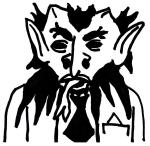
The Brainiac (1962): “I loved The Braniac (or, as it was known in its native Mexico, The Baron of Terror). It’s such a bizarre little horror cheapie that didn’t need to try nearly as hard as it did. Check out this plot: It opens with hooded executioners of the Spanish Inquisition expressing their frustration that a specific victim, a philandering Mexican baron, was surviving all of their torture methods by bending the laws of physics like an omnipotent god. When they sentence the baron to a death-by-burning execution, he escapes by hitching a ride on a passing comet and promises to return in 300 years to murder the descendants of the Inquisitors. He delivers on this promise in the form of a forked-tongued space alien beast. All of this transpires in the opening 20 minutes.”

The Love Butcher (1975): “This is a fun, and funny, movie. In much the same way that Tristram Shandy satirized the novel as a form despite being one of the first ten or so novels in the Western world, The Love Butcher mocks, subverts, and emulates the slasher despite having been conceived when that concept was only beginning to solidify. It’s an exploitation film that will use a cartoon sound effect when an older man shows off his bicep in one scene and then have a woman beaten to death with a sharp rake in the next.”

Midnight Offerings (1981): “Melissa Sue Anderson (Mary Ingalls from Little House on the Prairie) and Mary Beth McDonough (Erin Walton from The Waltons) step away from their well-known country girl roles to become dueling teen witches in this made-for-TV horror flick. When I first realized that Midnight Offerings was a made-for-tv movie from the early 80s, I expected it to be a joke of a horror film, oozing with campiness, but to my surprise, it was actually a little more on the serious side.”

 Spooky Drinking Games

EPSON MFP image

If for some ungodly reason the campier titles listed above still aren’t trashy enough for you, we also have drinking games for the following two slices of schlock: the found footage sasquatch flick Exists (2014 & pro-wrestler Kane’s grotesque slasher vehicle See No Evil (2006). If you dare participate in such cinematic horrors, beware & take care. You’re going to need the alcohol.

Happy Halloween!

-The Swampflix Crew

The Thing (1982)

EPSON MFP image

fivestar

I’ve greatly enjoyed every John Carpenter movie I’ve ever seen, save maybe a couple nu metal-era misteps like Ghosts of Mars. As much as I love the director’s landmark films & his soundtrack work, though, there are still a few major titles from Carpenter that I haven’t yet made the effort to catch up with. That’s why it was a godsend that the Prytania Theatre is dedicating the October schedule for its Late Night movie series to Carpenter’s work, culminating at the end of the month, of course, with a screening of Halloween. As I mentioned in my recap of the theater’s recent screening of Cinema Paradiso, The Prytania is a century-old New Orleans institution, the oldest operating cinema in the city, a fine venue for seeing great films for the first time. It was where I first saw Jaws, their frequent selection for America’s favorite holiday: Shark Week. When Robin Williams passed away last year it was where I first saw Terry Gilliam’s The Fisher King. And, most recently, it was where I finally watched John Carpenter’s masterful monster movie The Thing, screened on the first truly cold night of the year (how’d they plan that?), so that you could feel a fraction of the chill of the film’s Antarctica setting in your bones. Technically, it’s still fall outside, but when Kurt Russell gripes in the film, “First goddamn week of winter,” it was easy to empathize. All that was missing was a shape-shifting alien & a bottle of Jim Beam.

The Thing is essentially a 1950s Roger Corman monster movie taken to its most logical & most pessimistic extremes. In fact, the short story the film is based on had been previously adapted into an actual 1950s creature feature (and would later be resurrected for an episode of The X-Files & a cheap CGI trifle of a remake). A practical effects masterwork, The Thing‘s titular creature is just as ambiguous in form as it is in name. It’s a grotesque, rapidly evolving mess of undercooked biology, calling into mind the hot mess of vaguely defined monsters in the back half of 1981’s psychological horror Possession. The thing arrives on Earth via a disc-shaped, Millennium Falcon-esque UFO in the opening credits with very little detail provided for its origins. A complicated “organism that imitates other life forms,” the thing is alien in every sense of the word. It transforms in ways that are shocking & disgusting because they don’t make sense in the context of anything we’ve ever seen or understood in biology. Even in cinema, we’ve seen dogs used to create tension or terror, but never by splitting their faces open to reveal a mass of spider-like tentacles. We’re used to monsters killing for sport or nourishment, but not so much a creature that infiltrates a species through physical imitation, like a disease. Cellular activity found in corpses, blood that actively avoids extreme heat, half-cooked human imitations that look just about almost right except for long claw-like hands that resemble gigantic, deep-fried softshell crabs: the thing is far beyond human comprehension of basic biology, constantly opening compartments of itself like horrific Russian dolls to reveal more & more layers of ambiguous terror. Too often sci-fi horror models the designs of its creatures around what we already know. The Thing‘s creature might be the most alien alien to ever grace the screen.

Finding themselves face to face with this unknowable threat is an all-male crew of scientific researchers isolated in Antarctica for the winter. Even as scientists our protagonists have a difficult time making sense of the thing. Kurt Russell’s character exclaims early on, “I don’t know what the hell’s in there, but it’s weird & pissed off, whatever it is.” Once the thing infiltrates their ranks & starts imitating human lifeforms (a computer model helpfully explains, “Possibility that one or more crew members are infected: 75%”), everyone becomes suspect. The group of goofs, once prone to drunkenly playing computer chess, rollerskating to Stevie Wonder, and smoking six-paper joints in the lab, soon has to ask of each & every team member, “How do we know he’s human?” The notorious scene of extensive, pointless, paranoid violence in Carpenter’s They Live (“Put the glasses on! Put ’em on! “) is drawn out here to a full length narrative. Nearly every member of the crew is an affable goof, so it’s a very tense atmosphere in which at least one of them is not what they seem, but instead is a shape-shifting mess of mismatched body parts & gore.

I’m not sure of the exact reason The Prytania is spotlighting John Carpenter this month (not that I would complain if they did so every October), but it does feel like kind of the perfect time to do so. After scoring his own films for decades, the director just released his first studio album, Lost Themes— complete with his first music video & live concerts. Screening They Live earlier this month was a fitting tribute to the recently deceased “Rowdy” Roddy Piper, as it was easily his best work outside the wrestling ring (and I’m bummed to say I missed it). Even in a more general sense, the current cinematic climate is adoringly looking back at the Carpenter aesthetic & it’s all too easy to see echoes of his work in films as recent as The Guest, It Follows, and Cold in July. In other words, everything’s coming up Carpenter.

If I only catch one film during this mini-Carpenter Fest, I’m glad I at least got to experience The Thing for the first time on the big screen. The movie’s visuals are on par with the best the director has ever crafted. The strange, rose-colored lighting of emergency flares & the sparse, snow-covered Antarctica hellscape give the film an otherworldly look backed up, of course, by the foreign monstrosity of its titular alien beast. The film’s creature design  is over-the-top in its complexity and I sincerely hope every single model made for the film is preserved in a museum somewhere & not broken into parts or discarded. Also up there with Carpenter’s best work is the film’s dark humor, not only in Kurt Russell’s drunkenly cavalier performance, but also in the absurdity of the film’s violence & grotesqueries. It played very well with a midnight, BYOB audience. The only thing that’s missing here from Carpenter’s typical masterworks is one of his self-provided, glorious synth soundtracks, but with a pinch hitter like Ennio Morricone stepping in to fill the void, it’s near impossible to complain. The Thing is a perfectly crafted creature feature, one that even satisfies art cinema tastes with a resistance to tidying up its ambiguity in a bleak, mostly open conclusion. It’s by no means a stretch to rank it among the best of Carpenter’s works & I’m grateful to The Prytania for providing the opportunity to see it large, loud, and (in the spirit of the film’s isolated crew of scientific researchers) more than a little drunk with a live audience at a late hour. It was special.

-Brandon Ledet

Burnt Offerings (1976)

EPSON MFP image

fourstar

Dan Curtis is most well remembered as the creator of gothic soap opera Dark Shadows (poorly remade as an irreverent fish-out-of-water comedy starring Johnny Depp in 2012), but  remembrance of his legacy should also include his direction of 1976’s horror film Burnt Offerings. A kind of haunted house flick, the story concerns a run-down neoclassical manor home and the spell that it casts over a hapless family in order to rejuvenate itself.

The owners of the mansion are the wheelchair-bound Arnold Allardyce and his sister Roz (Burgess Meredith and Eileen Heckart, prominently featured in the film’s trailer but in what amount to extended cameos). They are delighted when the Rolf family, consisting of father Ben (Oliver Reed), mother Marian (Karen Black, whom Curtis directed the previous year in Trilogy of Terror), and twelve-year-old son Davey (Lee Montgomery, future heartthrob of Girls Just Wanna Have Fun), express interest in renting the house. Of course, for the low rental price of $900 for the whole summer, there is one caveat; the family must care for the ancient Mrs. Allardyce, a recluse who requires only that meals be left outside her door thrice daily. Ben is resistant at first, but Marian, already affected by the house, insists, and the trio, along with Ben’s elderly Aunt Elizabeth (Bette Davis), arrive at the mansion the following week.

Things seem to go well for a while. Davis is a particular treasure as the wisecracking Aunt Liz, and although Marian becomes more withdrawn (becoming obsessed with Mrs. Allardyce’s collection of photographs and listening to a music box for hours on end), the rest of the family bonds on their vacation. Things begin to take a turn for the worse as Ben starts to have nightmares about a creepy, grinning chauffeur (Anthony James) he encountered at his mother’s funeral as a child, and his roughhousing with Davey in the pool takes on a dark turn as he feels compelled to drown the boy. Soon, the lively Aunt Elizabeth grows ill and dies while the house continues to become less decrepit. Ben ultimately tries to flee the grounds with Davey, but forces conspire to block his way, as his hallucinations of the evil chauffeur begin to appear even in his waking states. When the pool once again tries to drown Davey, Marian’s spell is briefly broken and she agrees to flee with the rest of the family, but the house will not let them go so easily.

A forgotten treasure, Burnt Offerings shares more than just its genre with Poltergeist: they also both share a PG rating. Although it’s still a bit of a shock to think about Spielberg’s haunted house movie being given such an age-inappropriate rating, it’s easier to see how the creepiness of Burnt Offerings slipped under the radar. There are no ghosts in the Allardyce house; the house itself seeks to feed upon the life force of its inhabitants, and very little explanation is given as to how or why the house came to be this way. In a more modern movie, the audience would likely be forced to deal with an unsatisfying origin story for the house’s hunger, but the lack of context actually adds to the horror factor; unanswered questions often leave a stronger impact than unfulfilling answers, and Offerings is a movie that understands that. The only thing that could conceivably be called a specter is the grinning chauffeur, who is effectively unsettling despite never performing any malicious actions. Who is he? Nobody, really, just a creepy guy that Ben encountered as a child and who left an impact on him, which is a nice touch. He’s not affiliated with the house except in the way that he relates to Ben’s unspooling sanity, and he actually stands out as one of the creepier boogeymen that have haunted horror films of the past, calling to mind the Thin Man from the Phantasm series.

Further, the way that the house uses its occupants to act out violence against each other is also quite scary. The tension builds slowly in this film, starting first with images of life and renewal (a dead potted plant suddenly has a green leaf, a burned-out light bulb begins to work) before more outrageous elements occur (gas leaks in locked rooms, dilapidated siding and roof tiles flying off of the house and being replaced by fresh fixtures). If the film had spent less time establishing the Rolfs as a happy family before tearing them apart, the escalation of terror wouldn’t work half as well as it does, and I can’t believe such a great film has faded into relative obscurity. It’s definitely worth tracking down and enjoying.

-Mark “Boomer” Redmond

Crimson Peak (2015)

EPSON MFP image

fourhalfstar

Crimson Peak is luscious, extravagant, and terrible – a perfectly gothic Gothic Horror. Guillermo del Toro makes another entry into his visually stunning filmography, providing a richness and grotesqueness in both storytelling and cinematography.

I really appreciate that Crimson Peak is a classic Gothic Horror, with the storyline sticking closely to the standard tropes of the genre – isolation, bloody histories, unnatural relationships, menacing architecture, Victorians, obvious symbolism, endangered virgins, things that gibber and chitter in the night, etc.  Del Toro makes references to the Hammer Horror aesthetic, appropriate for a movie with such an overstated sense of dramatic Victorian style (although, to be fair, the Victorians were really dramatic to begin with).

The plot is not complicated or particularly innovative, but the storytelling is superb and the style is to die for.  Crimson Peak is perfectly dark and creepy, with Mia Wasikowska, Tom Hiddleston, and Jessica Chastain delivering a wonderful combination of passion, tension, and insanity.  Del Toro knows how to keep the audience horrified and engaged, and he continues to exercise his use of obscenely rich visuals.

I’d recommend Crimson Peak to anyone looking for Halloween movie.  It’s not a slasher movie or a suspense drama, but it’s terribly good fun.

-Erin Kinchen

Black Friday (1940)

EPSON MFP image

twostar

After the last gasp for air in Universal Pictures’ famous monsters brand with the re-release of Frankenstein & Dracula as a double bill that resulted in the creatively bankrupt Son of Frankenstein, there wasn’t much work to go around for actors Boris Karloff & Bela Lugosi. The drought that followed for the eternally typecast horror movie heavyweights is perhaps what turned up the heat on their professional rivalry & turned their next collaboration, 1940’s Black Friday, into such a disastrous bore. A bland gangster film with only the slightest hints of horror or sci-fi in its formula, Black Friday is a shameful what-could’ve-been experience, one made dull by Lugosi & Karloff’s refusal to play nice & share the scraps that Hollywood had left for them to fight over.

In Black Friday, Boris Karloff plays a brilliant neurosurgeon who saves his close friend’s life by replacing his brain with that of an infamous mobster. Once a meek college professor, Karloff’s buddy starts to show personality traits of the gangster his surgeon-savior-friend effectively murdered to extend his life. The split-personality professor now has the hots for the deceased gangster’s showgirl girlfriend, drinks & smokes with the same mannerisms, threatens violence in a way far outside his normal character, and (much to Karloff’s surgeon’s piqued interest) talks of a hidden fortune stashed before his death. Rival gangsters & the showgirl dame rush to uncover the fortune before the surgeon can beat them to it, while he’s not fighting off suspicion about what happened to his once genteel friend. It’s even less exciting to watch this all unfold than it sounds, exhausting even for a feature barely more than an hour in length.

If you’re asking where Bela Lugosi fits into all of this, you’re not alone. The original script cast Lugosi as the troubled neurosurgeon & Karloff as the split personality professor-gangster. That formula might’ve actually been interesting. Alas, Karloff insisted on playing the surgeon & instead of taking the role of the professor-gangster Karloff had left vacant, Lugosi was relegated to the much smaller part of a rival gangster. Perhaps the reason they didn’t switch roles outright was that playing the rival gangster allowed Lugosi to avoid ever filming a scene with Karloff. It also allowed him to continue their onscreen meta rivalry that dated all the way back to the actors’ first collaboration, The Black Cat. As a result, although Lugosi is second billed he only has a bit role in the film and does not appear in a single scene with his rival.

There are only a few isolated moments of interest in Black Friday. The film’s opening credits play over a calendar reading Friday the 13th & are followed by an intense death row march that promises a much more horrific vibe than what follow. The film’s sole moments of outright horror are a brutal car crash stunt & an onscreen brain surgery, both motifs echoed from earlier Karloff-Lugosi collabs The Black Cat & The Raven. Watching Lugosi play gangster & Karloff don surgical gear are fantastic images, but aren’t put to much use. The only line of dialogue that really stuck with me was when Karloff’s daughter pesters him about his professor friend’s sudden change in personality & he snaps, “Haven’t you guessed?! The operation I performed was a brain transplantation,” as if that were the most obvious explanation for the change. The rest of Black Friday is a forgettable slog made hopelessly dull by two great actors who were visibly tired of working with each other on occasional projects & fighting over the scraps of the rest.

-Brandon Ledet

Son of Frankenstein (1939)

EPSON MFP image

twohalfstar

One of the most satisfying things about watching the Bela Lugosi/Boris Karloff collaborations The Black Cat, The Raven, and The Invisible Ray is that it’s been nice to see the two horror legends play characters outside of their usual roles as Count Dracula & the Frankenstein monster. It’s been even more of an unexpected treat to watch their offscreen professional rivalry reflected in their antagonistic onscreeen dynamic, adding an interesting meta context to their work together. Both of those elements are missing from Son of Frankenstein. The final film in Karloff’s trilogy of Universal Pictures Frankenstein productions, Son of Frankenstein is a dreary, by-the-numbers affair. The first Frankenstein film had a strange, otherworldly magic to it already dubbed on this site The Spirit of The Spirit of the Beehive. Its followup, The Bride of Frankenstein, is remarkable for its prowess as an early example of the horror comedy. The third film has, what, Bela Lugosi’s first performance as Igor? A replacement Dr. Frankenstin Jr. with a John Waters mustache? The first appearance of the Frankenstein monster’s fur vest? These might be interesting images in isolation, but they hardly amount to justification for a 100 minute feature, the lengthiest of the Lugosi-Karloff collaborations at the time of its release.

This spirit of creative bankruptcy is apparent in Son of Frankenstein as soon as Franken-junior is introduced with the line, “This one’s probably just as bad as his father!” Franken-junior also laments early on that people often get his father mixed up with his monstrous creation, upset that his family name is synonymous with horror & monsters. That pretty much sums up the entirety of the film’s interesting dialogue. Franken-junior is, of course, met with a cold reception when he moves into his deceased mad scientist father’s spooky castle and, of course, becomes obsessed with recreating Franken-senior’s work. Through a little bit of revisionist cheating, it’s revealed that the Frankenstein monster (played by Karloff, of course) & Igor (played by Bela Lugosi, as mentioned), are still for the most part physically intact, despite certainly being destroyed in the earlier films. Somewhere along the way Franken-junior’s little moppet offspring, Franken-junior Jr., “adorably” gives his dad away to the cops in a high-pitched squeak that pretty much made me want to watch the little bastard drown in a fire. That’s the most I felt of the film’s conflict. The only element of interest, really, is that Karloff’s monster & Lugosi’s Igor are good buddies, forming a sweet sort of symbiotic relationship in a world that wasn’t made for them, to say the least.

Although Karloff’s reign as the top-billed performer continues here & you’d think that Lugosi’s secondary role as Igor would push him to the side,  Son of Frankenstein actually stands as a victory for Lugosi in terms of the actors’ longtime struggle to hog the spotlight. It’s not the best of their joint efforts, but at least Lugosi got more lines? He’s oddly captivating as Igor, especially in his Wolfman-like make-up (why did Lugosi never play the Wolfman?!) complete with a broken neck from a past lynching, while Karloff is remarkably dull as the monster he’s played so well in the past. In a completely non-verbal performance, his sole moment of interest is a scene in which he smashes Franken-junior’s very sciency science lab in a blind rage, an image that’s begging for an “open up this pit” meme. The rest of the film is just Karloff going through the motions while Lugosi tries to make the most of his role as a hairy, deformed Igor.

Son of Frankenstein arrived in the midst of a career slump for both Lugosi & Karloff. The decline of monster films that followed The Raven had limited the amount of roles the spooky duo were offered, but a successful double bill re-release of the original Dracula & Frankenstein films renewed interest in the Universal Pictures “famous monsters” brand, which lead to Son of Frankenstein‘s production. Although the film was a financial success for the studio, it’s a creatively weak endeavor at best, amounting to not much more than a collection of “what if?”s. What if, as originally planned, horror icon Peter Lorre had played the role of Franken-junior? What if Bela Lugosi had played the Wolfman instead of Igor & battled Karloff’s monster in a continuation of their meta rivalry? What if Franken-Junior Jr died a slow, agonizing death in a fire, putting an end to his annoying little squeaks forever? Alas, nothing so satisfying is delivered in Son of Frankenstein. That didn’t stop the studio, however, from returning to the well at least one more time in Ghost of Frankenstein. Karloff smartly declined to reprise his role for that trifle, obviously growing tired of the limitations of his most famous character. Unfortunately, Lugosi’s escape from the franchise was not so easy, as he returned as Igor in the Lon Cheney film. Poor Bela.

-Brandon Ledet

The Invisible Ray (1936)

EPSON MFP image

three star

campstamp

One thing Universal Pictures definitely got right in their series of Boris Karloff & Bela Lugosi collaborations was allowing the two actors to stray from their legendary roles as the Frankenstein monster & Count Dracula. Unfortunately for Lugosi, the 1936 picture The Invisible Ray only allowed him to stray as far as the role of a mad scientist, something he had played almost as often as he portrayed the world’s most famous vampire. Fortunately for the audience, the film made enough room for two mad scientists, so Karloff & Lugosi could continue living their offscreen professional rivalry in meta, fictional contests. Karloff always gets top billing in these pictures, which I’m sure drove Lugosi mad, but in their first few movies together they typically traded the narrative spotlight back & forth. In The Black Cat they shared it. In The Raven Lugosi stole the show. In The Invisible Ray Karloff actually earns his top billing, playing the more interesting, omnipresent mad scientist of the pair.

The best The Invisible Ray has to offer is in the spooky mad scientist sci-fi horror in the the two segments that bookend the duller half of the film. The promise of this antiquated sci-fi horror glory is apparent as soon as the film’s “Forward”: “Every science fact accepted today once burned as a fantastic fire in the mind of someone called mad. Who are we on this youngest of planets to say that the INVISIBLE RAY is impossible to science? That which you are now to see is a theory whispered in the cloisters of science. Tomorrow these theories may startle the universe as a fact.” So what “science fact” are we to look forward to in the future? Apparently an alien element known as Radium X, delivered to Earth via a “few thousand millions of years” old asteroid crash has been discovered by Karloff’s maddest-of-all scientist. Karloff has a million & ten different uses for Radium X that range from curing blindness to the creation of a sort of death ray. Too bad exposure to the element causes his skin to glow in the dark & the gentlest of his touches to kill on contact. Lugosi’s less-mad scientist wants to use Radium X to help prove his vague theories about how “the Sun is the mother of us all,” and although the two men work together on the element’s discovery & procurement, they disagree on its practical applications, something that gives Lugosi’s dissenter the moral high ground once Karloff’s touch becomes luminous & deadly. In a lot of ways this reflects their real life professional rivalry, seeing how they both had a distaste for one another, but worked on eight feature films together anyway.

I’ve skipped over a lot of the film’s second act shenanigans, which involve a lengthy expedition to Africa in the quest to harvest Radium X from the asteroid crash site. This being a 1930’s film, there’s a lot of unseemly representation of black characters in these scenes as subservient, easily frightened native tribesmen, but if nothing else this is the first instance I’ve seen of a non-white character having a speaking role in any Karloff/Lugosi collaboration so far. There’s also some thought given to how women’s contributions to the scientific community, represented here in Karloff’s much-suffering wife & mother, are often attributed to men. Of course, these instances of non-white, non-male representation are a little thin & undercooked. At best, it’s a modest start & not much more. As I said before, the best The Invisible Ray has to offer is in its mad scientist spookiness. Early scenes featuring a Frankenstein-esque castle being repurposed as a planetarium provide some great, oldschool outer space weirdness, which combined with Karloff’s transformation into The Very Visible Man supplies The Invisible Ray with its most memorable elements. Karloff is particularly captivating in the film, whether he’s donning a stunning welding mask & cape combo (complete with rubber gloves), glowing like a nightlight, or dispensing of his enemies with the simple act of a genteel handshake. By comparison, Lugosi’s presence is far more understated, distinguished only by a goatee that makes him look like a mid-90s alt bro. The Invisible Ray was far from the pair’s best collaboration at the time of its release (that would be The Black Cat), but it’s also far from their nadir. In short, it’ll do.

-Brandon Ledet