Swampflix’s Top Films of 2018

1. Annihilation A beautifully terrifying tale of life, death, rebirth, and the trauma that haunts us throughout it all. On one level, Annihilation is just a visually gorgeous, weirdo monster movie that reimagines Tarkovsky’s Stalker with a pastel color palette & more traditional genre thrills. On a deeper level, it’s a powerful reflection on how grief & trauma transform us into entirely different people, to the point where that change becomes physical & irreversible. Our bodies and our minds are fragmented into their smallest parts until not one part of our original form remains. The fact that the movie itself is its own creature separate from its source material novel also makes it an oddly fitting adaptation, since transformation and change is an essential part of its DNA.

2. Mandy The most metal movie of 2018 (and maybe even of all-time?). When Nicolas Cage axe-murders biker demons & religious acid freaks in an alternate dimension 1980s, Mandy is headbanging party metal, a blood-splattering good time. In its quieter moments it also captures a stoned-and-alone, crying over past trauma to doom riffs version of metal, where the flashes of fun & cosmic absurdity are only reminders of how cruelly uncaring & meaningless it can feel to be alive.

3. The Wild Boys An erotic fever dream that’s part Guy Maddin, part James Bidgood, part William S. Burroughs, and part Treasure Island adventurism. Its visual experimentation, transgressive gender politics, and surreal depictions of sexual violence achieve an unusually focused version of imaginative dream logic. Both beautifully & brutally old-fashioned in its newfangled deconstruction of gender, it lives up to the “wild” descriptor of its title in every conceivable way, delivering everything you could possibly want from a perplexing “What the fuck?” cinematic bazaar.

4. Sorry to Bother You Incredibly dense, gleefully overstuffed sci-fi satire about the Amazon Prime-sponsored hellscape we’re already living in today – just bursting with things to say about race, labor, wealth, and the art of selling out. Boots Riley’s debut is remarkably well executed despite the sheer number of ideas it throws in your face, especially in how it handles its brazen third-act rug pull. Still, its most impressive feat is how it captures the moment we’re currently struggling through, but somehow finds a way to make it even worse.

5. Unsane Filmed on an iPhone and shamelessly participating in every mental institution thriller cliché you can imagine, Unsane is a purely Soderberghian experiment in the lowest rung of genre filth. Since it trades on the worn-out clichés and tired tropes of the Scary Asylum genre to induce its ugly, cheap-thrills panic attack, it’s not the most original movie in the world, nor the most sympathetic or responsible. However, it does use that unlikely genre platform to explore themes ranging from capitalist greed in modern medical & prison systems to male-dominated institutions’ dismissal of the concerns of women to the power dynamics of money & gender in every tier of society.

6. Paddington 2 We always say we wish more children’s films were ambitious in their craft & purposeful in their thematic messaging; Paddington 2 wholly satisfies both demands. It’s timelessly wholesome, visually precious, and emotionally fragile – all while teaching kids an important lesson about applying simple concepts like politeness & manners to their interactions with social & cultural outsiders. After praising so much exploitative horror & lowly genre trash year after year, Paddington 2 was a welcome change of pace for the crew. It lifted our spirits and made us want to be better people. (It even inspired James to learn how to make marmalade).

7. Hereditary Effectively gaslights the audience by starting as a fairly down-to-earth exploration of mourning, rage, helplessness, and grief before fully descending into the supernatural – striking an uneasy balance between heart-wrenching family drama & spine-chilling horror. Where Hereditary overachieves is in anchoring all of its glorious 70s horror vibes & stage play familial viciousness to the best Toni Collette acting showcase to reach the big screen since Muriel’s Wedding.

8. Cam A neon-lit, feminist cyberthriller about modern sex work, Cam is set in a digital world where identity is no longer stable nor protectable. It mashes up Unfriended-style user-interface horror about the Evils of the Internet with smutty Brian De Palma modes of building tension through eerie sexual menace. It’s excellently written, staged, and performed for a movie of its modest budget, one bolstered by subversive politics that will have you cheering for a sex worker to return safely to her profession instead of being punished for her supposed sins, which is sadly extraordinary for its subject & genre.

9. You Were Never Really Here Lynne Ramsay’s latest grime-coated vision of a real-world Hell obscures the emotional release of traditional macho revenge thrillers by focusing only on the violence’s anticipation & resulting aftermath, never the act itself. This is a powerful film about the tolls that violence takes on its enactors & its witnesses, tracking the many ways it can destroy a soul. It hypnotizes and mesmerizes, but not in an uplifting way, just in a way that makes you feel hollowed & alone.

10. Eighth Grade With a piercingly astute eye for the way social media has reshaped & mutated adolescent anxiety into an entirely new beast, Eighth Grade excels both as a snapshot of what life online looks like in the 2010s and as a distinct, character-driven drama even when removed from that of-the-moment focus on social media. Following an actual 8th grader as she relives our own past moments of unbearable anxiousness, we both identify with her all too well and feel a desperate need to protect her from the world. It’s both a fresh, important coming of age story for modern kids and a timeless anxiety Litmus test for all ages.

HM. Dirty Computer An anthology of music videos with a dystopian sci-fi wraparound, this “emotion picture” delivers on the genre film undertones of Janelle Monáe’s early pop music career while also advancing the visual album as a medium to a new modern high. Its story of non-conforming Others being captured to have their culture erased becomes such an explicit expression of Monáe’s own identity as a queer black woman in an increasingly hostile world, it reaches a point where a tyrannical government is literally draining the gay out of her in tubes of rainbow ooze before she rises against them in open bisexual rebellion. It’s fiercely queer, femme, and black – the most defiant, punk thing you can be in modern times.

Read Boomer’s picks here.
Read Brandon’s picks here & here.
Read Britnee’s picks here.
Read CC’s picks here.
Hear James’s picks here.

-The Swampflix Crew

Boomer’s Top Films of 2018

Let’s get this out of the way: 2018 was a miserable year for yours truly. From March to June, I was locked in a constant battle with the manager of the property where I live with regards to a phantom leak that they “observed,” leading to them cutting a 4′ square section of my bathroom ceiling being cut, without being repaired or replaced, for three months. I picked up a staph infection while on vacation, arrived home after nearly a day-and-a-half of travel due to an overnight layover in Dublin, only to find that my luggage had been lost and that my refrigerator was abloom with monstrous polyps and fungi due to its motor failing while I was gone. And then in October, I was standing innocently at the corner of 7th and Colorado Streets in downtown Austin, waiting for my bus to take me home after a long Monday, when a man in a pickup truck ran the red light, was struck by another vehicle, spun out, and then ultimately hopped the curb and pinned my leg to the bus stop bench and dragging me the length of it before coming to rest in a position that trapped me and rendered me immobile. This broke my fibular neck and left me with extensive tissue damage, including an internal degloving event (don’t look it up unless you’ve got a strong stomach), and trapped me in my apartment for six weeks; I only got out to go to the doctor and to vote, because it’s going to take a lot more than being mangled and nearly killed to keep your boy from voting. As a result, anything that was released after October 15 pretty much flew under my radar. There was so much I wanted to see this year: I had tickets to Bad Times at the El Royale for the day after the collision that has (temporarily, fingers crossed) hobbled me, and a pass to Good Manners (As boas maneiras) for that weekend, both of which went unused. Perhaps the greatest crime is that I, the self-proclaimed foremost expert on Dario Argento’s body of work among all the people that you know (unless you know Maitland McDonagh, in which case, can you introduce me?), still have not seen the remake of Suspiria. Of course, this year also blessed me in some places: I took my first vacation since 2014 and got to go out of the country for the first time for it as well! Also, Black Panther came out and my cat outlived (and continues to outlive) the veterinarian’s projections, so here we are. Also, I’m not going to see Boy Erased. It’s just too triggering and personal.

All the movies that I wanted to see but did not in 2018, and thus should not be considered omissions from this list for lack of quality, but simply due to availability and my getting mangled: Bad Times at the El Royale, Foxtrot, Three Identical Strangers, Summer of ’84, Green Fog, Call Me By Your Name, Isle of Dogs, American Animals, Won’t You Be My Neighbor?, Blackkklansman, The Kindergarten Teacher, Let the Corpses Tan, Good Behavior, and If Beale Street Could Talk. Also, probably that one about the Spiders-men.

2017 Hangover
(Movies I Wish I Saw Last Year So They Could Have Been on My 2017 List)

The Babysitter: Every word of Brandon’s review of this one is correct: it is a sugar rush of gory absurdity, in the vein of Turbo Kid, one of my favorites of the past few years. I, too, could have done without some of the elements that were designed to pander to the lowest denominator of movie viewers, with their foundationally eradicated attention spans (more on that in a minute). The pop-up text on screen (especially anything to do with the pocketknife) was distracting and fundamentally lowered the level of discourse we can have about this movie, but I was still enthralled from minute to minute, even after walking shirtless scene Robbie Amell took his plunge. This one gets a strong recommendation from me.

I, Tonya: Although this fine crew found each other through the sheer force of will and love for cinematic Things That Should Not Be, we are not of one mind, and I, Tonya is a pretty clear example of that. Brandon was not impressed, but I was enraptured by every moment of it. I can’t remember the last time that I was so sucked into a movie that I watched it again almost immediately, and then a third time just a few days later. There’s violence aplenty, which I think was the main detraction for our Dear Leader, but while the omnipresent domestic abuse that permeated the film was so true-to-life that I wasn’t pushed out of the scene by it, but was only drawn further in, even in the moments that it got very close to home. It’s certainly a movie that needs a trigger warning, and I have my issues with a sympathetic portrait of a person whose political views are, um, bad, but I nonetheless found this utterly compelling.

It Comes at Night: Holy shit is this a great movie. From the disorienting refusal to clarify anything about the layout of the house in which all of the action takes place, to the twists and turns in plotting, this is another great A24 release, even if it comes so soon after the similarly plotted Into the Forest (2015, also distributed by A24), which found Ellen Page and Evan Rachel Wood as two sisters alone in a deteriorating cabin in another undisclosed location somewhere in otherwise idyllic wilderness. What I liked most about this one was the dread atmosphere that takes hold from the first moment, when an elder member of the clan meets his heartbreaking demise: it makes you side with the first family that you meet, although another film could just as easily follow the other family. What if their inconsistent information about their past is just the result of not wanting to give too much about themselves away in case their apparent saviors aren’t all that they appear to be (which . . . ends up being the case, essentially). This one is on Amazon Prime now and Into the Forest is on Netflix, so treat yourself to this double feature. Read Brandon’s review here.

Honorable Mentions

Sierra Burgess is a Loser: While certainly not the great follow up to the surprise Netflix hit To All the Boys I’ve Loved Before that Netflix was hoping it would be, given the reappearance of the internet’s newest celebrity boyfriend, Noah Centineo, and the presence of Shannon Purser (a.k.a. Barb from Stranger Things), Sierra Burgess is a Loser is a perfectly serviceable little teen romcom that retells the well-worn Cyrano de Bergerac story: a physically “imperfect” suitor woos a perfect specimen with the help of a more attractive counterpart. It’s not groundbreaking, even with the gender flip that lands Purser as loser Sierra Burgess trying to win the heart of Centineo’s Jamey through surrogate Veronica (Kristine Froseth), a mean girl with a rough home life whom Sierra ultimately befriends, albeit with some bumps along the way. Much of the negative reaction to this one, I’m assuming, stems from the desire for another pitch-perfect romantic comedy like TATBILB, not the movie’s actual quality. First time screen-writer Lindsey Beer does a pretty good job here, and I’m looking forward to seeing more of her work.

Bird Box: My roommate read Josh Malerman’s novel Bird Box a couple of years ago and was super excited when he learned that it was being adapted into a film, citing the book as one of the scariest things he had ever seen. From his description of the novel, I was sitting in a movie theater in November 2017 to see Lady Bird and saw the trailer for A Quiet Place and thought “wow, they got that into production faster than I would have expected,” before realizing that it was not a trailer for Bird Box that was playing out before me. Here it is, over a year later, and the comparisons to A Quiet Place and The Happening are still rolling around out there on the internet, largely in response to (and revolt against) Netflix’s bizarre (but effective) meme-heavy marketing strategy. Still, derivative though the film may seem now after the release of other similarly themed apocalyptic titles in the years since the book was first released, this is a pretty effective little thriller with a star-studded cast and a new dimension from lead Sandra Bullock, who has rarely had the opportunity to play a character who is both sentimental and hardened, at turns charming and unlikable. The biggest drawback here is that the film somehow manages to feel both overstuffed and somewhat overlong as well, with a lot of plot points that should have been given more time to be explored, but having too many of these to make a film with a pat running time. This one should have been a miniseries.

The Haunting of Hill House: Speaking of miniseries (or limited series), I’m giving a special mention to The Haunting of Hill House, a breakout ten-episode mini that Netflix released this year. Very loosely based on the Shirley Jackson novel of the same name, Hill House follows the story of the Crains, a large family headed by patriarch Hugh Crain (Henry Thomas in the past and Timothy Hutton in the present), a house flipper before that term really existed. He and architect wife Olivia (Carla Gugino), who looks forward to the day when the family can finally build their “forever house,” have moved their five children into the Hill House mansion, where a series of escalating supernatural events leaves the family broken and traumatized, with that trauma spilling over into their adult lives: Stephen (Michael Huisman) is a skeptic who writes books about other supposed hauntings; Shirley (Elizabeth Reaser) is a mortician who resents that Stephen’s books have dragged the family’s history into the public eye; Theodora (Kate Siegel) is a queer social worker unable to form relationships because of her psychic sensitivity; and twins Luke (Oliver Jackson-Cohen) and Nell (Victoria Pedretti), the former of whom is a drug addict who has burned his family more times than can be counted and the latter of whom was the most affected by the house in her youth and has never really recovered. I’m putting this on my list because it’s not a movie, in any technical or real way, but it does stretch the boundaries of what we can consider a movie, as it feels less like a series of episodes and more like a ten hour movie broken into manageable chunks. There’s also a one-shot in the sixth episode that blows away any competition from actual films on my list as far as technical mastery. As with Bird Box, I’ve seen the split on my Facebook feed between people who loved this and people who hated it, but unlike with BB there’s a notable difference: the only people I’ve seen consistently hating on Hill House are those who have terminally limited attention spans and who don’t have the patience to watch a whole movie, let alone a miniseries, without checking their phones every 5 minutes (sorry if you feel called out by this, but you know it’s true). If that’s you, stick to Vine compilations, but if you have the ability to, you know, watch things, give this a try.

Dishonorable Mentions

Solo: A Star Wars Story: I may have given a lukewarm defense of this one in my review of it last summer, but this movie really doesn’t work. Ehrenreich is charming in everything, and I got a kick out of L3-37, but further reflection on this film has really not been kind to my remembrance of it. It helps that so much of it was forgettable, and I’m hoping that we’ll see more of Ehrenreich and Donald Glover on the big screen in years to come, but I’m not holding my breath.

Deadpool 2: I fell asleep during this movie, in a theater. That disqualifies me from reviewing it unless I see it again, and through to the end, but honestly, I’m just not sure I’m up for it. I’ve always been a Domino fan, and her character is about the only thing that I remember from the film, but I just couldn’t bring myself to care (or keep my eyes open). Luckily, Brandon managed to stay awake through it.

Avengers: Infinity War: “What’s this?” you say. “He didn’t like Infinity War? But everyone liked Infinity War!” Well, sorry to break anyone’s hearts, but my opinion of this movie has only gone down following my review last summer. I even gave it a slightly higher star review at the time than I felt in my heart, because the people I had seen it with had enjoyed themselves so thoroughly and I wanted it to be better than it was. But while it was technically proficient, visually stimulating, and managed to weld together nearly two dozen characters into a plot that was serviceable and well-executed, it left me so cold. I didn’t feel anything in this movie, not even for a moment. I thought maybe I was just in a bad mood when I saw it the first time, so I gave it another watch a couple of months later and I was even less engaged the second time around. I should have loved this movie. I wanted to love this movie. And I just didn’t.

Ready Player One: Holy shit was this a pile of self congratulatory garbage. I’d diatribe here about the way that this reinforces toxic gatekeeper culture and also about how it’s still pretty vapid and shitty despite all of that (“You’d love me but not my birthmark!”), but this isn’t a movie worth investing that kind of emotional energy and labor into. Just read Brandon’s review or Vox‘s primer.

Open House: Britnee beat me to it with her review of this stinker a full year ago, but I stuck it in my Netflix queue last January, largely based on my fondness for Dylan Minnette, where I promptly forgot about it until I was housebound and working my way through those things I hadn’t watched yet. Having run out of Star Trek: Voyager, Haunting of Hill House, Chilling Adventures of Sabrina, and, god forgive me, Riverdale, I turned my sights on movies in my queue. I watched the Australian movie where Robin Wright and Naomi Watts bang each others’ sons; I watched a horrible coming of age movie called SPF-18 in which the most exciting thing that happens is that Noah Centineo breaks a disco ball; I even watched a boner comedy by way of Groundhog Day called Premature about a high school kid who is stuck in a repeating day that restarts every time he, well, ejaculates (prematurely). But by far the most disappointing one was Open House, a mediocre rehash of every “creepy things happen in a remote house to a family in crisis” movie that you’ve ever seen, but without the kind of twist or resolution that a film of this type needs to be memorable, or at the very least the catharsis that it needs to be passable. Forbes reviewer Paul Tassi wrote that Open House made him feel like someone was asleep at the switch in Netflix’s quality control, but if they managed to let this movie out into the world, the person in charge of QC must have died at the wheel.

And now . . . Boomer’s Top 15(ish) Movies of 2018

15. Mary and the Witch’s Flower: Make no mistake, this is a children’s movie. It’s also not a Hayao Miyazaki movie, or even a Studio Ghibli film, although you can be forgiven for assuming either given the film’s visual style. Director Hiromasa Yonebayashi, formerly of Ghibli (first working as a clean-up animator on Princess Mononoke before doing key animation on Spirited Away, Howl’s Moving Castle, and Tales from Earthsea, among others) and now well-known for his directorial debut The Secret World of Arrietty and, a few years later, his Oscar nomination for When Marnie was There, turns a fairly thin story about a young girl who encounters a world of magic and sorcery through the discovery of the titular “witch’s flower,” a kind of bud that, when burst, grants those whose juice it touches temporary access to magic. The film’s strong opening sequence, breathtaking flying scenes, and the exploration of the visually entrancing and dynamic magical college that Mary finds in the clouds elevate what would otherwise be just another The Worst Witch/Harry Potter knock-off (although one with a stronger pedigree: the source novel, The Little Broom, was published in 1971, a full three years before the first Worst Witch book). Read Brandon’s review here.

14. A Simple Favor: A bit of an uneven movie, this comedy thriller is held aloft by some decent twists and turns coupled with strong performances from Anna Kendrick and Blake Lively. Read more in my review here.

13. Love, Simon/To All the Boys I’ve Loved Before: I’m taking the coward’s way out on this one, since neither of these films is really “quality” enough to belong on this list under its own merits. Upon Love, Simon‘s release, I was largely against it, even in theory. “Why do we need stories like this one?” I asked myself. “Where are the radical queer stories?” And then I went and saw it, and I was completely enraptured by its earnestness and clarity of vision. I wanted to hate Love, Simon, but instead found myself feeling a kind of warmth and sincerity that I haven’t felt in a long time. (The one moment of sarcasm that I allowed myself was when I leaned over to my companion during the scene in which Simon waits for his online friend “Blue,” and said “If this were Degrassi, a pedophile would show up right about now.” I also had a moment where I was like “Oh, Josh Duhamel is in this, just like Broken Hearts Club, which I guess lends this some gay romcom credibility” before I remembered that it was Timothy Olyphant in that one; I also realized in that moment that I am old.)  Likewise, I slept on To All the Boys I Loved Before because I didn’t think that I could get much joy out of a movie that generates that many posts on BuzzFeed with shirtless .gifs and quizzes about which boy from TATBILB you, BuzzFeed reader, should be with. And yet, in my time of need, I gave this one a try, and was utterly charmed by it. It’s certainly better than other efforts with leading man Noah Centineo (I refer you back to the aforementioned SPF-18), and it wears its social media age Sixteen Candles lineage on its sleeve. Lana Condor’s Lara Jean is effortlessly charming. If you just need a little warmth in your heart, either one of these would make good medicine.

12. Ant-Man and the Wasp: A fun follow-up to 2015’s Ant-Man, read my thoughts on this one here.

11. Game Night: I was warmer to this one than Brandon was; he liked it, but I really, really got on board with this one. Directors John Francis Daley (didn’t think that I would be mentioning a Freaks and Geeks alum on the same list in 2018, but here we are) and Jonathan Goldstein have churned out a fun little heist comedy that utilizes the talent of all of its participants. Max (Jason Bateman) and Annie (Rachel McAdams) have great chemistry, and Billy Magnussen is doing great work making a truly stupid character likable enough that you don’t find yourself doubting why he’s even friends with the others. Sharon Horgan also turns in a command performance with her continuing exasperation at Magnussen’s character’s idiocy. If I had one qualm, it would be that Lamorne Morris and Kylie Bunbury are given little to do other than playing off of each other rather than the whole group, as Morris’s character’s obsession with the idea that his wife may have slept with one other person before they were married consistently puts the two of them in little joke cul-de-sacs rather than keeping them more central to the narrative.

10. Upgrade: Leigh Whannell’s latest is a sleek, fun, trashy romp through a futuristic Death Wish-style roaring rampage of revenge, with a cyberpunk twist. Blumhouse accidentally made a prestige picture in 2017 and has been riding that success for a while; a friend who will be doing some work on one of their upcoming TV projects told me that the first question that you would ask when you got tapped for a Blumhouse production was “Is it union?”, but now it’s a solid bet that you might end up working on something great. Upgrade may not be the greatest sci-fi, but it’s a super fun thrill ride with Logan Marshall-Green as a truly likable guy with a magnetic screen presence. While others might consider him a poor man’s Tom Hardy, he does great work here, especially when he’s in “conversation” with an AI that no one else can hear. It’s twisty, it’s turny: it’s Upgrade. Read Brandon’s glowing review here.

9. The Endless: I added this one to my Netflix queue some time ago based simply on the premise: two brothers who, years before, escaped from a UFO death cult return to the commune after receiving a strange video from one of its members. Younger brother Aaron (Aaron Moorhead) was apparently too young when they left to remember all of the truly creepy goings-on that older brother Justin (Justin Benson) has always told him they were lucky to escape, but Aaron is insistent that the video they received could mean that the UFO they were waiting for has finally arrived. Realizing that his younger brother will never be at peace until he sees the place for himself, Justin takes Aaron on a road trip, seeing a few portents of the irrational along the way. Once they arrive, things seem almost too perfect, although strange happenings and optical illusions (or are they?) begin to make the men wonder if they will be able to escape before something truly terrible happens. It’s a low budget indie sci-fi that occasionally shows it lack of money (there’s a scene in which a house is supposedly aflame but the fire itself is terribly unconvincing), but its heart is in the right place and the tension can’t be beaten. Read Brandon’s review of The Endless and its sister film Resolution here.

8. The Ritual: A kind of modern day Blair Witch Project (minus the found footage element) paired with a heaping dose of morbid survivor’s guilt and including a pretty original… let’s say “monster,” for lack of a better term, The Ritual follows four men who venture onto a Swedish nature hiking trail to honor a fallen friend. Luke (Rafe Spall) entered a liquor store with Rob (Paul Reid) after a boy’s night out with his university buds, only to discover that the place is in the middle of an armed robbery. Luke hides but Rob is seen by the thieves and, upon refusing to cooperate, is killed. As Rob’s wish was to take this hiking trip, Luke joins hardass Hutch (Robert James-Collier), gone-soft family man Dom (Sam Troughton), and nervous Phil (Arsher Ali). When Dom injures himself along the trail, the group opts to take a shortcut back to their last occupied way station through the deep, dark woods. Fair enough, until they take shelter in an abandoned shack during a heavy rain storm and emerge the next morning to find that the storm prevented them from noticing all the runes carved into nearby trees, and that’s not even getting into the bizarre effigy in a room upstairs, or the fact that they discover a dead elk pinned in a tree like an offering. At every turn, Luke is confronted by memories and hallucinations of Rob’s last fateful moments. Is he cracking up in another stressful situation, or is there something in the woods that’s forcing him to relive that night over and over again? Although not the most original story, it makes up for its flaws with a haunting ambiance and a reveal of a… being that is truly unique. Check it out, and read Brandon’s review here.

7. Sorry to Bother You: This is a movie that’s only gone up in my opinion since I first saw it. Read my review here.

6. Phantom Thread: I’ve previously mentioned my theory that if a film that comes out after December 20th, it really should only count on lists for the following year, so I’m including Paul Thomas Anderson’s latest (and supposedly Daniel Day Lewis’s last) film here. There’s so much to say about this movie, and so much of it has already been said, but I would say that this is a movie worth seeing, for all of the passive aggressive eating if nothing else. Read Brandon’s review here.

5. Black Panther: I’m not sure that there’s much more that I can (or am qualified to) contribute to the discourse on this movie that I haven’t already, so just read my review here.

4. You Were Never Really Here: Brandon said everything I could say about this movie better than I could here. This movie hypnotizes and mesmerizes, but not in an uplifting way, just a way that makes you feel alone.

3. Unsane: I can say without a moment’s hesitation or mental evasion that Unsane is hands-down the most unsettling and disturbing film that I have ever seen. I have never, in my entire life, been more uncomfortable than I was when watching this movie. I know that Unsane is trading on a lot of worn-out cliches and tired tropes of the Unspeakable Horrors of the American Mental Health System, or the general Scary Asylum genre. I don’t care: this movie knows exactly where every single one of my psychological pressure points are and just how much weight to apply to each one in sequence to make me physically ill. My reaction watching this film was like my friend’s reaction to seeing Raw for the first time and being unable to handle it at all: I almost had a panic attack. It’s not the most original movie in the world, or the most sympathetic or responsible, but it made me sick. Read Brandon’s review here.

2. Annihilation: Our bodies and our minds will be fragmented into their smallest parts until not one part remains. Read my review here. For those of us in parts of the world where this wasn’t released straight to Netflix, it’s now streaming on Hulu.

1. Hereditary: My favorite thing about Hereditary is that it actually effectively gaslights you, the audience member. Spoilers ahoy, so just skip this if you haven’t seen it: there’s some weirdness at the beginning with odd sigils appearing in places that make sense and which do not, strange mourners, and unearthly glowing and droning. But then after the event (you know the one), the film instead turns into a fairly down-to-earth exploration of mourning, rage, helplessness, and complete surrender to the abyss of grief, and you convince yourself that all of the signs of supernatural interference that you saw must have just been things you thought you saw. The movie teaches you to mistrust yourself, then turns another hairpin corner and says, nope, there were demonic shenanigans all along. Or, to put it another way: this movie was marketed as The Bad Seed and appears to be this at the beginning before turning into Ordinary People for an hour before morphing once again into Rosemary’s Baby. I can’t recommend it highly enough. Read my original review here.

-Mark “Boomer” Redmond

Movie of the Month: Cloak & Dagger (1984)

Every month one of us makes the rest of the crew watch a movie they’ve never seen before and we discuss it afterwards. This month Britnee made Boomer, Brandon, and CC watch Cloak & Dagger (1984).

Britnee: Even as a grown woman, I find that I still watch a lot of children’s films, which is obvious from some of my past Movie of the Month choices (e.g., Magic in the Mirror, Something Wicked This Way Comes). The reason I get so much joy from indulging in films created for kids is that watching them whisks me away from my boring life of being a lame adult. Children’s films are full of imagination, creativity, and nostalgia – all things that I love. And so my selection for December’s Movie of the Month is yet another imaginative, nostalgic children’s film: Richard Franklin’s 1984 children’s adventure classic, Cloak & Dagger.

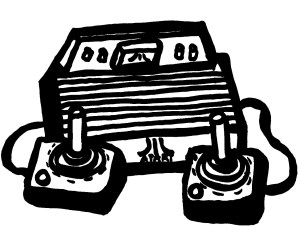
Cloak & Dagger is different from the average children’s movie, though, because it is extremely violent, making it super fun to watch as an adult. The film is about a dorky kid named Davey (Henry Thomas of E.T. fame) that spends most of his time going on adventures with his imaginary friend, Jack Flack (Dabney Coleman). Jack is the main character of Cloak & Dagger, a spy-adventure Atari game that Davey is obsessed with. After Davey is handed a Cloak & Dagger cartridge by a dying man in a stairwell, his life becomes Cloak & Dagger for real instead of for pretend. The cartridge contains top-secret government plans, and he must protect it at all costs. Things get crazy when a mysterious group of men hunt Davey down, intent to get their hands on the game (and to murder Davey in cold blood).

Brandon, were you surprised by the amount of violent action in Cloak & Dagger? What kind of reception do you think this film would receive if it was released in theaters today?

Brandon: I was definitely taken aback by the violence of Cloak & Dagger. Shocked, even. The film’s Video Game: The Movie gimmickry and casting of Dabney Coleman (in a dual role as both father & imaginary friend) promises a fun, goofy knockoff of WarGames about a young boy’s spy-mission fantasy antics. Instead, Cloak & Dagger mostly plays like a terrifying thriller about an international network of ruthless child murderers, only wearing its PG kids’ adventure movie pedigree as a disguise. The gleeful brutality of the child-hunting terrorists in Cloak & Dagger extends far beyond the normal Bad Guy goons just doing their jobs that typically fill the villain roles in these kinds of movies; they’re really looking forward to destroying their pint-sized tagrets (E.T.‘s Henry Thomas is paired up with a precocious Drew Barrymore-type for a sidekick, go figure), even more so than recovering their top-secret video game cartridge. The children of Cloak & Dagger are throttled, shot at, nearly stabbed, delivered bombs and, most cruelly, locked in car trunks with the corpses of their dead friends. Burly men burst into their homes, growling threats of how they’re going to blow up the entire neighborhood or shoot out the kids’ kneecaps before actually killing them, just to watch them bleed. All of this violence is supposedly in service of teaching Davey a lesson about how the adventurism he craves is no match for the stability of the loving home his father provides, but it is pushed to a traumatic extreme that definitely feels distinct for the genre.

As extreme as the brutality of Cloak & Dagger feels in retrospect, the film is clearly a product of its time. Sneaking into theaters just before the advent of the PG-13 rating, it got away with a lot of its violence because of the amoral grey area of not-quite-children’s-media that arose & died in its era. Along with Spielberg productions like Gremlins & Indiana Jones and the Temple of Doom, Cloak & Dagger presented a confounding trend for the uptight pearl-clutchers at the MPAA: films that weren’t sexually crass enough to earn an R-rating, but were far too violent to be rated PG, requiring the invention of an entirely new rating. If released even months later, Cloak & Dagger would have been saddled with a PG-13 rating, which likely would have preempted it from becoming a modest hit. Cutting out that much of its potential customer base (by making a children’s movie only teenagers could see without a guardian in tow) would likely mean that a modern release of Cloak & Dagger either wouldn’t be greenlit in the first place, or would be sanitized of the violence that makes it distinct. Modern audiences struggle with embracing violent children-in-danger narratives in general, and the few that sneak through (Midnight Special, Kubo and the Two Strings, and Tomorrowland, to name a recent few) are often commercially shrugged off until they effectively disappear. The PG-rated brutality of Cloak & Dagger is just as 1980s-specific as the kids in the film being given free reign to ride the city bus wherever they like without chaperones and waving around black plastic toy guns in office buildings; it simply wouldn’t be permissed in modern day.

Of course, Cloak & Dagger is also adorably dated to the 1980s in its treatment of video game culture as an opportunity for a cash-grab, a flash-in-the-pan fad. One of the first instances of corporate synergy in the cinematic video game tie-in market (via a real-life Cloak & Dagger game simultaneously released to arcades by Atari) this film could have just as easily been titled Video Game: The Movie. Yet, it doesn’t seem to understand video games at all, likening all types of gaming (role play, cards, board games, arcades) as if they were all of the same cloth and not separate forms of amusement. CC, what do you make of Cloak & Dagger‘s adorably antiquated understanding of video game culture and how that tone clashes with the severity of its children-in-danger brutality? Does that juxtaposition date the film in a delightfully entertaining way or is it prohibitively distracting?

CC: I wasn’t there to experience it, so I could be wrong, but I feel like leisure activities have dramatically evolved in the past 50 years. When Cloak & Dagger came out, I’m not 100% sure that video games were seen by the wider culture as any different from table-top RPGs, card games, board games, or the games of skill seen in arcade halls. The types of amusements depicted in Cloak & Dagger were once considered the amusements of children – and children only. The only adult who plays video games in the movie was portrayed as a socially awkward nerd who is coded as existing in a state of arrested development. Now that video games are mainstream and firmly established as their own multi-billion-dollar industry, separate from all other types of gaming, I feel like the distance between these types of amusement has expanded. Further, the desire of the children of the 1980s to continue playing video games as they got older pushed it into the mainstream and increased the age of the average player. Today, I feel like table-top RPGs and campaign board games are more of a late-teen to adult amusement. Or perhaps I’m overestimating the level of perceived difference in types of gaming among actual gamers and the jumbling of elements has more to do with the writers’ cluelessness?

I never really felt that the clash between the gaming sensibilities and the violence were what was jarring. It was simply the protagonist’s young age that made the level of violence seem discordant. Personally, I liked the level of violence in this because it drove home the point that the Cold War Era table-top RPGs our protagonist was obsessed with included a huge amount of senseless violence. It’s only when you see that gore portrayed onscreen that you understand the intensity of the violence in the fantasy world he was already immersed in. On the page it’s fun and games, but in real life it’s terrifying.

Boomer, during our October Movie of the Month discussion for The Pit we talked a little bit about the mental health of Jamie, the sociopathic (but previously written as autistic or at least on the spectrum) lead. I feel like this film also walks a fine line between portraying its protagonist, Davey, as an obsessed child who gets carried away with his games to the point of hallucinating his hero Jack Flack – and a normal, but imaginative child who is truly trapped in a dangerous situation. How do you think this film handled Davey’s mental state? Did you feel that the level of judgement towards Davey’s game-playing was warranted?

Boomer: There’s certainly a level of “the newest form of entertainment is evil” panic present in the film, at least as far as Davey’s father is concerned. Some of this could simply be a filmmaker’s panic about video games; after all, history is filled with (externally moralized) panic about television replacing film, phonographs replacing people’s desire to learn how to play a musical instrument, and the printing press being an invention of the devil. With the advent of home gaming in the early 80s, there were many attempts to demonize that there newfangled video console. (Given that the video game industry is making money hand over fist and pulling in more revenue than movies, perhaps their concerns were justified.) Within the context of the film itself, Davey’s father’s concerns are justified: while he’s at work, his son gets so into his fantasy world that he’s wandering around downtown San Antonio and flashing very realistic toy guns in front of office lobby security. The security guard who sees a kid with what could easily be a real gun and doesn’t do anything about it is really bad at his job. While it would have been pretty bad for the elderly spies to escape with the secret stealth bomber plans hidden on the cartridge, this plot should never have happened, because Davey should have been asked where his parents were and his dad should have been called at work as soon as he flashed his piece in a crowded building. I live in Texas and the open carry laws are pretty lenient, but even in the 80s this wouldn’t have flown. The film sets up Mr. Osborne to be, within the context of this narrative, rightfully concerned that Davey is experiencing some degree of difficulty separating reality from fantasy, and so the lesson for children does seem to be that video games (and by association tabletop RPGs, etc.) are not to be trusted. Alternatively, a reasonable kid could also take away the lesson that, should you happen to witness a murder or something else you can’t immediately prove, maybe you should explain it to your parents in a realistic way and not talk about your imaginary friend in the process; that ups your credibility. Further, as with most stories in which new media are denigrated, most kids will recognize that the people making it have no idea how any of it works, which is in full evidence here in the way that no one making the movie understands how video games work or how figurines could play into it.

Brandon noted that this is part of that 80s zeitgeist of movies in which kids are doing pretty spectacular things, and they either fool their parents (who are useless), or their parents don’t believe them (again, useless), until at the end of the film Mom or Dad (never both in the 80s: Dad’s either left the family or Mom’s dead) demonstrate that they really do love Child Protagonist in a way that could be dangerous to them, but it all works out in the end. One of the things that this film didn’t do was have the two single parents of the kids have that moment at the end when everyone’s safe and they look at each other with a “maybe romance?” twinkle in their respective eyes. In fact, given the overall level of violence (it hasn’t been mentioned yet, but our Child Protagonist kills a man) and a pretty winding plot, there are probably more “rules” of kids movies from this era that are being broken that I’m overlooking. Britnee, as the expert on this genre and the person who’s seen Cloak & Dagger more than once, what are some of the other subversions and broken rules at play here?

Britnee: Piggybacking off your statements about the role of parents in 1980s kids’ movies, often when the child has a deceased parent there’s at least one or two scenes where they have an “I wish Mom/Dad was here” moment, or something is done to honor their parent’s memory. A memorable example would be when Bastian from The NeverEnding Story calls the Childlike Empress “Moonchild,” which is believed to be the name of his late mother. This trope even persists in animated children films of the 1980s. In The Land Before Time (which I still truly cannot watch without crying like a baby until this day), the spirit of Littlefoot’s deceased mother guides him on his journey to The Great Valley. The only mention of Davey’s deceased mother in Cloak & Dagger is from his father. Davey never talks about her or references her, and she never shows up to give him any sort of spiritual guidance. Perhaps having the memory of his mother more present in his decision-making would have softened up the film a bit?

What really stood out to me after watching Cloak & Dagger recently is how Davey was so willing to go with the elderly couple who end up being total creeps. For some reason, in both film and in real life, the older a person is, the safer they seem to be. The sweetly helpful elderly couple is all too common of a trope in children’s movies, so the twist that they are villains here is shocking. Trusting the old couple was the biggest mistake that Davey made because they were just as evil as the pack of child-killers chasing him. The most important lesson that can be learned from Cloak & Dagger is that Stranger Danger has no age limit.

Cloak & Dagger also strays away from the average 1980s kids’ movie because there’s really nothing magical or whimsical in it. There are no buried treasures or mythical creatures. The villains are grown men with guns; it takes place in San Antonio, Texas; and all that’s at stake are some lame secret government plans. Even though Jack is an imaginary friend, he doesn’t have any superpowers or magical abilities, which are typical imaginary friend qualities. The only thing in the film that was a little outside-of-the-box is the giant multi-sided dice in the opening scene. The more that I think about it, Cloak & Dagger is essentially a kids’ movie made for old men.

Brandon, do you think the film would have been better if Jack had superpowers? Like making weapons appear out of thin air for Davey to use against the bad guys?

Brandon: I was delighted by the jarring, Top Secret!-style spy-movie spoof that opens Cloak & Dagger, but I’m also glad the fantasy stopped there. That run-in with the giant dice is a concise, disorienting taste of Davey’s inner-fantasy life before the film moves on to contrast that escapism with the harsh, violent realities of the real world. Giving Jack Flack real-world superpowers might have made for a different kind of fun kids’ movie, but it would have ruined the dynamic that makes this one so special: the disconnect between Davey’s swashbuckling boys’ adventurism and the real-life implications of the violence that often defines those adventures. That dynamic is not only fascinating because of the horrific levels of 80s action movie violence leveled on children in a PG context, but also because of how it affects Davey’s relationship with his overworked father.

As Boomer already touched on, Cloak & Dagger stands out as the rare children’s film where both the kid & the parent actually have a point in their central conflict. Yes, Daddy-Dabney Coleman faces the same resentments about valuing career over family that plague most single parents in kids’ media. However, his explanation to Davey that “real heroes do boring things” like provide stability & shelter for their loved ones (instead of saving the world in grand, bullet-riddled adventures) is more justification than most single-parent archetypes get in this context. At the same time, Davey’s insistence that his dad play along with his interest in gaming so that they can spend intimate, quality time together is also justified by the danger that envelops him when he’s left to his own devices (namely, an Atari & a bus pass). Giving Imaginary Dabney Coleman real-life superpowers might have tipped the scales of justification further in Davey’s direction, which would be a shame since it’s rare to see such an evenly weighted parental conflict in a kids’ movie.

Cloak & Dagger was originally adapted from a short story (presumably written solely to pitch the movie) titled “The Boy Who Cried Murder,” so there’s plenty of implication that the film was meant to serve as a cautionary tale about getting lost in the fantasy of gaming – the same alarmist territory covered in the Tom Hanks Dungeons & Dragons cautionary tale Mazes & Monsters. At the same time, the film really wants you to invest in the struggling Atari console, so much so that it’s directly marketing a tie-in Cloak & Dagger video game by incorporating its cartridge & gameplay as a central part of the plot. Daddy-Dabney Coleman is also taught a lesson that parents should not blindly dismiss their kids’ interest in gaming, encouraging them to play along so they can be involved in their kids’ inner lives. CC, what do you make of this self-contradictory moralizing about the dangers of gaming and encouragement for parents to play Atari with their kids? Does Cloak & Dagger attempt “to have its cake & eat it too” or does it make a clear, substantive statement about whether gaming is a danger or if it’s harmless fun?

CC: It’s difficult to parse out the filmmakers’ intent, but there is definitely an internal struggle between the idea that games are a dangerous mind-suck and the reaction that golly-gee, that new Atari game sure looks swell. Even when they’re trying to sell you a new video game, they make it very clear that, unless you’re a well-adjusted parent trying to forge a stronger bond with your child, the only adults that play games are socially awkward nerds. They certainly spend more of the film’s runtime emphasizing the dark sides of gaming (obsession, fantastic delusion, misplaced trust in the elderly) that any pro-gaming messages seem like an afterthought, or were perhaps shoehorned in after Atari’s team watched the rough cut.

At the end of the day, it doesn’t really matter what the intent was. Due to the video game crash of 1983, Atari halted production on the home console version of Cloak & Dagger (and the company went bankrupt shortly after). All of the screenshots in the film were pulled from the arcade version and the cartridges were fakes. Perhaps the conflicted tone of the movie gives us some insights into the turmoil of Atari’s marketing department. With friends like these, who needs enemies?

Mark, imagine you were the right age when Cloak & Dagger came out (and Atari had released the home console version). Would you have wanted to purchase your own copy after seeing this movie?

Boomer: You know, I don’t think that I would have been that into it, but I’m not sure. I like video games and always have, but I’ve never really been much of a “gamer” (especially as, almost from its inception, online gaming has been a cesspool of homophobic and racist language used by children without oversight or parental guidance), and I’m old enough to remember when the gatekeepers of that fandom looked down on me for my unending love of Halo (then derogatorily referred to as a “Doom clone” before we came to call those games by the more appropriate term “first person shooter”). But as a kid growing up in economically depressed Southeastern Louisiana, we were always behind the times technologically, although I still clearly remember getting the original Game Boy for Christmas in 1995, six years after its release, and I’ve been lagging behind ever since; I bought my Xbox 360 in 2008, three years after it hit the shelves and even then only because my tax return that year was pretty good, and ten years later it’s still the most sophisticated thing that I own. That having been said, the depictions of video games in movies rarely piques my interest, and I don’t think that this would have been any different had I been the appropriate age for this film when it was released. It makes an interesting companion piece to The Wizard, which came out 5 years later and which I do remember from its television airings when I was younger; I remember being fond of that movie, but that might simply be the fact that even as a child I knew that I would follow Jenny Lewis to the ends of the earth. The first video game I can remember playing in the home (the local seafood po-boy place at the corner of Plank and Hwy 64 had both Pole Position and Ms. Pac-Man, both over ten years old by that point) was the bizarre Bouncing Babies, which came with our monochromatic MS-DOS HP that was inherited from a friend of the family in 1996 (again, 12 years after that game was originally released) and which I loved.

The actual gameplay of the Cloak & Dagger video game that we see doesn’t look like much fun, to be honest, and I don’t think even child-Boomer would have been impressed or interested. The graphics are bad, even for that time; compare the onscreen presentation to something like Frogger, Donkey Kong, and especially Dragon’s Lair, all of which predated or were contemporaries of C&D, and there’s really no contest. Cloak & Dagger looks muddied, clipped, and just plain ugly. Of course, that may just be the way that the refresh rate on the monitors that characters are using in the movie interacted with film, since actual screengrabs from the game look amazing in comparison. Still, as a kid, I don’t think that I would have been that interested, especially since even for a patient kid like me, this movie was long, and the gameplay was the least captivating thing about it. I would have been much more interested in the real-world make-believe play-acting that the kids in this movie did. In fact, if I remember correctly, I used to desperately want a pair of amazing walkie-talkies that I could use to talk to my best friend from a long way away more than I wanted anything else as a kid, a desire that was fanned by other movies with similarly unrealistic performance ranges (I’m looking at you, Three Ninjas).

The other thing that would have really stood out to me as a kid, even more than its video game subplot, were the villains. The elderly couple make for pretty memorable antagonists. I told a friend that I had watched this movie the day before, and he said that this was on the movies that his elementary school had on VHS to be pulled out on rainy days (which . . . yikes). When asking questions to make sure he was remembering the right movie, he didn’t mention any Atari cartridges or an imaginary friend: his strongest memory was of the evil elderly spies. Take from that what you will.

Lagniappe

Boomer: So this movie is pretty blatantly propaganda for San Antonio’s public transportation system, right? That and the River Walk.

Britnee: Dabney Coleman looks like he smells like a mix of chewing tobacco and fabric softener. This applies to his role as Davey’s father and as Jack Flack.

Brandon: It was kind of a bold move both for Henry Thomas’s agent and for Atari to risk associating the young actor with gaming so soon after the E.T. video game disaster. The E.T. tie-in video game was such an embarrassing flop for Atari (due mostly to poor craftsmanship in its rush to market) that it’s cited as one of the major contributing factors for the video game industry crash of 1983 – the very thing that made desperate last-ditch revitalization efforts like Cloak & Dagger necessary in the first place. As confirmed in the 2014 documentary Atari: Game Over, thousands of copies of the E.T. game were buried in a New Mexico landfill to clear the unsold stock, each with Henry Thomas’s face on the cartridge. That’s not necessarily the first face I would think to cast in my movie about a video game fantasy adventure.

CC: As much as I like kids in danger, I dunno, this one doesn’t do it for me. I think Britnee got it right when she said it was a kids film for old men. Plus the opening scene reminded me of Top Secret! & The Naked Gun and I hate ZAZ/Leslie Nielsen films.

Upcoming Movies of the Month
January: The Top Films of 2018

-The Swampflix Crew

Movie of the Month: Beyond the Black Rainbow (2010)

Every month one of us makes the rest of the crew watch a movie they’ve never seen before and we discuss it afterwards. This month Brandon made Boomer, Britnee, and CC watch Beyond the Black Rainbow (2010).

Brandon: Full disclosure: for a long time, I had planned for my final Movie of the Month selection for the year to be Mario Bava’s space exploration creep-out Planet of the Vampires, but I decided at the last minute to swap it out for another highly stylized sci-fi horror instead. When recently watching Panos Cosmatos’s grueling, psychedelic descent into human misery Mandy in the theater, I felt compelled to switch tracks and bring the Swampflix crew back to the director’s 2010 debut, Beyond the Black Rainbow. Mandy has been a highly divisive film, splitting audiences between finding its slow-motion, style-over-substance psychedelia frustratingly stubborn and being wholly won over by the pure sensory pleasures therein. I personally found Mandy’s religious worship of 80s genre cinema’s neon & synths aesthetic to be wonderfully stupefying, a technical & emotional knockout that had me stumbling from the theater in a daze. Oddly, I’ve also been obsessively reading fiercely negative takes on the film in the weeks since, browsing complaints as varied as it being too macho, too nostalgic in its retro genre pastiche, and too arbitrarily Weird as a for-its-own-sake indulgence. This happens often when I latch on to a new highly-divisive, highly-stylized genre film: it’s all I want to think or talk about for weeks, but I only want to read the most bitterly negative takes on its merits available, almost as if to challenge my own admiration. It’s happened recently with titles like The Neon Demon, Tale of Tales, We Are the Flesh, Double Lover, and mother!, but more importantly it also happened in the early days of Swampflix when I first discovered Beyond the Black Rainbow, Panos Cosmatos’s debut (and one of our very first five-star reviews). As I’ve been obsessing over both the immense sensory pleasures & fiercely negative critical takes of Cosmatos’s latest work, it feels like I’m re-entering a cycle I already lived through with his previous feature, making an intensive re-examination of Beyond the Black Rainbow practically mandatory.

Like Mandy, Beyond the Black Rainbow is set in an alternate-dimension 1983 overrun with evil LSD cults and heavy metal mysticism. This particular neon-lit nightmare is mostly contained in the (literally) underground Arboria Institute, a medical research facility dedicated to the Scientology-reminiscent goal of achieving happiness & inner peace through a melding of science & theology. This pseudoscience approach to achieving “serenity through technology” is vaguely defined at best, but mostly appears to be hinged on two key experiments: a 1960s LSD ritual explained in horrific flashbacks to open participants to Lovecraftian knowledge of the Infinite and current, ongoing research of a young woman with telepathic abilities who mysteriously seems to have been born of these earlier acid rituals. Most of the narrative (what little there is) focuses on the young woman, Elena, who is held captive at the Arboria Institute via a glowing pyramid-shaped contraption that limits her telepathic abilities when activated. Although the institute’s mission is to find happiness through science, this captivity has only served to make both the captive Elena and her menacing captors (especially the menacing brute Dr. Barry Nyle) the most miserable beings on the planet. Elena silently weeps in a depressed haze under the pyramid’s invisible oppression for most of the runtime, until she manages a slow-moving escape from the facility in the final act. The concluding minutes of Beyond the Black Rainbow make for a jarring tonal shift, as Elena & Barry’s violent clash with unsuspecting, beer-swilling metal heads in the real world feels like it’s from a cheap VHS-era slasher, whereas all the pseudoscience LSD mysticism that precedes it feels like it’s from another planet. There’s flashes of kitschy humor in the film’s earlier indulgences in 1980s genre imagery, but so much of the film is so stubbornly slow & relentlessly dour that the audience is not at all prepared for the more conventional horror payoffs of the concluding bloodshed.

It almost feels beside the point to discuss Beyond the Black Rainbow in terms of plot choices, but I feel like that final-minutes shift from ethereal mysticism to humorously familiar genre tropes is where this film loses even potential fans who are okay with its stubbornly quiet build-up. After so much careful attention is paid to the sensory delights & horrors of the first section’s reaches beyond perceived reality, that intentionally comedic return to pedestrian knuckleheads sharing cheap beer on Planet Earth has turned some audiences off for making the film play like a feature-length prank, whether or not they found any humor in the earlier stretch. Boomer, what do you think of Beyond the Black Rainbow’s balance between genuine filmmaking beauty and prankish 80s pastiche humor? Was your overall opinion of the film challenged or reinforced by its concluding minutes of genre-traditional bloodshed?

Boomer: It is interesting that, for the second month in a row, we’ve watched a horror movie that starts out as a psychological thriller, albeit one with pseudoscientific elements (the cryptozoological tra-la-logs in The Pit and the bizarre fringe parascience of Black Rainbow) that turns into a more conventional genre film toward the conclusion. Whereas that was something that I didn’t care for in The Pit, I found it less intrusive here in Black Rainbow, if for no other reason than that the latter seems to be entirely predicated upon both being extremely conventional in its subject matter while defying convention at the same time. Nostalgia for the horror of the late-1970s-bleeding-into-the-1980s is pretty much my jam, and although it’s certainly reaching a saturation point in the wake of Stranger Things, I had to keep reminding myself throughout the entirety of Black Rainbow that it predates Things by a the better part of a decade—beating some of the more triumphant examples of this subgenre, like 2014’s superb The Guest (which is the perfect distillation of this concept into a modern environment), 2015’s It Follows (which helped popularize the style in the mainstream, paving the way for Stranger Things, IT, and many others), and M83’s 2011 “Midnight City“-“Reunion“-“Waitvideo cycle (which, for my money, is probably the purest and most beautiful example). So while Black Rainbow was ahead of the curve, riding the wave before the tide came in, its reversion to a more typical kind of 80s horror in its final minutes isn’t surprising or, to my mind, detrimental. Like the film overall, its magic (and madness) lies in invoking the rhetorical space of one concept and juxtaposing it with a dissonant one. For me, the best example of this is when the film forsakes its hypnotic droning during the emergence of the Sentionaut for a more evocative, almost peppy motif. It’s not just an auditory break in the—for lack of a better term—monotony, but its visuals as well, with the emergence of a Daft-Punk-by-way-of-Dave-Bowman entity into the Kubrickian ascetic aesthetic that permeates the film.

My roommate and I joked that the script for Black Rainbow was probably about 15 pages long, full of directions like “[droning]“, “[higher pitched droning]“, and “[buzzing]“. We got a kick out of the film, despite his general objection to films like this that he considers “self-indulgent.” Here’s a direct quote: “I”m really liking this movie, despite its best attempts to make me hate it.” Also: “See, this is what I thought Raw was going to be, which is why I resisted it for so long. Is this what Neon Demon was like?” And one from me, from the scene in which Elena (slooooowly) telekinetically crushes the head of Margo, the cruel nurse: “Man, they should have called this movie Scannerzzzzzzz.” It’s strange, because I often find myself drawn to movies that I would consider to be feature-length music videos and completely immerse myself in their worlds (Oblivion is a film I would consider to be part of this list, although it has a lot more going on narratively than most examples, even if said plot is fairly run-of-the-mill), but he and I both found Black Rainbow entrancing and sometimes it pushes you right out of the moment. What he calls “self-indulgent” I would consider to be more bathetic: many of the moments of Dr. Nyle staring into the middle distance hold on a frame (or thirty) too long, effectively losing the tension instead of sustaining it. Granted, this is a matter of interpretation, and likely has more to do with environment and frame of mind than the filmmaker’s intention. It’s all intentional and demonstrates a masterful ability of filmcrafting, not to mention a fearlessness when it comes to creating a piece of art that will not only be “niche,” but actively and viscerally rejected by the majority of the filmgoing audience. Black Rainbow is exactly the kind of sententious film that I imagine making, all maximal style and minimally substantive, hearkening back to the visual and visceral horror (that which was viewed and that which was imagined) of my youth, more imitative and moody than necessary. I would make a much worse movie, however.

One of the things that caught my attention in reading about the film after screening it was that director Cosmatos would often walk the horror aisle of the video rental shop and have to imagine what the film was like based on the cover and the title alone, as renting them was forbidden. This, too, I did as a child, and I vividly remember the giant cardboard standee of Silence of the Lambs and the cover art for Chopping Mall and So I Married an Axe Murderer (my imagined version of this was neither better nor worse than the real thing, but it was certainly gorier). Black Rainbow owes a lot of its plot (such as it is) to re-imagined bits and pieces of various 70s and 80s media, most notably taking visual inspiration from 2001 and borrowing most of the plot from a mishmash of Altered States (notably the mutation from psychedelic and hallucinatory experimentation), Akira, Firestarter, The Fury, and even a little bit of D.A.R.Y.L. with visual flair from Poltergeist for good measure. CC, do you think that this borrowing of visuals and ideas from other films strengthens or weakens Rainbow? What are some of the visuals that came from elsewhere that I’ve overlooked? (For instance, I know I’ve seen that mutant before, and the glowing pyramid, but I can’t figure out their origin.) Would the film have benefited from using more original concepts and ideas, or would that have missed the point?

CC: As a lifelong sci-fi fan, I really love the current trend of atmospheric horror filtered through half-remembered nightmares and analog equipment [see: The Void (2016), Berbarian Sound Studio (2012), We Are the Flesh (2016), High-Rise (2015), The Strange Colour of Your Body’s Tears (2013), and Too Many Cooks (2014)]. Beyond the Black Rainbow predated these films by at least a couple years and really set the stage for things to come. I think that for a film so sparing with dialogue and narrative explanations, having those familiar visual and auditory clues gave viewers something to grasp onto. In my case, I really latched onto Beyond the Black Rainbow‘s use of the popular 80s trope of children either in danger or the source of danger (which I have already mentioned in the last MotM as one of my favorite tropes). (Also, thank you Mark for sending us those M83 videos! They had completely escaped my radar.)

I think we’ve all done a good job so far of identifying the specific cinematic influences and tropes in Beyond the Black Rainbow, so I’ll address the weirder influences I noticed. Looking back at my notes on the Sentionauts (terrifying helmeted golems of red leather and black plastic), I wrote down Garth Nix’s book Shade’s Children, a 1997 YA novel where it is revealed that the gigantic humanoid soldiers (myrmidons) engineered by the bad guys are actually captured human children who are sterilized by excessive steroid use and put inside mind controlling mechsuits, which is a pretty good description of those things in the red suits. And, Mark, as for the zombie mutant she encounters, I keep trying to figure out what it looks most like and it’s a three-way tie between Dr. Pretorious in From Beyond, Bib Fortuna from Star Wars, and a neomorph.

I’ve never had an issue with a film borrowing the style or ideas from another movie, unless it constantly tells you it’s doing it [see: Deadpool]. Todd Haynes’s Far From Heaven and Wes Craven’s Scream are both examples of loving tributes to their source material and exemplary works in their own right. I feel like the endless rebooting, remaking, and remixing we’re seeing in popular cinema today is a natural outgrowth of post-Modernism and a defining characteristic of our cultural landscape; it’s not necessarily good or bad on principle (even though the films produced may certainly be judged on their own merits). We have access to so many sources of inspiration nowadays that a person can be influenced by the non-Euclidian angles of German Expressionist cinema and the garbage bin unsavoryness of 1980s video nasties. Pastiche is a way for filmmakers to explore the ideas that they’re most interested in through the visual language they were influenced by. In writing, pastiche is often used to better hone your own voice because using an exaggerated version of another author or genre’s style can help you figure out what’s unique about your work. It’s a useful tool.

Britnee, we keep looping back to all the ways Beyond the Black Rainbow pulls from other sources, but never really talk about what makes it original. Even though it is in constant dialogue with its influences, I’m not sure if I’ve ever seen anything quite like it. But maybe I’m wrong? In your opinion, what are, if any, the unique elements of this film?

Britnee: I don’t know if there’s something seriously wrong with me, but when I reflect on everything that happened in Beyond the Black Rainbow, my brain immediately goes to the scene where Barry’s wife, Rosemary, is caught sleeping/meditating (don’t ever let Barry catch you sleeping!), and she comes out of her trance to say, “If you’re hungry, there’s some brown rice and steamed asparagus in the refrigerator.” A leftover meal of brown rice and steamed asparagus is just as bland as the relationship between Barry and Rosemary, which is one of the more unique elements of the film. Sure, a miserable marriage in cinema is nothing out of the ordinary, but the way in which Barry and Rosemary communicate with each other is unlike anything I’ve really seen before. Rosemary makes only a few small appearances, but in each one, it’s obvious that she is terrified of Barry. After all, he is the living definition of a creep. Her fear of Barry is present in the way she speaks, her body language, and her mental state when she is in his presence. It’s not the type of fear that would lead one to believe he’s an abusive husband, but it’s more of a fear that he’s some sort of creature, keeping her captive in a remote house in the woods. Rosemary plays such a minor role in the film, and I’m amazed at how much of her character impacted me.

Another element that is unique to Beyond the Black Rainbow is the transitions between scenes. It reminds me a lot of the nuclear shadows caused by the bombing at Hiroshima. The slow transitions burned images from one scene into the next, and it was difficult to tell when they disappeared completely. I was hypnotized as I kept my focus on Elena’s face and it turned into a mere shadow in the bright, neon red screen before shifting to Barry lingering around the Aboria Institute. The way these scene transitions slowed my breathing and relaxed my muscles was super weird, but I was really into it.

Barry’s obsession with Elena has been sitting in the back of my mind for a while. He seems to get some sort of erotic pleasure from her, but I can’t figure out if it’s because he loved her mother or if he’s a sadist that gets off on her pain. Brandon, what are your thoughts on Barry’s fascination with Elena? Is she merely an experiment he’s highly interested in or is there something else going on?

Brandon: It’s difficult to say what any character in Beyond the Black Rainbow is thinking or feeling, since the film’s basic narrative is so opaque & stubbornly vague. The most emotion I sensed from Barry throughout the film was a seething resentment for everyone around him, almost in a macho midlife crisis reaction to the monotony his life had devolved into. The three women in Barry’s life (his captive Elena, his eternally sleepy housewife Rosemary, and his bumbling coworker/subordinate Margo) all receive the same hushed, barely-restrained anger from him, so it’s difficult to say if his resentment of & fixation on Elena is any different in tone than the mood he projects elsewhere in his miniscule social circle. The only insight we get into why he’s so corrosively resentful is in the flashback to the mysterious LSD ritual that transformed him (Altered States-style) into a new, inhuman beast. In a literal sense, Elena is a prisoner to the Arboria Institute’s experiments, as she’s physically held captive under Barry’s “care” (via the glowing pyramid contraption). To an extent, Barry himself is a figurative prisoner of the same experiment. He’s continuing the work of the decrepit, senile Dr. Arboria long after the research meant to achieve “serenity through technology” had demonstrably, disastrously failed. Elena personifies to Barry a failed experiment that he must see to the daily monotony of continuing out of habit & lack of other options. He’s technically freer than Elena to roam wherever he likes, but they’re both stuck on either side of the same observation glass, prisoners to the same never-ending, increasingly pointless research. That must be a difficult daily monotony to subscribe to after “looking into the Eye of God” in the earlier LSD experiment where he was the subject, a frustration he nastily takes out on everyone around him.

What I find most interesting about Barry’s seething, resentful anger is how it contrasts with the deep, unending despair suffered on Elena’s side of the glass. Elena is not afforded nearly as much backstory as Barry (read: any), yet Eva Bourne’s physical performance of total emotional devastation in the role conveys the full severity of what she’s feeling. I had remembered Beyond the Black Rainbow as being less plotty and less emotional than Mandy, but after this revisit I’m not convinced that’s entirely true. Between Barry’s resentful anger & Elena’s silent anguish, Beyond the Black Rainbow traffics in plenty of extreme emotional expression; it’s just not the aspect of the film that stuck with me most on first watch. Boomer, did any of the emotional havoc wrought by the Arboria Institute’s experiments on this small, quiet cast of characters resonate with you on your own initial viewing or was all of that effect overwhelmed by the film’s sensory pleasures and nostalgic genre throwbacks?

Boomer: Although I share Britnee’s enthusiasm for Rosemary (largely because the actor looked so familiar and I just could not place her until I looked her up; she was one of the representatives on the Quorum in the rebooted Battlestar Galactica!), the person I most connected to was Margo. It’s not that I was fond of her at all—she was cruel, almost needlessly so. In fact, the general emptiness of the institute and her presence in it was telling. Maybe “vacancy” is a better word than “emptiness,” since it’s not just the largeness of the space that’s so effective, it’s the extent to which it’s obvious to the audience that this space was designed for many more people than just Barry, his captive, and his single employee—break rooms, cafeterias, etc. The other staff is long gone, hopefully having moved on to other opportunities and not turned into mutants, but either way, Margo sticking it out for the long haul after all of her colleagues departed or were destroyed is troubling. Even the discovery of Barry’s incomprehensible journals (the only part of which that stays on screen long enough to have an impact is the word “spermy,” which is nauseating), although it freaks her out for a moment, has no lasting power, as she’s back to doing her nefarious master’s bizarre bidding almost immediately.

It’s in that following scene that Margo becomes so much more menacing than Barry, albeit more subtly. She turns on the charm with Elena, becoming warm and almost maternal. In an uncanny approximation of playfulness, she asks Elena to show her what she has in her hands. Elena hides the supposed photo of her mother, refusing to give it up. I’ve seen this scene many times, in which a warm authority figure tries to draw out a withdrawn child; notably, the TV show Fringe (which can be reductively but not-inaccurately described as “the post-9/11 X-Files by way of Altered States) uses this a few times, when victim-of-childhood-experimentation-turned-FBI-agent Olivia Dunham interacts with pretty much any kid on the show. In this scene, however, you’re almost tricked into thinking Margo might be sincere, before she rips the photo from Elena’s hands and destroys it, leading to her own undoing. She’s the evil stepmother of this particular neon-drenched 80s fairy tale, and her immediate comeuppance is a mirror of her destructiveness. It’s really effective, and I think it’s actually the best acting we see in the film. Elena’s anguish is palpable; Barry’s fury is understated. Margo’s convictions and desires are still completely opaque, and this small moment of misdirection and cruelty is far more intriguing than the, as noted above, kind of obvious “killer chases the final girl through the woods” conclusion. Maybe it’s that this scene, like the Sentionauts scene, is an island of something different happening amidst the (intentional) monotony; after scene upon scene in which the only audio is a persistent and constant drone, the Sentionaut appears, accompanied by a gothy synth organ that calls to mind Claudio Simonetti or Ennio Morricone, Likewise, the scene with Margo is a rare event of explicitly human emotion happening amidst all of the inhuman ones.

CC, what did you think of Margo, who is arguably the most dynamic character in the film? Did her scenes speak to you the way they did to me, or am I latching onto something that’s not really there? What do you think her motivation was to keep working at this facility long after she had any reason to? Was it fear? Inertia? Something else?

CC: As a character, Margo did appear to be the only being within the film capable of acting and lying (or at least lying convincingly) and generally showed a wider range of emotions than Elena (blank and despondent), Barry (cold and furious), and Rosemary (sleepy and confused). To be honest, I never really thought about Margo after her (deserved) demise. Perhaps I dismissed her as a Nurse Ratched-type, a sadistic nurse who gets off on torturing their patients? When I look back at her scenes I find her so disgusted and pissed at Elena (and to be fair, Elena does give Margo a nosebleed with her telekinesis) that perhaps her later sadism towards Elena is not because she is evil or a sadist, but just because she’s an exhausted, put-upon woman who works for a psychopath and is the caretaker of a child that would love to blow her head off. Perhaps any of us would resort to crumpling a child’s only photo of her mom, if said child gave us nosebleeds every time we walked them back to their cell or if we were in charge of keeping a child in a cell so that a monster could conduct “experiments” that judging from his “notes” were mostly about reproductive organs, snippets of text like, “after she was drugged, she slept for 2 days”, and drawings of the third eye. But why stick with a job that turns you into a monster in the first place? You never get the sense that Margo wants to be there or that she’s contributing to the “vision” of the Arboria Institute. Barry, with his “appliances” and sexual obsession with Elena, is an obvious villain, but maybe the real evil in Panos Cosmatos’s film is the banal sadism of a person who doesn’t even know why they are participating in what is an obviously terrible situation.

Britnee, speaking of obsessive relationships, let’s talk about Panos Cosmatos’s obsession with films-within-films. He’s only made two movies so far, but both have featured fully realized short films (an infomercial for the Arboria Institute in Beyond the Black Rainbow and a mind-melting commercial for boxed pasta in Mandy). Do you ever get too into the fake films? In Hamlet 2 and Hunky Dory, both films about putting on a theatrical production, I always really want to watch the play instead of snippets of rehearsals between scenes of the actual film. Do you ever wish there were full-length versions of all these little things Cosmatos has obviously put so much work into?

Britnee: Speaking of the Arboria Institute infomercial, it reminded me of the “Behold the Coagula” infomercial in Get Out. Both give a quick background of each horrific institution and are significant pieces in their respective films. As for the question at hand, I could see the Arboria Institute infomercial as a sci-fi short film, but I think it would be kind of boring. Dr. Aboria’s voice sounds like a lame high school teacher, so having to listen to that for more than the three minutes in isolation would be a nightmare.

The Cheddar Goblin commercial in Mandy is a totally different story. With less than a minute of screen time, the Cheddar Goblin is the breakout star of the year. That cheesy little monster managed to sneak his way into our hearts, and he is practically an American icon at this point. I would love to see a feature length film about the Cheddar Goblin, presumably as would anyone else who has seen Mandy. Where did he come from and why does he want to eat macaroni & cheese only to immediately puke it up? We deserve to have these questions answered.

Lagniappe

Brandon: This years-delayed reassessment of Cosmatos’s debut felt more or less mandatory in light of his recent follow-up, so I was both immensely pleased by how well it holds up and relieved that everyone on the crew reacted positively to its sparse, beguiling charms. Just like Mandy, this is a beautiful, amusingly absurd bummer that I couldn’t fault anyone for dismissing as self-indulgent fluff even though I love it dearly. After the refresher, I’m not even sure I could pick a favorite between Cosmatos’s two features; I mostly just feel spoiled that we get to have them both.

Britnee: I seriously thought that Christian Bale was Barry Nyle until I looked up the movie on IMDb three days or so after initially watching it. I even had a conversation with my coworker that went something along the lines of “Hey, I watched this weird Christian Bale movie the other night called Beyond the Black Rainbow. You should check it out!” Perhaps I need some of the Aboria Institute’s services.

Boomer: I know I mentioned a lot of different pieces of media with regards to what this reminded me of, but I’ve finally got my roommate watching Fringe, and I honestly cannot recommend it highly enough. If you’re pressed for time, you can use Den of Geek’s roadmap for the series so you don’t have to watch every episode, as long as you go back and watch all the way through someday.

CC: Mark, I have a potential glowing pyramid visual reference, but this one is pretty niche. Do any of y’all remember the 1987-1991 NBC sci-fi sitcom Out of this World? No? I certainly do! The conceit is that our protagonist Evie Ethel Garland suddenly gains magical powers on her 13th birthday (Teen Witch much?) that cause all kinds of wacky mischief. She finds out that powers are inherited from her space alien father, voiced by Burt Reynolds, who was called back to his home planet when she was a baby. They really like to stress he is NOT a deadbeat dad; he reluctantly returned to fight in an intergalactic war. To communicate with his daughter while she learns about her powers, he gives her a glowing prism that is essentially a walkie-talkie. I should note that it does look more like a stack of clear cubes in a vaguely octahedron shape, BUT there are a bunch of glowing alien pyramids in the insane theme sequence:

Also, weird/fun MoTM tie-in, Evie’s best friend on Out of this World is played by actress Christina Nigra, who co-stars in next month’s MotM Cloak & Dagger!

Upcoming Movies of the Month
December: Britnee presents Cloak & Dagger (1984)
January: The Top Films of 2018

-The Swampflix Crew

Special Effects (1984)

Brian De Palma wasn’t the only director who released a sleazy version of Vertigo in 1984 that used a film industry term as its title; everybody’s second favorite weirdo workhorse (after Roger Corman, natch) Larry Cohen also churned Special Effects, which takes all the debatable class of Body Double and wrings it dry. Unfortunately, what you’re left with isn’t much to write home about.

Andrea Wilcox (Zoë Lund) is having a merry time in sleazy eighties New York. It may be Christmas outside, but it’s Independence Day on the set of a fake Oval Office where she rides a rotating platform in a star-spangled top hat and not much else. Trouble brews at the arrival of Keefe (Brad Rijn), the husband that she left behind in rural Texas to care for their toddler son. He’s arrived to take her home, and he won’t take “no” for an answer; despite some chicanery and attempted escapes, he manages to catch her and they go back to her apartment. While he rests, she escapes through the bathroom window and flees. Unsure where exactly to go, she ends up at the home of Christopher Neville (Eric Bogosian), a hotshot young director whose most recent picture was a complete flop, leading him to consider moving into making high-end porn instead. After sleazily setting up a camera behind a one-way mirror, he sleeps with Andrea, then kills her. When her body is later found, Detective Delroy (Kevin O’Connor) immediately suspects the jilted husband, but Neville pays Keefe’s bail and hires an attorney, claiming that he saw Keefe’s arrest and is fascinated by his story. Although Keefe is initially reluctant, he allows himself to be convinced to sign over the rights to his and Andrea’s narrative to Neville in exchange for being a consultant on the film. Detective Delroy is similarly distracted by the allure of the silver screen and likewise signs on to production.

While trying to track down Andrea’s possessions, Keefe ends up at the Salvation Army, where he meets Elaine Bernstein (Lund again), a woman whose resemblance to Andrea is uncanny. Neville hires her to portray Andrea in the film; and after an on-set altercation between the actor playing Keefe and the real Keefe, brought on by the realization that Andrea had slept with the actor, Keefe ends up playing himself. After murdering one of techs who processed the film negatives of Andrea’s death “scene,” Neville recreates his own bedroom on set and even includes certain touches, like a white rose, which lead to the perfect emulation of the day he killed Andrea, apparently in an attempt to frame Keefe for her murder by splicing together the two films. Keefe becomes suspicious and manages to acquire the film on which her murder occurs, but is unable to show it to Elaine before the footage is destroyed. But when Elaine is lured to Neville’s home so he can recreate the original footage of Andrea’s death, Keefe must save her despite Delroy’s suspicions.

The plot of this one is as thin as the celluloid it’s printed on. Rijn is obviously doing his best with the script that he’s given, but there are moments where he seems utterly lost, and it seems like the confusion is more Rijn’s than Keefe’s. Lund manages to make Elaine feel different from Andrea at first, but by the time Elaine dyes her hair to look like Andrea, Elaine seems to completely lack the street smarts that initially made her a separate character. Bogosian tries his best to balance malicious menace with approachable eccentricity, but his motivations are so unclear that not only is he completely unsympathetic, he’s also generically nonthreatening. Ten years before making this film, director Cohen sold a few ideas to Columbo; given that this film’s primary murder happens near the beginning and there’s no mystery about who the perpetrator is,this film feels like a feature-length episode of that show, but with sleazy nudity and an overlong denouement. All of the sets are ugly, including Neville’s house, and the cat-and-mouse in the dark after Keefe figures out the truth is more tedious than thrilling. All in all, unless you’re a Cohen completist, this is one to avoid.

-Mark “Boomer” Redmond

They’re Coming to Get You! (1972)

As this October continues to materialize, it appears that this is going to be the Halloween of Bad Cuts for yours truly, following the recent screening of the Creepers cut of Phenomena that I recently attended, plus the badly mangled VHS release of Mario Bava’s A Hatchet for the Honeymoon that recently found its way into my possession. The most recently discovered victim is Sergio Martino’s Tutti i colori del buio (All the Colors of the Dark), which was released to the English-speaking world as both Day of the Maniac and They’re Coming to Get You!, the latter of which is the cut to which I was subjected.

Jane Harrison (Edwige Fenech) is a woman suffering from a series of intense visions, apparently as a result of the trauma of miscarrying her child when live-in boyfriend Richard (George Hilton), a pharmaceutical rep, was at the wheel during a car crash the previous year. He insists that she keep taking her mysterious vitamins and that these will help to allay her hallucinations. Jane’s sister Barbara (Susan Scott) feels that Jane would benefit from a visit with her employer, psychologist Dr. Burton (George Rigaud), but Richard doesn’t believe in therapy and forbids Jane from going. Meanwhile, Jane also meets her new neighbor Mary (Marina Malfatti), who convinces Jane to join her at a “Sabbat,” promising that participating in the ritual helped her when she had similar problems. Jane’s visions primarily revolve around a man with preternaturally blue eyes (Ivan Rassimov) stabbing a woman to death, until she starts to see him in the real world: following her onto the metro, sitting in Dr. Burton’s waiting room, and standing outside her apartment complex. Finally, she also agrees to participate in the Sabbat, which turns out to be a Black Mass in which she is given a goblet of dog’s blood to drink by the dark priest (J.P. McBrian).

This description makes the film seem much more linear and consistent than it is, and perhaps the original film makes sense. What follows is completely discombobulated. The apparent Satanists attempt to convince Jane that she must kill Mary, and then show her Mary’s body, claiming that Jane followed through. Dr. Burton convinces Jane to spend the evening at his country house, where she will be safe from the Satanists, but she arises the next morning to find the caretaker and his wife murdered, only for Dr. Burton to return and be murdered as well before Jane is saved by Richard. Richard and Barbara seem to have some kind of past relationship, and he also makes eye contact with Mary early in the film while being observed by Jane, implying that he is somehow involved in her machinations, but nothing comes of this in the cut that I viewed; in fact, the They’re Coming to Get You! version ends with Jane finding the dead body of Richard in their apartment’s stairwell and then being discovered by another neighbor, who assumes that Jane killed him. Did she? Even for a giallo, this is a notably incomprehensible film.

According to a comparison between different versions that I was able to find online, the complete film establishes more connections between characters, and has a narrative that extends for another six minutes beyond the sudden conclusion of the They’re Coming to Get You! cut. Notably, the Satanists are actually drug dealers, and Barbara may be involved with them. I can’t speak to that version’s competency, but I can say that this cut should be avoided, if possible. Track down a complete version; that’s what I intend to do.

-Mark “Boomer” Redmond

Body Double (1984)

What if Vertigo wasn’t about vertigo, but was instead about claustrophobia? It feels like this is the catalyzing question that went through Brian De Palma’s mind when he first came up with the idea for 1984’s Body Double, a risque homage to one of the Master of Suspense’s greatest works (there’s also a little bit of Rear Window thrown in there just for good measure). In place of Jimmy Stewart’s Detective “Scottie” Ferguson, we instead meet Jake Scully (Craig Wasson) on one of the worst days of his life: after freezing up in claustrophobic terror on the set of the low-rent vampire flick in which he’s starring, Scully is sent home early, where he finds his girlfriend in the throes of passion with another man – she doesn’t even have the decency to stop. After running into friend-of-a-friend Sam Bouchard (Gregg Henry) a couple of different times at auditions and being rescued by him from an apparently emotionally abusive acting exercise in which he revisits the memory of being trapped behind a freezer during hide-and-seek as a child, Jake takes Sam up on the offer to house sit for him while he is out of town performing in a play. Sam takes Jake back to the home in question, the famous Chemosphere (aka Troy McClure’s house) and shows him the amenities: a fully stocked bar, rotating bed, and a telescope perfectly placed to watch the nightly erotic dance of a beautiful neighbor.

On his second night of housesitting, Jake witnesses a creepy-looking older man also watching the woman; the following day, he realizes that the other man is following her, so he pursues them both to a mall, where he overhears the neighbor planning to meet someone at a seaside hotel. He pursues her there, too, where the creep also lurks before snatching her purse. Jake chases him down, but is unable to follow him more than a few feet into a tunnel before his claustrophobia renders him immobile. The woman introduces herself as Gloria (Deborah Shelton), and the two share a passionate kiss after she confesses that she is unhappy in her marriage. Unfortunately, Jake’s new (and creepy) romance is over before it can truly begin, as he sees the villainous peeper burgling her home and arrives too late to save Gloria. The police are suspicious, but there are other witnesses, and though they are all rightfully disgusted by Jake’s voyeurism, he is released. Jake finds himself in a slump, until he sees porn star Holly Body (Melanie Griffith) performing a very familiar dance on late night television. So begins a journey of mistaken identity and duplicitous disguises that traces a path across LA, from reservoirs to the seedy (but also maybe kind of fun?) underbelly of the porn industry.

There are a lot of scenes in Body Double that draw on the visuals from Vertigo, and which highlight the Hitchcockian influence on this sleazy thriller. When Jake enters the tunnel and is paralyzed by his claustrophobia, the visual distortion that communicates his distress echoes the iconic top-down shot of Jimmy Stewart attempting to climb stairs. There’s also a shot of the famous tower at Fisherman’s Wharf, which calls to mind distant shots of the tower that becomes the site of the older film’s climactic showdown. Jake’s voyeurism reminds one of Jimmy Stewart’s other most famous role in a Hitchcock film; Rear Window presents Jeff’s peeping as largely harmless and ultimately beneficial to the resolution of a murder investigation. Body Double follows some of those same story beats, it doesn’t shy away from the fact that in the real world, such surveillance is deviant and creepy, happy ending or no. And then, of course, there’s the inclusion of Melanie Griffith, daughter of Tippi Hedren, star of The Birds (and Marnie, but let’s not talk about that). It’s admirably clever that De Palma, like John Carpenter before him when he cast Psycho star Vivien Leigh’s daughter Jamie Lee Curtis in Halloween, creates a rhetorical space in which he identifies himself as one of the next filmmaking generation’s Hitchcock successors by using the daughter of one of Hitchcock’s actresses. And that’s leaving aside the fact that Griffith is fantastic in this role, bringing vivaciousness and an unusual brand of smarts to what could otherwise have been a very of-the-era “dumb blonde” role. While Wasson’s Jake is an interesting character study, a seemingly ordinary man who easily falls into depravity, Griffith’s Holly is a porn star with a sense of humor and who won’t put up with any creeps giving her a hard time. She also knows her limits and is up front about them from the beginning: “I do not do animal acts. I do not do S&M or any variations of that particular bent, no water sports either. I will not shave my pussy, no fistfucking and absolutely no coming on my face. I get $2000 a day and I do not work without a contract.” In contrast, Jake is a man who’s never thought about what his limits are, but he finds that with very little prompting, he’s perfectly willing to perv on a strange woman long distance, stalk her around a mall, and follow her to a presumable hotel tryst. And, of course, steal underwear out of a trash can (it makes more sense in context, but only just).

The presumption that the audience will sympathize with Jake (which you do, to an extent; when this film was introduced as part of this summer’s Unhitched series, Wasson’s character was referred to as a “nebbishly inept weirdo”) is something that really dates this movie, but there’s another element that I don’t think De Palma could have predicted. I won’t name the actor to avoid spoiling it for you, but there’s a latex mask reveal (possibly foreshadowing De Palma’s eventual fate as the director of the first Mission Impossible film) in this movie that is completely undercut by the fact that the mask that the killer wears pretty much looks like the actor underneath does now, nearly 35 years later. The villain is also consistently referred to as “The Indian,” which is . . . not great. It’s a product of its time, a sleazy De Palma take on a Hitchcock classic, and as such it’s an oddity that I can’t recommend more highly. It’s definitely not going to be everyone’s cup of tea, but I haven’t been able to stop thinking about it for months. There’s a new 4k restoration making the rounds, and it’s well worth the price of admission. And, as Halloween approaches, if you generally like your scares a little more cerebral than slashy but still want to feel a little bit dirty, Body Double could be your new go-to.

-Mark “Boomer” Redmond

Hatchet for a Honeymoon (1970)

Hoo boy, is this cut a mess. Recently, the one true and original (read: “Austin”) Alamo Drafthouse weekly Terror Tuesday feature screened Creepers, aka the original botched American cut of Dario Argento’s Phenomena, which was trimmed from the full running time of 116 minutes to 86(!). Host Joe Ziemba defended this decision, made by a guest programmer, by noting that this was the cut that he had been raised on. This wasn’t really uncommon at the time, as films were cut both for content and length. I managed to come away with a few treasures from a recent VHS Swap Meet that was held in conjunction with Fantastic Fest, including Andrei Tarkovsky’s Nostalghia and what appears to be a Rapture preparedness video (I’m saving that one for last), but I also ended up with a heavily butchered (no pun intended) copy of a Mario Bava film that was originally titled Il rosso segno della follia (literally translated as The Red Sign of Madness), released by Charter Entertainment, a home video company that doesn’t even have a Wikipedia page (although there is an extensive library of their covers online). Their edition utilizes the title Hatchet for a Honeymoon, which isn’t consistent with the translated title, the film’s Wikipedia page (which calls it Hatchet for the Honeymoon), or the film’s listing on IMDb (which calls it A Hatchet for the Honeymoon). It’s also not consistent with the film itself, which features a cleaver and exactly zero hatchets.

John Harrington (Stephen Forsyth) is a dressmaker, specializing in wedding dresses and negligees: everything a woman might need for her wedding day—and night. He is also quite mad, as he explains in his opening voiceover; according to the film’s Wikipedia page, he also explains in this monologue that he has an Oedipus Complex and is impotent, but this isn’t in the Charter release outside of subtext throughout the film that would make much more sense with this inclusion. He is married to an “older” woman, Mildred (Laura Betti), with whom he has an openly antagonistic relationship despite the fact that she has funded his fashion house and also flatly refuses to give him the divorce he so desperately desires. Their morning breakfast is interrupted by Inspector Russell (Jesús Puente), who is still trying to learn the fate of three of Harrington’s models suddenly disappeared on their wedding nights; Harrington, of course, reveals in his continuing interior monologue that all three women are currently buried in his hothouse. New model Helen Wood (Dagmar Lassander) appears to take over as a model for the most recent victim, and Harrington is impressed by her moxie and intelligence, but he is distracted when model Alice (Femi Benussi) announces that she will have to leave the business, as she too is marrying. Harrington takes her to his creepy secret vault, in which dozens of mannequins wear various wedding dresses, and tells her to pick the one she wants to wear on her happy day. As soon as she tries one on, however, he hacks into her with his cleaver (again, not a hatchet) and cremates her body in his hothouse furnace and spreads her ashes about as mulch. We also learn that Harrington watched his own mother being murdered as a child, and that he thinks that by killing other women he will be able to acquire all the pieces of this puzzle in order to make sense of his past

Mildred announces that she will visit a sick relative, leaving Harrington alone for a week. He takes advantage of this opportunity to romance Helen, but when he returns home after a night out, Mildred is waiting for him, announcing that she has no intention of ever letting him out of her sight, and that he has failed her test. In a fit of rage, Harrington kills her moments before the inspector arrives with the late Alice’s fiance in tow, demanding to know Alice’s whereabouts and what all the screaming was about. Harrington convinces them that the noises were from the television and they depart, suspicious but empty-handed. Of course, this is when things get really strange: Harrington now finds himself followed by Mildred’s ghost everywhere he goes, but in a twist, it’s not Harrington who sees her specter, but everyone else, other than in the moment when she tells him the rules of this new un-living arrangement, in which he will never be free of her.

Here’s where things actually get interesting, as a heretofore fairly standard, if barely comprehensible, giallo proto-slasher takes on a bizarre supernatural element. Much like our most recent Movie of the Month The Pit mixes together conflicting horror: the psychological horror of having witnessed a murder as a child and not knowing who was responsible; the standard slasher horror of a murderer who fetishizes something and seeks particular victims because of it; and, finally, a strangely gothic ghost story straight out of the 1800s. It’s got everything! Even with all the cuts to the film, this twist happens too late, as it’s the most interesting thing to happen. Harrington even goes so far as to dig up Mildred to make sure she’s dead and then cremating her like his other victims, then trying to get rid of said ashes multiple times. The best scenes follow this, like Harrington tossing the ash-filled valise out, only to have it show back up in his house, or when he takes the bag of ashes with him to a bar and the waiter patiently waits for Mildred’s spirit, which Harrington and the audience cannot see, to place an order. Harrington also tries to throw the ashes out in the middle of a rainstorm, and it’s pure poetry.  The reversal of the normal “only you can see me” ghost story trope is surprisingly fresh, and it’s a shame that it’s stuck in this otherwise mediocre movie.

Of course, even a bad Bava is still Bava, so there are some visuals that are at turns intriguing and gorgeous, despite the lack of depth in character and storytelling. The vault in which Harrington keeps his mannequins, all adorned with wedding dresses, is a sight to behold both for its creepiness and ethereal beauty. When we see flashbacks to the young Harrington sneaking out of bed to figure out what’s wrong with his mother, he pulls his lacy white blanket over his head and it trails behind him like a bridal dress train, which makes for some lovely visual symmetry. There’s even a Psycho-esque scene in which Harrington tries to evict the inspector from his home before he notices the hand hanging over the upstairs banister, slowly dripping blood onto the carpet below. Strangely enough, I had just seen Phantom Thread in the morning before watching this film at night; not only are they thematically similar in that each film revolves around a European dressmaker whose bridal gowns are renowned and play a pivotal role in the story before his wife enforces behavioral changes through drastic means, but there’s even a scene in which the married couple eat breakfast passive aggressively, right down to the scraping of burnt toast.

The average movie viewer won’t find much to love here, but if you’re a Bava fan, there’s enough visual magic to offset the unimpressive screenplay and distracting histrionics of the lead. It’s not a Halloween classic, but for a completist, it’s worthwhile.

-Mark “Boomer” Redmond

A Simple Favor (2018)

Paul Feig is a strange animal. Freaks and Geeks is classic television, Bridesmaids is certainly popular even though I couldn’t quite get into it, and I’m probably one of the eight people in the world who saw Other Space, and I really, really enjoyed it (I’m still over here waiting for Karan Soni to really and truly break out). Never was Paul Feig’s eccentricity more clear to me than in the recent (all-too-brief) resurgence of The Soup under the Netflix banner as The Joel McHale Show with Joel McHale. Feig, who was a producer of TJMSWJM, appeared in every single episode. There was a lot that was . . . off about TJMSWJM. The Soup‘s recurring characters appeared organically as part of sketches and happened to reappear only if there was a reason or they struck a chord with the audience, while TJMSWJM seemed to be forcing new characters onto the show without any rhyme or reason and segments like “That Happened,” while occasionally funny, were completely tone deaf about who the show’s demographic was and who they wanted to appeal to. If there was one element of The Soup that I would have forsaken when rebooting, it would have been the once-per-episode celebrity appearances; TJMSWJM actually compounded this problem, as each time Feig appeared on screen, the show ground to a halt (although I did get a kick out of him using the money gun in the finale). I like him, I think that he has a great sense of humor, and you’d be hard pressed to find a white man in the business who is so consistently and effectively using his privilege to promote women in the industry, but I also feel that he has the problem that some comedians I know personally have, which is an inability to recognize when something doesn’t quite work. In short, I’m not sure that Feig knows how to kill his darlings.

A Simple Favor is one of his least uneven films. There are still some comedic moments in it that feel very out of place; the worst offender in the film comes at the conclusion, when a comic bit of action happens and a very minor character reappears to say a terrible line, which is then followed by several much-better lines from our main characters. It stands out because, for the most part, the comic timing in the film is pretty perfect, but when it clunks, it clunks hard, in a way that is more noticeable than in some of his other work since this one is much more intricately plotted.

Widowed single mother Stephanie Smothers (Anna Kendrick) is a mommy vlogger whose son Miles befriends his classmate Nicky, which leads to Stephanie entering into an unequal friendship with Emily Nelson (Blake Lively, giving the best performance of her career). Emily is the PR manager for a fashion house that is run by your standard fashion mogul type, and her ultramodern home, huge income, hands-off parenting, hard drinking, and high fashion conflict with Stephanie’s tendency to commit to every school event, her recognition that her late husband’s insurance money will soon run out, and her felt-and-pompom arts and crafts aesthetic (although she does wear this cat study Anthropologie apron, which I recognized because don’t ask, so she’s more “Hollywood broke” than “real world poor”). Emily’s husband Sean (Crazy Rich Asians‘s Henry Golding) is a failed writer who teaches at a local institution, although Stephanie read his only novel as part of her book club years before. As their friendship grows (at least on Stephanie’s part), Emily elicits a dark secret from Stephanie under the guise of compassion and interest before asking her to pick up both boys one afternoon. Then Emily . . . disappears.

The police initially suspect Sean, but his alibi is solid. When evidence starts to point toward suicide, Stephanie refuses to believe it and launches into her own investigation, winding into and out of the lives of such disparate people as Sean’s T.A. (Melissa O’Neil, who I’ve been sorely missing since the unfortunate cancellation of Dark Matter), a painter who was once Emily’s lover (the ever-wonderful Linda Cardellini), and Emily’s dementia-afflicted mother (Jean Smart, always a pleasure). Her investigation leads her to the offices of fashion magnate Dennis Nylon, a Christian summer camp, a burned-out wing of a formerly glorious mansion, and even Emily’s gravesite. Emily–if that’s even her name–was not who she seemed to be. But then again, maybe Stephanie isn’t either . . .

Multiple reviews of A Simple Favor have drawn comparisons to the 2014 thriller Gone Girl, and with good reason, especially given that the film’s marketing seems to place it firmly in the largely humorless thriller genre (if there’s any way to describe Gone Girl, “humorless” is pretty high up there on the list). What appears to be taking audiences by surprise is A Simple Favor‘s comedic lightheartedness amidst all the sociopathy, implied and explicit violence, half-incest, debatable paternity, and arson. There’s a lot going on, but it’s never overwhelming, and if you’ve ever seen one of these movies before then there will be revelations that will lead you say, “Oh, I know where this is going,” and then the film promptly goes there. Regardless, there are still a few surprises buried in its bones, and the performances are strong enough to carry the film even when it seems to be simply following the outline of thrillers of this ilk. As noted above, this is probably the first film in which I’ve really been thrilled by a performance from Lively; I know that her shark movie was well received around these parts, but after Oliver Stone’s Savages I had no interest in another Lively vehicle. She’s really dynamic here, and it’s fantastic.

The only real problems in the film are the moments in which the comedy doesn’t land. Unfortunately, it’s the more ostentatious (and dare I say more Feigian) humor that thuds lifelessly on screen, and unfortunately those moments are more memorable than the praiseworthy subtle humor that’s woven throughout. Still, the actors and the French pop music lift the film when the plot starts to flail, and it would be a mistake to let this curiosity slip into obscurity without giving it a watch.

-Mark “Boomer” Redmond

Movie of the Month: The Pit (1981)

Every month one of us makes the rest of the crew watch a movie they’ve never seen before and we discuss it afterwards. This month CC made Boomer, Britnee, and Brandon watch The Pit (1981).

CC: When I was first asked to join Swampflix I was both excited and apprehensive because I knew that I would soon have to select a Movie of the Month. How could I possibly choose something that I’ve seen but none of the experts at Swampflix have? I was doubly intimidated when I was informed that my first selection would be the October Movie of the Month, which has traditionally been a horror film. Thank goodness for my years of idly watching whatever garbage played during daytime television in my cable-free, pre-internet childhood. I saw The Pit around the same time I saw the 1979 film Prophecy, a sci-fi horror featuring a truly disturbing mutated, skinless bear. As a result, I kinda mixed some parts of the two in my mind. Mainly, the disturbing gore.

The Pit is a 1981 Canuxploitation (Canadian schlock) horror film that was for some strange reason filmed in Beaver Falls, Wisconsin. It follows the story of socially inept and lustful 12-year-old Jamie, who discovers a pit full of monsters he calls “Tra-la-logs” (instead of troglodytes) in the woods behind his house. He quickly discovers the monsters will eat any meat he supplies them, even . . . HUMAN FLESH! When Jamie’s not pushing his enemies into a pit of monsters, he’s blackmailing librarians for sexy nudes and stalking his babysitter. Oh yeah, and he talks to a teddy bear who may or may not be demonically possessed. In the words of SNL‘s Stefon, “This movie’s got everything: pits full of hungry humanoid creatures, disturbingly sexual pre-teens, talking bears, MURDER.”

Boomer, what did you think of The Pit? Were there too many plot elements and horror tropes or was it delightfully overstuffed?

Boomer: I loved this movie. It definitely felt a little sporadically organized, given that there are at least three different kinds of horror going on here (psychological/psychosexual, supernatural [arguably?], and cryptozoological), and that means that the film is being pulled in multiple directions at once, but while that certainly means that it runs the risk of being muddled (and it shows its seams at times), it hangs together pretty well on the whole, minus a few things that I would consider to be poor choices. I really like that, for the most part, the film acts as an insight into the mind of a repressed little boy who’s likely somewhere on the autism spectrum. He’s stuck in a state of arrested development and lives almost entirely in his own imagination, and his parents are so unprepared to deal with his specialized needs (or as Sandy says, “exceptional children”) that they treat their son like an alien being. At first, the things that we learn about Jamie—like that he was wearing a superman cape (presumably as a loincloth) and swinging around in trees pretending to be Tarzan—are unusual, but not bizarre, antisocial, or dangerous enough to warrant the kind of response that his family and community provide: old ladies talking about his maladaptive behavior when he is within earshot; getting punched in the face by a bully with no apparent repercussions for the larger, more aggressive boy; the cruel taunts and pranks from Abergail [sic]; and arguably the worst, Marg Livingstone, who treats Jamie as if he were an aggressive adult sex offender released on parole, rather than an odd little boy who needs a good talking to. If a child develops a crush and acts on it inappropriately, you would think an adult would first scold the kid and then get the parents involved if it happened again, but Marg just hides behind bookshelves like a creep instead of tackling the problem head-on like a grown-up (not that this excuses what Jamie does to her later). He builds, of course, to violence and sexual harassment (his extortion of Marg under threat of violence to her niece is when he really crosses the line), but his community already despises and ostracizes him at a time when the audience can’t help but sympathize with him.

There’s a lot that happens in implication here, much more than in other horror movies of the era, area, or budget. Jamie’s father looks to be at least a decade older than his mother, if not two, so the audience is left to assume that there’s a bizarre sexual energy in the house even before the parents abandon the boy in the hands of a local college student they barely know. On top of that, we get Jamie’s monologue in the bath about how his mother often washes him and washes him, even when he doesn’t think that he’s dirty, implying that Mrs. Benjamin goes a little “Piper Laurie as Margaret White” whenever Jamie acts out. Honestly, the amount of sexual repression and psychological damage, combined with the “child with a secret” trope and the northeastern US backdrop, give the whole thing a Stephen King vibe all the way through. When we hear Teddy speaking, he does so with Jamie’s voice, much like little Danny Torrance has an imaginary friend that helps him interpret the world around him when adults fail to provide even the most scant or answers (or sympathy). The titular pit is almost the least interesting aspect of the entire film, except as an objective correlative metaphor about the giant hole in Jamie’s understanding of the world that leads him to do some pretty fucked up things. For me, the only real problem is when the “tra-la-logs” in the hole are revealed to be literal and real and not just aspects of Jamie’s psyche. It doesn’t ruin the movie, but it does irrevocably change the tone when the psychological inspection of Jamie is interrupted for 20+ minutes by characters we’ve never seen before: a toothless and typical “monsters eat skinny-dipping teenagers” scene, an abbreviated police procedural about finding the missing persons, and a bunch of camo-hatted hunters pursuing the troglodytes back to their pit and shooting them all.

Reading up on the film, apparently the original script was more explicit in the fact that the action of the film was all in Jamie’s mind, with no escaped troglodytes and nothing supernatural about Teddy. To me, the influence of that first script is most apparent in the scene where Jamie forces Marg to strip, as we see Teddy’s (read: Jamie’s) voice coming from a recording on the other end of the phone line instead of, for instance, coming from the bear himself. On the other hand, there’s also the scene where poor Sandy finds Jamie’s nudie mags and then puts them back where they were, while Teddy’s head turns to the door after she leaves, clearly indicating that there is something not-of-this-earth about the bear. There was clearly a lot of studio interference going on here, and I wish we could see the film as it was originally intended, but nonetheless I’m delighted that I’ve finally seen it.

I’ve been hard on all of the adults in this film with the exception of Sandy (who certainly has moments where she could be a better influence on Jamie and help guide him into being less antisocial, but overall is fairly balanced in her treatment of him and only freaks out when he really crosses the line, like when he sneaks into the bathroom while she’s showering), but the one I feel most perplexed about is Marg. The film acts as if we’re supposed to have more empathy for Jamie, and reasonably so (at least at first), while Marg in general reacts very poorly to Jamie’s affections, crude though they may be. Again, why would you not address a twelve year old boy about how inappropriate it is for him to put your picture on a nude? By acting as if it never happened, you’re doing nothing to alter or change this behavior, which is irresponsible and bizarre, especially when you are an authority figure in his life. Brandon, am I being too hard on Marg?

Brandon: I think the issue is that you’re being too soft on Jamie, which is making you overly judgemental of Marg by extension. Jamie’s prurient interests in adult women goes far beyond the typical crushes of boys his age and instead weighs on the community around him as a genuine sexual menace. The creepiest thing about it is that he knows his predatory, privacy-violating behavior will be excused by the adults around him because of his apparent juvenile innocence. He’s like a horned-up version of Rhoda Penmark (of The Bad Seed) in that way, playing the part of a curious child who loves his teddy bear whenever anyone’s looking, but privately operating as a sexual sociopath with complex schemes on how to exploit the older women around him for cheap thrills. I don’t get the sense that we’re meant to sympathize with Jamie, but rather are supposed to be creeped out by his premature sexuality & his overreaction to bullies (both actual & perceived). His juvenile horniness feels like a threat that’s terrorized his community long before the film’s narrative starts, as indicated by his parents’ deliberate absence, his long back-history of traumatized babysitters, and Marg’s already-established paranoia in his presence. I’m totally on Marg’s side in suspicion & fear of that horny little devil, which is why it’s so satisfying when he ultimately meets his demise at the hands of his own Rhoda Penmark-type equal (in a conclusion that makes no logical storytelling sense, but strikes a perfect note of poetic justice anyway).

Jamie’s terrifying, predatory sexuality is a large reason why I fell in love with The Pit, because it’s a genuinely horrific threat that effectively creeped me out even though the film at large is campy & over-the-top. As already suggested, this is a film that’s delightfully overstuffed with non-traditional monsters: flesh-eating troglodytes, a telepathic teddy bear, and a horny pubescent boy. Because of the cheapness of the troglodytes’ Roger Corman-level costuming & the bear’s cartoonish vocal dubbing, it’s easy enough to laugh those threats off as being too goofy to take seriously. Jamie’s predatory sexuality is much more difficult to dismiss, recalling other unconventionally eerie films of the era like Pin, The Baby, Sleepaway Camp, and Flowers in the Attic that transcend their limited means by tapping into adolescent sexual discomfort. Britnee, did you similarly find Jamie’s sexuality to be the creepiest threat in The Pit? Were the tra-la-logs or the telepathic teddy bear at all scary to you or did they play like campy jokes in comparison to the horny little boy who considers them friends?

Britnee: When I think of what scares me the most in general, it’s children like Jamie. Creepy, sleazy little perverts who think they’re untouchable. I wanted to jump through the screen and light that teddy bear on fire just to punish Jamie for being a gross creep. Also, it seemed like the teddy bear had part of his soul, so burning it would possibly destroy Jamie (like Voldemort’s horcruxes!). Even if the tra-la-logs were more realistic and genuinely terrifying or if the teddy bear was possessed by a demonic spirit and using a child to do its dirty work, nothing even comes close to how terrifying Jamie is. He’s also at the age where kids are the most annoying: not quite a teenager, yet older than an elementary school student. All of these horrible things combined made it really difficult for me to have any sort of sympathy or understanding for Jamie, and this is why I don’t have children or work with children.

What I love most about The Pit, other than the fact that it contains my worst fear (creepy kids), is that it’s so unpredictable and goes in a ton of different directions. I just didn’t know what to focus on. Should I have been concerned about the tra-la-logs climbing out of the pit and wreaking havoc on the innocent folk of this small town? Or should I be more worried about the possessed teddy bear guiding a perverted kid in the wrong direction? I didn’t really know, but I also didn’t really care because all of the distracting little subplots made the ending of the film all the more shocking for me. There’s nothing quite like a film that ends with a twist, and oh boy, was this ending twist so satisfying. I went home and slept like a baby after the movie ended.

CC, you mentioned watching this as a young kid. How was watching it again as an adult? Is there anything that you were more scared of in the film back then that didn’t scare you in the recent viewing? Or vice versa?

CC: As mentioned previously, I had somewhat blended the plots to both The Pit and Prophecy in my 6-9 year-old brain and as a result, didn’t really remember much of The Pit beyond the glowing eyes of the tra-la-logs. It’s a strange detail to fixate on too, since the tra-la-logs themselves get so little screen time. I’m surprised that Jamie’s extremely disturbing Teddy did not leave more of a lasting impression. Mind you, I was terrified of clowns, the dark, some dolls (especially Chucky or Chucky-adjacent ones), Troll II, Freddy Kruger, walking up staircases or down hallways, and cars so I probably was just trying to make sure that at least teddy bears could stay on my “safe” list. It should also be noted that none of the weird sexual stuff stayed with me, but that might again be my baby brain trying to protect me from the world.

Perhaps one of the reasons this film did stick in my mind is that it’s not particularly scary. A psycho-sexual thriller starring a 12-year-old and lacking in significant jump scares is more creepy and off-putting than most horror I had been exposed to at this age. Boomer, what’s your take? Is The Pit a scary movie? Does it even count as horror?

Boomer: I wouldn’t necessarily consider this film to be “scary” per se, and not just because it turns into a bargain basement Don Dohler (redundant, I know) movie in the third act. I’m in agreement with Brandon and Britnee in that the scariest thing about this film is its function as a disturbing exploration of the psyche of an oversexed pubescent boy, and Jamie is, as Brandon notes, a genuine sexual menace. I just find myself having more sympathy for Jamie (initially; he falls off the slippery slope very quickly). I think that may have more to do with how old/mature we interpret Jamie to be and whether or not he has some kind of social disorder or is on the autism spectrum, and I’m quick to admit that this is likely due to my reading of the film being rooted in my own horizon of limited experience.

When I was in the fifth grade at a repressive Christian school, the students in my class were on a rotating schedule of who was to deliver the lunch orders for the entire class to the cafeteria in the mornings. I remember clearly that this happened on a Thursday, because the lunch room was in back of auditorium that was used for assemblies and in which the middle and high school students had “chapel” assemblies every week. The previous night, the son of the pastor who headed the megachurch of which the school was part had been caught in flagrante delicto with the school secretary’s daughter in his car during the Wednesday night service. Every student in grades 6-12 had been gathered in the auditorium to watch an “educational” video in which one of the talking heads (not those) stated clearly that “We [adults] always know when teenagers are having sex, because the boy is always angry, and the girl is always crying.” Leaving aside the more subtle nastiness in that statement (the heteronormativity, the prurience of adults with regards to teenage sexual behavior, etc.) and focusing on the extreme inappropriateness of the ideas presented in it, this is deeply fucked up. That’s not even getting into the fact that the girl in question was expelled and the pastor’s son was allowed to continue to attend school, and the undeniable sexism of that, not to mention the implicitness of the fact that this decision should not be questioned; after all, wasn’t the pastor ordained by God and thus above having his decisions questioned?

This was just one piece of a 5000+ component puzzle of my understanding of sexuality in an extremely religious and oppressed household and community. For years, if there was a girl who was crying at school, the only logical conclusion was that she was a slut (she couldn’t possibly have been simply frustrated at the overall sexism and degradation she experienced at this school, or in a home headed by a patriarch who considered this a sufficiently healthy learning environment . . . right?). There was nothing healthy about my own understanding of sex and sexuality until I was in my late teens at best, and even then, I was still possessed of toxic ideologies and regressive attitudes that have taken years to unlearn, and which I still find myself noticing and confronting in my life on a daily basis. I could recount dozens upon dozens of stories just like this one that illustrate how my own mind and that of many others I knew were warped by an abusive home, school, and church life that created one Jamie after another. I’m certainly not saying that I think Jamie shouldn’t be held accountable for his actions; he definitely should. Leaving aside the extent to which Jamie is mentally capable of understanding what he’s doing (more on that in a moment), I just see his home life and the repressed reactions of his parents and community as being contributing factors to his personality problems: he explicitly says that his mother enjoys bathing him despite the fact that he is at an age where he should be able to bathe himself (hinting at potential molestation); he says that his mother often bathes him even when he doesn’t think that he’s dirty, which immediately makes me think of poor Carrie White getting locked in her closet by her mother for her “uncleanness”; when he acts inappropriately, his father snatches him up, threatens violence, and doesn’t even consider having a conversation about consent, privacy, or the inappropriateness of voyeurism; and ultimately, his parents completely abdicate their responsibility to raise their child and leave him in the care of a stranger with, at most, a day or two’s warning.

At least one source I’ve found indicates that screenwriter Ian Stuart’s original script was explicit in its demonstration that Jamie had a developmental disorder, that The Pit was intended to be “an earnest exploration of the inner life of an autistic child” and that “[the] tra-la-logs and the talking bear were all products of Jaime’s mind, and his perversions were mostly interior.” Although no one in the film talks about neurological atypicality vis-a-vis their relationship to socialization issues (other than Sandy’s oblique references to working with “exceptional children”), after having worked in education, the signs that Jamie is on the spectrum were apparent to me in my reading of the film. With this in mind, he clearly has parents who are completely unprepared, ill-equipped, and unwilling to do the hard work of raising a special needs child. It doesn’t make his actions forgivable (in particular, the peeping at poor Marg under the threat of proxy violence is completely inexcusable and the most nauseating thing in the whole film), but I see the reactions of the adults in his life to his actions as making them complicit in the escalation of his behavior. To loop back around to CC’s question, I wouldn’t say that the film is “horror” per se, but it does effectively demonstrate the disturbing way that children with disabilities are often abused and neglected. The Arc, an organization that was originally created to assist people neurologically atypical individuals in finding legal recourse against institutions that denied services to them, reports that one in three children with autism or some other kind of mental impairment will experience abuse in their lifetimes (although they indicate that there’s insufficient study data to confirm all of their findings, and they do not differentiate between abuse by parents and other entities like caregivers or teachers).

Any properly socially aware person can see that the sexist, unequal treatment of male and female children and the cultivation of a “boys will be boys” mentality that denigrates the lived experience of women contribute to a society in which someone like Brett Kavanaugh can come within spitting distance of a lifetime appointment to the highest court in the land while his accusers are doxxed, harassed, and threatened with violence. The difference is that at the time of his (“alleged”) infractions, the older and neurotypical Kavanaugh was mentally competent to take responsibility for his actions, while Jamie is (arguably) an autistic child whose need for specialized care is neglected by his parents and who is ostracized and isolated by his community. His curiosity about sexuality combined with his punishment for having said curiosity, devoid of any kind of education about why his actions are inappropriate and reprehensible and how they can be expressed more healthily, turns him into a ticking time bomb of perversion (and worse). To me, this is a movie about the horrors of abuse, neglect, complicity, and the failure of communities (on the familial and societal level) to take responsibility to teach young men about consent, assault, bodily autonomy, boundaries, and respect. The true horror of The Pit is that it acts as a mirror of society and shows us how rape culture can be perpetuated: “This is how you get Jamies. This is how you get Kavanaughs. This is how you get Brock Turners.” The only difference is that Jamie (again, arguably, given that nothing is ever made explicit about his neurological state) lacks the mental faculties to meditate on his toxic ideologies and change them without some kind of guidance, which he is denied at every turn.

Brandon, bearing in mind that the screenwriter originally intended to make Jamie’s autism explicit, and that this was one of the many changes made by the studio between conception and release, do you see any of that implied on screen, or am I giving the film too much credit? Does it affect your feelings about Jamie? Is the “Hollywoodifying” of the script (like making the bear’s possession and the existence of the tra-la-logs explicitly real on top of dropping Jamie’s disorder) something that you observe as a continuing problem in the film industry (i.e., are there any recent films in which the “seams” between the original intent and the finished product are so obvious)?

Brandon: The thoughtful child-psychology drama you’re describing is clearly detectable early in The Pit, but it’s something that gets muddled the more the film indulges in the schlocky horrors offered by the tra-la-logs, the telepathic teddy bear, and Jamie’s weaponized libido. To note a particular way that dynamic changes, consider the shifting implications of how Jamie’s relationship with his parents tracks from beginning to end. When Jamie’s just a sexually confused, mentally disturbed young boy who can’t differentiate between reality & fantasy, his parents come across as abusive brutes, ill-quipped to properly raise a child with special needs (or any child at all, really). Later, when the horrors of the film are made explicitly real and Jamie is demonstrated to be a cold-hearted, perverted killer who takes orders from a demonic toy and feeds (mostly undeserving) victims to his pet troglodytes, that parent-child dynamic shifts dramatically. The threats of physical violence, reports of inappropriate bath time scrubbing, and eagerness to delegate responsibility for the little creep to unsuspecting babysitters are still disturbing on their own merit, but they can easily be read as desperate, last-ditch efforts from parents frustrated by & fearful of a murderous, horned-up monster child. Any credibility The Pit might have had as a sincere inner-life portrait of a troubled child on the spectrum is lost as soon as magic is shown to be real & Jamie starts deploying it against his enemies . . . but I’m not convinced that’s necessarily a bad thing.

On some level, I recognize that an intellectual, measured approach to Jamie’s dysfunctional psychology would likely be the more ethical path for The Pit to take, but as an appreciator of shameless, bonkers genre films, I’m honestly deeply appreciative that the original script underwent the “Hollywoodization” process instead. I’ve seen a movie with The Pit’s budgetary & creative means attempt to thoughtfully capture the imagination & frustrations of a child on the spectrum through their relationship with a teddy bear. It was 2009’s unintentionally terrifying curio Gooby, a film that’s only notable for its unintended what-the-fuck factor (thanks largely to being covered on the How Did This Get Made? podcast) – the same fate I believe The Pit would have suffered if it had attempted sincere melodrama about Jamie’s troubled psyche. By leaning into its genre film potential and making its monstrous treats “real,” The Pit transcends so-bad-it’s-good mockery to become something undeniably captivating & unnerving. The Hollywoodization of The Pit is partially what saves it from being an embarrassment. As an audience, we’ve practically been trained to expect the restrained “It was all in Jamie’s head” reveal from the original script, which is what makes touches like the teddy bear’s unexplained anthropomorphism or the tra-la-logs’ third act escape from the titular pit such mind-blowing developments. The producers may have pushed for an intellectually hollower effect with those changes, but it feels like they’re breaking unspoken storytelling rules as a result, and the film feels like something much wilder than the Gooby precursor it easily could have been (considering its production value & quality of dialogue).

Because of the types of films I’m most typically drawn to (“messy,” over-the-top, “style over substance” genre fare), I more often run into unintentionally implied messages & themes rather than ones that have been erased or diluted in production. Sometimes, these unintended messages can be delightfully absurd, such as how Juame Collet-Serra’s 2009 horror film Orphan makes adopting a child appear to be a dangerous terror or how the 1989 fantasy comedy Teen Witch encourages young women to ditch their loyal best friends for easy popularity without there being fallout or consequence. Sometimes, the result is shockingly offensive, such as how the 2016 horror Lights Out encourages parents with depression to heroically commit suicide to spare their children of the burden or how this year’s G-rated talking-animal comedy Show Dogs groomed children to be accepting of sexual molestation (before appropriate outrage had that underlying theme removed from the film while it was still in theaters). Whether delightful or abhorrent, I always find this kind of unintentional messaging in cheapo cinema to be fascinating, even more so than tracking the ways a screenwriter’s original intent was diluted on its way to the screen. As such, I find myself scratching my head over what the completed, explicitly supernatural version of The Pit is saying about Jamie & childhood psychology more than I am fretting over what may have been lost from its first draft on the page. The final version of the story isn’t saying much (if anything) substantial about children on the spectrum, but it’s loudly ranting about something, however incoherent.

Britnee, what moral or message are you getting from The Pit as a completed work, if any? What is the film ultimately saying about Jamie & childhood psychology?

Britnee: If there is any moral message that I got from The Pit, it’s “You can’t be a little shit without being punished.” I saw Jamie as a terror of a child who ran around terrorizing people for sheer pleasure and killing people who got in his way or did him “wrong.” The more harassing and killing he did, the more I hoped that he would be punished for his actions in some way, which in the end, he did. Not once did I think about what was causing him to be so horrible. I just assumed he was pure evil. Now that it’s been a while since I initially watched the film and I’ve read Boomer’s take on Jamie’s character, I definitely see how Jamie was a victim of abuse and neglect. For instance, when I watched the bathtub scene, I thought he was acting like a perv and manipulating Sandy into the bathing him for sexual pleasure. My dislike for his character made me disregard his cries for help when he told her about how his mom bathed him hardcore even when he’s not dirty. While Sandy seemed concerned after hearing this, she did nothing. Sandy was really the only person he seemed to trust (he even told her the tra-la-log secret!) and she failed him. So between Sandy and his neglectful parents, he really didn’t have anyone to guide him in the right direction and get him the help he desperately needed.

In regards to childhood psychology, the film may be trying to say, “Hey, if you have a disturbed kid like Jamie, pay attention to their abnormal behavior and get them help before they do some serious damage.” It’s possible that Jamie would’ve had a chance if his parents would have brought him to a therapist or psychiatrist instead of ignoring him, hoping the problem would just go away on its own. All that being said, I still really hate him, but I sort of understand why he’s such a terrible human being.

Lagniappe

Britnee: I usually don’t do any prior research for Movie of the Month choices before watching the films, but I did a quick Google Image search for The Pit because it sounded like a movie I watched as a teenager. The movie I was thinking of was 1987’s The Gate, which is about a group of kids that unleash demons from a hole in their backyard. I love that there are multiple 80s movies about kids messing with creatures living in holes.

Brandon: The Canuxploitation factor of The Pit, combined with its Wisconsin shooting locale, is undeniably part of its value as a curiosity. There’s a whole outsider-artist industry of regional genre cinema out there that rarely reaches wide distribution or acclaim, but can be fascinating in its creative dissonance with routine Hollywood filmmaking. To that point, I accidentally spoiled myself on some of the film’s stranger touches when I recently watched Matt Farley’s 2002 horror comedy Sammy: The Tale of a Teddy and a Terrible Tunnel for an unrelated viewing project. Farley himself is an outsider, regional artist who makes backyard movies with friends & family in New England, far from The Pit’s Wisconsin locales. He must see a kindred spirit in The Pit’s aggressively local aesthetic, though, as Sammy is – unbelievably – a feature-length homage/spoof of this little seen cult classic, set in Farley’s Massachusetts haunts.

As strange & highly specific as The Pit can be, there’s an entire world of regional cinema weirdos out there producing curios just like it for barely existent audiences (and in the case of Sammy, I mean just like it). As an amateur, localized film critic with a deliberately D.I.Y. blogging aesthetic, I find that pocket of outsider filmmaking to be inspiring, if not outright heroic.

CC: I’m a big fan of films where children are put in danger (like The Goonies, The Monster Squad, or even The Nice Guys) so a film where children are both in danger and the source of the danger are really enjoyable for me. I’m glad my co-writers were also able to have fun with this weird gem.

Boomer: Super grateful that CC brought this gem to the table. I’d like to apologize for any lack of clarity on my part with regards to Jamie’s monstrosity and if it appeared I was trying to completely deflect responsibility for his behavior onto the myriad of (mostly bad) adult caretakers and gatekeepers in his life. I’d also like to forewarn any interested parties that, should you find this film on YouTube, although it will at first appear that it’s been mangled in some way and starting in the middle, but no, that’s just the way that it is.

Upcoming Movies of the Month
November: Brandon presents Beyond the Black Rainbow (2012)

December: Britnee presents Cloak & Dagger (1984)
January: The Top Films of 2018

-The Swampflix Crew