Halloween Report 2016: Best of the Swampflix Horror Tag

EPSON MFP image

Halloween is rapidly approaching, which means a lot of cinephiles & horror nerds out there are currently trying to cram in as many scary movies as they can before the best day of the year (except for Mardi Gras, of course) passes us by. We here at Swampflix watch a lot of horror films year round, so instead of overloading you with the full list of all the spooky movies we’ve covered since last year’s Halloween report, here’s a selection of the best of the best. We’ve tried to break it down into a few separate categories to help you find what cinematic scares you’re looking for. Hope this helps anyone looking to add some titles to their annual horror binge! Happy hauntings!

Art House Horror

EPSON MFP image

If you’re looking for an escape from the endless parade of trashy slasher movies & want a more formally refined style of horror film, this list might be a good place to start.

The Neon Demon (2016): “The Neon Demon is consistently uncomfortable, but also intensely beautiful & surprisingly humorous. Days later my eyeballs are still bleeding from its stark cinematography & my brain is still tearing itself in half trying to find somewhere to land on its thematic minefield of female exploitation, competition, narcissism, and mystic power. This film is going to make a lot of people very angry and I’m certain that’s exactly the reaction Refn is searching for, the cruel bastard. At the same time it’s my favorite thing I’ve seen all year. I’m caught transfixed by its wicked spell & its bottomless wealth of surface pleasures, even as I wrestle with their implications. This is where the stylized form of high art meets the juvenile id of low trash and that exact intersection is why I go to the movies in the first place. The Neon Demon may not be great social commentary, but it’s certainly great cinema.”

The Witch (2016): “A lot of times when you tell people that you really liked a horror movie the first question they ask is ‘Was it scary?’ Now, that’s not a requirement for me to enjoy myself at a horror showing. Horror can be funny or gruesome or just eccentric or interesting enough to make questions about whether or not it was scary to even be relevant. With The Witch, however, I can actually answer that question bluntly & with enthusiasm. The Witch is a scary movie. It’s a haunting, beautifully shot, impossibly well-researched witchcraft horror with an authenticity that’s unmatched in its genre going at least as far back as 1922’s Häxan, so it has many virtues outside the simple question of whether or not it was a scary movie, but yes, The Witch succeeds there as well. At times it can be downright terrifying.”

High-Rise (2016): “High-Rise is, at heart, a mass hysteria horror, a surreal exploration of a weird, unexplained menace lurking in our modern political & economic anxieties. Instead of simply leaving the titular building when things go horrifically sour, its inhabitants instead party harder and their drunken revelry devolves into a grotesque, months-long rager of deadly hedonism & de Sade levels of sexual depravity. The people of the high-rise are portrayed as just another amenity, one that can malfunction & fall apart just as easily & thoroughly as a blown circuit or a busted water pipe. It only takes weeks for the societal barriers that keep them in line to fully degenerate so that the entire high-rise society is partying violently in unison in their own filth & subhman cruelty. If this is a version of America’s future in consumerism & modern convenience, it’s a harshly damning one, a confounding nightmare I won’t soon forget.”

Tale of Tales (2016): “It’s beautiful, morbidly funny, brutally cold, everything you could ask for from a not-all-fairy-tales-are-for-children corrective. It’s sometimes necessary to remind yourself of the immense wonder & dreamlike stupor a great movie can immerse you in and Tale of Tales does so only to stab you in the back with a harsh life lesson (or three) once you let your guard down. This is ambitious filmmaking at its most concise & successful, never wavering from its sense of purpose or attention to craft. I’d be extremely lucky to catch a better-looking, more emotionally effective work of cinematic fantasy before 2016 comes to a close. Or ever, really.”

The Boy (2015): “Much like the empty, existential trudge through life at its desolate motel setting, The Boy brings its pace down to a slow crawl for most of its runtime. Most of the film plays like a lowkey indie drama that turns the idea of morbid fascination into a mood-defining aesthetic. It isn’t until the last half hour so that the film becomes recognizable as an 80s slasher version of Norman Bates: The Early Years. It takes a significant effort to get to the film’s horror genre payoffs, but allowing the film to lull you into a creepily hypnotic state makes that last minute tonal shift all the more satisfying.”

The Body Snatcher (1945): “The Body Snatcher is surely one of the best of Karloff & Lugosi’s collaborations and a fitting note for the pair to end their work together on. The film’s promotional material promises The Body Snatcher to be, ‘The screen’s last word in shock sensation!’ which might not be true for cinema at large, but is at least literally true in the context of Lugosi & Karloff’s appearances together on film. It was the final word.”

Goodnight Mommy (2015): “Goodnight Mommy is a smart, taut movie that is beautifully composed and cinematically crisp, full of beautiful exterior landscape shots that highlight the isolation of the two boys and contribute to the logic of their slowly building paranoia in a home that no longer feels safe and a caregiver they cannot recognize.”

Silent Horror
EPSON MFP image

If the above list of art-house horror titles is a little too modern for your tastes & you’re curious about the genre’s origins in the 20s & 30s, here are some particularly great examples of horror cinema’s early beginnings.

A Page of Madness (1926): “A whirlwind of rapid edits, bizarre imagery, and an oppressive absence of linear storytelling make A Page of Madness feel like a contemporary with, say, Eraserhead or Tetsuo: The Iron Man instead of a distant relic of horror cinema. It’s an early masterwork of disjointed, abstract filmmaking and it’s one that was nearly lost forever, considered unobtainable for nearly four decades before a salvageable (and significantly shortened) print was re-discovered.“

The Phantom Carriage (1921): “The Phantom Carriage is well worth a watch even outside its massive influence on the likes of Kubrick & Bergman. The film was noteworthy in its time for innovations in its ghostly camera trickery and its flashback-within-a-flashback narrative structure. Those aspects still feel strikingly anachronistic & forward-thinking today, especially the gnarly phantom imagery, but you don’t have to be a film historian to appreciate what’s essentially a timeless story of brutally cold selfishness & heartbreaking remorse.”

The Bat (1926): “The Bat is a must-see work of seminal art. It’s not some antiquated bore with an antagonist that was plucked from lowly ranks for a higher purpose. The film directly influenced the creation of Batman, but it also achieves its own, exquisite Art Deco horror aesthetic that recalls the immense wonders of the Hollywood classic The Black Cat, except with more of a creature feature lean.”

Destiny (1921): “Released in the wake of the seminal Swedish masterpiece The Phantom Carriage, Destiny (sometimes billed as Behind the Wall or Weary Death) offers yet another striking image of Death as he conducts his business of harvesting expired souls (this time depicted as a passenger in a carriage instead of the driver, oddly enough). The early German expressionism landmark expanded the limitations of film as a medium, even cited by legendary directors like Alfred Hitchcock & Luis Buñuel as proof that cinema had potential & merit as an artform. The film’s ambitious special effects, unconventional storytelling, and morbid mix of death & romance all amount to a one of a kind glimpse into modern art cinema’s humble silent era beginnings.”

The Lost World (1925): “The same way the blend of CGI & animatronics floored audiences with “realistic” dinos in Jurassic Park‘s 1994 release, the stop motion dinosaurs of 1925’s The Lost World were an unfathomable achievement at its time. When the source material’s author Sir Arthur Conan Doyle screened test footage for the press (at a magician’s conference of all places) The New York Times even excitedly reported ‘(Conan Doyle’s) monsters of the ancient world, or of the new world which he has discovered in the ether, were extraordinarily life like. If fakes, they were masterpieces.’ Imagine writing that ‘if fakes’ qualifier in earnest & how quickly that writer’s head would have exploded if they got a glimpse of Spielberg’s work 70 years later.”

The Golem: How He Came into the World (1920): “An ancient German Expressionism creature feature about Jewish mysticism, The Golem: How He Came Into the World bounces back & forth from being an incredible work that nearly rivals Méliès’s A Trip to the Moon in sheer beauty & ambition and the most standard issue silent horror you can conjure in your mind.”

Giallo

Dario Argento is one of the all-time horror movie greats, right up there with Mario Bava as one of the masters of the highly-influential giallo genre. His work is a perfect blend of art house cinema & trashy genre fare, the exact formula Swampflix treasures most. Boomer was in the midst of tirelessly covering all of Argento’s films at the time we posted our Halloween Report last year. He’s since finished the project and covered a few non-Argento giallo pictures in its wake. Here’s the best of what’s been posted since.

The Stendhal Syndrome (1996): “What separates art and sculpture from prose, film, drama, and music is that those media incorporate time as an element of the story, progressing in a more or less linear fashion from beginning to end. Paintings and sculptures do not have this luxury, and thus must evoke an emotional rapport and create a rhetorical space through a still image, implying motion with static visuals. The Stendhal Syndrome, in many ways, acts as a series of set pieces that are presented out of order, and must be ordered after viewing. You cannot read The Night Watch from left to right like a sentence; you first see the figures highlighted by chiaroscuro, and then focus on other faces, or the figures’ clothing. Syndrome is much the same, and the attempt to recreate this kind of experience on film is laudable in its audacity and its success. I simply wish that they appeared in a movie that was praiseworthy for the content of its story as well.”

The Church (La chiesa) (1989): “So much is left unexplained that La chiesa fails under minimal scrutiny. That having been said, this is still a very effective and scary film. The gore here is shocking because so much of the terror comes from slowly-building tension of watching possessed people act in eerie and creepy ways toward the unsuspecting innocents they have infiltrated. There are visuals here that I don’t think Argento would have been able to realize with his own skill sets, and there’s a writhing mass of dead bodies at the end that’s truly glorious in all its grotesque hideousness.”

Sleepless (2001): “Sleepless isn’t necessarily a return to form with regards to inventive cinematography, but it does feature several set pieces that effectively ramp up the tension while also being visually dynamic in a way that Argento hadn’t shown an aptitude for in the nineties–not even once. The first of such set pieces, the chase aboard the train, stands out as being particularly remarkable, and may be one of the best from the director’s entire career.”

Body Puzzle (1992): “Body Puzzle is a fun little giallo thriller, with delightful cinematography and a plot that works, for the most part. The tension builds slowly as it becomes apparent that there is no safe place for Tracy no matter where she goes, and the final reveal is foreshadowed in a manner that is utterly unexpected but fits all the clues that we have seen so far, minus a red herring that I am certain made most contemporary reviewers rather pissed, given the film’s overall low aggregate rating.”

The House with Laughing Windows (1976): “There’s a lot to unpack in The House with the Laughing Windows, and I like that the entire village is in on the murders, a la the original Wicker Man or the modern classic Hot Fuzz, although the reason for why the consent to be complicit in the murders requires inspection. As is the case with many gialli from this era, there is a larger cultural context that I am unfamiliar with, and that knowledge may lend itself to a clearer interpretation of the film’s themes.”

Confined Space Thrillers

disaster

One of the more unexpected trends of 2016 is how many high quality confined space thrillers have terrorized filmgoers throughout the year. Here’s some of the best examples of claustrophobic horrors we’ve seen this year.

10 Cloverfield Lane (2016): “10 Cloverfield Lane is less of a ‘sister film’ sequel to the (shrill, annoying, insufferable) 2008 found-footage sci-fi horror Cloverfield & more of a tense, horror-minded thriller about the monstrous spirit lurking within doomsday prepper culture. I’m not sure that it’s the first film to depict the selfish nastiness & misanthropy at the heart of ‘survival’ types in the context of the horror genre, but it’s the first I’ve seen and it’s damn effective.”

The Invitation (2016): “The isolation of the main character’s skepticism makes The Invitation feel just as much like a psychological horror as it does a reverse home invasion thriller (where the victim is invited as a guest to the threatening stranger’s home). With the production value just as cheap as the fictional party’s wine looks expensive, The Invitation has a way of feeling like everything’s happening inside of its protagonist’s head as he works through painful memories in a storied space, as if he’s navigating a nightmare or a session of hypnotherapy. Thankfully, the film goes to a much more interesting & terrifying place than an it-was-all-just-a-dream reveal, but the psychological torment of the film’s nobody-believes-me terror adds a layer of meaning & emotional impact that would be absent without that single-character specificity.”

Don’t Breathe (2016): “Even with all of its flaws, Don’t Breathe is a delightfully wicked and taut horror thriller with great influences from other films in the same genre and outside of it. Beyond the ‘blind person fends off home invaders’ similarities to Wait Until Dark and the superficial similarities to The Edukators, there’s a lot of The People Under the Stairs in Don’t Breathe’s DNA (minus that film’s exploration of the race-related nature of economic disadvantage, which is lacking here).”

Green Room (2016): “Green Room‘s authenticity doesn’t stop at its depictions of D.I.Y. punk culture. The violence is some of the most horrifically brutal, gruesome gore I’ve seen in a long while, not least of all because it’s treated with the real life severity that’s often missing in the cheap horror films that misuse it. Each disgusting kill hits with full force, never feeling like a frivolous indulgence, and the resulting tone is an oppressive cloud of unending dread.”

Emelie (2016): “It’s rare that a thriller can get away with being this tense while showing so little onscreen violence. Emelie knows exactly what buttons to push to sell the discomfort of its children in peril scenario, especially when the kids are forced into exposure to above-their-age-range experiences like witnessing a python’s feeding habits or passionate fornication. If it had somehow worked those same provocations into its desperate-for-distinction conclusion I would’ve been much more enthusiastic about its value as a complete product. I really like Emelie, but with a better third act I could’ve fallen madly in love with it.”

Creature Features

EPSON MFP image

Do you want to see some weird/gross/creepy/goofy monsters? Check out these bad boys.

Alligator (1980): “Campy creature features were a hot commodity around the time Alligator was released (Piranha, Humanoids from the Deep, C.H.U.D., etc.), and usually the film gets thrown into that group. Yes, there are many campy moments in Alligator, but it’s actually an excellent, well-rounded film. I would go as far as to say it’s close to being on the same level as Jaws.”

I Was a Teenage Werewolf (1957): “The main innovation I Was a Teenage Werewolf brings to the table is the very basic idea of a teenage monster. It’s difficult to imagine modern horror cinema without teenage monsters. Transforming into a heinous, bloodthirsty monstrosity is a perfect metaphor for the hormonal powder keg of puberty and has been put to effective use in countless horror pictures. Even the werewolf teenager picture has evolved into its own genre, including titles like Ginger Snaps, Cursed, and, duh, Teen Wolf. In 1957, however, this idea was entirely foreign & even somewhat controversial.”

Pulgasari (1985): “Even without its exceedingly surreal context as a document of unlawful imprisonment under Kim Jong-il’s thumb, Pulgasari would still be highly recommendable as a slice of over-the-top creature feature cinema. I’m far from an expert in the hallmarks of kaiju cinema, but the film felt wholly unique to me, an odd glimpse into the way the genre can lend itself to wide variety of metaphors the same way zombies, vampires, and X-Men have in American media over the years. The titular monster ranges from cute to terrifying, from friend to enemy over the course of the film, which is a lot more nuanced than what I’m used to from my kaiju.”

Yokai Monsters: Spook Warfare (1968): “Perhaps the strangest detail about the ghost monsters in Yokai Monsters: Spook Warfare is just how kid-friendly they look. I don’t use the comparison to the soon-to-follow work of Jim Henson and Sid & Marty Krofft lightly. Many of the creature designs are just aching for plushie doll or action figure merchandise, a sensation backed up by the film’s broad physical comedy & the fact that they befriend children in the film. What’s strange about this is that so much of the film would be a nightmare for certain young audiences. Ghosts take shape from magical, colored mists in spooky swamps. Buckets of giallo-crimson stage blood is spilled in the film’s many brawls. Adult language like ‘damn’, ‘bastard’, and ‘hell’ are liberally peppered throughout the script. This is all jarring at first, but when I think back to staging action figure battles on the living room carpet, that sort of violent crassness actually makes total sense. Children can often be goofy & violent in the same breath, so then it’s really no surprise that Spook Warfare was somewhat of a cultural hit upon its initial release. Even as an (admittedly goofy) adult, the mere sight of the film’s gang of monsters was enough to win me over as a fan, effectively bringing out my inner child enough to sidestep any concerns with plot or general purpose. Sometimes monsters brawling really can alone be enough to make a great film & Spook Warfare stands as a prime example of that maxim.”

Attack the Block (2011): “There are plenty of reasons for sci-fi & horror fans to give Attack the Block a solid chance. It’s a perfectly crafted little midnight monster movie, one with a charming cast of young’ns, a wicked sense of humor, and some top shelf creature feature mayhem. The film doesn’t need John Boyega’s teenage presence to be worthy of a retroactive recommendation & reappraisal, but that doesn’t hurt either.”

Clown (2016): “Without any intentional maneuvers in its fashion, music, or narrative, Clown effortlessly taps into a current trend of reflective 90s nostalgia by lovingly recreating the horror cheapies of that era. It does so by striking a very uncomfortable balance between horror comedy & gruesome misanthropy, forging a truly cruel sense of humor in a heartless, blood-soaked gore fest featuring a killer clown & his tiny tyke victims. You’d have to change very few details of Clown to convince me that it was actually a Full Moon Features release made twenty years ago. Besides small details like cell-phone usage and the inclusion of ‘That guy!’ character actor Peter Stormare, the only noticeable difference is that, unlike most Full Moon ‘classics’, it’s a genuinely great product.”

Daikaijû Gamera (1965): “Gamera is essentially a too-soon remake of Godzilla, but it’s a Godzilla remake that features a gigantic, fire-breathing turtle that can turn its shell into a flying saucer. I don’t think I need to explain any more than that to get the film’s basic appeal across. It’s a concept that pretty much sells itself.”

The Shallows (2016): “The film’s basic 1-shark-vs.-1-woman premise has a campy appeal to it. However, the shark attacks do have a real gravity to them as well. There’s intense gore in the film’s moments of self surgery & genuine heart-racing thriller beats when our hero & her friend the seagull have to stave off real-life dehydration & cabin fever. The Shallows is satisfied relegating itself to a 100% trashy surface pleasure ethos, but it doesn’t let up on the practical results of its central scenario’s violence & confinement and that dual goofy/scary balance is what makes this such effective summertime schlock.”

How to Make a Monster (1958): “Instead of staging a logical physical altercation of the Teenage Werewolf & Teenage Frankenstein from the previous pictures, How to Make a Monster instead depicts a movie production of that altercation. Set on the American International Pictures movie lot, the film centers on the make-up artist who created the look of the Teenage Werewolf & Teenage Frankenstein and his mental unraveling during the production of a film where the two monsters meet onscreen. It’s the exact kind of meta horror weirdness I was a huge sucker for in Wes Craven films like New Nightmare (except maybe a little cheaper & a little goofier) and it works like gangbusters.”

Weirdo Outliers

Halfway between high art & the depths of trash, these titles occupy a strange middle ground that defies expectations. They also are some of the scariest movies on the list in completely unexpected ways.

Tourist Trap (1979): “Tourist Trap instantly became one of my favorite horror films of all-time. I literally got goosebumps several times throughout the film, and I’m not one who gets scared easily. I highly recommend Tourist Trap for anyone remotely disturbed by mannequins or psychopaths.”

#horror (2015): “An explosion of emojis, group texts, cyber-bullying and, oddly enough, fine art, #horror is an entirely idiosyncratic film, a sort of modern take on the giallo style-over-substance horror/mystery formula, with its stylization firmly in line with the vibrant vapidity of life online in the 2010s. It’s such a strange, difficult to stomach experience that it somehow makes total sense that the film premiered as The Museum of Modern Art in NYC before promptly going straight to VOD with little to no critical fanfare.”

Hardware (1990): “The onslaught of roboviolence that dominates the final 2/3rds of Hardware is a chilling glimpse into Cronenberg’s America. Hardware‘s basics are very simple: a damsel in distress is trapped by a scary monster (robot) and any attempt to rescue her leads to more bloodshed. As trashy & campy as these genre films can be, however, Stanley manages to make them uniquely terrifying & unnerving. Hardware is both exactly just like every other creature feature I’ve ever seen before & not at all like any of them. I don’t know what to say about the film’s particular brand of horror other than it subliminally dialed into a part of my mind I prefer to leave locked up & hidden away. Stanley’s debut feature is both a schlocky horror trifle & an unholy incantation that puts the ugliest aspects of modernity to disturbing, downright evil use.”

The Nightmare (2015): “Ascher’s follow-up applies Room 237‘s judgement-free presentations of wild supposition to a different subject entirely: the phenomenon of sleep paralysis. Halfway between the late night paranormal radio broadcast Coast to Coast AM & the hyper-artificial dramatic re-enactments of Rescue 911, The Nightmare pushes the boundaries of what a documentary even is & what it possibly could be. Ascher’s approach has little concern for evidence or context, but instead builds narratives from the oral history end of anthropology.”

Trick ‘r Treat (2007): “Although Trick ‘r Treat is far from perfect in terms of consistency & tone, its reverence for Halloween as a social & spiritual institution makes it a perfect candidate for the annual revisits I usually reserve for The Monster Squad & The Worst Witch. As soon as one of the first characters introduced is brutally murdered for offense of griping, ‘I hate Halloween,’ and talking down their decorations a day early, the film establishes its mission statement: to protect the sanctity of dressing up in costumes & eating candy at all costs.”

Bone Tomahawk (2015): “Bone Tomahawk strikes a satisfying balance between living out a (possibly outdated) genre (or two)’s worst trappings & subverting them for previously unexplored freshness. Part of what makes it work as a whole is the deliciously over-written dialogue, like when David Arquette’s ruffian thief complains to the sheriff, ‘You’ve been squirting lemon juice in my eye since you walked in here,’ but mostly it’s just nice to see Kurt Russell back in the saddle participating in weird, affecting genre work.”

Southbound (2016): “As a modern horror anthology, Southbound mostly delivers both on its genre-specific surface pleasures & its interest in boundary-pushing narrative innovation, which is more than you can say for most modern horror films it resembles. Besides, it features David Yow wielding a shotgun like a raving lunatic. Where else are you going to find that? (Please don’t ever tell me there’s an answer to that question.)”

Horror Comedy

EPSON MFP image

Here’s some recommendations in case you’re looking to have some yucks along with your scares.

Goosebumps (2015): “I personally would’ve preferred if Goosebumps had been anchored more by practical effects rather than its somewhat tiresome CGI (although there were some genuinely effective visual cues like a beautiful funhouse mirror sequence & a sad little box labeled ‘Dad’s Stuff’ in the film) but the younger generation of kids in the audience are highly likely not to care about that distinction. For them, the film is more or less perfect as a primer for horror & horror comedy as a genre, CGI warts & all and, honestly, that’s all that really matters.”

Krampus (2015): “Other than it being a horror film about a murderous Christmas beast, one of the weirdest things about Krampus is that it made it to the big screen. Most Christmas horror movies go straight to DVD. I can’t even remember the last time a Christmas horror film was in theaters. It may have been the 2006 remake of Black Christmas, but I’m not quite sure. Anyway, it’s always a good sign when a campy movie makes it to theaters. Krampus brought in over $16,000,000 on its opening weekend, which is pretty impressive considering its campy reputation. Bad taste is alive and well!”

Ghostbusters (2016): “It’s subtle, but there’s a lot of love and respect for Ghostbusters as a franchise in this film, no matter what you’ve heard. Some of the more slapsticky moments went on a little long for me, but there’s too much fun to be had to stick your head in the sand and ignore this movie just because the ‘Busters aren’t the same ones that you grew up with. And, hey, if Dave Coulier replacing Lorenzo Music as the voice of Venkman in The Real Ghostbusters or the creation of the Slimer! shorts to pad out the Slimer and the Real Ghostbusters hour didn’t destroy the Ghostbusters legacy, this certainly won’t either.”

The Final Girls (2015): “If you happen to be a fan of 80s ‘camp site slasher films’ like Friday the 13th & Sleepaway Camp and you enjoy meta genre send-ups like Scream & The Last Action Hero, please check out The Final Girls as soon as you can. Save reading reviews (like this one, for instance) for after you give the film a chance. It’s best to go into this movie cold if you can manage it. I wish I had, anyway.”

Deathgasm (2015): “On the surface, Deathgasm has a lot more in common with the chaotic 1980s horror franchise Demons than it does with zombie fare like Dead Alive. It’s just that the films’ eye-gouging, throat-slitting, head-removing, blood-puking mayhem is played almost entirely for grossout humor instead of the discomforting terror inherent to films like Demons. This is especially apparent in the gore’s juxtaposition with rickroll gags & the goofy image of kids in corpse paint enjoying an ice cream cone. The horror comedy of Deathgasm is far from unique, though. What truly makes Deathgasm stand out is its intimate understanding of metal as a subculture. It’s easily the most knowledgeable movie in that respect that I’ve seen since the under-appreciated Tenacious D road trip comedy Pick of Destiny. I mean that as the highest of compliments. The difference there is that Pick of Destiny (besides being relatively violence free) got a lot of the attitude right, but didn’t have bands with names like Skull Fist, Axeslasher, and Beastwars on the soundtrack. Deathgasm not only looks & acts the part; it also sounds it, which is a rare treat.”

Campy Spectacles

If you’re looking for a little irony in your horror comedy yucks, these films tend more towards the so-bad-it’s-funny side of humor, sometimes intentionally and sometimes far from it. They’re the best we have to offer in terms of bad taste.

My Demon Lover (1987): “I honestly didn’t expect My Demon Lover to be much different than the other hundreds of campy 80s comedies out there, but it actually does a great job standing out on its own. At first, the film didn’t seem like it was going to be anything but a cheeseball comedy about a fruit burger-eating airhead that falls for a perverted homeless guy who may or may not be a killer demon. Thankfully, things become much more interesting as the film goes on. The monster movie and romcom elements of My Demon Lover come together to create a rare combination that makes for one hell of a memorable flick.”

Slumber Party Massacre 2 (1987): “The Slumber Party Massacre II gets everything right on its approach to slasher-driven mayhem. The origins & specifics of its killer rock n’ roll sex demon are just flat out ignored. All you know, really, is that he kinda looks like Andrew Dice Clay (although I’m sure they were aiming for Elvis) with a Dracula collar on his leather jacket & a gigantic power drill extending from the neck of his electric guitar (or ‘axe’ in 80s speak). He mercilessly disembowels & impales teen victims on his monstrously phallic weapon/musical instrument all while shredding hot licks & doling out generic rock ‘n roll phrases like ‘This is dedicated to the one I love’ & ‘C’mon baby, light my fire’ before each kill.”

The Flesh Eaters (1965): “The Flesh Eaters is horrifically violent for a mid-60s creature feature, paying great attention to the special effects of its blood & guts make-up. Many credit the film as being the very first example of gore horror & it’s difficult to argue otherwise. The anachronistic-feeling intrusion of extreme violence in what otherwise feels like a standard Corman-esque B-picture is beyond striking. Although I’ve seen far worse gore in films that followed in its wake, the out-of-place quality the violence has in The Flesh Eaters makes the film feel shocking & upsetting in a transgressive way.”

The Boy (2016): “I expected The Boy to play out more or less exactly like the last PG-13 evil doll movie to hit the theaters, the largely disappointing Rosemary’s Baby knockoff Annabelle, but the film sets its sights much higher than that light supernatural tomfoolery. It’s far from wholly original as a horror flick, but instead it pulls enough wacky ideas from a wide enough range of disparate horror movie sources that it ended up being an enjoyably kooky melting pot of repurposed ideas.”

Mother, May I Sleep with Danger? (2016): “It’s a well-informed balance between heady subject matter & campily melodramatic execution that makes Mother, May I Sleep with Danger? such a riot, a formula that holds true for all of Lifetime’s most memorable features whether they focus on co-ed call-girls, wife-mother-murderers or, in this case, lesbian vampires. This film has the gall to approach topics as powerful as grieving over familial loss, coming out to your parents, and the horrors of date rape, but does so only as a means to a tawdry end, namely inane mother-daughter shouting matches & young, lingerie-clad girls making out in spooky graveyards. It’s wonderfully trashy in that way, the best possible prospect for made-for-TV dreck.”

Cursed (2005): “I wouldn’t rank Cursed up there with Wes Craven’s best or anything like that, but I don’t think the director was aiming for that kind of accolade with this film anyway. Cursed finds Craven relaxed, having fun, and paying tribute to the monster movies he grew up loving. Throw in a time capsule cast & some classic werewolf puppetry/costuming from special effects master & John Landis collaborator Rick Baker (when the film isn’t indulging in ill-advised CGI) and you have a perfectly enjoyable midnight monster movie pastiche.”

Victor Frankenstein (2015): “Victor Frankenstein‘s latent homosexuality (which really does stretch just beyond the bounds of bromance), laughable atheism, and grotesque body humor all play like they were written in a late-night, whiskey-fuelled stupor, the same way the film’s monster was constructed by the titular mad scientist drunk & his perpetually terrified consort. I know I’m alone here, but my only complaint about this film is that it could’ve pushed its more ridiculous territory even further from Mary Shelly’s original vision, with Victor planting wet kisses on Igor’s cheeks & Rocky Horror’s ‘In just seven days, I can make you a man . . .’ blaring on the soundtrack.”

Death Ship (1980): “It’s hard to pinpoint what exactly it is that makes Death Ship engaging. It’s a disappointment in most regards. The acting is terrible, the characters are under-developed (to the point of wondering if anyone even tried at all), and the premise is never really fully explained. There are some shocks, but they’re too hokey to be convincing or effective. In fact, there’s almost nothing redeemable about this film at all. Yet, I still enjoyed it. Maybe not as a spooky Shining-esque boat horror I assume they intended, but as a campy masterpiece.”

Cooties (2015): “Cooties may be a dirt cheap horror comedy, but it finds a downright lyrical, disorienting visual language in the spread of its central epidemic. You feel like a little kid who just spun too fast while playing ring around the rosie watching the film’s violence unfold. It’s fun to watch as a horror fan, but it must’ve been even more fun to film for the little kids who got the chance, given how much of the film’s violence resembles typical playground activity.”

Rubber (2011): “A full-length feature film about a killer car tire might sound a little narratively thin to wholly succeed, but Rubber sidesteps that concern by adding a second plot line concerning meta audience participation to its formula. Rubber is not only an unnecessarily gritty/gory version of the classic short film The Red Balloon; its also a tongue-in-cheek indictment of the audience who would want to see such a gratuitous triviality in the first place.”

Special Features

Every link listed above is for a review we’ve posted on the site. If you’re looking for lists or articles from our horror tag instead, check out our look at the horror works of comedic director John Landis, our comparison of the vampire mafia in Landis’s Innocent Blood with the zombie mafia of Shrunken Heads, our guide to the onscreen collaborations between horror legends Bela Lugosi & Boris Karloff, and this list of five must-see, sharkless Jaws knockoffs.

And as if that weren’t enough already, we also have podcast episodes on Felt#horrorBoxing Helena, evil doll movies, AlligatorA Page of MadnessMartyrsThe Flesh Eaters, The Fly, and Possession.

Happy Halloween!

-The Swampflix Crew
 

An Evening with Richard Kelly: A Southland Tales (2007) Q&A

EPSON MFP image

“No film is every really finished, just abandoned by the filmmaker.”

This is the philosophy, or rather one of the facets of the real-life and filmmaking philosophies, of Richard Kelly. In something of a MotM miracle, I received an email last week advising that Austin’s Alamo Drafthouse would be hosting a screening of Kelly’s 2007 opus Southland Tales, with an introduction by the director and a Q&A following the film. As discussed in our email roundtable, I was a fan of Donnie Darko when it was first brought to my attention in 2003, when a DVD of the film was passed around like wildfire at the Louisiana School for Math, Science, and the Arts. Although time and distance (and a strong wave of hype backlash as the film caught on outside of the cult scene) have dulled my teenage enthusiasm for the film, my interest in Kelly’s work was piqued again by our viewing of The Box, a film I didn’t love but haven’t been able to stop thinking about. I never got the chance to see Southland Tales before this past Sunday, but I’m glad that my first viewing experience was on the big screen and not limited to the comparatively tiny television in my living room.

What’s the film about? I’ll try to be as succinct as I can: Southland Tales takes place in an alternate 2008, where post-9/11 paranoia and the overreach of infringement upon civil liberties that followed that incident has been further exacerbated by a nuclear attack on American soil (Texas, to be precise). The draft has been reinstated, interstate travel is extremely restricted, and citizens are heavily monitored via the use of information network USIdent and the deployment of heavily militarized Urban Pacification Units, which seem to have taken the place of standard police forces. The Republican Party, most notably represented by Texas Senator and potential VP Bobby Frost (Holmes Osborne) and his wife, NSA Deputy Director cum USIdent overlord Nana Mae (Miranda Richardson), is seeking to swing California to the red in order to ensure the continued power of USIdent and the party. Popular action star Boxer Santaros (Dwayne Johnson), the husband of the Frosts’ daughter Madeleine (Mandy Moore), has recently awoken in the desert with amnesia; he makes his way into the arms of Krysta Now (Sarah Michelle Gellar), a psychic porn star seeking to expand her media and merchandise empires through diversification. Krysta has recently completed a screenplay entitled The Power, which foretells the end of the world.

Elsewhere, the underground liberal forces of the Neo-Marxists oppose the Republican Party (this entire group is composed almost entirely of former SNL cast members, including but not limited to Nora Dunn, Amy Poehler, and Cheri Oteri). Their current plan involves staging a racially-motivated police shooting committed by haunted veteran Roland Taverner posing as his twin brother Ronald (Seann William Scott), an UPU officer; the intention is to have this captured on film by Boxer during a ride-along for research purposes, then use the footage to discredit Bush’s apparent successors. Their machinations are held in check by a series of double-crosses that undermine their ability to take any real political action. Elsewhere elsewhere, the wizard Baron von Westphalen (Wallace Shawn) has invented both a device that uses the power of the ocean to generate wireless electricity as well as several injectable liquids of various colors that are used as drugs for both recreational and psychic purposes. He and his band of assorted cronies (Bai Ling, Curtis Armstrong, Zelda Rubinsten, and Beth Grant) move throughout the various factions at play, gaining political power and prestige while well aware that the alternative energy source that they have created could bring about the end of humanity. And all of this is narrated by Pilot Abilene (Justin Timberlake), a former movie star whose face was disfigured by friendly fire in Iraq after he was drafted. And, hey, if you were starting to think any of this was too straightforward, don’t worry; there are also stable time loops, predestination paradoxes, mistaken identities, and all the other Kelly elements you’ve come to know and, perhaps, love. Plus a lip-synch music video.

Part multimedia experiment, part time travel film, part jeremiad prophecy of the dangers of unchecked rightwing expansion into surveillance and homeland policing, part philosophy lecture, but mostly a political satire, Southland Tales has been called many things: unwatchable, convoluted, pretentious, and incomprehensible. For my money, however, the film (and its expanded materials, which I hesitate to call “supplementary” given that they were always intended to be part of the experience) is simply too ambitious to ever have any kind of mainstream penetration, even on the level that Darko did. There’s also been a lot of name-calling and assumptions with regards to Kelly’s ego and affectations of intellectualism, even from those of us here at Swampflix; in person, however, Kelly comes across as approachable, well-spoken, thoughtful, and shy (and he’s a total babe as well– look up a picture or two if you haven’t already done yourself this great service; those triceps are poppin’). Kelly directed this film when he was twenty-nine; that’s my age, and all I have to show for a life is a stack of unopened mail and a heap of student loan debt that I’ll finish paying off seven years after I’m dead– if I’m lucky.

In case you weren’t aware, Southland was originally envisioned as the final three chapters in a six-chapter arc, with the first three components released as graphic novels (Kelly said that when these materials, which were not quite complete at the time of the Cannes premiere, were given to the press, they sneered). There is a certain feeling of incompleteness that can be felt in the film as a result, but this is not the same thing as saying that the film is, as Kelly said in his introduction, “unfinished.” There’s certainly an element of that in play in the theatrical version that was screened, but I didn’t find it as distracting as others have. He discussed the nature of the release of the film, the way that certain visual effects were never quite completed due to the fact that the money for said polishing was to have come from one studio that held the international distribution rights, but there were issues with the domestic distributor. It’s all information that you can find elsewhere, I’m sure, so I won’t get into it here. There were some new tidbits that were shared in the Q&A that I’ll share here, though.

Why is Janeane Garofalo in the final scene? In the earlier, longer version of the film that was screened at Cannes, there is an additional subplot in which Garofalo plays a general who is engaged in a Dungeons & Dragons game with veteran Simon Theory (Kevin Smith) and a couple of other characters, with that game serving as an additional metaphorical layer to the events of the film, just line the screenplay for The Power. (I did see a credit for a D&D consultant in the final credits, which confused me until this was explained.)

Was this movie inspired by Brazil? Yes, Kelly loves Brazil.

Where did the character names come from? Kelly discussed that there’s a music to character names, and described how some come from more obvious sources (like the Robert Frost-quoting Senator Bobby Frost), and some a bit more obscure from sources both historical (like the von Westphalen family, whose true allegiances are obvious from the outset for those who know Jenny von Westphalen was the wife of Karl Marx), and literary (the Taverners share their surname with Jason Taverner, protagonist of Philip K. Dick’s Flow My Tears, the Policeman Said, which shares a rightwing autocratic dictatorship with Southland). So, like many of the references to extratextual real-world works that we mentioned in The Box discussion, they’re present less because Kelly wants to prove how smart he is and more because he thinks we’re all on his level, which is a compliment more than anything else.

Why so many Saturday Night Live actors? Besides the aforementioned Poehler, Oteri, Dunn, and Garofalo, other SNL alums include Jon Lovitz and John Larroquette. I really liked Kelly’s answer to this question; when we talk about political satire, at least in America, SNL is the troupe that is on the cutting edge of that discussion.

Is the recurring theme of free will versus predestination representative of a personal philosophy or just something that Kelly finds intriguing to play with on film? This was my question, and was admittedly a little longer in the actual asking (which involved referencing the Job-like structure of The Box and eschatological nature of Southland, leading Richard Kelly to compliment me personally, so take that, world!), but Kelly stated that this was something that he thinks about a lot, that humans beings are often bandied about by forces outside of their control, and how much agency any of us have at all (one audience member asked about Krysta Now’s agency in regards to the film, but I missed the answer to that one trying to calm myself enough to ask my question). Kelly had previously mentioned that Southland was intended to be a cathartic film experience; given that the themes of the film boil down to the idea that salvation comes from forgiving the self, which is an entirely internal emotional journey, I think that this could be reflective of that idea. Forgiving one’s self, like Taverner does in the film’s final moments, removes the external elements of predestination and is purely an act of personal decision, and through that comes real existential relief.

Whatever happened to the Norma Lewis prosthetic foot prop? This one I had to ask for Britnee, per her final thoughts on The Box. As it turns out, Kelly’s father, who really did work on the Mars Viking Lander project, did something similar for Kelly’s mother, whose own foot was disfigured, not unlike Norma’s. As for the prop, Kelly said he would have to make some calls to be absolutely certain, but he’s pretty sure it’s in a props warehouse in Boston.

For more on September’s Movie of the Month, Richard Kelly’s sci-fi mystery thriller The Box, check out our Swampchat discussion of the film and last week’s look at how the film works as a literary adaptation.

-Mark “Boomer” Redmond

Don’t Breathe (2016)

EPSON MFP image

fourstar

Don’t Breathe is quite the experience. It’s being touted as a return to form for the horror genre, and while it’s certainly memorable, tense, and well-acted, there’s a fine line between well-earned praise and overhype, and the promotion of this film may have already crossed that event horizon.

The film follows Rocky (Jane Levy), Alex (Dylan Minnette), and Money (Daniel Zovatto, of the strangely similar It Follows, but more on that in a moment), three Detroit teenagers whose varying levels of desperation to get out of their dying city lead them to theft. Using Alex’s father’s private security company connections to get in and out of homes without setting off any alarms, the trio land on the idea of robbing the home of a blind military veteran (Stephen Lang) who was given a large civil settlement when the daughter of a rich family was found not guilty of vehicular manslaughter of his only child. Once they make their way inside, they find that the Blind Man is more than they bargained for, and is hiding secrets that they could not have imagined.

I went into the film mostly blind, for lack of a better term. I knew very little about the plot from the outset other than that the film was supposed to be the best horror flick of the year, and I was expecting something along the lines of an inverted Wait Until Dark. I was also excited in the very first scene, as it reminded me of Hans Weingartner’s 2004 flick The Edukators, of which I am a big fan. The film quickly shifted tone, however, and although there are elements of Wait Until Dark at play here (most notably in a scene in which a blind individual turns off all of the lights to put themselves on equal footing with the people invading their home), this is a very different film.

We recently discussed in the roundtable for our September MotM outing The Box that it was hard to sympathize with the protagonist family and their need for more income because of their relative place of privilege, and Don’t Breathe is certainly more identifiable on that front, but the characters never quite reach a point where we can fully sympathize with them. The only main character of color, Money (Zovatto is Costa Rican), is the least fleshed out and has the least characterization; his character is the least likable of the three mains, and Zovatto seems to be playing an exaggerated version of the same sleazeball he played in It Follows. Further, Don’t Breathe seems to take place in the same alternate universe Detroit as It Follows, by which I mean both films are nearly devoid of black people. It’s understandable that director Fede Alvarez chose not to cast actors of color for these roles; having black actors play Detroit thieves would have unfortunate implications of their own, but since I only counted two extras of color (one in the overhead flyby at the start of the film and one getting coffee at the station at the end), there’s a lot of missed opportunity here. The film effectively portrays Detroit as a dying city with homes full of broken windows and empty streets, but focusing on the economic problems of (mostly) white teenagers creates an incorrect perception both of the city’s real problems and of the people who are usually victims of economic inequality.

The scene we see of Rocky’s family (including the deadbeat mother’s unsubtly swastika-tattooed boyfriend) attempts to communicate in a very short time frame the reasons why Rocky so dearly desires to leave Detroit behind, but it’s a little clumsy in its overtones and fails in comparison to a later scene where Alex talks about her childhood in a much more effective demonstration. And we learn the least about Alex, except that he seems to have a fairly decent home life, and his investment in the thefts is largely because of his romantic interest in Rocky, which the film never states is either problematic or loving. It’s also not the only problematic thing in the film other than the whitewashed Detroit, as there is a scene near the end that uses the ol’ rape-as- drama cliche, although not in the way you would expect. It’s effectively unsettling, but I’m not sure if the “I’m no rapist” line is meant to show off the blind (sorry) self-deception of the character saying it or an attempt to head off any attempted interpretation of the line (which it obviously has not, based on some of the think pieces emerging in the wake of the film’s release). I’m hesitant to say more than that for the sake of retaining the film’s surprises. It’s enough to sour the experience somewhat but not enough for me to say the film should be skipped, although I definitely recommend a big trigger warning for those viewers sensitive to sexual assault.

Even with all of its flaws, Don’t Breathe is a delightfully wicked and taut horror thriller with great influences from other films in the same genre and outside of it. Beyond the “blind person fends off home invaders” similarities to Wait Until Dark and the superficial similarities to The Edukators, there’s a lot of The People Under the Stairs in Don’t Breathe’s DNA (minus that film’s exploration of the race-related nature of economic disadvantage, which, as noted, is lacking here). There are also minor elements that are reminiscent of this year’s earlier horror film 10 Cloverfield Lane, particularly in one of the fake-out endings and the scene of a woman climbing through an air vent in a desperate escape attempt (this scene is also evocative of my favorite horror film, Alien, from which 10 Cloverfield borrowed some of its imagery). Alvarez’s beautiful cinematography and lingering camera work elevate what could otherwise have been a fairly run-of- the-mill horror movie. There’s an attention to detail that bespeaks a greater knowledge of the language of film, and Alvarez is obviously well on his way to being a master linguist. I can’t remember the last time, other than The VVitch, where I felt so much tension in my spine  while taking in a fright flick, and I was haunted by the movie for hours after walking out of the theatre. If you have a strong stomach and can handle the anxiety, Don’t Breathe gets a“recommended” from me.

-Mark “Boomer” Redmond

Movie of the Month: The Box (2009)

EPSON MFP image

Every month one of us makes the rest of the crew watch a movie they’ve never seen before & we discuss it afterwards. This month Brandon made Britnee, Alli, and Boomer  watch The Box (2009).

Brandon: “Your home is a box. Your car is a box on wheels. You drive to work in it. You sit in your home staring at a box. It erodes your soul while the box that is your body inevitably withers, then dies, whereupon it is placed in the ultimate box to slowly decompose.”

No, that’s not lyrics to a Bright Eyes song or a page ripped from your 15 old self’s poetry-filled diary (or both if you’re Conor Oberst). It’s an explanation from The Box’s mysterious villain Arlington Sterward when he’s asked the simple question, “Why a box?” Steward’s rambly, heavy-handed response (delivered expertly by character actor Frank Langella) is a typifying example of writer-director Richard Kelly’s filmmaking style in that it’s both far outside any semblance of normal human communication and it represents a nonstop torrent of ideas that Kelly can’t help but spill onto the page all at once. His debut film, Donnie Darko, was a weird 80s throwback sci-fi horror that’s just bonkers enough to serve as art film training wheels for disgruntled teens (it worked for me, anyway), but also stylistically restrained in a way Kelly hasn’t been since. His follow-up, the sprawling & delightfully incomprehensible Southland Tales, is a punishing assault of strange ideas that plays like a big budget adaptation of a crackpot conspiracy theorist’s 4,000 page manifesto on the state of the modern & supernatural world. The Box, Kelly’s most recent film to date, splits the difference.

As Kelly put it himself, The Box was an attempt “to make a film that’s incredibly suspenseful and broadly commercial, while still retaining [his] artistic sensibility.” I’d say it’s almost successful in that way, tempering Kelly’s bottomless wealth of bizarre ideas with a familiar realm of cinematic tones that lands somewhere between Hitchcock suspense and the Spielbergian throwback horror of titles like Super 8 & Stranger Things. I honestly believe The Box is his best work to date. However, if Kelly thinks that this overwhelming tale of deadly ultimatums, alien invasions, mind control, interdimensional gateways, and spiritual ascension has “broad commercial appeal” he’s gotta be out of his fucking mind (and I’m sure there’s more than a little truth to that). Audiences hated The Box. It’s one of the few films to ever receive an “F” Cinemascore, which is typically a very forgiving grading system. It flopped financially in 2009 & has since been largely forgotten by time. General audiences have been known to hate a lot of great art, though, and I think that there’s an argument to be made that this film deserves to be recognized as such.

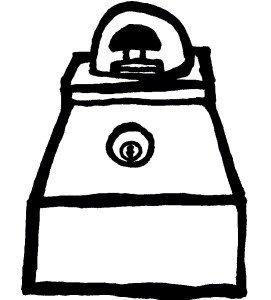
The first half hour or so of The Box might actually be the work of “broad commercial appeal” Kelly believed he was delivering. The film opens as a retelling of the classic Twilight Zone episode “Button Button” in which a young couple receives a mysterious box that prominently displays a giant button and comes with an even more mysterious offer: if the couple pushes the button someone they do not know, somewhere in the world, will die & they will receive $1million cash. Long story short, the couple pushes the button, receives the cash, and are informed that the box will now be passed onto a new couple, someone they do not know. Like the best of The Twilight Zone, “Button Button” is a tight, efficient story of supernatural dread that reinforces the value of The Golden Rule: treat others as you would wish to be treated. Kelly faithfully delivers that tight, controlled life lesson and then, leaving broad commercial appeal behind, explodes it into a galaxy of strange ideas that explore the identity of the man who delivers the box (or “the button unit” as Steward puts it”), the question of whether or not humanity is an enterprise worth preserving, and theories on what could possibly exist beyond our basic understandings of reality & mortality. All of these heady topics are interjected with whatever weird ideas pop into Richard Kelly’s head from moment to moment – say, lightning as a means of alien-to-human communication, motel pools as gateways to other worlds, entire armies of It Follows-style demons (“employees” of Steward), etc. etc. etc. It’s all perfectly overwhelming and I enjoy every frame of it, but I can’t fathom a world where it could’ve been a runaway commercial success.

Richard Kelly seems very much interested in trying to convey the vague menace of the unknown here, an overreaching ambition that leaves a lot of character development by the wayside in favor of otherworldly ideas & never-ending suspense. As a result, a lot of the film’s dialogue & character motivations can fall just on the campy side of eerie. It can also be a little difficult to care about any particular character’s fate, including the film’s central family, since they remain near-strangers for the entire runtime as they try to piece together exactly what’s happening to them. As unnerving as The Box can be, its lack of compassion for its characters & its subversively campy humor can play just as thick as Cameron Diaz’s godawful Virginian accent (she really is laughably bad in her lead role as the matriarch).

Britnee, how do the corny acting & unclear character motivations play into the film’s nonstop assault of spooky ideas for you? Are they a distraction or do they add to the film’s strange, off-putting appeal?

Britnee: First of all, when I found out that The Box was going to be the September Movie of the Month selection, I got it confused with the 2015 film The Gift. Jason Bateman graced the cover of The Gift, so I kept waiting for him to make an appearance in The Box, which, of course, he never did. It turns out that movies about mysterious boxes are more popular than I thought.

The insanity that is The Box should come with a warning label. Those with severely high blood pressure or epilepsy should never watch this movie because they will end up in the emergency room before the film is over. The constant twists and turns are just too much to handle, but I loved them all. The acting of just about every character, especially Cameron Diaz and James Marsden, really contributes to the movie’s wacky charm. Diaz’s performance as one of the film’s main characters, Norma Lewis, really sticks out for me. It’s really as bad as it gets, but her horrible accent, unconvincing attitude, and missing toes all come together to make The Box a hell of a good time. As Brandon mentioned previously, it’s difficult to give a damn about the fate of any of the film’s characters because viewers aren’t given the opportunity to really connect with them, and that’s not necessarily a bad thing. I enjoyed not worrying about whether or not Norma and Arthur would survive the terrors brought on by the box because I was able to focus my attention on the all the confusing supernatural happenings.

There were many times in the film where I thought the movie was concluding, such as when Arthur goes through his chosen portal in the library and ends up in his bedroom with Norma, but then the film continues and the story develops even more. Alli, did you find the constant twists in the film to be irritating or did you enjoy them? Was there any point in the film where you thought it should’ve ended?

Alli: It’s hard to say when a movie this in-over-its-head in a bizarre concept should have ended. I think maybe somewhere on the writer’s desk someone should have come in and asked about some plot holes and maybe talked Kelly out of some of them. But as you guys are saying, they’re all a part of this movie’s goofy charm. After a certain point of being jerked around I kind of gave up and just let it take me along for this strange little ride and part of me even felt like it could have kept going, honestly. There were so many more questions than answers. Not that I think I could have stood Diaz’s accent for another hour, but I really wanted to know more about these employers of Mr. Steward. I want to know more about this film’s philosophy as well.

A thing this movie brushed over and possibly unintentionally made a argument about was free will. In the end, did the new family being offered the box have a choice at all? He clearly knew that everyone he offered these options to were going to choose the easy way out, if you can call it that, otherwise some sort of transmitter would actually have to be in the box for him to know. I know there’s an argument to be made for supernatural surveillance, but it seems like he and his employers knew all along what human nature would lead these people to do. I was a little disappointed that there wasn’t a heavy-handed monologue about that.

But then again, this is a movie that only left me half satisfied. We’re vaguely introduced to aliens but we don’t learn much more about them other than they want to prove humans are unworthy. We’re given some suspense but nothing too bad, except for like Brandon said the occasional It Follows moment of a stranger being outside the window. We’re given an ideal suburban family in an ideal suburban town that’s slightly claustrophobic but not quite. Everything seems to fall just barely short of hitting whatever target he was aiming for. Boomer, is there anything you really wish had been expanded or clarified that wasn’t?

Boomer: Honestly, I had the opposite feeling. Although I definitely like the spookiness of the Steward hive mind followers and the general impenetrability of concept that is a hallmark of Richard Kelly’s work (like Brandon, Donnie Darko served as a kind of Baby’s First Jacob’s Ladder for me as well), there’s a certain simplicity to the existential dread of the original Richard Matheson short story that is absent here. In the short “Button, Button,” the story ends with the enigmatic Steward retrieving the button in a box from the protagonists, departing as he “reassures” the couple that they should not worry, as the next recipients of the box won’t be anyone that they know, with all the implications thereof. Does that mean that there is a direct link between the immediate recipients of the button and the previous button-pushers, or just a chilling reminder that their karmic comeuppance will come someday, without warning? It’s classic Matheson that way, and I adore the story (it’s adaptation in the eighties Twilight Zone revival has a different, more obvious ending, and I, like Matheson, don’t care for it; he went so far as to have the story idea credited to a pseudonym). There’s a quietness and intrigue to the original story that this film, which uses the original story less as a template and more of a jumping-off point for spiraling but utterly watchable madness, doesn’t possess.

That having been said, there were some things that I would have been interested to see more of. I was particularly intrigued by the use of realistic grounding in the life of the family before the box arrives, like the discussion of Norma’s foot injury and Arthur’s spacey aspirations. While it’s true that much of what makes the film captivating is the unexpected paths that it takes, I would have preferred to see the story retain that level of grounding throughout rather than grow exponentially more wild. It’s as if there are two films here, and I would have liked to see a Kelly flick that had the alien test plot and a second, different film that followed the mundane lives of the Lewises after the button is pushed, as they navigate the quandary of the immoral actions taken as a result of Steward’s visit. As it is within the film, everything that follows Norma’s impulsive push that affects them is an external force, not an exploration of the fallout of committing such an act, which would have been a more interesting film to me.

As far as other elements that I would have liked to see more of, Deborah Rush is criminally underutilized here as she was in her previous MotM appearance in Big Business, and every time I see her in any role I wish she had more to do. I also would have liked to know more about what Steward was like before he became the host for the alien entity that is sitting in judgment of humanity; was he chosen because of a similarity between his pre-possession personality and the ideas of the Hive? Was he the opposite? It could have been interesting to see the dichotomy between his former self and his new one, especially as a mirror of the change in personality between some of the button-pushers we saw pre- and post-button mashing; an objective correlative metaphor is never a bad idea, and could have illustrated the difference in the self that occur as a result of chance (Steward) versus those that follow deliberate action (the Lewises). What do you think, Brandon? You mentioned that the campiness and spectacle of the movie are its big draws for you; would you feel that you would enjoy it more, or at least as much, if it had been more of a character piece than a moderately coherent, not-quite-on-target, effects-heavy scifi fable?

Brandon: I’m a little amused by that question because I assume Kelly believes he was delivering a character piece, or at least his version of it. I don’t think stripping the film of its excess of The Day the Earth Stood Still-modeled sci-fi ideas on testing humanity’s worthiness through complex alien puzzles would necessarily improve its narrative in terms of entertainment value, but I do agree that the film starts weaving some interesting threads about the Lewises that might’ve lead to some truly powerful character-based moments had they been given enough room to breathe & develop. For instance, the family’s early financial troubles, born solely of their apparent disinterest in living within their means, is played merely as motivation for their activation of the button unit, but could’ve instead lead to genuine dramatic tension were Kelly interested in building it. He also suggests an interesting spousal dynamic when the couple negotiates the button unit’s terms & conditions and Marsden’s scientist-dolt husband asks, “What is it to really know someone? Do you know me?” I wouldn’t trade those lines of inquiry for the ludicrous sci-fi spectacle we’re gifted with instead, but I do think they would’ve been better received if they had been more fully developed, ideally without sacrificing the sci-fi backdrop that contrasts them.

The problem with fitting the character study elements and Kelly’s immense idea flood into a single vehicle might be a question of form. In some ways a two hour feature film isn’t nearly expansive enough to encompass everything The Box wants to contain. The film takes the idiom “biting off more than you can chew” as a direct challenge & a mission statement, an approach that doesn’t always sit well with a movie-going audience. I feel like the property’s ideal self would be as a prestige television series on AMC or HBO, a medium that would fix several immediate problems like allowing more room for grounded character study, giving each out-there sci-fi idea time to breathe instead of running through them all at once, forgiving a little bit of the television-grade acting choices made by Diaz & Marsden, etc. I’m imagining it like a Twin Peaks or a Welcome to Nightvale, where monster-of-the-week alien threats (or in this case, alien puzzles) would all inexplicably occur in a single town & follow a small family unit as they struggle to make sense of the phenomenon. The first episode of The Box: The Television Series would be the same “Button, Button” remake the movie uses for a launching point, except that it would end with the couple pushing the button in a cliffhanger, waiting for the story to be picked up at the beginning of episode 2. As I’ve said, though, a large part of the fun of The Box for me is in being overwhelmed by its wealth of ideas in such a short amount of time & I think there’s a value to experiencing all of that otherworldly absurdity in a tightly paced, cinematic punch that is somewhat lost when you’re, to risk referencing something so of-the-moment twice in one conversation, binge-watching all 8 hours of Stranger Things over the course of a week.

Speaking of the sprawl of sci-fi ideas included here, one of my favorite concepts in The Box didn’t come from Richard Kelly himself, but is instead a quote from sci-fi writer Arthur C. Clarke, conveniently read aloud for the viewers following along at home: “Any sufficiently advanced technology is indistinguishable from magic.” Unable to resist piling even more literary quotes onto the film’s DNA, Kelly also makes several allusions to Jean-Paul Satre’s play “No Exit,” both mining its title for easy existential dread & expanding its infamous line, “Hell is other people” to “Hell is other people seeing you for who you truly are,” in an offhand stab at literary analysis. Kelly’s pulled off this trick before in Donnie Darko as well, which includes an extensive classroom analysis of the Graham Greene short story “The Destructors.” Britnee, do you think these two literary references, Clarke & Satre, as cool as they are, provide any legitimate sort of insight into what kind of story Kelly was trying to tell in The Box or were they just easy modes of injecting profundity into what’s at heart a very pulpy sci-fi premise? Was their inclusion earned in the film’s content or did it come across as a little try-hard?

Britnee: Kelly’s use of the Clarke and Satre references you mentioned, Brandon, caused me to give a big eye-roll as I was thinking back to when they occurred in the movie. It’s difficult for me to take anything in this film seriously, so I would definitely have to say that the presence of these literary references is a little ridiculous. Obviously, Kelly didn’t throw them into the film to add to the campiness, but ultimately, that’s exactly what happened. I get what he was attempting to accomplish, but this movie was just too silly for anything profound to exist within it. Then again, my knowledge of anything by Clarke and Satre doesn’t go beyond Brandon’s previous statement, so maybe I’m the crazy one and Kelly’s got the right idea.

I feel like I’m being a little harsh on The Box. There were a few moments where I caught myself thinking about monumental life choices I’ve made and what motivated me in my decisions. The Lewis family painted a picture of how ugly being selfish and greedy really is, which is why I didn’t have much sympathy for them. The fact that they decided to take the life away from another human being so they could keep up with their suburban lifestyle made me sick to my stomach. Alli, do you think the film’s “protagonists” would have been more likeable if they were worse off (e.g. Their kid was dying, and they needed money for a lifesaving transplant)?

Alli: You know, I actually do think they would be more likeable if they were in more dire circumstances, but I think making them shallow suburbanites is either some sort of misguided attempt in a post-2008 financial crisis world to say, “This is you!” to the audience or to do the high and mighty, “Yes, you as the audience gets it. Look at the normies struggling with their mixed up priorities.” And if it was the second I’m not sure if they were ever supposed to be likeable at all and it’s just about the schadenfreude. Given the smug literary references and all of Donnie Darko, pretty much I’m leaning towards that interpretation, but it seems like there’s a lot of ways to read this movie.

Even though I never liked them and never sympathized as the movie progressed, I managed to like them even less as it went on, until finally it reached a point where I actually despised them. That point was at the end when they have to choose between having a deaf and blind son or Arthur shooting Norma. I hope I’m not spoiling too much by saying this, but what the hell? The idea of a disabled son being worse than a dead wife is really upsetting to me, especially when you have a million dollars and can afford to find ways to make your life more accessible. Not only is it a cheapness of life thing but just some casual ableism thrown in. And I just shudder to think that someone watching this somewhere probably thought that that was a reasonable choice to make.

Boomer, was there any point more “upsetting” (I’m not quite sure that’s the word I’m looking for) than others to you or did nothing really stand out to all?

Boomer: The most upsetting thing to me was seeing poor little Britta passing through the long hotel hallway while being met with the stares of various Steward acolytes. I know that a lot of people find hotels to be inherently creepy automatically (I’m not one of them) and so they probably found this even more unsettling than I did, but there was something about her apparent innocence and the way that she was bandied about by forces outside of her control. I don’t recall that we ever really get much of an explanation as to who she is or what she was doing; was she, like the man from the previous box cycle from whom Arthur learns about the nature of Steward, an escapee from the “plan” who was trying to make sense of her upturned world? Was she merely an unwilling accomplice in the larger goals of the mysterious entities? It is perhaps my fondness for Gillian Jacobs alone that led me to be so thrown off by this sequence, but it was generally disturbing.

I disagree with your reading of the final scene, however. Not that there are no ableist connotations in the scene (that interpretation is certainly valid), but I don’t feel that Kelly’s intent was to make it seem that having a blind/deaf child was worse than a dead wife/mother, but was more of a demonstration of Steward’s willingness to give Norma a second chance to prove that she could make the “right” decision, since it was her impulsive pushing of the button (despite Arthur’s hesitation and apparent ultimate refusal) that doomed the family in the first place. In response to your question, what was perhaps most disturbing was the fact that Steward and his overseers were testing “free will” in a way that influenced the participants; in fact, given that none of us can come to an agreement as to whether there is free will in this situation (given the way that deaths of previous users of the box rely upon the next user making the wrong decision), it’s unclear what, if anything, could be gleaned from these experiments.

Although I hesitate to sympathize with the Lewises because of their vapid engagement in consumerism (it’s important to note that the original story did, in fact, feature a family in a much worse economic situation than the Lewises), they were living within their means until Steward manipulated events in their life, like causing Arthur to lose his candidacy for promotion and taking away the tuition reduction plan that the family relied upon in order to send their son to the best possible school In a way, the film could be seen as a modern(ish) retelling of the story of Job, substituting mild setbacks for utter familial destruction and replacing faith in God with the willingness to perform acts which enact the greatest good for the largest number of people. Viewed through this lens, Norma and Arthur have their faith tested and Norma fails, but is given the opportunity to correct this wrong through self-sacrifice. I don’t necessarily think that this is the reasonable choice, but I feel like this was more likely to be Kelly’s intent. Regardless, just as with Job, none of the characters that we see would be in the situations in which they find themselves without divine (or unholy) intervention. Maybe this means that The Box is really an exploration of the philosophical conceit that if (a) the divine is all knowing and pre-ordains all actions and (b) humans are thus unable to exercise free will despite the appearance that they can, then (c) punishing mankind for acting in accordance with preordination is unreasonable and perhaps evil. Probably not, though.

EPSON MFP image

Lagniappe

Britnee: While The Box left me with loads of unanswered questions, what I want to know more than anything else is the current whereabouts of the prosthetic silicon foot that Arthur made for Norma (using materials from his workplace!). Did Diaz take it home as a souvenir from one of her most desperate roles? Does Kelly keep it in a curio cabinet in his family room?

Alli: Coming back to the disabilities/deformities thing. I just really think it’s super messed up that someone like Norma, who lives with a limp has some sort of hierarchy of disabilities. Like, Mr. Sterling’s face makes her feel better about herself instead of her being able to identify with him. I know she’s worried about the teasing and ridicule when it comes to her son, but it’s still terrible.

Brandon: There’s so much to cover in The Box that I feel like I could never touch on all of it even if this conversation went on for two more rounds. There’s the curious case of its Arcade Fire-provided score that never reached physical media release, the weirdly wonderful feeling of seeing a babyfaced Gillian Jacobs in an early dramatic role, the peculiarly detailed prop of that Human Resource Exploitation Manual Arlington Steward supplies to his employees, and a whole lot more I could never get to with all the time in the world. Instead of trying to gather all these details like so many Pokémon, I’d just like to follow up on a couple things Alli & Boomer mentioned that interested me.

I totally agree with their assessment that the film’s musings on free will are muddled at best. This is never more apparent to me than at the film’s climax when two couples are given an ultimatum by Steward and they make their decisions simultaneously, one directly affecting the other. Whose free will is being exercised there? It’s a question (among many) that the movie is far from interested in answering. A heavy handed Steward monologue on the subject would’ve been nice. However, I do want to buck Alli’s assertion that not enough suspense is earned through interactions with the It Follows “employees”. They’re creepy as all hell and, unlike most of the film, tastefully employed in small doses. The three big moments I’m thinking of are the aforementioned zombified man in the kitchen window; the babysitter’s long, troubling walk down a motel hallway; and that incredible sequence in the library where the employees threaten to form into an angry mob. I know I’ve poked fun at how ludicrous The Box can be from minute to minute, but I do believe the suspense it generates is genuine and a lot of it comes from those creepy, dead-eyed employees of Steward’s.

Boomer: When I was working at the Urban Outfitters in the French Quarter in grad school, James Marsden came in to shop (I think he was working on the remake of Straw Dogs at the time). I rang him up and I cannot tell a lie: he really is that pretty in real life. I’m not going to say that I got lost in his eyes or anything, but I’m also not going to pretend that I didn’t. The most beautiful thing I’ve ever seen in my life was the gradation of colors in the rings of Saturn through a refraction telescope at the top of the observatory in college; the viewer was the size of a dinner plate, and from ringtip to ringtip, the rings were six inches across, with nothing between me and this distant planet but glass and space. It was humbling, awe-inspiring, and absolutely stunning. The second most beautiful thing I’ve ever seen was James Marsden buying tank tops. Take from that what you will.

Upcoming Movies of the Month:
October: Britnee presents Funhouse (1981)
November: Boomer presents  The Paperhouse (1988)
December: Alli presents Last Night (1999)
January: The Top Films of 2016

-The Swampflix Crew

Movie of the Month: Black Moon (1975)

EPSON MFP image

Every month one of us makes the rest of the crew watch a movie they’ve never seen before & we discuss it afterwards. This month Alli made Britnee, Brandon, and Boomer  watch Black Moon (1975).

Alli: It’s hard to describe the plot of Black Moon, but I’ll try my best to sum it up simply. A young girl, Cathryn Harrison, is fleeing certain death in a war. It’s seemingly everywhere as she tries to get away. She eventually winds up at a magically untouched farm house. There she seeks refuge. Life at the farm house is surrealist chaos. Things that exist in this movie: an operatic yet mute man, nude children with farm animals, a unicorn, and a mumbling rat. It’s more an Alice in Wonderland type story than an actual escaping the war movie.

In the credits, I noticed Sven Nykvist listed as cinematographer. He was Bergman’s cinematographer for many, many films, but the two most relevant to this one are Persona and Hour of the Wolf. Those two titles, to me, function in the same sort of dream-like time frame and space. There’s a scene in particular that’s an extremely beautiful shot where the cast is in a living room type space and there’s this family production of an opera. There’s these two children standing and singing and to just freeze that frame I think is a lovely picture.

Something I forgot about was the strange politics of this movie. It’s set against the backdrop of this war, but it’s set up to be a battle of the sexes. By showing this as a brutal and seemingly senseless battle, it seems to be a very clueless attempt to say, “Why can’t we just get along?” By not giving context it kind of trivializes a lot of what was going on in mid-early 1970’s, given that this was during the height of second wave feminism and Roe v. Wade was only two years before. I think the reason I forgot about the politics in this film is that they get brushed aside very early on by its strange tone and pacing.

This movie is extremely surreal. It has the rare quality of having the most dream-like logic of any movie I’ve ever seen. I frequently have sort of stressful dreams where I’m running in and out of buildings and rooms struggling to find something. The something is always vague. Watching this movie kind of put me into a familiar, trance-like state, which I’m not entirely sure if that’s a positive or negative attribute. In a way I think is dreamlike surrealism finds its own kind of horror whether intentionally or not.

I find that surrealism is an either you’re in or out sort of thing, especially in film. What do you think about its dreamlike feel, Brandon? Were you onboard? Why or why not?

Brandon: Black Moon does reach for a languid Spirit of the Beehive style of horror in ambiguity & the unknown that I genuinely appreciated, but will admit that the film’s deliberately alienating mode of obfuscation took me a minute to sink into. Early on in the runtime I found myself searching for direct metaphor in the film’s War vs. Nature imagery & a clear, linear sense of plot in what was happening minute to minute, but I don’t think the move lends itself to that kind of literal examination. That’s not to say that there is no prevailing structure or that the movie is generally meaningless, but I do think trying to “figure it out” is a little besides the point, which is a kind of submission on the audience’s part that can be difficult for a film to earn.

I think Black Moon shows its hand in this way when its initially stoic, Mad Maxian brat protagonist demands “Would you please tell me what’s going on around here?” and her panties immediately hit the floor, signifying nothing but an oddly tawdry, whimsical joke. Then there’s my personal favorite moment when she opens a picture album in search for answers only to find pictures of the same confounding characters & objects that frustrated her in the first place. It’s gags like these that signaled to me that it’s okay to relax and enjoy the film’s odd visual pleasures & loopy dream logic without having to solve some kind of complex metaphorical puzzle. The movie knows exactly how silly & absurd it’s being.

As Alli noted, the best way to wrap your mind around Black Moon‘s structure is to consider it as an Alice down-the-rabbit-hole story (an influence explicitly acknowledged by the director, Louis Malle). Our de facto hero Lily (one of three Lilies, a super popular name apparently) leaves a masculine-governed war-torn world in the midst of a female rebellion to mysteriously find herself transported to a decidedly matriarchal, magical realm of Nature. These two realities, War & Nature, seem to paradoxically occupy the same space, alternating in dominance but rarely interacting as Hero Lily tries to make sense of where exactly she fits in. She begins the film as a defiant non-participant in the War realm and ends the film wholly indoctrinated in the Natural one, with all of its naked children, strange critters, and nonverbal communication. It reminded me of fairy tales where you’re not allowed to leave a magical realm once you’ve tasted the food, except in this case you’re stuck once you breastfeed a mythical beast or a human adult.

It’s in that War vs. Nature dichotomy where I have to slightly disagree with Alli’s suggestion that the film’s central war-of-the-sexes political message is “Why can’t we all just get along?” Although both realms depicted in Black Moon are horrifying in their own bizarre way, there’s a peace & freedom to the feminine, Natural world that simply doesn’t exist in the male-dominated War world. It’s a tranquility you can see in the slow-moving beauty of the film’s odd little bugs or in the wild, screaming abandon of its hoard of naked children. It’s only when Man Lily disrupts this serenity by dismembering an hawk with his giant, phallic sword that the semblance of order & freedom is disrupted and the Nature realm starts to resemble the War one. Like I said, though, the film is so aggressively nonsensical that it’s risky to read anything this concrete in its story or allegory, as tempting as it is.

Britnee, what, if anything, do you think Black Moon has to say about the war of the sexes? Was the film’s social or political metaphor at all strengthened by its deliberately confusing story & imagery or only muddled by them?

Britnee: When initially viewing Black Moon, I felt completely lost. I’m usually slow at catching on to art house films such as this one. As the film came to an abrupt end, I planned on heading home and Googling the hell out of Black Moon because I felt as thought there was some deep movie message that I completed missed. A strange feeling sat with me for a long time after watching the movie. It was a mixture of fear, confusion, familiarity, discomfort, and bliss. What a combination, right? I loved the way that Black Moon made me feel, and I loved how I was given the freedom to figure out the film for myself. So, thankfully, I decided to not do one bit of Googling for Black Moon.

The film begins with a very violent and terrifying war of the sexes. With such an intense opening, I thought the film was going to be a surrealistic war movie, and Lily was going to join the women in their fight. Well, that didn’t happen at all. Once Lily ventured off to the magical farmhouse, the war of the sexes makes very few appearances for the rest of the film. I didn’t think the film had much to say about the war of the sexes except for that it simply existed. I also didn’t recognize any social or political messages within the film, so, in answering Brandon’s question, it’s quite possible that the film’s confusion prevented these messages from coming across (if they exist at all). I viewed Black Moon as a bizarre film about a young girl stepping into womanhood. Lily’s breastfeeding of the old woman, the sexual tension between her and male Lily, and just the way that she goes from having a tantrum about something silly to taking control of the situation led me to believe that this film could be a coming-of-age tale. Oh, I almost forgot about the snakes! I thought it was strange how there were multiple snakes that made appearances in this movie, but the snake represents transformation (shedding its skin) and Lily is transforming from a girl to a woman. The film sort of makes a bit of sense when I view it as story of a young girl transforming into a woman, but maybe I just shouldn’t be making sense of this movie.

Boomer, did you think the film was attempting to make a statement about entering womanhood? What parts of the film were you able to easily clarify and what parts, if any, were you simply not able to make any sense of?

Boomer: Like you, Britnee, the first thing that I did after watching the film was looking for interpretations of it online. I was primed to assume that the movie would be about burgeoning female sexual maturity as soon as I learned it was a film with the word “moon” in the title and was about a young woman. Overall, that reading bears itself out, although it seems like a shallow and decidedly male (maybe even chauvinistic) lens into that world. I’ll admit that point is arguable, but I have to say I would feel less annoyed by a film that has a girl’s underpants falling down when she tries to understand the strange world around her if there had been a woman in the director’s chair.

This is the primary rhetorical methodology used to dissect the film as well. Ginette Vincendeau writes in her essay “Black Moon: Louis in Wonderland” (released with the Criterion DVD of the film) that the “dominant interpretation, unsurprisingly, has been psychoanalytical. [Black Moon] is a tale of a young girl’s sexual awakening, explicitly modeled on Alice in Wonderland…. [Georgiana] Colville offers the best sustained analysis in this vein, pointing out, for example, Lily’s positioning as an onlooker, frequently seen on a threshold or at a window, observing the adults’ and animals’ behavior.” It’s certainly an interesting idea, but I’d go so far as to posit that the pervasive surreality may render any attempts to parse the film a bit of an academic exercise.

Before going in to the film, Brandon told me that he perceived a distinct Suspiria vibe in the proceedings, and I can see the similarities between the two in the dreamlike nature of the narrative (for lack of a better term), although Suspiria benefitted from a structure and a more colorful palette (although the dream elements in Suspiria don’t have the same metaphorical quality that Black Moon‘s losses). Given the parallels and the very brief period of time between each film’s respective premiere, how do you feel these two films compare to each other?

Alli: There’s actually a lot of things in common with Suspiria that I didn’t think about until you guys brought it up. They both employ a sort of Wonderland style story arc. There’s the idea of girlhood and girlhood terror through the lens of a male director. Then, you’ve got the idea of witches as old terrifying hags, sort of Queens of Hearts. You could even make a strong argument for the woman in the bedroom being a similar kind of witch as Mater Suspirium, both bedridden and cared for by their followers. Both Lilia and Suzy navigate their worlds with a similar brazen, Alice-like curiosity. Though Suspiria relies on the terror of being young and small in a world controlled by ageless beings, while Black Moon sticks to the well-trodden fear of growing up.

I think Black Moon presents coming into womanhood and growing as giving up some natural freedom. The only truly free people you see the entire movie are the nude children running around. Sister Lily is stuck disdainfully caring for everyone, even this new arrival. Every other adult woman is stuck fighting the men. Even old age is presented as horrific since the old lady is bedridden and sickly and mean. There’s the unsettling ticking clocks as the passage of time with alarms going off as a prominent thing in this film, as if a reminder that Lily is just getting older and older. Her chasing after a mythical creature, one that only appears to virgins and maidens, is a kind of way of chasing after youth and imagination.

I guess the thing that always stands out to me when I watch this movie is the talking animals. Usually they’re only seen in children’s movies, so it’s kind of refreshing to have a character like Humphrey appear in a wacky, surreal arthouse movie. As apposed to being lighthearted, It sure seems that creatures like Humphrey and the Unicorn have sort of a disdain for humankind. Nature in general seems pretty eager to let people kill themselves off so that it can get along with things. It feels a little bit like it’s all looming, especially at the end with the sheep everywhere. I know you said, Brandon, that there’s sort of a peace and freedom in nature, but to me it seems a little bit like it’s biding its time. What do you think about this idea of ambivalence? Is it menacing or comforting?

Brandon: I meant to use the terms “peace” & “freedom” in more of a political sense than anything. There is plenty of discord & danger to be had in Black Moon‘s take on Nature, but I get the general sense that its societal structure is far more functional than the War realm’s. The children & animals (both mythical & otherwise) run freely in an overwhelming, menacing sort of way in Lily’s new home, but it’s difficult to imagine them existing at all in the War realm. According to the film’s central philosophy, “All is illusion. Set us free of this world,” a sentiment that points to an ambivalence & frivolity on both sides of the coin, the same kind of everything-is-pointless mentality you see in anti-war art movements like surrealism & Dadaism. Even as both worlds pose their own sort of existential threat, though, as any kind of mortal life would, I still found the Natural one more hospitable.This isn’t quite the ultra-feminine Nature utopia of The Duke of Burgundy, especially with the masculine romance novel cover model Lily chopping birds out of the sky, but there’s still food on the stove & (goofily ugly) unicorns milling about, dispensing life advice. It’s, to me, a preferable existence in a world that’s bound to be dangerous & ambivalent either way Lily chooses to go.

Britnee, you said earlier that Black Moon is at heart a bizarre tale of a young girl stepping into womanhood. Besides the girls running amok among the wild children, there seem to be three distinct snapshots of what womanhood looks like presented here: the panty-dropping frivolity of youth in Hero Lily, the confidently self-assured adulthood of Sister Lily, and the bedridden, infantile bitterness of (as the credits bill her) Old Lady. What do these portraits combine to say about the womanhood Lily is presumably stepping into? How does it differ from what little we see of the film’s masculine archetypes?

Britnee: I didn’t initially see the three main female characters as representing stages of womanhood, but I completely agree with your theory, Brandon. My mind is completely blown right now. These “snapshots” combined really make womanhood seem like it’s going to, for lack of a better term, suck. Hero Lily (insert the incredible Trey Songz hit “Panty Dropper”) is so confused about who she is and what she’s doing that I get stressed out just thinking about her. Sister Lily seems to have her shit together and really holds down the fort, but as Alli previously mentioned, she’s stuck in this caretaker role (serving dinner to the naked kids, maintaining the cottage, breastfeeding the Old Lady, etc.). The cruel Old Lady is completely envious of Hero Lily’s youth, and spends most of her time talking to a rat and radio. Nothing about her life is remotely appealing.

Brother Lily serves as one of the only representations of masculinity in the film. He really seemed to be ignorant and immature when compared to Sister Lily, who seems to be the same age. He doesn’t really do much but garden and sing, and the only time he really stands out is when he becomes violent by killing a hawk and having a deadly fight with Sister Lily. When comparing him to the symbolic female characters of the film, he just looks really dumb. I’m starting to feel like Sister Lily is the strongest character in the film. That could say something positive about a woman entering adulthood, but still, she doesn’t seem to have much freedom.

Boomer, were there any parts of the film that made you uncomfortable? The breastfeeding of the old woman, spanking of the young girl, and the nude kids are a few things that made me shudder a bit. Even the parts with the talking animals were a bit unnerving because their voices were so whispery.  Of course, this could be because of my own ignorance.

Boomer: That’s not ignorance at all; I’m fairly certain that the parts which made you uncomfortable did so intentionally. For me, one of the things that stood out the most was the recurring motif of breastfeeding, not because of the feeding itself but because of the way that it subverted the paradigm of top-down caretaking that was referenced above. There’s a definite Maiden/Mother/Crone element at play that runs parallel to and inhabits the stages of womanhood, and the upending and general scattering of what personification/stage performs what actions and when is, I think, deliberately evocative of the general topsy-turviness of this world. That distance from the (presumably natural but really socially inscribed) norm lends even the more quotidian actions a general sense of uneasiness.

The thing that disturbed me most overall was the general destructiveness of our heroine, especially the sequence in which she stomps around the yard and takes delight in snuffing out the screaming cries that emanate from under her feet. There’s such a sociopathic quality to it that I couldn’t stop thinking about it after the movie ended. It’s a pretty mundane sequence (as much as anything in this film could be considered mundane) in comparison to the other surreal oddities on display, but it’s really stuck with me.

EPSON MFP image

Lagniappe

Britnee: I really feel like a terrible person for being so judgmental of the film’s unicorn. When seeing the unicorn for the first time, I was so pissed off that it was a donkey with a horn. Unicorns are supposed to look sort of like Fabio as a horse and have silky hair and shiny horns, but being a short, stubby donkey with an ugly horn shouldn’t make the Black Moon unicorn any less of a unicorn.

Boomer: The death of the hawk made me think of Paget Brewster felling an eagle in the cold open of the “Pageant” episode of Another Period, which made me laugh inappropriately. “Ha! Majestic no more!”

Alli: I’m going to take this as a Humphrey appreciation moment. I love his constant mumbling and that he slams doors every time he leaves the room. Also, I think that he’s extremely relatable. If I were that old woman’s pet rat, I’m pretty sure I’d be perpetually peeved.

Brandon: I think my text message wires got crossed while I was gushing to Boomer about too many movies at once, something I do embarrassingly often. I was actually comparing Suspiria to to Refn’s latest provocation, The Neon Demon, and Black Moon to Ladyhawke, which I assure you are much lesser stylistic leaps. I do think the Suspiria similarities Alli drew on were interesting & valid, though, and funnily enough I had cited another Argento title in my notes for Black Moon: Phenomena, a work that similarly sets a journey into womanhood against a horrific world of supernatural Nature.

My favorite aspect of Black Moon is the way it presents magic & witchcraft as a Natural, feminine realm crawling with plants, bugs, animals, and mythical creatures. There might be a bone-headed, typically masculine lens to that style of storytelling that estranges womanhood to an otherworldly mystique, in essence stripping an entire gender of its humanity, but damn if we haven’t gotten some great movies out of that buffoonery: Phenomena, The Witch, Pan’s Labyrinth, The Juniper Tree, The Spirit of the Beehive, etc., etc., etc. The gimmick may not lead to great gender discussion, but it certainly has lead to some great cinema.

Upcoming Movies of the Month:
September: Brandon presents The Box (2009)
October: Britnee presents Funhouse (1981)
November: Boomer presents  Paperhouse (1988)

-The Swampflix Crew


Star Trek Beyond (2016)

EPSON MFP image

fourstar

A few months back, I wrote about the then-upcoming release of Star Trek Beyond and discussed my hopes for the film and the franchise in general. I wasn’t particularly excited after the first trailer, but the second trailer seemed a bit better, and the fact that Simon Pegg was one of the credited writers was certainly a point in the film’s favor, given his actual fondness for the franchise (in comparison to Roberto Orci, which I’ll get to in a minute). A generally favorable early critical response was also heartening, despite the general dearth of any significant marketing push for the film. I did see the same TV spots play before almost every YouTube video I watched in the past three weeks, but I can never tell if that’s marketed to me specifically as a Star Trek nerd scholar or indicative of a larger initiative. And, as a scholar, was I satisfied?

Yes? Mostly? This is definitely a fun movie, and a major improvement over the tone deaf Into Darkness, which was bad on a such a high number of levels that it’s difficult to nail down which one was most absurd. Was it the nonsensical nature of the motivation of the film’s antagonists? Was it the fact that their motivation might actually make sense when viewed through the lens of the particular madness of screenwriter and notable 9/11 truther Roberto Orci (there’s a decent article about this on BirthMoviesDeath, which is pretty great even though I have mixed feelings about Devin Faraci)? Was it the recasting of a character whose name is Indian and was previously portrayed by a person of color with Benedict Cumberbatch? It was probably that.

I went into greater detail about my feelings about both of the previous films in this reboot timeline in the previous article, so I won’t get into it here, but I will say that, although this film is being billed as a return to Star Trek’s roots or a real “classic style” Star Trek story, that’s not entirely true. Of course, given that the same thing was said about Insurrection back in 1998 (and, for better or worse, that’s a more or less true description of the film’s premise if nothing else), that’s not necessarily a bad thing. This is still a film that takes characters from a fifty year old television series where most problems were solved within an hour and attempts to map them onto a contemporary action film structure, which works in some places and not in others. Other reviews of the film have also stated that Beyond is a more affectionate revisitation of the original series than the previous two films, which is also mostly true. The film does suffer from the fact that the opening sequence bears more than a passing resemblance to a scene in Galaxy Quest, which is a stark reminder of the kind of fun movie that can be made when someone loves Star Trek rather than simply sees it as a commercial venture. Overall, though, you’d be hard pressed not to get some enjoyment out of this film, Trekker or no.

The film opens 966 days into the Enterprise’s five year deep space exploration mission, and Kirk (Chris Pine) is beginning to feel the weight of both the mission and the impossibility of living up to his father’s legacy. When the ship docks at Starfleet’s newest starbase, Yorktown, a ship appears from a nearby nebula containing one alien astronaut, who says that her ship crashed on a mysterious planet within said nebula and asking for assistance. In true Federation fashion, Kirk and Krew jump at the chance to help out, but are immediately attacked as soon as they penetrate the nebula; the crew is forced to abandon ship, ending up scattered and/or captured by the villainous Krall (Idris Elba), who seeks a doomsday MacGuffin in order to exact violence against the concept of peaceful unity in general and the Federation in particular because of its idealization of these virtues. Along the way, Scotty (Pegg) meets a woman named Jaylah (Kingsman’s Sofia Boutella), who helps him reunite the crew and to plan a rescue and escape.

There’s a lot to love here. There are references peppered throughout to other parts of the franchise, and instead of feeling hamfisted or forced as in previous installments of the reboot series, they feel natural here. There are more overt connections, with the basic plot about a dangerous planet that acts as a graveyard for various interstellar travelers and their ships being somewhat reminiscent of the animated Star Trek series episode “The Time Trap,” as well as one of the proposed fates of a starship lost a century previous being that it was snatched by a giant green space hand, which happened to the original Enterprise in “Who Mourns for Adonis?” Kirk’s opening log even references the fact that there’s a lot of shacking up going on aboard the ship during its mission, which is undoubtedly a reference to the fact that NBC balked at Gene Roddenberry’s proposal that the coed Enterprise crew be composed of roughly half men and half women; the story goes that one exec stated that this would make it seem like there was an awful lot of “funny business” going on. Likewise, Roddenberry’s original script treatment was about a starship that bore the name Yorktown, not Enterprise, leading to the starbase in this film being named for the former. Those are pretty obscure references to pull out and use for the plot of this movie, and that’s pretty indicative of how much this film cares about the fandom. More obscure references, like discussion of the dissolution of the MACOs and the Xindi and Romulan Wars (all of which are references to Star Trek: Enterprise), the possibility of accidentally splicing two people together with transporters (transporter accidents are fairly common in the franchise, but this is probably a shout out to the Voyager episode “Tuvix” in particular), Kirk’s birthday melancholy and even some of the lines he uses in his toast (from Wrath of Khan), and the appearance of a Commodore Paris (the Parises being a family with a long history of Starfleet ervice, most notably Tom Paris of Voyager) are scattered throughout and are, frankly, quite welcome.

Of course, references do not a great Star Trek film make. There are some things that don’t quite work, and given that the film runs just shy of 2 hours and that there has been some discussion of what was cut (mostly backstory for Krall and Jaylah, but smaller moments like Sulu kissing his husband as well), there are some things that don’t quite read as well on screen as they likely did on the page and/or before the film was edited down. I’m also never going to be completely on board with the use of high speed land-based chases in Star Trek; I know that Justin Lin comes from the Fast/Furious franchise so that’s really his wheelhouse, and as a result these sequences at least work better than previous attempts (I’m looking at you, Nemesis). And I know that it’s nitpicky to point this out, but there’s a lot of Hollywood science going on in this movie. First of all, nebulae are not composed of giant rocks; they’re made up of mostly dust and ionized gases. The film presents the nebula surrounding the mystery planet as being more like the Hollywood imagining of what an asteroid belt looks like, with city-sized rocks knocking into each other; real asteroid belts are mostly empty space with some rock throughout (in space, such a small area with such large pieces of debris would mean that the rocks the Enterprise works so carefully to navigate would pulverize each other into dust within a very short time, relatively speaking).

But, this is still a good movie. There is a classic Star Trek idea here, in that Krall hates the idea that the galaxy is uniting under a banner of peace instead of strength/valor and will do terrible things to demonstrate his devotion to his anti-Federation ideals, as well as the fact that he is opposed and ultimately defeated by the strong bonds that the crew of the Enterprise have and their devotion to the ideals of unity and exploration. It’s not a terribly deep humanistic ideal, and is so faintly traced that the film could be accused of paying lip service to that idea more than actually exploring it, but the fact that this film actually bothers to have this idea means that this movie is actually Star Trek, and not just JJ Abrams’s Star Wars demo reel wrapped in Star Trek’s clothes. The new additions to the cast are very engaging as are the old standards, and there’s a lot of story here that makes it well worth investing in a visit to the theatre. The end of the film legitimately left me with damp cheeks (for those of you who have already seen it, I’m talking about the photo that nuSpock finds in Spock Prime’s possessions), and I can’t wait to see it again. It’s not a five-star movie, but it has my seal of approval.

Final thought, though: The Franklin is said to be the first ship capable of achieving Warp Four; on Star Trek: Enterprise, the NX-01 Enterprise is said to be the first ship capable of achieving Warp Five, even though the Franklin seems to have come later in the timeline given that her captain’s service record includes participating in the Xindi conflict, which followed shortly after Enterprise’s first few years of service. I’m not saying that this can’t work (the Franklin could actually be older than the Enterprise but Captain Edison took command of her later, like how OG Kirk took over command of the Enterprise from Christopher Pike, took command when Robert April was promoted to Commodore). I’m honestly just pointing this out because if I don’t mention it, someone will call me out on it.

-Mark “Boomer” Redmond

Ghostbusters (2016)

EPSON MFP image

fourstar

Like most people my age (I was born in 1987), my first experience with the Ghostbusters came not in the form of the 1984 comedy classic; instead, my love for all things Ghostbusting was the result of watching the animated The Real Ghostbusters as a kid. In fact, watching the cartoon adventures of Egon, Venkman, Ray, Winston, and Janine on Saturday mornings, alongside Teenage Mutant Ninja Turtles and Garfield and Friends, is one of my earliest memories; unlike TMNT, I can actually remember particular episodes and character types from Ghostbusters (I know that the Turtles theme song delineates each turtle’s individual personality, but that blew right past me as a kid and I couldn’t tell you which one was a “party dude” right now to save my life). I didn’t see the original film until I was a little older, and even then my clearest childhood memories of the movies actually comes from Ghostbusters II, where the pink slime that fills Sigourney Weaver’s bathtub made me terrified of the tub for a few months.

I was pretty excited to hear about the remake/reboot when it was first announced last year, but wasn’t confident that it would ever really been made and even less thrilled about how well it might turn out. I still remember hearing on the radio about a fourth Indiana Jones film as far back as 1997, when Joaquin Phoenix was in talks to play Indie’s younger brother; then, eleven years later, Kingdom of the Crystal Skull plopped into theatres on my birthday like the worst present of all time. I had mixed feelings about Paul Feig; he directed seven episodes of Arrested Development, sure, but one of those was “Ready, Aim, Marry Me,” which is probably the worst single episode of the original three season run. I was also not one of those people who was terribly impressed with Bridesmaids, although it might merely have been that I was in a terrible mood the first time I saw it. Still, Feig was heavily involved with Other Space, Yahoo’s sci-fi comedy that was released last year and which I enjoyed much more than anyone really has a right to (and which featured super cutie Karan Soni, who plays deliveryman Bennie in Ghostbusters, and Neil Casey, who plays villain Rowan North*). Still, when I saw a pic of the all-gal Ghostbusters squad all suited up and ready to bust last year, I was super on board. I retweeted the picture and expressed my excitement, even (and Feig favorited it!).

*According to the credits, fellow Other Space alums Milana Vayntrub and Eugene Cordero were also in the film, as Subway Rat Woman and Bass Guitarist, respectively, but I missed them, unfortunately.

There was (unfortunately, inevitably, and unfortunately inevitably) a backlash, mostly of the misogynistic variety, because of course there was. Of. Course. There. Was. Most of the criticism of the film had little to do with the fact that Ghostbusters is pretty much a perfect movie in a lot of ways (if inarguably a little dated in its kinda creepy sexual politics); after all, this is the primary objection that is usually voiced in response to remakes of any kind. “Why would you remake Total Recall/Robocop/King Kong/True Grit/The Manchurian Candidate/Poltergeist (etc.) when the original still holds up?” But that’s not why (a certain subset of) people were upset about Ghostbusters 2016 at all, even if they tried their best to couch their anti-woman bias in that language. Of course, the blanketing effect across the internet meant that people who were legitimately concerned about the potential artistic or financial failings of the film, especially after the not-very- good first trailer was released, were lumped in together with the rabid woman haters; as a result, those who were anxious that the film would simply fail ended up being on the side of the worst parts of the internet, meaning that there any real criticism was immediately swept away in a wave of meaningless manpain.

So, as someone whose childhood was very GB-influenced, how’s the new movie?

….

I loooooooved it. I loved it so much, y’all. Of course, it pales in comparison to the original, but that’s like saying that Canopus pales in comparison to Sirius: they’re still both pretty bright. It’s not a perfect movie, but it is a lot of fun, and I honestly can’t wait to see it again. There’s a perfect mix between nostalgia and novelty, a slew of cameos from the original cast, and a hell of a lot of laughs throughout.

The film opens with a tour of a supposedly haunted mansion that becomes a little too real for the tour guide (Zach Woods). Meanwhile, Dr. Erin Gilbert (Kristen Wiig) is preparing for her final tenure defense at Columbia when a book about the paranormal she co-wrote many years before threatens to derail her career track. She tracks down the other author, Dr. Abby Yates (Melissa McCarthy) and asks her to stop pushing sales of the book long enough for her tenure to be accepted. Yates and her engineer officemate Dr. Jillian Holtzmann (Kate McKinnon) agree, as long as Gilbert assists them in investigating the mansion. Following a genuine encounter with a ghostly entity, all three women find themselves rejected from academia. Meanwhile, MTA employee and amateur historian Patty Tolan (Leslie Jones) has a strange encounter with commuter Rowan North (Neil Casey), then follows him down to a subway tunnel where he plants a device that summons a ghost from which Patty barely escapes. The three parascientists set up shop above a restaurant in Chinatown and hire hunky dingbat Kevin (Chris Hemsworth) as their receptionist, and Patty invites them to check out the ghost in the tunnels beneath the city. From there, the Ghostbusters become a legitimate team, and the story builds until the four of them face off against an entity that threatens to destroy New York.

First, the negatives: this film lacks a lot of the New York flavor that permeated the first Ghostbusters and its sequel, although I’d argue that this was inevitable given the overall Disneyfication and general enforced conformity that New York has undergone since the Giuliani administration (Sam Delaney’s Times Square Red, Times Square Blue is required reading on this subject, if you can find a copy). Still, it’s impossible to ignore how much that affects the overall tone of this film in comparison to the original. Further, the original Ghostbusters is a film that has a very dry wit, and although that same temperament is here, the comedy is a little more broad (no pun intended) and varied: there’s slapstick, improvisation, and your standard jokes tied in with the more sardonic wit that characterized the eighties flicks. Here, instead, the film runs the gamut from very dry (the mansion tour guide notes that the mansion that opens the film had the best contemporary security measures at the time of construction, including a fence specifically designed to keep out Irish immigrants) to the more over-the- top (Andy Garcia, as the mayor of New York, blows his lid when Dr. Gilbert compares him to the mayor from Jaws, in one of the film’s funniest moments).

There are other negatives. The music choices in the film are terrible, frankly, outside of the revisitations of the original GB theme and its derivations. There’s an extended sequence in which the team captures a ghost at a nü-metal concert, and the music playing throughout is utter garbage, but even that sounds like the music of the angels in comparison to the closing credits theme “Good Girls” by Elle King, which stands out as possibly the shittiest pop song of the new millennium. There’s also a slight editing problem in a few sequences where it is apparent that a scene has been cut. For instance, it seems like the big psychokinetic dance sequence that plays out over the end credits might once have been part of the film proper, but that’s not terribly distracting on the whole. There also may have been a cut subplot in which Gilbert leaves the team after one of their very public outings that ends with a fake arrest, but that’s also not a problem for me (honestly, the sooner someone takes the “team member rejects the group but then comes back in the end” third act subplot out into a field and puts it out of its misery, the better). I also didn’t love the “battle sequence” toward the end of the film, but that’s more a statement about the the state of modern film structure than a complaint that’s specific to this particular movie.

As far as other things that people have had negative criticism for, I don’t really agree. I’ve heard complaints that some of the improv jokes go on a little too long, but I’m not bothered by them. I’ve also seen much hay being made about Patty’s being a blue collar worker and not a scientist like the three other (white) women in the group, but I found her to be a delight and not at all the potentially troublesome stereotype that she was presented as in a few of the trailers. There are some people out there who are intent on finding something to hate in the film, especially anything that seems “man hating,” but there’s so little of it and it’s so toothless in comparison to the generally misogynistic tone of most media that it won’t bother you unless you go looking for it (for instance, the fact that one of the ghosts takes a crotch shot is something I’ve seen a great deal of discussion about, as if hits to the groin aren’t a staple of comedies with brows both high and low).

Overall, however, the film is great. There’s a lot of great parallelism between Gilbert and Rowan, and the way that each fights or assists supernatural evil with science and technology. There’s very overt humor throughout as well as more subtle moments, and there’s a lot to enjoy whether you’re a fan of old school Ghostbusters or not. None of the characters are direct one-to- one parallels with Egon and the gang (although Holtzmann has Egon’s cartoon hair, which I love), and the story feels fresh and new while retaining echoes of the past. One of the best visual gags in the original GB is when Egon activates Ray’s “unlicensed nuclear accelerator” in the hotel elevator, and then he and Venkman subtly move away from the proton pack, as if a few extra inches would really make a difference; there’s a similar scene in this film in which two of the Ghostbusters inch away from an activated device in the alley where they test their equipment. It’s subtle, but there’s a lot of love and respect for Ghostbusters as a franchise in this film, no matter what you’ve heard. Some of the more slapsticky moments went on a little long for me, but there’s too much fun to be had to stick your head in the sand and ignore this movie just because the ‘Busters aren’t the same ones that you grew up with. And, hey, if Dave Coulier replacing Lorenzo Music as the voice of Venkman in The Real Ghostbusters or the creation of the Slimer! shorts to pad out the Slimer and the Real Ghostbusters hour didn’t destroy the Ghostbusters legacy, this certainly won’t either.

-Mark “Boomer” Redmond

Independence Day: Resurgence (2016)

EPSON MFP image

twohalfstar

Several years ago when Rob Zombie’s Halloween remake was first announced, I asked my neighbor and fellow horror fan Drew if he thought it would be worth seeing. In his trademark bombast, he declared that there was no point; the original Halloween had spawned so many imitators and copycats over the ensuing decade that the movie had essentially been remade dozens of times.

I couldn’t help but think about the autumn afternoon that conversation took place while sitting in the theatre watching Roland Emmerich’s latest cinematic outing, Independence Day: Resurgence last week. Why should we revisit the world of Independence Day when there have been so many imitations, parodies, and virtual remakes of that movie in the twenty intervening years between the original and this too-late sequel? Especially given that many of the attempts to recapture ID4’s success were made by that film’s director? After early career success with cult film Universal Soldier and the big-budget sci-fi flick Stargate (which I rather like, although I understand and accept that I’m in the minority on this one), Emmerich hit the film world with comparable force to one of the ID4’s flying saucer beams. The 1996 film was the highest grossing movie of the year, with a box office take of $817.4 million (for comparison, Twister was the second highest grossing film of 1996, raking in $494.4 million, about 60% of ID4’s total), and led Time to declare that science fiction was back in the mainstream. Comparative quality aside, Independence Day was essentially the Star Wars of the nineties: a surprise blockbuster success that catapulted almost everyone involved into another level of Hollywood starpower.

There are those who argue that Independence Day is a dumb movie, including most internet reviewers like (my personal hero) Lindsay Ellis, although even the hardest-hearted nitpicker can admit that there’s nothing wrong with loving a dumb movie. I have an unabashed fondness for ID4 even after all the times that I’ve seen it, and I can’t even find it in my heart to consider it a dumb movie, for all of its flaws. The characterization is generic and bland; as a result, most of the audience investment in the film rides on the charisma of its leads, Jeff Goldblum, Bill Pullman, and (especially) Will Smith, even more than the show-stopping effects work that turns DC, LA, and NYC into smoldering ruins. The film is unabashedly patriotic and jingoistic, but in a largely positive way; it’s not pro-America to the extent that non-Americans are portrayed as chaotic evil monsters, as in films in the vein of Emmerich’s later film The Patriot. What I love most about ID4 is that the stakes feel real and tangible, because the world of Independence Day is, for all intents and purposes, our world.

Resurgence’s biggest flaw lies in how it fails to understand the simple appeal of that reality. Because all the reviews that you’ve seen talking about how Resurgence is an awful piece of shit aren’t really accurate: Resurgence is a perfectly serviceable modern science fiction film. That’s faint praise and I know it, but it’s the truth. Resurgence is not a good movie or a bad movie, it’s just a moderate, middle of the road, mediocre film. It’s just as “dumb” as ID4 but without the charm. It’s basically a Syfy Channel original but with actors who can recite dialogue like they’ve met a human being before (minus Brent Spiner) and a budget that accommodates the spectacle that Emmerich wants to put on display. It’s as bland and inoffensive as a film can possibly be, and it would be as quickly forgotten as comparably unmemorable sci-fi time-passers like 2013’s Oblivion and 2014’s The Signal were it not for the fact that it’s a follow-up to a movie that people have intense nostalgic fondness for.

But before I spend any more time deliberating on the differences between the sequel and the original, a brief plot outline: 20 years after the “War of 1996,” the various nations of the planet are largely unified into a single governmental body and with a singular planetary defense force. Doctor Ian Malcolm David Levinson (Jeff Goldblum) is director of Earth Space Defense, and his father Julius (Judd Hirsch) wrote a self-aggrandizing book and is living off of its profits on an apparently indestructible houseboat. Former President Whitmore (Bill Pullman) is tended to by his daughter Patricia (It Follows’s Maika Monroe taking over for Mae “Her?” Whitman, because the latter is “not pretty enough” I guess), who is also a former space jet pilot and current staffer in the White House under President Sela Ward, who may have been given a character name but damned if I can recall it. Dylan Dubrow-Hiller (Jessie Usher replacing Ross Bagley), the stepson of Will Smith’s character in the first film, is the leader of a squadron of “legacy” pilots, including new characters Jake Morrison (Liam Hemsworth) and Charlie Miller (Travis Tope), who have been busted down to menial work after Morrison endangered Dylan in a practice flight. Also, Charlotte Gainsbourg is in this movie for some reason, as a researcher who thinks that a very simplistic icon that repeats itself in the drawings of people who were psychically connected to the aliens is important before disappearing as soon as the plot no longer needs her. Oh, and Brent Spiner is back as Dr. Okun, only this time he’s a major part of the plot in addition to service as one of the film’s four(!) comic relief characters. The plot follows the new generation (Hemsworth/Monroe/Usher) teaming up with the old (Spiner/Pullman/Goldblum) to destroy a new alien threat, which is the same as the old alien threat but bigger.

One of Emmerich’s trademarks is that his films (that aren’t the least historical historical pictures ever committed to film, like The Patriot and the utter garbage Anonymous) usually open with one character finding out about something, then that information being communicated to several other people before being disseminated to one of our protagonists. Stargate opens with a child in Egypt discovering something that becomes her life’s work, and then James Spader is eventually brought in to translate the hieroglyphics that kickstart the plot. In ID4, a signal is detected and the information is eventually escalated to the point that the president is awoken to be told this information. Often, someone of import will be in the middle of a party and then be called away to answer a phone call. As lazy as it is to repeat this trick over and over again, it’s a decent filmic way of using a gigantic cast of characters in order to convey a sense of scale. That’s part of what helped ID4 feel so global, but here the world of the film feels very small, and we see characters that we already know almost immediately. A lot of this has to do with the film’s world-building, which is another element that alienates this sequel from the original. The appeal of Independence Day is that it took place in our world, whereas Resurgence takes place on an Earth with antigravity helicopters, interplanetary “tugs” that can shuttle to the moon and back in a matter of minutes, a building that you don’t even realize is the rebuilt White House at first, and soldiers carrying around Halo-esque pulse rifles. Everything in the film is futuristic because it’s been reverse-engineered from alien tech; this needn’t inherently detract from the film, but it does mean that the world of Resurgence isn’t ours, and it’s hard to care about the stakes in this film when compared to the original. This entire film could take place on Alderaan or Arrakis for all that it resembles the 2016 we’re all living in. And when we live in a world where 9/11 imagery is used to “sell” the audience destruction on a massive scale in everything from Man of Steel to Transformers, Independence Day’s relatively tasteful and understated destruction and use of practical effects seems dated now, but Resurgence goes too far in the other direction, with the over-the- top devastation looking like outtakes from 2012 that were put back in the box for being too unbelievable.

There’s honestly too much to say about why this film fails as a sequel, so divorcing it from that context and viewing it as a run-of- the-mill sci-fi flick that combines absurd schlock (Judd Hirsch outrunning a tidal wave on a tiny boat is some ‘98 Godzilla shenanigans) with occasional tenderness (Monroe and Pullman pull off some damn fine interfamilial love) is the best way to enjoy it Resurgence, should you want to do so. There are interesting ideas aplenty: post-singularity life forms that exist elsewhere in the universe, an insular nation where a ground war against survivors of a crashed alien ship went on for a decade after the invasion proper was thwarted, and the haunted dreams of post-invasion survivors are all woefully underdeveloped in comparison to subplots that are useless and forgettable, like Charlie’s crush on the Chinese pilot, the tagalong auditor comic relief character, the busload of kids that Judd Hirsch rescues, and pointless rivalry between Dylan and Jake. The attempts to recreate the personal relationships of the first film fall flat, and it would have been better not to try at all.

Overall, Resurgence is too little, too late, and it doesn’t have the heart and charm that the original did to cover its flaws. But it exists now and we all have to live with it, so my advice is to either not bother or try to enjoy it as an Asylum flick that somehow got a big-screen budget.

-Mark “Boomer” Redmond

Movie of the Month: Citizen Ruth (1996)

EPSON MFP image

Every month one of us makes the rest of the crew watch a movie they’ve never seen before & we discuss it afterwards. This month Boomer made Britnee, Brandon, and Alli watch Citizen Ruth (1996).

Boomer: Citizen Ruth is twenty years old this year, but the topics that it tackles and the way that it approaches those ideas is both frank and depressing. Reproductive rights and agency over one’s body are, sadly and frustratingly, still topics that the public sphere considers to be up for debate, just as they were in 1996. The film tells the story of Ruth Stoops (Laura Dern), an homeless drug addict and frequent tenant of the local jail, who has had four different children taken from her by the state because of her overall unfitness to care for herself, let alone a child. After she extorts some cash from her brother (who has custody of two of her four kids), she buys a can of patio sealant and huffs it in an alley, where she is discovered in a daze by local police. At her hearing, she learns that she is pregnant for the fourth time; the state has chosen to pursue felony indictment of Ruth for her endangerment of the fetus. A kind judge suggests to Ruth that an “accident” could reduce this charge to a misdemeanor, but she is convinced otherwise when a group of anti-abortion crusaders led by Gail Stoney (Mary Kay Place) spends the night in the same cell. The Stoney family, including patriarch Norm (Kurtwood Smith) and teenaged daughter Cheryl (Alicia Witt) take Ruth into their home. Ruth takes the first opportunity that she can to get high, ending in an altercation that leads Pro-Lifer Diane (Swoosie Kurtz) to offer her home to Ruth as well, but she turns out to be a mole for the Pro-Choice movement, along with her domestic partner Rachel (Kelly Preston). Soon, both sides of the debate are raging against the other over the future of Ruth’s unborn child, represented by Pro-Life champion Blaine Gibbons (Burt Reynolds) and Pro-Choice queen Jessica Weiss (Tippi Hedren).

Director Alexander Payne has said that this film is less about reproductive rights vis-à-vis abortion than it is about fanaticism, and that this particular fight was chosen simply because it was the most openly divisive political fight of the time. Although I certainly understand that point, it’s impossible to divorce the concept of fanaticism from the topic of the debate at hand, and the lens through which each side is viewed is telling in the way that men are the central point in many ways, despite this ostensibly being a women’s issue (as it is in the real world). There’s a great moment close to the end of the film that shows that the Pro-Lifers have tracked down and recruited Ruth’s own mother in an attempt to sway Ruth to their side, complete with a bullhorn-enhanced argument between the two women that reveals Ruth provided sexual favors to (at least) one of her mother’s suitors while underage, speaking volumes about the home situation from which Ruth and women like her are birthed, ultimately pointing the finger back at men and their attitudes about sex, entitlement, and gendered power politics. Male needs are prioritized over women, from Norm growing increasingly exasperated by Ruth’s long bath time, delaying his dinner, to his wife’s fawning over their son while all but ignoring their daughter. Even among the doe-eyed moon-worshipping loons who populate the Pro-Choice side of the debate, the arguments women present to Ruth fail to sway her like the offer of money… that comes from a man.

There’s also some discussion of class as well, albeit more subtly. Just look at the overall dreary aesthetic of the world Ruth lives in, from the flophouse where she has sex with her ex (in the opening of the film, creating a rhetorical space in which Ruth is taken advantage of, to be bookended at the end by the argument with her mother) to the dilapidated house where her brother lives. As the war for Baby Tanya first begins, Ruth is raised from homelessness into the modest (in that the-frillier-the-doilies-the-closer-to-God/”we homeschool our children because of evolution” way) home of the Stoneys and then into the gorgeous farmhouse that Diane and Rachel share. Neither of these factions understands Ruth’s life and world outside of their shallow conceptions of how she must live, and as a result fail to appreciate the gravity of her situation in any way except how she can be used to benefit their respective causes.

What did you think, Britnee? I felt a lot of sympathy for Ruth even though she was, frankly, a horrible person. Did you feel the same way? And do you think that was because of Dern’s nuance or the representation of the world Ruth lived in?

Britnee: As my grandmother would say, “Pauvre Ruth!” I felt sorry for her since the film’s opening scene, where she’s having emotionless sex with her horrible boyfriend before he throws a television at her. Just when I think this girl’s life can’t get any worse, she turns out to be a homeless addict who has a terrible, insensitive family. And to top it all off, she has 3 children she’s lost custody to. Can this girl catch a break? Ruth comes off as a really awful person, but there’s much to be taken into consideration before making any harsh judgement about her. Let’s start with the relationship she has with the only two family members of Ruth’s we’re introduced to: her brother and her mother. In the beginning of the film, she goes to her brother, who is raising two of her children, for help after being kicked out of her boyfriend’s garbage apartment. Her brother is annoyed and angry to find that his sister showed up at his home asking for shelter, so he sends her off with $15. Then, we’re introduced to her mother at the Pro-Life vs. Pro-Choice battle at the end of the film. As Boomer previously stated, we get a pretty clear picture of Ruth’s upbringing after she is accused of performing sexual activities with her mother’s boyfriends. It’s no wonder she turned to drugs and alcohol to escape from her unfortunate reality. She didn’t choose her lifestyle; it was forced upon her.

Ruth is essentially treated as an object and not a human being throughout this entire film. When she finds out she’s pregnant while in prison, the judge handling her case suggests she have an abortion to avoid being imprisoned. Then when she’s “rescued” by a group of Pro-Lifers, they do everything they can to make sure she goes through with her pregnancy. She’s then “rescued” from the pro-lifers by the Pro-Choicers, and they do everything to persuade her to have an abortion. The pro-lifers and the Pro-Choicers go as far as to persuade her with money to either keep or get rid of her child. Both groups use her to support their cause, and it was so hard to watch this happen. How is Ruth supposed to better herself when everyone around her is trying to use and control her? Ruth lives in a world that has failed her, and I think that’s why I feel so much sympathy for her.

Brandon, how did you feel about Ruth’s choice in the end of the film, when she jacks the money from the Pro-Choice group and escapes the rally? Was this a sign that she was in control of herself or was this just Ruth being a bad person?

Brandon: As with all joys in this film, that final triumph feels like a mixed bag at best. I experienced a certain pride in that moment, watching Ruth take control of her own life for the first time in the entire film (except for, arguably, the occasions when she huffs spray paint & household chemicals for a cheap high). There’s a general sense that she’s sticking it to the man, getting what’s hers, finally having her day, etc. It’s a very bittersweet victory, though. Ruth is making off like a bandit, but her loot is a measly $15,000. It’s certainly more than the nothing Ruth starts the film with, but she believes it’s an astronomical amount, when it’s not likely to keep her afloat for a full year. It’s especially not enough to invest in real estate, as the self-help cassette she steals inspires her to (if she can ever get her grubby claws on Side 3). Also, consider for a second who exactly she’s stealing the money from in that moment. She’s not ripping off the horrifically self-righteous Pro-Lifers or their equally slimy hippie-dippie counterparts. She’s stealing from the biker, who, in my mind, was the only character in the entire film who ever offered Ruth freedom of choice in the first place (his $15,000 bribe was only meant to diffuse the financial pressure raised by the opposing, Pro-Life side of the argument so that money was not a factor in her choice).

Ruth isn’t really making any grand political statements or personal strides toward autonomy & self-actualization in her midday marauding. She begins & ends the film an addict with a one track mind. There’s a glorious catharsis in her final stride when she openly gets away with her heist of the century because everyone’s so wrapped up in a hot button political issue that they forget to take notice of the human being at the center of it. However, it’s also a bit of a last second gut punch as you realize Ruth’s most likely returning to the world where we found her at the beginning of the film. I’m not sure how much spray paint & patio sealant you can huff for $15,000, but I’m willing to bet it will land her in a coffin.

That balance between emotional devastation and (pitch black) comedy is a major part of what struck me about Citizen Ruth (besides Laura Dern’s career-consistent brilliance, obviously). Ruth’s not a “bad” person, necessarily. She’s just been turned into something of a feral animal by her addiction, making her play onscreen like a hyper-realistic version of Jerri Blank (who is a bad person, I should add) in her more amusing moments. Since I first saw Election writer/director Alexander Payne has always struck me as an outright sadist in his humor, but this movie goes for a very uncomfortable mix of tragedy & comedy that’s extreme even for him. He’s working on some fucked up Todd Solondz vibes here. Watching the first ten minutes or so of Citizen Ruth it’s near impossible to imagine that something so bleak would gradually be reshaped into a comedic mold, but the film pulls off that balance beautifully (and quite cruelly). You can feel it in Ruth’s “triumphant” stroll at the climax. You can feel it when she punches a child in the gut for snitching on her drug abuse. You can even feel it in her drug of choice, which is somehow more pathetic than alcoholism or needle drugs. Payne is a sick bastard for making us smile through the pain here, but he also never makes the protagonist’s horrific circumstances feel unrealistic. There’s genuine pain on display in this film  even when it’s softened with nervous laughter. Nothing ever feels easy or trivialized, which is impressive to say the least.

What do you think of Citizen Ruth‘s tonal clash between character-based humor & emotional terror, Alli? Did you expect that genre play even before the film took you there or did it catch you off-guard?

Alli: I think from the first scene of her having emotionless and unsatisfying sex while the song “When Somebody Loves you” is the soundtrack, I kind of expected there to be a clash of deep sadness and dark ironic humor. I found the scenes like this one, and also the one where she’s crying into a drain, praying to God, to be sort of the real life kind of funny. You know, the kind of funny where you’re having the worst day but if you don’t laugh what can you do? Not necessarily satisfying but still something to laugh at. I don’t think I expected the genuinely funny, satisfying moments at first, and what I really didn’t expect is how sort of bizarrely surreal the humor was going to get. I think some of those surreal moments even kind of treaded into John Waters territory, or at least for me.

For instance, one of my favorite scenes in the movie is after she’s just been “rescued” by this Pro-Choice couple the Pro-Life crowd comes to demand Ruth back. And they go out to look at the moon, and they start singing to the “moon mother” in unison, and have that three way hug with Laura Dern’s head comically smashed in the middle. It just feels like the exact kind of irreverent over the top situation that John Waters would construct.  Just the idea of a part rescue part kidnap by a fanatical group brings to mind Cecil B Demented, which was released in 2000, four years later, so maybe it was an influence on that. There’s also the clash between the perfect suburban family and the reject weirdo class, which is a huge theme in a lot of John Waters’ films. You have the naive Gail saying things like, “We’re all sinners but that doesn’t mean you can go around smelling drugs!” contrasted with one of my favorite Ruth lines in the movie, “Suck the shit out of my ass, you fucker!” I would have a hard time believing that he didn’t write this movie if it weren’t for the dark, emotional terror.

There’s also this very Eraserhead moment, where Ruth is just a fish out of water at their dinner table, and there’s these tiny chickens that they’re all eating. And the only thing I could think was, “You just cut them up like regular chickens.” The fact that Laura Dern was in two David Lynch movies before this makes me feel like that was no accident.

What do you think, Boomer? Does this movies humor stand on its own? Or do you think it wears it’s influences a little too on its sleeves?

Boomer:It’s important to bear in mind that this was Alexander Payne’s first film. As a writer (like all of us here), we all start out on our journeys as scribes by paying deference to the creators who inspired us, merging our own voices with those of the giants on whose shoulders we stand. For me personally, I think that Citizen Ruth stands out as truly original in its voice in spite of any inspiration Payne may have taken from other sources, with a clear through line that makes the poetic statement that we are all products of the lives that we are brought into without permission.

On a bit of an existential note, none of us have any agency in our creation. We’re all born without a choice, which is reflected in the way that baby Tanya is no more than a MacGuffin onto which various parties project their personal moral concepts and failings. Ruth, likewise, was born into a world in which she was treated as a sexual object long before she had the emotional capacity to make decisions about consent. Everything about her life that followed was the result of her mother’s unnamed boyfriend using her, just as both factions of the abortion debate use her. Even when she is presented with the illusion of agency when she is taken to a clinic where she demands an abortion and is instead forced to watch propaganda, she’s trapped in a world that doesn’t care about her needs or desires as anything other than a means to a political end wrapped in a fiction about morality. On the face of it, this is a narrative about women and the agency they deserve in regards to their bodies, but on a higher level it’s about how all of our lives are circumscribed by an indifferent society and the personal agendas of people we should be able to trust.

I often find myself thinking about Tanya. What would her life have been like? Even with $15K, it’s not as if Ruth is all that likely to escape the cycle in which society and her own vices have trapped her; would Tanya have escaped that cycle, or would she, too, have been caught in it? Although I would never want to see Citizen Tanya (and Ruth’s miscarriage means that this sequel could never happen), I am curious about who she would have become, whether her life would have been better than her mother’s or not. Would she know about her prenatal past as a talking point for myopic worshipers of God and the moon? What hypothetical future do you see for Tanya, Britnee?

Britnee: It’s interesting how I didn’t really think much about Tanya even though she was so prominent in the film. If Tanya was born and raised by Ruth, her upbringing would have been terrible. Ruth would’ve bought a warehouse packed with patio sealant with that $15K, so that money would not go towards Tanya in any way. Ruth’s brother would definitely not take in another one of Ruth’s children, so Tanya would most likely end up in foster care. Now, foster homes could be the best thing to happen to a child in Tanya’s situation. There are loving families out there that want nothing more than to give children the best life possible, but there are some foster homes that are nothing short of a horror story. There is a chance that Tanya could grow up to be a completed success, even an advocate for children growing up in situations similar to her own. There’s also a chance that she would grow up to huff just as much patio sealant as Ruth and be just as self-destructive. I’ve been trying to think a little more positive lately, so I’m going to say that Tanya would grow up to be a phenomenal social worker that would eventually write a book about her fame as Baby Tanya (with a Danielle Steel-style photograph on the back cover). The book, which would be titled Whatever Happened to Baby Tanya?, would become one of those fantastically terrible made-for-TV Lifetime films. Of course, this is all just wishful thinking.

Something that I’ve been wanting to mention is the choice of casting Laura Dern as Ruth. Dern was in her late twenties when she portrayed the role of Ruth, and I find it interesting that they didn’t choose someone in their early twenties or late teens. Also, at the point of the release of Citizen Ruth, Dern was best known as Dr. Sattler from Jurrasic Park, and it must’ve been so strange for viewers to see Dern in such a different role. The whole thing just didn’t feel right.

Brandon, what are your thoughts on Dern as Ruth? Would another actress have fit into this role a little better? If so, who would it be?

Brandon: I think I spilled the beans a little prematurely on who I’d love to see in the role of Ruth, were it to be recast. Although logic would tell you to go younger & more reserved, I’d love to see the film go hard in the exact opposite direction and cast Amy Sedaris in the lead role, preferably decked out in her Jerri Blank gear. Citizen Ruth predates Strangers With Candy by just a few years and, to me, boasts an unlikely kinship with the cult comedy series in the ways it finds pitch black humor in the base, animalistic behavior of its hopeless addict antiheroes. If there’s enough room in this world for a second Strangers With Candy movie (and I pray we can all agree there is), one that follows Citizen Ruth‘s exact storyline would be a perfect backdrop for Jerri Blank’s particular brand of finding humor in selfish, subhuman cruelty. There would be plenty of room for Sedaris to go over the top with the role without having to alter a single beat of the story’s current state.

That being said, I wouldn’t change one note of the performance Dern delivers here. Whether she’s a blind horse enthusiast or elbow deep in triceratops droppings, I’ve always found Laura Dern to be a magnetic presence onscreen. Citizen Ruth offers a rare treat in its casting of Dern in a lead role, one she tackles fearlessly as a lovably self-absorbed, violently naïve monster. A lot of actresses at that point in their career would’ve injected too much vanity or empathy into this kind of role, but Dern is content to leave her be as an doomed, ugly soul. I would love to see the Amy Sedaris take on the part, but that mental exercise is transforming the movie into something it’s not, pushing it further into the John Waters territory Alli mentioned earlier. I found Dern’s screen presence to be perfectly suited for the task at hand, as subtly uncomfortable & amusing as that task was.

What’s your biggest takeaway from Dern’s performance as Ruth, Alli? How does this role fit into her career at large?

Alli: I personally really enjoyed Laura Dern in this role, and I actually got really excited when I found out she was the lead in the movie before I even started watching it. I don’t know why, even though I’ve only seen a handful of the movies she’s been in, but I’m sold on something if she’s involved. I knew her as a kid from Jurassic Park and that role is definitely iconic. But recently I just watched Wild At Heart and loved her in that. I really like the way she handles these complex characters in difficult situations. In Wild at Heart, she still plays sort of the naïve youngster, but in a much more positive way than in Citizen Ruth. Both characters make their fair share of bad decisions though. She plays the lovable scamp really well. She manages to bring this almost nervous yet comical in it’s own right energy to these roles. Her acting is pretty charming at the loss of a better description.

I guess given the movies I’ve seen her in I think of her in kind of the Chloë Sevigny category, “the actresses who rock these small, strange movies but can just as easily slide into bigger roles.” She also seems to take sort of daring roles, be it the smart scientist of Jurassic Park (“Dinosaurs eat man. Woman inherits the earth.”) or a drug addict Ruth seeking an abortion.

Also, superficially, she has one of my favorite interesting faces, so I like that about her as well.

EPSON MFP image

Lagniappe

Britnee: I didn’t mention this during the conversation, but I thought it was so creepy how Gail Stoney was totally planning on stealing Baby Tanya. There were a few hints in the film that led me to believe that her son’s real mother was a woman in a position similar to Ruth. What a creep!

Brandon: My favorite tonal shift in this film is when it first reshapes itself from a heartbreaking drama into a subtly comedic character study. After Ruth hits rock bottom (literally) and is rescued from her cold jail cell floor, she’s whisked away to the tackiest version of suburbia you’re likely to see outside a Tim Burton film. There’s so many subtly humorous/nightmarish details to focus on in this sequence — the goth teen temper tantrums, the Kafkaesque trip to the anti-abortion clinic, the rabid feminists trying to break their way into the house through the dining room windows, etc. What really cracked me up/kept me up at night, though, were the depictions of suburban food. What words could you even use to describe those images? Horrific blandness? Nightmarish crimes against good taste? Culinary abortions? The film’s intense focus on the horrors of suburban cuisine were both a great snapshot of the aggressively mild nature of the Pro-Lifers who prepared it & the delicately monstrous humor Alex Payne constructs in his debut feature as a whole. There’s a lot of powerful imagery in these kinds of details that you wouldn’t normally experience in a comedy, no matter how dark or political.

Boomer: I’ll second Brandon’s note that the suburban nightmare was a favorite element of mine, although the thing that stood out to me more than the food was the loud airplane flyover that occurs when the family is having their meal outdoors. It perfectly encapsulates a paradoxical sense of both “nowhereness” and “everywhereness” that permeates the film’s mood. It expresses the lack of urbanity, or more accurately the utter suburbanity, of the Stoney lifestyle, and is perhaps the most artful sound choice in the film.

Alli: I didn’t mention this before, because I thought it would have been weird and off topic, but I really feel like this is a movie just asking to be adapted to a musical. I know it would push it more into the goofball comedy spectrum, but I’d really like for there to be a musical number with the staff of a pregnancy crisis center feeding the audience increasingly outrageous fake information. I’d pay money to watch that and a bunch of stereotypically dressed third wave feminists serenading the moon goddess.

Upcoming Movies of the Month:
August:
Alli presents Black Moon (1975)
September: Brandon presents The Box (2009)
October: Britnee presents The Funhouse (1981)

-The Swampflix Crew

Agents of S.W.A.M.P.F.L.I.X.: Captain America 3 – Civil War (2016)

EPSON MFP image

Superhero Watching: Alternating Marvel Perspectives, Fresh and Longterm, Ignoring X-Men, or S.W.A.M.P.F.L.I.X., is a feature in which Boomer (who reads superhero comics & is well versed in the MCU) & Brandon (who reads alternative comics & had, at the start of this project, seen less than 25% of the MCU’s output) revisit the films that make up the Marvel Cinematic Universe from the perspective of someone who knows what they’re talking about & someone who doesn’t have the slightest clue.

Boomer: After the success of Winter Soldier, the Russo brothers were invited back to direct the next Captain America sequel, confirming their involvement in March of 2014. Christopher Markus and Stephen McFeely, who had previously drafted the scripts for both First Avenger and Thor 2 in addition to Winter Soldier, presented the Russos with the script for Civil War around the same time. Early reports featured the production team stating that they saw the film as more of a direct follow up to Winter Soldier, and that the intent was to further pursue the Bucky/Steve relationship in this flick.

There were mixed reactions to the announcement that the film would adapt (however loosely) the basic plotline of the Marvel Civil War plot from the comics. I’ve mentioned how I feel about this particular storyline in a few of our earlier reviews, but it’s worth outlining here and seeing how it stacks up against the plot of the film. One thing to bear in mind is that the Marvel comics universe is full to the gills with super-powered people. Mutants, Inhumans, actual alien refugees and expatriates, mystics and magicians, survivors of experimentation, people who were involved in chemical/radiation accidents: there are a lot of them. A decade or so back, the company tried to cull its ranks by reducing the number of mutants– just mutants– to less than 200, and there were still too many to allow time for each to be sufficiently developed. It’s also important to bear in mind that the books had spent the past few decades showing bigoted human legislators attempting to pass a Congressional Act that would require all mutants to register with the government. Marvel took the correct stance on this issue, demonstrating that (a) such a thing would be utterly unconstitutional and (b) that the advocates of this act were unequivocally in the wrong from a moral and ethical standpoint.

The plot of the comic Civil War opens with a team of third-tier superheroes, called the New Warriors, filming an episode of the reality show in which they were participating in exchange for funding of their operations. The group finds themselves involved in an altercation with a few villains; though they realize that they are out of their depth they press on, and their interaction with the villain Nitro results in an explosion that incinerates 612 people, including 60 schoolchildren. In the film, the circumstances are different: it’s the new Avengers team (minus War Machine and Vision) taking on a mission in Lagos that is successful but not without collateral damage, mitigated by but blamed upon the heroes. In the comics, Tony Stark is confronted by the mother of one of the children who died in the “Stamford Incident” (here he is confronted by a woman whose adult son died in Sokovia, which was a separate incident from the Lagos mission that opened the film). As a result of this shaming, Comics!Tony works with the U.S. Government to draft the Superhuman Registration Act, which would require all Americans with enhanced abilities to report their nature to the government without complaint.

It’s immediately obvious how questionable this is, especially when readers had been taught to expect (and, it bears mentioning again, rightfully so) that proponents of these types of laws—laws that require vulnerable minorities to essentially surrender not only their right to privacy but also the expectation of protection from hate violence—are villains. Comics!Tony may have had a point in that there should be a system of accountability in place for superpowered people, but the methods by which this was introduced resulted in a fandom backlash that Marvel should really have expected but seemed to be utterly surprised by. The miniseries later further added that not only did the SRA require powered people to register, but it also made them part of a de facto superhuman draft; people who registered (and remember: not registering is not a choice) could be called upon to act as agents of the government at any time, even in conflict with their own political and moral ideals. For a miniseries that was very much born of the paranoia of the War on Terror and the global politick of the Bush Administration, Marvel seemed shockingly out of touch with how its readership felt about that administration and its policies.

Worse, Marvel doubled down on the idea that they wanted readers to be on Team Iron Man instead of Team Cap, who was the much more reasonable figure, voicing the logical issues that come from drafting unwilling innocents to participate in missions that could be in violation of their beliefs in the name of political agendas.

Film!Tony’s proposition, that the Avengers act only when called upon to do so by a U.N. Accord, is much more sensible as an act that isn’t in violation of anyone’s civil rights or political autonomy. It has its own problems, some of which Cap points out (like the potential for the Avengers to be called upon to act against the greater good or their own consciences in the name of someone’s agenda) and some of which he doesn’t (there’s no way that an emergency session of the U.N. could be called together quickly enough to confer and vote upon deploying the Avengers in time to save anyone if, for instance, Thanos’s fleet appears in the skies above earth with the intent of burning all living things to ash). Overall, however, it strikes enough of a compromise between freelance vigilantism and wholesale surrendering of one’s right to forced government employment that one can feel conflicted about which side to choose, instead of everyone being Team Cap by default.

Back on the production side of things, the Russos acknowledged the difficulty of referencing this much-contested miniseries in their films, but stated that they were confident that they had found the right balance. It was announced early in production that Chadwick Boseman had joined the cast of the film as Black Panther and that Daniel Brühl of Goodbye, Lenin and The Edukators had been cast in an undisclosed role, although early internet speculation that he would be playing a version of Baron Zemo turned out to be correct. Other speculations, such as the much-touted fan belief that Mark Ruffalo’s Hulk would appear in the film, turned out to be unfounded, although virtually every other superpowered person who had previously appeared in the MCU films was back (so no Thor and no TV-only characters like Jessica Jones or Quake). Other returning characters included Emily VanCamp’s Sharon “Agent 13” Carter, who ends up reciting a remixed version of one of Comics!Cap’s speeches in her eulogy for her Aunt Peggy, and William Hurt’s General-cum-SecDef “Thunderbolt” Ross, who was last scene in the Norton Incredible Hulk film.

Other new characters announced included Martin Freeman’s forgettable Everett Ross (no relation) and, the big news, Brit newcomer Tom Holland as Peter Parker. In a recent interview with ScreenJunkies, the Russos admitted that they always intended for Spider-Man to inhabit the role that he plays in the final film; it was their insistence that this story would not work without the character that eventually led to the Sony-Disney deal that allows for crossovers. The two never considered for a moment presenting Marvel with a script that included a different character in that role. As a result, we also get our youngest Aunt May to date, played by Marisa Tomei.

Brandon, what did you think of Civil War?

EPSON MFP image

fourstar

Brandon: In the current media landscape where the borders between cinema & television have become increasingly blurred, I’ve found myself becoming most attracted to films that buck the trend. Formally bizarre titles like Under the Skin, The Duke of Burgundy, Upstream Color, and Beyond the Black Rainbow are so magnetic to me because they remind audiences that there are still things film can achieve that television can’t. As a franchise, the MCU has gone in the exact opposite direction. After a dozen films’ (and a difficult to calculate amount of supplementary televised content’s) worth of worldbuilding, the MCU can’t help but function as the cinematic equivalent of televised fiction. Each individual movie in the series, sans maybe the origin stories, is starting to feel like a compact season of absurdly well-funded television. With Civil War, the MCU seems to be hitting its stride the same way the Fast & Furious franchise did around its fifth installment. I enjoyed the film thoroughly, but felt as if I were enjoying it more as one small piece to a much larger whole than as a standalone property. I can’t even say for sure if Captain America was the star of his own movie here, despite his name being slapped on the title, since the series has adapted the sprawling cast format of a long-running television show. As much as this film seems willing to break nearly every rule of avoiding superhero conventionality, however, I couldn’t help but to enjoy every loud, bloated minute of it.

My most hopeful expectation about Civil War going in was that Tony Stark would essentially do what pro wrestlers call a “heel turn” and finally reveal himself to be the villainous prick I’ve taken him for since movie one. I would still love to see that dynamic play out (and I vaguely understand that it works that way in the comics), but Civil War goes a whole other route that may be an even better take on what superhero movies can be. A dull take on this story would be to have Cap & Tony fight for a minute, realize they have a bigger enemy at hand, and eventually team up to fight the film’s true baddy. If this sounds especially familiar at this moment it might be that it sounds awfully parallel to the way Batman v Superman: Dawn of Justice structured its d.o.a. conflict. Despite the two movies’ striking thematic similarities, however, Civil War makes a much bolder, stranger turn. The film threatens to back out of its central hook of having its franchise’s two most popular heroes feud, but instead doubles down & gets murderously vicious in its brutal, climactic battle. Sticking to its guns in this way is a brilliant move, as was keeping the film’s true villain, (expertly portrayed by the always-welcome Daniel Brühl) a small pawn in the larger chess game who can stealthily cause a lot of damage. This is a superhero movie where the bad guy wins, which is not something I can’t remember on this large of a scale since, what, The Dark Knight? Because Civil War is just one puzzle piece/stepping stone/drop in the bucket in regards to its massive franchise, that aspect can feel a little drowned out. You know for a fact that the discord will eventually be undone, but for now it feels refreshingly pessimistic considering the supposed sameness of the superhero movie as a medium.

The most impressive thing Civil War did for me was revive my giddiness in the novelty of seeing all of its various “superpeople” sharing the screen in its titular centerpiece action sequence. It’s been at least since the first Avengers film hitting the theaters that I got this excited watching superheroes battle each other. Ant-Man going kaiju, Falcon toying with drones, Spidey geeking out, and Black Widow kicking close range ass (Remind me again why she doesn’t have her own movie yet?) were all touches of pure joy for me, as was the premiere of the fierce feline Kitty Cat Man, er, Black Panther. You could point to so many similarities Civil War shares with Dawn of Justice, not least of all its fretting over superheroes’ dead mommies & the collateral damage incurred while saving the world from an Apocalyptic threat, but the DC films so far seem to entirely miss the point of what makes the MCU so enjoyable. Civil War may wring its hands over concepts like “Victory at the expense of the innocent is no victory at all” & the necessity of “doing what has to be done to stave off something worse”, but it’s nowhere near the dour mess delivered by Batman v Superman just a couple months ago. Even early glimpses of the as-yet-unreleased Suicide Squad movie look like the cinematic equivalent of a sad sack’s depressive trip through a Hot Topic lingerie section and that film’s actively trying to ape some of the MCU’s Joss Whedon jokeyness in a conscious effort to lighten the fuck up. It took a lot of work to get there, but the MCU can now have its heroes beat each other into near-death, paralytic submission and somehow have the audience walk away thinking, “That was fun.”

I don’t know exactly how to rank this movie. Did I enjoy it on its own merits or as yet another chapter in a much larger story? These divisions are getting much more difficult to define as I become something closer to an in-the-know fan with these characters’ particular trajectories. Realistically, Civil War is probably just as good as The Winter Soldier or the first Avengers film, both of which I ranked slightly lower, but my enthusiasm has been raised merely through longterm familiarity. I’ve become too entrenched in the Marvel mindset to really look at these films with that outsider perspective anymore. If I end up reading the comic book source material as the next step (and I’ve already broken the seal with the first run of Howard the Duck), I’m in danger of losing total perspective of where I fit in here, except maybe as a Johnny Come Lately. Either that or Civil War did a fantastic job of encapsulating the totality of what makes the MCU a continuously entertaining product, even if its structure is more television-adjacent than it is cinematic. All I know for sure is that I’m enjoying what I’m seeing.

EPSON MFP image

fourhalfstar

Boomer: I put my non-spoilery notes in the individual review of this film, so please note that here there be spoilers.

I’ll be honest right out of the gate and admit that I never really fully bought into the relationship between Bucky and Steve as something that would be so all-consuming for Cap. I know it’s a popular pairing in the fandom and that the film franchise spends a lot of time telling us about how important they are to each other, but it’s hampered by the fact that Chris Evans and Sebastian Stan share fairly limited screen time in The First Avenger. After Bucky goes off to war, he disappears from the narrative for the entirety of Steve’s training and transformation, only reappearing when Steve, now Captain America, shows up to rescue him from Hydra captivity.

Then they have a montage about all their victories against the Axis, and go on a mission where Bucky “dies.” Everything that happens after that is about the two trying to reunite, and the framing of this relationship as the most important in Steve’s life never really “read” for me in the way that his relationships with Peggy, Natasha, and even Howard Stark did. Winter Soldier is the best movie that this franchise has churned out to date as far as I am concerned, but my affection for it is completely independent of any particular affection for the Steve/Bucky bromance.

Of course, Howard Stark is dead, and we even get to see how in this film (confirming a long-held film-specific fan theory that’s been circulating for a while). Also dead is Tommy Lee Jones’s character from First Avenger, and everyone else that was a part of Steve’s life before he went into the ice, except for Peggy… until the end of Act I. Peggy Carter, the best character in the MCU, dies offscreen in Civil War, passing painlessly in her sleep. And, yeah, I cried. It was an ugly cry. Rest in peace, Agent Carter. May your televised adventures carry you on forever in our hearts (oh no). Regardless, the fact that Bucky is now the last anchor to the life that Steve had before the 21st century, and in fact the only connection that he has to a time before his life was a never-ending war, strengthens the connection between the two. For the first time, I buy the relationship and its importance as much as Marvel wants me to.

The movie does fail to wring sufficient pathos out of the relationship between Cap and Black Widow this time around. I’m much more invested in their friendship, which we got to see grow and change over the course of Winter Soldier, than the relationship between Steve and Tony, who are barely friends and really only tolerate each other because of Howard’s hero-worship of the former, which was a source of contention for the latter. That tension isn’t fully explored here, especially in comparison to how well Winter Soldier addressed the points of contention between Natasha’s espionage-oriented worldview and Steve’s point of view as a lifelong soldier. As Age of Ultron showed us, Cap fears the end of war (probably because he can’t imagine having a place in a world of peace), which would have been an interesting point to explore here but is ultimately left out.

I’ve been a big fan of Brühl’s work since I was in high school (where the German club hosted a screening of Goodbye, Lenin), and I’m glad that his appearance as a hero of the Nazi army in Tarantino’s Inglorious Basterds has brought him more exposure in the U.S., but his presence on screen here doesn’t quite measure up. To be fair, a lot of that may have to do with the fact that Civil War has two major plotlines that aren’t happening concurrently so much as intermittently. The framing of Bucky for the bombing of the Sikovia Accord ratification conference sets the stage for conflict between Iron Man and Cap that then takes over the narrative, in a plot that is somehow more light-hearted than the more Winter Soldier-esque plotline involving Zemo and the Winter Soldier Squad. It’s tonally inconsistent, but this is one of those productions that shows having tonal changes in a film doesn’t necessarily mean failure, as the brightly-colored, quippy airport battle brings some much-needed levity to the film before we go back to Siberia (and a quick side trip to an undersea Guantanamo) for the finale. It doesn’t break the seriousness, it just keeps the film from being too dark. Winter Soldier excels because of the consistent grittiness that characterized that picture, but Civil War benefits from mixing it up a bit. Overall, however, any complaints that I have pale in comparison to how much I enjoyed the film.

EPSON MFP image

Lagniappe

Brandon: Something that’s difficult to pin down here is the film’s sense of humor This was one of the quieter trips to the theater I’ve had with an MCU picture in terms of audience laughter. A one-liner or two landed here or there, but for the most part that typical Joss Whedon-type yuck-em-up humor was more than a little muted. Ant-Man & Spidey felt like necessary injections of silliness into the two sides of level-headed pondering on the balance between ignoring terrorism & combating it with outsized, unchecked aggression. I had a ton of fun watching this film, but my giddiness was less “That’s hilarious!” and more “That’s so cool!” In the absence of the Whedon-esque humor I found myself reaching for jokes that might not have actually been there. Was the line “Help me, Wanda” a subtle Traci Rearden reference? Did I actually see the Bluth family stair car hiding in the background of that epic airport battle? Was Spidey shooting little web wads in his teen boy bedroom subversively spermy for anyone but me? I can’t tell how far I’m reaching for these.

It seems like Captain America as its own isolated series (as much as it’s allowed to be one) has become more of a political thriller than a joke-a-minute action comedy, despite the lighter tone that made The First Avenger a franchise favorite for me. The next Thor movie is being billed as a road trip buddy comedy helmed by the almighty Taika Waititi, so the MCU is obviously not done with humor altogether. It’s just becoming increasingly unlikely that we’ll ever get my dream title of Captain America: The 100 Year Old Virgin off the ground (especially if Cap’s uncomfortable relationship with the unceremoniously dispensed-with Peggy Carter’s niece continues on its current, inevitably, oddly slimy path; Yikes!).

Boomer: If you’re looking for a basic introduction to the Black Panther mythos, I found the Black Panther animated series created by BET a few years back to be pretty good. It features Djimon Honsou (who appeared in the MCU proper as one of the Kree in Guardians) as the voice of T-Chaka, and features cameos from Captain America, Nightcrawler, and the Juggernaut as well as a recurring role for Storm, as voiced by R&B artist Jill Scott. I never loved the Storm/Black Panther pairing in the comics (it always came off as Marvel curtailing their individual, separate story arcs in order to create a “tokenistic” pairing; admittedly, I might be a bit biased since I always preferred Ororo’s relationship with Forge and hated how their breakup was handled), but it works in that series.

As for how this film relates to the MCU at large, the impact of this film on Agents of S.H.I.E.L.D. was not as immediate as the fall of S.H.I.E.L.D. in Winter Soldier. Agents has been focusing on more Inhuman-related plotlines in the past season and a half, and there was much speculation that the MCU would be using the Inhumans in place of mutants in the franchise, featuring a mass-empowering that would require more government oversight and lead into Civil War. Although that ended up not being the case, the events of Civil War did lead up to an argument between Director Coulson and General Glenn Talbott over the merits of the Sokovia Accords vis-à- vis Inhumans, with Coulson obviously being Team Cap (surprisingly, Agent May was as well, perhaps because the showrunners already used up their May vs. Coulson chip last season with the “Real S.H.I.E.L.D.” arc and felt it would be too early to go back to that well). Talbott is eventually brought around to Team Cap, too, but it remains to be seen whether or not the show can recreate the strong endings that characterized the respective finales of Seasons 1 and 2.

And what of the man who can do whatever a spider can? The new Sony-produced flick starring Tom Holland will be titled Homecoming, which was one of the words that was used to activate the Winter Soldier’s sleeper programs. There’s also been news that the new film will include Tony Stark in a key role, possible revisiting the Iron Spider arc from the comics (which led up to Civil War on the page). It remains to be seen how these will become further connected. There are still many other connections that have yet to be followed up on even now (like the fact that the first season of Daredevil revealed that Matt Murdock grew up in the same orphanage as Skye/Daisy, which hasn’t been mentioned since), so it’s unclear what the future holds for the MCU.

In conclusion, this will be the last Agents review for a while. I’ve already written up a piece detailing why we won’t be performing a review of Doctor Strange while it is in theaters, so you can expect to see that review only once it becomes possible for me to watch the movie without contributing to it financially, maybe in early 2017. The next MCU flick that I’m excited for is the sequel to Guardians, which is set to premiere in about a year, so be on the lookout for us then!

EPSON MFP image

Combined S.W.A.M.P.F.L.I.X. Rating for Captain America 3 – Civil War (2016)

fourhalfstar

-Agents of S.W.A.M.P.F.L.I.X.