Who Is Fiona?

A young, passionate musician will stop at nothing until she fulfills her dream of becoming a rock star.  This sounds a lot like Molly McGuire, played by leading lady Fiona Flanagan in November’s Movie of the Month, Hearts of Fire, but this is also Fiona’s story in real life. Flanagan was a young girl from New Jersey with a dream of becoming a rock singer. After hearing Aerosmith for the first time at the age of 15, she fell in love with Steven Tyler’s vocals and decided she would stop at nothing until she was a successful vocalist herself. In the early 80s, an 18-year-old Fiona moved to New York City to pursue her dream of becoming a famous singer. She played shows in small clubs until she landed a record deal in 1985. Her debut album, self-titled Fiona, contained her first hit single, “Talk to Me,”  and the album’s sixth track, “Love Makes You Blind” was featured in the soundtrack for the film No Small Affair (a lesser known film starring Demi Moore and Jon Cryer).  She may not have gained mainstream success with her first album, but she was definitely off to a good start considering how difficult the 80s music scene was. Pop-rock musicians were a dime a dozen, and one hit wonders were more abundant than ever.

Her second album, Beyond the Pale, came shortly after, and it achieved mediocre success. My favorite Fiona song, “Living in a Boys World,” is featured on this album, but most importantly, the music video for the album’s second track, “Hopelessly Love You,” is probably the strangest 80s music video I’ve ever seen. In the video, Fiona models several outrageous outfits, smashes cake before grabbing a goldfish with her bare hands, and bites a taillight on a pink car (among a number of other bizarre acts).  At this point, Fiona was really making a name for herself, so it’s no surprise that she was scooped up to star in 1987’s Hearts of Fire.

Brandon explored Bob Dylan’s feelings (or lack thereof) about his role in Hearts of Fire in his article, Bob Dylan’s Indifference towards Hearts of Fire (1987), The Press, and Life in General, and I thought it would be interesting to know how Fiona felt about the movie. Of course, she was far more enthusiastic about her involvement with the film than Dylan, but she, like most people, overall thinks Hearts of Fire was a terrible film. In a 1998 interview with Bob’s Metal Show, she refers to Hearts of Fire as “that movie” in an attempt to avoid discussing her involvement in the box office flop, but eventually makes a couple of positive comments about the film. She even owns several copies! Her first try at acting involved a small role in a Miami Vice episode, but Hearts of Fire was her first major acting gig. She admits in the Bob’s Metal Show interview that she was very unprepared for such a huge role, but honestly, she was hands-down the most talented actor in the movie.  In another interview with Jen Dan of Adequacy.net , she stated “Rupert, I think, hated me.” referring to Rupert Everett, her love interest (other than Dylan) in the film. That statement broke my heart a little since she seems like such a sweet, down-to-Earth person, but Everett has a reputation for being a douche bag, so it’s his loss if anything.

Her most successful album, 1989’s Heart Like A Gun, was released post-Hearts of Fire, so thankfully, the film’s reputation did not impact her music career. She would go on to release one more album, Squeeze, three years later before taking a break from the music world.  She received a degree in accounting at UCLA and had a very short career with PricewaterhouseCoopers before taking some time off to start a family.  But because music runs through her veins, Fiona jumped back into the music scene with her 2011 album, Unbroken. I listened to a few tracks, and they were all pretty good! She sounds like she’s singing what she wants to sing, how she wants to sing it. Even though she’s currently active in the music scene, it’s highly unlikely that she’ll give acting another shot. Although I enjoyed her performance in Hearts of Fire, this seems like a wise choice.

Fun Fact: Fiona did background vocals for Roger Daltrey’s cover of Elton John’s “Don’t Let the Sun Go Down on Me,” which was featured on The Lost Boys movie soundtrack. Interestingly enough, Timmy Cappello, the “Sexy Sax Man” who appears in one of the early scenes of The Lost Boys performing “I Still Believe,” plays Nico, one of Rupert Everett’s band members in Hearts of Fire!

For more on November’s Movie of the Month, the Bob Dylan rock n’ roll disaster Hearts of Fire, check out our Swampchat discussion of the film and last week’s look at Dylan’s behind-the-scenes apathy.

-Britnee Lombas

Get Excited! Swampflix is Returning to NOCAZ Fest This Weekend

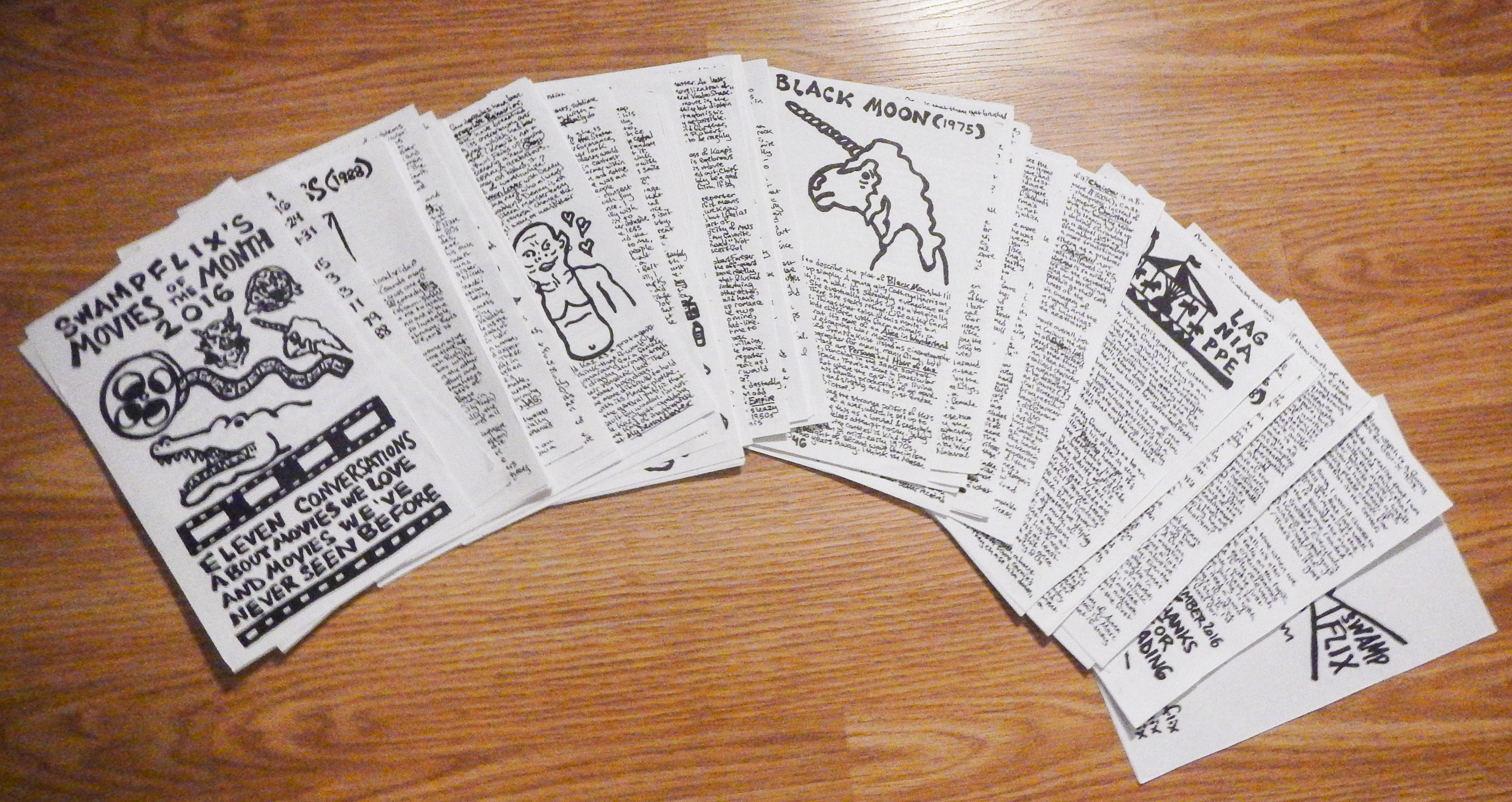
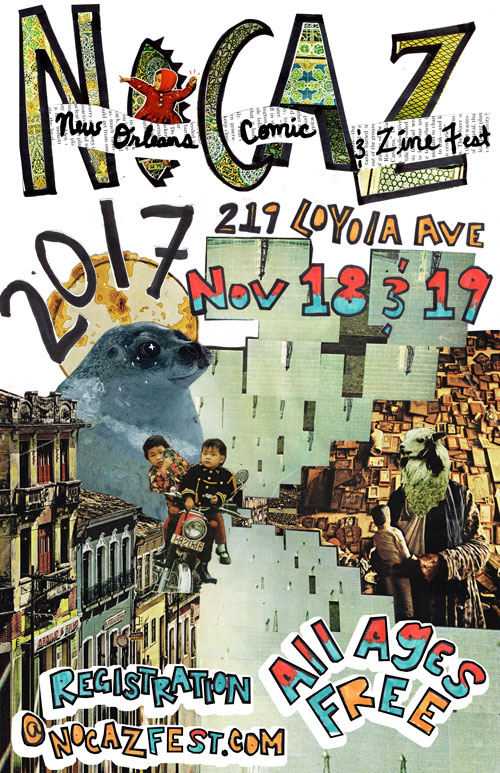
Attention, Swampflix readers in the New Orleans area! We will be exhibiting this Saturday (November 18th) & Sunday (November 19th) at the fourth annual New Orleans Comics & Zines Festival along with a bunch of other super cool comics & zines exhibitors. For this year’s festival we made a massive print version of the entirety of last year’s Movie of the Month conversations.

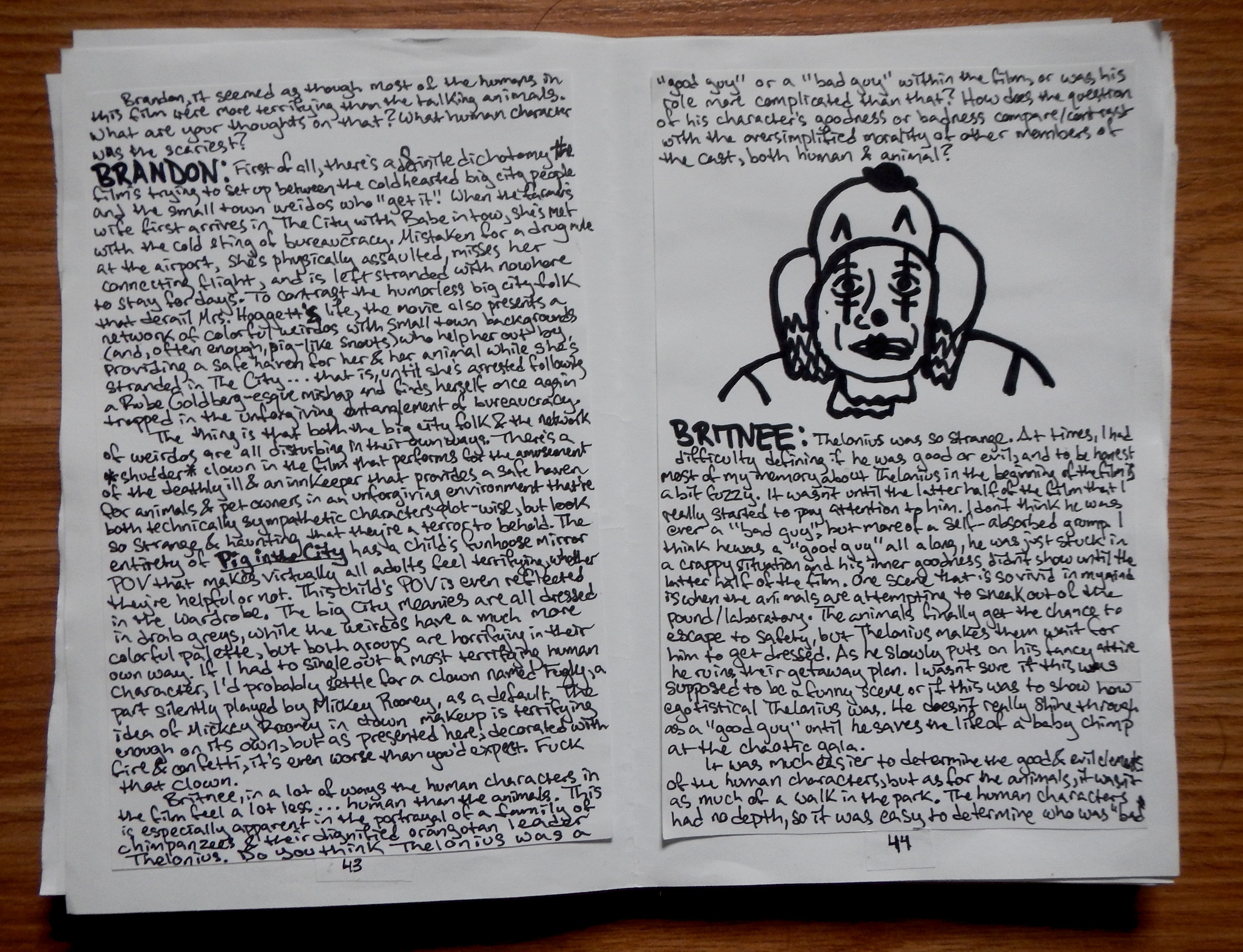
We will be also selling print versions of our “Marabunta Cinema“, “Lugosi Vs. Karloff“, “Agents of S.W.A.M.P.F.L.I.X.” and “Wrestling Cinema” pieces, as well as 2015’s Movie of the Month conversations in their entirety. They all feature dozens of new illustrations & hand-transcribed text from the site and the two Movies of the Month zines are ~90 page whoppers featuring work from everyone who contributed to the site those two years.

We will be tabling from 11am-4pm on Saturday & 12pm-4pm Sunday at the Main Branch of the Orleans Public Library on Loyola Ave. For more info on the festival, check out their website at Nocazfest.com & refer to the poster below.

We hope to see y’all there!

-The Swampflix Crew

Bob Dylan’s Indifference towards Hearts of Fire (1987), The Press, and Life in General

The only reason to ever dig up our current Movie of the Month, the 1987 rock n’ roll melodrama Hearts of Fire, from its VHS format burial ground is to gawk at how baffling Bob Dylan’s presence is in the film. Cast as a washed up rock n’ roller with an attitude problem & Bad Boy sex appeal, Dylan is insanely wrong for the role. Every mumbling line reading of flirtatious cynicism & every moment of tough guy macho posturing plays like an unintended joke. Dylan consistently fails at the basic task of pretending like he cares about the young woman he’s meant to seduce or the hotel room furniture he lazily smashes as he sleepwalks through the whole ordeal as if he were a man twice his age. It appears as if Dylan’s presence in Hearts of Fire was entirely a marketing decision cooked up by his agent and the music industry legend himself had zero interest in fulfilling the project’s basic requirements. Dylan needed an image rejuvenation after his 80s gospel period pleased no one, but was entirely indifferent to any opportunities presented to accomplish that turnaround. He simply didn’t give a shit.

If you need any confirmation of Bob Dylan’s indifference to Hearts of Fire, there’s a BBC-produced documentary about the making of the film, titled Getting to Dylan, that should make his total lack of interest in the film crystal clear. 1980s press organizations were just as baffled by Dylan’s decision to star in the film as we are now, looking back. It had been decades since Dylan had appeared in weirdo art movies like Don’t Look Back and Renaldo & Clara, so no one could parse out why he chose to revive his nonstarter cinema career with a love triangle music drama where he plays a washed up rocker archetype clearly written for Mick Jagger. Determining the answer to this question was no easy task, since Dylan’s indifference to Hearts of Fire extended to his feelings on speaking to the press and, seemingly, being a living human being. It takes producers of Getting to Dylan almost halfway into their hour-long runtime to get their subject to even speak on what drew him to the project. His answers are, to be expected, mostly a series of cryptic mumbles. When asked what his favorite scenes in the movie involve, he shrugs, “I don’t even know the scenes in the movie, to tell you the truth. They’re all good, I guess.” The only time he seems like he cares about or even knows what’s going on in the movie is when he jokes that he’s being standoffish with reporters because he’s “getting into character.”

As easy as it is to have a laugh at Dylan’s indifference towards the press & his craft as a dramatic actor, Getting to Dylan does offer some insight into why he feels that way. The cynics & sycophants of pop media journalism are grotesque monsters in the BBC doc. First of all, although they’re professionally tasked to ask Bob Dylan questions about Hearts of Fire, they care even less about the movie than he does. While he’s sitting directly next to a stone-faced Fiona (the actual star of the film) he’s asked why he’s debasing himself with such lowly pop culture material when a writer of his talents could presumably have penned a better movie himself. Journalists use Hearts of Fire as an excuse to get close enough to the notoriously reclusive Dylan to ask questions about what the really want to know: the details of his heyday in the 60s & 70s folk scene. Dylan shrugs off the praise heaped on him by music journalists in the film, shyly making self-deprecating nonsense like, “I just write [songs] because nobody tells me I can’t write ‘em.” He shoots down grandiose statements about his work with mumbled repetitions of “Not really,” until the reporters who’ve desperately tried to get him on the mic the entire film ask questions that have nothing to do with his work at all, searching for tabloidish info about his family life & potential assassination attempts. The press is just as gross in their coverage of Hearts of Fire as Bob Dylan is aloof.

There’s nothing especially significant or revelatory about Getting to Dylan. The short-form TV doc is mostly amusing for watching the BBC attempt to cull together scraps of interviews & promotional clips for a movie its subject has less than zero interest in promoting. They have to meet Dylan more than halfway to produce something that resembles a finished product, which is more or less just desserts considering the way they chose to cover his involvement in the film. The most animated Dylan becomes in the doc is in an out of nowhere tangent where he (idiotically) complains that modern, synthesized pop music has “no roots” & “no foundation.” For that brief moment real life old fart Bob Dylan resembles the old fart he was hired to play in Hearts of Fire, a character who similarly turned up his nose at 80s pop & new wave. It’s kind of a shame he couldn’t translate that passionate distaste for modern music into an authentic performance in the film, but it’s still entertaining in its own way to watch him half-heartedly trash a hotel room & seduce a woman half his age with nearly inaudible mumbles and a profoundly stupid earring.

For more on November’s Movie of the Month, the Bob Dylan rock n’ roll disaster Hearts of Fire, check out our Swampchat discussion of the film.

-Brandon Ledet

The Florida Project (2017)

Youth is the key ingredient to the court jester defiance of D.I.Y. punk as a culture & as a philosophy. There’s a defiant, punk as fuck spirit that drives Sean Baker’s breakout feature Tangerine in a way that made it an easy pick for one of my favorite films of 2015 and one of the 2010s releases I’d most want to watch with the unintentional godfather of youthful punk defiance, John Waters (Wetlands would be up there as well). Baker distills that youthful, punk defiance even further in his follow-up to that iPhone-shot whirlwind of sex workers on the war path by looking to even younger, more defiant protagonists: actual children. The Florida Project is already facing early waves of backlash for its cultural sins as poverty porn (and it’s honestly a miracle that Tangerine largely escaped the same). These accusations are understandable given the film’s children-in-peril setting in the extended-stay slum motels just outside the Disney World amusement parks in Florida, but they presume that the film’s sole goal is to merely report that these impoverished communities exist just outside the tourist industry playgrounds they surround. The Florida Project is not the miserable, poverty-exploiting drama that reading frames it to be. Rather, it captures the defiant punk spirit that laughs in the face of all authority & life obstacles among the children who run wild in those insular, run-down motel communities. The Florida Project doesn’t dwell on or exploit the less-than-ideal conditions its pint-sized punks grow up in, even when depicting their most dire consequences; it instead celebrates the kids’ anarchic energy and refusal to buckle under the false authority of adults.

Willem Dafoe (in Willem Dafriend mode here) stars as the only recognizable face in a crowd of “nonprofessional” actors (give or take a Macon Blair or a Caleb Landy Jones), mostly children & young women. His exasperated motel manager, Bobby, is a reluctant caretaker of the single mother families that rent his rooms by the week. He attempts to maintain a professional emotional distance from these near-homeless families, whom he occasionally has to police & evict, but fails miserably due to direct contact & a soft heart. Like all adults & authority figures, however, Bobby is only a periphery presence to be mocked & subverted by the punk-as-fuck little rascals that play throughout the purple pastel stucco buildings that cater to Disney World tourist runoff. Their ring leader is our POV character, Moonee (Brooklynn Prince), a dangerously sharp child who runs wild around the motel as if it were a playground, with the approval of her sex worker mother. Instead of solemnly gawking at her small family’s limited means, The Florida Project celebrates the minor successes Moonee pulls off in the tropical Florida heat: scheming tourists out of ice cream money, crashing fancier hotels’ breakfast buffets, initiating newcomer kids into the joys of smashing the fragile semblance of routine normality authority figures like Bobby are tasked to maintain, spitting on cars. It’s no mistake that the opening credits are set to the disco hit “Celebration,” since the entire intent of the film is to celebrate good times, even in the face of the harsher realities at the story’s fringes. Although Moonee & her cronies are financially locked out of The Happiest Place on Earth, they defiantly turn the Magic Castle & Futureland Inn knockoffs they are allowed to occupy into a punk rock amusement park of its own.

Many reviewers are discussing The Florida Project in the same modern American poverty documentation terms used to describe last year’s (much less jubilant) American Honey. I believe the film’s vibe is much more in line with the young court jester punks of titles like We Are the Best!, Daisies, Female Trouble, etc. There’s certainly a detectable quality of documentation of hyper-specific “at risk” Floridians who live at the tourism industry’s fringes, following them with a detailed eye as they pass theme park-style gift shops & listen to trap music on smartphone speakers. Baker’s filmmaking style is much less kinetic & haphazard here than it was in the iPhone-shot sugar rush of Tangerine, but the rich 35mm colors & fixed camera precision of The Florida Project only stabilizes & beautifies the world of its children-in-peril punks enough to emphasize their exuberance & imagination. The pure, dangerous joy these kids find in the palm tree-lined parking lots of an urban Florida wasteland is infectiously genuine. The movie doesn’t ask for your pity, but rather a hearty cry of “Up the punks!” and recognition that “All Cops Are Bastards,” even well-meaning motel managers. The court jester youthfulness of punk requires you to take no authority or life challenge too seriously (even though situations are often physically & emotionally dangerous here) and the little kids who run free in The Florida Project’s miniature domain laugh in the face of it all without caution and without apology.

-Brandon Ledet

Movie of the Month: Hearts of Fire (1987)

Every month one of us makes the rest of the crew watch a movie they’ve never seen before & we discuss it afterwards. This month Britnee made Brandon & Boomer watch Hearts of Fire (1987).

Britnee: Known as the film that killed critically acclaimed director Richard Marquand (Return of the JediEye of the Needle, etc.), the 1987 musical drama Hearts of Fire has somehow managed to disappear from the cinematic landscape. It’s so strange for a film with such a well-known director and big name actors (Bob Dylan & Rupert Everett) to not achieve even cult status. I’m not going to beat around the bush here. Hearts of Fire is terrible. It’s so terrible that it went straight to video after spending a very short time in theaters. Until this day, it’s difficult to get a hold of a physical copy because it was never released on DVD, and it doesn’t look like it ever will be.  All of this negativity aside, I wholeheartedly love this movie. It’s a lot of stupid fun without trying to be funny, and that’s why I just had to make the Swampflix crew watch it for Movie of the Month. The film stars music legend Bob Dylan as a washed up rock star turned chicken farmer named Billy Parker. Billy develops an uncomfortable romantic friendship with a young musician, Molly McGuire (Fiona). Molly plays small gigs with her band at her hometown bar (somewhere in Pennsylvania) that’s filled with some very interesting characters, including a barmaid who looks like a combination of Large Marge and Dolly Parton. Billy stumbles into the bar and quickly develops an interest in Molly.  He sort of becomes her mentor, but it’s also obvious that he wants to get in her pants super bad. It’s so hard to watch middle-aged Bob Dylan flirt with a teenager, and it gets even worse when she flirtatiously calls him names like “Dirty Old Man.” Billy is performing in London, and he takes Molly along for the ride. Almost immediately after landing in London, Molly runs into her all-time-favorite singer, James Colt (Rupert Everett), the hottest name in modern music. It doesn’t take long for Molly to be caught in a love triangle between these two men while also striving to achieve her dream of being a superstar. The chemistry between the three main characters is perfect. Dylan moves like a zombie and mumbles truckloads of nonsense, Fiona is a bubbly teen with a great raspy singing voice (Bonnie Tyler meets Laura Branigan), and Everett is the stereotypical 80s pop star. When the three interact with each other, it’s pure entertainment.

The character Billy Parker was initially written for Mick Jagger, but he turned down the role because, well, the script was crap. I’m so thankful he did because Dylan is hilarious in this movie without even trying. He literally mumbles all of his lines and pretty much sleepwalks throughout the entire movie. Dylan was obviously not very excited about starring in Hearts of Fire, and it shows through his acting. He must’ve been very desperate for cash at that point in his life.

Brandon, what are your thoughts on Dylan’s acting in Hearts of Fire? Was he attempting to portray a tired, old rock star or was he actually a tired, old rock star?  How different would this movie be if Mick Jagger had taken the role of Billy?

Brandon: The originally intended, Mick Jagger version of Hearts of Fire at least makes more sense. Billy Parker is a hard-drinking, fast-loving rock n’ roller, a lifestyle Jagger had genuinely been living for decades by the time this film was released. I don’t necessarily believe that Jagger’s rock n’ roller energy could have saved the film’s embarrassingly lifeless script (which was co-written by Showgirls/Basic Instinct coke monster Joe Eszterhas, of all people), but he could at least have afforded it some authenticity. As Britnee suggests, part of what makes Hearts of Fire so memorably bizarre is that Bob Dylan is absurdly miscast in the role. First of all, unlike Jagger, Bob Dylan does not fuck. Not that he’s a 76 year old virgin or anything, but he’s more of a music industry legend for his rambling, radical politics poetry than he is for pure sexual charisma. Second of all, 1980s Bob Dylan especially does not fuck. Fresh off a creative slump where the singer-songwriter churned out several little-loved gospel records as a Born Again Christian, Dylan was as soft & as unsexy as ever. That’s why it’s so weird to see him don the leather-clad costuming of a rock n’ roll toughie; nothing in his past as an indignant hippie folk singer or a mediocre gospel enthusiast suggests he had earned the right (give of take a recording or two with The Band). The conceit of the film requires Dylan to be playing himself, but not quite, so that he credibly turns heads when he saunters into rock clubs unannounced. Instead, he’s playing a version of himself that never actually existed. This is made doubly strange by the fact that Dylan has the energy level of a man twice his age. He’s less than 50 years old in Hearts of Fire, but he has the charisma of an ancient geezer, to the point where when he smashes a hotel room in a moment of supposed rock n’ roll excess, all the audience can do is laugh at the labored, slow-motion movements in his old man body. Dylan was tasked with making Hearts of Fire cool. Rather than achieve that impossible task, he turned it into a joke.

As fun as it is to gawk at a past-his-prime Dylan slowly seeping out of his range as a dangerous rock n’ roller romantic lead, I do feel really bad for Fiona here. I have to assume Hearts of Fire was even more damaging for her career as a VH1, Pat Benatar-era rock n’ roll singer than it was for the director’s, if not only because I’ve never heard of her before. She’s actually super charming as the film’s lead, Molly McGuire (except maybe when she’s performing the lifeless radio rock that poisons the soundtrack), which makes it a total shame that she’s asked to act circles around a cardboard cutout of Bob Dylan, a man 20 years her senior. With Mick Jagger in the opposite role, there might have been more of a chance for an erotic spark between Molly & Parker to earn film’s baffling R rating, despite Jagger being roughly the same age as Dylan. Instead, we watch an old man leer at Fiona through drooped eyelids between nonsensical, patronizing mumblings about the dangers of the music biz. Her younger, more viable option for a romantic partner is a synthpop twit played by Rupert Everett, who’s essentially laying out a roadmap for Russell Brand’s career as a public nuisance two decades later. He’s no better than Dylan’s old fart, has-been rocker, really, and the men in Molly’s gradually appear to be two versions of the same asshole on different ends of a shared career trajectory. Their patronizing treatment of Molly as a muse & a protégé instead of a professional equal is exemplified even by their respective choices for a “first date” location: an ice cream parlor and a carnival. They treat her like a little kid (just one they happen to want to sleep with). What’s extra gross about this dynamic is that the movie leers right along with them. Rock n’ Roll was very much still a Boy’s Club at the time of Hearts of Fire‘s production (maybe even more than ever, thanks to the groupie-exploiting hijinks associated with hair metal) and the film obliges the male gaze’s interest in Fiona’s body just as often as it allows her to play music. The camera drools over her as she skinnydips, sleeps pantsless, and forgoes a bra in her sound booth recording sessions. Fiona not only deserved a better pair of rock scene buffoons to lust after her; she deserved a better movie overall.

Boomer, what did you make of Fiona’s performance and her positioning at the center of this bizarre rock star love triangle? Was the Boy’s Club perspective of the film’s version of rock n’ roll at all offset by details like her ultimate decision to choose neither man as a lover & the one lovemaking scene that focused on Everett’s naked flesh for a change? Or was the movie just as limiting of her potential as the leading man-children who populate it?

Boomer: I thought Fiona was quite charming, actually. For the first 45 minutes of the film I found the scenes that focused solely on her to be the best part: her deprecating interactions with her shitty boss, her short but sweet scene with her roommate, even her objections to joining her bandmates in their new gig (despite her objections that she doesn’t play lounge music being bratty in a Reality Bites way). But every time Dylan was on screen, all of my good will just got sucked right out of me. It wasn’t just his performance (which was, make no mistake, terrible), but also his overall look and demeanor. Young Dylan was a cutie pie, and the elder Dylan now is like a noble statesman in his appearance, but a shudder ran down my spine when Molly asked him to go skinny dipping with her; she’s young and effusive and adorable and he looks like someone took 60s Dylan’s face and turned it into a tanned and cracked handbag. All I could think about was this exchange between Bart and Marge in “A Fish Called Selma”: “Why did they make that one Muppet out of leather?” “That’s not a leather Muppet, that’s [Bob Dylan]!”

Which is not to say that Everett serves as a better love interest. His sex scene with Fiona may have focused more on his flesh than hers, but it is to the film’s detriment, as the scene itself is the least erotic love scene that I’ve born witness to since Argento’s Phantom of the Opera. Everett is not an ugly man (I’d argue that his shower scene in Cemetary Man could make any receptive audience member, wombed or not, pregnant), but he’s never been more unappealing than in this greasy mullet and untweezed unibrow. He only barely manages to be more attractive than Dylan by virtue of the fact that he’s not sporting Dylan’s embarrassing earring, which was as distracting as it was pathetic.

Despite being surrounded by so much poor decision-making in the way of casting, costuming, and everything else, Fiona manages to be likable and ebullient. I did spend a lot of time waiting for the other shoe to drop with regards to her fame, however. In a film like this, when a semi-naive country girl is dropped into the lap of a more experienced performer and explores his world of fame from the inside, you expect there to be a certain kind of turning point. Although Colt is subtly inferred to drink too much, Molly never falls into chemical dependence or is forced to confront the fact that her lover is a rock star with a libido to match and he “needs” more than one woman, nor does she have any real failings. The suicide of one of Colt’s fans is the only real obstacle in her life or career after she leaves Pennsylvania, and she’s really only involved tangentially as a witness. Her decision to take neither of her proposed love interests as her endgame partner suggests a kind of feminism, but ultimately feels more like the screenwriter didn’t expect women to experience fame and all of its accompanying temptations and pitfalls the same way that men do, or even at all.

Britnee, do you think that there was a faded rock star in 1987 who could have played the Billy Parker role without it coming off as creepy and weird? Would it have been a better choice to hire an actor who could sing instead of a singer who could(n’t) act? Who would you have cast instead in the roles of Parker and Colt, and why?

Britnee: The thing about washed up rock stars is that they are usually highly unattractive and just hard to look at in general (Bret Michaels immediately comes to mind), so the idea of any real-life, washed up rock star successfully playing the role of Billy Parker seems close to impossible. Most of the musicians that I immediately thought of were still big names in 1987, but their careers are over and done in this day and age. Honestly, I think that 1987 Iggy Pop would have been the best choice. Bob Seger would come in as a second choice, but he’s got a dad vibe to him that isn’t sexy at all. He’s got a very interesting personality and he definitely knows how to work his sexuality, unlike Dylan. Iggy Pop would probably make the unavoidable creepiness of Parker’s character much easier to stomach, but the idea of casting an actor that can sing in the Billy Parker role makes a lot more sense to me. It’s a film after all, not an album. Take a look at James Colt. Everett’s singing wasn’t amazing, but his acting was pretty good. Come to think of it, having a real-life musician in the role of James Colt would have been a better choice, if a musician had to be in the film. Even if the younger musician sucked at acting, more people would have seen this movie and it wouldn’t have flopped so hard at the box office.

In my fantasy recasting of Hearts of Fire, I’m imagining Chris Sarandon as Billy Parker. I recently watched Fright Night and was reminded of how he really does own the screen. As for James Colt, I would cast my favorite 80s music bad-boy, Billy Idol. He’s just so much fun! He’s got some decent acting skills as far as music videos go, and his charisma is out of control. His personality is so vibrant compared to the blandness that is Everett, and it’s what the role of James Colt desperately needs. This is a guy who is the biggest name on the music scene, so lets give him some flare.

Sometimes when musicians take on acting, it does work in their favor. For instance, David Bowie, Cher, and Barbra Streisand had many successful roles in major films. However, most of the time, it just doesn’t work out.

Brandon, after all of the flops that feature musicians attempting to be actors, why do you think this is still such a prominent occurrence in film? Why don’t they just give it a rest? Is there some sort of method to the madness?

Brandon: I have to assume that most acting turns from musicians are  marketing decisions, not artistic ones. When David Byrne directs a weirdo art film like True Stories, it’s obviously coming from a place of artistic passion, but it’s a different story altogether when, say, Vanilla Ice stars in a rap-oriented remake of a Marlon Brando motorcycle picture. Vanilla Ice likely didn’t get into the rap game thinking the best way to purely express himself would be as a leading man in a high-fructose romantic comedy. That decision had to have been made for him through a series of boardroom meetings over marketing data that suggested Cool as Ice would boost his album sales & cultural cachet. I can’t speak for Bowie, Cher, or Streisand’s respective movie industry success stories as either passionate work that happened to pay off or marketing decisions that stuck because of natural talent, but Hearts of Fire is most definitely seeped in the desperate cash grab end of that dichotomy. Fiona’s marketing team was likely invested in catapulting a rising star with a hit motion picture, while Dylan’s own publicity team was attempting to borrow some Mick Jagger edge to forgive the sins of his thoroughly un-cool gospel period that immediately preceded the film. I’m pretty sure that Hearts of Fire proved to be an embarrassment & a failure for both musicians, but it’s especially cringe-worthy for Dylan, whose prematurely senile mumblings in the film did absolutely no favors for his dangerous rock star street cred.

Most marketing decisions are a strike-while-the-iron’s-hot proposition made while a pop star is Having a Moment. To hammer the comparison home, I have to assume that Cool as Ice was greenlit when “Ice Ice Baby” was endlessly looping on the radio. By the time the movie hit theaters, however, Ice’s moment had more or less passed and audiences’ thirst for him had, um, cooled. Hearts of Fire feels similarly late to the table. The late 80s was admittedly a strange, stagnant time for radio rock. Nirvana wouldn’t break through until a few years later (as immortalized in the documentary title 1991: The Year Punk Broke), so most genuinely subversive rock n’ roll movements at the time (punk, sludge, thrash, etc.) were largely invisible to mainstream audiences. Still, even a cheesy hair metal soundtrack would have been more cutting edge than the stubbornly old-fashioned 70s arena rock and post-Benatar VH1 rock Fiona & Dylan were tasked with selling as cool here. Even the Soft Cell & Human League style of new wave pop Everrett’s character is supposedly a sell-out for playing would have been years & years stale by the time Hearts of Fire was released. They might as well have made fun of him for singing disco. Casting Bob Dylan as a dangerous, sexy rock star isn’t the only way Hearts of Fire fails to keep its finger on the pulse of modern rock either. When Fiona & company play “aggressive” rock meant to rile up the British punks pogoing in the London audience, it plays like an unintentional joke. In a real life 1987, those kids would have laughed them off the stage for performing the music their parents listen to.

Boomer, I get the general sense that punk & metal aren’t entirely Your Thing as much as other music genres. From that outside perspective, was Hearts of Fire‘s version of dangerous 80s rock n’ roll as noticably, laughably out of date for you or could you more easily excuse the inauthenticity of the youth culture it was selling?

Boomer: Untrue on the count of the first, but correct with regards to metal. I think you’re probably thinking back to this passage from my Shock ‘Em Dead review, and you’re remembering it correctly: “I’m not here to pass judgement on Metal as a genre—after all, as far as devotees to a particular musical style are concerned, metalheads are some of the most aggressive, fanatical, defensive, and insular, and I’m not looking to get my head bashed in by a guy […] who has willingly and purposefully refused to listen to anything that came out after the demise of Vinnie Vincent Invasion. Metal fandom is a mostly misogynistic miasma of guttural throats, thrashing, and toxic masculinity, devoted to a musical subculture that was most successful during a decade where everyone was coked out of their fucking minds, but it’s also the genre that features some of the most amazing and mindboggling musical feats ever performed on guitar, and that fact is not lost on me.” So, yeah, as with some things that I like, there’s a bit of personal backlash against the devotees rather than the thing itself; I think that this feeling is evident in the way that I’ve written about Christianity in my The Late Great Planet Mirth articles as well. It reminds me of a conversation I had a few months ago with my roommate, who pointed out that he’s always associated Star Trek and the Grateful Dead with each other in his mind, because they’re both works of art that are as famous for their fandoms as they are for the text itself; as much as I would like to enjoy metal, the fandom is simply too toxic for me to enjoy.

My obvious punk days are behind me (it’s hard to show your commitment when you no longer have enough hair to die or ‘hawk), but that doesn’t mean I’m not still a fan of the music or the ethos, although I would be lying if I said that I didn’t find the slow infiltration of nationalism into the punk scene (admittedly not as deep in the bone as it is in some pockets of the metal scene, where it seems to breed like a weed) disturbing and disconcerting. Like, seriously, Nazi punks fuck off.

Overall, I found the film to be laughable in its attempt to be “hard” or “edgy,” although I credit that feeling more to simply being a person and not a punk fan. I mentioned it before, but I found Molly’s insistence that she doesn’t play lounge music to be the complaint of a contemptuous brat. I’m reminded of a story I read about a flautist who had been coddled and fawned over from an early age and reached high school as a prodigious talent but also a confrontational and sententious jerk. His high school band raised money by performing an annual community concert wherein they played various compositions with which the general public was familiar, like the Star Wars hero theme and the score to Harry Potter; he refused to participate because doing so was “beneath” him. He was accepted to Julliard but flunked out within a year because he felt that he knew more than his professors. At the time of the last update that the author of the story (a former high school bandmate) had heard, the flautist was now having to live on Earth with the rest of us, with no prospects in his desired field but still clinging to his delusions of musical godhood and not having learned the humility that usually accompanies such a fall from grace. I look at Molly and consider her age and have to ask, just how many dues could she have possibly paid? How could she possibly be so naive? But then the film sees fit to have a haggard musical genie come along and sweep her away from her podunk town, which makes the film a fantasy of wish fulfillment for every backwater kid who knows three chords and thinks they have a story to tell. With that in mind, I’m not surprised that the narrative is so acutely lacking in self-awareness of how these stories play out in real life that we’re supposed to agree with her and be swept along in her wake, but you hit the nail on the head with the words “laughable” and “inauthentic.”

Boomer: I’ve never seen a film so hell bent on not pulling the trigger on Chekhov’s Gun. When Billy first rolls into town, the handle of a revolver is hanging out of the front of his jacket. I’m pretty certain that we also see the same gun sitting on the counter in his kitchen near the end of the film, but we never see him using it at all. There’s not even a scene where he takes Molly out to the back forty to shoot tin cans off of a fence while he pontificates about some metaphor comparing the cans to men who will try to steal or subvert her talent. Sure, we get to see one of Colt’s (har har the irony) fans use a gun, but it’s not the same one. I kept wondering when Billy’s gun was going to come into play, but it never does. That’s a first draft problem, but this is also a first draft movie, so I don’t know why I’m surprised.

Brandon: For a much more authentic look at a singer-songwriter struggling to establish her own voice in the oppressive Boys’ Club of 1980s rock n’ roll, I highly recommend 1982’s Ladies & Gentlemen, The Fabulous Stains. The feminist messaging is more pointed, the songs are more believably punk, and you get to have a glimpse at a before-she-was-famous Laura Dern. As much as I allowed myself to be charmed by Fiona as a personality, I think Hearts of Fire is really only worth digging up to laugh in Bob Dylan’s face as he bizarrely attempts to pass himself off as a sexy, dangerous rock god & fails miserably. The Fabulous Stains, by contrast, is a genuinely great movie set in a notably similar atmosphere.

Britnee: I’ve recently watched a couple of interviews with Bob Dylan around the time Hearts of Fire was filmed, and he is just as tired in real life as he is in this movie. He should’ve gone on a two-week cruise instead of making a movie to get some of his energy restored. But as sad as it sounds, I love how horrible he was, and I love how horrible this movie is. I wish it had achieved cult status so there could be midnight showings with fans dressed up as James Colt (in oversized suits and greasy mullets).

Upcoming Movies of the Month
December: Boomer presents Wings of Fame (1990)
January: The Top Films of 2017

-The Swampflix Crew

Afflicted (2014), Unfriended (2015), and the Future of Found Footage Horror

After the success of 1999’s The Blair Witch Project, the horror market was flooded with found footage echoes of that pioneer work that diluted its legacy. Titles like [Rec.], Willow Creek, Paranormal Activity, and straight-to-DVD dreck too bland to even be named exhausted the possibilities of how the found footage gimmick could be kept fresh on the horror landscape despite the limitations of its form. There’s still an occasional success that follows a traditional found footage formula (The Visit & Creep both immediately come to mind), but for the most part that subgenre still feels oddly faithful to the roadmap laid out by Blair Witch almost two decades ago. For me, the most exciting developments in found footage gimmickry have been the instances where movies leave behind the handheld camcorders of Blair Witch entirely and switch up the technology of the devices used to record their horrors. Our current Movie of the Month, Unfriended, is my go-to example of how updates in technology can keep this genre alive. Framed entirely within the POV of a laptop screen during a deadly Skype conversation, Unfriended offers a new, novel perspective on found footage storytelling. It recaptures the “It could happen to you” verisimilitude of Blair Witch’s camcorder format without merely repeating the trick. The subsequent shift to smartphone POV (via Snapchat) in Sickhouse wasn’t quite as memorable, but at least offers hope that future technology jumps can keep this genre fresh. We can’t continue to produce carbon copies of The Blair Witch Project and expect them to remain effective. Its modes of “documentation” no longer reflect the way we film our lives, in supernatural thrillers or otherwise.

I believe Unfriended is the best technology jump I’ve seen among Blair Witch descendants, but it wasn’t the first. A year before Unfriended hit wide release, a much smaller indie horror titled Afflicted offered its own Blair Witch technology advancement in what could (reductively) be described as GoPro Horror. Written, directed by, and starring Derek Lee & Chris Prowse (who use their own names & old photographs in the film), Afflicted adapts vampire transformation horror to the format of a reality show-style travelogue. Two American buddies take a break from their daily drudgery as an I.T. bro (who’s suffering an aneurysm-causing brain disorder) & a low-level documentarian (who just wants to shake his bestie out of his medically-induced rut) to backpack through Europe in search for excitement, experience, adventure, and distraction. They document their every waking moment on a shared “video travel blog” titled Ends of the Earth. Things take a bad turn when the aneurysm-suffering tech bro engages in a one night stand hookup with a French girl and is unwittingly turned into a vampire. The bubbly self-promo energy of the reality show travelogue then slips away as the focus shifts to documenting the supernatural changes in his body, which range from the ailments & abilities of a superhero to those of a bloodthirsty monster. By the end of the film he’s a fully feral Nosferatu, wreaking havoc in the streets of Paris with wild abandon. Afflicted is an exciting balance of dirt cheap, accessible technology (most notably in its use of GoPro footage) and large scale CGI horror spectacle. The tension between those two aesthetics pumps fresh blood into the veins of two over-drained horror subgenres (the found footage horror & the vampire myth) while still maintain the feeling of two normal buds making a no-budget indie together. As the technology of its camera equipment becomes more obsolete, it might stand a chance as surviving as an essential cultural document, just as Unfriended captures what life online feels like in the 2010s (except maybe with less vampirism & ghost murders, respectively).

As much as I remain impressed with Afflicted’s use of new technology to revitalize the found footage gimmick, I do have to admit that its basic accomplishment have become less novel over time. Spring offered a much better version of the supernatural European vacation from Hell narrative (sans the found footage device). They’re Watching (although total garbage) was more fully invested in the reality show turned found footage horror format (which still has more room to be fully explored). Most importantly, though, Unfriended’s commitment to framing its entire story through a single Skype session has since made Afflicted’s only occasional use of GoPros seem a little half-assed in retrospect. At this year’s New Orleans Film Fest I saw a darkly funny, merciless drama titled Damascene that proved it’s possible to film an entire movie on GoPros without it inherently feeling like a Hardcore Henry-style first person shooter. Afflicted mostly saves its GoPro sequences for its final, action-packed stretch as our vampiric antihero is being chased by Interpol for his crimes against innocent Parisians. Most of the movie is seemingly filmed on handheld digital camcorders, which makes it more a direct Blair Witch descendant than the much more fully committed Unfriended. Still, an intense focus is placed on the technology behind the documentation, even including a scene where all of the documentarian’s gear is laid out & cataloged on a hotel room bed (chest-mounts, GoPros, zoom lenses, etc.). The movie also finds the technological novelty in its attention to the two buddies’ travel blog, especially in how they crowdsource information through the comment sections. Afflicted may be slipping in my estimation in how its GoPro horror gimmick is used to revitalize the found footage format, but it’s still endlessly impressive in how it punches above its weight by playing with the latest available technological tools.

Although Afflicted is not as fully committed to its employment of GoPro technology to revitalize found footage horror as Unfriended was with Skype or Sickhouse was with Snapchat, it’s still worthy as an early signifier that the genre will only survive & remain fresh if it’s allowed to keep up with the technology of its time. I’m not convinced that Afflicted would have been half as interesting as a vampire transformation narrative or as a found footage horror piece without its GoPro technology & travel blog documentation providing modern online culture texture to its basic aesthetic. Just a year later, Unfriended did the same for the traditional ghost story within a found footage context, although admittedly with a fuller, better-realized commitment to its gimmick. It’s unclear what the next technology jump is for the found footage genre (although it’s likely a return to the Sickhouse smartphone gimmick is likely what’s next for Unfriended 2, at least), but the further the genre moves away from the handheld camcorders of The Blair Witch Project the better. There’s no reason for the genre to remain stuck in the technology of 1999 and the more it makes an effort to keep up with the gear available to its characters in the era they’re terrorized onscreen, the more effective it will remain as a mode of true-to-life horror & a cultural document.

For more on October’s Movie of the Month, the laptop-framed found footage horror Unfriended, check out our Swampchat discussion of the film, our look at how its committment to its gimmick distinguishes it from its German knockoff Friend Request (2017), and last week’s discussion of our hopes for it just-announced sequel.

-Brandon Ledet

Five Decades, Year by Year: Boomer’s Favorite Horror Movie of Each Year Since 1968 (Part Two: 1993-2017)

This feature is Part Two (of Two) in an extensive list of highlights and heartfelt recommendations from the last 50 years of horror cinema . . .
1993: It’s no secret that I love Needful Things. Leprechaun is a camp classic, and my dual loves of Timothy Hutton and George Romero mean that I have to take note of The Dark Half (even if I don’t love it), but the 1993 title belt goes to Guillermo del Toro for his Cronos, the most original take on a vampire film since Martin, although its internal mythology and cinematic eye far surpass that of the earlier film. The details in my mind are scant, but perhaps that’s for the best since I can’t spoil anything for you.

1994: A few years back, I would have called Cemetery Man my favorite horror film of 1994. While I do still enjoy it and find the imagery haunting (and there’s a Rupert Everett shower scene that might make everything in your house pregnant), a recent discussion with other socially progressive horror fans about the film’s admittedly questionable sexpolitick has made me want to revisit the film before I give it an unequivocal go-ahead. As such, I can’t recommend 1994’s Freddy Krueger entry Wes Craven’s New Nightmare enough. Before Craven jumped feet first into the meta-slasher genre, he tested the waters with this horror film about horror films, featuring an intriguing mythology that repositions the Krueger monster in the real world, as the embodiment of an ancient and real demonic entity that has become comfortable in Freddy’s skin. Featuring the return of Heather Langenkamp, who portrayed Nancy in the original film and Dream Warriors, this film serves as the perfect capstone to a trilogy of horror, if you watch the first film, the third, and this one, ignoring the others (except for morbid curiosity about how bad they can be). Brandon even came to a similar conclusion recently.

1995: This was a terrible year for horror cinema. If 1988 was the nadir of horror sequelitis, then 1995 is a close second. And if I told you that 1995 gave us one good thriller at least, you’d probably guess that I was talking about Se7en. But I lied; there were two good thrillers! A forgotten gem, Copycat stars Sigourney Weaver as a psychologist who studies serial killers until she is attacked by a deranged Harry Connick, Jr., leaving her mentally unwell and agoraphobic. That is, until a series of killings under investigation by detectives Dermot Mulroney and Holly Hunter force her to face her terror… before her fears can figure out where she lives.

1996: It’s The Craft. I mean, you knew that it would be, right? Obviously I love Scream, and it’s the better film objectively by a few miles, but there’s so much joy in watching the ladies of this coven succumb to their dark teenage impulses while refracting and reflecting the abuses that they have suffered back onto their teachers, bullies, parents, and other tormentors. There’s also a distinctly unusual story structure at play here that can make the film feel strange when you see if for the first time, like it’s not playing by the rules of cinema, and I love that as well. I have a friend who is working on the remake of the film, should it ever get off the ground, and when he told me about it I made sure to schedule some time to talk about what he had to get right, but the truth is, The Craft should remain untouched, unless you’re slipping it out of a DVD case (or, even better, a VHS sleeve) to watch it.

1997: This was almost the hardest year to make a choice about on this entire list. I share Brandon’s appreciation for Office Killer, and I think that Scream 2 is the rare sequel that is of equal quality to its predecessor. Guillermo del Toro gave ten-year-old Boomer nightmares for weeks from just the trailer for Mimic, and a series of sequels of diminishing quality doesn’t dull the horror of the original Wishmaster. Event Horizon is the real winner of my heart, pitting Sam Elliott and Lawrence Fishburne against each other aboard a derelict spaceship whose experimental propulsion system unwittingly opened a portal to Hell (of course, as one character says, “Hell is only a word. The reality is much worse.”). The film initially garnered an NC-17 rating for its violence, prompting some of the more truly horrifying scenes to be cut down to mere seconds of screentime and presented in flashes, which really only serves to make them subliminal and more horrifying. It’s a film that actually makes you want to reconsider the straight and narrow path.

1998: The post-Scream nineties were full of imitators. 1998’s Urban Legend has a special place in my heart because of its cast (notably future Dead Like Me actress Rebecca Gayheart, the always-amazing Alicia DeWitt, everybody’s first love Joshua Jackson, and Loretta DeVine, whose role here undoubtedly inspired Niecy Nash’s Scream Queens character Denise Hemphill). I also enjoy its attempt to compartmentalize and adopt contemporary folk tales into a basic slasher revenge narrative. Halloween H20 is also a great watch, and is (in my opinion) the best nineties sequel to a horror franchise that originated in another decade, recapturing the feeling of the first film and raising the stakes. That’s all well and good, but the best Scream imitator is undoubtedly The Faculty, which combines the classic pod people/body snatching plot with a commentary on interclique politics and general distrust of authority. It’s no surprise, then, that the script was penned by Scream screenwriter Kevin Williamson, but he’s not the only notable name in this incredibly talented cast and crew: Josh Hartnett, pre-Fast/Furious Jordana Brewster, Elijah Wood, Clea DuVall, Laura Harris (who went on to replace the above-mentioned Gayheart on Dead Like Me), and Shawn Hatosy–and that’s just the teenagers! Rounding out the adults in the cast are Robert Patrick, Salma Hayek, a pre-Daily Show Jon Stewart, Famke Jensen, Bebe Neuwirth, and Mrs. White herself Piper Laurie. Also, Usher is there. It’s a shame that this one’s no longer on Netflix, because it’s the perfect nostalgic high school Halloween flick for the ages.

1999: On any other list, The Blair Witch Project would probably be the title you’d expect to see here. I mean, what does it have to compete with? Two dumb giant aquatic creature movies (Lake Placid and Deep Blue Sea)? A Carrie sequel that was twenty years too late and that no one wanted? Two separate remakes of black and white horror classics that should have been left alone (House on Haunted Hill and The Haunting)? The Sixth Sense? Ok, maybe that one. But as unassailable and iconoclastic as Blair Witch was, I’m throwing my weight behind The Ninth Gate, which may come as a surprise to those who are aware of my general dislike for Johnny Depp vehicles (in fact, I didn’t even hate Sleepy Hollow, which also came out this year; it’s actually quite a beautiful film and probably Tim Burton’s last great live action picture). The Ninth Gate is about a rare book dealer who becomes part of a larger conspiracy that seeks to reunite a series of woodcarving prints from various editions of an alchemical text in order to use the clues hidden therein to summon the Devil. It’s a great premise, and the film itself is eerie enough, even before the film categorically answers whether or not the horror facing the protagonist is truly supernatural or merely the manipulation of a reckless cabal of rich fools with cult-like devotion and bottomless pocketbooks.

2000: Ginger Snaps! Ginger Snaps! Katharine Isabelle is a delightful terror in this film that connects the blossoming of womanhood with a “change” of a more… lycanthropic nature. The scene in which one sister tries to help her sister through the removal of a painful and disgusting tail is a particularly nauseating treat. In this nickel-budget indie, everything is pitch perfect: the blandness of suburbia, the power of sisterhood, the uselessness of parents. Seek it out.

2001: Frailty was the directorial debut of the late Bill Paxton, and it’s an interesting experiment in determining which of your friends are purely rational and which are inclined to a more supernatural explanation. Of all the films that annoy me with their revelation that, “surprise,” the rational explanation of the film’s events is incorrect and the supernatural explanation is the correct one, Frailty toes the line with surprising subtlety and grace, never answering the question one way or the other and providing ample evidence for either viewpoint. Unusually, however, my favorite horror flick of 2001 is explicitly supernatural: The Others, in which Nicole Kidman and her poor, ill children are forced to confront the ghosts of the past (or are they?). Although a lot of the film’s surprises have been diminished by parody and overplay over the years (I think that TNT played The Others five times a week from 2003 to 2005), it still holds up, and it continues to reward with every viewing.

2002: The influence of The Ring on the horror films that followed in the next ten years is undeniable, for better or worse, and I was fortunate enough to see 28 Days Later on the big screen at a recent Terror Tuesday so that I could be reminded just how fantastic it is (I found myself listening to “In a House In a Heartbeat” for weeks after). It’s so good. But 2002 truly belongs to the beautiful oddity that is Bubba Ho-Tep, starring camp icon Bruce Campbell as an elderly Elvis Presley, whiling away his final days in an assisted living facility. You see, the “Elvis” who died in 1977 was actually an impersonator with whom the real Presley traded places in order to get some distance from his fame and all the trauma that accompanied it. He’s not the only supposed dead man there either: Ossie Davis plays a wheelchair-bound JFK, whose skin color was changed in order to hide him away from those who would do him harm after his “assassination.” Together, these two decrepit American icons have to fight off a reanimated mummy before it can suck the life out of every patient in their nursing home.

2003: When I started this list last year, I was genuinely perplexed as to what I should list as the best of this year, as virtually every film was complete garbage. Freddy vs Jason? The remake of Texas Chainsaw Massacre? Darkness Falls and Dreamcatcher? I even went so far as to include Haute Tension on my outline with the assumption that I would find the time to watch it (I didn’t). But then a light appeared in the heavens and I saw A Tale of Two Sisters, a South Korean thriller about a young girl named Su-mi who returns to both her secluded family home after psychiatric treatment and to a dependency upon and protection of her younger sister, Su-yeon, against the apparent evils of their wicked stepmother. There’s more happening here than meets the eye, however, and you’re doing yourself a disservice if you haven’t caught this one. It’s also going to be the last legitimately good horror movie you’ll read about on this list for a while, so settle in.

2004: Yikes. Another shitty, shitty year. There were not one but two sequels to Ginger Snaps in 2004, neither of them really being worth the effort. I almost want to give the credit to Cube Zero, serving as the best sequel to 2007’s Cube, a fantastic master class in making the most of your budget and finding a way to make the most of the “characters in search of an exit” premise. But Cube Zero isn’t Cube, so hat’s off to you, Shaun of the Dead.

2005: When I was in high school, I was fortunate enough to attend a lecture by Juliet Snowden and Stiles White, the husband and wife team behind The Boogeyman (Snowden’s father was a professor at the college on which my boarding school’s campus was housed). It was an eye-opening experience, as the two talked about how much could change from inception to release. You got the feeling that they were embarrassed by the final product, which transposed their creepy urban horror fairy tale to a remote farmhouse, among other liberties taken with their material. Fun trivia fact for a couple of people you’ve probably never heard of and probably will never think about again: the couple first bonded over their love of Rosemary’s Baby! I’m not saying all this because their film is good, or even passable, but it is indicative of a studio push for more financially safe, viable horror fare that would haunt the 2000s with lazy special effects, tired plotlines, and actors who were moving out of their family-friendly TV programs and trying to find success in film (usually unsuccessfully; who would have thought that the person who would best survive the demise of their WB family drama would be Melissa McCarthy?). I guess I’m giving this one to Dark Water? I mean, it’s not good, but it’s always nice to see Jennifer Connelly getting work.

2006: This was the year of bad remakes. The above-cited Black Christmas and The Wicker Man got a lazy and a crazy remake, respectively, while the remake of The Omen was passable at best and the reimagined The Hills Have Eyes is utterly lacking in charm. I guess that my favorite horror movie of the year was technically Slither, helmed by future galaxy guardian herder James Gunn, but I saw it only once when it was in theaters and, though I enjoyed it at the time, I’m hesitant to throw my weight behind it. Instead, I’ll praise Pan’s Labyrinth, another Guillermo del Toro picture that I’ve always considered to be more of a “dark fantasy” along the lines of a more mature NeverEnding Story or Legend than a horror film, but I suppose its nightmarish imagery means that it falls within the purview of this list. It’s probably his most well-known film in the U.S. that doesn’t have the words “Hellboy” or “Blade” somewhere in its title, so you’re probably already well aware of it, but if you haven’t seen it before, now is the time to strike, especially as its narrative of using imagination and compassion to fight fascism is more important now than it was 11 years ago.

2007: I don’t really care for Planet Terror, but I did love Death Proof. It’s typical Quentin Tarantino: lots of talk about pop culture topics, women with their feet hanging out of car windows and over the edge of booths to be ogled, discussion of great music made by bands you’ve never heard of before, and hilariously over the top violence. But it’s also atypical in that all of the characters are women; I’m not positive, but I think this may even be the first Tarantino that passes the Bechdel Test (it’s been a minute since I saw it, but it’s possible that Kill Bill had a few lines of dialogue exchanged between Uma Thurman and Lucy Liu or Thurman and Vivica A. Fox that didn’t explicitly mention Bill, but I can’t be sure). All of the characters are women, and the film also plays with convention by allowing us to slowly get to know a group that is quickly murdered by the killer before a whole car full of new Final Girls appears to make him sorry he was born. It was also the best American, studio-produced film to come along in years (and the last for a while).

2008: Speaking of which, Let the Right One In is my favorite of 2008, as we must reach beyond our domestic crop of films in 2008 to find one that is even worth mentioning. Luckily, this one’s not only passable but superb. In this creepy Swedish vampire film that was as iconoclastic of the genre as Martin and Cronos were in their respective days, the audience witnesses a bizarre (and horrifying) love emerge between a bullied prepubescent and his new neighbor, who is more than what they seem. The same rule applies here as it did with Jacob’s Ladder: if you haven’t already seen this movie, don’t read anything else about it until you get a chance to watch it for yourself. You won’t be disappointed, although you might be a little nauseated.

2009: Our cousins in the U.K. made the best horror (technically thriller) film of 2009 with Exam, a movie about eight people in a room who are competing for a single job opening in a vaguely-defined company that is situated to do important work in a bizarre world. Functioning as a kind of pre-Black Mirror surreal speculative fiction that looks at our world as it is, but slightly askew, the narrative follows the breakdown of these applicants who are faced with the titular exam. There are only a few simple rules: no talking to the Invigilator (exam proctor) or the armed guard at the door, no spoiling their paper, and no leaving the room. Failure to comply means disqualification, which is implied to be more devastating than simply not being considered for the job, but something darker. Much like Cube before it, the minimalist setting and cast allow the film to explore the darker side of human nature in a microcosm of society while standing in opposition to an unknown force.

2010: We have to cross the channel to France for my favorite horror film of 2010: Rubber, a bizarre ode to “no reason” that follows a psychopathic tire as it winds its way across a desert wasteland and encounters a variety of armchair philosophers who make muddled statements to make about the nature of man, art, and other topics. Brandon wasn’t as much of a fan as I was, but everything in his review is  nonetheless accurate, so give that a read!

2011: If you go back through my old American Horror Story reviews on Tumblr or my personal blog (I’m not linking here because, like all writers, I’m a little embarrassed by my early work), you’ll find a fair amount of antipathy for Emma Roberts, whom I eventually came to accept as a passable actress about halfway through the first season of Scream Queens (perhaps because playing an unrepentant bigot with delusions of grandeur and the moneyed background to support it is squarely within her wheelhouse). As such, her presence in Scream 4 should have bothered me much more than it did at the time, but I found her portrayal of Sidney Prescott’s younger cousin to be a good role for her, and the film is great overall. Enough time had passed that the ground from which this franchise was born was fertile again (especially after the mess that was Scream 3), and the story works great within the paradigm of being a soft reboot while also bringing back the characters that we had grown to know and love over 15 years. Neve Campbell, David Arquette, and Courteney Cox truly feel like they’ve come home after a long time away, and the additions to the cast like Hayden Panettiere, Mary McDonnell, babealicious Nico Tortorella, and Alison Brie all contribute to a film that’s better than it has any right to be, and better than we deserve. It’s a shame that Scream 5 seems so unlikely now, but if this is where the franchise has to end, then at least it went out with style.

2012: This was the hardest decision on the list. I have nothing but love for Cabin in the Woods (see Brandon’s review here). Not only is it hilarious, scary, full of Easter Eggs, and generally perfect, it’s got many of your fave Joss Whedon collaborators (even if, understandably, your least favorite Joss Whedon collaborator these days is Whedon himself), but I also have a special fondness for it since a theatrical viewing was the first treat I gave myself after completing the grueling process that is graduate school (I was in my seat an hour after I took my last exam. Still, I’m going to have to give this year’s honors to Berberian Sound Studio, a pitch-perfect deconstruction of working behind the scenes on a giallo film, especially if you’re a timid English sound editor whose only previous experience is with tenderly shot pastoral documentaries. From the moment of his arrival, Gilderoy (Tobey Jones) is a nervous ball of anxiety, experiencing culture shock in his friction with a gaggle of aggressive Italian filmmakers (who in turn grow increasingly frustrated with his nebbishness). This only grows more potent as the film on which he is working, The Equestrian Vortex, becomes more intense. His inability to stomach the film’s subject matter becomes a liability; despite being a part of the process (and thus seeing how the metaphorical sausage is made), he descends into a kind of madness that takes him to unexpected places. Both Cabin and Studio are deconstructions of the horror genre that work perfectly as examples of the genre as well, and both are well worth your time.

2013: I didn’t see Odd Thomas, which has been sitting in my Netflix queue for nearly four years now, and although I’m super intrigued by the mechanisms of the creation of Escape from Tomorrow, I haven’t managed to catch that one either. I saw The Conjuring but wasn’t particularly impressed, and although I saw the next films by the directors of the Evil Dead remake and Mama (Fede Álvarez’s Don’t Breathe, mentioned above and Andrés Muschietti’s recent adaptation of IT, respectively), I haven’t seen either of those. I’m going to have to give it to Oculus, strangely enough. I have no love whatsoever for professional wrestling, but I’m obligated to note that WWE films managed to put out a pretty decent horror film. It’s nothing ground-breaking, but it attracted my attention initially for having two actresses from two of my favorite sci-fi franchises, Katee Sackhoff (Starbuck from the reimagined Battlestar Galactica) and Karen Gillam (Amy Pond, companion of the Eleventh Doctor), as well as Australian heartthrob Brenton Thwaites. The ending, and the overall plot, leave much to be desired, but I was pleasantly surprised when, sitting in the theater, I was presented with a horror film that was (a) original, (b) well produced and edited, and (c) genuinely terrifying at parts. It’s certainly nothing to write home about, but the fact that it’s a horror movie down to its bones and doesn’t rely on metatextual references to support it makes it a noteworthy experiment.

2014: While we should all hail Babadook as the ingeniously inventive (and nightmarish) metaphor for depression and loss that it is, there’s something about the feature-length music video that is A Girl Walks Home Alone at Night that captured my heart from the first time that I saw it. I’m more fond of it than Brandon is, in a kind of inverse of our respective feelings about Neon Demon, another film that could be described using the words “feature length music video.” Demon and A Girl Walks are both mood pieces that rely on certain filmic techniques to tell a very short (if deceptively complex) narrative in a long form; after all, each film’s plot could be condensed into a three sentence recap apiece without excising any relevant details. But whereas I found Neon Demon to be a beautiful kaleidoscope of color that grew tiresome somewhere around the eighteenth hour of electronic musical droning, I was never bored by A Girl Walks Home Alone at Night, while Brandon felt the opposite. Instead, I felt that 2017’s Raw was the spiritual successor to Suspiria that I wanted Neon Demon to be, while A Girl Walks is the timeless monochrome meditation that my life was missing. So, you know, take it from us(?) and watch neither, or both.

2015: People who know me personally are probably sick to death of hearing me talk about Queen of Earth, which I not only wrote about extensively just over two years ago, but also named my top film of 2015. I am sure that there are those who would object to my definition of this film as a “horror movie,” given that a surface viewing would show that the film lacks the normal hallmarks of that genre. What’s fascinating, though, is that this is a horror movie, with unsettling music, inexplicable and creepy appearances, a sympathetic and intertwined backstory for both our antagonist and our protagonist (if either of the main characters could be defined in such simple and straightforward terms). This is a thriller in which all of the violence is emotional, not physical, and that makes the film all the more haunting.

2016: It’s The VVitch. I mean, what else would it be? This one swept through the entire Swampflix staff like a delightfully distressing flu, earning a spot on every contributor’s list of best films of the year: Alli and Britnee both put it at number two on their respective lists, Brandon put it at number five, and it was my pick of the year. We’ve all written words upon words about it, so I don’t know what else to add to our compendium. Read Brandon’s review here.

2017: Barring the sudden and unexpected appearance of an unforeseeable dark horse candidate, Get Out is going to be my number one movie of the year, followed by the aforementioned Raw as a close second. As such, there’s no argument that it’s also my favorite horror movie of 2007 (again, with Raw as a close second), but I’ll be saving most of my thoughts for the end-of-the-year list. In the meantime, you can slake your thirst by reading Brandon’s review here.

-Mark “Boomer” Redmond

Five Decades, Year by Year: Boomer’s Favorite Horror Movie of Each Year Since 1968 (Part One: 1968-1992)

This feature is Part One (of Two) in an extensive list of highlights and heartfelt recommendations from the last 50 years of horror cinema . . .

1968: There are two truly noteworthy zombie movies that came out in 1968: the undeniable classic Night of the Living Dead and the endearingly awful Astro Zombies (some even consider it the worst film ever made!). But for my money, nothing tops Roman Polanski’s Rosemary’s Baby when it comes to existential dread and the anxieties and paranoias of urban living, as well as the socially imposed restrictions that treat women like baby machines with no agency. After fifty years, that at least still rings true, but recent right-backed legal policy coming out of this administration means that we really haven’t come as far as we would like to think.

1969: This wasn’t a great year for horror cinema; in fact, of all the frightful flicks that came out this year, the only one I consider to have much staying power is the pilot for Rod Serling’s Twilight Zone follow-up Night Gallery, which aired about a week after Halloween on November 8. Although the program itself is a mixed bag that errs heavily on the side of nonsense and lacks much of the gravitas of its spiritual predecessor, this premiere consists of three shorts: “The Cemetery,” which is genuinely unsettling and cost young Boomer many a night’s sleep; “Eyes,” about a rich woman’s desire to see again, no matter the cost to others; and “The Escape Route,” in which a Nazi gets his just desserts (not to get political two entries in a row, but I have to point out that you can tell this one is fiction because the Nazi gets treated to a fate he deserves, unlike the American Nazis we see now).

1970: 1970 may have been the year that gave us Equinox, a triumph of amateur cinema and Harryhausen-esque special effects, but it also gave the world its first look into the directorial mind of Dario Argento, and longtime readers of the site know I simply can’t overlook The Bird with the Crystal Plumage. See my review of that one here for more!

1971: Argento churned out a second film in less than a year for a 1971 release date with Cat o’ Nine Tails, but I didn’t care for that one as much as Plumage. In fact, in my opinion, the best horror film of 1971 was Let’s Scare Jessica to Death, a psychological thriller that airs on local broadcast television pretty frequently, having lapsed into that gray market that’s not quite the public domain, but may as well be. Despite the fact that it was met with a lukewarm reception by critics of the time, the film is tense and serves as an interesting peek into the times in which it was made. I’m hesitant to say more for fear of spoiling it for future viewers, but it’s well worth the viewing.

1972: The late Wes Craven had a sick thing about mothers. For every Heather Langenkamp protecting her son in Wes Craven’s New Nightmare (see Brandon’s revisit of the film here), there are a dozen Amanda Kruegers getting raped by countless asylum inmates in A Nightmare on Elm Street: Dream Warriors. Last House on the Left is a movie with a distressingly gross approach to sexpolitick, but it is nonetheless an important part of horror cinema history and demands to be seen, if you can stomach it. Acting as a kind of spiritual remake of Ingmar Bergman’s The Virgin Spring (which was itself an adaptation of a European folktale, as explored in this video by Leon Thomas), this serves as an interesting companion piece to Rosemary’s Baby but in a suburban, not urban setting, and about the other kind of horror that parents are inherently subject to: loss.

1973: The Exorcist may be the most famous horror film of 1973, and was the highest grossing horror movie of all time until its box office earnings were surpassed by IT this year, but although William Friedkin’s adaptation is an undisputed classic, I’ve always found The Wicker Man to be a creepier film with a slower build and a better ending. There’s a distinctly pagan feeling to the film that adds an air of discomfort to the proceedings that the polish on Friedkin’s film can’t match. If you’re only familiar with the title because of the terrible/campy Nic Cage remake, you’re doing yourself a disservice by not tracking down the original.

1974: Although I’ve been known to sing the praises of the late Tobe Hooper’s seminal work (and perhaps his opus, give or take however much credence you lend to the stories that Poltergeist was ghost-directed by Spielberg) The Texas Chainsaw Massacre, the most truly original horror film of the year was Bob Clark’s underrated holiday masterpiece Black Christmas. Years before Halloween, Clark set this proto-slasher during the winter holiday and focused on the travails of a group of sorority sisters who are at first amused by a series of dirty phone calls before they start to disappear one by one. Every character in this film feels real, from each housemate to their alcoholic house mother, and the non-ending makes the whole thing that much more terrifying. It’s a must-see.

1975: Although there’s debate over whether Profundo Rosso (Deep Red) or Suspiria is Argento’s true masterpiece, Rosso works better as a thriller while Suspiria works more as an art house nightmare. 1975 gave us the former, as well as the remarkably well-done Jaws and the frequently-cheesy-but-still-great Karen Black vehicle Trilogy of Terror, but my absolute favorite horror movie of 1975 is the fantastic The Stepford Wives. Even 40 years later, the central conceit of the film still stands the test of time. Even though a little reworking (as evidenced in this year’s Get Out) can adapt the plot to apply the timeless story of disenfranchisement, gaslighting, and the presumption of moral authority because of social power, the original remains as haunting today as it did the year it was released. The only thing scarier is how terrible the remake was.

1976: It was a tough call between The Omen and what I ultimately chose as my favorite horror movie of 1976, but as much as I love the slow burn of Damien and his various acts of evil, Richard Donner’s story of the birth and early childhood of the Antichrist simply doesn’t affect me as much as Brian DePalma’s Carrie, the first of many, many, many adaptations of Stephen King’s works to hit the big and small screens. Sissy Spacek is simply too captivating an actress to ignore here, and Piper Laurie has never been better than she is in this film as the hysterical mother of the main character. The ending is just as much a part of the public consciousness as the reveal at the end of Psycho, but the fact that the finale is a foregone conclusion makes the film that much more tragic, really.

1977: It’s no surprise that I’m picking Suspiria as my top movie for this year, but because I’ve written about it extensively both here and in other places, I want to take this opportunity to recommend the Japanese horror flick House (a.k.a. Hausu), which is similar in a lot of ways. Both films feature a cast composed almost entirely of women in their later years of schooling, visiting the unusual home of an older woman and facing apparitions and other horrors. But where Suspiria plays the haunted house concept to create a discomfiting dream, Hausu is more comedic, featuring bizarre cat monsters, seemingly hungry pianos, and various other absurdities that I won’t spoil for you here. It’s a must-see, even if you can’t get your hands on the Criterion version.

1978: What a great year for horror! In addition to cult classics like I Spit on Your Grave!, we also had John Carpenter’s undisputed masterpiece of slasher horror Halloween, which introduced the world to Jamie Lee Curtis and Michael Meyers. We were also blessed to receive George Romero’s return to the world of his first masterpiece with the improved (your mileage may vary) sequel Dawn of the Dead, which is my favorite of his zombie films, not least of all because it features being barricaded in a mall against the mindless undead horde outside, which was an idle daydream of many children, myself included. But it’s actually Romero’s other 1978 release, the post-modern vampire film Martin, that’s my favorite horror film of the year. It hasn’t aged as well as others (our titular protagonist is a sexual predator in addition to his blood hunger), but it definitely holds a special place in my heart. Despite all of his problems, Martin remains sympathetic, and the film serves as an excellent companion piece to Carrie in its demonstration of the way that the cycle of psychological abuse can take root in a family and repeat over and over again. The audience is consistently confronted with its presumptions and forced to question whether or not there’s anything wrong with Martin other than being told that he is “unclean” for his whole life, and the way that this received abuse harms his psyche and makes him act out in a predictable, if horrifying, fantasy.

1979: Again, it’s no surprise that I’m picking Alien as my best horror movie of 1979, since, as has previously been noted here, it’s my favorite horror film of all time. But I also think it’s important to point out some of the other horror classics, both seminal and forgotten, that came out the same year. Five years after Black Christmas pioneered the “The call is coming from inside the house!” horror element, When a Stranger Calls perfected it. Young Carol Kane, whose career is largely comedic, plays against type as the frightened babysitter who is terrorized by a series of calls that are coming from, well, you know (all I ask is that you avoid the 2000s remake like the plague). 1979 also saw the release of the first Phantasm, a series that grew increasingly absurd as time wore on but is still surprisingly watchable and creepy, and I’m surprised that the Tall Man antagonist has never entered the mainstream horror fandom in the way that Freddy, Michael, and Jason did (although his influence on the Slenderman creepypasta can’t be denied). I’d also be remiss if I didn’t mention David Cronenberg’s The Brood, which helped introduce him to a larger audience, and is one of his best works, even in comparison to more successful features that followed, like Scanners and The Dead Zone.

1980: A lot of people would immediately jump to the conclusion that The Shining is the scariest movie of 1980, and they may be right. Kubrick’s opus (give or take a 2001 or a Barry Lyndon or whatever) is probably the best remembered of his oeuvre in the mainstream, and it’s a film that has continued to terrify two successive generations, much to Stephen King’s chagrin. It’s a movie that needs no recommendation, so I won’t bother with wasting your time. However, an oft-overlooked film is Watcher in the Woods, a Halloween favorite of my childhood and beyond, and I can’t recommend it enough. Still, my favorite horror flick of 1980 has to be Altered States, starring William Hurt as a man whose experiments with hallucinogenic drugs and human psychic regression go further than he could have expected and have an effect on him that no one could have foreseen. Although silly at points, it’s a film with unforgettable imagery that will haunt you for weeks after, from multi-eyed goat creatures being crucified in Hurt’s visions to Hurt’s protohuman monster stalking about and making dangerous mischief, Altered States never gets old no matter how many times one sees it.

1981: The best horror movie of 1981 is actually a horror comedy, John Landis’s greatest creation (sorry, Max), An American Werewolf in London. I recognize this, and acknowledge that it is technically and narratively superior to Scanners, but I still find the Cronenberg flick to be more entertaining (if that’s even the word) on a personal level. The likelihood of something horrible happening to an entire generation because of poor pharmaceutical screening and a tendency to treat pregnancy as an ailment or illness has a greater verisimilitude than the possibility of lycanthropy, especially given that Thalidomide was given to pregnant women in Canada, resulting in a huge number of physical birth defects, and this was likely the inspiration for the film. If you’re only familiar with Scanners because of that one exploding head gif, then you’re missing out.

1982: When I first wrote my review of 1982’s Pieces, over two years ago, I stated that it “set the bar high as my new standard for horror comedy.” Although revisitations of the film outside of the Alamo Drafthouse’s Terror Tuesdays yielded a less exciting experience, it’s still a great film. Other films that I’ve reviewed before from this year include Basket Case and Tenebrae, which are both contenders for the best of the year, as is John Carpenter’s pinnacle creature feature The Thing, but my hands-down favorite has to be Poltergeist, which I was fortunate enough to see in 70 MM earlier this year and loved every minute of it. The hysteria of suburbia, the horror of undead meat, the premature celebration over the supposed “cleansing” of the house: this is a movie that sticks with you. No matter how many times I see it, Poltergeist never gets old.

1983: If you’re a Stephen King fan, 1983 was a good year for you, as it featured Lewis Teague’s adaptation of Cujo, the release of John Carpenter’s movie version of Christine, and David Cronenberg’s understated The Dead Zone film. But it’s Cronenberg’s other big release that year, Videodrome, that I hold in the highest regard. Few films have stayed with me as long as this one has, in all of its gruesome body horror. Few films so capture a descent into madness with such style and substance. “Long live the new flesh!” may be the film’s most well known mantra, but my personal favorite comes to my mind most often: don’t be afraid to let your body die.

1984: A Nightmare on Elm Street was released in 1984, and although the series overall is my favorite franchise to be born out of the slasher wave of the seventies and eighties (over Friday the 13th, Halloween, and Child’s Play), and the first film saved New Line Cinema from bankruptcy, it’s not my favorite horror film of that year. Nor is Silent Night, Deadly Night the top contender either, although I have a fondness for its absurdity in spite of its more troubling aspects. The year truly belongs to Night of the Comet, though: a film about two teenage sisters who survive an apocalyptic comet fly-by. Those who were not protected are atomized instantly, while those who were partially protected slowly turn into mutated zombies. Full of some of film’s best post-apocalyptic vistas, great performances from young actors, and a breakneck pace that moves from one situation to another (Mall! Radio Station! Government Bunker!), this is one to catch, even if it is no longer available with the easy access Netflix used to provide.

1985: Although Phenomena is my favorite Argento film, I have to give Fright Night the award for my favorite horror movie of 1985. It’s a film that speaks directly to the heart of every horror fan who let their imagination carry them to places outside the realm of reason, as well as all those who discovered a love of creature features with the help of a host like Elvira or Joe Bob Briggs. Despite a terrible remake featuring David Tennant and the late Anton Yelchin, the legacy of the original (starring Roddy McDowall, William Ragsdale, and Chris Sarandon at his most sultry and scary) remains untarnished–except maybe by the sequel.

1986: I have to profess a certain fondness for Slaughter High, a mediocre slasher film that relies on nerd revenge fantasies to carry what little emotional load it has. With a tagline like “Marty majored in cutting classmates,” you’d think that the film could do no wrong, but the plot meanders like a stumbling drunk and the stilted cinematography is boring. It only works as much as it does because of my association with the title (Slaughter is also the name of the town in which I grew up) and some pretty inventive (if occasionally nonsensical) kills. Instead, I’d like to highlight the refreshing Troll, a film that has been completely forgotten in lieu of the infamy of its in-name-only sequel, which has enough of a cult following that it spawned a documentary. The original film starts The Neverending Story‘s Noah Hathaway as Harry Potter Jr. (it’s a coincidence), a teen whose family moves into a new apartment in a building that is haunted by an evil troll. It’s essentially a kid flick that’s light on gore but manages to creep, while also featuring a cavalcade of burnouts, future stars, and others: June and Anne Lockhart, Sonny Bono, Julia Louis-Dreyfuss, Warwick Davis, and Michael Moriarty.

1987: Another great year, with the first feature to be based on a work of Clive Barker (Hellraiser), the “baby’s first horror movie” of myself and many others (The Gate), and the second film of John Carpenter’s apocalypse trilogy (Prince of Darkness), but no movie from this year captures my fancy and interest quite like Jackie Kong’s Blood Diner, a tongue-in-cheek parody of the more serious 1963 seminal splatterer Blood Feast. Despite only a few titles to her name and a depressingly short career, Kong remains one of the best examples of a successful female horror director, and Blood Diner is her masterpiece. You can read Brandon’s review of the film here.

1988: More pretentious and short-sighted critics than those of us here at Swampflix love to complain about the number of franchise entries and sequels that we’re dealing with in today’s cinemas, but the eighties, and specifically 1988 and 1989, were in many ways worse. This is the year that gave us Hellbound: Hellraiser II, A Nightmare on Elm Street 4, Friday the 13th Part 6, Halloween 4, Sleepaway Camp II, Return of the Living Dead Part II, Poltergeist III, Fright Night Part 2, Critters 2: The Main Course, Zombi 3 and Phantasm II. It also gave us original flicks like the oft-forgotten Pumpkinhead, Lair of the White Worm, Brain Damage, and Child’s Play, which terrified me more as a child than any other film save perhaps Puppetmaster. It’s been a long time, and the law of diminishing returns has meant that each sequel further watered down the terror of Chucky, but there’s still a lot to be frightened by here, as a child (whose doll is possessed by a murderer and no adult believes him) and as an adult (a parent whose child seems to be committing heinous acts of violence and blaming his toys). It’s a rare film that ages with you and puts you on both sides of the horrific events, and I respect that.

1989: Silent Night, Deadly Night 3! C.H.U.D. II: Bud the C.H.U.D.! Stepfather 2! Sleepaway Camp 3! Beyond the Door III! Howling v: The Rebirth! Amityville 4! Friday the 13th Part VIII! Nightmare on Elm Street 5! Yet another banner year for sequels, and a crop of truly terrible ones at that. It’s no surprise we have to look outside of the American studio system for my favorite horror flick of the year. Sure, Pet Sematary is decent and I think that Leviathan deserves more fond remembrance than it is usually awarded (and I would be remiss if I didn’t note that Society was made in 1989, even if it wasn’t released until 1992), but there’s nothing that came out this year that tops La chiesa. Read my review of it here.

1990: This is a tough one. Rob Reiner’s Misery is an amazing movie, and my one of the best Stephen King adaptations for the big screen, up there with Kubrick’s The Shining, Cronenberg’s The Dead Zone, and DePalma’s Carrie. I also have a real fondness for Tremors, which is as pitch perfect as a deconstruction of giant monster movies as Scream is for slashers. But I have to give Jacob’s Ladder the prize here. Despite having a twist ending that has been spoiled by pop cultural osmosis (like Psycho before it and The Sixth Sense that followed), this is a film of deep sorrow, anxiety, and fear, and it will haunt your dreams for longer that you’d expect. If you haven’t seen it already, skip checking out any information about it and go straight to the video store (analog or online) and see this film before it can be ruined for you.

1991: In my review of last year’s Don’t Breathe, I noted some similarities, both superficial and not, to The People Under the Stairs, one of the oft-overlooked films of Wes Craven’s career. It’s hard to recommend this film without giving away too much of its central thesis, but it is noteworthy that the film tackles race with a surprisingly deft hand for a director who was both white and 50 years old (and thus the epitome of “The Man”) at the time of production. This isn’t even getting into the fact that Craven was never a man of great subtlety (see the above discussion of Last House on the Left). Somehow, he managed to create a film that is more complex than the larger part of his body of work while also expressing frustration at gentrification, the forced creation of urban ghettos, and the rise of the slum lord. It’s not only his most nuanced work (comparatively), it’s also his most socially relevant.

1992: And speaking of socially, relevant my favorite horror movie of 1992 is the original Buffy the Vampire Slayer! Nah, I’m just kidding, it’s Army of Darkness! Nah, still kidding, although those are both a lot of fun. No, I’m talking about Candyman, which takes the childhood game of Bloody Mary and transposes it to Chicago’s South Side, giving the title monster, played by Tony Todd, a sympathetic back story in which he was murdered by a racist mob because of his interracial marriage. That aspect of the story is mostly overlooked in order for director Bernard Rose to create some of the most enduring horror imagery of the 1990s. That rib cage covered with bees? Geesh. It’s no surprise that contemporary horror like American Horror Story continues to use elements of this film, including not only the bee imagery that is an integral part of this year’s Cult storyline, but also protagonist Helen’s leitmotif, composed by Phillip Glass, which the show uses often.

-Mark “Boomer” Redmond

What We’d Most Like to See from the Sequel to Unfriended (2015)

It takes a few months of vetting & email exchanges to pull off our regular Movie of the Month discussions, so our individual selections for the feature are typically scheduled long before they’re published on the site. Even with that publishing delay, though, our selections often stumble into serendipitous timing. For instance, it turns out this October was an especially good time for us to return to the found footage social media horror Unfriended for a Movie of the Month round-table. Not only did the conversation happen to coincide with the American release of Unfriended‘s German knockoff, Friend Request, but it was also just announced that a sequel to the laptop-framed sleeper hit has already been filmed and is looking for a near-future release date. So, with this already-completed sequel lurking on the digital horizon and its gimmicky supernatural horror predecessor fresh on our minds, we thought it’d be a good time to weigh in as a crew on what we’d most like to see from Unfriended 2.

Britnee: What I most want to see in Unfriended 2 would be for the victims to actually leave their homes in order to get to the bottom of a cyber mystery. Confining the entire crew of teens to their bedrooms for most of the first Unfriended got to be a little boring. Each teen could be on FaceTime together (I think more than two people can be on it at once?). They’d all be tasked with figuring out the true reason Laura Barns died by visiting her grave, the place where she shot herself, etc. The idea of using smartphones to communicate with each other instead of laptops seems to be more modern, so I’m assuming the film will go in that direction.

Also, what if Laura had a brother or sister that wanted to avenge her death? A Barns sibling could act as a lure to get shitty teens to visit Laura’s haunted cyber world where they’d meet super crazy/brutal deaths. Laura can kill a couple of teens and her sibling can try their hand at murder too.

Brandon: My initial impulse would also be to switch up Unfriended‘s technology gimmick to a new device or platform from the laptop-framed Skype chat POV of the original. The mental roadblock I’m running into there, though, is that a lot of the better options have already been taken.  Sickhouse already delivered a Snapchat Story version of The Blair Witch Project, so smartphones have been done. Afflicted already supposed what a supernatural horror would look like filmed entirely through GoPros. Neither work is perfect, but by repeating either gimmick, Unfriended 2 risks becoming a kind of redundancy. Its only technological refuge from there might be framing its story from the POV of an Apple Watch, and I’m not even sure I would want to watch that.

With little choice but to repeat the laptop-framed Skype conversation format from the first film, I think Unfriended 2‘s best chance for satisfying audiences is the usual route taken by slasher sequels: going broader with the humor and gorier with the kills. There’s an endless sea of electronic appliances out there that the next wave of online teen bullies could be forced to kill themselves with by Laura Barns’s ghost. Salsa blenders & hair straighteners have already been employed, but there’s still clothing irons, trash compactors, egg beaters, dishwashers, light sockets, and all kinds of other household electronics that could be used to dispose of Unfriended 2‘s teenage trash. Just look to the bonkers Stephen King trash fire Maximum Overdrive for more inspiration there. The sequel could even forgo the verisimilitude of the online experience in the first film and go full-on live action cartoon in its sense of gimmick-dependent novelty. Why not fully commit and kill the new batch of kids with lethal pop up ads or literal computer viruses?

Basically, like with most slashers, I don’t expect Unfriended 2 to be anywhere near as good as the original film, so I think its best chance for memorability is to be as violent and as silly as possible.

Alli: I know you think smartphones and Snapchat wouldn’t be original enough, but I haven’t seen a movie that utilizes those in this context. I really would like a ridiculous Unfriended-style murder with the dog Snapchat filter flipped on. Or maybe a horrific face swap.

Also, the ending is a little ambiguous. Maybe Blaire lived to tell the tale. Maybe Laura messed her up just enough that she’s going to be babbling about ghosts for the rest of her life, which could lead to the cliché, but inevitable horror movie mental institution scene.

There could even be an element of The Ring involved, where the YouTube video of Laura’s suicide is now cursed. A group of kids from the same high school could have watched it and now face the same fate as the original teens.

I know all of this sounds very derivative, but the idea of a sequel to a movie that was this tightly wrapped up seems like a cash grab.

It could also be interesting if Unfriended 2 went straight to a streaming service and worked that in somehow. An “Are you still watching?” prompt after a violent death scene would be a delightfully goofy moment.

Boomer: I’d like to once again note my surprise at the fact that not only was Unfriended decent, but actually pretty good. With that in mind, I don’t have much hope for the sequel. The Blair Witch Project is a fantastic movie, but the need for a sequel gave us the underwhelming Book of Shadows: Blair Witch 2 (which I think actually works on some levels as a creepy film about people losing time and being possessed in the woods, but is terrible as a continuation of the original story for various reasons, not the least of which is a rejection of the first film’s found footage roots in favor of a more traditional cinematic style). Alternatively, we could end up with something like Scream 2 or A Nightmare on Elm Street 3: Dream Warriors, a film that is competent and almost as good as the original, if not of equal quality.

My biggest complaint about Unfriended was that it set Blaire up as a traditional Final Girl and then cut her to shreds. I remain unconvinced that she was deserving of the retribution that she received; I was never fully convinced that she participated in the creation of sock puppet accounts to encourage Laura to kill herself, and the fact that she (in her own drunkenness) filmed Laura in her inebriated, passed out state (but didn’t, at least in my reading of the text, share the video) is casually unthinking but not outright cruel. If anything, I’m hoping that the sequel will clarify this and show whether or not Blaire was, in fact, deserving of the vitriol heaped on her. Maybe we’ll see her as the new internet poltergeist, doling out unbalanced revenge on those who commented on her own Facebook, or she’ll be like Alice from the first two Friday the 13th films, surviving to the end only to be killed off in the first scene of the follow-up. Only time will tell.

For more on October’s Movie of the Month, the laptop-framed found footage horror Unfriended, check out our Swampchat discussion of the film and last week’s look at how its committment to its gimmick distinguishes it from its German knockoff Friend Request (2017).

-The Swampflix Crew

Scream (1996) is a Modern Horror Classic, but It’s Not Wes Craven’s Meta Masterpiece

When Wes Craven passed away in 2015, I commemorated the loss by revisiting what I’ve long thought to be his crown jewel, New Nightmare. The late-in-the-game Nightmare on Elm Street sequel is a meta reflection on the philosophical conundrums of the director’s own work. By creating the evil of Freddy Krueger in his fiction, what exactly was Craven unleashing into the world and what power did he hold over that evil once it seeped into public consciousness? This intellectual launching pad allowed the director, who appears as himself within the film, to not only lament & poke fun at the way his vision had been bastardized by the Elm Street series’ diminished returns sequels, but also to engage with the nature of Art & Horror as ancient societal traditions & metaphysical lifeforms all unto their own. It continues to surprise me that the Scream series that followed the trail of these meta-critical inquiries is generally held in higher regard than New Nightmare, despite their much shallower mode of self-aware criticism. 1996’s Scream is a modern classic that completely rejuvenated the teen slasher genre, altering the trajectory of mainstream horror as an art form for many years to come. Scream is a great film. However, its meta-commentary on the nature of horror isn’t nearly as philosophical or as ambitious as New Nightmare‘s, as it shifted Craven’s focus away from self-examination & towards the deconstruction of tropes.

I was very young when Scream hit theaters in the mid-90s, so the film served as my Rosetta Stone for a genre I didn’t know much about at the time, outside titles like Killer Klowns from Outer Space & The Monster Squad. Its hook is that it’s a slasher film where every character is highly aware that they’re living in a slasher film. Before setting in motion its A-plot hybrid of Prom Night & John Carpenter’s Halloween, Scream opens with a vignette homage to When a Stranger Calls. A (supposedly) teenage Drew Barrymore is harassed over her parents’ cordless phone by a masked, off-screen killer who grills her over the line about her favorite scary movies. Their verbal cat & mouse game escalates to real life violence in a trivia game about horror classics like Halloween & Friday the 13th. When Barrymore gets enough answers wrong, she’s brutally murdered. This opener has become more infamous than the film’s main plot in some ways, if not only for the shock that Barrymore is so easily discarded after featuring prominently in the advertising (which might in itself be a nod to Vivian Leigh’s role in the first act of Psycho). Scream’s main plot follows (a conspicuously twenty-something) Neve Campbell as she attempts to survive her final year of high school despite being stalked by the same serial killer from that opening vignette. As the killer’s catchphrase is “What’s your favorite scary movie?” and most of Campbell’s friends appear to be horror nerds (including a video store clerk played by Jamie Kennedy), Scream allows itself to name check nearly every classic horror title it apes in its own dialogue: Psycho, Carrie, Friday the 13th, Candyman, Basic Instinct, Prom Night, The Silence of the Lambs, the list goes on. The film even openly jokes about the declining quality in Nightmare on Elm Street sequels and features a brief cameo from Wes Craven himself as the high schools’ janitor, wearing Freddy Krueger’s exact sweater & fedora costume. Having since caught up with virtually all of these reference points in the two decades since I first saw this film as a child, these namedrops now play like adorably clever winks to the camera. In the mid-90s, however, that list was a doorway to a world of horrors I would take mental note of for future trips to the video store. It was essential.

As a more seasoned horror nerd, my appreciation for Scream has shifted away from its direct horror references to its broader deconstruction of slasher genre tropes. As fun as it is to hear characters reference The Howling as “the werewolf movie that has E.T.’s mom in it,” it’s much more rewarding to pick apart the mechanics of the genre while still delivering on their basic chills & thrills. Neve Campbell is immediately introduced to us as a virginal Final Girl archetype, wearing the girliest white cotton nightgown costume imaginable for a “high school senior.” Despite her self-awareness about that archetypal role in horror films, she lives out her Final Girl duties in a textbook manner. In one breath she’ll deride how it’s insulting that female horror victims are idiotic enough to run up the stairs instead of out the front door, then in the next breath she’ll allow herself to be chased up the stairs instead of running out the front door. Characters seem totally aware of the mistakes that get victims killed in slashers, warning each other not to drink, fuck, or say things like “Who’s there?” or “I’ll be right back.” Despite a verbal assurance that “This is life. This isn’t a movie,” the soon-to-be-victim teens make all of these exact mistakes anyway and immediately suffer the consequences. The movie is so aware of its own participation in well-worn slasher tropes that even decisions like casting twenty-somethings to play high school students feels like an intentional choice of self-parody when it could just as easily be a genuine participation in a Hollywood cliché.

Scream’s meta-commentary on the slasher genre is much more clever & trope-aware than New Nightmare’s earnest, philosophical stares into the metaphorical mirror. This may be a symptom of the Scream screenplay being written by Kevin Williamson instead of Craven himself, who was certainly doing a bit of career-spanning navel gazing with his New Nightmare script. As intricate & delightful as Scream’s self-awareness of its participation in horror tropes is for a lifelong fan of the genre, the film’s not nearly as impressive in its thematic depth as New Nightmare’s more metaphysical interests. The closest the film gets to reaching those New Nightmare heights is in a sequence where a newscaster van is watching hidden camera surveillance footage of a teen party on a 30 second delay, helpless to save victims who are unaware of the killer behind them, despite shouting “Turn around! Turn around!” at the screen. It’s as if the characters themselves are watching a copy of Scream in that moment, which is an interesting logical thought loop the movie creates within itself. Since Scream’s release, I do feel like I have seen a trope-deconstruction meta-horror that does approach New Nightmare’s philosophical ponderings; Drew Goddard & Joss Whedon’s The Cabin in the Woods does a phenomenal job of satisfying both ends of that divide. What’s interesting now is that in the decades since its release Scream itself has become a kind of cultural object worthy of nostalgia like the countless slasher titles it namedrops in its dialogue. It not only has been spoofed by the (godawful) Scary Movie series (as if a self-aware meta horror needed spoofing) & was followed by four of its own sequels, but its 90s-specific details have amounted to a kind of cultural time capsule. 90s telephone technology & fashion choices, along with callbacks to a time when Neve Campbell was the star of Party of Five and Courtney Cox & David Arquette were America’s goofball power couple/punching bag have all aged the film in a way that’s ripe for its own nostalgia. Even the mask design of the film’s killer, colloquially known as Ghostface, has become just as iconic as the killer visages of Jason, Freddy, Michael Meyers, and any other fictional slasher villain mentioned in the film. Scream may not be as philosophically curious or thematically ambitious as New Nightmare is in its own self-examination, but it has proven to be one of Wes Craven’s most iconic works in its own right instead of getting by as just an empty callback to the titles that inspired it.

-Brandon Ledet