Halloween Report 2015: Best of the Swampflix Horror Tag

EPSON MFP image
Halloween is next week (!!!), which means a lot of cinephiles & horror nerds out there are currently trying to cram in as many scary movies as they can before the best day of the year (except for Mardi Gras, of course) passes us by. We here at Swampflix watch a lot of horror films year round, so instead of overloading you with the full list of all the spooky movies we’ve covered since we launched the site, here’s a selection of the best of the best. I’ve tried to break it down into a few separate categories to help you find what you’re looking for. Hope this helps anyone looking to add some titles to their annual horror binge! Happy hauntings!

Dario Argento

EPSON MFP image

Dario Argento is one of the all-time horror movie greats, right up there with Mario Bava as one of the masters of the highly-influential gaillo genre. His work is a perfect blend of art house cinema & trashy genre fare, the exact formula the Swampflix treasures most. Mark has been tirelessly covering Argento’s films over the past couple months & here’s the best of what he’s reviewed so far.

Suspiria (1977) : “Color and immersion are much more important here than they are in a lot of other films from the same period (or today). Contemporary critics took issue with the film’s plot structure, apparently failing to realize that Suspiria is intentionally dreamlike, influenced by fairy tales and nightmares more than monomyth. Even the opening narration, which others consider to be out of place and somewhat silly, contributes to the film by acting as a kind of horror-tinged “once upon a time.””

Phenomena (1985): “Phenomena is not a giallo picture in the way that many of Argento’s works definitively are or even Suspiria arguably is; although there is a mystery at its core, the crimes cannot be solved by the audience, making this much more of a slasher movie than other entries in the director’s canon, which may have contained elements of the slasher genre but were narratively focused on investigation. Running throughout the film is an undercurrent of terror, which is paired with distinctly beautiful imagery to create a film experience that is more haunting than inquisitive.”

Deep Red (1975): “Deep Red is the apotheosis of many of Argento’s tropes, but it also reflects his growth as a director and the instigation of newer concepts that would become part of his repertoire in the films that followed. His new focus on developing women characters is cited above, but this was also Argento’s first of many collaborations with prog-rock legends Goblin, who composed most of the score for the film after Argento was dissatisfied with Giorgio Gaslini’s initial composition (although some of Gaslini’s tracks are still present in the final score).”

Tenebrae (1982): “Tenebrae (aka Tenebre, although this is less of a translation of the title as it is a miscommunication about promotional material from day one), released in 1982, is Argento’s first picture to be filmed in the eighties and is the definitive giallo of that decade, despite being less well known than his preceding films in that genre. Most importantly, however, this is the first time I’ve really felt that Argento had a thesis with his movie. His previous gialli ranged from good to bad, but one thing they all had in common was that they were first concerned with cinematography and mystery, with meaning and metaphor playing inconsequential roles in the overall structure. […] Here, however, Argento addresses criticism of his work and its themes as well as what he perceived to be a rise in random acts of violence in his contemporary world.”

The Bird with the Crystal Plumage (1970): “The Bird with the Crystal Plumage was the first film directed by Argento, who was already relatively well known as a screenwriter, and the reference to the Master of Suspense in the film’s advertising is well placed, as the traces of Hitchcock’s influence are all over this film like fingerprints at a murder scene; this is not a criticism, per se, but it is nonetheless true.”

Opera (1987): “Widely considered to be the last great Dario Argento film, Opera (promoted in the US under the unwieldy Agatha Christie-esque title Terror at the Opera) is a sharp movie with a fast pace and some great new ideas from the aging director. Argento was invited to La Scala after Phenomena and asked to produce and mount a stage opera; he was happy to do so, but the project never went anywhere due to artistic differences. Instead, he channeled that idea into his 1987 film, which concerns a production of Verdi’s Macbeth staged by a transparent avatar of himself, with heavy influences from the plot structure and recurring images of The Phantom of the Opera.”

Mother of Tears (2007): “Mother of Tears is effectively creepy, pairing the psychological horror of a destabilizing and self-destructive society with the unhinged and violent imagery of a slasher, with some occult horror thrown in for good measure. Asia Argento turns in an absolutely dynamite performance, and looks gorgeous doing it, and her scenes with her mother are quietly beautiful despite the uncannily awful CGI–not the only bad CGI in the movie, but, to the movie’s credit, the effects are largely practical. The lighting and score are perfection, and the overall ambiance was reminiscent of Wes Craven’s work in the nineties like Scream and New Nightmare, with sumptuous visuals that play up earthtones in place of the vivid colors of Argento’s earlier work. Although the film seems to be rather widely reviled, it’s actually great–even perfect–in some places, and its weaker elements aren’t awful enough to weigh down the film as much as I expected.”

Art House Horror

EPSON MFP image

If you’re looking for an escape from the endless parade of trashy slasher movies & want a more formally refined style of horror film, this list might be a good place to start.

Peeping Tom (1960): “It’s near impossible to gauge just how shocking or morally incongruous Peeping Tom must’ve been in 1960, especially in the opening scenes where old men are shown purchasing ponography in the same corner stores where young girls buy themselves candy for comedic effect & the protagonist/killer is introduced secretly filming a sex worker under his trench coat before moving in for his first kill. Premiering the same year as Hitchcock’s Psycho and predating the birth of giallo & the slasher in 1962’s Blood & Black Lace, Peeping Tom was undeniably ahead of its time. A prescient ancestor to the countless slashers to follow, Powell’s classic is a sleek, beautifully crafted work that should’ve been met with accolades & rapturous applause instead of the prudish dismissal it sadly received.”

Possession (1981): “Let’s just get this out of the way: Possession is a masterpiece. It’s a cold, incomprehensible film that confidently unleashes cinematic techniques like deadly weapons. Filmed in Berlin in 1980, Possession occupies harsh, uncaring architectural spaces, but populates them with passionate characters that remain in constant, violently fluid motion. The camera moves with them, rarely allowing the audience to settle as it chases its tormented subjects down sparse rooms and hallways like a slasher movie serial killer. In one shot the central couple undulates back & forth in front of a blank white wall, constantly swirling around each other during a bitter argument, but seemingly going nowhere as if trapped in a void.”

Beyond the Black Rainbow (2012): “Beyond the Black Rainbow is not a straightforward cinematic experience, but instead works more like ambient music or a poem. In an age where the lines dividing cinema & television are becoming increasingly blurred, there’s an exponential value in movies that work this way. Recent mind-benders like Beyond the Black Rainbow, It Follows, Upstream Color, Under the Skin, and The Strange Color of Your Body’s Tears are much-needed reminders that there are still things cinema can do that television can’t, no matter how much HBO wants you to believe otherwise.”

Blood & Black Lace (1964): “Mario Bava’s celebrated Italian thriller, Blood and Black Lace, is a landmark in horror cinema and one of the earliest giallo films in existence. It’s also considered to be the first “body count” horror film, so we can thank Bava for all of those campy, raunchy 80s slasher flicks. Watching this film is like taking a walk through an art gallery. It’s chock-full of rich colors, eerie scenery, deep shadows, and impressive camera angles. The outstanding cinematography alone is a good reason to watch the film.”

The Masque of the Red Death (1964): “The Masque of The Red Death is one of eight films in the Corman-Poe cycle: a series of Edgar Allan Poe adaptations directed by B-movie legend Roger Corman for American International Pictures. The Masque is widely considered the best of the Poe cycle as well as one of Corman’s best films overall, a sentiment I wholeheartedly agree with. There’s so much about The Masque that’s firmly in my wheelhouse: over-the-top set design, an early glimpse of 60’s era Satanic psychedelia, Vincent Price taking effete delight in his own cruelty, a fatalistic ending that doesn’t stray from the pessimism of Poe’s story, Corman pushing the limits of what he can get away with visually on a shoestring budget.”

The Black Cat (1934): “1934’s Unversial Pictures production of The Black Cat is fascinating not because it’s a loose, full-length adaptation of a Poe short story, but because it features the first of many onscreen collaborations between horror movie legends & professional rivals Bela Lugosi & Boris Karloff. Lugosi & Karloff are a match made in horror nerd heaven, especially in this gorgeous, alarmingly violent film that allows them to stray from their usual typecast roles as Count Dracula & the Frankenstein monster. Although there are eight Lugosi/Karloff collaborations in total, it’s difficult to imagine that any of them could possibly match the delicious old school horror aesthetic achieved in The Black Cat. It’s an incredible work.”

The Raven (1935): “Although Karloff receives top billing for The Raven, something he was also awarded in The Black Cat, this is unmistakably Bela Lugosi’s show. Watching the horror legend recite Poe’s “The Raven” in front of an exaggerated raven’s shadow, don surgical gear to apply a knockout gas to the camera lens, gleefully give tours of his torture chamber, and recite lines like “Death is my talisman, Mr Chapman. The one indestructible force, the one certain thing in an uncertain universe. Death!” are all priceless moments for oldschool horror fans.”

Häxan: Witchcraft through the Ages (1922): “Even nearly a hundred years since Häxan’s release, the message is still potent. There are still huge flaws in our treatment of mental health & we still need flashy, sinful entertainment to draw our attention to them. Along with its hellish practical effects & creature design, the film’s central message has a surprisingly long shelf life.”

 The Spirit of the Beehive (1973): “Both Under the Skin & The Spirit of the Beehive reach beyond the typical ways a movie can terrify, beyond the methods pioneered by classic monster movies like Frankenstein. They achieve a transcendental beauty in images like Beehive’s honeycomb lighting & endless doorways and Under The Skin’s liquid void & free-floating flesh. It’s a terrifying beauty, though, as it is a beauty of the unknown. Both films are transfixing, yet horrifying, because they cannot be truly, completely understood, like the graveyard landscape at the beginning of Frankenstein. For the more than 80 years since mysterious men were curiously robbing graves on that foggy, otherworldly set, ambiguity and obscuration have been used to terrify audiences in countless films. The three mentioned here are mere steppingstones in the evolution of cryptic, atmospheric horror, perhaps only loosely connected to one another in terms of genre, but connected all the same in a hauntingly vague, undead spirit.”

Weirdo Outliers
 

Halfway between high art & the depths of trash, these titles occupy a strange middle ground that defies expectations. They also are some of the scariest movies on the list in completely unexpected ways.

Wes Craven’s New Nightmare (1994): “My personal favorite Wes Craven film is 1994’s New Nightmare. It’s not his scariest, nor his most tightly-controlled work, but it is an incredibly smart picture that manages to bridge the gap between the dream-logic horror of A Nightmare on Elm Street with the meta genre reflection of the soon-to-come Scream franchise. Wes Craven’s New Nightmare is a perfect way to remember the filmmaker for all he accomplished, not only because it marries those two defining moments of his career in a single picture, but also because he plays a role in the film as a fictionalized version of himself.”

Phase IV (1974): “It’s easy to see why Phase IV was given the Mystery Science Theater 3000 treatment, but I feel like that brand of mockery is selling its other merits a bit short. Visually bizarre, technically impressive, tonally unnerving, and backed by a wickedly cool soundtrack of droning synths (recently made available 40 years late by Waxwork Records), Phase IV is a thoroughly strange film.”

Crimson Peak (2015): “Crimson Peak is a classic Gothic Horror, with the storyline sticking closely to the standard tropes of the genre – isolation, bloody histories, unnatural relationships, menacing architecture, Victorians, obvious symbolism, endangered virgins, things that gibber and chitter in the night, etc.  Del Toro makes references to the Hammer Horror aesthetic, appropriate for a movie with such an overstated sense of dramatic Victorian style (although, to be fair, the Victorians were really dramatic to begin with).”

Triangle (2009): “Part of Triangle’s fun is figuring out just where the plot is going. Your initial viewing will most likely be filled with nagging questions of just “What. Is. Happening. Here?” Familiar explanations of time-travel, ghosts, and the whole ordeal merely being a nightmare will all creep up. They will also prove false as the movie escalates from a slasher flick to a psychological horror to, most terrifying of all, a philosophical one.”

Spring (2015): “Revealing too much about Spring’s story would be a disservice to you so I’m just going to have to stop there and ask you to take my word for it: it’s a great movie.To illustrate how difficult the tone & intent are to pinpoint here, check out the genre listed on the film’s Wikipedia page: ‘supernatural romantic science fiction horror’- expialidocious. You can go ahead and add the word ‘comedy’ to that list as well, as the film is frequently hilarious in a satisfyingly adult way.”

It Follows (2015): “It Follows doesn’t get everything right. It loses momentum at several points and builds toward a somewhat tepid climax, but these are small grievances. Overall it is an exceptional horror film that plays around with horror genre tropes, but feels modern instead of regressive. There is also potent subtext about the nature of our sexual attachments and intimacy anxieties.”

Near Dark (1987): “Near Dark is not a perfect film. It frankly gets by more on style & mood than it does on content, but it’s so stylistically strong that it can pull off a lack of depth with ease. Just the basic concept of a Kathryn Bigelow vampire-Western with a Tangerine Dream soundtrack is enough to inspire enthusiasm on its own.”

Burnt Offerings (1976): “The way that the house in Burnt Offerings uses its occupants to act out violence against each other is also quite scary. The tension builds slowly in this film, starting first with images of life and renewal (a dead potted plant suddenly has a green leaf, a burned-out light bulb begins to work) before more outrageous elements occur (gas leaks in locked rooms, dilapidated siding and roof tiles flying off of the house and being replaced by fresh fixtures). If the film had spent less time establishing the Rolfs as a happy family before tearing them apart, the escalation of terror wouldn’t work half as well as it does, and I can’t believe such a great film has faded into relative obscurity.”

Creature Features

EPSON MFP image

Do you want to see some weird/gross/creepy/goofy monsters? Check out these bad boys.

The Thing (1982): “If I only catch one film during this mini-Carpenter Fest, I’m glad I at least got to experience The Thing for the first time on the big screen. The movie’s visuals are on par with the best the director has ever crafted. The strange, rose-colored lighting of emergency flares & the sparse, snow-covered Antarctica hellscape give the film an otherworldly look backed up, of course, by the foreign monstrosity of its titular alien beast. The film’s creature design  is over-the-top in its complexity and I sincerely hope every single model made for the film is preserved in a museum somewhere & not broken into parts or discarded. Also up there with Carpenter’s best work is the film’s dark humor, not only in Kurt Russell’s drunkenly cavalier performance, but also in the absurdity of the film’s violence & grotesqueries. It played very well with a midnight, BYOB audience.”

Nightbreed (1990): “Honestly, the critics were kind of right about the film’s underdeveloped characters and confusing plot, but can’t a movie just be tons of ridiculous fun? I think so, and that’s really what Nightbreed is all about. With loads of gore, terrible acting, rad monsters, and an incredible score by Danny Elfman, what’s not to love?”

Marabunta Cinema“There are definite patterns & tropes common to the way killer ants, often called “marabunta,” are portrayed in cinema, but the quality of the tactics & results vary greatly from film to film. Them! & Phase IV certainly represent the apex of the killer ants genre, but they don’t capture the full extent of its capabilities.”

Night of the Lepus (1972): “Night of the Lepus is a lot of things all at the same time: both generic & bizarre, both adorable & nightmarish, both super cool & super lame. These inner conflicts are partly what makes it such a fascinatingly re-watchable cult classic. Well, that and the gigantic, murderous rabbits.”

Razorback (1984): Just as a dehydrated traveler would hallucinate in the Australian wild, Razorback‘s visual eye is a horrifically detached-from-reality trip through a dangerous landscape ruled by dangerous reprobates & and ripped apart by a supernaturally dangerous boar that ties the whole thing together in a neat little creature feature package.”

Horror Comedy
EPSON MFP image

Here’s some recommendations in case you’re looking to have some yucks along with your scares.

What We Do in the Shadows (2015): “What We Do in the Shadows is as great as a vampire mockumentary could possibly be. An exceptionally funny comedy overstuffed with loveable, but deeply flawed characters (they are bloodthirsty murderers after all) and endlessly quotable zingers, it’s hard to imagine a more perfect, more rewatchable execution of its basic concept. In other words, it’s an instant classic.”

John Dies at the End (2012): “The trick to appreciating John Dies at the End is allowing yourself to get on its wavelength & roll with the out of nowhere punches. The film does adopt a helpful interview & flashback story structure to vaguely rein itself in, but it’s mostly a loose collection of horror movie tangents that take on subjects as wide & as varied as zombies, alien invasions, exorcisms, demons, the Apocalypse, abandoned malls, heroic dogs, white rappers and alternate universes.”

Housebound (2014): “There’s also the obligatory gross-out moments, including a head-exploding bloody finale but Housebound also has an emotional core that addresses the rebellious nature of youth and learning to accept one’s parents that still resonates despite the craziness that surrounds it.“

Innocent Blood (1992): “A decade after An American Werewolf in London, John Landis brought the public Innocent Blood, a movie about a French vampire in … Pittsburgh.  Marie, the fey French vampire, decides to help herself to Pittsburgh’s criminal element.  Mistakes are made, spinal cords are left intact, and before too long Marie and ousted undercover cop Joe are duking it out with a proliferating vampire Mob. There’s something for everybody!  Stunts!  Grotesque special effects!  Gallons of blood!   Strippers!  Don Rickles! Innocent Blood is entertaining, weird, and a little self-conscious.”

Highway to Hell (1991): “I forgot to mention that AC/DC’s ‘Highway to Hell’ does not play at any point in the movie. I think this is super funny because when I tell people about this flick, the first they usually say is ‘Did someone seriously make a movie based on that song?’ Sadly, Highway to Hell wasn’t cool enough for the song to be in the movie, but there’s some of the strangest songs I’ve ever heard on the soundtrack. Some unknown band called Hidden Faces did the music for the film, and the singer sounds like he’s singing through his butt. Just one of the many fun things that can be found in Highway to Hell. God I love this movie.“


Campy Spectacles
thebraniac

If you’re looking for a little irony in your horror comedy yucks, these films tend more towards the so-bad-it’s-funny side of humor, sometimes intentionally and sometimes far from it. They’re the best we have to offer in terms of bad taste.

Monster Brawl (2011): “Monster Brawl gets so much right about both its pro-wrestling-meets-classic-horror premise, that it’s impossible not to love it (given that wrestling or gore-soaked horror are your thing). Scripted & shot like a broadcast of a wrestling promotion every disturbed ten year old wishes existed, Monster Brawl is camp cinema at its finest.”

Pieces (1982): “Pieces is a solidly hilarious and gratuitously gory flick about a campus killer who murders women with a chainsaw, full of ridiculous and unrealistic dialogue that would give a more modern postmodern horror spoof a run for its money. Shot largely in Spain and set in Boston, Pieces will leave you breathless, but from laughter, not fear. This movie is a camp masterpiece, and has set the bar high as my new standard for horror comedy.”

Frankenstein Meets the Space Monster (1965): “Frankenstein Meets the Space Monster, (which is also known by the titles Frankenstein Meets the Space Men, Mars Attacks Puerto Rico, Mars Invades Puerto Rico, and Operation San Juan) is firing on all its batshit crazy cylinders, squeezing a surprising amount of camp value out of its limited premise & budget.”

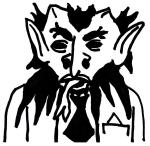
The Brainiac (1962): “I loved The Braniac (or, as it was known in its native Mexico, The Baron of Terror). It’s such a bizarre little horror cheapie that didn’t need to try nearly as hard as it did. Check out this plot: It opens with hooded executioners of the Spanish Inquisition expressing their frustration that a specific victim, a philandering Mexican baron, was surviving all of their torture methods by bending the laws of physics like an omnipotent god. When they sentence the baron to a death-by-burning execution, he escapes by hitching a ride on a passing comet and promises to return in 300 years to murder the descendants of the Inquisitors. He delivers on this promise in the form of a forked-tongued space alien beast. All of this transpires in the opening 20 minutes.”

The Love Butcher (1975): “This is a fun, and funny, movie. In much the same way that Tristram Shandy satirized the novel as a form despite being one of the first ten or so novels in the Western world, The Love Butcher mocks, subverts, and emulates the slasher despite having been conceived when that concept was only beginning to solidify. It’s an exploitation film that will use a cartoon sound effect when an older man shows off his bicep in one scene and then have a woman beaten to death with a sharp rake in the next.”

Midnight Offerings (1981): “Melissa Sue Anderson (Mary Ingalls from Little House on the Prairie) and Mary Beth McDonough (Erin Walton from The Waltons) step away from their well-known country girl roles to become dueling teen witches in this made-for-TV horror flick. When I first realized that Midnight Offerings was a made-for-tv movie from the early 80s, I expected it to be a joke of a horror film, oozing with campiness, but to my surprise, it was actually a little more on the serious side.”
 Spooky Drinking Games

EPSON MFP image

If for some ungodly reason the campier titles listed above still aren’t trashy enough for you, we also have drinking games for the following two slices of schlock: the found footage sasquatch flick Exists (2014 & pro-wrestler Kane’s grotesque slasher vehicle See No Evil (2006). If you dare participate in such cinematic horrors, beware & take care. You’re going to need the alcohol.

Happy Halloween!

-The Swampflix Crew

Movie of the Month: Innocent Blood (1992)

EPSON MFP image

Every month one of us makes the rest of the crew watch a movie they’ve never seen before & we discuss it afterwards. This month Erin made Britnee , Brandon , and Boomer watch Innocent Blood (1992).

Erin: A decade after An American Werewolf in London, John Landis brought the public Innocent Blood, a movie about a French vampire in . . . Pittsburgh.  Marie, the fey French vampire, decides to help herself to Pittsburgh’s criminal element.  Mistakes are made, spinal cords are left intact, and before too long Marie and ousted undercover cop Joe are duking it out with a proliferating vampire Mob.

There’s something for everybody!  Stunts!  Grotesque special effects!  Gallons of blood!  Strippers!  Don Rickles!

Innocent Blood is entertaining, weird, and a little self-conscious.

I really like this movie.  I’ve seen dozens of vampire films and most of them are lacking things like . . . plots.  Direction.  Cinematography.  Scripts.  Innocent Blood was clearly made with a sufficient budget and by a team who knew what they were doing.  It isn’t scary enough to really be a horror movie, although it pays homage to the genre.  There are schlock elements, but all in all it feels too mainstream for me to consider it a camp film.

Vampire films often sit in a strange place between monster movies and mainstream dramas.  John Landis seems to have envisioned a film respectful to the grand history of monster movies, but essentially a gritty, sexy, 90s dramedy.  I’d say that he gets about 95% of the way there.  There’s the preposterous sex scene that feels overlong, some pacing issues around the end of the second act that slow down the movie, and a soundtrack that is all. about. that. jazz.  That said, I would recommend it to anyone looking for a vampire movie while avoiding camp or outright bad movies.

What do you think, Brandon?  Is Innocent Blood a pretty good monster movie that’s appropriate for a filmography that includes An American Werewolf in London, Blues Brothers, and Animal House?  Am I blinded by my exposure to truly, truly terrible movies? Does this movie stand out to you as a vampire film?

Brandon: It’s funny, because the near-campless first half of the film really wasn’t doing it for me. It felt like Landis was splitting his time between making both a mediocre vampire movie & a mediocre mob film. There was a little fun to be had in the way Marie talked about her “food” (read: victims) in lines like “How about Italian?” & “Never play with the food” and the dissonance between her glowing-eyes blood feasts & the Sinatra-scored, bargain bin Scorsese mob aesthetics, but it didn’t feel all that special as an example of either genre. Innocent Blood didn’t truly win me over until it devolved into utter chaos, a change that gets kicked off sometime around when mob boss Sallie “The Shark” Macelli is turned & starts assembling cinema’s (as far as I know) very first vampire mafia. There’s some respectable noir influence in the dark alleys & detective work of the back half, but it’s the black comedy & campy vampire mob shenanigans that make the movie shine. It’s hard for me to read scenes like Don Rickles’ vampire transformation or that never-ending, super-kinky, thrust-heavy sex scene as anything but exercises in camp.

And I don’t think there’s anything wrong with that. There’s so much implication that Landis knows exactly what he’s doing here. Like Erin said, it’s not an entirely campy affair through & through. The competent production & surprising jaunts of violent cruelty (including some truly grotesque body horror in Don Rickles’ Big Scene) see to that. It’s just that when Marcelli is running around converting his dopey goons, hissing at lightbulbs, and curling up for a cat nap in a meat freezer, the movie’s darkly humorous (and entirely intentional) campy tendencies thankfully start overtaking what was promising to be a too-serious & not-too-special film in the first act. Robert Loggia (whose version of apoplectic rage I’m most familiar with in Tim & Eric’s Billion Dollar Movie) is brilliantly funny in his role as Marcelli, thoroughly unraveling in his newfound, undead state, to the point where he’s playing more of a vampiric humanoid raccoon than a vampiric mob boss.

Landis backs up this silliness with copious televisions playing ancient B-movies featuring familiar monsters like stop-motion dinosaurs, escaped gorillas, Bela Lugosi, and Christopher Lee. At the same time, on-screen televisions also take time to play more respectable fare, like the Hitchcock film Strangers on a Train. I think these movie selections are a great representation of what Landis was intending to do here: marrying a schlock aesthetic with the higher production value of a “real” film. It’s that exact push & pull that made me fall in love with Innocent Blood as a dark comedy, when I initially wasn’t expecting to get much out of it.

Britnee, how much of that camp/serious divide was segregated between the vampire mafia cast and the scenes featuring the demure vampire Marie & her undercover cop love interest Joe (Anthony LaPaglia, who also played a “Joe” in Empire Records, oddly enough)? Did Joe’s & Marie’s scenes ever approach the fever pitch absurdity of Mercelli’s vampiric mob-building or was their share of the plot more dedicated to the film’s more serious, straight-forward impulses?

Britnee: The relationship between Marie and Joe was interesting, to say the least, but I never found it to be this serious, genuine romance that it tries to be. From the time the two had the cliché meet-cute in the middle of a snowy Pittsburgh street, I sensed that there was a campy romance brewing. And in all honesty, campy romances make for the best cinematic experiences. When comparing Joe and Marie’s scenes to the explosive vampire mafia scenes, I find myself going back and forth deciding whether or not the couple could be taken more seriously than the vampire mobsters. Part of me feels that they do fall a little more on the serious side, but then my head is filled with images of Marie’s fiber optic eyeballs during her memorable lovemaking scene. When reading the film credits, I noticed that a licensed optometrist was credited, so if eyes could magically change color, I guess that’s exactly what it would look like. Anyway, I guess the two contribute to the film’s small amount of seriousness because their romantic element isn’t as outlandish as a bunch of bloodthirsty mobsters covered in meat juice.

During our viewing of the film, there were a couple of times when I almost forgot about Marie and Joe because the insanity that was the budding vampire mafia completely overshadowed their characters.  There were times where I felt as though half an hour went by and the two lovebirds where nowhere to be seen. Of course, I was too enthralled by the vampiric mob madness to care. Landis is an obvious special effects junkie, and the majority of this film focuses on the stunning effects of the monster mobsters. He may have unintentionally drawn attention away from Marie and Joe’s characters, but I can’t blame him for getting carried away because for such an unknown movie, the effects were far from shoddy. They were brilliant! The scene where Manny (Rickles) gets his first dose of sunlight after making the “turn” is pure art. His skin tears open as he’s burning up and turning into pure ash, and it’s one of the greatest examples of exceptional special effects work that I’ve ever seen.

Boomer, do feel as though Marie’s character was not very prominent in the film? Did she make any contribution other than a couple of funny quotes and some sexy moments?

Boomer: It’s funny you should ask, since I was thinking throughout the film how tangential Marie’s role is to the more intriguing and interesting elements of the plot. She acts as a catalyst, as her actions against the first wiseguy she devours onscreen serves to lead LaPaglia’s Joe to out himself as an undercover cop, and her second meal leads to Loggia’s Sallie turning undead and dreaming of an enthralled vampire Pittsburg underground. For a character whose actions set the plot in motion, we know almost nothing about her.

Who is Marie? Is that her real name? When was she turned? Why? Who turned her? How does she feel about her parasitic nature? Nearly all contemporary vampire narratives in which the vampire is not explicitly villainous (and even some where they are) at least pay lip service to the idea that being an undead monster is a bit of an ongoing existential crisis. It’s ironic that the first shot of the film reveals (and revels in) Marie’s entire nude body, as her literal nakedness lies in direct contradiction to the way that she is metaphorically covered and hidden throughout the film. Other than her animal instinct to feed (and breed) and the actions she takes in an attempt to rectify her accidental release of a monster mobster, we have no idea what Marie does with her literally endless spare time. She feels guilt enough over her actions to consider ending her existence by meeting the sun, but her ultimate decision to continue (un)living is less a heartfelt triumph of the spirit than an “Eh, I guess I’ll stick around.” It’s less an issue of Marie not being prominent and more an issue of her being two-dimensional, standing out as a flat character even against shallowly characterized (but endearingly entertaining) scenery-chewers like Rickles and Loggia.

Now that I consider it, none of the main characters are fully fleshed out. Joe is determined to take down the Italian mafia, but any other motivations he may have in his personal or private life are unspoken, if they exist at all. The same can be said of his fellow cops (and a criminally underutilized Angela Bassett as the Pittsburg DA) or of the mobsters from Loggia down. For a prolonged section of the film, the protagonists and antagonists exist in completely different plotlines that only tangentially intersect, and I think that the crime the film is most guilty of is devoting too much focus to Marie and Joe, especially if none of that attention yields any character insight or development; there’s both too much and too little of Marie to be satisfying. A film that focused instead on Luis Guzman, for instance, ineptly bumbling his way through an investigation would have more potential entertainment value, all things considered. LaPaglia’s not a bad actor, he just seems to be under the impression that the ratio of crime thriller to comedy of the film he’s in skews in the opposite direction it actually does.

Perhaps it’s my postmodern eye, but throughout the film I kept attempting to apply some metaphor to the representation of vampirism. In the past thirty years we’ve seen vampirism stand in for disease, sexuality, and corruption, and even vampires themselves as metaphorical minorities and outsiders. From the way that Marie’s particular vampirism operates, at first I was expecting that we would eventually get some correlative relationship with AIDS, but no clear metaphor eventually coalesced, at least not one that I could see.

What do you think, Erin? Is there a metaphor that I’m missing, or one we as an audience could infer regardless of authorial intent?

Erin:  That’s a great question, Boomer.  Innocent Blood has a lot of action, but not a lot of character development, even as characters are doing such intense things as literally transforming into undead monsters.

I’m not sure how to parse the metaphor of Marie’s vampirism in this movie.  I find that usually vampirism is linked to themes of excess, hedonism, and greed.  Marie certainly has some of these elements – her two main interests in life are sex and food.  On the other hand, as you pointed out, we never really learn anything about her past, her other motivations, or how this episode of her life changes her.

The mobsters might be the place to look for metaphor in Innocent Blood.  Sal’s greed for power and his megalomaniacal feelings of invincibility are the things that cause his downfall.  Maybe the metaphor of vampirism here is for both greed and trying to use powers that are not fully understood or appreciated.  Sal tries to convert his whole mob into vampires, but doesn’t seem to make any considerations for the fact that they will no longer be able to work during daylight or that their favorite Italian foods will now cause great distress.

All in all, I’m leaning towards saying that John Landis wasn’t trying to explore the metaphors of vampirism so much as he was trying to produce a mainstream monster movie to appeal to the mass market.

What do you think, Brandon?  Is Marie a cipher here, an empty Manic Pixie Dream Girl only in the movie as a plot device?  Is vampirism presented in the same way?  Is that problematic?

Brandon: There’s a near endless list of metaphors that have been attached to vampirism in the past, ranging from as disparate of meanings as the unchecked thirst for power Erin mentioned to the powerlessness of cyclical depression & drug addiction. I’m just not seeing anything explicit in Innocent Blood that suggests a clear metaphor. The mobsters’ thirst for power angle Erin suggests is something I’d buy, with plenty of evidence backing it up in the film, but where exactly does that leave Marie as a character? The more I reflect on the emptiness of Marie’s general presence, I’m left thinking that the movie could’ve been so much better without her. It’s as if she were a starting point that eventually lead Landis & writer Michael Wolk to the much more fleshed out undead mobster concept. If Marie had been left on the editing room floor or at the very least taken a backseat after she got the mobster plot rolling, we might have a much tighter plotted movie. The befuddled law enforcement POV Boomer suggested above in particular could’ve been worth a try. Then again, we wouldn’t have that insanely sleazy sex scene in that scenario, so maybe they made the right choice afterall.

In addition to the absence of a clear vampirism metaphor, Landis’ film also goes light on its dedication to the generally accepted rules of cinematic vampirism. Marie may be averse to garlic & sunlight, but her reflection appears in mirrors & she kills her fellow vampires with shots to the head (much more akin to zombie rules) rather than stakes to the heart. Somehow, though, I’m not at all bothered by all of this. As much as I might’ve appreciated a clearer set of rules or a more well-defined metaphor, I believe that the film is perfectly entertaining as is. It’s curious to me that Innocent Blood is the sole screenplay credit for writer Michael Wolk, as I believe he did a fantastic job of establishing a distinct kind of mob-themed horror comedy that I’ve never seen on film before. When his screenplay works it really works, flaws & false starts be damned.

Britnee, do you think that Innocent Blood could’ve been more successful if it were more dedicated to the vampire movie as a genre or do its deviations from the format make it all the more memorable/entertaining?

Britnee: This may sound a bit crazy, but I don’t really think of Innocent Blood as being a vampire movie. I know that there are indeed many vampires in the film, but they aren’t the sexy, mysterious vampires that dominate the vamp movie world. They’re a group of grotesque undead dudes that look more like zombies than actual vampires, and as Brandon previously stated, they are killed off like zombies as well. Of course, Marie does fall into the sexy vampire category, but she wasn’t really a big part of the film. Even when she did have her vampire moments, she reminded me more of a werecat from the 80s film Cat People than an actual vampire. Landis was attempting to almost reinvent the vampire, but in 1992, the world just wasn’t ready for something so huge. The general public would have probably better received the film if Landis stuck to more traditional vampire guidelines, but I am ever so grateful that he didn’t. The film’s many deviances make it a cult masterpiece, which is 100 times more valuable than a box office hit.

The idea of a monster mob film is brilliant, but other than Innocent Blood, I don’t recall ever coming across any other films that incorporate the mob with the supernatural. The two elements surprisingly work together in harmony.

Boomer, did you feel as though the monster mob is what mainly contributed to the film’s success? Why didn’t this idea take off and influence other horror films?

Boomer: I can honestly say, with no mental evasion or dishonesty, that the parts of this film which work best are those which relate to and revolve around vampire mafia plot. Loggia’s screen presence, hammy though it may be, is definitely the energetic core of what would otherwise be little more than a late-night Cinemax softcore skin flick that happened to star half the future cast of The Sopranos. I feel like I’ve seen the Underworld (Len Wiseman) meets underworld (mafia) schtick before, but after racking my brain and consulting TV Tropes, I’ve come to the conclusion that it must be one of those ideas that is so ingenious you only think it must have been done dozens of times. Maybe on Angel? Or Forever Knight? Kindred: The Embraced? But definitely not in a feature, or in any work in which the vampire mob was so central to the story.

As to why this didn’t usher in a new era of similar or copycat bloodsucking mafia flicks, I don’t really think there was room in the world for that genre to flourish. The popularity of film mafiosos waxes and wanes; after scores of films about gangsters in the early days of cinema, features about organized crime largely receded until the 70s and 80s, when pictures like Scarface and the Godfather series created a resurgent interest in “fuggedaboutit” movies that didn’t really survive into the 90s. The last great genre piece from that era was Goodfellas, which came out two years before Innocent Blood, and as far as prestige cinema goes, there’s really no comparison between the two. Landis’ American Werewolf endures because its story blended horror and comedy more successfully than Innocent Blood does, and its striking effects work made it stand out despite being released the same year as both The Howling and Wolfen. Aside from Rickles’ character’s (admittedly well done) death sequence, Innocent Blood doesn’t have American Werewolf‘s tangible viscerality; overall, Innocent Blood is a much cheaper-looking movie. If I didn’t know better, I would assume that it was a Cinemax made-for-TV film, and would never have guessed that Landis was involved.

Innocent Blood also fails to stand out among its vampiric brethren as well, as it lacks the sweeping epicness of, say, Interview With a Vampire, which came out just two years later, or Bram Stoker’s Dracula, which was released the same year (Innocent Blood also doesn’t have the built-in audience that comes from being an adaptation, either). As a result, it failed to gain the prominence or immortality that other movies in the same vein and of the same era did. It just wasn’t gruesome enough, or memorable enough, or gangstery enough. In shooting for a middle ground, it ended up having too many ideas; consequently, it failed to stick in the public consciousness in a meaningful way.

Lagniappe

Boomer: Innocent Blood is an ultimately inconsequential film, the kind of movie that seems destined to be included in one of those ubiquitous Cracked.com lists, like “Six Movies with a More Interesting B-Plot than Premise.” I didn’t care for it as much as some of my fellow reviewers, but I didn’t dislike it either. I guess, on the whole, I’d say that on the range of John Landis’ contributions to the world, where American Werewolf is the limit of the best end and spawning whiny privileged misogynist Max is the limit of the lower end (and no, I didn’t forget the death of two children during the production of the Twilight Zone feature; Max is arguably worse), Innocent Blood falls somewhere in the vicinity of Beverly Hills Cop III.

Britnee: Innocent Blood is an excellent horror-comedy as well as a truly entertaining film with an unforgettable plot and cast (well, except for Marie). The true gem of this film isn’t the vampiric mafia or the vampire/human romance; it’s Lenny (David Proval), Sal’s dopey-eyed assistant.  The only other film that I’ve seen him in is The Brady Bunch Movie, in which he makes a 10 second appearance as an electrician with a bad lisp, and I had no idea that he embodied so much talent and pizazz until I saw him in this film. He only had a handful of lines, but each one was pure gold. I still crack up when I remember his worried face by the bathroom window, screaming “Sal!” while Sal is in a tub of his own blood after Marie’s failed attack.

Brandon: Although we’ve already ragged on Marie & actress Anne Parillaud a good bit here, I will at least admit that she has one interesting quirk to her outside of the glowing eyes & knack for BDSM: lighting. As we’re first introduced to Marie, buck naked in her apartment, she’s revealed to be a bit of a candle hoarder. Because much of what she was doing & saying was less than captivating, our minds were left to wonder about Marie’s endless sea of lit candles in several early scenes. Does she prefer candles to electric light because they remind her of simpler times? Where do they come from? Does she buy them wholesale? Do her vampire powers allow her to light them all at once or does she have to go around the room igniting each one with a match like a chump? Marie talks a lot about her “food” (victims), but I feel she has an equal passion for candles that goes conspicuously uncommented on.

Erin: I think that one of my favorite things about this movie are the more mature actors.  Don Rickles, Robert Loggia, and Elaine Kagan working together in Sal’s transformation at the Bergmans’ house has to be one of the best scenes I’ve had the pleasure of watching.  I really wish that John Landis had focused more on the “monster mobster” side of the plot, especially with the amount of talent he had on tap.

Upcoming Movies of the Month
November: Boomer presents The Class of 1999 (1989)
December: Brandon presents The Independent (2000)

-The Swampflix Crew

Emily Pear’s Top 5 Fashion Moments in The Boyfriend School (1990)

Between Lizzie’s eccentric wardrobe and Lobo’s out-of-control Australian biker attire, it’s easy to glance over Emily’s fashion choices in The Boyfriend School, but after watching this film over and over again (which I have), she has both of them beat by a landslide. Emily, played by Jami Gertz, is so much more than a journalist and bundle of nervous energy; she’s a straight-up fashionista! Take a walk with me down The Boyfriend School’s runway while I discuss my top 5 favorite Emily Pear fashion moments.

5) The Eager Journalist

Emily is more than ready to interview romance novelist Vivica Lamoreaux (aka Lizzie Potts) in this stunning chiffon blouse, buttoned up to the top of course. Her silver cuffs bring a little playfulness to her outfit, but from the look of her hairdo, we know she means business. I know that this photo doesn’t show the bottom half of her body, but she’s wearing a pair of light wash straight-leg jeans that she will wear again several different times with totally different outfits. How thrifty!

4) The Lost Member of The Partridge Family

How can one look at this outfit and not imagine the Partridge Family’s “I Think I Love You” playing in the background? The open red vest adds some vintage flair to her casual attire. As you can see, the jeans as well as the silver cuffs have returned from the previous look, and they really do a great job of pulling the outfit together. It’s no wonder Trout can’t stop checking her out.

3) The Floral Gas Pump Girl

Pumping gas is no excuse to look drab. Lizzie proves that a simple oversized floral tunic with an extremely low waist seam can make such a tedious task seem ultra glamorous. Her gold tassel earrings are a bit risky since the floral pattern is so busy, but it’s a risk that definitely pays off.

2) The Suburban Biker

Forget the leather chaps. Floral embroidered cardigans and printed balloon pants create the ultimate church-lady-biker look. Notice how she rebelliously buttoned only 3 buttons in the center of her cardigan. This helps her keep a classy image while still being a little rough and tough. She’s ready to get on that motorcycle with her mysterious Australian lover and haul ass to Sears!

1) Playmate of the Millennium

Don’t call it a comeback! The jeans and silver cuffs are back again, and this time, they are the stars of the show. This look is my absolute favorite because it’s simple and seductive. The ill-fitted satin lingerie top tucked into the high-rise jeans transforms Emily into a sultry Jordache model. Emily is hosting dinner tonight, and she is serving some serious face!

For more on September’s Movie of the Month, 1990’s The Boyfriend School, check out our Swampchat discussion of the film, our comparison of its horrific romance novelist romcom format with that of 1989’s She-Devil, and last week’s look at the five stranger roles of Steve Guttenberg’s career.

-Britnee Lombas

The Guttenberg School or: How I Learned to Stop Worrying and Love The Gutte (in Just 5 Easy Steps)

While we were discussing September’s Movie of the Month, 1990’s The Boyfriend School, it was amusing to me that no one around here could muster anything cruelly negative to say about the film’s male lead, Steve Guttenberg. Once upon a time Guttenberg starred in a relentless onslaught of successful, but mediocre comedies (including Short Circuit, Three Men & a Baby, and far too many Police Academy sequels), amounting to a high profile on the Hollywood landscape that felt at best incongruous with the man’s modest level of talent & low-key natural charisma. Perhaps feeling that the Hollywood machine was pushing an undeserving everyman down their throats, moviegoers eventually reduced The Gutte to a sort of a fad & a punchline. Guttenberg has never been able to recreate the success streak he achieved in the 1980s & the mention of his name is more likely to elicit a mild chuckle than any more desirable reaction. Being slightly too young to remember a time when Guttenberg was a disingenuous cinematic omnipresence, I’ve always had a sort of mild ambivalence to the actor, but more recently I’ve discovered that I’ve grown to actually love seeing him pop up in unexpected projects. Nostalgia has been kind The Gutte. After enjoying his performances in a few of his stranger, off-the-beaten-path roles, I genuinely get excited whenever he’s involved in something worth watching. Detailed below are the five performances that shaped my personal path to learning to stop worrying and start loving The Gutte, hopefully serving as a guide to those who want to leave their Guttenberg hate in the distant past where it belongs.

1) Collaborations with Rob Thomas: Party Down (2010) & Veronica Mars (2005)

EPSON MFP image
The first time I can recall having a strongly positive reaction to Steve Guttenberg was in an episode of the (sadly defunct) television show Party Down titled “Steve Guttenberg’s Birthday.” Within the episode, the titular catering service (featuring such talented comedians as Adam Scott, Ken Marino, Megan Mullally, Lizzy Caplan, Martin Starr, etc.) arrive at the swanky mansion of Steve Guttenberg (playing himself, of course) only to discover that he had already celebrated his birthday & forgot to cancel the catering. Not wanting the food to go to waste, Guttenberg improbably invites the crew inside to enjoy a wild night of drinking (fine vintage wines from his personal collection), philosophy, workshopping, and frank discussions of art. It’s an incredibly funny & endearing performance from Guttenberg, one that makes for one of the best episodes of the entire series (no small feat, that). I later discovered that this was not the first time Guttenberg had worked with Party Down‘s producer Rob Thomas. The Gutte was also a major figure in the second season of Thomas’ cult television show Veronica Mars, playing mayoral hopeful & monstrous reprobate Woody Goodman. It’s difficult to discuss much of Goodman’s story arc without spilling  the beans on a few of the season’s surprises (it was a mystery show, after all), but I will say that it gave Guttenberg a chance to play cold & sinister notes that aren’t normally afforded his normal roles as affable goofballs. In fact, both of Guttenberg’s collaborations with Thomas revealed aspects to his onscreen presence that suggest a depth of talent that’s gone shamelessly unmined (no offense to fans of Police Academy 4: Citizens on Patrol). It would be great to see more of this subversion of The Gutte’s usual schtick in the future, even if it only amounts to a cameo on Thomas’ current project, the far-better-than-it-should-be iZombie.

2) Can’t Stop the Music (1980)

EPSON MFP image
Thanks to a sublimely silly review by our own Britnee Lombas, I eventually discovered that one of Steve Guttenberg’s strangest roles was also one of his earliest. In 1980, The Gutte starred as a DJ/rollerblade enthusiast in the Village People movie Can’t Stop the Music. Although as a musical act the Village People were designed to be a cynical cash grab aimed at the popularity of disco among homosexual audiences, the Village People movie is almost completely scrubbed of anything non-heteronormative (something Britnee & I discussed at length in our Swampchat on the film) and Guttenberg was used as the central bait & switch. Although the promise of Can’t Stop the Music is a film starring The Village People, it’s actually a film starring a then-nobody Steve Guttenberg, with The Village People (along with celebrity athlete Bruce Jenner) serving mostly as accessories & much needed dance breaks. Guttenbeg’s performance is mostly just serviceably dorky (and sexually incongruous) in Can’t Stop the Music, but he does hold one of the film’s best moments in the opening sequence. I dare you to watch The Gutte rollerskating to maddeningly repetitious lyrics about “New York, New York, New York” at the beginning of the film & not love the goof just a little, little bit. It worked for me, at least.

3) The Boyfriend School (1990)


By another suggestion from Britnee, I of course re-encountered The Gutte in the 1990 romcom The Boyfriend School. Well, “romcom” might be a little bit of a misnomer there. Long stretches of The Boyfriend School (aka Don’t Tell Her It’s Me) play like a horrifying exercise in cringe comedy, one that subjects Guttenberg’s protagonist to a long list of indignities that include Hodgkin’s lymphoma, being pressured into living a false identity, and getting goaded into committing an act of sexual assault. So much unsightly suffering is piled on Guttenberg’s protagonist (especially for a romcom) that I felt as if the film were somehow a punishment a producer was putting Guttenberg through to atone for the sins of his mid 80s omnipresence. As I put it in our Swampchat earlier this month, “Throughout the endless parade of embarrassments (especially in the first half of the film), my brain was screaming ‘This is Hell! This is Hell! Set him free!’ The Gutte may not have been exactly deserving of his ludicrously overblown success, but surely this punishment was a little rough for even him.” Guttenberg’s performance in the film is amusingly silly at times, especially in his post-cancer Uncle Fester makeup & his New Zealand biker alter-ego Lobo, but what really rings loudly in the film is a distinct sense of sympathetic suffering. I ended up liking The Gutte more after The Boyfriend School, if nothing else, just because I felt so sorry for him.

4) P.S. Your Cat is Dead! (2002)

EPSON MFP image
More than a decade after his 80s omnipresence, but years before his subversive turn on Veronica Mars, Steve Guttenberg found himself wrapped up in a personal passion project, P.S. Your Cat is Dead!. Much like with his turn as himself on Party Down, there’s a meta aspect of Your Cat that makes the film interesting as a Guttenberg oddity. Throwing on some nerdy glasses & unshaven Gen-X grime, Guttenberg plays a struggling stage actor & playwright who has recently reached a professional low with the failure of his one-man production of Hamlet. Following this blow, he loses the sole copy of a manuscript he’s been tirelessly working on & his girlfriend leaves him on New Year’s Eve. That’s not even to mention that his cat is deathly ill & currently receiving overnight treatment at the vet. All of this tension leads to The Gutte’s long-suffering artist to capture a burglar (& frequent uninvited visitor) in the act for a long night of psychological torture & surprisingly poignant exchanges that eventually leads to, surprisingly enough, deep-seated questions about his own sexuality. As far as labors of love go, P.S. Your Cat is Dead! is an interesting glimpse into what makes The Gutte tick. A small indie picture with homosexual connotations was never going to reignite Guttenberg’s career as a leading man, but it was still a picture he decided to star in, produce, and direct (his sole feature credit as a director), presumably because he was such a fan of the material’s origins as a play. P.S. Your Cat is Dead! is by no means a knockout, phenomenal picture (and honestly not all of the homosexual content has aged very well), but it is a low-key look at a different side of The Gutte, one that possibly could’ve enjoyed a career as a mediocre Woody Allen devotee. It’s likely to be the closest you’ll ever see the actor actually fulfilling the genteel artiste characteristics he’s assigned in Party Down, something I’ve honestly come to cherish.

5) Lavalantula (2015)

EPSON MFP image
Speaking of meta content, Guttenberg plays yet another actor in the recent Asylum mockbuster Lavalantula. I first heard of the 2015 CGI creature feature from our contributor Erin Kinchen in the Boyfriend School Swampchat, where she said, “[Guttenberg’s] latest credit seems to be for Lavalantula.  If you are thinking that this is a move about giant and horrifying lava spewing tarantulas, then you are absolutely correct.  Could it be a hidden gem in the land of self-aware, poorly produced B movies?  Could it be the movie we’ve all been waiting for to watch at 3:00 am while eating a whole bag of pizza rolls?  Maybe.  But probably not.” She’s not wrong. In a lot of ways Lavalantula is no better or no worse than other subpar Syfy titles like Piranhaconda or Sharknado 3. I will contend, though, that despite the quality of the film, Guttenberg comes across as oddly likeable in Lavalantula. His role as a washed up actor who used star in 80s dreck like Clown Cops (poking obvious fun at Police Academy) and nonexistent superhero movies like Red Rocket (a SuperGutte movie could actually be fun, now that I think about it), is a pretty amusing exercise in self-deprecating humor, especially considering exactly how washed up you have to be to star in a move about volcano-born spiders that drool lava & spit fireballs in the first place. Extended cameos from people like That Red Headed Kid From The Sandlot (Patrcik Renna, who looks more or less exactly the same as he did 20 years ago) & The Guy Who Does the Voices in Police Academy (Michael Winslow) only hammer the point home how far The Gutte has fallen. Yet, you can tell Guttenberg is having a blast poking fun at himself & his reputation.

The idea of fire-breathing spiders getting ejected from a volcano is mildly amusing at first, but wears thin at a feature length, so what stands out most about Lavalantula is how effortlessly likeable Steve Guttenberg really is. At this point, I can easily sit through an entire Syfy Original stinker just to spend more time with the goof, which is something I never could have done comfortably in the past. In just five projects or so, my conversion to a Guttenberg fan is alarmingly thorough, complete. Now, all I have to do is hope that someone out there is willing to put these odder, dare I say loveable aspects to his personality & range to good use on a worthwhile project, preferably something that doesn’t tease a Sharknado crossover in a throwaway “gag” or curse The Gutte with the visual tolls of Hodgkin’s lymphoma. It could happen. It could!

For more on September’s Movie of the Month, 1990’s The Boyfriend School, check out our Swampchat discussion & last week’s comparison of the film to another horrific romance novelist romcom, 1989’s She-Devil.

-Brandon Ledet

Unexpected Horror in the Romance Novelist Rom-Coms She-Devil (1989) & The Boyfriend School (1990)

While we were discussing September’s Movie of the Month, the Steve Guttenberg/Jami Gertz will-they-won’t-they comedy from Hell The Boyfriend School, we had a hard time pinning down the film’s exact genre. Ostensibly a traditional rom-com, the film had some painfully awkward stretches of cringe comedy that clouded the issue. Even stranger yet, the romance novelist character played by Shelley Long was a terrifying, overbearing presence that overstepped her bounds as a quirky sister/side-character & ventured into some truly horrific torture-tactics territory. Her meddling was at least somewhat well-intentioned; she wanted to help her brother, played by Guttenberg, recover from a near-fatal battle with Hodgkin’s lymphoma (told you it gets rough) by reshaping him into an alpha male biker trope straight out of one of her romance novels. The problem is that the transformation is emotionally painful for The Gutte & it leads to a really nasty line of deception that he finds difficult to escape once the ball gets rolling. Shelley Long’s romance novelist is the source of all the film’s non-Hodgkin’s related conflict & creates an amped up level of dread that’s not typically present in a traditional, lighthearted rom-com, making for one very strange little movie.

While The Boyfriend School isn’t exceptionally unique in its genre play that takes dimestore romance novel tropes into unexpected territory, it is at the very least part of a small crowd. Perhaps the most well-known romance novel-themed comedies are the Robert Zemeckis films Romancing the Stone & its little-loved sequel Jewel of the Nile, but those are more oriented towards action comedy (as is typical with Zemeckis) than the unusual discomfort & horror of The Boyfriend School. I could only find one picture that explores unexpected horror in a romance novel-themed romcom similar to the dread Shelley Long’s meddling creates in The Boyfriend School. 1989’s She-Devil, an underloved gem starring Meryl Streep, Roseanne Barr, and Ed Begley Jr., injects a surreal sense of horror into the romcom format, at the same time making sure to lampoon the very idea of romance novels, as well as the illusion & cruelty of unfair beauty standards and the competitive wedges that are driven between women who would benefit much more from a sense of camaraderie. She-Devil may, in fact, be a far supreior film than The Boyfriend School, because its writing is so pointed & satirical that its horror can only be read as intentional, whereas the terror of The Boyfriend School sometimes seems to exist outside what the film’s creators intended. I assume that we were supposed to leave The Boyfriend School feeling great that The Gutte got the girl, but I was honestly more in a state of shock & disbelief than anything, whereas in She-Devil the horror element is promised right there in the title.

She-Devil stars Roseanne Barr in the titular role as a frumpy housewife who goes on a violent quest for revenge when her husband leaves her for a wealthy romance novelist played by Meryl Streep. Streep reveals herself to be hilariously adept at playing the butt of the joke here & the movie has a field day poking fun at her in a much more obvious way than The Boyfriend School attacks Shelley Long’s very similar antagonist. First introduced as “The Reigning Royal Highness of Romance” by none other than Lifestyles of the Rich & Famous‘ Robin Leach (who also provides voice over work for the film’s trailer), Streep’s bodice-ripping novelist Mary Fisher is a genteel bore with more than thirty novels to her name, a boy toy butler who does more boytoying than butling, and a vast fortune she vainly tries to enjoy despite her crippling loneliness. In a very early plot development, she seduces the husband of Roseanne’s housewife frump (played by Ed Begley, Jr.) under the guise of hiring him as her accountant. Begley’s accountant is hilariously dedicated to seeing the world in terms of his profession, constantly making offhand remarks about electric bills, tax writeoffs, and balanced checkbooks whenever a vague opportunity arises. When he finally breaks things off with his wife (who was knowingly, but patiently suffering through his adultery) he describes himself as having four assets in life (his home, his family, his career, and his freedom) & exactly one liability: her. That alone would be cruel enough, but he punctuates the conversation with this ugly diatribe: “You’re a bad mother, a lousy wife, and a terrible cook. In fact, have you looked in a mirror recently? I don’t even think you’re a woman. Do you know what you are? You’re a she-devil!”

Watching Roseanne’s much-humiliated wife suffer through this indignity is a horrifying moment, something the film is smart to immediately acknowledge. After her husband’s abusive tirade a visible change takes place in her. She turns to her make-up mirrors, which provide an amusing sort of fun house effect, and Mario Bava-esque horror movie lighting takes over the screen. She’s shown with glowing red eyes & accompanied by fire. Her transformation into the titular She-Devil is very much the kind of classic horror movie theatrics you’d expect to accompany the birth of the Frankenstein monster. This is also when the mood of the film shifts. No longer feeling loyal to a man that has taken her for granted, the She-Devil systematically destroys every one of her husband’s assets (his home, his family, his carreer, his freedom) until he’s broken down to a literal prisoner & not even Mary Fisher wants to pick at the crumbs. To her credit, the She-Devil does not attack Mary Fisher directly, although she does have wicked thoughts about her, like “I hope your pink palace crumbles into the sea. I hope your delicate white skin breaks out in hives and your shiny blond hair falls out at the root.” Instead, she attacks the verbally abusive, adulterous man that takes advantage of both Fisher & herself and even goes as far as to start an employment agency that gives all of the other disenfranchised, unglamorous, non-Mary Fishers of the world a chance to stand up for themselves in a society that’s systemically stacked against them.

Despite the horror movie lighting & the “She-Devil” moniker she’s awarded, Roseanne’s protagonist is actually pretty inspiring. Even though she’s presented in the context of becoming a monster, her transformation makes for a subtly feminist revenge-fantasy spin on the romcom genre that feels almost like a spiritual opposite of the deception & violation that’s played for uncomfortable laughs in The Boyfriend School. Unlike The Boyfriend School, She-Devil adopts a woman’s POV and has pointed things to say about sexual politics & the nature of romance novels as an art & a product (at one point calling them “nothing more than softcore porn for bored housewives”) that extend beyond the basic jab that they’re silly. When a woman complains in the film that, “Men get away with murder, you know. It seems like if you’re a woman, there’s just no justice in the world” the evil She-Devil of the title refuses to accept those terms & (gasp!) makes her own justice. The horror! Besides these thematic charms there’s also some great visual playfulness, like direct references to Psycho & What Ever Happened to Baby Jane?, a scene transition that cuts from a blowjob to a violent cucumber chopping, and a brief appearance from GLOW: The Gorgeous Ladies of Wrestling. Both The Boyfriend School & She-Devil subvert the romance novel genre by portraying it as a horror show (it’s surprisingly rare that it’s portrayed in rom-coms at all), but The Boyfriend School‘s subversion feels cruel & unintentional while She-Devil‘s is much more winkingly transgressive. They make for an interesting double feature either way, one with much more terror & discomfort than you’d expect from a pair of late 80s rom-coms.

For more on September’s Movie of the Month, 1990’s The Boyfriend School, check out our Swampchat discussion of the film.

-Brandon Ledet

Wes Craven’s Crown Jewel: New Nightmare (1994)

EPSON MFP image

Just two weeks ago, we lost a cinematic great who was often overlooked for his accomplishments as an auteur, perhaps due to his extensive work in genre films. Wes Craven may have made an occasional goofy trifle like a Shocker or a Swamp Thing, but his more accomplished films have unmistakably reshaped the horror landscape in a significant way. I don’t have much of a stomach for them myself, but his early works The Hills Have Eyes & The Last House on the Left rang out like the enraged, too-believable battle cries of a deeply disturbed mind eager to unleash its violent cravings upon the world at large. Honing in that anger for something more purposeful & universally palatable, Craven later scared the every living shit out of mainstream audiences with A Nightmare on Elm Street, which did for the simple act of falling asleep what Jaws did for nightswimming. Craven’s instantly infamous Freddy Krueger creation, brought to disturbingly vivid life by actor Robert Englund, would’ve been enough to coast on for the rest of the director’s life, but instead Craven broke out into more surreal territory with The Serpent & The Rainbow, political satire in The People Under the Stairs, and the very nature of horror as a genre in the meta franchise Scream, among other projects. Craven was an inventive fella, to put it mildly. He was enthusiastic about exploring new, strange ideas that would allow his demented id to escape from his mild-mannered exterior, scaring his audience while simultaneously challenging them in unexpectedly intellectual ways, the latter being something a lot of horror peddlers don’t bother with often enough.

My personal favorite Wes Craven film is 1994’s New Nightmare. It’s not his scariest, nor his most tightly-controlled work, but it is an incredibly smart picture that manages to bridge the gap between the dream-logic horror of A Nightmare on Elm Street with the meta genre reflection of the soon-to-come Scream franchise. Wes Craven’s New Nightmare is a perfect way to remember the filmmaker for all he accomplished, not only because it marries those two defining moments of his career in a single picture, but also because he plays a role in the film as a fictionalized version of himself. The Scream franchise introduces its meta context by having the typical bonehead slasher victims be atypically self-aware of classic horror film tropes that usually lead to violent deaths, allowing for them to make commentary on the very film that they populate (eventually with their lifeless bodies). However, thanks to the dream logic of A Nightmare on Elm Street, New Nightmare allows itself even more free rein with its meta context. The movie itself is about the making of another Freddy Kruger picture, a cursed production that blurs the lines between reality & nightmare and free will & scripted fiction to the point where it’s near impossible to tell the difference between a character being awake, getting trapped in Freddy’s playground of the subconscious, or, worse yet, living out one of Wes Craven’s screenplays.

Set on the 10th anniversary of the original Freddy Krueger picture, New Nightmare stars Heather Langenkamp, who played the protagonist Nancy in the original Nightmare on Elm Street, as Heather Langenkamp, who played the protagonist Nancy in the original Nightmare on Elm Street. As the anniversary of the film draws near, threatening phonecalls (often accompanied by Earthquakes) that impossibly seem to be from Freddy Krueger himself torment the poor actress, establishing a mood of dread very early in the picture. The strange thing is that Langenkamp is good friends with Robert Englund, her colleague who portrays Krueger in the movies. Englund, playing himself (and Freddy, of course), is portrayed as a genteel dude here, spending his days idly painting in the sun room of a mansion undoubtedly funded by the success of the Elm Street films, a far cry from the undead homicidal maniac he embodies with Freddy. As mentioned above, Wes Craven also plays himself in New Nightmare. He explains to Heather that he’s been working on a script (or a “nightmare in progress” as he calls it) for a new Elm Street picture as a means to stop Krueger from becoming “real”. According to Craven, because Freddy was killed off in the 6th installment of the franchise (Freddy’s Dead: The “Final” Nightmare), he has been set free like a genie from a bottle, now able to manifest in real life, causing real havoc. The only way to stop Freddy, Craven explains, is to make another picture, an ordeal Heather is very reluctant to suffer.

There is so much to enjoy in New Nightmare & the film really does at times feel like all of the best elements of Wes Craven’s aesthetic conveniently gathered in one package. Striking an unnerving artificiality from the get go, the whole film feels like a constant dream state, a feeling that’s only amplified as the walls between the conscious & the subconscious, as well as the walls between the movie & the movie within the movie, begin to break down into a mess of Freddy Krueger themed chaos. As for Krueger himself, he actually doesn’t appear in his full form for much of the film. He’s more of a disembodied idea than a physical threat, often appearing solely as a clawed glove & at one point literally becoming larger than life by appearing in the clouds above a freeway. Heather’s horrified reaction to Krueger’s new, true-life form & his adoring fans’ gushing at his publicity appearances call into question Craven’s own thoughts on his creations & their fandom, particularly with the rougher work of films like The Last House on the Left. Otherworldly landscapes of bedsheets & subconscious dungeons recall the POV of a child’s imagination Craven so well captured in The People Under the Stairs. Although the dream state reflections of The Serpent & The Rainbow and the original Elm Street as well as the meta reflections of the Scream movies may have been more thoroughly solidfied in his other pictures, it’s nice to see those two worlds bounce off each other in such a satisfying way here.

Wes Craven’s New Nightmare might not be his most technically accomplished film & it’s doubtful that it’ll be the one he’s most remembered for, but it holds a special place in my heart as a sum of the accomplishments of a director I grew up loving & fearing. When I heard the recent news that the incredibly gifted director had died, it was the first film I thought to revisit as a means of remembrance. It only helps that the director himself makes an appearance in the film to weigh in on the magical nature of filmmaking, directly referencing his personal compulsions to create, the often hellish compulsions that drive anyone to create, and the ways art can take on a life of its own outside its creator’s will or control. Besides being a great film as well as a reflection on the nature of horror as a genre & art as an enterprise, New Nightmare is a solid means to commemorating the accomplishments of a great director who is unfortunately no longer with us. He will undoubtedly be missed, but we’ll always have great films like New Nightmare to remember him by. Much like his creation Freddy Krueger, Craven lives on.

-Brandon Ledet

Introducing: The Swampflix Canon

EPSON MFP image

Although we’ve fairly easy critics (especially when it comes to trash cinema) & have reviewed hundred of films since we first launched in January, it’s been interesting to see how few & how disparate our selections have been that exceed a four star rating. Over the last eight months we’ve given only two dozen films a rating of 4.5 of 5 stars, and they’re as wildly varied as a mindless 80s slasher flick, a Paul Rudd superhero movie, a pro wrestling action comedy starring famous monsters, and a Björk concert film. We’re turning out to be a wildly goofy & oddly dissonant bunch and it’s starting to show in the movies we profess our love for.

In light of this growing list of targets for our critical gushing, we’ve begun to collect our reviews that exceed a four star rating on a page we’re calling The Swampflix Canon. All 24 reviews that have met this one criteria so far are listed in alphabetical order on the new page for easy access & I’m certain more will be added shortly. If you’re interested in a starting point for where to dive in, here’s the list of the nine titles that we have awarded a five star rating so far: Beyond the Black RainbowThe Duke of Burgundy, Monster Brawl, Paris Is Burning, Peeping Tom, Pieces, Possession, Profondo rosso (aka Deep Red), and What We Do in the ShadowsThe rest of the list can be found here.

As always, Enjoy!

-Brandon Ledet

Movie of the Month: The Boyfriend School (1990)

EPSON MFP image

Every month one of us makes the rest of the crew watch a movie they’ve never seen before & we discuss it afterwards. This month Britnee made Brandon and (newcomers) Erin & Boomer watch The Boyfriend School (1990).

Britnee: As a fan of uncomfortably terrible films, I was more than excited to select The Boyfriend School (aka Don’t Tell Her It’s Me) for September’s Movie of the Month. This is a film that was washed away with the other thousands of unsuccessful romantic comedies of the late 1980’s and early 1990’s, but it’s truly a diamond in the rough. What makes The Boyfriend School stand out from the rest is, well, just about everything. The film’s cast includes the crème de la crème of chintzy actors: Steve Guttenberg, Shelley Long, Jami Gertz, and Kyle MacLachlan. Who can resist a line-up like that? Throw in a crap ton of cringe worthy, knee-slapping moments, and you have one hell of a movie.

The film follows the sad, sad life of Gus Kubicek (Guttenberg), a depressed cartoon artist that just won a battle against Hodgkin’s disease. His overbearing sister, Lizzie (Long), is a romance novelist, and she is disturbingly obsessed with getting him a girlfriend. She decides to prey on a young journalist, Emily (Gertz), and attempts to force Emily and Gus to become a couple. It’s extremely difficult to sit through the first half of this film without doing a couple of facepalms. Every ounce of Gus’s embarrassment and humiliation seeps from the screen and into your soul, and just when you think it can’t get any worse, it does. Lizzie creates a persona for Gus, and he morphs from a chubby, hairless Average Joe into a hunky biker from New Zealand named Lobo Marunga. Guttenberg ends up looking like Mad Max and George Michael’s love child, and it’s absolutely amazing.

Brandon, what are your feelings on the love story between Gus and Emily? Should she have ran after him or away from him?

Brandon: Discomfort is certainly the story at the heart of this film & Emily The Love Interest had so, so many discomforting reasons to run away from Gus that the movie was honestly pretty gutsy to go for the traditional romcom ending at the airport than the much more appropriate option of a murder-suicide. At the risk of spoiling a decades old Steve Guttenberg vehicle for anyone who could possibly care, let’s get this out of the way: Gus violated Emily. He doesn’t come clean about not being Lobo until the morning after they slept together. That’s pretty fucked. The only time Emily met Gus as himself he was in full Uncle Fester cosplay (because of the cancer, God help our souls) and the two of them were force-fed jellyfish salad (a dish Emily humorously describes as “chewy tears”) in a scene that makes Shelley Long’s character out to be less of a romance novelist & more of a torturer whose techniques rival those of Vlad the Impaler or the Holy Inquisition. Even if Emily saw something in Gus through the façade of Lobo Marunga, she should at least have ran far away to escape his sister’s evil clutches.

The strange thing is that even though Gus is a certifiable monster for not coming clean before doing the deed, it’s still difficult not to feel bad for him because he starts the film as a visible monster. In the opening scenes Gus is a Hunchback of Notre Dame type who’s locked himself away in his seaside cabin to draw cartoons & die alone so his Jack Russell terrier can pick at his bones. It very well may have been his sister that motivated him to win his battle with cancer, but she uses his extra time on Earth to remind him of how sad & ugly the disease has made him as a means to try to whip him back into shape & “get himself out there”. No one comes across looking good in this exchange. Gus is is a horrifying shell of a man. His sister is a Type A sociopath who takes great glee in playing God. Emily is an astute journalist who can’t figure out that this dude (that she has met before) who is most definitely not from New Zealand is not from New Zealand. There are very few traces of dignity or humanity to be found in this film & the resulting cringe fest is oddly fascinating.

Erin, am I exaggerating here? Is this kind of absence of dignity or recognizable humanity normal for a romcom or does The Boyfriend School push the pained awkwardness into unusually morbid territory?

Erin: I have got to agree that this movie definitely pushed the boundaries of taste, even for a self-consciously cheesy romcom.  I’d almost categorize it as a cringe comedy, instead.  I can only hope that the actors protested their roles in this wreck of a movie.  It’s set in a strange and unrealistic world, a caricature of a reality populated by caricatures.  Yes.  Undignified and inhuman and inhumane.  The most real character is Annabelle, Gus’s toddler niece, who has a speech delay and has somehow survived Lizzie’s negligent and neurotic parenting.

Maybe we’re missing something with this movie, or there was a disagreement between the editing team and the director.  If the movie as watched is the intended product, then The Boyfriend School might be a comprehensible work if the watcher forgets the romantic comedy genre and watches it as an exploration of the universe of romance novels.  It has all of the hallmarks of a trashy novel: unrealistic universe mechanics, tragic back stories, completely unbelievable plot turns, romantically picturesque settings, unethical sexual encounters . . .

Boomer, what do you think? Were we mislead by marketing?  Is there any redeeming quality to be found at all in this movie?

Boomer: It took me nearly a week to track down a copy of this movie, and the copy that I did find was the kind of bare-bones affair rushed onto the market in the early days of  DVD to fluff up home video collections; in fact, it has one solitary “special” feature: the theatrical trailer, which I watched before the movie, out of habit. I’m not sure if it was the American market trailer, since it features the alternate title, Don’t Tell Her It’s Me, but the narrative outlined in the promo recapitulates the film’s plot fairly well: unlucky man is made over into a precognitive Dog the Bounty Hunter cosplayer by his sister in order to win the heart of the girl of his dreams. The trailer does make Kyle McLachlan’s Trout character out to be more of an innocent in the end of his relationship, rather than the two dimensional cuckolder that he is in the film, and it fails to show that Gus will end up, as Brandon notes, violating Emily; the marketing is pretty straightforward in broad strokes and (mostly) in the details. At the end of the movie, I thought to myself, “Yes, that was certainly a movie.” The 1990s were the decade of the romcom, a short period in which so many films of the genre were made that the concept itself was subject to so much dilution and derivativeness that Meg Ryan went from starring in such straightforward love stories as falling for a rival storeowner in a remake of The Shop Around the Corner to being swept off her feet by angels and handsome timelost scientific pioneers (that was actually 2001, but you get the picture). As a cultural artifact, The Boyfriend School is charming in its simplicity and straightforwardness, if not necessarily in its subject matter.

As Emily says to Lizzie near the end of the film, the former hates the latter in the abstract, but can’t hate her in the flesh. I would wager that this is true of virtually any character played by Shelley Long; she’s just an intensely likable actress with a great sense of comic timing, and it’s hard to be certain that the enjoyment I got out of this movie would have been present without her. Long brings an effervescent effusiveness to a role that would likely play as more malicious had Lizzie been portrayed by another actress. Jami Gertz is also quite charming here, despite the fact that her character is paper-thin. During the time it takes Gus to grow a full head of hair, learn to poorly impersonate a Kiwi, lose those horrible face prosthetics that are supposed to simulate illness, and sweat off all the cotton stuffed around his waistline, what do we see Emily doing? Shaving her legs. We don’t see anything of her relationship with Trout, or her working on a different story (at one point Gus does read an article of hers about snakehandling, the first paragraph of which is actually about that religious practice, while the rest is advertising copy about desktop publishing software–great job there, propmaster), and yet I felt her character was likable in her sweetness, if a bit obtuse, even before the film felt the need to go full Liz Lemon with her mud-sprayed, torn dress airport run. Even Gus, a handsome creep played with discomfiting ease by Guttenberg, comes off as hatable in the abstract but not the flesh, and, to his credit, Gus is only at Emily’s the night of the violation to come clean about his double identity, although he stops putting forth an effort on this front almost immediately, for the sake of plot contrivance.

If anything, it was the tight plotting of this movie that struck me as a pleasant surprise, especially in a film with such low stakes, so to speak. In contrast to a lot of the romcoms that followed in the next ten or so years, there’s not a single wasted line or moment, and there are a lot of subtle touches and ironies that I found to be inspired, or at least novel. The film introduces the “Unkow” clue and the fact that Lizzie’s dog only likes Gus early in the movie, with a kind of deft subtlety that belies the over-the-top facade of a somewhat high concept story. Lizzie is constantly trying to impress upon Anabelle the potential consequences of her adorable but dangerous random childlike actions, but she fails to foresee the consequences of her own meddling in things that she shouldn’t. She even mentions that she has to get Gus to the metaphorical last page of the bodice-ripping romance she’s constructing in her mind; for her, what matters is getting to that final paragraph of sexual conquest, and what happens afterwards is irrelevant because, in her novels, nothing happens next. It’s a formulaic, cookie-cutter movie, but with the kind of foreshadowing and payoff that you wouldn’t expect from a movie sharing shelf space with other forgettable fare like Something to Talk About, Addicted to Love, or Simply Irresistible (why were so many of these movies named after songs, anyway?).

Anyway, I’ve rambled long enough about a movie that’s, by and large, pretty inconsequential, despite featuring a brief scene between Beth Grant and a life-size demonstration doll with questionably accurate anatomy. What about you, Britnee? How do you see this film fitting into the milieu that was the romcom ocean of last millennium’s last years? Is it a precursor, a relic, or a non-starter?


Britnee:
Even though I really enjoy this film (for all the wrong reasons), I would have to say that when compared to the romcom scene of the 90s, it’s nothing more than a dud. The film does try hard to be great by playing on the popular “don’t judge a book by its cover” love story, where the nerd gets the hot girl in the end, but as we all know, it leans more towards being a psycho in disguise horror-type film. What really hurt this film (among other things) and caused it to be a romcom failure was the hard-to-believe romance between Gus and Emily. You can’t have a solid romantic comedy without the romance. When she initially meets Gus as himself, she has no romantic or friendly feelings for him, and Gus merely makes a few compliments on her “playboy model” looks. What causes him to go after Emily is his twisted sister, who pushes him to win Emily’s heart for her own sick pleasure. A couple of heartfelt exchanges after Lizzie’s disastrous dinner would’ve made all the difference. Even when Gus becomes Lobo, there still doesn’t seem to be much going on between the two. None of Gus’s personality shines through in his Lobo character. He does have a couple of vocal slipups, but he doesn’t give Emily a reason to fall for him, which really ruins the creditability of the “romantic” ending scene. He violated her and she didn’t really care for him to begin with, so why is she going after him? Big mistake. Huge.

I first came across this film on late-night cable, and the main reason I tuned in was because I noticed that Shelley Long’s name was in the TV Guide description. I’m a huge Shelley Long fan, so I wasn’t going to miss this one. Strangely enough, it wasn’t Shelley that won me over; it was Guttenberg’s horrible New Zealander caricature. In real life, Guttenberg looks, sounds, and acts like someone who would own a candy shop or run a summer camp, so seeing him head to toe in leather, whispering to himself, “I am Lobo. I hunt alone. I need no one,” is beyond hilarious. Even when he’s plain old Gus, there’s just something about his signature Guttenberg mannerisms that make the character unforgettable.

Brandon, do you think Guttenberg did well in his role as Lobo/Gus? Does he contribute this film’s failure or is he without blame?

Brandon: Here’s where I have to cop to genuinely enjoying Steve Guttenberg. It helps that I am just a few years too young to remember a time when he was this unlikely, but oddly ubiquitous leading man that was legally required to star in every movie offered to him no matter the quality. I have the fortunate position of remembering The Gutte as an odd cultural footnote. It’s fascinating to me to see him play parts like the mayor with a secret on Veronica Mars or the pot-smoking DJ in the Village People movie or even his own charming self on Party Down. He’s not a particularly versatile actor, but he is a pleasantly goofy one. Somewhere along the line, I’ve somehow learned to love The Gutte, God help me.

I think that’s why it hurts so damn much to see him in the cancer survivor Uncle Fester make-up, the embarrassing leather daddy New Zealander chaps, and the lowly position of Shelley Long’s whipping boy in The Boyfriend School. I felt as if the film were a punishment someone was putting Guttenberg through to atone for the sins of his mid 80s omnipresence. Throughout the endless parade of embarrassments (especially in the first half of the film), my brain was screaming “This is Hell! This is Hell! Set him free!” The Gutte may not have been exactly deserving of his ludicrously overblown success, but surely this punishment was a little rough for even him. Y’all were right to call The Boyfriend School out for being more of a cringe comedy or a psycho in disguise horror than a romcom, but I find it also plays like an act of penance. Even in the film’s trailer, which Boomer mentioned earlier, where the Gutte is talking directly to the camera (looking like his normal, healthy, non-Kiwi self for longer than he does in the entire film), I can feel the menacing presence of someone slightly off-screen holding a gun to his head & pointing at the cue cards.

Erin, do you think it’s time that we as a society let Steve Guttenberg back into our hearts? Now that he’s served his time in the squalid prison of The Boyfriend School, what kinds of roles (if any) would you like to see him play?

Erin: I can understand how The Gutte earned his spot in the limelight – his completely non-threatening, boy-next-door good looks, his passable skill with goofy comedy, and his string of not-too-terrible 80s movies.  Not to discredit what I’m sure was lots of work, but it seems like The Gutte benefited a bit from right-place-right-time syndrome.

His current career has been hit and miss . . . well, actually, after appearing in Veronica Mars ten years ago, mostly miss.  His latest credit seems to be for Lavalantula.  If you are thinking that this is a move about giant and horrifying lava spewing tarantulas, then you are absolutely correct.  Could it be a hidden gem in the land of self-aware, poorly produced B movies?  Could it be the movie we’ve all been waiting for to watch at 3:00 am while eating a whole bag of pizza rolls?  Maybe.  But probably not.

I’d love to see Steve Guttenberg reclaim his career with a well produced family comedy (The Gutte as a slightly befuddled dad? Sure!), then maybe take on slightly more adult dark comedy roles that explore the world of the aging baby-boomers as they navigate a world vastly different from their heyday.  The Gutte takes on Tinder and deals with the death of his close friends?  Is that past The Gutte’s range?  I’d like to think not.

Boomer, do you see any room in our current movie environment for a Gutte-back?  Are his current roles due to some fault in talent, natural Hollywood career trajectory, or are we simply seeing a man taking the projects that make him happy?

Boomer: There is something to be said for Guttenberg’s natural charm. I, too, remember his sinister turn on Veronica Mars as yet another in a long line of adults who couldn’t be trusted, a wealthy man whose privilege made him feel above morality; somehow, this role felt well suited for him, despite his charm in movies like Police Academy, the Three Men and a Little X flicks and even, God help me, Cocoon. As an actor, he has a charisma that helps him sell characters that are despicable, either intentionally (as on Mars) or unintentionally (as in The Boyfriend School). Earlier, I praised Long, saying that another actress in the role would have made Lizzie seem more sinister, but that dubious accolade could be ascribed to Guttenberg just as easily, and his contribution to making Gus likable in spite of the character’s flaws can’t really be ignored.

Which is not to say that I’m suffering from a lack of Guttenberg in my life, at least not in the way that I miss seeing Shelley Long in vehicles that show off her charm (her occasional appearances on Modern Family notwithstanding). But I could stand to see him in something new. He could put in an appearance as relatively obscure character given new prominence in an upcoming Marvel film, for instance; there’s no dearth of those coming out, and it could give him the visibility he needs to resurrect his career. Personally, I think I’d like to see him in a role more like Michael Keaton’s in Birdman, where he tackles a thinly veiled version of one of his former characters in a serious, postmodern way. The Boyfriend Academy, perhaps? Or maybe Three Men and a Divorcee? If the Vacation movies aren’t sacred, perhaps nothing is.

Lagniappe

Brandon: When I said earlier that there’s very little humanity for the audience to identify with in this film, I may have been selling Gus’ aforementioned, nonverbal niece Annabelle a little short.  Known to her mother by the hideously cruel nickname “Piglet”, Annabelle is a bizarre collection of quirks just like every other character in the film, but she does have the very relatable impulse to escape the confines of The Boyfriend School‘s sadistic universe (and the evil clutches of Shelley Long) by ending her own life. Whether she’s shoving metal into electrical sockets or ingesting toxic household products, I totally understand Piglet’s desire to leave a world that can be this unkind to a man as simple and as goofy as The Gutte. Thank you for speaking up for the audience, Piglet, (even if you couldn’t use your words) when you repeatedly asked that they shuffle off this cruelest of mortal coils.

Britnee: Something I forgot to mention in the Swampchat was the short, strange appearance of zydeco music in the film. Shortly after Gus enrolls in Lizzie’s “boyfriend school” and starts getting into shape, all the fun 80s film pop is set aside to allow a few minutes of zydeco. Watching Guttenberg run to zydeco made my little Cajun heart very happy, but it really threw me for a loop. It was such a weird choice of music for a running scene, but I guess I shouldn’t be all that surprised because, afterall, this is a weird movie. A weird movie with a little heart and loads of discomfort.

Boomer: I was surprised to learn that the screenwriter of The Boyfriend School, Sara Bird, was also the author of the book on which the film was based, and she was named by The Austin Statesman as Austin’s best author in 2011. It’s hard to conceptualize that this accolade could be applied when School is, overall, a fairly mediocre movie, but I can see that the tight plotting of the film probably mirrors a more complex structure in the original novel. That having been said, this film gave us Beth Grant tonguing a lifesize mannequin, so it’s not without some value. I probably never would have seen this movie were it not for this Swampchat, and I can’t say that it changed my life, but it did give me a new perspective on the genre, so I’d have to say I appreciated the opportunity to view this little oddity.

Erin:  The Boyfriend School is definitely a strange movie.  I think that it definitely seems like a novel in the characterization and pacing.  Purely speculation, but I think that some of the creepiness would be mitigated if presented in written form since we would be able to understand some of the thought processes of the characters.  It’s actually pretty interesting for a self-referential trashy movie.

Upcoming Movie of the Months
October: Erin presents Innocent Blood (1992)
November: Boomer presents The Class of 1999 (1989)
December: Brandon presents The Independent (2000)

-The Swampflix Crew

An Ill-Advised Journey through All Craptastic Four Fantastic 4 Adaptations

EPSON MFP image

It’s gradually becoming conventional wisdom that you simply cannot make a watchable Fantastic 4 movie. For two decades running Hollywood has failed rather miserably to adapt Stan Lee’s/Jack Kirby’s half-goofy/half-gritty characters into a successful feature film, despite having much better luck with other Lee/Kirby designs such as Iron Man & The X-Men. It’s hard to pinpoint exactly what it is about Fantastic 4 specifically that is so difficult to competently capture on film, despite the wild commercial success of other superhero properties. What is certain, though, is that despite the disparate variety of approaches, no adaptation has won over fans of the comics or even casual movie goers looking for mindless escapism. And it’s somehow still likely that there will be even more shoddy attempts to adapt this property in the future, despite the four already-raised red flags. Listed below is a brief review of every Fantastic 4 feature released so far, hopefully to serve as a guide for the morbidly curious.

The Fantastic Four (1994)

EPSON MFP image

three star

Perhaps the most infamously troubled Fantastic 4 adaptation of all also happens to be the one I enjoyed the most. A Roger Corman production from the mid-90s, the original Fantastic 4 movie is often rumored to have been made solely so that co-producer Bernd Eichinger could retain the film rights that he eventually put to grander use over a decade later with the 2005 adaptation. As a result to these backscene shenanigans the Corman picture never saw an official release. To this day, the film can only be viewed through bootleg VHS copies & less-than-legal YouTube uploads. There’s even a documentary in works called DOOMED!: The Untold Story of Roger Corman’s Fantastic Four (which I’m dying to see) that’s supposed to recount the entire troubled production & intentionally bungled release, which are, in short, a jumbled mess.

What’s most surprising about this mucked-up non-release is that it’s actually a really fun picture, much unlike the three adaptations that followed. Corman’s production ignores the insanely popular trend of Burton’s Batman pictures & intentionally reverts to a time when comic book movies were still made for children. 1994’s The Fantastic Four plays like a live-action Saturday morning cartoon. Even Dr. Doom’s surveillance setup & pack of obedient goons recalls the evil Dr. Claw from Inspector Gadget more than it does any other villain I can name. Sure, the costumes & effects employed here were way behind the times even for 1994 & the film was easily distracted by subplots that involved not one, but two will-they-won’t-they love stories as well as some less than compelling & entirely tangential jewel thief goblins that must’ve wandered from the set of Ernest Scared Stupid by mistake, but that’s all part of the movie’s hokey charms.

When viewed as a children’s movie instead of how we think of modern superhero fare, Corman’s The Fantastic Four is a fun little modestly-budgeted movie. There are some great cheesy lines like “Hello, Mrs. Storm. Can Johnny & Susan go out into space with us?” & [flying a spaceship] “Using turn signal. Turning right.” The cheapness of some of the effects can be fun in a campy way, especially in the psychedelic outer space transformation scene where the group gains their powers (where the background looks like something you’d expect to be projected behind The Doors) & in Doom’s hand-drawn space palace. There’s also some really awkward twists on the Fantastic 4’s core members’ group dynamics, like in the revelation that Reed “Mr. Fantastic” Richards knew Susan “The Invisible Woman” Storm as a little girl who she had a crush on him (gross!), Ben “The Thing” Grimm’s self-hating depression cycles turning him into a silent film bum, and in an over-explained monologue that reveals that each of the 4’s powers are reflections of their personalities, (something that’s much more subtly hinted at or assumed in the films to follow). Corman’s stab at adapting The Fantastic 4 is far from a perfect picture, but it is at the very least a mildly enjoyable slice of mid-90s children’s media with a fascinating context given its troubled production & lack of an official release. That’s more than you can say for any of the other films listed here.

Fantastic 4 (2005)

EPSON MFP image

onehalfstar

If Corman’s goofy adaptation sorta worked in its decision to chase the goofy, kids’ media bent of the Fantastic 4 universe, the 2005 adaptation that it made possible fails miserably because it makes no decisions at all. The mid-00’s Fantastic 4 is remarkably bad, just awful. Even more-so, it’s a prime example of what’s terrible about Hollywood’s chase for the PG-13 movie, a grey blob of un-creativity meant more to hit every possible demographic in their wallets more than it is meant to entertain. It tries to mimic the childlike goofery of the Corman film in lines like “Why the long face?” (directed at a stretched-out Mr. Fantastic, of course) & “That’s my nose. This is my face, genius,” (in a scene where an invisible Sue Storm is being sloppily kissed, of course), but also attempts to appeal to salacious old men in a gag where Sue (played here by 00’s sexy symbol Jessica Alba) is left publicly embarrassed in her underwear, ripe for the oggling. The 2005 adptation has its foot one in, one out, trying to juggle Corman’s children’s movie with the adult Burton Batman aesthetic; it drops the ball on both ends.

One of the strangest aspects of the film is that even though it arrived with an outrageously larger budget more than a decade after Corman’s picture, its effects were not nearly as impressive. Corman’s The Fantastic Four may have looked cheap, but at least it looked cool. The only practical effects used in the 2005 film are in The Thing’s prosthetic costume, which I gotta admit I thought was kinda cool-looking in a hand-made way (although the awfulness of Michael Chiklis’ labored voice work ruined that effect). Everything else looked stuck in the late 90s, especially in the transformation scene where the crew mutates into their newly powerful bodies, where the CGI was barely a step above an old-school screensaver.

The CGI wasn’t the only thing stuck in the late 90s, either. Further solidifying the movie’s cynical grabs at the perfect PG-13 market, Fantastic 4 is crawling with dirt bikes, snowboards, pop punk, and antiquated rap rock, gasping its final breaths here in the twilight years of its heyday. Johnny “The Human Torch” Storm is essentially a live-action Poochie in his 2005 incarnation, appealing to all of the cool, radical kids out there who are too X-treme for the establishment. The movie also indulges in some X-treme marketing in a single, extended scene that finds room for ad placement for ESPN, The X Games, Red Bull, Burger King, Pepsi, Sobe, Mountain Dew, Dos Equis, and I’m sure I’m missing a few. It was dizzying. There’s something very telling in that sequence’s love for X-treme branding as nearly every minute of the movie that surrounds it feels just as hollow & desperate to make a buck.

Fantastic 4: Rise of the Silver Surfer (2007)

EPSON MFP image

onestar

Despite the mixed reviews, narrative bankruptcy, and all-around awfulness of 2005’s Fantastic 4, it was still financially successful enough to garner a sequel. X-treme marketing really works, y’all! There’s a reason studios are chasing those sweet, sweet PG-13 bucks. Two years after Johnny Storm won The X-Games, Fantastic 4 returned to the silver screen, this time with a Silver Surfer in tow. The sequel is somehow even more awful & empty than the first, its narrative hinged on a much-delayed wedding between Mr. Fantastic & Sue Storm that no one could possibly care about. The Silver Surfer is an interesting character (voiced here by Lawrence Fishburn) who threatens to shake things up with his space alien aesthetics & threats of world destruction, but the movie is largely uninterested in this line of thought.

What it is interested in is repeating itself. Rather than trying to tell a worthwhile story about its titular villain , Rise of the Silver Surfer aims to tell more goofy jokes (with even fewer that land) and make room for more nonsensical asides, like in a sequence where Mr. Fantastic & The Thing both bust moves on the dance floor at a bachelor party for that all-important wedding, making me question the value of living another day . . . or at the very least watching another Fantastic 4 movie ever again. Besides some surprise cameos from folks like Brian Posehn & Kerry Washington (not to mention a not so surprise cameo from Stan Lee as himself, even though he played a mail man in the first film), Lawrence Fishburn’s competent voice work, and a needless sideplot where the 4’s powers are switched around in a gag that felt hokey even for Scooby-Doo (2002), there’s just really not much to distinguish this film from the first. It feels like an exact repeat of the not-at-all satisfying formula that came two years before, complete with yet another gag where Jessica Alba is left naked in public, complaining “Why does this always happen to me?” It’s a moment almost existential in its pleading desperationg, prompting me to ask it of myself as a member of the movie-going public. Why?, indeed Jessica. Why?

Fant4stic (2015)

EPSON MFP image

twostar

Although Corman’s Fantastic 4 film is the adaptation most widely known for its troubled production, the version that’s currently running in the theater may one day give it a run for its money. Although director Josh Trank won a lot of superhero fans over with his debut film Chronicle, they’ve quickly abandoned ship with the release of his much higher profile follow-up. To give you some perspective on just how much critical abuse the latest Fantastic 4 film is receiving, just take into consideration that it currently boasts a dismal 8% score on Rotten Tomatoes, while the much more infamously reviled (and not even officially released) Corman movie is carrying a 33% on the same site. According to Trank, the film’s problems could mostly be blamed on studio interference after 20th Century Fox reportedly hijacked the production in order to, in their eyes at least, limit damages & save face. It’s difficult to say if the final product would have been more successful if it were left completely in Trank’s hands, but there’s definitely enough going for it that indicates a decent Fantastic 4 film was at some point in the works here before it was hideously derailed. Trank claims that his original, unaltered cut of the film was a much better product than what was delivered, but that remains to be seen.

What actually reached theaters is not an entirely shoddy film, however. At least not in the first half. The beginnings of 2015’s Fant4stic (hey, if they’re going to spell their shit that way on the ads, they have to live with it) feels like a kids’ movie in a way very much unlike how Corman’s film did. The idea of children getting in over their heads while building teleportation devices in their garage using stacks of N64s and other dated electronics calls to mind a wonder-struck Spieldbergian kids’s flick or maybe Joe Dante’s Explorers or JJ Abrams’ Super 8. Much like with a lot of recent non-MCU superhero films, though, Trank’s Fant4stic succumbs to the mood-spoiling temptations of post-Dark Knight grittiness. During an early scene, The Thing’s family name “Grimm” flashes in neon, serving as an early warning of the Nolanisms to come. It might as well have read “Gloomm” or “Broodd”.

As the Spieldbergian tykes transform into disgruntled teenage nerds, the film gradually became a slog of very sciency lab montages, who-cares struggles with military figureheads, and knowing looks of teenage lust & self-hatred. This transformation wouldn’t be so bad if it actually built to something significant, but the film completely derails after the 4’s superpower-gaining transformation scene and never really gets started in any significant way. In short, it’s a total nonstarter. By the end credits, reminders of flashes of promise in the film’s cast, which included Miles Teller, Tim Heidecker and (voice of Homer Simpson) Dan Castanella feel so distant that they’re almost unbelievable. I was left in the darkened theater with one all-consuming thought: “What happened?”

The two characters that are seemingly hardest to get right on film are The Thing & Dr. Doom. Part of what makes the newest Fantastic 4 film so frustrating is that it gets them both so horribly wrong. The Thing’s 100% CGI body is much more of a yawn than his practical effects looks in the earlier films & his silly/infamous “It’s clobbering time!” catchphrase is one of the Nolan-spoiled elements in play, as it is delivered by a physically abusive family member (whereas in the other film’s it’s first heard as a cheeky action movie one-liner or through the speakerbox of an action figure). Also bungled here is Doom. In all craptastic four films listed here, Doom is burdened by the prolonged build of the origin story format and, thus, afforded very little time to rock his metal face & hooded cape look. He gets the most screentime in Corman’s film, but even then he’s often obscured by that behind-the-chair Dr. Claw angle. In the 2015 version, since Doom isn’t shown in his full glory until very late in the film, audiences mostly know him as an angry Redditter type, the kind who rarely bathes & is very concerned with the “ethics in gaming journalism” or whatever. He’s grotesquely misused.

Perhaps the absurdity of Stan Lee’s & Jack Kirby’s collaborative aesthetics are just too at-war with our current Dark Knight gloominess. The most enjoyable moments of the latest Fantastic 4 film are when it reverts back to the childlike wonder wholeheartedly embraced in Corman’s adaptation. There’s even a couple full-on goofy moments, like with Johnny Storm’s X-treme love of Fast & Furious style street racing, or the way Sue Storm’s energy shield is at one point employed as a Hamster Ball of Justice. For the most part, though, the movie is sank by a crushing lack of imagination despite its high concept & well known characters. Watching the Fantastic 4 waste their time in the alternate greenscreen universe of Planet Zero or buck against the tedium of government interference is way more of a chore than it should be, very far removed from the unhinged silliness that made Corman’s film mostly enjoyable. I don’t think the 8% score on the Tomatometer is accurately indicative of the film’s overall quality, as it was a much better picture than the X-Treme branding of 2005’s picture & its weak echo of a sequel, but it does reflect a frustration I personally felt. The first half held so much promise. The second delivered so, so little.

-Brandon Ledet

Babe is the Undisputed King of Cinematic Talking Pigs, but Who are the Pretenders to His Throne?

EPSON MFP image

It’s fairly well established that the Babe franchise is height of live-action, talking-pig children’s media. If you ask someone, “Hey, what was that movie with the talking pig?” it’s highly likely that Babe will be the response. The technical achievements of the first Babe film alone (which include animatronic puppets designed by Jim Henson’s Creature Shop & an Academy Award win for Best Visual Effects), mark it as the height of quality in talking pig media. That sense of movie magic wonder is backed up by a fantastic, effortlessly affecting script (adapted from a 1983 novel called The Sheep-Pig), as well as a intense fever dream of a sequel, our current Movie of the Month, George Miller’s Pig in the City. Babe is an impossibly cute little swine with an angel’s singing voice & a heart of gold that unites even the most disparate of beasts across species lines. In short, he is talking pig perfection.

Of course, being the king of any genre is going to attract some pretenders & Babe has more than his fair share. Starting as soon as the first Babe film’s 1995 release date, there have been multiple live-action piggies looking to wean off some of its swine-adoring audience. I’ve found four pretenders to the Babe throne, all of varying quality. None were fit to shine the king’s hooves, but a couple were at least mildly enjoyable.

The four Babe pretenders are listed below in order of their release dates, hopefully serving as a guide for which ones to avoid in the case that two perfect Babe features weren’t enough to satiate your talking pig needs.

Gordy (1995)

EPSON MFP image

twostar

Gordy, the original pretender, is a movie so slick in its Babe-usurping ambitions that it even beat the first Babe film to the theaters by a few months in 1995. Considering the length of Babe‘s production & the high-profile nature of its visual effects vs. the all-around lackluster quality of Gordy, I feel it’s pretty safe to assume that the latter was a mockbuster rushed into production in order to beat Babe to the punch, delivering shoddily-constructed cute pig antics before the true king arrived. Gordy is the most blatant Babe imitator & also one of the least enjoyable. It’s just an absurdly empty picture, relying on a cutesy, seemingly made-for-TV farm life aesthetic complete with line dancing & a honky tonk soundtrack. Even Gordy‘s visual effects pale in comparison to Babe‘s, relying on an ancient, possibly peanut butter-aided Mr. Ed effect to simulate its talking farm animals.

The best thing Gordy has got going for it is its titular piggy, which I’ll admit is a cute little bugger. As the film awards Gordy front-page publicity as a “hero pig” (for saving some rich dude’s grandson from drowning in a swimming pool of all things) & dresses him up in adorable costumes for a photoshoot (as a scuba diver, a professor, a surfer, etc.) it become increasingly apparent that the pig’s natural cuteness is all the film had in mind. As I mentioned in my exploration of the horror film Pigs, there’s a narrative focus on makeshift families that feels oddly ubiquitous in all pig media (perhaps due to the inherent domesticity of farm life) and both Gordy & Babe participate in that angle. Like with everything else, Gordy’s journey to unite two single parent families (including one headed by an uncomfortably creepy country singer) is much less satisfying than Babe’s struggle to fit in on his own farm. The only entertaining aspects you’re likely to find here is a couple chuckles in seeing Gordy in the scuba gear & in scenes where he teaches human children to understand pig talk, which apparently is a talent reserved for “people who take the time to understand animals, especially the pure of heart.” Blech.

My Brother the Pig (1999)

EPSON MFP image

onestar

As thoroughly empty as Gordy is, it still doesn’t represent the depths of live-action pig cinema. Things get much worse. The straight-to-DVD 1999 comedy (in name only) My Brother the Pig offers even less than Gordy in the way of entertainment and calls into question exactly how films this terrible make it to completion, especially considering the volume of them that are made for pint-sized audiences. Do we really hate children this much? The movie’s only saving graces are in the odd sensation of watching a teen Scarlett Johansson & Eva Mendes starting their careers in hopelessly mindless dreck.

In My Brother the Pig a 13 year old ScarJo struggles to live with her rascal little brother & pristine co-ed nanny, all the time believing that she doesn’t get the love & attention that she deserves. In all honesty, she deserves shit. Her brother may be annoying but at least he does mildly interesting things from time to time (like hosting food fights set to late-90s ska) instead of endlessly complaining like a spoiled brat. Anyway, the mischievous little bro activates some magic crystals through some kind of spilled ice cream spell and is unexpectedly transformed into a pig. This prompts a road trip to Mexico in order to visit Mendes’ family, who happen to be “keepers of the animal spirits.” I promise you it’s a lot less exciting than it sounds. My Brother the Pig only barely even reaches the basic “talking pig” requirements of this genre thanks to the transformation (which “amusingly” leaves him with a pig’s tail) and a particularly silly rendition of “Old MacDonald Had a Farm”. It’d be more than forgivable if you skip this one entirely.

Animal Farm (1999)

EPSON MFP image

three star

Just one month after My Brother the Pig‘s home video release, 1999’s Hallmark adaptation of Animal Farm aired on cable television. Unlike Gordy & My Brother the Pig, Animal Farm is actually pretty decent. It’s far from the technical achievement of Babe, but it does feature a nice mix of talking animal techniques, including all three approaches in the genre: animatronics, CGI, and the good, old-fashioned Mr. Ed trick. Just like with Babe, the animatronic puppets featured in Animal Farm were provided by Jim Henson’s Creature Shop. And they look pretty great, especially for a made-for-TV production. The sheep, collies, pigs, geese, and horses also call into mind a similar scenario as Babe, but it’s a more-than forgivable similarity, especially considering those animal’s real-life ties to farm life as well as the fact that Animal Farm‘s source material outdates The Sheep-Pig by nearly four decades.

One of the immediate differences you’ll notice between Babe‘s talking pig & those of Animal Farm is that George Orwell’s creations are much more grotesque & realistic than cute. Instead of the adorable voice work provided by the immensely talented (and, unfortunately, recently deceased) Christine Cavanaugh in Babe, the pigs in Animal Farm boast intense, booming voices. They pose themselves as intellectuals, authority figures, and (as the story goes) cruel bullies that are worlds away from Babe’s loveable personality. The kind wisdom of Kelsey Grammar’s voice work softens the portrayal of swine just a tad in the picture, but for the most part pigs are terrifying monsters here with their own authoritarian brutality as well as black & white propaganda footage. I’ll give Hallmark a lot of credit there: they actually put a lot of effort into preserving Orwell’s well-known story for the screen, not at all softening its violent edges for young audiences. For instance this is the only film in the genre where threatened trips to the butcher’s block for pigs are actually fulfilled. Overall, Animal Farm‘s a pretty decent adaptation of an important, but perhaps too-familiar work, far better than what I was expecting based on its pedigree.

Charlotte’s Web (2006)

EPSON MFP image

threehalfstar

Speaking of surprisingly well-executed adaptations with source material that predates Babe’s The Sheep-Pig origins, Nickelodeon’s 2006 take on E.B. White’s novel Charlotte’s Web is actually pretty great as well. It’s hard to say exactly why this version of Charlotte’s Web works so well on its own, but it does feel the most distinguished from Babe in terms of the talking-pig genre, so it at the very least it sidesteps a lot of comparative scrutiny. Even the state-of-the-art puppetry of Babe is entirely avoided here, replaced by the omnipresent use of CGI that has dominated children’s media in the past decade. I am usually turned off by this kind of CGI-dependent kids’ media, but I still ended up finding Charlotte’s Web to be the most enjoyable live-action, talking-pig film that didn’t feature Babe, the genre’s undisputed king.

I’m willing to attribute Charlotte’s Web success to the casting just as much as the inherent charm of the source material. Dakota Fanning plays Fern competently & the “humble”, “terrific”, “radiant” piggy Wilbur was voiced by relative unknown Dominic Scott Kay. It’s the rest of the animal personalities that really makes the movie work. Julia Roberts is greatly cast as the gentle, titular spider, as is John Cleese as a pompous sheep. Other voices include Oprah Winfrey, Robert Redford, Reba McEntire, Kathy Bates, Andre 3000 & Cedric the Entertainer. That’s quite a ridiculous crew. What really holds the film down, though, is the all-too-perfect decision in hiring Steve Buscemi to voice Templeton the Rat. There’s some corny “children are better listeners” bullshit echoed from Gordy here (which most likely borrowed that sentiment from White’s novel) as well as some lame humor in the film’s repetitive fart jokes & lines like “What the hay?!” & “I guess the yolk’s on me”, but Buscemi’s turn as Templeton as well as the decision to remain faithful to the source material made the film an enjoyable little diversion, just barely more entertaining & distinct than 1999’s Animal Farm. And a lot less creepy.

There might be something to be said about the fact that the best three live-action, talking pig films were all adaptations of pre-existing novels. The narrative slightness of Gordy & My Brother the Pig at the very least prove that a cute pig alone is not enough to carry a film (duh). Still, there’s something special about Babe & Pig in the City that the other two enjoyable adaptations listed here don’t even come close to touching in terms of quality & rewatchability. Babe is the king. No matter how enjoyable, the film versions of Charlotte’s Web & Animal Farm are merely the best among the pretenders to his throne.

For more on August’s Movie of the Month, George Miller’s Babe 2: Pig in the City, check out our Swampchat discussion of the film, our exploration of how it serves as a key to understanding Miller’s strange oeuvre, and last week’s look at its companion in live-action, pig-themed horror, Pigs (1972).

-Brandon Ledet