1. Ask Any Buddy – A post-modern mash-up of clips from 125 golden-era hardcore films, loosely constructing a morning-to-night day in the life of a post-Stonewall gay male archetype (one with an incredibly bustling sex life). Transgressive D.I.Y. outsider art that could easily be tediously academic or pointlessly provocative in the wrong hands, but instead comes across as a playful, genuinely loving catalog of tropes & narrative throughlines clearly assembled by a true fan of the supposedly low-brow, disreputable film genre.
2. We Are Little Zombies– Four orphans meet at their parents’ simultaneous funerals and run away to form a surprisingly successful pop punk band. One of those movies where every single in-the-moment comedic gag & tangential flight of whimsy makes you shout “That’s so cool!” at the screen. Pushes the twee video game nostalgia aesthetics everyone drools over in Scott Pilgrim to much more exciting, surprising extremes; just absolutely overflowing with creativity.
3. The Wolf House– A nightmare experiment in stop-motion animation that filters atrocities committed by exiled-Nazi communes in Chile through a loose, haunting fairy tale narrative. It’s a relentlessly grotesque display, one that fully conveys the hideous evils of its allegory’s real-life parallels even if you aren’t familiar with that particular pocket of fascism history.
4. The Twentieth Century– A gorgeous, absurdist fantasy piece that retells the history of Canadian governance as “one failed orgasm after another.” It’s like Guy Maddin directing an especially kinky Kids in the Hall sketch, stumbling out into feature length in a dreamlike stupor. A German Expressionist farce that features tongue-in-cheek drag routines & ejaculating cacti; I couldn’t help but love it.
5. Birds of Prey – My favorite superhero movie since Batman got deliriously horny in the 90s. All hyperviolent, hyperfemme slapstick from start to end; there can never be enough mainstream movies where obnoxious women gleefully misbehave. It also felt nice to finally enjoy a Deadpool movie for once (it helps that Margot Robbie is, unlike Ryan Reynolds, actually funny).
6. Possessor– Apparently Brandon Cronenberg took note of the often-repeated observation that Andrea Riseborough loses herself in roles to the point of being unrecognizable, and built an entire fucked up sci-fi horror about the loss of Identity around it. A damn good one too.
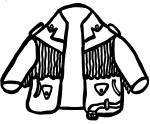
7. Deerskin– An absurdist thriller from Rubber director Quentin Dupieux about a vapid man whose obsessive love for his own deerskin jacket leads him to a life of crime, including serial murder. Consistently funny, but also incredibly vicious when it wants to be. Works as a macho counterpart to In Fabric, but more importantly it’s an excellent joke at the expense of Male Vanity (including the vanity of making an entire movie about a deerskin jacket).
8. Color Out of Space – Richard Stanley returns to the director’s chair after decades of mysterious exile to adapt an H.P. Lovecraft short story about a meteor crash and an Evil Color. Genuinely just as upsetting as anything Stanley accomplished in Hardware, if not more so. I mostly saw it as a traumatic nightmare movie about cancer tearing a family apart, 80s throwback vibes & Nic Cage affectations aside.
9. Horse Girl– A woman-on-the-verge mental illness drama filtered through a trippy sci-fi narrative. In my eyes, the most shamefully underrated movie of the year. It’s like watching the first half-hour of a mumblecore movie and then, bam, you’re in the third act of Bug . . . Then again, I always seem to enjoy Jeff Baena movies at least 30% more than everyone else and I don’t know why that is.
10. Emma.– A basic appreciation of the Jane Austen source material is a requirement at the door, since it’s a super faithful adaptation, but this is coldly hilarious and gorgeously composed from start to end. The dips into thoughtless cruelty hit just as hard as the physical comedy, both of which are majorly enhanced by the buttoned-up tension of the setting. Each performance is aces; ditto the confectionery production design & the deviously playful costuming. Just a pure, icy delight.
11. Zombi Child– A from-the-ground-up renovation of the zombie film, one that directly reckons with the genre’s racist, colonialist history onscreen and the untapped potential of its roots in genuine Voodoo religious practices. Somehow evokes both Michael Haneke’s cold, academic political provocations and Celine Sciamma’s emotionally rich coming-of-age narratives while still ultimately delivering the genre goods teased in its title.
12. Impetigore– An Indonesian ghost story about the lingering evils of communal betrayal & inherited wealth (and horrific violence against children in particular, it should be said). This walks a difficult balance of being gradually, severely fucked up without rubbing your face in its Extreme Gore moments. Handsomely staged, efficiently creepy beyond the shock of its imagery, and complicated enough in its mythology that it’s not just a simple morality play.
13. Host– Basically a kindler, gentler Unfriended with actually likeable characters (I don’t think that necessarily makes it an improvement, but it’s at least a different flavor). It’s also got a lot of COVID-lockdown specific details that make it extra eerie in a way that really leans into the of-the-moment documentary quality of these tech-driven horror novelties. Big fan of both the genre and this example of it.
14. Swallow – An eerie, darkly humorous thriller in the style of Todd Haynes’s Safe, in which a newly pregnant woman is compulsively drawn to swallowing inedible objects, much to the frustration of her overly-controlling family & doctors. Appearing like a scared child in June Cleaver housewife drag, Hayley Bennett conveys a horrific lack of confidence & self-determination in every gesture. Her fragility & despondence under the control of her wealthy, emotionally abusive family make you want to celebrate her newfound, deeply personal path to fulfillment, even though it very well might kill her. As she snacks on fistfuls of garden soil while watching trash TV instead of obeying her family’s orders all I could think was “Good for her!”
15. Vivarium– Imogen Poots & Jesse Eisenberg are a young couple in search of a suburban starter home to begin their life together, only to get trapped in a hellishly bland eternity of supernatural imprisonment in that very abode. I knew this was going to be grim & abrasive. I didn’t know that it was going to be so Funny. A humorously cruel sci-fi chiller about resenting your own spouse & child (one that I’m not surprised is so divisive, since the child is 1000x more shrill & frustrating than even the kid in The Babadook).
16. Bacurau– A delicately surreal sci-fi take on “The Most Dangerous Game” that’s so gradually, subtly escalated that you don’t notice how truly batshit it is until you’re deep in the thick of it. Uses familiar tropes & techniques to tell a story we’ve all heard before in a new style & context that achieves something freshly exciting with those antique building blocks. In other words, it’s genre filmmaking at its finest.
17. The Invisible Man – This was excellent, but Remake Culture is just getting so out of hand. Are we so out of ideas that we need the Upgrade guy remaking Unsane only two years after the Soderbergh original? Shameful.
18. You Cannot Kill David Arquette – A documentary that chronicles Arquette’s recent self-destructive campaign to win over pissy wrestling fans who are somehow still mad about a silly angle from over 20 years ago. A really fun, surprisingly emotional watch. Reminded me a lot of the Andy Kaufman “documentary” I’m From Hollywood (one of my all-time fav wrestling movies) in how it mixes reality & self-mythology to become a wrestling angle & performance art project in itself.
19. The Shock of the Future – Alma Jodorowsky stars as a fictional synthpop composer in late-70s Paris. This is almost 100% aesthetic posturing; its entire thesis is that synths sound cool-as-fuck and women didn’t get enough credit for pioneering their use. It’s not wrong; synths and the women behind them are incredibly cool and, apparently, endlessly watchable. There’s also something super relatable about watching someone work tirelessly alone in their apartment on art no one else in the world cares about; feels very of-the-moment even though it’s a nostalgia piece.
20. Dogs Don’t Wear Pants– A Finnish drama about a widower who processes his grief by hiring a dominatrix to help him explore an emerging kink for breath play. Follows a plot template I’m always a sucker for: Our protagonist is obsessed with something they know is going to eventually kill them but they keep going back to it anyway because it makes them super horny.
I typically don’t catch any films at the New Orleans Film Festival, mostly because my mind is all over the place around that time of year. This year was different. When I got word that there was a documentary about my favorite local musician being presented at the fest, I was on it. I immediately bought my digital pass and blocked off my calendar for its premiere date. The film that got me to dip my toes into the New Orleans Film Festival world was Nobody May Come, an independent documentary about the one and only Valerie Sassyfras.
Before I discuss the documentary, I want to talk a little about my experiences with the music and performances of Valerie Sassyfras over the past five years. Picture it: it’s the Siberia lounge in New Orleans on a Friday night in May of 2015. Underground puppeteer David Liebe Hart is getting ready to perform, so I stepped outside to bum a cigarette from a hipster (a bad habit I had when I was in my early-mid 20s while socially drinking). Across from me was a Trailblazer with a big magnet on the door that said “Valerie Sassyfras,” and I remember thinking to myself, “Wow, what a fun name.” Suddenly someone comes outside and yells, “Everyone get in now! She’s doing something called the Alligator Dance and it’s amazing!” I immediately go in to join the fun, and I see a small woman in glitzy garb walking around the bar with her arms clapping together like the mouth of an alligator, and there’s a conga line behind her. That was my first Val experience, and I was immediately obsessed and officially became a Sassyfrasser (a term for Val fans). She was the opener for David Liebe Hart and gave one of the best opening performances I’ve ever seen. After the show, I found her website (www.valeriesassyfrass.com – go to it now and I promise you won’t be disappointed) and searched for her upcoming shows. I called one of my best friends to tell him about this amazing woman and invited him to go with me to St. Roch Tavern, and that was the beginning of us trying to see as many Valerie Sassyfras shows as possible.
I’ve seen Val perform in lots of different venues: Live Oak, Morning Call in City Park, Tipitina’s, Trader Joe’s, and Lebanon’s, just to name a few. I have also randomly run into Val performing on Oak Street and at a couple of art markets. You never know when you’ll catch a Val show! My favorite place to watch her perform is St. Roch Tavern. Most of the performances I’ve seen there have small crowds, which sometimes were just made of up of me, my Sassyfrasser friend, and the bartender; but Val performs as though she was playing a sold-out stadium. She’s a one woman show, so the stage included her scrim, which she dances behind provocatively (it’s the best!), her variety of instruments (accordion, keyboard, washboard, mandolin, etc.), and all of her props (leather whip, feather fan, etc.). Those St. Roch shows made for some of my most fond memories. The feeling of just being myself and having a good time without a care in the world would take over my body, and for just those few hours, I was so damn happy. I also really enjoyed her mandolin performances outside of my very favorite restaurant ever, Lebanon’s Cafe. One night, my Sassyfrasser pal and I (we both lived super close to Lebanon’s) went over for dinner and a show. I mentioned to Val that I was a down-the-bayou Cajun, and she played one of my favorite Cajun tunes, “Jolie Blonde,” for me. It was more of an acoustic performance without all of the fun stage props, and it was just as fabulous.
After following her shows for well over a year, I started to realize that there was a great Sassyfrasser community in existence. Val opened for local female rapper Boyfriend at Tipitina’s in August of 2016, and while at the show, there was a group of folks in the crowd who were singing along to a Val classic called “Hide the Pickle”. I joined in and they told me that they loved Val’s music and always go to her Old Point Bar shows in Algiers. There are so many groups and folks that I’ve run into at Val shows over the years who adore her as an artist and a musician.
When I sat down to watch Nobody May Come at this year’s New Orleans Film Fest, I expected the documentary to be just as upbeat and exciting as a Valerie Sassyfras performance, but it didn’t really go in that direction. Directors Ella Hatamian and Stiven Luka focused more the Val’s personal struggles with her family issues and her experiences after being featured on The Ellen DeGeneres Show and America’s Got Talent. The documentary did a great job of allowing everyone to see what Val’s life is like behind all of the glitz and glam, but to my surprise, there really wasn’t much focus on how much the New Orleans locals value Val and her artistry. It could be that the directors are not from New Orleans (although I believe one of them lived here for a bit), and that’s why the doc is missing that element. There is this great moment at the very end of the documentary where Val is performing in front of an audience made up of a few people eating at some event in Kenner’s Rivertown and not really paying attention to her performance, and one of her fans shows up with her kids specifically to see Val. That is what Val fans do. We seek her out, even if she’s in Kenner, and we bring our family and friends with us to expose them to the Valerie Sassyfras experience. I just wish that the documentary featured more of those moments. Although the film is a bit on the grim side, it at least does a great job on focusing on its main character: Val.
There will be folks watching this documentary who only know Val through her viral televised performances, and I just want it to be known that there are many of her fans who truly appreciate her as an artist. Val is not just a viral video or an off-beat audition in a TV talent competition; she’s a local New Orleans legend.
If you’re interested in getting into Valerie Sassyfrass’s music, here is a list of my top 10 favorite songs:
Our current Movie of the Month, Ken Russell’s lurid living-tableau Salome’s Last Dance, is a metatextual adaptation of Oscar Wilde’s banned stage play, Salome. It’s a wonderful clash of high art pretension and broadly comedic, hyper-horny trash: Russell’s specialty. His metatextual approach to Salome allows for an overlap between Wilde’s rapidfire dry humor (as the jeering audience for a brothel-staff production of his own play) and the director’s sopping wet everything else. It’s an example of a provocateur artist lovingly tipping his hat to an even more infamous provocateur artist from our literary past, and not the only example from Russell’s own catalog.
Here are a few recommended titles if you loved our Movie of the Month and want to explore similar instances of Ken Russell paying homage to the over-the-top weirdo artists who inspired him.
Gothic (1986)
The only other literary figure in Ken Russell’s collection of provocateur homages is the poet Lord Byron, who looms large as a horndog villain in the hallucinatory horror-drama Gothic. In Gothic, Russell dramatizes Byron’s infamously sweaty night swapping ghost stories & hallucinations with fellow writers Mary & Percy Shelley while growing increasingly mad with horniness (and laudanum!). It’s a historic event that’s been made legend by teenage lit nerds & Kate Beaton comics, if not only for inspiring Mary Shelley to pen her novel Frankenstein and, thus, effectively inventing the genre of science fiction. When seen through Russell’s eyes, however, it’s an event most interesting for its unhinged social chaos and the monstrous behavior of the evening’s host, Byron, in particular.
Whereas Salome’s Last Dance turned Oscar Wilde’s play into a series of outrageous living tableaus, Gothic reinterprets an infamous moment in literary history as a cheap haunted house chiller. After a group séance conjures a demon that disrupts their ghost story trading with some “real” (i.e. hallucinated) scares, the story that inspired the film mostly devolves into manic haunted house gags that Byron lords over in hopes of isolating every last one of his guests for an intimate sexual encounter. Like with Salome, this event is also presented through a metatextual framing device, with modern tourists snapping photographs of the estate where Byron’s horned-up antics tortured two fellow literary geniuses for his own amusement – something Russell himself can’t help but gawk at in admiration.
Gothic is Ken Russell striving to be on his worst behavior despite an unusually tight budget. It’s the exact kind of maniacally perverse spectacle you always hope for from him, staged with the resources of a Kate Bush music video stretched out to feature length. The way it depicts the Shelleys’ romantic dynamic is also surprisingly on-point about the misogyny at the core of Free Love politics, but it’d be a lie to suggest that’s the #1 issue on its mind. Mostly, the film is presented as an amoral appreciation of Lord Byron’s laudanum-fueled prurient villainy.
Lisztomania (1975)
If Gothic finds Ken Russell’s wildest impulses restrained by a 1980s music video budget, his mid-70s rock opera Lisztomania is a glimpse of what he could do when fully allowed to run wild & torch piles of studio money. Hot off his sole mainstream hit with Tommy, Russell cast The Who frontman Roger Daltry as Hungarian composer Franz Liszt in an even more obnoxious, unwieldy exercise in pure style. Lisztomania is all shrill, gleefully vapid, dialed-to-11 excess from start to tend – a Pure Sinema indulgence that’s just as obnoxious as it is magnificent. It’s essentially Ken Russell’s Beyond the Valley of the Dolls, with all the triumphs, sleaze, and annoyances that descriptor implies.
In a proto-Velvet Goldmine meltdown between reality & fantasy, Russell positions Liszt as a glam rockstar heartthrob more befitting of the 1970s than the 1800s. The film opens backstage at a wild orgiastic party preceding one of his concerts, where hundreds of squealing teen girls demand that he play “Chopsticks” on loop in a fit of 19th Century Beatlemania. Liszt truly was a Teen Beat heartthrob in his time, and the movie remains “true” to the bullet points of his life in that way as he pursues his “art” at the expense of his his family & comrades. It’s impossible to claim that a movie where Listz’s friend/rival Richard Wagner is a literal Nazi vampire whom Liszt must smite in order to save the planet is historically accurate, but the film is at least spiritually accurate in touching on the broader details. Lisztomania is mainly a celebration of Franz Liszt as a himbo partyboy pop icon, with very little energy put into tempering or contextualizing that indulgence.
I don’t know that this registers as one of my very favorite Ken Russell pictures, but it does feel like one of the most Ken Russell pictures. If you think watching a series of films wherein a 1970s British auteur pays homage to composers, artists, and literary giants of the past sounds stuffy or pretentious, I offer this horned-up nightmare as a counterpoint. It’s an anti-Nazi glam rock opera that features vampires, Frankenstein monsters, forced-femme fantasies, paper mâché dicks, and Ringo Starr as the goddamn pope. What a beautiful, cacophonous mess.
The Music Lovers (1971)
This manic love letter to a provocateur artist of the past is aimed at 19th Century Russian composer Pyotr Ilyich Tchaikovsky, whose violent compositions & barely-closeted homosexuality lands him firmly under the Misunderstood Mad Genius umbrella where Russell loved to play. It’s a lewd, lurid joy as always, but it’s one that smartly saves its most over-the-top indulgences for well-timed bursts. As a result, it very well might be my personal favorite film of this bunch—Salome’s Last Dance included—if not only for knowing how to choose its Moments wisely. If the dialed-to-11 zaniness of titles like Gothic & Lisztomania test your patience as if you were babysitting a hyperactive child, I highly recommend giving The Music Lovers a look so you can experience those same manic highs in small, manageable doses.
The Music Lovers mostly focuses on Tchaikovsky’s marriage to Antonina Miliukova, whom Russell portrays in the film as an insatiable, fantasy-prone nymphomaniac. Unable to copulate with his wife due to his strongly queer sexual preferences, Tchaikovsky becomes increasingly volatile as a person and unproductive as an artist. Although he’s solely attracted to men, he finds himself torn in all directions by a small coven of women: his horndog wife, her grifter mother, his overly adoring sister, his stalker/patron, etc. At the time when he was working, being officially outed as gay would have ruined his career as a composer. In a modern context, it makes him Cool as Hell, the perfect subject for a Ken Russell film – especially as his repressed desires drive him into a drunken, sweaty mania. When his closeted relationship reaches its violent breaking point, Russell’s usual erotic funhouse nightmares spill onto the screen in spectacular ways, matching the explosively violent piano stabs that typify Tchaikovsky’s music. I’m particularly fond of a drunken train ride where his wife fails to seduce him in the sloppiest, most explicit maneuvers she can manage and the final sequence where the composer’s pent-up creativity floods onto the screen and washes away the last semblance of reality holding the entire picture together.
Watching this particular batch of Ken Russell films was an extremely rewarding exercise for me. I expected these titles to be some of Russell’s stuffiest and best-behaved, given the high-art pedigree of their historic subjects, but they turned out to be just as wild as his no-fucks-given 80s frivolities like Altered States & The Lair of the White Worm. Even The Music Lovers can be wildly over-the-top when it chooses to be, an occasional self-indulgence that landed the film fiercely negative contemporary reviews for its historical inaccuracies. As someone who cares way more about cinematic hedonism & over-the-top artifice than faithfulness to source material or historical fact, that self-pleasing blasphemy pandered directly to what I love about movies. I’m now starting to consider Ken Russell one of my very favorite directors (as opposed to just the director of Crimes of Passion, one of my very favorite movies).
When reviewing the few feature films I caught at this year’s (mostly virtual) New Orleans Film Festival, I found myself constantly writing about how the context of the COVID-19 pandemic shaped my experience with them. It’s been a long nine months since I last attended a film festival in person (French Film Fest, which was snugly slotted in between Mardi Gras and the city’s initial coronavirus lockdown orders), so it was impossible to not compare & contrast this year’s NOFF with similar events in the past.
To the festival’s credit, the programmers addressed this unavoidable preoccupation head-on, platforming a wealth of short films that directly commented on COVID-era New Orleans culture. They also adjusted the scope & structure of the festival to offer as safe of an experience as possible, including an online streaming option for most of their selections as well as a few outdoor, socially distanced screenings for in-person events.
COVID undeniably reshaped my usual New Orleans Film Festival experience this year, at the very least in how it limited the range & volume of movies I could make time for during the fest’s short window. It didn’t halt the ritual entirely; it just hung over it as an unignorable dark cloud.
Here’s a list of the four features I’ve reviewed from this year’s New Orleans Film Festival. CC & I will record a more fleshed-out recap of our COVID-era festival experience on an upcoming episode of the podcast, in case you’re interested in hearing about our favorite shorts from the line-up or our thoughts on the ways the fest had to adapt to the constrictions of a pandemic. This list is a more bare-bones kind of recap: a best-to-least-best ranking of the features we managed to catch at this year’s NOFF.
Each title includes a link to a corresponding review. Enjoy!
A local documentary that captures how drastically different the New Orleans drag scene is now vs. the traditional Southern Pageant Drag scene I remember growing up with. It was great to see a community I love (including a couple friends who perform) documented for posterity, but also bittersweet because the very last in-the-flesh social event I attended was a drag show in March and I miss it very much.
A local documentary about avant garde zydeco-turned-new-wave musician Valerie Sassyfras, who’s a very specific kind of New Orleans eccentric. It’s a jarring mix of fun outsider-art punk aggression and severely upsetting social & mental dysfunction; the exact kind of niche-interest no-budget filmmaking you only see at festivals.
A conceptual art piece about Black women’s relationships with their own bodies and the meaning of “feeling safe.” It’s a little impenetrable the way a lot of experimental essay films can be, but it also packs a powerful wallop when it feels like going for the jugular. There’s also some incredible Nina Simone footage interspersed throughout.
Christian Petzold’s latest is Good, but not entirely My Thing. I can’t imagine being the kind of person who watches The Lure and thinks “What if this was a quiet, understated drama instead?” but apparently that kind of person is out there.
Every month one of us makes the rest of the crew watch a movie they’ve never seen before and we discuss it afterwards. This month Britnee made Brandon, Boomer, and Hanna watch Salome’s Last Dance (1988).
Britnee: Last year, while I was on a month-long Ken Russell binge, I watched Salome’s Last Dance for the very first time. I had avoided it for a while because I assumed it was going to be a run-of-the-mill period piece. I do enjoy period films, but I have to be in a particular mood to watch them. It turns out Salome is more than just a period film. It’s a trashy masterpiece! How could I expect anything less from Ken Russell?
Salome starts with a framing narrative where the staff at a London brothel put on a performance of Oscar Wilde’s banned play, Salome, for none other than Oscar Wilde himself. The play is so magnificent that it’s easy to forget that you’re watching a play within a movie. The vibrant set and gaudy costumes are visually pleasing components to this very sexy Salome production, and I just loved all of it. Ken Russell even plays the part of the play’s photographer! There all sorts of delicious little treats strewn throughout the show, such as topless dominatrix guards with silver nipples and a zombified John the Baptist.
The actress who plays Salome in the play, Imogene Millais-Scott, is phenomenal. She has a very cat-like presence that really makes for an interesting take on the character, and her passionate and intense line deliveries outshine everyone else in the film. Millais-Scott was almost blind from an illness before she started filming, so the fact that she showed up and showed out in Salome regardless is insane.
What I enjoyed the most about Salome is that we never really leave the theatre. There aren’t many moments where we go into different areas of the brothel to follow up on what Wilde and everyone else is doing while the play is going on. The play is just so damn good that I never wanted to leave, so that layout worked out for me. Brandon, was that something you enjoyed as well? Would you have preferred more scenes that were not part of the actual Salome play?
Brandon: While I appreciated Russell’s playfulness in burying the play under several layers of metatextual remove, I don’t know that diving any deeper into the off-stage narrative would’ve added anything to this film’s entertainment value. It makes sense for Russell to include Wilde’s off-stage antics in the brothel for a couple reasons: to help highlight their shared qualities as button-pushing provocateurs and to give shape to the brothel’s otherwise slight production of Salome. The onstage performance is presented almost as a series of living tableaus, where the actors’ costuming & positioning against the hand-painted backdrops is far more outrageous & attention-grabbing than any of the spoken dialogue. There’s almost a John Waters Community Theatre quality to the play, wherein total freaks endlessly rhapsodize about how gorgeous they are – only interrupting those breathlessly horny rants for an occasional fart joke or dance break. As fun and as wonderfully artificial as that production can be, it’s also a huge relief to occasionally drift away from it to check in on Wilde’s escapades as a half-attentive audience. He gropes the staff, ruthlessly critiques their acting skills, and fires off a few of his infamously dry witticisms as a form of self-amusement (including a particularly great one about how brothels “combine business with pleasure”), seemingly bored by the onstage tableaus. I was not bored by this stage production of Salome, but it was still funny hearing that potential complaint in real time from the author of its source material. He doesn’t need to do anything more than that to justify being there.
Overall, I found this movie to be a wonderful clash of high art pretension and broadly comedic, hyper-horny trash: Ken Russell’s specialty. It often feels more like Russell doing Derek Jarman or a Cockettes stage show than Russell doing Oscar Wilde, so it was smart for the director to include an in-the-flesh avatar for Wilde onscreen, injecting the writer’s more idiosyncratic quirks into an adaptation of his play that doesn’t especially highlight them (the way a straightforward adaptation of The Importance of Being Earnest might have). I totally get Russell’s decision to stage Salome with that metatextual remove, as it allows for an overlap between Wilde’s rapdifire dry humor and the director’s sopping wet everything else. What I’m much less clear on is whether there’s any significance to the movie being set on Guy Fawkes Night in particular. Boomer, is there any textual or historical significance you can glean from this private, brothel-set staging of Salome occurring on that uniquely British holiday? Or did that register as just as significant of a detail as the fart jokes and the hand-painted moon?
Boomer: Is there any figure in English history more widely misunderstood in the pop cultural consciousness than Guy Fawkes? His exaggerated likeness went from centuries-old scapegoat mask to symbol of anti-tyranny in Alan Moore’s V for Vendetta, then to wider infamy with that graphic novel’s 2005 film adaptation, and then as the mask of online hacktivism group Anonymous. In all of his popular culture incarnations, Fawkes is a man of progress fighting for liberty against an oppressive state, but in reality Fawkes himself wasn’t … that.
Most of our readers probably already know this but just to be safe (and as Cliffs Notes as I can make it): infamously, Henry VIII blamed his wife/wives for giving him nothing but daughters (and thus no mail heir to the throne, as the law sort of dictated and tradition clearly required) and, since the Catholic Church wouldn’t let him divorce any of them, he created his own, new church (The Church of England, aka the Anglican faith) with blackjack and hookers with the option to let him trade in his wife for a new model without having to do all that beheading (which he still did sometimes anyway). He was immediately succeeded by his (Anglican) nine year old son Edward VI, and upon Eddie 6’s death at 16, the crown passed to Edward’s (Catholic) sister Mary. Better known as Bloody Mary, she attempted to return property that had been acquired by the state back to Catholic control but was largely prevented from doing so by Parliament, but that didn’t stop her from burning 280 (Protestant) people at the stake for religious dissent. When she died, there was yet another hullabaloo that eventually led to her (Protestant but, like, mostly pragmatic about it) sister, Elizabeth becoming the Queen of England. Elizabeth never had any children of her own and went to her deathbed saying “nah” to requests that she name an heir, there was another succession debate that resulted in her nephew James (also a Protestant but hyperfixated on the heresy of witchcraft rather than the heresy of Catholicism), Mary’s son, being coronated as the new king.
The Gunpowder Plot was an attempt by Catholics to assassinate James I solely because he was a Protestant (and a fairly tolerant one at that, having seen how the people turned on his mother for her religious persecution). Guy Fawkes was just a guy from York who had been fighting in Spain during a time when Spain and England were allied (mostly because they were both Catholic states) and was so unhappy that everything was so Protestant now that he went so far as to petition the Spanish throne to turn their attention toward retaking England, for Catholicism. His job in the plot was to guard the gunpowder, but he was caught, and the whole thing fell apart; this lead to the declaration of November 5 as Guy Fawkes Night, which became the primary commemoration of England as a nation-state (a corollary would be the U.S.’s Independence Day) as well as a focus for anti-Catholic sentiments. Eventually, things got so heated that Guy Fawkes Night may as well have been The Purge for Catholics, but reform eventually nerfed that element of the proceedings until GFN was essentially little more than a name for a celebration that was mostly divorced from its roots (a corollary would be the U.S.’s Labor Day, which was originally created as a celebration of the Labor movement and is now mostly a holiday for the enemies of Labor to get 50% off jeans while Laborers … labor), becoming just a holiday.
Historically, Wilde’s actual arrest occurred in late May 1895, at nearly the opposite side of the calendar cycle as early-November’s Guy Fawkes Night; Russell, as a Briton himself, would know this and wouldn’t have made such a significant change without reason. Or would he? Robert Catesby, the mastermind behind the Gunpowder Plot, was beheaded like John the Baptist, but his decapitation was postmortem (in order for his head to be exhibited outside of Parliament as a warning, as you do). He did die (of being shot) clutching a portrait of the Virgin Mary, who was John the Baptist’s aunt. But really, that’s grasping at very tenuous threads. There’s little that correlates Fawkes or the Gunpowder Plot to Wilde or Salome. Salome as a figure of myth/history is technically royal and the Gunpowder Plot revolves around an attempt at a religious coup via regicide, but the two events are fairly different otherwise. One could sift to find some relationship between Salome’s existence as Herod’s stepdaughter from a previous marriage and the succession crisis (that at least partially revolved around kingship transferring from Edward VI to Mary, his stepsister from his father’s previous marriage) that eventually led to James I’s reign, but that’s really pushing it. Biblically, Salome isn’t even given a name and is mentioned only as Herodias’s daughter, and we only have a name for her because of Titus Flavius Josephus’s Antiquities of the Jews (completed ca. 93 or 93 C.E.). There are some who argue that Salome the Disciple (one of the tenders of Jesus at the crucifixion and witness to his empty tomb, depending upon the gospel in question) and Salome the daughter of Herodias could be the same person, and that admittedly makes for a fun redemption arc Bible headcanon if that’s your bag, but most scholars hold that the latter Salome was the sister of Mary.
Beyond that, one is hard pressed to find a connection between GFN/The Gunpowder Plot and Salome/Wilde other than this: despite how they have been interpreted by right wing regressives in the present, the teachings of Jesus were iconoclastic and progressive, and the decapitation John the Baptist as both his harbinger and hype man could be interpreted as the state’s execution of a rabble-rousing progressive dissident; if one sees Fawkes as an analog of Herod II, pushing for a return to a more regressive, conservative form of governance, it almost works. But not quite. Maybe all he wanted was for future viewers to watch the film annually on GFN? Move over, “Is Die Hard a Christmas movie?”, it’s time for the real debate: “Is The Last Dance of Salome a Guy Fawkes Night movie?”
One of the things that I found puzzling while watching the film was the presence of ciswomen actors as women in the play and its framing device. Every plot summary of Last Dance online notes that the film takes place in “an all-male brothel,” but that doesn’t seem to be the case for many of the ostensibly cisgender topless women serving in the ensemble or Imogen Millais-Scott as Salome/Rose. It’s possible that I’m very wrong about this (the copy of this film that I saw was the one that’s grainy, free on YouTube, and subtitled in Spanish), but I’m guessing that there was a body double used in the final, full monty frame of Salome’s dance itself, which makes me curious about the casting, given that I can find no evidence that Millais-Scott is trans. Does this casting of a ciswoman as a man-portraying-a-woman read strangely to you, Hanna? Given that Millais-Scott’s powerhouse performance is the biggest draw in the film (at least for me), I’m not sure I would have preferred this be done a different way, but I’m of two minds. After all, men portrayed all roles, including women, for a huge chunk of British theatrical history. What do you think?
Hanna: In general, I was a little torn by this too. Why not feature an all-male performance for Oscar Wilde, especially given the history of British theatre? I would have loved a glitzy, dragged-up rendition of Salome. On the other hand, since the premise of the film is that Salome is so publicly subversive that Oscar Wilde can only view its performance behind the walls of a brothel and women were banned from performing onstage in England until the 1660s, the use of female actresses would technically be the more subversive choice for that time (although that point was probably moot by the late 1800s).
Regarding Millais-Scott’s casting specifically, I actually didn’t think that she was cast as a man portraying a woman; I thought that Rose was a cisgender female chambermaid for the brothel playing Salome, not a male worker, and that the appearance of the body double – dubbed “Phoney Salome” in the credits –was meant to be a prank on Herod within the play (i.e., Herod got horny for an anonymous male slave and Salome never really danced for him) and a scintillating little show for Wilde. I would guess that the bare-breasted guards were also workers in the brothel. That being said, I truly have no idea what actually happened – that’s just my best guess.
If I’m wrong about the casting and Rose/Salome is meant to be a male actor playing a woman in the film, it might have bothered me if the role had been taken by any other cis-woman. As it is, I wouldn’t trade Millais-Scott’s mesmerizing performance for anything, and if it were up to me, I would probably shirk gendered roles and British theatre history to feature her. Her Keatsian monologue with John the Baptist was equal parts hypnotic and bratty, and has significantly contributed to my arsenal of obsessive, lusty similes. That scene alone was worth the $3.99 rental.
Lagniappe
Britnee: I love the costume design in this movie, especially the costumes for Herodias and Salome. It’s all a mix of BDSM, pageant drag, and Victorian fashion. The costume designer, Micheal Arrals, is only credited for this one film, and I can’t find much about him online. I want to know more about this mysterious genius!
Hanna: My first exposure to the story of Salome was stumbling upon the grotesque and gorgeous illustrations that Aubrey Beardsley produced for Wilde’s original run of his play (especially “The Dancer’s Reward”). Those illustrations and Salome’s Last Dance compel me for the same reasons: they are intricately and ornately detailed, a little bloody, and horny as all get-out. Those illustrations were highly regarded by Wilde, and in my opinion, Russell did a fantastic job of bringing that mood to his adaptation.
Boomer: Thank you for indulging me in my recapitulation of various English succession crises. For a film that features an entirely male cast performing a play in which they inhabit men and women’s roles, I recommend Lilies. If you’re interested, the single-Salome interpretation noted above (that she was both Herodias’s daughter and later a disciple), was an idea probably influenced the narrative of the 1953 film Salome with Rita Hayworth in the title role.
Brandon: This conversation concludes five full years of Movie of the Month discussions, a tradition we’ve continued since our very first month blogging as a crew. Somehow, this is the first time we’ve ever doubled up on any one particular director over all those years, having previously covered Ken Russell’s Crimes of Passion (still one of my all-time favorite films) back in May of 2015. I’m proud of the wide breadth of movies we’ve discussed so far with this project. I’m also proud that when we inevitably cycled back it was for Ken Russell in particular. It couldn’t have happened to a bigger pervert.
Our current Movie of the Month, John Sayles’s 1992 comfort-watch Passion Fish, is a Southern-fried melodrama about a Rude soap opera star whose career comes to a halt after a paralyzing car accident. It looks & acts like a Normie heartwarmer about a proud woman overcoming sudden adversity, but pulls it off with an unusually direct, vulgar bitterness that cuts through the bullshit. In particular, the way the film depicts its lead’s discomfort, rage, and gradual acceptance of her newfound disability & reliance on a wheelchair feels refreshingly honest & relatably human for a 90s-era VHS rental. As a result, most recommendations of further viewing for anyone who enjoyed Passion Fish probably should touch on its unusually frank depiction of newfound physical disability, which really does set it apart from other, more maudlin works in its genre.
Here are a few recommended titles if you loved our Movie of the Month and want to experience similar depictions of recognizably Real people venting relatable frustrations over their own physical disabilities.
Never Fear (1949)
You might be tempted to ask for a better directorial debut from actor-turned-auteur Ida Lupino than the 1949 sudden-illness weepie Never Fear, but it would be tough to ask for a more personal one. Lupino’s first credit as a director is a well-behaved but harrowing melodrama about polio, a disease that Lupino herself suffered early in her career as a young actor. In fact, it was being bedridden with polio (and losing some mobility in her leg and hand) that inspired Lupino to develop skills as a writer & a filmmaker in the first place, as it was a harsh realization that her career as an onscreen beauty was limited & impermanent. She explained in an interview, “I realized that my life and my courage and my hopes did not lie in my body. If that body was paralyzed, my brain could still work industriously . . . If I weren’t able to act, I would be able to write. Even if I weren’t able to use a pencil or typewriter, I could dictate.” Polio was too sensitive of a subject at the time of Never Fear‘s release and, thus, failed to make a splash at the box office, but Lupino fearlessly tackled it head on from a place of personal frustration & anguish that affords it cultural significance anyway.
A young dancer (Lupino regular Sally Forrest) has her career cut short by a rapidly onset case of polio that leaves her paralyzed. She gradually earns her mobility back through painful months of physical & emotional therapy, but in the meantime struggles to maintain the romance, career, and independence she knew before the disease left her unable to dance. There are about twenty minutes of puppy-love bliss shared between the dancer and her partner/choreographer before polio cuts their ambitions short. The remaining hour is a pitch-black tearjerker that threatens to break that blissful romance apart, both through the introduction of potential love interests inside & outside the hospital and through the protagonist’s self-pity that makes her believe she’s no longer worthy of her former beau’s love & devotion. The resulting film illustrates a complex, nuanced psychological portrait of someone bedridden with polio, one that arrived in theaters while the country was still suffering the darkest days of the epidemic.
Never Fear is a romantic melodrama in which Ida Lupino pulls from her personal experience with polio to illustrate just how isolating & embittering the disease could be. It’s more or less a standard sudden-illness weepie, but it’s emotionally fearless in directly tackling its subject in a way that can be impressively horrific in flashes. It isn’t Lupino’s best work in the director’s chair, but it is a film with surprising emotional depth in her expressions of personal, professional anguish, which makes it a worthy watch for anyone interested in her one-of-a-kind career as one of the most substantial female directors in the Old Hollywood system. It’s also one of the few melodramas of its kind that matches Passion Fish‘s bullshit-free depictions of personal, internal conflicts over sudden physical disability.
Misery (1990)
If the bitter disability journeys of Passion Fish & Never Fear are too subtle or gentle for your liking, there’s always the Kathy Bates psychobiddy classic Misery. According to Steven King, Misery was written as a metaphor for his debilitating addiction to cocaine, which figuratively held him captive and forced him to write pulpy dreck far beneath his dignity as a Serious Artist. There’s likely some truth to that, but I do suspect King brandishes that anecdote at least somewhat to cover up the novel’s more obvious expressions of his open, seething contempt for his most enthusiastic fans. In the 1990 adaptation, Kathy Bates stars as a disgraced nurse who kidnaps her favorite pulp author after a blizzard-incited car crash and forces him to write novels that fit her headcanon instead of his own imagination. It’s a wonderfully blatant, literal depiction of the increasingly hostile relationships between artists & their audiences in recent years, where fans’ demands are too often allowed to dictate the work. It’s also, on the surface, a torturous body horror about a man held captive by a deranged medical professional who violently hobbles him to delay his recovery instead of working in his own interest.
In the opening sequence of Passion Fish, May-Alice is a big-city Soap Opera Star who’s frustrated that she relies on the whims & the capabilities of the small-town nurses hired to help her navigate her Louisiana bayou home. Things calm down once she finds an unlikely friendship with a nurse on her own wavelength, but that frustration over her reliance on another human being to accomplish mundane, daily tasks never really goes away. In Misery, a big-city Celebrity Author finds himself at the mercy of a small-town nurse who cares more about the fictional characters he creates than she does about his physical health (to put it mildly). Both films traffic in a warmly familiar 1990s mainstream filmmaking sensibility that sets expectations for a wholesome, safe viewing experience. Passion Fish cuts through that expectation with an unexpected vulgarity & bitterness as May-Alice becomes increasingly frustrated with her newly disabled body. James Caan goes through the same struggle as the Celebrity Author in Misery, except with a pronounced layer of traumatizingly gruesome body horror that even more drastically contradicts director Rob Reiner’s wholesome, mainstream sensibilities.
Weirdly, Misery also happens to employ an overqualified cinematographer in Barry Sonnenfeld, which mirrors Passion Fish‘s employment of industry legend Roger Deakins as its own DP.
The Intouchables (2011)
Maybe Misery‘s gory hyperviolence & Never Fear‘s Old Hollywood prestige are too fringe for a proper Passion Fish pairing. Maybe you just want to watch another by-the-books tearjerker that only strays from melodrama conventions by indulging in some occasional vulgarity. 2011’s The Intouchables isn’t exactly a great film the way Passion Fish is, but it does share some of its recognizable humanity that’s often missing from similar sudden-disability melodramas.
Based on a true story, The Intouchables chronicles an unlikely friendship between a paraplegic French aristocrat (who recently suffered a paragliding accident as part of his adrenaline seeking interest in X-Treme Sports) and the underqualified Senegalese ex-con he hires as his live-in caretaker (who only applied for the job as a ploy to remain on welfare). Although it arrived in theaters two decades after Passion Fish, it stumbles a lot more frequently in its own depiction of a budding friendship across race & class barriers (the Senegalese man is a pothead horndog criminal with no sense of public decorum, an often embarrassing line of humor). Still, there is a core sense of mutual respect & playfulness in their relationship that’s surprisingly endearing, especially in contrast to the long line of unsuitable, uptight, white caretakers who also interview for the job. The live-in caretaker is hired because he doesn’t look at his employer’s disability with any sense of pity or patronizing caution. His vulgar, casual demeanor cuts through the bullshit to allow them to meet on equal terms as human beings, even though one needs the other to accomplish most mundane tasks. The central friendship in Passion Fish is a lot more nuanced (and a lot less problematic in its race & class politics), but both movies share that vulgar, humanistic core.
I feel a little conflicted recommending a film I don’t wholly appreciate myself. The Intouchables alternates between charm & cringe so erratically that it’s difficult to be too enthusiastic about the positives when the whole ordeal is through. For perspective, then, it’s a good idea to follow up the film by watching the trailer for its recent American remake, starring Kevin Hart. It’s a quick way to appreciate how much worse the material could have been (and apparently was!) in even cruder hands.
It’s been nearly two decades since John Waters’s last feature film, and it’s looking increasingly unlikely that there will ever be another. And that’s okay. The Pope of Filth appears to be totally content in semi-retirement, where he continues to entertain as an author and a travelling orator without having to beg movie studios for budgetary pittances. If Waters never makes another film again, at least he went out a return to form in A Dirty Shame, an underrated career retrospective that bridges the gap between his early-career gross-outs and his late-career “mainstream” comedies. Still, as he is the single greatest filmmaker of all time, it’s fun to daydream about all ~the John Waters projects that could have been~ had his Hollywood Studio cashflow not dried up so suddenly. A Christmas-themed comedy called Fruitcake (potentially starring Johnny Knoxville & Parker Posey) was the most recent unmade John Waters project drifting around the ether, but here are several others besides: a Wizard of Oz spoof called Dorothy the Kansas City Pothead, an ill-advised adaptation of Confederacy of Dunces, some unholy mutant titled Glamorpuss, etc. It’s difficult to speculate on any of these unmade projects with any clear detail beyond a basic elevator pitch, though, because they mostly pop up in media coverage as fun anecdotes in Waters’s bottomless repertoire of fun anecdotes. That is, with one major exception.
The closest one of John Waters’s unmade films ever came to production was in the mid-1980s, when the director was staging his unlikely transformation from arthouse reprobate to a household name. The 1988 paperback Trash Trio features collects three screenplays from John Waters’s “trash period”: Pink Flamingos, Desperate Living, and the unrealized sequel Flamingos Forever. In the intro to the book, Waters refers to Flamingos Forever as his “first abortion,” a “stillborn” project that failed to secure the proposed $600,000 budget it would’ve needed to reach the screen uncompromised. There were many roadblocks to Flamingos Forever‘s journey through the Hollywood System birth canal: clueless producers insisting on rewrites that included more Hot Babes, Divine’s dwindling enthusiasm for its various gross-out stunts, and, ultimately, the death of the irreplaceable Edith Massey. There was a brief window where Waters could have got the film off the ground under the infamously sleazy Troma Entertainment brand, but he held out for a better opportunity that never came. It’s probably for the best. I’m personally appreciative that Waters pressed on to new, subversive textures in works like Serial Momand Cry-Baby rather than revisiting Pink Flamingos for a victory lap sequel. Still, reading the screenplay for Flamingos Forever in Trash Trio all these years later is a total treat, as his authorial voice (as well as the mind-searing vocal performances of actors like Massey & Divine) is idiosyncratic enough that you can mentally picture the movie more or less exactly as it would have been had it not been quietly aborted decades ago.
Fifteen years after the events of Pink Flamingos, Divine and her cavalcade of perversions return to Baltimore to reclaim their title as the Filthiest Family Alive. In a beat-for-beat rehash of the previous film, Divine brags to the press about her wicked deeds, drawing unwanted attention from jealous members of the Marble clan, now led by the deceased Connie’s equally vile, child-snatching sister. Gross-out pranks and violent crimes ensue as the two families once again clash over Filth supremacy, with Divine ultimately (obviously) coming out on top. Of course, narrative doesn’t matter nearly as much in a John Waters film as the gross-out stunts & character quirks. While Flamingos Forever retreads a lot of familiar ground, it’s packs plenty of gags that would’ve been a scream if they were realized: the Filth family moving on up to an absurdly artificial Pee-wee’s Playhouse type compound, Divine carrying around Edie in a baby holster, a deranged performance of “The Hokey Pokey” (one of several gags that found its way into the A Dirty Shame), etc. It’s also a wildly offensive vision in the way that you’d expect from a Pink Flamingos sequel, including jokes involving blackface, necrophilia, children in drag and on heroin, and male rape. Even with the slightly-ballooned budget, it’s a trash-era John Waters screenplay through & through. No wonder producers were squeamish to back it.
To Flamingos Forever‘s credit, it does its best to escalate the filthy antics of its central cast to match the escalation of the proposed budget, especially when it comes to Divine. Amusingly, the screenplay recontextualizes Divine as a kind of filth superhero, an avenger of Bad Taste. As her war with the Marble clan heats up, Divine reveals previously unexplored superpowers that confirm her divinity: levitation, X-ray eyes, the production of flying turds (many, many flying turds). She also contrasts the heroic quality of her own filthy antics vs. the child-snatching stunts of the Marble clan, explaining in detail the difference between Good Filth & Bad Filth (the way Waters will walk you through the difference between High Camp & Low Camp in his essay work). Divine’s saga as a notorious murderess who kills because she loves attention from the press is already sketched out in a crude precursor to MCU-style sequential filmmaking across multiple loosely connected films: Mondo Trasho, Multiple Maniacs, and Pink Flamingos. In Flamingos Forever, she would have solidified her stature as a filth superhero in that lineage, even providing a flashback superhero origin story for how she became so filthy (in stubborn opposition to her cleanliness-obsessed parents). Flamingos Forever would not have broken new narrative ground for Waters’s early Family of Weirdos character comedies, but it is amusing to consider how far it would have unintentionally pushed that familiar story into the modern territory of sequential superhero storytelling.
I’ve gradually come to peace with the realization that I’ll likely never see a new John Waters film again, a blow that’s been softened by several recent developments in his cinematic legacy: Waters’s newfound joy as an on-stage storyteller, The Criterion Collection’s wonderful restorations of his trash-era classics, the occasional opportunity to experience repertory screenings of his work with new audiences (which somehow always still inspires mid-film walk-outs all these decades later despite their notorious reputations). I’d also chalk up reading the unmade screenplay for Flamingos Forever in Trash Trio as a similar comfort. It was a delightful to watch an unmade John Waters film projected only in the run-down drive-in theater of my mind (an experience I wisely saved for a hurricane-related power outage), even if his work is always better with an audience – as all comedies are. The unlikely Superhero Sequel qualities of the screenplay only added to that novelty, as movies this unabashedly filthy rarely secure Superhero Movie budgets.
Every month one of us makes the rest of the crew watch a movie they’ve never seen before and we discuss it afterwards. This month Boomermade Brandon, Britnee, and Hanna watch Passion Fish (1992).
Boomer: I was born in Louisiana and didn’t reside elsewhere for longer than a month or two for the first 28 years of my life. It’s been over a year since I was last home. With the pandemic continuing to rage because some people are just too selfish and obsessed with the abstract concept of personal liberty to just stay home, what could have been a few fortnights of quarantine, isolation, social distancing, and loneliness have stretched into over half a year with no real end in sight, so it’s not clear when it will be safe to travel again. Where I am now is a place of natural beauty, varied cultural interest, and urban elegance, but I’d be lying if I said it didn’t lack a certain verdancy that I sometimes feel a longing for. Few things of late have made me more homesick than the movie Passion Fish.
NYC-based soap opera actress May-Alice Culhane (Mary McDonnell) is left paraplegic following a mundane but nonetheless tragic vehicle collision, and returns to her long-abandoned parents’ lakefront home on Lake Arthur. Unable to fully care for herself in a home that wasn’t built with the wheelchair-bound in mind, May-Alice’s resentment of her newfound immobility, loss of employment, and isolation lead her to lash out angrily at a series of home nurses who range from grossly incapable to overly familiar to simply not being a good fit. The last of these is Chantelle (Alfre Woodard), who has her own problems. Although the two women are initially mistrustful and intermittently antagonistic, Chantelle’s unwillingness to coddle May-Alice or to allow herself to become another in a long line of nurses driven off by her employer’s hostility forges a bond between the two women that eventually exceeds what either of them could have expected.
I was given this movie a few years ago as a birthday gift by a couple who were my first friends here in Austin, and with whom I played weekly trivia—religiously—for a few years. As we have similar interests, one of the games that we used to play (poolside, in the car, wherever) was the one where you connect two actors using a series of “acted alongside” connections. For example, if one person suggests Pam Grier and the other suggests Audrey Hepburn, one might connect Hepburn to Veronica Cartwright throughThe Children’s Hour, then Cartwright to Yaphet Kotto through Alien, then Kotto to Pam Grier through Friday Foster. I have a profound love for both McDonnell and Woodard, and bring them up frequently as a connector when playing this game, which led to the recommendation (and ultimate gift) of Passion Fish. It has been one of the best recommendations ever, as it transported me fully not only back home to Louisiana but also to my childhood in the nineties.
Passion Fish also falls under one of my favorite genres/topics: the story of women on the verge. May-Alice’s frustration, feelings of impotence, and what she perceives as the loss of her identity as a woman of moderate celebrity, are clear and powerful without falling into the trap of ableism, which it easily could have. Her career is over, her place in society is gone, and she finds herself back in a home she never wanted to revisit and has spent her entire adult life running from. As we learn in one of a series of vignettes in which she reunites with various people from her past, May-Alice was always an outsider in her community, the “weird girl” who stood out and was socially punished for it; it’s no wonder that she sees the loss of the lifeline that she used to flee this place as the end of her journey, while also dealing with the associated traumas of losing the functionality of the lower half of her body. It’s not an abstract issue: she falls off of the toilet and is alone in her house for hours without assistance, and the lack of accessibility features (like ramps) in her home minimizes her world.
May-Alice isn’t alone on this precipice either, as it turns out that Chantelle has lied her way into her current position, having lost her nursing credentials (and custody of her daughter) after falling in with a man who gave her access to crack cocaine. It would be easy to dismiss this as another lightweight “inspirational” movie (complete with a problematic trope or two) were it merely about May-Alice overcoming obstacles through the help of a sassy stereotype, and to some I’m sure it comes across as one, but Chantelle is no mere prop for May-Alice’s recovery. She has her own problems, issues, fears, and even romance — all of which are separate from her relationship with May-Alice as both caregiver and friend, even if those disparate threads sometimes intertwine. Powerhouse performances from both lead actresses are what push this beyond being some lighthearted pablum for the masses into something truly beautiful, while weaving in various coastal/bayou cultural touchstones like ghost mythology, local folks who are recognizable as people instead of archetypes, and lots (and lots) of zydeco music.
One of the other ways that Passion Fish rises above the rest of the crop is through its narrative throughline. We start in a New York hospital in which May-Alice awakens to learn that her life has changed from a faceless, impersonal member of the medical staff. From there, as she falters at adapting to her new circumstances and decides to go home to Louisiana—even as she encounters fans of her work—all of them remain faceless and unseen to us, like specters. Only once she’s back home do those around her begin to exist again, and so does she. In one of our long-ago MotM reviews of Big Business, I was openly opposed to the trope of “Rural living is simply better to urban life,” and while there’s some of that at play here, I also think that it exposes the facile nature of that assumption as we meet people both shallow and deep from each of May-Alice’s worlds.
I really enjoyed this vignette-style set-up of characters, although I was a little disappointed that some of them never reappeared. First we meet May-Alice’s closeted(ish) Uncle Max, who at first reads as a parody of a Tennessee Williams character before revealing a depth of character beneath his genteel Southern nature. From there we are introduced to two of May-Alice’s childhood tormentors who recall their “friendship” with their now-famous(ish) victim very differently, going so far as to attempt to bond with her over the girl they used to bully, not realizing that they are one and the same. We also meet a trio of women from May-Alice’s soap opera world, including the actress who now plays her role on The Young and the Stupid and her closest friend (Angela Bassett!). Each of these encounters seems to set up a future interaction or confrontation, but reveal that both worlds have people who have a depth of personality (Uncle Max), those who have a lack of it (her childhood bullies), and those who portray vapidity but actually have a rich internal life (the actresses).
Of these and the other vignettes, there are some that feel like a potential that is unfulfilled, and some that feel perfect in their concision. Brandon, which was your favorite interaction? Is there a character you wish we saw more of? Are there any characters who reappear that you feel were too large a part of the narrative?
Brandon: I can’t say that I was especially invested in the either of the male love interests that drift in & out of these women’s lives, and by the end I don’t think the movie was either. The story doesn’t conclude with the two leads settling down for a humble Southern-fried life on the bayou with new respective husbands in tow, so the men’s presence mostly felt like a means to draw the women out of their shells. I wouldn’t have minded if the men’s screentime had been cut a little short to reflect that eventual unromantic conclusion, either to allow more breathing room for the more engaging relationship dynamics or just to shave the runtime down to under two hours (this is one of those languorous Entire Afternoon movies that’s in no rush to get anywhere in particular). Whereas the potential bayou beaus mostly feel disconnected from the women’s lives outside this brief retreat from “the real world”, the other side characters that pop in for a single visit do a lot to illustrate what their lives were like before their recent traumas transformed them. You just have to consider them in contrast with each other rather than in isolation.
I most appreciated the contrast between the visits from the two groups of women from May-Alice’s past. While her stay at her family’s Lake Arthur home has been restorative (largely due to Chantelle), the film is not at all shy about interrogating why it would be worthwhile to leave that “simple” life behind. Her smiling, suburban childhood bullies that drop in to snoop & gossip are torturous demons in Good Christians’ clothing. Consider that unannounced lunch-date in contrast with her chosen family of Big City artists who visit between filming episodes of The Young and the Stupid. They might be just as flawed as human beings, but they’re genuine & kind in a way that transcends the small-minded, small-town misery the snooping locals represent. If the two love interest characters add anything to this story, it’s in softening that Small Town vs. Big City divide by demonstrating that there can be genuine, kind-hearted people in even the most toxic of closed-off communities. Still, the two visits from those distinctly opposed groups of women still say a lot about the urban-rural divide when considered on their own. It’s a very real, very distinct contrast that I’ve felt even just moving the short distance from “down-the-road” in St. Bernard Parish to New Orleans proper, a trajectory I never intend to reverse.
On a shallower note, I also most enjoyed the visit from the Big City women because it featured the film’s true centerpiece: the “anal probe” monologue. It’s an excellent actor’s showcase for one of the visiting soap stars, who explains the never-ending embarrassments of trying to make it in a viciously sexist entertainment industry that would rather her appear nude or ruminate on extraterrestrial anal probes in trashy sci-fi dreck than genuinely pursue her craft. That monologue is a showstopper on its own, but it also points to what I found to be one of the film’s more rewarding choices: its R-rating. Passion Fish looks & acts like a Normie heartwarmer about proud women overcoming sudden adversity, but it pulls that off with an impressively direct, vulgar bitterness that cuts through the usual bullshit — the same way that the cannibalism & lesbian romance cut through the bullshit in Fried Green Tomatoes. You can especially feel the effect of that vulgarity in the early scenes where May-Alice is still in her full Rude Soap Star mode, cursing her nurses & her own failing body in a long string of f-bombs — making her simultaneously more Difficult and more Relatable.
Britnee, how different do you think this movie would be if it had toned down that vulgarity for an easy PG-13 rating? Do you think you would have appreciated Passion Fish any more or less if you caught an edited-for-TV version where they replaced the word “fuck” with “frak” in those early scenes (Battlestar Galactica style, in honor of Mary MacDonnell)?
Britnee: How did I go all this time without knowing about Passion Fish? Late 80s and early 90s dramas revolving around Southern women are always a treat, and Passion Fish did not disappoint. And to top it off, Alfre Woodard is one of my favorite actresses. She was, of course, amazing as Chantelle. I’d say this was one of her top performances, putting it up there even with her role as Betty Applewhite in Desperate Housewives.Passion Fish is a film about one of the most important things that a woman can have: female friendships. The connection built between Chantelle and May-Alice came off so strong without feeling over-acted, making me shed a tear or two at the end of the film.
May-Alice’s potty mouth made me connect with her character right off the bat. Her frustration with her being a paraplegic and having her world upended would not have come across the same way if her language was toned down. I think the film would still be enjoyable without all the more R-rated parts, but it just wouldn’t be the same. And I also shared the same enthusiasm for the “anal probe” monologue, which television (at least at the time the film was released) would have most definitely cut out. Passion Fish without the anal probe bit would be like Christmas without a Christmas tree. It’s just plain wrong.
What Passion Fish did so well was balance the two stories of Chantelle and May-Alice without allowing one to overpower the other. There was something so heartwarming watching both women who’ve hit rock bottom find their way back up while stuck with each other on Lake Arthur. Hanna, did you also think that Chantelle and May-Alice’s stories were balanced? Or was focus placed more on one character than the other?
Hanna: I thought that May-Alice and Chantelle’s stories were pretty well balanced, especially for a plot that could have veered into Driving Miss Daisy territory. Movies about Black people rehabilitating white people can come off a little gross, especially when their identity is defined by their role as a caretaker for the white character in need of some personal growth. I do think there was a touch of that in Passion Fish. I learned a lot about May-Alice throughout the film; she was an outspoken Joan Baez fan in rural Louisiana, she’s a gifted photographer, and she’s an excellent cook. Other than Chantelle’s history with drug addiction and estrangement from her father and daughter, I only know that she can’t cook and she doesn’t like the swamp, which are both negations of May-Alice’s characteristics. I enjoyed the interruptions May-Alice’s visitors (her gay uncle, southern Louisiana frenemies, and New York art friends), who all help to paint a richer picture of her character and life up until this moment. Meanwhile, Chantelle’s visitors are strict reinforcements of her history with drugs: the boyfriend who got her addicted, and the father and daughter she lost in the process. Both May-Alice and Chantelle were given equal weight and both are portrayed as strong women with complex inner lives, but May-Alices’s story felt a little more expansive than Chantelle’s.
I think the difference can be mostly explained by the nature of the two women’s recoveries rather than a narrative disinterest in Chantelle’s story. May-Alice learns that she can create a rich and valuable world for herself being paraplegic in southeastern Louisiana. Meanwhile Chantelle is rediscovering her personhood in the wake of an addiction that stole her life, and has just reached the point where she can trust herself enough to nurture her life and relationships in the last stages of recovery. We get to see Chantelle relax into herself a little with her love interest, but I wish we had the chance to see that happen more fully, and I wish her world could have expanded in a direction that didn’t involve May-Alice or another man. In the end, I think Alfre Woodard’s performance was a godsend for this role; she brought incredible depth to a Chantelle’s character, which could have easily tipped into flat stereotype in an otherwise powerhouse drama driven by two utterly compelling women.
Lagniappe
Brandon: I’m tickled by how this film’s behind-the-scenes pedigree contrasts its seemingly ordinary surface details. This not only includes an early cinematography credit for industry legend Roger Deakins, but also the fact that it was written, directed, and edited by John Sayles – a respected novelist & returning Movie of the Month champ who also penned our beloved urban creature feature Alligator(1980).
Boomer: I love Brandon’s identification of this as an “Entire Afternoon” movie (trademark that). That’s precisely what it is, although I would also say it falls into that genre of “Your Mom Rented This in the Nineties.” For your enjoyment, here’s some local coverage of the 20th anniversary of the film in Jennings, where it was largely filmed.
Britnee: I normally get annoyed when actors have horrible Cajun accents in movies, which Passion Fish did have in abundance, but the plot was so wonderful that the slow Southern drawl that Cajuns do not have didn’t bother me one bit. I actually found it to be super funny when Rennie would slip in and out of his accent and would sometimes sound like a suburban dad from Connecticut.
Hanna: The Anal Probe scene was also a favorite of mine; it was desperately professional, heartbreaking, and funny. It reminded me of “The Actress”, an SNL skit where Emma Stone plumbs the dramatic depths of “mom that finds her husband cheating on her with her godson” in a gay porno. I’ve filed both of these bits under my file of female actors authentically dedicating themselves to the tiny scrap of material they’ve been afforded.
Upcoming Movies of the Month December: Britnee presents Salome’s Last Dance (1988) January: The Top Films of 2020
After years of resistance & delay, I’ve finally started an Instagram account for Swampflix. So far it’s mostly just a place to browse the Sharpie doodles that illustrate our reviews, but who knows how we might use it in the future . . . Give us a follow at https://www.instagram.com/swampflix/ for a slow trickle of #content like this: