Little Sister (2016)

EPSON MFP image

threehalfstar

The Sundance-style indie drama has formed into a concrete genre all of its own, especially in the years since titles like Little Miss Sunshine & Lars and the Real Girl broke out of the festival to find mass audience success. Mixing melodrama melancholy with cathartic moments of black humor can feel a little formulaic & small in those dirt cheap indie dramedies, but every now and then one will break through to reveal something genuine & carefully considered in its approach to capturing & exploring human behavior. There’s nothing especially mind-blowing or unique about the small scale familial drama Little Sister once you look past the visual details of its ex-goth-turned-Catholic-nun protagonist; in fact, the basic structure of the film reminded me a lot of the similarly minded indie dramedy The Skeleton Twins. Instead of setting itself apart with any immediately apparent stylistic details, Little Sister excels by searching for moments of humanism & genuine empathy in its narrative beats. Every theme & story arc proves to be far kinder & less sensationalist than where I consistently feared the film might be going and Little Sister‘s warmth & familiarity ultimately proved to be its greatest storytelling, not a fault of its adherence to genre.

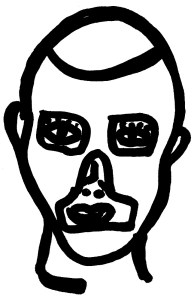
A young woman studying to be a nun makes a pilgrimage alone to her home town to confront unresolved issues from her past. Her pristinely preserved bedroom reveals her past life as an angsty goth teen, with all of the upside down crosses, drawers of black clothing, and leftover containers of Manic Panic hair dye that past life implies. The people she left behind are in shambles. Her mother is a suicide attempt survivor who gets by through self-medicating with massive doses of marijuana; her brother has returned from the War in Iraq with a disfigured face, resembling a low-rent version of Deadpool; her future sister in law is desperately lonely in the wake of her fiancee’s wounded ego; her only high school friend is a spoiled rich brat with the delusions of a wannabe political activist. She feels deep sympathy for every one of these broken loved ones, but as a vegetarian, straight edge virgin who’s never even tried a beer, she also stands as a constant target for peer pressure, an insistent urging to indulge in drugs, sin, and a breaking of her vows to God. This tense family reunion devolves into a sort of late-in-life coming of age story as the future nun reverts back to her goth teen ways and struggles both with her own inherent innocence in a not-so-innocent world & her family’s cyclical run-ins with hereditary chemical imbalance.

Little Sister‘s themes are heavy and its stakes can be high for individual characters but overall its conflicts are played as a delicate melancholy and any potential for dramatic shock value is sidestepped for deeply empathetic kindness & humanism. For instance, Ally Sheedy’s role as a drunken, unhinged mother who purposefully says hurtful things like, “I am a disappointment to you and you are a disappointment to me,” could easily be played as a tyrannical monster, but the film instead searches for what’s worthwhile & wounded within her and that’s what for the most part makes it special. That’s not to say that Little Sister doesn’t distinguish itself with a highly stylized aesthetic. Besides it’s basic hook as a coming of age story featuring a young goth nun, the film also gets a lot of mileage out of its 2008 temporal setting. This allows for Brooklyn hipster performance art that cruelly satirizes 9/11 and some historical positioning of the Iraqi War as a Second Vietnam, where wounded soldiers’ hero status is complicated by the futility & illegitimacy of the cause they served. I also really admired the way old camcorder footage of children playing Universal Monsters, VHS copies of movies like Carnival of Souls & The Wizard of Gore, and dinky homemade Halloween parties boosted the film’s themes of familial nostalgia & stuck-in-a-rut goth angst. Best yet, the disfigured brother’s continuous, frustrated practice on an impossibly loud drum kit provided a great tension building score that played beautifully into the way his presence & depression left his family on edge.

Mixing these specific stylistic choices with their overall sense of unexpected empathy makes Little Sister work as a series of memorable, but minor successes instead if floundering as formulaic, Sundance runoff. There’s so many ways this film could have slipped into cruelty or tedium at every turn, but it maintains its tonal balance nimbly & confidently, never settling for easy dramatic beats or quirk-for-quirk’s-sake character work. Successes like this often go unappreciated because they seem so easily manageable from the surface, but Little Sister could have very easily been a total tonal disaster. It’s honestly kind of a minor miracle that it isn’t.

-Brandon Ledet

Movie of the Month: What’s Up, Doc? (1972)

Every month one of us makes the rest of the crew watch a movie they’ve never seen before & we discuss it afterwards. This month Britnee made Alli, Boomer, and Brandon watch What’s Up, Doc? (1972).

Britnee: As far as screwball, madcap comedies go, Peter Bogdanovich’s 1972 film, What’s Up, Doc? is up there with the greats. It’s also, in my opinion, the greatest Barbra Streisand film of all time. Yes, it’s even better than Yentl. Streisand was quite the “funny lady” from the late 1960’s through the 1970’s, and Judy Maxwell is by far one of her most hilarious roles. The film also stars a young Ryan O’Neal, who is Judy’s depressed and confused love interest, Dr. Howard Bannister. Both leading characters have such conflicting personalities: Judy is a free-spirit who gets off on starting trouble between strangers, and Howard is a walking zombie in an unhealthy relationship. There’s not much romantic chemistry between the two, but they are a great comedy duo.

The main plot of the film revolves around a mix-up between several identical bags that belong to completely different individuals that are staying at the same hotel in San Franscicso (Bristol Hotel). The bag mix-up is so confusing that it’s almost impossible to explain, but in all honesty, the whole film is confusing because there are loads of plot lines occurring at the same time. I’ve seen this movie at least 30 times, and I didn’t really put all the pieces together until about the 5th viewing. Strangely enough, the confusion of the film is one of the things I love most about it. You could watch What’s Up, Doc? over and over again without getting bored. There’s always something different to focus on.

Actually, after watching it for Movie of the Month, I realized how horrible Madeline Kahn’s character, Eunice Burns, was treated. Seriously, this poor woman was put through hell for this entire movie, and she’s made to look like the bad guy. She’s Howard’s fiancé, and while the two aren’t in the best relationship, Judy randomly swoops into their lives and basically steals Eunice’s identity. After Eunice is made a fool of in front of an entire banquet of people, kidnapped and most likely assaulted by a group of mobsters, etc., it’s difficult to see her as the annoying fiancé she’s portrayed to be.

Boomer, what are your thoughts on the real Eunice Burns? Did you feel any sympathy towards her? Did you feel as though she was portrayed to be a villain when she was actually a victim?

Boomer: I didn’t realize that the audience was supposed to see Eunice as unattractive until the end, when the Judge responded to Eunice’s complaints that she had been inappropriately touched by the jewel fences with “That’s . . . unbelievable.” Because, I mean, come on, Khan’s a knock-out. That unusual perception is not unique to her character, however, as Ryan O’Neal is probably the most tan, studly, and barrel-chested hunk of man to ever play a milquetoast Iowan academic.

As to whether she’s made out to be a villain or a victim, I’m less sure. It’s unusual for me to sympathize with a character like Judy, a kind of proto-Manic Pixie Dream Girl who also happens to be a whirlwind of disaster, but Streisand plays her with enough aplomb and likability that Judy comes off as charming. This was a bit of a surprise for me, as someone who only really thinks of Streisand as a face on a CD cover in a stack of albums sitting next to the stereo of a deeply closeted Baton Rouge hair stylist (you know who you are). I also have nothing but love for Khan, and as such I think I might have been more inclined to sympathize with her than the producers intended, given that she was a complete unknown cast as the romantic rival to the more well-known Streisand. Eunice is certainly demanding and a poor match for Howard, but I read her as more of a Shakespearean archetype of a woman who appears to be a shrew only because of the character with whom she is paired but who will fit seamlessly with someone else, which is essentially exactly what happened with her arc.

So, I suppose I didn’t find her to be a villain or even presented as one, nor did I find Judy to be a “bad guy” either, even though her entire story resolves around falling for an engaged man and doing everything in her power to subvert Eunice in her “rightful” place as Howard’s lady love. I can’t even quite put my finger on it, but there’s something about Judy that makes her eminently likable despite her objective villainy. Alli, did you feel the same way, or not? If you agree, perhaps you’re better able to articulate why?

Alli: I also liked Judy against my better judgement. She’s entitled, disrespectful, and dangerous, but somehow still endearing. Probably because she’s free and she’s got a great sense of humor, which is able to shine through because of her stunted, immature nature. I think the thing about Judy isn’t that she’s a villain so much as she’s just chaotic, and there’s something charming about chaos. Reasonable people would never rip around the town impulsively, but we all have flashes of that instinct. Judy is the embodiment of that instinct, free from society’s pretensions and facades.

A major theme here is sort of a clash between absolute chaos and rigid order, the inner child vs “propriety.” Not to get too pretentious here, but this movie almost seems to be about the old debate over “the state of nature” vs society and reason. Eunice is order, “reason,” Judy obviously pandemonium, “savagery,” and Howard is the neutral ground that they’re fighting over. But at its heart What’s Up, Doc? is a wacky, briefcase switching comedy and I doubt that the intent was a debate about the true nature of humanity and society. It’s hard to take away any serious dramatic themes in a movie this cartoonishly bizarre.

The world it’s set in, while relatively realistic, is simultaneously surreal. There’s exaggerated sound effects, slapstick, and just a general bending of rules. One of my favorite examples of this is when they’re at the banquet underneath the table and Eunice gets dragged away, leaving skid marks and squeaking. Brandon, did any moments to you stand out as particularly cartoonish? Do you have a favorite?

Brandon: If nothing else, “cartoonish” is such a perfect word to describe what Barbara Streisand’s doing in this movie as Judy. At this early, most successful stage of Peter Bogdanovich’s career, the director scored a string of hits dripping with nostalgia for the cinema of his youth, with What’s Up, Doc? being sandwiched between fellow classics The Last Picture Show & Paper Moon. The interesting thing to me about What’s Up, Doc? that distinguishes it from those other two films is that it not only calls back to madcap mix-up comedies of the 1930s, which are traditionally staged at these grand hotels, but it also pulls influence from a much more unexpected source: Looney Tunes. Judy’s role as a benign source of comedic chaos is 100% Bugs Bunny tomfoolery and the film winds up feeling just as much equal parts Tex Avery as Bringing Up Baby. It makes this influence as explicit as possible too, with one of Judy’s first comedic moments being staged around her eating a carrot and her final exchange with her hunky Elmer Fudd (Ryan O’Neal) including the titular line, “What’s up, Doc?” The film even closes out with Porky Pig stuttering his way through “That’s all, folks!” on an airplane television. So, yeah, while we might not want Judy mucking up our lives with her literally cartoonish antics, it’s easy to see why we wouldn’t find her any more villainous than Bugs Bunny or his obvious source of inspiration, Groucho Marx.

Bogdanovich’s choice to bring in the surreal slapstick of Looney Tunes to disrupt the relatively realistic world of traditionalist screwball comedy was a brilliant move, mostly because screwball comedies are already pretty damn cartoonish in their own right. Although I found Babs’s Bugs Bunny antics as Judy to be a large part of the movie’s charm, she actually had very little involvement in my favorite gag from the film. There’s a scene about midway through What’s Up, Doc? where Howard is trying to hide Judy’s presence in his hotel room from Eunice by asking her to hang perilously off the balcony. The combination of Eunice’s interrogation, Judy’s demands to re-enter the room, other guests frantically trying to steal their desired variation of the identical luggage, and a waiter calmly preparing a meal Judy ordered as room service reaches a comedic fever pitch where Howard’s hotel room is destroyed in a fire, a moment that had me howling. Now, this visual punchline is much more closely tied to the film’s 1930s screwball roots than anything related to its cartoonish surrealism, but it’s also so absurdly over the top in its gradual escalation that it’s a great insight into why those two aesthetics were so easy to marry into one humorous feature.

Something that felt a little less natural & easy to me were the motivations for the two sides of that coin. Judy’s motivation for pursuing Howard as a romantic partner is a little muddled for most of the picture. Her instant attraction to him is oddly intense, making it unclear whether she’s genuinely into seducing him or if she’s just an opportunist who needs a place to stay and is having fun toying with a milquetoast, but handsome pushover in the meantime. The engine that drives the screwball humor was also a little confusing, as the identical cases of luggage (one containing diamonds, one containing Top Secret government documents, and one containing, I don’t know, more carrots for Judy to chew on like a cigar) were difficult to keep track of. Some of that confusion was obviously deliberate, but it didn’t help at all that the two thieves attempting to steal the luggage were both bald schlubs I couldn’t really tell apart because the film was far more interested in the machinations of the Judy-Howard-Eunice love triangle (and rightly so).

Britnee, considering that you selected the tonally similar, hotel-set 1930s throwback comedy Big Business for a Movie of the Month last year, it seems that you’re somewhat of a fan of this kind of Old Hollywood madcap humor. For you, does the exact, clear status of who’s in possession of which bag at what time and who’s trying to steal what from whom matter at all in these kinds of stories? Without the luggage mix-up and the thieves that follow, there’d be less people involved in this film’s insane, climactic car chase through the streets of San Francisco, which would definitely be a shame. Do the mix-up or the motivations of the romance need to be any more clear or necessary than that for you to find them worthwhile or is it enough that they provide a backdrop for the comedic antics of a Barbara Streisand or a Better Midler or whoever the particular film’s de facto Bugs Bunny/Groucho Marx happens to be?

Britnee: It’s never dawned on me until now that I have a thing for hotel comedies. Just yesterday, I recommended Four Rooms to a friend as a fun weekend movie. There’s just something hilarious about hotel settings, and I really think it has a lot to do with the gaudiness of hotels. All that brass, ridiculous patterned carpet, and over-the-top chandeliers are just oozing with tackiness, making it the perfect background for a comedy. Hotels are also perfect for a trashy murder mystery for the same reason (1972’s Private Parts particularly comes to mind).

As for the mystery of the bag mix-up, finding out if each bag makes it back to their owner doesn’t really matter. It’s strange because I usually find satisfaction watching belongings find their way back to their owner in a film, but I honestly could not have cared less if Judy ended up losing her underwear and became stuck with top secret documents or if Howard lost his rocks and ended up with a buttload of fancy jewels. It doesn’t really matter because the humor would still be there. The same goes with the romance between Judy and Howard. Who cares if they end up getting together in the end? The comedy wouldn’t suffer if they didn’t get together, and that’s really all that matters in films like this one. If the romance and bag mix-up were to be stripped away from What’s Up, Doc? without taking away the funny characters, shenanigans, and of course, the comedy of Streisand, the film wouldn’t suffer one bit.

Although the romance and bag mix-up are not very important to the film’s success, the San Fransisco setting is. The car chase throughout the city’s steep streets (especially Lombard Street), the run-in with the Chinese dragon during the Chinatown parade, and the cars running off the pier are just a few funny moments that wouldn’t be the same if the film wasn’t set in San Fransisco.

Boomer, do you think that the film’s San Fransisco setting was important? Would any other location have made a big difference in the film?

Boomer: I have to admit that I didn’t give much thought to the film’s setting initially. When the climactic show-stopping car chase began, I thought “Oh, it’s in San Francisco because of Bullit.” That film likewise centers around a final car chase through the famously hilly city, and I assumed that Bogdanovich had merely been inspired to make a more comedic version of said vehicular pursuit. Reading a little more about the film, it looks like that was, in fact, the reasoning: this homage is merely one of many that occur in the film, and as it relates to a contemporary piece of pop culture that is less well-known than some of the older (but more culturally revered and thus more “permanent” fixtures in our cultural landscape) references, like to Looney Tunes. For instance, there was an ad that touted the VW Bug’s real ability to float in water, as seen at the end of the film when Howard and Judy launch into the bay; the reference was more pertinent and familiar in its day, but still works as a sight gag even without that knowledge.

Of course, the placement of the film in San Francisco also allowed for some nice touches that would have been lacking had the film been set elsewhere, like New York or Los Angeles (i.e. the two places where probably 85% of American media is set). The scene with the Chinese New Year parade, and the resultant accidental theft of the parade’s crafted dragon, could only take place in SF, for instance. As noted above, the hills of the city make for a particularly interesting place for car chases, here used as they had been in Bullitt, to more comedic–if no less thrilling–effect. Larrabee himself is distinctively West Coast in that his mannerisms are unconventional and excited; he rolls with the punches. One could even argue that, since his personality clashes so strongly with the unlikable (but no less comically delightful) Hugh Simon, and since that character is a parody of New York’s most unpleasable (and most unpleasant) critic John Simon, a criticism of this artistic and individual dissonance between East and West Coast is made implicit in the text.

There’s a scene in one of the early episodes of Scream Queens in which a character is breaking into an office and uses a glass cutter to cut a hole in the in-door window, through which they attempt to reach in and unlock the door; after a protracted time of s-l-o-w-l-y cutting, the character reaches through, and the glass shatters. Every time I see it, I have to rewind because of how hard I’m laughing. It’s a great sight gag, and the build-up is great; it’s just so pure. It’s one of the best jokes in the whole series, and is inarguably the best non-quip laugh the show elicits. The two-men-carrying-a-pane-of-glass gag in What’s Up Doc? is similar but writ large, and is the best such visual joke I’ve ever seen. Alli, can you think of any other contenders for the top version of the TMCAPOG gag? And could you better put into words why this version of the cliché works so well?

Alli: I’m going to have to come clean here and say that while that gag is in everyone’s mind and feels so pervasive in popular culture this might be the only time I’ve actually seen it used in context. (It makes me wonder where it even came from and why we all know it.) Given it’s prevalence and predictability (there’s a sheet of glass therefore it will shatter inevitably), it’s impressive that What’s Up, Doc? manages to still make it so funny. The problem with this movie and its humor is that it’s very difficult to try to explain what is so funny about it. There’s so many old gags and silly one liners, but they just work. I think maybe it has to do with the pacing. It’s just spitfire. There’s just joke after joke, so if one doesn’t land the next one probably will.

Not to use the played out, “They don’t make them like they used to,” but you don’t see a lot of this sense of humor in movies anymore and I miss it. The jokes are so carefree and for the most part inoffensive, minus the jabs at Eunice. Probably why I’ve never actually seen the sheet of glass gag in action is because it’s not used as much anymore. When’s the last time a movie had an earnest pie in the face? A lot of comedy these days seems to rely on crude, gross, or vulgar humor. I don’t really have a problem with tastes changing, but there’s such a timelessness and charm to so many of the gags in this film.

Brandon, you mentioned the nostalgia aspect of What’s Up, Doc? Do you think more movies could benefit from more of the nostalgic impulse? Have you seen any recent comedies that remind you of this one in any way?

Brandon: It’d probably be a little foolish to ask for more nostalgia in our current pop culture climate, but I do believe revision & tradition has been a part of cinema as long as cinema has been around. Current comedies seem to be looking back to the absurdist gross-out humor directors would have enjoyed in their 80s & 90s youth, just as Bogdanovich would have been fondly looking back to Marx Brothers/Bringing Up Baby-type hotel mix-ups when he made What’s Up Doc? in the 1970s. I don’t think the classic screwball tradition is at all dead, though. It’s just moved away from broad, commercial films to what we’d be more likely to consider “smart” comedies. Filmmakers like Wes Anderson, Noah Baumbach, and the Coen Brothers all work in various forms of comedy that draw from the same influences as Bogdanovich (and likely from Bogdanovich himself as well), but dress up their screwball antics in enough meticulous visual craft & tonal melancholy that they’re considered “art house” instead of commercial humor.

For specific examples from the last decade, I suppose Wes Anderson’s Grand Budapest Hotel would be a great reference point, considering its setting & ensemble cast structure. Baumbach collaborator Rebecca Miller’s recent film Maggie’s Plan also has a sort of screwball structure to it, including a mix-up at a hotel conference between emotionally immature academics. I’ve also recently watched the British ensemble comedy Death at a Funeral for the first time, which reminded me if this kind of old-fashioned comedic tradition in that all the attendees at what should be a quiet, civil event are trying to keep their goofball antics under wraps to not draw attention to themselves, only for it all to blow up spectacularly at the climax. The Coens’ recent triumph Hail, Caesar! also makes nods to the genre (along with every other Old Hollywood genre imaginable), right down to the convoluted luggage heist.

What distinguishes these comedies from the kinds of works that would be headlined by a Melissa McCarthy, a Seth Rogen, or a Kevin Hart is that they’re just more openly conscious of their participation in cinematic tradition. What’s Up, Doc?‘s spirit, borrowed wholesale from its own set of traditional works, is still alive in our current comedic landscape. Keeping it alive is in itself a kind of scholarly, traditionalist act, though, so the films where you’d hear its echoes are often considered to be stuffy, highbrow art films, despite being as absurdly goofy in tone as the genre originally was in the 1930s.

Lagniappe

Alli: I just want to say how much I liked this movie. Immediately after watching it, I ended up recommending it to people. I think it’s been a weird, rough month for a lot of us and it was good to unwind with something charming and hilarious. It was my first Barbara Streisand movie, and now I feel like I really need to watch more. 

Brandon: Of the handful of Barbara Streisand films I’ve seen, this is the only one I’d consider to be a strict comedy, so I wasn’t at all prepared for how little singing there’d be. I have a habit of picking up her movie soundtracks long before I actually see their corresponding films (Streisand vinyl is oddly ubiquitous at thrift stores), so now I have to wonder what a What’s Up, Doc? soundtrack would even be. Besides a brief duet with Ryan O’Neal on piano, I don’t remember any other musical numbers. Is this indicative of the way her comedies usually go? I’m curious to look into it.

Britnee:  The outfits in What’s Up, Doc? are absolutely amazing! I know that they blend in well with the fashion of the time, but of all the films I’ve seen that take place in the early 1970s, nothing compares to the costume design of What’s Up, Doc? Basically, I want to own everything in Judy’s closet, no offense to Eunice.

Boomer: I also noticed the similarity between this film and Big Business, with each film having a 20th Century Diva, a hotel setting with a sardonic and world-weary desk clerk, and shenanigans that come from mistaking identical people/bags. I thought Britnee was pulling a long con on us. Further, I also was annoyed by the lack of visual differentiation between Harry and Mr. Jones, as Brandon was, given that the other characters were much more distinct in appearance. Finally, depending upon how much you hate yourself, you can find John Simon’s hold-nothing-back blog here, or just enjoy this fun batch of excerpts.

Upcoming Movies of the Month
April: Boomer presents Head Over Heels (2001)
May: Alli presents Mikey and Nicky (1976)
June: Brandon presents Cool As Ice (1991)

-The Swampflix Crew

Krewe Divine’s Maiden Voyage

EPSON MFP image

There comes a time in your adult life when maturity & experience leads you to making tough decisions and strengthened dedication to the things that matter most. That’s why a few of us here at Swampflix have decided that it’s time to get serious about Mardi Gras. Every Carnival season there’s always some kind of personal crisis about what to wear or what themes to play off of while costuming in the Quarter, but that’s something that never seems to be a problem for krewes that stick with a consistent theme in their annual masquerading. Those revelers always seem to have their shit together. Since Swampflix was launched two years ago, we’ve tried our best to find the ways cinema is represented in Mardi Gras festivities, whether by covering the Star Wars celebrations of Chewbacchus or by costuming as the titular plague from the Vincent Price classic The Masque of the Red Death. It never quite feels like enough, though. As it’s time to get serious about how we can contribute to cinema’s presence in Mardi Gras festivities, we’ve decided to find our own sense of dedication & consistency in forming a new costuming krewe that celebrates one of our all-time favorite onscreen performers: Divine.

Arguably the greatest drag queen of all time, Divine was the frequent collaborator & long-time muse if one of our favorite filmmakers, John Waters. Her influence on the pop culture landscape extends far beyond the Pope of Trash’s Dreamlanders era, however, emanating to as far-reaching places as the San Franciscan performers The Cockettes, the punkification of disco, RuPaul’s Drag Race, and Disney’s The Little Mermaid. We hope to honor the Queen of Filth in all her fabulously fucked up glory by forming a new Mardi Gras tradition in Krewe Divine, a costuming krewe meant to meet in the French Quarter on every Fat Tuesday from here to eternity. Our initial krewe is a small group all made of Swampflix contributors: site co-founders Brandon Ledet & Britnee Lombas, podcast co-host CC Chapman, and former podcast guest Virginia Ruth. There’s no telling how Krewe Divine will expand or evolve from here as we do our best to honor the Queen of Filth in the future, but for now, enjoy some pictures from our 2017 maiden voyage as Swampflix’s official Mardi Gras krewe:


-The Swampflix Crew

Get Out (2017)

EPSON MFP image

fourstar

Although they’re often (rightly) called out for their inherent misogyny, there’s a popular reading of slasher films that claims they’re subversively, politically progressive because they ask a traditionally male audience to identify & empathize with a female victim’s POV. Aligning horror nerds’ sympathies with a Final Girl archetype might not seem like the height of radical discourse, especially considering what typically happens to those characters on-screen, but it does have a cultural value to it that might not be the first thing that comes to mind when discussing sleazy 80s slashers. The directorial debut of comedian Jordan Peele recognizes this function of horror audience sympathies and shifts its culturally critical eye from feminism to racial politics. Instead of a virginal, scantily clad blonde running from a masked killer with an explicitly phallic weapon, Get Out aligns its audience with a young black man put on constant defense by tone deaf, subtly applied racism. Part horror comedy, part racial satire, and part mind-bending sci-fi, Peele’s debut feature not only openly displays an encyclopedic knowledge of horror as an art form (directly recalling works as varied as Rosemary’s Baby, The Stepford Wives, Under the Skin, and any number of Wes Craven titles), it also applies that knowledge to a purposeful, newly exciting variation on those past accomplishments. Get Out knows what makes horror effective as a genre and finds new avenues of cultural criticism to apply that effect to instead of just mirroring what came before, no small feat for a debut feature.

Our de facto Final Girl protagonist is a young, hip photographer visiting his white girlfriend’s family home for the first time. Isolated in a secluded, wealthy suburb, he’s faced with the outnumbered, paranoid feeling of being the only black man in a sea of white, smiling faces. The only other POC in his hosts’ community are “the help”, who have an unnatural, creepily robotic way of acting (assumedly in a direct nod to The Stepford Wives). Instead of tackling the blatant, violently hateful kind of racism that would more typically be skewered in this kind of movie, however, Get Out finds horror in racism’s much subtler, more difficult to pin down forms. The girlfriend’s family is initially very cordial with our Final Boy, but in an awkward, discomforting way, plagued with a wide variety of micro-aggressions he awkwardly smiles through to avoid confrontation. By using phrases like “my man,” “thang,” and “Sup, fam?” in an attempt to make him feel welcome and at ease, the family only makes his presence feel all the more alien. They declare proudly that they can’t possibly be racist, since they enthusiastically voted for Obama. Twice! The girlfriend, in turn, makes a big show of pointing out every subtle slight in an attempt to seem cool & above it all. Nothing about the scenario is cool. Through eerie atmosphere, mood-setting jump scares, and surreal nightmare imagery, Peele slowly, steadily reveals the ugly spirit lurking under this try-hard liberalism that reduces a human being into a cultural specimen. And when the corrupt, corrosive nature of that sentiment comes violently crashing to the surface, it’s exposed to be just as cruel & terrifying as the kind of racism usually depicted through white hoods & burning crosses.

Get Out is a good, well made genre film that then becomes spectacularly great in its violent, no fucks given third act. Peele’s well-rounded screenplay brings every stray theme, from the racial discomfort to the main character’s guilt over past inaction to metaphorical motifs as small as roadkill deer, back around for a glorious, purposeful conclusion. The seemingly well-meaning, casual racism that had been lurking under the surface like a paranoid delusion is exposed as a horrifically grotesque monster that reduces black men to physical objects, targets for the white & wealthy’s fascination & possessive entitlement. Additionally, Peele filters this thinly veiled maliciousness through a surreal nightmare where reality is warped by perception-shifting hypnosis. If I had one complaint about Get Out it’d be that it could’ve spent a lot more time diving into the otherworldly imagery & paralyzing implications of its hypnotic dream-space, known in-film as The Sunken Place, instead of chasing tension-cutting meta humor with the film’s comic relief character. The Final Boy’s best friend phones in periodically to act as an audience surrogate, asking questions like, “How are you not scared right now?” & directly calling out the girlfriend’s family as the creeps they so obviously are. He’s an amusing presence in the film, but he’s one that pushes Get Out away from the more unique touches of its modern horror surrealism into a more overly familiar horror/sketch comedy tone. However, Peele still gets the most he can out of his subtle nightmare plot’s moment to moment creepiness, especially from always-welcome character actors Catherine Keener & Stephen Root, and you can tell he made this passion project from the perspective of a life-long horror fan who knows exactly how the format works most efficiently. From Get Out‘s cultural criticism to its play with Final Girl tropes to the gloriously bizarre territory of its third act reveals & Sunken Place surrealism, it’s an impressive, striking debut feature, a great first go for a filmmaker who hopefully has a long career of these horrific, satirical mind-benders ahead of him.

-Brandon Ledet

Beginners (2011)

threehalfstar

Immediately after falling in love with 20th Century Women, a film I’ve retroactively declared the best movie of 2016, I went home to watch writer-director Mike Mills’s previous work, Beginners. The immediacy of dividing into Beginners was not necessarily an extension of its convenient availability on Netflix Streaming (not that it hurt), but more a result of the film’s obvious connection to Mills’s subsequent work (and, in my opinion, his best to date). Much like 20th Century Women, Beginners finds Mike Mills in a self-reflective mode, capturing a semi-autobiographical moment in one of his parent’s lives in a loving, spiritual work of non-linear cinema. Instead of detailing the impossibly endearing persona of his ever-present mother like in 20th Century Women, Beginners tackles his much more complex relationship with his once-distant father. The two movies aren’t perfectly, exactly analogous but they’re undeniable in their parallels and they work well as sister films (an odd thing to say about someone obsessed about his parentage as an only child).

Beginners opens with Mills’s on-screen surrogate (an as-charming-as-ever Ewan McGregor) cleaning out the house his father lived & died in as an old man. In what’s appearing to be a trademark narrative style, Mills tells the entire life story of the recently deceased parent up front, then doubles back to color in the details for context. We learn immediately that he was not a great father to his only child in his youth, being mostly absent for his son’s formative years. This is explained largely to be a result of his quiet suffering as a closeted homosexual, something he concealed from the public until after his wife’s death. We mostly see the man as his son remembers him: openly gay, struggling with poor physical health in his 70s, acting as a makeshift father figure for his much younger weirdo boyfriend, and shining as happier than ever. This narrative thread mixes with a separate timeline where his son, grieving for the loss of both of his parents, struggles to form a healthy romantic relationship based on the ideals of the home he grew up in. He also struggles with a self-absorbed ennui he solemnly knows his parents didn’t have the luxury of, due to the times of War and queer & Jewish persecution that dominated their own heyday.

Reductively speaking, Beginners is not as impressive of a film as 20th Century Women. At times it can feel like a less-confident trial run of that far-superior work. It’s still a great movie in its own right, though, one that excels due to the same multi-media, multi-POV approach to a narrative structure Mills would later apply to its follow-up. Still images & physical photographs are used to evoke a period setting. Historical context seeps in to inform the film’s non-linear biographies through news footage & coldly presented facts. The scope of its story pulls back not just to cover its characters’ lives, but the essence of life on Earth. In my personal favorite touch, the nonverbal thoughts if the deceased father’s Jack Russell terrier are presented in subtitles, a detail that increases in frequency as the dog becomes more of a central character. Although I can’t cite Beginners as my favorite Mike Mills movie, it’s easily one of the best Jack Russell terrier movies I’ve ever seen, rivaling even Russell Madness (a lofty target, I know). In watching the dog communicate thoughts like, “The darkness is about to consume us if something drastic doesn’t happen right now,” or the father drunkenly discovering the simple joy of gay club music or his son learning to become a more loving, empathetic person in his grief-stricken moment of crisis, Beginners unfolds as an interesting, delicately beautiful work of personal revelation. Comparing it to the virtues of the immediately similar works from its director might undercut some of what makes it so special as a singular piece of art, but it is special all the same.

-Brandon Ledet

The Skin I Live In (La piel que habito, 2011)

EPSON MFP image

fourstar

When I went over to a friend’s house to watch a movie, he presented me with several recent rentals and let me pick one. “What’s this one?” “An early anti-western.” “And this one?” “Oh, that one’s really good, but I need to wait to watch that one with my girlfriend.” “What’s The Skin I Live In?” “It’s a horror film by Pedro Almodóvar.” So in.

Of  course, my only real experiences with Almodóvar came over ten years ago, when I saw Todo sobre mi madre (All About My Mother) and La mala educación (Bad Education) in my freshman year of college, and a few years later when I saw ¡Átame! (Tie Me Up, Tie Me Down) and was displeased with the film’s overall themes. Still, although the former two films have faded in my memory like paper flowers left in the sun, I was excited to see his approach to a straight-up horror flick. That’s not really what The Skin I Live In was, but it was all the better for it.

The film follows Roberto Ledgard (Antonio Banderas), a plastic surgeon who has tragically lost both his wife and daughter to suicide, the former after she catches sight of the reflection of her badly burned face following extensive reconstructive surgery, and the latter after a lifetime of mental illness resulting from witnessing her mother’s fateful leap to her death. As a result, he keeps a mysterious woman named Vera (Elena Anaya) locked away in a (metaphorical) gilded cage in his palatial home and experiments on her to create a skin that is resistant to fire. Vera’s only connection to the outside world besides Roberto and a few television channels is Marilia (Marisa Paredes), a domestic servant of Roberto’s who has been with his family since before his birth. When Roberto is away, Marilia’s son Zeca (Roberto Álamo) reappears during Carnival and discovers the imprisoned Vera and believes that she is actually Roberto’s dead wife, with whom he had an affair.

While Zeca forces himself on the woman he believes to be his lost love, Roberto returns and kills him to protect the fact that he has secreted Vera away. Vera’s offer to stay with Roberto, ostensibly out of love for him, elevates her from captivity to his bed, where dreams relate the tale of the fateful night that drove Roberto’s daughter Norma (Blanca Suárez) to her final throes of madness. Six years prior, Roberto took Norma from the sanitarium that has been her home for many years to attend a wedding, where she meets Vicente (Jan Cornet). Vicente is a sensitive young man who works in his mother’s vintage boutique, but who is nevertheless too fond of recreational drugs– so much so that when he hits it off with Norma at the wedding, he is too pilled-out to recognize that she is mentally unwell. As various young couples in the same garden engage in sexual acts, Norma objects to Vicente’s physical advances; as he disengages, she bites him and he strikes her before fleeing the scene. Roberto comes upon Norma lying near the tree as Vicente speeds away on his motorcycle, leaving the surgeon to assume the worst.

That’s already spoiler-heavy enough that I’m hesitant to say more, as I encourage you to seek the film out and form your own opinion, especially given some of the more controversial elements. As a trigger warning, it is imperative to understand before viewing that there is at least one rape scene in this film. Perhaps there are more, but given the film’s various and occasionally conflicting points of view on agency, consent, deception, gender, mental health, and overall sexual politics, you as a viewer will find yourself questioning the motivations and preconceptions not only of the characters but also yourself. (Also, unlike Tie Me Up, Tie Me Down, the sexual violence is treated respectfully, rather than as erotic or titillating, which it s a valid criticism of Almodóvar’s earlier work.)

At turns provocative and disquieting, The Skin I Live In is relentless in the way that its unfolding narrative forces the viewer to re-evaluate every previous scene with each new revelation. Do our sympathies for Roberto outweigh the fact that the well of his monstrosity is deeper and darker? His ultimate fate is a consequence of his inability to accept the reality of his life (which is related to his being a plastic surgeon, which is conventionally considered a position that exists solely due to society’s vanity) and let go of that which has been lost (which is more reflective of his well-intentioned scientific drive to build a better human skin through unethical experimentation, as well as his activities as a reconstructive, restorative plastic surgeon). It’s a film that rewards close attention and empathy; as each fleshy layer is peeled away, the viewer finds him- or herself challenged, but the experience is ultimately fruitful.

-Mark “Boomer” Redmond

Sickhouse (2016)

EPSON MFP image

threehalfstar

I’m a huge sucker for throwaway details from internet-specific visual palettes being employed in my cheap genre cinema. Titles like Unfriended, Nerve, #horror, and Beware the Slenderman have all incorporated bullshit, disposable internet imagery in their visual aesthetic to terrorize audiences with social media alarmism in a way that feels fresh & fascinating to me, making for some of my favorite cinematic experiences in the past few years. I honestly believe that these films, although instantly dated, will serve as a great time capsule of where our culture is currently at mentally & spiritually a few decades down the line, the way slashers defined the 80s & torture porn ruled the 00s. The dirt cheap, smart phone-filmed found footage horror Sickhouse joins the recent trend of social media-obsessed genre cinema by pushing its premise even further into verisimilitude. Released over three days last Spring via a series of posts on the Snapchat app, this hour-long cheapie actively participates in the social media platform it openly condemns. By adopting the format of its critical target right down to its mode of release, Sickhouse emerges feeling like a newly exciting filmmaking innovation, despite easy complaints that could be lobbed its way in terms of narrative ambition. Admittedly, the film doesn’t stray too far from its Blair Witch But With Snapchat premise in any narrative sense, but as an experiment in genre film technique, that formula was more than enough to generate some interesting results, especially for those as enamored as I am with films like Unfriended and Nerve.

“Have you ever seen The Blair Witch Project?” A character bluntly asks his fellow teens this blatantly silly question over a campfire, knowing full well that they’ve already been living the exact plot of that late-90s milestone. A handful of young, overconfident fools venture into the woods to investigate an urban legend about a haunted house, documenting their every move with an ever-present smartphone. Like with Blair Witch, their dialogue is mostly improvised, one character is blamed for getting the whole crew hopelessly lost, and there’s an excess of extratextual material backing up the central folklore to make it feel legitimate (visitsickhouse.com). According to that smokescreen website’s account of the True Events, the titular Sickhouse has three defining rules: 1) Don’t make any noise, 2) Don’t go inside, 3) Leave a gift on the porch. Like with Blair Witch, our dumb teen protagonists turn their noses up at genuine engagement with the local legend, laughing off the danger of the scenario and breaking every single rule set before them. Also like Blair Witch, they’re punished within the house they clearly should have avoided venturing inside in the first place, but there is no gore or violent end shown onscreen. Anyone looking for more than a brief flash of a face or a hand from the teens’ supernatural tormentors is going to be disappointed by what’s delivered. The film instead attempts to creep the audience out through pure folklore & mythology. Have I mentioned The Blair Witch Project enough to get the general vibe & narrative of the film across? Because it’s exactly like Blair Witch.

What’s most important here is form, not content. Sickhouse is shot entirely through the rectangular aspect ratio of a vertical smartphone video. Onscreen text & MS Paint quality doodles overlay the imagery in the way most Snapchat videos would be hastily edited. Because shots cannot extend past 10 seconds in length due to Snapchat’s formatting, the film finds kinetic energy in a never-ending series of rapid fire shots. Characters philosophize about the nature of Snapchat and social media at large at length. When our smartphone-toting protagonist is admonished for posting too often, she’s told, “Snapchat’s not a documentary. It’s just . . . stuff.” As an audience, we all know that it’s carefully curated “stuff,” though. Even when the two girls that drive the plot are sleeping, camping, or running for their lives in a haunted house, they’re always wearing make-up and always attempting to choose the most flattering angles for their omni-present faces. One of those two girls is played by *shudder* “YouTube personality” Andrea Russet, who brings a kind of authentically false persona to the role of a narcissistic brat who obsessively cultivates online fans, but will also chide friends for using their phones too often. Russet’s real life YouTube Channel features bafflingly popular videos with inane titles like, “Dying My Hair Purple,” “Cuddling With My Ex-Boyfriend,” and “My Morning Routine,” so her onscreen presence, as painfully inauthentic as it feels, actually has a lot of credibility to it that makes Sickhouse feels as close to the genuine thing as possible.

I’m not convinced writer-director Hannah MacPherson knows exactly what to do with all of this internet age narcissism & over-sharing except to represent it onscreen. There’s nothing to Sickhouse‘s social media themes that are explored too far beyond maybe a character ironically declaring, “Social media is a plague” while obsessively uploading short-form videos to Snapchat or a few online “followers” becoming stalker-level followers in a much more literal, physical sense. Still, the way MacPherson applies the visual & narrative techniques of broadcasting a curated personal aesthetic on social media to a standard obnoxious teens getting punished for smoking weed & having sex horror structure make for some really exciting results. I have my own stray complaints about some of her individual choices (the ending could’ve been more jarring, the third act body horror of the teens becoming ill could’ve been pushed further, there really was no need for any non-diegetic music), but for the most part I was delighted & energized by what she pulls off here. Many will brush off Sickhouse as a gimmick, an act of frivolity, but I think it’s secretly a doorway to the future of filmmaking. Not the long-term future, mind you, but certainly what’s soon to come. Even Sickhouse‘s phone screen aspect ratio makes it feel as if you’re peeking in on the film through a doorway and that space-conscious tension allows for an unnerving feeling in images like a mangled deer or a well-arranged still life of “gifts” left on the titular house’s porch. That won’t be enough of a payoff for everyone who tunes in, but I at the very least found it to be an entertaining experiment.

-Brandon Ledet

The Dentist (1996) and Brian Yuzna’s Search for His Very Own Horror Franchise

EPSON MFP image

One of the few minor details that bugged me about Brian Yuzna’s otherwise satisfying class politics body horror Society was that it left its abrupt conclusion open for a sequel instead of chasing a more logical narrative end. It’s now been over two decades since Society‘s initial release and, although the idea of expanding the original film’s scope to include other shunting-obsessed wealthy circles like Hollywood or Washington DC sounds promising, there still has yet to be a proper sequel. Leaving Society open in that way, then, has only weakened its own fortitude as a standalone film. Yuzna would have to look elsewhere to establish a horror franchise all of his own the way Nightmare on Elm Street is closely associated with Wes Craven and Alien is associated with Ridley Scott. Yuzna directed two Re-Animator sequels, Bride of Re-Animator & Beyond Re-Animator, and served as a producer on the first, but that series truly belongs to Stuart Gordon. He also directed two sequels for the Christmas-themed slasher series Silent Night, Deadly Night, but that franchise is way too loose & haphazard to claim an authorial voice. Brian Yuzna’s very own horror franchise wouldn’t be found in completing works others had started, but in staking his own ground as the director of both The Dentist (1996) & The Dentist 2 (1998). The Dentist may not have the cult classic staying power of Society as a continually referenced horror work, but its effect is just as equally, brutally fucked up, and it’s easy to see how a single madman could be responsible for both acts of cinematic sadism.

Usually when you rewatch a movie that scared you as a kid, it turns out that it wasn’t so traumatizing after all. That wasn’t my experience with Yuzna’s 1996 body horror slasher The Dentist. If anything, The Dentist felt ten times more nightmarish than it did to me as a kid on this most recent watch. It’s a deeply, almost unforgivably upsetting work, playing as if the shunting sequence from Society were stretched out to feature length instead of capping off an otherwise conventional late 80s horror. Co-written by Yuzna & Re-Animator‘s Stuart Gordon, The Dentist stars Corbin Bernsen as a killer dentist eventually known as Dr. Caine, who on the surface wouldn’t be all that different from any other cliché of a refined sadist who listens to classical music while slaying/mutilating his victims, except that he hurts them through the delicate nerve centers of their mouths. Some people have a difficult time stomaching on-screen violence directed towards eyeballs or fingernails or groins or any number of specific locations on the body because of a physical aversion to witnessing its depiction. I’m that way with dental-themed gore. The visual of a tooth being pulled or a tongue being split physically hurts me every time, so The Dentist wouldn’t have to do much to make me sweat in fear & anxiety. In fact, it’s likely that catching this film on HBO at a young age is partly why I’m that particular kind of squeamish in the first place. With the first The Dentist film, however, Yuzna & Gordon found a way to make the premise even creepier by aligning the audience POV with the mind of the deranged killer who would inflict that kind of pain in the first place. It is, on every conceivable level, a deeply uncomfortable experience.

In what’s essentially a slasher film take on Falling Down, The Dentist aligns the audience’s perspective with that of a hateful, Conservative monster who has a total meltdown once his marriage starts to fall apart. After wrestling with paranoid suspicions that his wife is sleeping with the pool boy, Dr. Caine does some sleuthing & catches the two lovers in the act (on their anniversary, no less) and suffers a full-blown psychotic break. In his pitch black misogynist fantasy, he confronts the pair mid-fellatio and forces his wife to bite the pool boy’s cock at gunpoint in a moment to so hateful against women as a species it would make even Russ Meyer blush. This is the exact seething anger lens we see the world through in this film. We already know Dr. Caine is evil because he fantasizes about hurting his own wife and obsesses over the state of every one he meets’ teeth, but even that isn’t enough for Yuzna, who doesn’t traffic in subtlety. Enraged by the witnessed infidelity, Dr. Caine shoots a dog out of spite, goes to work at his dental practice to mutilate multiple victims (mostly women & children) during sadistic oral procedures, and eventually cuts out his own wife’s tongue as a gift on their big anniversary date. It’s deeply, spiritually upsetting stuff, misanthropic violence paired with creepy internal monologues about how, “Nothing, no matter how good or pure is free of decay. Once the decay gets started, it can only lead to rot, filth, and corruption.” Divorced from Dr. Caine’s hateful paranoia about a “lack of respect in a world that goes on ignoring dental hygiene” and his personal hangups about how sex = filth, The Dentist is still a horror show. In close-up, medical detail, gums are punctured by hooked teeth scrapers, teeth are violently yanked from their grooves, tongues are stabbed with high-pitched drills, molars are ground into white powder, etc. Yuzna shoots these nightmare visuals through an unflinching fish-eye lens, something usually reserved for a children’s Saturday morning TV show, a music video, or a comedy, but it’s impossible to take the gore lightly. Still, it’s in marrying that visual terror to an even uglier, more difficult to stomach world view and never allowing a second of escape from either that Yuzna found a way to sustain the abject disgust of Society‘s shunting sequence for the entirety of a feature film.

The Dentist 2 (1998) would not be able to repeat that trick. Leaving behind the philosophical monologues on tooth & soul decay that made the first one so especially unnerving, this sequel follows the same pattern of a lot of horror follow-ups and focuses instead on increasing the gore. Yuzna even brings in Society collaborator Screaming Mad George to contribute to the film’s horrific special effects (one of ten shared projects between the two sick bastards), tipping his hat to the fact that gore had become a priority over writing. Escaping from the pristine, dream space psych ward where he had been locked up at the conclusion of the first film, Dr. Caine hides under a false identity in a small, isolated town where he’s now the only qualified dentist (after brutally murdering the one already operating there, of course). The first The Dentist film already stretches audience belief of how long Dr. Caine could possibly get away with killing & mutilating patients before being stopped either by law or by mob rule, but the second one really has no concern for anything resembling reality. The plot isn’t anything to speak of, other than that the dentist is made to feel jealous by a new woman’s sexual desires in a new locale while his mutilated wife from the first film hires a PI to track down his whereabouts. Instead of philosophical diatribes about filth & decay, the film signifies its killer’s murderous insanity through his constant hallucinations of rotting teeth, roaches crawling in his parents’ mouths, and non-existent demons with cartoonishly long tongues (who would’ve fit right in with members of Society). Dr. Caine periodically cuts his arm to relieve these hallucinations, at one point giving himself a crimson mask once they become unbearable in their persistence. There are a couple noteworthy moments, like Dr. Caine joking that “Pulling teeth is like, well, pulling teeth!” during an interrogation, a single-scene cameo from Clint Howard, and the wife from the first film finger fucking the dentist’s mouth to tease out his tongue for a fitting act of revenge, but for the most part The Dentist 2 is all gore! gore! gore! And you know what? It kinda works. I was sweating in fear during the oral horror scenes as much in the sequel as I was with the first film, despite logically knowing that it was a desperately inferior work.

Diminishing returns and forgotten thematic nuance is a large part of the nature of horror franchises as an art form, though, and it’s fitting that Brian Yuzna’s only franchise all to his own got to see that roundabout way of success. The Dentist 2 left its conclusion just as open-ended as Society‘s for a sequel that likewise never came, but Yuzna had already succeeded in scoring his very own franchise just by getting two films deeo. You can feel it as soon as Dr. Caine delivers the first film’s declaration, “I am the instrument of hygiene, the enemy of decay and corruption, The Dentist. And I have a lot of work to do.” Unfortunately, I don’t believe The Dentist has been treated with the same cult classic longevity as Society, a film it rivals at the very least in pure shock value. It’s so overlooked that its entire “Production History” section on Wikipedia reads, “The Dentist was shot in Los Angeles in a residential home.” That can always change, though. Maybe Society‘s Trump-era cultural resurgence will inspire more people to look back to The Dentist the way I just have or maybe people will dig up the first one just to see Baby Mark Ruffalo make an appearance in a few brief scenes. Either way, whether it remains obscure or not, Brian Yuzna has succeeded in creating a horror franchise in the way Society never became. It’s a damn disturbing one too.

For more on February’s Movie of the Month, the satirical class politics body horror Society, check out our Swampchat discussion of the film, this look at its highly questionable DVD-mate Spontaneous Combustion (1990), and last week’s celebration of minor scream queen Heidi Kozak.

-Brandon Ledet

The Swampflix Guide to the Oscars, 2017

EPSON MFP image

There are 47 feature films nominated for the 2017 Academy Awards. We here at Swampflix have reviewed little more than half of the films nominated (so far!), but we’re still happy to see so many movies we enjoyed listed among the nominees. The Academy rarely gets these things right when actually choosing the winners, but as a list this isn’t too shabby in terms of representing what 2016 had to offer to cinema. Listed below are the 25 Oscar-Nominated films from 2016 that we covered for the site, ranked from best to . . . least-best based on our star ratings. With each entry we’ve listed a blurb, a link to our corresponding review, and a mention of the awards the films were nominated for.

EPSON MFP image

1. 20th Century Women, nominated for Best Original Screenplay

“Although 20th Century Women is constructed on the foundation of small, intimate performances, it commands an all-encompassing scope that pulls back to cover topics as wide as punk culture solidarity, what it means to be a ‘good’ man in modern times, the shifts in status of the American woman in the decades since the Great Depression, the 1980s as a tipping point for consumer culture, the history of life on the planet Earth, and our insignificance as a species in the face of the immensity of the Universe. For me, this film was the transcendent, transformative cinematic experience people found in titles like Tree of Life & Boyhood that I never ‘got.’ Although it does succeed as an intimate, character-driven drama & an actors’ showcase, it means so much more than that to me on a downright spiritual level.”

2. Kubo and the Two Strings, nominated for Best Animated Feature Film, Best Visual Effects

“A lot of what makes Kubo and the Two Stings such an overwhelming triumph is its attention to detail in its visual & narrative craft. As with their past titles like Coraline & ParaNorman, Laika stands out here in terms of ambition with where the studio can push the limits of stop-motion animation as a medium. The film’s giant underwater eyeballs, Godzilla-sized Harryhausen skeleton, and stone-faced witches are just as terrifying as they are awe-inspiringly beautiful and I felt myself tearing up throughout the film just as often in response to its immense sense of visual craft as its dramatic implications of past trauma & familial loss. The film also allows for a darkness & danger sometimes missing in the modern kids’ picture, but balances out that sadness & terror with genuinely effective humor about memory loss & untapped talent.”

3. Hail, Caesar!, nominated for Best Production Design

“Hail, Caesar! is not performing well financially & the reviews are somewhat mixed so it’s obvious that not everyone’s going to be into it. However, it’s loaded with beautiful tributes to every Old Hollywood genre I can think of and it’s pretty damn hilarious in a subtle, quirky way that I think ranks up there with the very best of the Coens’ work, an accolade I wouldn’t use lightly. If you need a litmus test for whether or not you’ll enjoy the film yourself, Barton Fink might be a good place to start. If you hold Barton Fink in high regard, I encourage you to give Hail, Caesar! a chance. You might even end up falling in love with it just as much as I did & it’ll be well worth the effort to see its beautiful visual work projected on the silver screen either way.”

EPSON MFP image

4. Fantastic Beasts and Where to Find Them, nominated for Best Costume Design, Best Production Design

“The cast of Fantastic Beasts reminds me a lot of the cast of the Harry Potter films. Their camaraderie really comes across in their acting, and there’s just good vibes all around. The film’s director, David Yates, also directed the last four Harry Potter films, and he’s known for being a pleasure to work with. This is cinema that’s made with so much passion and love, and I cannot wait to see the next four!”

EPSON MFP image

5. Silence, nominated for Best Cinematography

“It’s going to take me a few years and more than a few viewings to fully grapple with Silence. My guess is that Scorsese isn’t fully done grappling with it himself. What’s clear to me is the film’s visual majesty and its unease with the virtue of spreading gospel into cultures where it’s violently, persistently rejected. What’s unclear is whether the ultimate destination of that unease is meant to be personal or universal, redemptive or vilifying, a sign of hope or a portrait of madness. Not all audiences are going to respond well to those unanswered questions. Indeed, most audiences won’t even bother taking the journey to get there. Personally, I found Silence to be complexly magnificent, a once-in-a-lifetime achievement of paradoxically loose & masterful filmmaking craft, whether or not I got a response when I prayed to Marty for answers on What It All Means and how that’s reflected in his most sacred text.”

EPSON MFP image

6. Zootopia, nominated for Best Animated Feature

“Zootopia is at its smartest when it vilifies a broken institution that has pitted the animals that populate its concrete jungle against one another instead of blaming the individuals influenced by that system for their problematic behavior. A lesser, more simplistic film would’ve introduced an intolerant, speciesist villain for the narrative to shame & punish. Zootopia instead points to various ways prejudice can take form even at the hands of the well-intentioned. It prompts the audience to examine their own thoughts & actions for ways they can uknowingly hurt the feelings or limit the opportunities of their fellow citizens by losing sight of the ideal that “Anyone can be anything.”

7. Hidden Figures, nominated for Best Picture, Best Adapted Screenplay, Best Supporting Actress (Octavia Spencer)

“As with all historical films, it’s not wholly clear how precise Hidden Figures is in its details (I must admit that I haven’t read the book on which the film is based), but that’s largely irrelevant to the film’s message. Does it matter whether or not the real-life Al Harrison took a crowbar to the ‘Colored Ladies Room’ sign and declared that ‘Here at NASA, we all pee the same color,’ after learning that his best mathematician had to run a mile to the only such lavatory on the program’s campus every time she needed to relieve herself? Not really. What matters is showing young people (especially young girls) of color that although barriers exist, they can be surmounted. It also reminds the white audience that is, unfortunately, less likely to seek this film out that the barriers that lie in place for minorities to succeed do exist despite their perception of a lack of said barriers.”

8. Moonlight, nominated for Best Picture, Best Director (Barry Jenkins), Best Cinematography, Best Editing, Best Adapted Screenplay, Best Original Score, Best Supporting Actor (Mahershala Ali), Best Supporting Actress (Naomi Harris)

“In Moonlight, Jenkins somehow, miraculously finds a way to make a meditation on self-conflict, abuse, loneliness, addiction, and homophobic violence feel like a spiritual revelation, a cathartic release. So much of this hinges on visual abstraction. We sink into Chiron’s dreams. We share in his romantic gaze. Time & sound fall out of sync when life hits him like a ton of bricks, whether positively or negatively.”

EPSON MFP image

9. Arrival, nominated for Best Picture, Best Director (Denis Villeneuve), Best Cinematography, Best Editing, Best Production Design, Best Adapted Screenplay, Best Sound Editing

“Arrival is a film about two species, human and alien, learning to communicate with one another by the gradual process of establishing common ground between their two disparate languages. Similarly, the film has to teach its audience how to understand what they’re watching and exactly what’s being communicated. It’s often said that movies are about the journey, not the destination, a (cliché) sentiment I’d typically tend to agree with, but so much of Arrival‘s value as a work of art hinges on its concluding half hour that its destination matters just as much, if not more than the effort it takes to get there. This is a story told through cyclical, circular, paradoxical logic, a structure that’s announced from scene one, but doesn’t become clear until minutes before the end credits and can’t be fully understood until at least a second viewing. Whether or not you’ll be interested in that proposition depends largely on your patience for that kind of non-traditional, non-linear payoff in your cinematic entertainment.”

EPSON MFP image

10. La La Land, nominated for Best Picture, Best Director (Damien Chazelle), Best Cinematography, Best Original Screenplay, Best Actor (Ryan Gosling), Best Actress (Emma Stone), Best Costume Design, Best Editing, Best Original Score, Best Original Songs (“Audition (The Fools Who Dream)”, “City of Stars”), Best Production Design, Best Sound Editing, Best Sound Mixing

“La La Land manipulates its audience from both ends. It opens with a big This Is For Musical Theater Die-Hards Only spectacle to appease people already on board with its genre and then slowly works in modern modes of the medium’s potential to win over stragglers & push strict traditionalists into new, unfamiliar territory. The ultimate destination is an exciting middle ground between nostalgia & innovation and by the film’s final moments I was eating out of its hand, despite starting the journey as a hostile skeptic.”

EPSON MFP image

11. I Am Not Your Negro, nominated for Best Documentary

“It seems inevitable that I Am Not Your Negro will be employed as a classroom tool to convey the political climate of the radicalized, Civil Rights-minded 1960s, but the form-defiant documentary is something much stranger than that future purpose would imply. Through Baldwin’s intimate, loosely structured essay, the film attempts to pinpoint the exact nature of the US’s inherent racism, particularly its roots in xenophobic Fear of the Other and in the ways it unintentionally expresses itself through pop culture media. These are not easily defined topics with clear, linear narratives and your appreciation of I Am Not Your Negro might largely depend upon how much you enjoy watching the film reach, not upon what it can firmly grasp.”
EPSON MFP image

12. Rogue One: A Star Wars Story, nominated for Best Visual Effects, Best Sound Editing

“Rogue One frames the rest of the series in a much darker light. It brings a revived urgency and anxiety to the franchise, which I hope was probably there when Star Wars was first released in 1977. It manages to make the Death Star not just an impractical super weapon and the Empire a floundering bureaucracy that can’t teach its Stormtroopers how to aim. No, the Empire is a real frightening threat. Despite Disney’s CEO insisting that this is not a political movie, there’s quite a bit of war imagery and themes that are being presented in a time when the threat of fascism seems to loom. I mean, the movie itself is about a rebellion.”
EPSON MFP image

13. Star Trek Beyond, nominated for Best Makeup And Hairstyling

“Although this film is being billed as a return to Star Trek’s roots or a real ‘classic style’ Star Trek story, that’s not entirely true. Of course, given that the same thing was said about Insurrection back in 1998 (and, for better or worse, that’s a more or less true description of the film’s premise if nothing else), that’s not necessarily a bad thing. This is still a film that takes characters from a fifty year old television series where most problems were solved within an hour and attempts to map them onto a contemporary action film structure, which works in some places and not in others. Other reviews of the film have also stated that Beyond is a more affectionate revisitation of the original series than the previous two films, which is also mostly true. The film does suffer from the fact that the opening sequence bears more than a passing resemblance to a scene in Galaxy Quest, which is a stark reminder of the kind of fun movie that can be made when someone loves Star Trek rather than simply sees it as a commercial venture. Overall, though, you’d be hard pressed not to get some enjoyment out of this film, Trekker or no.”

bear

14. The Jungle Book, nominated for Best Visual Effects

“The Jungle Book is a two-fold tale of revenge (one for Mowgli & one for the wicked tiger Shere Khan) as well as a classic coming of age story about a hero finding their place in the world, but those plot machinations are somewhat insignificant in comparison to the emotional core of Baloo’s close friendship with Mowgli (which develops a little quickly here; I’d like to have seen it given a little more room to breathe). So much of that impact rests on the all-too-capable shoulders of one Bill Murray, who delivers his best performance in years here (outside maybe his collaborations with Wes Anderson).”

EPSON MFP image

15. Captain Fantastic, nominated for Best Actor (Viggo Mortensen)

“Six kids wielding knives, late-night gravedigging, and skinning animals all sound like elements to a rather disturbing horror movie, but, surprisingly, all exist in Matt Ross’s latest comedy-drama, Captain Fantastic. Those with a slightly darker sense of humor will get a kick out of this film, but it really has something to offer everyone, such as family values, brief nudity, religious humor, and a heart-wrenching love story. I had no idea who Matt Ross was, and I was surprised to see that he directed less than a handful of movies because he did such a ‘fantastic’ job with this one.”

EPSON MFP image

16. The Lobster, nominated for Best Original Screenplay

“There’s a fierce, biting allegory to this premise that combines the most effective aspects of sci-fi short stories & absurdist stage play black humor to skewer the surreal, predatory nature of the modern romance landscape. It takes a certain sensibility to give into The Lobster‘s many outlandish conceits, but it’s easy to see how the film could top many best of the year lists for those able to lock onto its very peculiar, particular mode of operation, despite the sour word of mouth at the post-screening urinal. It’s basically 2016’s Anomalisa, with all the positives & negatives that comparison implies.”

EPSON MFP image

17. Jackie, nominated for Best Actress (Natalie Portman), Best Costume Design, Best Original Score

“As much as I admire Jackie‘s search for small character beats over broad dramatization, I think it could have benefited from the campy touch of a drag queen in the lead role. Jackie is delicately beautiful & caustically funny as is, but I’m convinced that with a drag queen in the lead (I’m thinking specifically of Jinkx Monsoon) it could have been an all-time classic.”
EPSON MFP image

18. Manchester by the Sea, nominated for Best Picture, Best Director (Kenneth Lonergan), Best Original Screenplay, Best Actor (Casey Affleck), Best Supporting Actor (Lucas Hedges), Best Supporting Actress (Michelle Williams)

“What I was most impressed by in Manchester by the Sea wasn’t at all the heartbreaking drama Affleck skillfully conveys under the falsely calm surface of each scene. Rather, I was most struck by the way the film clashes a take-no-shit Boston bro attitude with devastating moments of emotional fragility to pull out something strikingly funny from the wreckage. The film works really well as a dramatic actors’ showcase, but it’s that act of black comedy alchemy that made it feel special to me.”

EPSON MFP image

19. Nocturnal Animals, nominated for Best Supporting Actor (Michael Shannon)

“Nocturnal Animals feels most alive when Ford drops the pretense of trying to make a point and instead lovingly shoots his beautiful sets & impeccable costumes without any semblance of making them narratively significant. His art curator framing device works best as an instruction manual on how best to appreciate what he’s trying to accomplish in the film, rather than a participation in its thematic goals. I have very little interest in the way Ford’s narratives clash fragile artsy types against the unhinged threat of dangerously macho hicks, but any abstracted moment where he carefully posed naked bodies before blinding red fabric voids on top of a classical music score had me drooling in my chair. I’m not convinced Nocturnal Animals has anything useful or novel to say about the frivolity of revenge or the human condition, but it often works marvelously as an art gallery in motion (when it’s not hung up on watching Amy Adams think & read herself through another lonely night).”

EPSON MFP image

20. Loving, nominated for Best Supporting Actress (Ruth Negga)

“Loving finds Nichols returning to the muted, sullen drama of Mud, this time with a historical bent. It isn’t my favorite mode for a director who’s proven that he can deliver much more striking, memorable work when he leaves behind the confines of grounded realism, but something Nichols does exceedingly well with these kinds of stories is provide a perfect stage for well-measured, deeply affecting performances. Actors Joel Edgerton & Ruth Negga are incredibly, heartachingly sincere in their portrayals of real-life trail-blazers Richard & Mildred Loving and Nichols is smart to take a backseat to their work here, a dedication to restraint I respect greatly, even if I prefer when it’s applied to a more ambitious kind of narrative.”

EPSON MFP image

21. Hell or High Water, nominated for Best Original Screenplay, Best Supporting Actor (Jeff Bridges), Best Film Editing

“I totally believe people when they say Hell or High Water is their favorite movie of the year so far, but I suspect these folks are just more finely tuned to the intricacies of its genre & tone than I am. For me, the film is formally a little flat, playing like what I’d imagine a modern Showtime drama version of Walker, Texas Ranger would look like, right down to the wince-worthy music cues. However, even as an outsider I did find myself entertained, especially by the film’s showy dialogue & muted performances.”

EPSON MFP image

22. Fences, nominated for Best Picture, Best Adapted Screenplay, Best Actor (Denzel Washington), Best Support Actress (Viola Davis)

“Pushing aside any concerns with Fences‘s uncinematic tone, strange sense of pacing, and iffy final moments of redemption for a despicably cruel character (that seems to go even further than the source material in their cautious forgiveness), there’s a lot worth praising in what Washington & his small cast of supporting players accomplish here. Besides the obvious merit of bringing a play he greatly respects to a much wider audience who would not have had the opportunity to see he & Davis perform on stage, Washington does the quintessential thing actors-turned-directors are often accused of: crafting a work as an actor’s showcase above all other concerns. I may have some reservations about Fences being suitable for a big screen adaptation on a tonal, almost spiritual level (although I do very much appreciate the play as a text), but there’s no denying the power of the performances Washington brings to the screen with the project. The film is very much worth a look just for that virtue alone.”

EPSON MFP image

23. Suicide Squad, nominated for Best Makeup And Hairstyling

“Instead of portraying one of the few enjoyable characters in its roster suffering repetitive abuse, Suicide Squad instead re-works her love affair with Mr. J as a Bonnie & Clyde/Mickey & Mallory type outlaws-against-the-world dynamic, one with a very strong BDSM undertone. Affording Harley Quinn sexual consent isn’t the only part of the studio-notes genius of the scenario, either. The film also cuts Leto’s competent-but-forgettable meth mouth Joker down to a bit role so that he’s an occasional element of chaos at best, never fully outwearing his welcome. Not only does this editing room decision soften Leto’s potential annoyance & Ayer’s inherent nastiness; it also allows Harley Quinn to be a wisecracking murderer on her own terms, one whose most pronounced relationship in the film (with Deadshot) is friendly instead of romantic. I know you’re supposed to root for an auteur’s vision & not for the big bad studio trying to homogenize their ‘art’, but Suicide Squad was much more enjoyable in its presumably compromised form than it would have been otherwise.”
EPSON MFP image

24. Doctor Strange, nominated for Best Visual Effects

“Dr. Strange is a feast for the eyes, but fails to nourish on any comedic, narrative, spiritual, philosophical, or emotional level. For a work that’s inspired over a year of think piece controversy and a few weeks of hyperbolic Best of the MCU praise, it mostly exists as a flashy, but disappointing hunk of Nothing Special.”

EPSON MFP image

25. Elle, nominated for Best Actress (Isabelle Huppert)

“Elle vaguely echoes ideas about what it’s like to mentally relive a trauma once it’s ‘behind you,’ having to encounter your abuser in public social settings without acknowledging the transgression, the ineffectiveness of reporting sexual assault to police, and the misogynistic & sexually repressed aspects of modern culture that lead to rape in the first place, but all of those concepts exist in the film as indistinct whispers. Mostly, the rape is treated like a cheap murder mystery, with all of the typical red herrings & idiotic jump scares you’d expect in a whodunit. It’s a paralyzing trauma that has little effect on the story outside the scenes where it’s coldly detailed onscreen and the real shame is that it sours what is otherwise an excellently performed black comedy & character study by leaving very little room for laughter, if any.”

-The Swampflix Crew

Episode #24 of The Swampflix Podcast: The Elephant Man (1980) & Douglas Sirk’s Technicolor Melodramas

inaworld

Welcome to Episode #24 of The Swampflix Podcast! For our twenty-fourth episode, CC makes Brandon watch David Lynch’s The Elephant Man (1980) for the first time in light of John Hurt’s recent passing. Also, CC & Brandon discuss Douglas Sirk’s infamous run of Technicolor melodramas produced by Universal-International Pictures in the 1950s. Enjoy!

-CC Chapman & Brandon Ledet