



-Brandon Ledet
-Brandon Ledet

Every month one of us makes the rest of the crew watch a movie they’ve never seen before and we discuss it afterwards. This month Brandon made Boomer, Britnee, and Hanna watch Home of the Brave (1986).
Brandon: One of the more frequently repeated clichés in the weeks following the January 6th insurrection at the U.S. Capitol was “This is not who we are.” Political pundits & sentimental patriots were quick to distance their own guarded mental image of Who We Are As Americans from the racist, conspiracy-addled maniacs who attempted to thwart the democratic process that day. That’s easier said than done. America is a vast assortment of all kinds of disparate peoples & ideologies, and this recent election cycle has only highlighted what an alarming percentage of the U.S. citizenry are fascism-friendly white supremacists. A distorted, revisionist version of this country’s history and shared principles has been so rigorously hammered into our brains without reckoning with the uglier truths at its core that we genuinely have no idea Who We Are. Our national identity is mostly built on an often-repeated lie, so we have a lot of self-examination left to do if we can ever claim “This is not who we are” the next time far-Right extremists commit an act of domestic terror in an effort to disenfranchise Black voters.
This national self-examination does not have to be an entirely pessimistic or self-flagellating effort, though. One of the more glaring recent examples of popular art grappling with this topic was last year’s David Byrne concert film American Utopia, the kind of political self-reckoning you can dance to. In the film, Byrne’s parade of solo & Talking Heads hits are bookended by short lectures that examine the function & the soul of American culture from an abstracted outsider perspective – a kind of spiritual sequel to his small-town America portrait True Stories. American Utopia is an honest but optimistic temperature check of where America is today, both acknowledging the horrors of racially-motivated police brutality that have long been a stain on this country’s honor and pointing to our current moment of change as a possibly transformative turning point towards a better future. Meanwhile, everything onstage is rigidly uniformed & regimented like a dystopian sci-fi film, with the traditional rock performers’ instruments & colorful costuming stripped away to mimic the minimalism of modern performance art. It rightfully earned a lot of praise for its honest but hopeful examination of modern American culture, but it also reminded me a lot of another, older work that was very dear to me in high school: Laurie Anderson’s United States I-IV.
United States was a four-part, two-night concert series in the early 1980s that combined lectures, performance art, digital projections, and avant-garde new wave compositions in a way that innovated much of what Byrne has been praised for in his own concert films, American Utopia & Stop Making Sense. Unfortunately, that stage show was only officially documented in audio form (on the excellent four-hour concert album United States Live). The closest motion-picture document we have for the series is the 1986 concert film Home of the Brave, which Anderson directed herself. Home of the Brave is a streamlined, 90min distillation of United States I-IV that collects the more polished versions of the show’s compositions that appeared on Anderson’s first two studio albums, Big Science & Mister Heartbreak. In the film, Anderson also observes the soul & structure of America in a series of abstracted, outsider-POV lectures the way Byrne does in American Utopia, but those monologues are interwoven into her avant-garde new wave songs to the point where there’s no boundary between them. It’s an existential “Who are we?” national identity crisis for The Reagan Era, one that still rings true even if our populist politics have only gotten more rabid and our technology has upgraded from landlines to smartphones.
Laurie Anderson begins Home of the Brave with a stand-up routine about the 1’s & 0’s of computerized binary code, then immediately connects that line of thought to America’s national obsession with being #1. From there, she continues to abstract other basic modern concepts to the point where they feel foreign & uncanny: America’s national identity, the nature of rock music, the absurdism of gender performance & 80s workout routines, basic human interactions, technology, language, etc. Musical instruments don’t look or sound the way they’re supposed to, with violins transformed into synthesized samplers and rubber-necked guitars creating hideously distorted waves of noise. Anderson waltzes with William S. Burroughs, calls her keyboardist on the phone to chat mid-set, and at one point transforms her own body into a literal drum machine. It’s difficult to say with any clarity how these individual elements directly comment on the nature & soul of modern America, especially since the screen behind her often broadcasts phrases like “YOU CONNECT THE DOTS” in digital block text. Still, the overall effect of the work is an earnest prodding at what, exactly, we are as a modern society. Instead of declaring “This is not who we are” in the face of repugnant Reagan Era politics, Anderson instead asks “Who are we?”, which is a much more worthwhile spiritual & intellectual response to the hell of modern living.
I know all this abstract head-scratching about national identity and the eeriness of modern technology sounds a little hyperbolic for a concert film, but that’s exactly what Laurie Anderson’s art & music has always inspired in me. Hanna, do you think Home of the Brave has anything direct or meaningful to say about life in the modern Western world, or in America in particular? Or did you experience it merely as a kooky performance of esoteric new wave jams?
Hanna: Both! I think I would have to watch Home of the Brave at least three more times to absorb a thesis about modern intellectual and spiritual identity. However, one of the many threads of thought I really enjoyed was the obsession with categorization to cope with complexity, and how that categorization limits our understanding of our own experience and cannot possibly provide real comfort. In the short song “White Lily”, Anderson misremembers a scene in Fassbinder’s Berlin Alexanderplatz where a man walks into a flower shop and asks the florist for a flower that expresses: “Days go by, and they just keep going by, endlessly pulling you into the future …” Apparently, it’s a white lily. I’ve always liked those moments where somebody asks for a simple representation or expression of something confusing/painful/complex and receives a representation that’s totally insufficient, like the scientists in Vonnegut’s Cat’s Cradle who discover that the secret to life is “protein”. The fact that Anderson uses a white lily instead of the actual flower mentioned in Fassbinder’s film (a white carnation) is especially appropriate: first, because people are filled with little bits of information they’ve reconstructed to suit their needs and memories; second, because it might as well be either flower – both of them “mean” the same thing, which is nothing. We’re all just desperately trying to organize the world through our grossly inadequate schemas and forget that we’re big electric meat bags, pulled endlessly forward by impulses we can’t control (0 … 1 … 0 … 1 …). I don’t think this is a specifically American impulse, but I do think that American culture is especially repulsed by ambiguity—as referenced by Anderson in her opening monologue—and is especially prone to cutting the world up into jarring and unnatural pieces to avoid uncertainty.
Even without the intellectual and spiritual reflections on modern existence, Home of the Brave is a stone cold stunner in the arena of Kooky Jams. I was absolutely reminded of American Utopia and Stop Making Sense, especially because all three concerts host ensembles of incredibly talented people and funky performances abstracting the human condition. I think the biggest difference between Byrne’s films and Home of the Brave is that I could not take my eyes off of Laurie Anderson; she is, without a doubt, one of the most commanding performers I’ve ever seen. Her short spiky hair, wide eyes, and long white silk coat give the look of a mad music scientist; her voice slivers, swoops, shrieks, and howls in the span of a minute; and her performance varies incredibly in tone, both between and within songs. For example, “Difficult Listening Hour” opens with Anderson announcing the start of the aforementioned radio show (the spot on your dial for that relentless and impenetrable sound of Difficult Music!), a concept which I find endlessly amusing; the song takes a menacing turn when the speaker comes home to find a man sitting in their house, with “big white teeth / like luxury hotels on the Florida coastline”, and a mouth like “a big scar.” Yikes! Even the delivery of her prose is mesmerizing – she withholds her speech, slowly releasing phrases one after the other with total control in a way that’s utterly captivating (“and the flame would come dancing out of his mouth … and the woman liked this … very much.”) For the entirety of the show, I had the impression Anderson was interrogating me philosophically with a fun band and big shirts and satellites. Does that make sense? No! As I’m writing this, am I realizing that maybe I have a big crush on Laurie Anderson? Yes!
Boomer, what did you think of the tonal shifts in the songs and skits throughout Home of the Brave? Did Anderson fuse chaos into something meaningful, or was I just hypnotized by her snake monologue?
Boomer: One couldn’t blame you for being entranced by her poems or monologues. Poetry is a peculiar form of writing in that its beauty exists (and one could argue must exist) in two distinct realms, the physical and(/or) the abstract, in the performance or on the page. Even a novel or essay with the most melodic prose elicits something different than the poem, and some poems cannot exist on the page and must exist in the performance. There’s no way that this is a universal experience, but by the time I was seventeen, I thought that there was no better demonstration of fauxlosophical depth than being obsessed with Allen Ginsberg’s “Howl,” and found the exultation of it within my peer group to be annoying, until an undergrad class years later in which a professor played a live audio reading of it, and it just clicked. There’s a division in poetry between what can exist and remain both alive and meaningful on the page (and each person’s mileage on which poets for whom that might be the case) and what demands a performance, requiring bombacity and the meaningful pauses Hanna mentioned.
It’s that same mesmerism of her activity that means that I can’t rightfully say whether or not something “meaningful” was created in this synthesis of images, ideas, and sounds. It may be partially due to the quality of the version I was able to track down, but there are large sections that are verbally focused and wordy (like the discussion of the one-zero dichotomy) and some that are less clear for a first time viewer like I was; I was a little lost during the phone call with the keyboardist and although I feel like I absorbed the essence of the skit, any meaning was outside of my grasp. There’s a certain rhythm to what Anderson’s doing that, stripped of all of the props and projections, there’s a kind of sermon happening before you. I don’t mean that in a derogatory way, but I spent a lot of time in churches in my youth with a lot of “fellowship” that was indistinguishable from the instruction of the week before, and the week before that; as such, my mind often goes into a kind of self-defense mode, where I get absorbed in the melodicism of the language but the words themselves sort of float past me in the stream. Home of the Brave does something similar in parts, as it moves from music to spoken word to skit to music again and so on, all flowing into one another without discrete sections. This is an immersive experience, and a beautiful one, but until I read Brandon’s description of the film, I failed to CONNECT THE DOTS between a philosophical criticism of American opulence/consumption and the specifics of Anderson’s recitations (even though it’s right there in the title).
I do love Anderson’s ear for lyricism in her koans. I’m not familiar with any of the works referenced, but I do know her album Big Science; in particular, the track “From the Air” was in the digital library at KLSU when I was a DJ there, and it got heavy rotation during my three years as the morning drive DJ as both a phone-in request and just because I like it. I always loved the self-reflectiveness of the line “This is the time / And this is the record of the time.” It’s such a pure distillation of the artist’s experience: the semiotic thing that is being signified is the time, but the art which is the signifier is also the sign, and the record of the time, as it both creates and captures. Even though I didn’t digest Home of the Brave‘s intent as well as I might have, I knew what I was in for when I heard that we were watching a Laurie Anderson concert film. Britnee, is she an artist with whom you had prior familiarity? If not, what was your experience going into this “blind’? And if so, where does this work fit into your larger cognitive framework of her art?
Britnee: I wasn’t very familiar with Laurie Anderson prior to watching Home of the Brave. I knew of her, and I knew that she had a very unique music style. When I was younger, my aunt had a wicker basket filled with cassette tapes. I would love digging in it to find new musical discoveries, and I vividly remember picking out a copy of Laurie Anderson’s Strange Angels. The album was mesmerizing, with “Coolsville” being my favorite song from it. I didn’t know what any of the lyrics meant, but it made me happy. This is the same feeling I got from watching Home of the Brave. I didn’t pick up on the meaning behind all of it, but I enjoyed every minute.
Mainly, what I took away from Home of the Brave was admiration for Laurie Anderson as an artist. She’s the total package. Watching her move across the stage with her mad scientist business suit, doing all of her strange choreography, was a real treat. I was way more focused on her than I was on what she was trying to say. One of my favorite stage props was the screen with all sorts of images and messages projected. “What does it all mean?” was a constant question in my mind while watching the wacky journal entries and animal drawings pop up on the screen. I still don’t really understand what it all means, but I found it to be exciting and thought provoking. This is definitely a film I would have to watch a few times to truly get its full effect, but I think that’s more of a personal problem and no fault of Anderson’s.

Lagniappe
Britnee: Anderson’s Nash the Slash style getup at the beginning was such an attention grabbing opener. The voice modulator she used to create this disturbing electronic male voice was both chilling and brilliant. That will forever be the first thing I think about when I think about Home of the Brave.
Boomer: There’s a moment in this film where Laurie Anderson is dancing in her silk suit with her back to the audience/camera and the spotlight on her is a yellow gel, and her body movements are very similar to those of Jim Carrey in The Mask, and she suddenly turns around with a very “large” expression on her face, for lack of a better term. As much as I can’t stand The Mask (I have a Pavlovian dislike of Carrey’s work as the result of having a peer with severe ADHD—before they learned to pacify kids in the classroom—who would endlessly repeat every Carrey film routine on a daily basis in class, with at least one outburst per hour from 1995 until 1999, and only then because Austin Powers started airing on TNT constantly so there was another reference point to beat to death and then some), I wouldn’t be surprised if some of the mannerisms of the character were inspired by elements of Anderson’s performance art.
Hanna: A short stream-of-consciousness from my notes while watching this film:
She pops up through the floor! Squeaky voice! “Bending” the guitar! It sounds terrible! Now he’s hitting it with a mallet! Everybody’s just jumping around! A big fish bowl porthole magnifying her face! Ballerina accordion player! Huge drumsticks! Hitting a ball with the guitar!
So, if that (in addition to abstract new wave) sounds at all appealing, I highly recommend Home of the Brave.
Brandon: I know that Stop Making Sense has been communally anointed as The Greatest Concert Film of All Time, but this movie certainly belongs in that conversation, if not only for highlighting how Anderson’s work pioneered a lot of the more Conceptual Art elements that bolster Byrne’s stage shows. At the very least, it’s outright unforgivable that it never made the format leap from VHS & Laserdisc to DVD or Blu-ray. I would love to see a cleaned-up version in a proper theatrical setting someday, but for now all we’ve got is dead formats & fuzzy YouTube uploads.
Upcoming Movies of the Month
April: Boomer presents London Road (2015)
May: Britnee presents Trouble in Mind (1985)
June: Hanna presents Chicken People (2016)
-The Swampflix Crew

Back in 2018, Brandon reviewed A Touch of Zen, a wuxia epic about a warrior noble woman on the run from a corrupt government in Ming Dynasty China. In the review, he appreciates the badass female character and the goofy fun, but laments the film’s epic length and wonders whether all of the nature photography and expository sequences make the payoff of the battles worth it.
Unlike Brandon, I love a good epic. It’s not that I necessarily have the focus and attention span for them, and the fact that so many don’t have an intermission is ridiculous. (When viewing at home, I usually force one in.) But I love the way a long runtime gives the plot room to breathe and lets the audience get a peek at the world building. Movies like Seven Samurai and Solaris are masterpieces to me. The extended editions of The Lord of the Rings trilogy are my cinematic comfort food. Don’t get me wrong; I love a good, fast paced film. I am all about trash. (I do occasionally write for Swampflix after all.) It’s like comparing a 90 page novella with a 1000 page novel. If you like reading, they both have their time and place. A Touch of Zen is an epic and a masterpiece. Without the long run time, we’d never get to see the lush world of the film, which is something I really loved about it.
The atmosphere of A Touch of Zen is critical to the movie. It’s eye candy definitely—almost a travel brochure for China of the early 70’s—but it’s also part of the spirit and the plot of the film. This film isn’t just about a woman on the run finding zen; King Hu set out to translate the feel of zen within the film. He carefully controlled all the details, going so far as to build enormous and elaborate sets. At the beginning, the film takes place in the hometown of the main character Gu Sheng-zhai (Shih Chun). The town is small and sparsely populated, a remote place with an abandoned, rumored to be haunted, military barracks in the middle. This setting is misty and dark and unclear, which is to the advantage of the characters later on. It rains frequently. This early setting is the pre-zen world for our heroine, Yang Hui-zhen (Hsu Feng). It lacks clarity. It’s literally bogged down. The abandoned and derelict surroundings are shrouded by weeds and overgrown grasses, littered with the remains of people long gone.
The area around the Buddhist monastery, however, is bright and stark. It’s smooth rocks, and clear water. Things are clear and visible and the light is blinding. This is where Yang finds her zen. This is where the audience sees other characters grapple with looking at zen straight in the eye, when the head of the Monastery stands tall about a villain and is lit brightly, mystifyingly from behind. Nothing about this space is cluttered with evidence of worldly affairs. It’s beautiful but uncomfortably bare. There’s no place to hide, but there’s a maze of large boulders eroded into curving surfaces with corners to duck behind. It’s a space of contradictions, which is a lot like zen philosophy itself.
Without the time to have a look around at these areas, would there even be a touch of zen in A Touch of Zen? I think if you look at it solely from a plot of the leading lady cloistering herself off from a world where she only has a future as a mother or a fugitive, then yes, but I’m going to say that that would be more of a slight brush against zen.
-Alli Hobbs

Our current Movie of the Month, Aki Kaurismäki’s low-key revenge-thriller The Match Factory Girl, is whimsically bleak, a seemingly self-contradictory descriptor that’s somewhat unique to Finnish cinema. It’s patient, largely dialogue-free, and understated in its vintage beauty – like watching a Polaroid in motion. And yet, it’s often laugh-out-loud funny, specifically tuned in to the absurdist indignities of modernized labor & urban living. The further you dig into Kaurismäki’s catalog, the more you realize how constant these elements are: the carefully curated visuals, the low-key absurdist humor, the fixation on the embarrassing exploitations of entry-level labor. Something else you’ll see a lot of is actor Kati Outinen, who plays the titular Match Factory Girl and appears in almost all of Kaurismäki’s most iconic works.
Here are a few recommended titles if you loved our Movie of the Month and want to see more collaborations between Kaurismäki & Outinen, a consistently rewarding pair.

Shadows in Paradise (1986)
In a way, this is basically the romcom version of The Match Factory Girl. All of the Polaroid-in-motion aesthetics & pitch-black urban despair are there, but the poisonous revenge is replaced with low-key romantic whimsy. It’s lovely.
A lonely garbage man (Matti Pellonpää, another Kaurismäki regular) falls in love with a jaded grocery store clerk, played by Outinen. Their would-be romance is awkwardly stilted but gradually adorable as the pair earn equal footing in each other’s esteem. The near-documentary glimpses into 1980s Finnish waste treatment plants are starkly reminiscent of the match factory footage in our Movie of the Month, but the whole thing plays much sweeter & less devastating.
The Man Without a Past (2002)
Another darkly humorous Kaurismäki drama about a poor soul crushed by the indignities of life (played by Markku Peltola). This time it’s a man who can’t remember his own past & identity after suffering brain damage from a random, vicious attack in a public park. For such a fucked up premise, it’s oddly very cute watching him rebuild his life from scratch in an abandoned shipping container – including an unlikely romance with a lonely Salvation Army worker played by Outinen.
In a way, this one is just as sweetly romantic as Shadows in Paradise, but that grim romcom riff is more of a side-plot than the main attraction. Here, Kaurismäki really drills into the absurdist embarrassments of poverty, a Kafkaesque farce about how daunting it is to make a life for yourself without a home, a name, or past. Still, it’s a great showcase for the quiet vulnerability & guarded empathy Outninen got to exhibit in The Match Factory Girl (which is somewhat missing in her steelier performance in Shadows in Paradise).

The Other Side of Hope (2017)
The most outright humorous film of the bunch is also the most recent, and the one with the saddest ending. A Syrian refugee (Sherwan Haji) smuggles himself into Helsinki hiding among coal cargo, then struggles to find steady work & a place to live (basically as a man without a past). He eventually settles working at a restaurant that’s under new, chaotic management, contrasting his real-life political struggle with sitcom-level hijinks.
Kaurismäki’s announced retirement film still feels a lot like the bleak, low-key comedies he made in the 80s & 90s, which is no small feat considering how flat & cheap most modern film is on this budget level. The major deviation here is that he really lets the influence that Ali: Fear Eats the Soul has had on his work push to the forefront, both visually & thematically. Otherwise, it’s mostly just a lovely More of the Same exercise from an impressively consistent auteur (including a small cameo from Outinen, who essentially appears here as an auteurist calling card).
-Brandon Ledet

As many stuck-at-home audiences have been over the past year of pure, all-encompassing Hell, I’ve recently found myself seeking out cinematic comfort food in the form of Classic Movies, the kind of Old Hollywood fare best enjoyed under a blanket with a hot toddy & a bar of chocolate. That impulse overwhelmed my viewing habits around this past Christmas especially, when the annual stress of the holiday and the burnout from Best of 2020 catchups had me seeking shelter in the feel-good Movie Magic of the Studio Era. I wasn’t watching these films with any specific critical purpose in mind, but I did notice a glaring, unexpected common thread between them that delighted me, if not only because it was a subversive contrast to the warm-blanket nostalgia feeling I was looking for. I started to detect an archetype of 1930s & 40s media that I hadn’t really considered being a hallmark of the era before: the adorably morbid child. I’m not referencing the vicious little monsters of later cinema like the pint-sized villains of The Bad Seed, The Children’s Hour, or Village of the Damned. It’s an earlier, sweeter archetype of the cutie-pie tyke who happens to be obsessed with death, decay, and general amoral debauchery despite their cheery appearance. In an era where studio-sanctioned art was cranked out to seek wide commercial appeal, creators had thoughtfully included proto-goth youngsters in their casts of characters for the real Weirdos in the audience — something I still greatly appreciated from the warmth of my couch & blanket nearly a century later.
By far the purest, most adorably vicious specimen of this archetype is Tootie from the 1944 movie musical Meet Me in St Louis. Based on its reputation as The One Where Judy Garland Sings “Have Yourself A Merry Little Christmas”, I didn’t expect much in the way of subversion out of this Old Hollywood Movie Musical. Maybe that’s why I absolutely fell in love with Tootie The Pint-Sized Sociopath, whose interjections of feral bloodlust into this otherwise cheery Studio picture got huge, consistent laughs out of me. It’s like Louise Belcher was cast as one of the March sisters in a musical production of Little Women, a delightful element of pure, out-of-nowhere chaos. Child actor Margaret O’Brien even earned second-bill for the role beneath Garland on the posters, despite being more of an occasional source of comic relief than a main-cast participant. While her older sisters & parents navigate romances, courtships, and harsh financial decisions of the adult world, Tootie lives out a mostly carefree childhood in turn-of-the-century Missouri where she staves off boredom by focusing on the more ghoulish aspects of life. Tootie frequently interrupts the plot to interject about all her dolls she’s buried in the cemetery, the minor acts of domestic terrorism she’s committed against the city’s streetcar tracks, or how “The iceman saw a drunkard get shot yesterday; the blood squirted out three feet!” Each time she pipes up in sugary sweet squeaks you know you’re about to hear about the gnarliest shit that’s ever happened in St. Louis, which is a hilarious contrast to the warmer, more nostalgic comforts of Judy Garland singing Christmas carols.
I might’ve assumed Tootie was a total cinematic anomaly had I not also revisited one of my personal favorite Christmas classics this year, 1934’s Hays Code defiant comedy-noir The Thin Man. Usually when praising The Thin Man, it’s unavoidable to focus on the playful, often violent sexual innuendo shared between married, martini-swilling detectives Nick & Nora Charles. On this rewatch, though, I found myself drawn to the morbid fixations of the teenage side character Gilbert, the son of the murder victim Nick & Nora are hired to avenge. Gilbert is much older than Tootie, and so his adorable morbidity as a teenage boy is a lot less striking at first glance. What’s hilarious about its effect on the film, however, is how freaked out the other characters are by his obsession with death & sexual perversion. Police are squicked when he gleefully asks, of his own father’s corpse, “Could I come down and see the body? I’ve never seen a dead body.” It doesn’t help at all when he plainly explains, “Well, I’ve been studying psychopathic criminology and I have a theory. Perhaps this was the work of a sadist or a paranoiac. If I saw it I might be able to tell.” Unlike Tootie’s family in Meet Me in St. Louis, Gilbert’s mother & sister aren’t at all amused by his faux-Freudian obsession with sex & death, best typified by his sister’s repulsed reaction to his confession that, “Now, I know I have a mother fixation, but it’s slight. It hasn’t yet reached the point of where I …” The censorship of the era would not have allowed that train of thought to go much further, but it’s almost worse that the audience’s imagination is allowed to fill in the blank. Gilbert is not nearly as funny nor as alarming as Tootie, if not only because death & perverse sexual urges don’t seem as wildly out of place coming from a teenage boy in a drunken noir as they do coming from a 7-year-old girl in a cheery movie musical. Still, he’s a hilarious intrusion on the plot & tone of the work, especially since every other character is so thoroughly freaked out by his enthusiasm for ghoulish subjects.
While I couldn’t think of another movie character from the 30s & 40s that fit the mold of a Tootie or a Gilbert, I do believe they share a sensibility with a newspaper comics icon from that same era: Wednesday Addams. While The Addams Family wouldn’t be adapted to television & silver screen until decades later, the wholesomely morbid characters originated in a single-panel newspaper comic that was substantially popular in the 1930s. Wednesday Addams isn’t as bubbly nor as sugar-addled as Tootie, but she mostly fills the same role: a subversively morbid child who’s just as adorable as she is fixated on death & mayhem. It might just be because I’m a child of the 1990s, but Christina Ricci defines the character in my mind, thanks to her dual performances in Barry Sonnenfeld’s The Addams Family (1991) & Addams Family Values (1993). While her performance (along with a career-high turn from Joan Cusack) is more deliciously over-the-top in the sequel, the often-neglected original film of the duo showcases her as occasional, adorable interjections to the plot the same way Tootie & Gilbert function in their respective films. The ’91 Addams Family movie feels spiritually in-sync with the source material’s origins as a single-panel newspaper comic, mostly entertaining as a never-ending flood of individual sight gags; it’s essentially ZAZ for goths. Wednesday mostly operates outside the main plot (which largely concerns her parents’ relationship with her prodigal uncle), occasionally interjecting as a hyper-specific type of sight gag: a young, adorable little girl with a hyperactive sense of bloodlust. Wednesday is mostly silent in the ’91 film, but the way she repeatedly murders her brother, leads a spooky familial séance, and sprays her school play audience in gallons of stage blood leads to some of the film’s most outrageously funny moments; it’s no wonder Addams Family Values gave her more to do in the spotlight, straying further from both the comic panel source material & the usual role of the adorably morbid child side-character trope.
One thing that stuck out to me when revisiting the Addams Family movie so soon after falling in love with Tootie is that it starts with a Christmas carol, and ends at Halloween. Similarly, Meet Me in St. Louis is often cited as one of the greatest Christmas movies of all time, but one of its major set-pieces involves Tootie participating in an escalating series of Halloween pranks while dressed as the ghost of a town drunk. Meanwhile, Addams Family Values includes an iconic Thanksgiving-themed stage play (despite being set at a sleepaway summer camp), and The Thin Man is set between Christmas Eve & New Year’s. It makes sense that these comfort-watch classics would be likely to be set around The Holidays, since that time of year is so prone to warmly comforting (and easily marketable) nostalgia. The uniformity of these three characters—Tootie, Gilbert, and Wednesday—across those similar settings is amusing as a codified trio, though, and I can’t help but want to seek out more adorably morbid children in classic films just like them. Surely, there must be more violence-obsessed tykes running havoc around otherwise even-keel studio pictures of the Old Hollywood era. If nothing else, I suspect the continued popularity of Wednesday Addams over the decades must have been an influence over classic movie characters I just haven’t met yet. I doubt any will be as delightfully fucked up as our beloved little Tootie, but I’ll be seeking them out anyway.
-Brandon Ledet

It’s been over a hundred years since turn-of-the-century author Frances Hodgson Burnett was a hip, happening commodity on the children’s literature circuit, but her work’s been perpetually floating around the cultural zeitgeist ever since. That’s mostly due to the ongoing popularity of Burnett’s 1911 novel The Secret Garden, which is constantly being adapted for stage, television, and silver screen for each new generation of young audiences. Just last year, a big-budget reworking of The Secret Garden passed through theaters like a fart in the wind, unnoticed by most audiences despite the source material’s apparently evergreen popularity. I didn’t bother with the 2020 version of The Secret Garden, mostly because the gaudy CGI & overbearing orchestral swells of the trailers looked like they were adding way too many bells & whistles to a story mostly loved for its sweetness in simplicity. Had the movie been a proper hit (something it never had a chance to accomplish, if not only due to the COVID pandemic’s across-the-board-kneecapping of theatrical distribution), it would not have surprised me that its CG Magic additions to the story were welcoming to a younger generation of kids who are used to that digital patina. For me, the latest Secret Garden movie’s release mostly served as a reminder that Burnett’s novels had another, earlier Cultural Moment when I was a kid, something I can’t help but regard as their best era of adaptation to date.
Way back in the ancient days of the mid-1990s there were two wonderful, beloved adaptations of Frances Hodgson Burnett’s most popular novels, both shot by A-list cinematographers. Of course, the decade saw just as many forgotten, mediocre film & television versions of The Secret Garden, A Little Princess, and Little Lord Fauntleroy as any other era in popular media, but there were two exceptional films that stood out among the dreck. The first (and most substantial) of the pair is 1993’s adaptation of The Secret Garden, directed by Agnieszka Holland and shot by industry legend Roger Deakins. Half a G-rated Gothic horror about haunted, lonely children and half gorgeous Technicolor nature footage, the 1993 Secret Garden is a tender, incredibly patient children’s classic that I should have caught up with sooner. Where the treacly, desperately whimsical trailers for the 2020 Secret Garden push the delicate magic of the source material past its breaking point, Holland’s interpretation is interested in the more cinematic magic of Mood. The protagonist is a “queer, unresponsive little thing,” a prideful young orphan known to her lower-class bunkmates as “Mary Quite Contrary.” Displaced from a life with servants & extravagant parties to a spooky mansion haunted by her depressive, reclusive uncle who can’t stand the sight of her, she’s a child who’s proud of her prickly, don’t-even-fucking-look-at-me exterior. The magic of the film is subtle, represented mostly in her environment’s transformation from a dark, moody estate with possible ghosts lurking in the shadows to a sunshiny, springtime garden that she collaborates on restoring with the fellow lonely children she meets in & around the surrounding moors. Watching her guarded personality bloom into openness & empathy along with time-elapsed photography of the blooming, lush garden as she makes her first genuine friends is beautifully, genuinely magical, something the film is confident in highlighting without much in the way of special effects – computerized or otherwise.
The 1995 adaptation of A Little Princess—directed by Alfonso Cuarón and shot by Emmanuel Lubezki—admittedly does indulge in some shockingly cheap, overstepping CGI, but it at least sequesters those images within its story-time fantasy sequences. The set-up of the story is much the same as The Secret Garden, with a once-wealthy British child being knocked down the ladder of class once she is orphaned, now forced to work as a servant at her boarding school or face a destitute life of homelessness. This is a film I actually remember seeing as a kid; it was Baby’s First Cuarón in fact, something I did not at all connect to my high school-love of Y Tu Mamá También until decades later. It follows a much more traditional, familiar fairy tale premise for a kids’ movie than The Secret Garden, but it still squeezes in some gorgeously artificial illustrations of The Ramayana (told as bedtime stories at the boarding school), with Lubezki doing his best possible precursor to The Fall, give or take some ill-advised mid-90s CGI. Outside those bedtime story fantasies, the real magic of A Little Princess is still fairly subtle & unstrained. Its thesis is that “All girls are princesses”, whether they’re a spoiled boarding school brat or the orphaned peasant who mops the floors and serves them breakfast. I can’t claim that the movie matches or exceeds the heights of Cuarón’s later, more critically lauded works, but that “Everyone’s a princess” sentiment clashes against the horrors of labor exploitation the protagonist stuffers in a way that really left an impression on me as a kid; the Ramayana fantasy sequences only underline the magic of that much more grounded, “realistic” frame story. The only glaring faults of the film is that the Ramayana demons should have been rendered in traditional stop-motion animation and the unavoidable fact that 1993’s The Secret Garden is by far the better film.
Since I haven’t seen the 2020 The Secret Garden and I’m only contrasting these films against its trailers, I can’t make any objective claims about their superiority as works of art. The two major 1990s adaptations of Burnett’s novels did make a lasting impression on the generation who grew up with them, though, whereas the most recent film seems to have been an instantly forgotten blip. In fact, most adaptations of Burnett’s work appear to be routine, disposable, going-though-the-motions children’s media tedium, which makes those two 90s films stand out as an exception to the rule. At the very least, they’re both commendable for the subtle, controlled way they accentuate the magic & the beauty of Burnett’s novels, which is a funny thing to be able to say about two films where children live in fairy tale castles and communicate with animals. It’s apparently very easy to cheapen & deflate that magic if you desperately push it to the forefront instead allowing it to quietly bloom.
-Brandon Ledet

Every month one of us makes the rest of the crew watch a movie they’ve never seen before and we discuss it afterwards. This month Hanna made Boomer, Britnee, and Brandon watch The Match Factory Girl (1990).
Hanna: For this year’s first Movie of the Month, I’m returning to the cinema of my people with a feel-good romp called The Match Factory Girl (1990), which is written and directed by Aki Kaurismäki, arguably the most famous Finnish film director. The Match Factory Girl is the last film in the Proletariat Trilogy, which includes Shadows in Paradise and Ariel. All three films detail the dull lives of working-class people in Finland; they are very Finnish, very dour, and surprisingly funny.
In The Match Factory Girl, Iris (Kati Outinen) works at a match factory. By day, she checks the boxes of matches shooting past her on a conveyor belt for labeling errors; by night, she eats potato stew in silence with her parents (Elina Salo and Esko Nikkari) while footage of the Tiananmen Square protests flickers in the background. Iris eventually finds a man (Vesa Vierikko) to take her home, who assures her that “nothing could touch [him] less than [her] affection”. Even the local nightlife is unusually dreary. In one of my favorite scenes, Iris visits a local club where the band plays a rousing rendition of “Satumaa”, a popular Finnish tango detailing a far-off paradise à la “Somewhere Over the Rainbow.” In keeping with the blunt ennui pervading the Finnish population, the chorus ends, “Unlike the birds, I’m a prisoner of this earth / And only in my dreams can I see that blessed turf.” Bummer! (As a side note, “Satumaa” was one of my dad’s favorite songs, and my sisters and I used to gather together and sing it while he played the piano. I never knew the English translation until I saw this movie, and it now strikes me as a strange song to teach to children.)
I initially feared that this movie would be nothing but a character study in pain, the kind of film where the protagonist suffers and suffers until they’re finally relieved of suffering through death. Instead, the drudgery of Iris’s life is presented plainly, sometimes with comic hopelessness. For instance, I couldn’t help but laugh when Iris visits her brother (who has a very cool black mullet) at his café, and he delivers her the saddest “sandwich” I’ve ever seen: just a piece of bread covered in six cherry tomato slices. Moreover, Iris eventually finds the will to stage her own subdued version of a violent revolution, which is incredibly satisfying (even if morally dubious).
The job market has changed drastically in the last 30 years, and dreadful factory jobs like Iris’s are increasingly automated, but I think this film still captures the basic frustration of laboring for a life that isn’t even fundamentally fulfilling. Britnee, can you still identify with the dehumanization that Iris feels in the match factory? What did you think of this portrait of working-class life?
Britnee: I am so glad you asked me this question! I work in an office job, which is quite different from doing quality control in a match factory, but oh boy, I definitely identified with Iris. There are times where I will think of how I’m working to just keep up with my basic needs (rent, utilities, health insurance, etc.), and I will basically spend my life on Earth working every single day until I die. I come home after work for only a few hours of pleasure, then go to bed early so I can wake up early and do the same thing the next day. When I partake in social events (pre-pandemic of course), I’m mostly too exhausted from work to even enjoy myself. Every day’s the same and there’s little to no opportunity to get ahead. Watching Iris open and close that dreary gate to get into the apartment she shares with her parents reminded me of doing the same to get into my apartment to and from work day after day after day. Thankfully, I don’t have to deal with horrible parents when I get home like poor Iris did. Coming from a working class family, I witnessed this struggle of a life of labor every single day until I was old enough to join in the hell myself. Whether in Finland or the United States, it’s all the same I guess. Thankfully, the film is able to capture that day-to-day working class dreariness while being comical and entertaining.
One of my favorite films of 2020 was Swallow, where I found myself cheering on a bored housewife who found pleasure in swallowing dangerous objects. I did the same for Iris when she secretly started poisoning everyone around her. Instead of being horrified, I was proud of her for taking some sort of control in her boring life. Iris is such a likeable character. She’s a sweet, genuinely good person who is constantly shit on, and I just wanted her to find some sort of happiness. If that meant poisoning the horrible people making her life miserable, then so be it.
Boomer, do you also find satisfaction in Iris’s rat poison rampage?
Boomer: Boy, do I! Maybe I’m just a really twisted fuck, but I was not expecting this movie to go where it did, and I loved it. Although it slots perfectly into my beloved “women on the verge” genre, when those films go on a revenge kick, they rarely do so with such understatement. Most of the time, our character who is Going Through It either manages to pull back from the edge of their cliff, dissolves in upon oneself, or goes flying over the edge into vengeful Falling Down/God Bless America/I Don’t Feel At Home in this World Anymore/Spree territory. It’s notable (and more than a little shameful) that most of the films in the last of these three categories are about men while the protagonists of the former two are universally women, but it tells you something about what the filmmakers think about women, their agency, and what warrants a breakdown. The “hero” of Falling Down is a terrible person who takes his anger about exploitation out on the victims of that exploitation (fast food workers and service station cashiers) while being performatively offended by the fact that a white supremacist recognizes a reflection of himself in the protagonist. Iris is a woman exploited by the system on every front. Her employment is dull and unfulfilling employment, and the spoils of her labor are transferred to her mother and stepfather in total. She experiences sexism at the hands of not only Aarne (who thinks she’s a prostitute) and her stepfather (who abuses and steals from her), but also by her mother, who like many trapped in the system of exploitation, becomes the oppressor in her own way (kicking Iris out of the house and only allowing her back in if she plays servant). Although Iris’s vengeance is arguably outsized, as a revenge fantasy, it’s fantastic. And who can blame her, when all the world is full of images of revolution against an oppressive state, as seen in her parents’ constant consumption of TV news.
Speaking of what I expected, I went into the film thinking it would be a version of Hans Christian Andersen’s “The Little Match Girl.” I thought that maybe there would be a pun in the title, but looking at the Finnish title for the fairy tale (“Pieni ottelutyttö”), there doesn’t appear to be one; still, there’s something at play here, I think. Like Andersen’s little match girl, Iris fears her (step)father’s fury with regards to her earnings, all of which go to him, with the implication that the girl is supporting her lazy father’s drinking habit. The difference is that the match girl’s ultimate reward is death and ascension to heaven (it’s Hans Christian Andersen; surely you didn’t expect something different), a transition from earthly misery to paradise in the afterlife. Iris takes more agency in her life and, although the law catches up with her she moves from a prison of economic depression to one of her own choosing, at least.
What do you think, Brandon? Is there a fairy tale element to Iris’s transformation, or am I reading too much into it?
Brandon: I can’t say that fairy tales were at the forefront of my mind, since this takes place in a world so brutally devoid of magic and romance. However, you’re in good company making that connection. In Roger Ebert’s 2011 review for his site’s “Great Movies” column, he wrote, “Growing up in Finland Kaurismäki would certainly have heard Hans Christian Andersen’s story ‘The Little Match Girl.’ It told the story of a waif in the cold on Christmas Eve, trying to sell matches so her father will not punish her. To keep warm she lights one match after another, and they summon visions which give her comfort. She finally finds happiness of a heartbreaking sort.” The parallels are certainly there, if not only in how the two Match Girls are both punished for seeking comfort in an otherwise bitterly cruel world (one in a lonely death and the other in arrest for her crimes), but their stories both still feel like minor personal victories. Our heartbroken factory worker is no longer a “free” woman at the end of this film, but her life before arrest didn’t seem all that pleasurable anyway. At least her poisonous vengeance afforded her a brief moment of selfish satisfaction & comfort before she gets caught, same as her fairy tale equivalent’s brief moment of peace found in a match’s flame before death.
I experienced The Match Factory Girl more as a low-key revenge thriller and a wryly dark comedy than as a modern fairy tale, but any one of those three genre labels would have to come with a warning that it is aggressively muted in its tone. This film is whimsically bleak, a seemingly self-contradictory descriptor that’s somewhat unique to Finnish cinema. It’s patient, largely dialogue-free, and understated in its vintage beauty – like watching a Polaroid in motion. And yet, it’s often laugh-out-loud funny, and the third-act vengeance is just as thrilling as any rowdy big-budget action sequence despite choosing not to directly depict her body count on-screen.

Lagniappe
Britnee: I wasn’t expecting to be so impressed by the soundtrack of this movie. All of the music is really fun, especially all of the club music. I had a lot of head bopping moments during some really depressing scenes. Badding Rockers, Klaus Treuheit, and The Renegades have made their way into my monthly playlist thanks to The Match Factory Girl!
Brandon: I’m a little ashamed of how pleasing I found the opening footage of the matchstick factory machines doing their work. I know its function in the film is to underline how automated factory work has made modern manual labor so impersonal & limiting (especially since the humans operating the machines are cropped out of the frame in that intro). Still, there’s a reason that kind of footage often ends up in Mister Rogers’ Neighborhood field trip segments or YouTube highlight reels with titles like “Most Satisfying Factory Machines and Ingenious Tools 12”. It’s hypnotically beautiful, even if it facilitates a real-life evil.
Hanna: Kaurismaki has been compared to Robert Bresson for his minimalistic directorial style, and to Rainer Werner Fassbinder for his working-class melodramas (in fact, Bresson’s Au hasard Balthazar and and Fassbinder’s Ali: Fear Eats the Soul are two of his favorite films). I think it’s the combination of those influences that makes The Match Factory Girl so compelling to me: Kaurismaki captures exactly how funny, cruel, and unbearably banal it is to be alive.
Boomer: I tried to see if there was a more concise term than “Falling Down/God Bless America/I Don’t Feel At Home in this World Anymore/Spree territory,” since they’re all “revenge” films of a kind, but that terminology calls to mind Dirty Harry and Death Wish, which are much more macho and gross than what I’m thinking about. This led me to try Letterboxd for the first time to see if I could look for lists which have those films in common, but I didn’t have any luck. In fact, if you Google those film titles in quotation to see if anyone else is exploring those films in conversation with one another, Swampflix is the fourth example. I guess that means it falls to us to name it, and I propose we call it “Match Factory Girl on the Verge.”

Upcoming Movies of the Month
March: Brandon presents Home of the Brave (1986)
April: Boomer presents London Road (2015)
May: Britnee presents Trouble in Mind (1985)
-The Swampflix Crew

When I first learned of the #52FilmsByWomen pledge in late 2016, I was horrified to discover that I hadn’t reached the “challenge’s” quota naturally that year, despite my voracious movie-watching habits. Promoted by the organization Women in Film, #52FilmsByWomen is merely a pledge to watch one movie a week directed by a woman for an entire calendar year. It’s not at all a difficult criteria to fulfill if you watch movies on a regular routine, but so much of the pop culture landscape is dominated by (white) male voices that you’d be surprised by how little media you typically consume is helmed by a female creator until you actually start paying attention to the numbers. Having now taken & fulfilled the #52FilmsByWomen four years in a row, I’ve found that to be the exercise’s greatest benefit: paying attention. I’ve found many new female voices to shape my relationship with cinema through the pledge, but what I most appreciate about the experience is the way it consistently reminds me to pay attention to the creators I’m supporting & affording my time. If we want more diversity in creative voices on the pop media landscape, we need to go out of our way to support the people already out there who work outside the white male hegemony. #52FilmsByWomen is a simple, surprisingly easy to fulfill gesture in that direction.
With this pledge in mind, I watched, reviewed, and podcasted about 52 new-to-me feature films directed by women in 2020. The full inventory of those titles can be found on this convenient Letterboxd list. Each film is also ranked below with a link to a corresponding review, since I was using the pledge to influence not only the media I was consuming myself, but also the media we cover on the site. My hope is that this list will not only function as a helpful recap for a year of purposeful movie-watching, but also provide some heartfelt recommendations for anyone else who might be interested in taking the pledge in 2021.

5 Star Reviews
Fatal Frame (2014) dir. Makoto Shibata – An unfaithful video game adaptation that’s half J-horror ghost story and half lesbian boarding school melodrama. I loved it. It’s surprisingly creepy and super, super gay.
Mädchen in Uniform (1931) dir. Leontine Sagan
Marjoe (1972) dir. Sarah Kernochan

4.5 Star Reviews
Mary Jane’s Not a Virgin Anymore (1997) dir. Sarah Jacobson – A no-budget coming-of-age cautionary tale that subverts the Conservative 1950s road-to-ruin teen pic by transforming it into genuinely healthy sex education for 90s punx.
Birds of Prey (2020) dir. Cathy Yan
Emma. (2020) dir. Autumn de Wilde

4 Star Reviews
Ticket of No Return (1979) dir. Ulrike Ottinger – Simultaneously an on-the-surface political statement that discusses its gender theory & alcoholism themes in plain academic terms and an enigmatic gaze into a drunken abyss that’s just as mysterious as it is playfully meaningless.
Water Lilies (2007) dir. Céline Sciamma
Shirley (2020) dir. Josephine Decker
Little Women (2019) dir. Greta Gerwig
Yentl (1983) dir. Barbara Streisand
Portrait of a Lady on Fire (2020) dir. Céline Sciamma
Wolf Devil Woman (1982) dir. Pearl Chang
Sugar & Spice (2001) dir. Francine McDougall
Kajillionaire (2020) dir. Miranda July
Electric Swan (2020) dir. Konstantina Kotzamani
The Bigamist (1953) dir. Ida Lupino
Olivia (1951) dir. Jacqueline Audry
Little Women (1994) dir. Gillian Armstrong
Now and Then (1995) dir. Lesli Linka Glatter
Family (2019) dir. Laura Steinel
Varda By Agnès (2019) dir. Agnès Varda
Circus of Books (2020) dir. Rachel Mason
Mucho Mucho Amor (2020) dir. Cristina Costantini
She Dies Tomorrow (2020) dir. Amy Seimetz
Sea Fever (2020) dir. Neasa Hardiman
Blow the Man Down (2020) dir. Bridget Savage Cole and Danielle Krudy
Matching Escort (1982) dir. Pearl Chang
3.5 Star Reviews
Limbo (1999) dir. Tina Krause – A warped-VHS headtrip that’s all disoriented disgust with the world and nothing remotely resembling coherence. It’s more of a cursed object than a Movie, so that AGFA’s restoration feels less like a standard home video release than it does a black magic spell.
Dark Angel: The Ascent (1994) dir. Linda Hassani
I Was a Teenage Serial Killer (1993) dir. Sarah Jacobson
Just One of the Guys (1985) dir. Lisa Gottlieb
Never Fear (1949) dir. Ida Lupino
The Assistant (2020) dir. Kitty Green
Hustlers (2019) dir. Lorene Scafaria
Dick Johnson is Dead (2020) dir. Kirsten Johnson
The Giverny Document: Single Channel (2020) dir. Ja’Tovia Gary
The Other Lamb (2020) dir. Małgorzata Szumowska
The Lodge (2020) dir. Veronika Franz
Sibyl (2020) dir. Justine Triet
Tomboy (2011) dir. Céline Sciamma
Troop Zero (2020) dir. Bert & Bertie
Nobody May Come (2020) dir. Ella Hatamian
Dildo Heaven (2002) dir. Doris Wishman

3 Star Reviews
Tito (2020) dir. – Seeking a middle ground between sensory-assaultive arthouse horror and broad stoner comedy, it’s often more of a genre experiment than a proper narrative film. I almost want to describe it as the unlikely overlap between Josephine Decker and Cheech & Chong but that’s probably overselling it.
Black Christmas (2019) dir. Sofia Takal
Not Wanted (1949) dir. Ida Lupino
Marona’s Fantastic Tale (2020) dir. Anca Damian
I’m Gonna Make You Love Me (2020) dir. Karen Bernstein
Cuties (2020) dir. Maïmouna Doucouré
Would Not Recommend
Selah and the Spades (2020) dir. Tayarisha Poe
The Matrix: Revolutions (2003) dir. Lana Wachowski and Lilly Wachowski
-Brandon Ledet
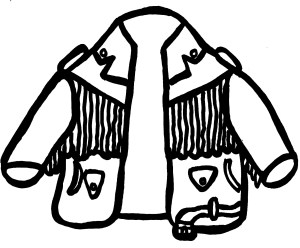
1. Deerskin – Quentin Dupieux’s absurdist thriller about a man’s obsession with a fringed deerskin jacket is consistently funny, but also incredibly vicious when it wants to be. Despite indulging in the ridiculous, high-concept genre of Killer Objects horror (think Death Bed, In Fabric, Christine, or the director’s own Rubber), it’s a surprisingly thoughtful film about the inadequacy that mediocre men face at middle age, and their psychotic efforts to overcome that deficiency. Jean Dujardin previously charmed American audiences in Best Picture-winner The Artist, but here he’s a sad, pathetic grifter who has to scam people just to hang out with him. It’s a hilarious joke at the expense of male vanity (including the vanity of making an entire movie about a deerskin jacket in the first place).

2. Color Out of Space – Richard Stanley returns to the director’s chair after decades of mysterious exile to adapt an H.P. Lovecraft short story about a meteor crash and a malignant color. Most criticism has fixated on Nic Cage’s over-the-top lead performance, but those antics aside this is a harrowing film about loss & cancer, fearing not just the disease but also its emotional erosion of familial relationships, interpreted through the powerful medium of cosmic horror.

3. The Invisible Man – A genuinely scary film that operates in a realm of traditional horror tropes. For a lot of its audience, it’s doubly scary because of its domestic violence aspect, capturing the feeling of the ground being pulled from under you when you realize your abusive relationship is not the loving one you initially pictured it to be. That realization happens before the film even opens, but we’re made to live through its terrifying aftermath.

4. The Twentieth Century – This pseudo-biography of a real-life Canadian politician is a gorgeous, absurdist fantasy piece that retells the history of Canadian governance as “one failed orgasm after another.” History says its events are set in Canada, but what’s onscreen is some nowhere nether-reality of dry ice and matte paintings, populated by caricatures rather than characters. It’s like Guy Maddin directing an especially kinky Kids in the Hall sketch, stumbling out into feature length in a dreamlike stupor.

5. The Wolf House – A nightmare experiment in stop-motion animation that filters atrocities committed by exiled-Nazi communes in Chile through a loose, haunting fairy tale narrative. It’s got all the trappings of a pre-Brothers Grimm folktale: the sour ending, the moralistic behavioral warnings, the magic that is both beautiful and cruel. It’s a relentlessly grotesque display, one that fully conveys the hideous evils of its allegory’s real-life parallels even if you aren’t familiar with that particular pocket of fascism history.

6. Possessor – This techno body horror from Brandon Cronenberg feels like the cursed love child between his father’s eXistenZ and his own Antiviral. It’s a compelling psychological battle between its characters to gain possession of the corporeal vessel they share (a battle powerfully performed by Christopher Abbott & Andrea Riseborough). A truly shocking film, both beautiful and disgusting.

7. Birds of Prey – A wonderfully stylized, deliriously hyperactive superhero movie that doesn’t drag or feel laboriously obligated to comic book backstory or pathos. It steps on other superheroes’ capes, soaring in its own unique, chaotic way (a power seemingly fueled by Vodka-Red Bulls).

8. Bacurau – A Brazilian film that mutates familiar details inspired by “The Most Dangerous Game” into a surreal sci-fi-horror-western genre meltdown. It uses familiar tropes & techniques to tell a story we’ve all heard before in a new style & context that achieves something freshly exciting with those antique building blocks. In other words, it’s genre filmmaking at its finest.

9. Swallow – An eerie, darkly humorous descendent of Todd Haynes’s Safe, in which a newly pregnant woman is compulsively drawn to swallowing inedible objects, much to the frustration of her overly-controlling family & doctors. It’s a subtle but highly stylized psychological horror about bodily autonomy, class warfare, and trauma, illustrating the complete lack of control you have over your own body & destiny if you’re born on the wrong end of class & gender dynamics.

10. His House – Reinvigorates haunted house genre tropes with the same tactics that titles like Blood Quantum, Zombi Child, and The Girl With All the Gifts used on the similarly overworked tropes of the zombie genre: by shifting the cultural POV and the purpose of the central metaphor. This bold debut feature from screenwriter and director Remi Weekes tackles topics of grief, disenfranchisement, loss, immigration, and cultural disconnection – all framed within the traditional scares of the haunted house horror film.
Read Boomer’s picks here.
Read Brandon’s picks here.
Read Britnee’s picks here.
Read CC’s picks here.
See Hanna’s picks here.
Hear James’s picks here.
-The Swampflix Crew

Honorable Mentions
15. American Murder: The Family Next Door is a frightening look into the future of the true crime documentary, not because the story that it tells is any different from one that you might have seen on Dateline or Unsolved Mysteries in the nineties or any of the hundreds of true crime TV shows that have sprung up in the wake of the sensationalist reportage of the past, but because of what constitutes its filmic material. Once upon a time, if 20/20 was relating the story of a spousal murder, producers were lucky to have a few minutes of useful, usable home video footage of the victim or perpetrator at a wedding or a child’s birthday party—shot on a fifty-pound, shoulder-mounted, air-cooled VHS camcorder—which could then be shown with melancholy music over it while Diane Sawyer delivered maudlin narration full of words and phrases like “ironically,” “cut short,” and “better days.” The rise of social media and its near universal use, alongside the proliferation of smartphones that allow for the instantaneous ability to effortlessly record oneself or one’s family, has created a strange new world of access to victims. This is especially true of those like Shanann Watts, whose interest in self-documentation bordered on the narcissistic, creating the opportunity for director Jenny Popplewell to use a wealth of Shanann’s own material in a documentary chronicling the dissolution of her marriage and, ultimately, her murder at the hands of her husband, who also killed the couple’s two daughters. It’s a harrowing peek not only into the soul of white male American entitlement but also what this style of reportage will look like as we move further and further into this new era, in which social media creates and reinforces narcissism and is powerful enough to (perhaps) topple nations through the spread of dangerous misinformation.

14. From my review of The Nest: “There’s nothing wrong with The Nest. The performances are great, as [Jude] Law effectively plays a man whose charm is so powerful he’s managed to convince even himself that his delusions are true, and he’s magnetic and contemptible in equal turns. You wouldn’t be able to accept a lesser actor in this role without thoroughly hating him, and that’s a testament. He’s also possibly the only actor who has ever managed to make BVD briefs look sexy, and at nearly 50 to boot. Similarly, Carrie Coon’s Allison is pitch perfect (and she’s proper fit, as one of Sam’s rude teenage friends notes). Each interaction contains the perfect amount of emotional distance and intimacy, and Coon is fantastic. By the time she really starts to fall apart, she’s held it together with such aplomb for so long that the audience feels her every revelation with empathetic exhaustion. I also like that there’s no beating around the bush about what the family’s problems are: there’s no infidelity (if anything, the couple’s sex life is the only thing about which they both remain passionate through the entire runtime), and all of the family’s anxieties stem entirely from Rory’s pathological obsession with money.”

13. W lesie dziś nie zaśnie nikt (Nobody Sleeps in the Woods Tonight): Hailed as Poland’s first slasher film, this sophomore feature from director Bartosz M. Kowalski is a central European Friday the 13th with the serial numbers filed off (and with a few random bits and pieces taken from other American horror flicks and shows to spice it up a little). There’s not much more to it than that, but as a peak into Polish interpretation of the American slasher genre, which was itself born out of American interest in Italian giallo films and Spanish obras de suspense, it offers a look into the weird ways that a genealogy of horror can criss-cross the Atlantic. It has its moments of gore, but they’re not only few and far between but also campy in their sanitization; imagine a scene from Hostel but sweded with fake rubber arms and heads from Party City, and you get the idea. In any other year, this wouldn’t be anything particularly noteworthy here, but with fewer releases due to the plague, it’s worth checking out. What else do you have going on?

12. Class Action Park: A documentary about Action Park, a New Jersey amusement and water park that famously maimed, mutilated, disfigured, and even killed multiple people over the course of its decades-long ownership by disgusting capitalist and deregulation enthusiast Ebenezer Eugene Mulvihill. Through interviews with former attendees and adults who were employed at the park as teens, as well as the family members of victims of Mulvhill’s negligence who never saw him face justice, the film strikes a strange tone. It encourages a feeling of both reminiscence about a lost era in which children seeking agency for themselves could do so by going to a cursed amusement park straight out of your Pinocchio nightmares, while also delineating the criminal laxity of safety regulations and proper testing of facilities (famously, teenaged employees were offered $50 to try out a looping waterslide, in which people frequently got stuck and from which the teens emerged bloody and battered). The film also draws a straight line from the right wing’s raging hard-on for deregulation and Mulvhill’s ability to simply buy his way out of all consequences, even negligent homicide, to the Trump administration, with its seemingly bottomless pockets and lack of accountability. The film occasionally loses its footing when interviewees, including recognizable faces like Chris Gethard and Alison Becker, fondly recall their youthful expeditions to the park, but overall, this is a pretty decent look into what happens when greed is left unchecked.
11. The Invisible Man: I saw that “He is a world leader in the field of optics” meme on Twitter for what felt like months before I got the chance to see The Invisible Man, which made me think the whole movie was going to be more camp than thriller. It’s not, although it has its moments (the scene in the restaurant between Elisabeth Moss and her sister being the most obvious example), and it’s an effective story about both PTSD and dealing with others with NPD. Also, more people need to hire Aldis Hodge to do things; I’m always glad when he pops up in something. Give him a lead in something, already! (You can read Brandon’s review of the film here.)
Top 10
10. Mamoudou Athie delivers a striking performance in Black Box, essentially embodying three different characters over the course of the film’s taut runtime. He spends a lot of the film playing off of nothing, really, as Nolan wanders through his unclear memories, especially as those recollections begin to appear more and more disconnected from reality. Also impressive is skilled child actress Amanda Christine in her portrayal of Nolan’s daughter Ava; it’s rare that a child performer delivers anything other than a toneless recitation of lines that they barely understand, but Christine pulls off the balance between patience with her father’s challenges and her muted frustrations and fears that she’ll be separated from him if he isn’t able to recover his faculties. Although the film feels like a lower budget full-length episode of Black Mirror, it tells its story without the presumptive moralizing of that series (although your mileage will vary on whether that’s a good or bad thing with regards to Charlie Brooker’s program) and instead is a narrative that uses the trappings of a near-future scientific breakthrough to simply tell a story, rather than browbeat the audience.

9. When Brandon and I first discussed Shirley on the podcast, I expressed my discontent with the way that the film fictionalized Jackson’s life, and I stand by my feelings that I would enjoy this film more if it were about a fictional woman instead of ostensibly being about the woman behind We Have Always Lived in the Castle and The Haunting of Hill House. I’m not CinemaSins and I’m not just a nitpicker for the sake of picking nits, and it’s not like I’ve never been annoyed by someone else’s complaints that such-and-such a thing never happened, or wanted someone to just shut up about how the real so-and-so never actually went to wherever a scene is happening. But I am also that person that gets annoyed when something that falls into my very specific wheelhouse or area of interest gets something inconsequential incorrect but gets it wrong to an absurd degree (if you need someone to be the curmudgeon when supposed interstellar distances are measured in hundred of millions of miles). For all of that, and regardless of my general antipathy for using Jackson this way, Shirley is a fascinating narrative about the interplay of reality and imagination, and an insight into the transgression of the act of creation, all wrapped in a tense period package. Just pretend it’s about a fictional author who happens to share some similarities with the real Jackson, then track down a copy of Let Me Tell You to get a more intimate insight into the real deal.

8. The Other Lamb was proposed by Brandon to discuss on one of the Lagniappe episodes of the podcast, both because it was about cults (more on that in a moment) and because it was specifically about a Christianity-adjacent cult of personality (which is kind of my thing, in case you missed it), and he thought it would be up my alley. He was right! This has been a year that has been adversely affected by the elasticity of time, where the endless everpresent “nowness” of staying at home in quarantine sometimes makes it feel like January 2020 was just a few weeks ago, while the prolonging of quarantine because some people keep ruining it for fucking everybody also makes it feel like the same month was 27 years ago. So much of that year feels like it was filled with very frenetic media, with frantic pacing and constant noise to fill the empty and aching void of the months that elapsed entirely without human contact, but The Other Lamb stands apart, with its story that at first appears to be about calmness, tranquility, and serenity. Even as the plot thickens, it never quickens, and is instead as languid in its storytelling at the end of the film as it is in its opening moments, to great effect. Sumptuous and powerful.

7. Speaking of the elasticity of time, The Lodge feels like it came out four years ago, but I guess it really was just at the end of the previous winter. A holdover from the 2019 year-end slate, I saw the film with someone with whom ties have been severed and whom I expect I won’t see again in this life. At the time, I underestimated how much it would stick with me, and felt smugly superior for guessing the twist to come; it’s been long enough now, but objectively and subjectively, to point out that this film fits in nicely with directors Veronika Franz and Severin Fiala’s debut film Goodnight Mommy, as this film could just as easily been titled Gaslight Mommy, since that’s what happens (with special bonus points for the fact that the beginning of the gaslighting features literal gas like its namesake). Still, if there’s anything we’ve seen in the past year, it’s the power of misinformation not just to mess with people’s psyches, but also to rend families apart. Following so closely on the heels of Doctor Sleep, perhaps I simply wasn’t prepared for another film that is so indebted to The Shining for its visual language, but it has a staying power that can’t be denied. (It’s also got a subplot about cults, and I am a man of simple but sincere interests.)

6. In my review of Kajillionaire, I wrote about how, “when I was going through a really bad breakup in 2014, there was a quote that I stumbled across on Tumblr (again, it was 2014) that spoke to me on an intimate, deep level. I thought it was part of a poem, but I could never find it again, and I spent six years occasionally plugging the random bits of it that I could remember into Google to see if it would spit out the name of the poem, or the poet. Finally, in September, the search engine of record returned a result. The author was [Kajillionaire director] Miranda July, and it wasn’t a poem, it was an excerpt from her book It Chooses You: “All I ever really want to know is how other people are making it through life—where do they put their body, hour by hour, and how do they cope inside of it.” There’s something fascinatingly and fantastically alien about Old Dolio (Evan Rachel Wood)’s situation, on top of and adjacent to the world that the rest of us live in. Miranda July seems to have asked herself about how one extremely specific person was making it through life —where she was putting her body, hour by hour, and how she was coping inside of it. It’s a character study of someone raised in a culture that is invisible, tangential, and almost inconceivable.”

5. As I wrote in my review, Spree “demonstrates a profound understanding of the relationship between new and traditional media, the power of and potential for abuse within internet discourse, and the deleterious effect on mental health on a societal level that can result from a pivot towards a social reward system that depends upon toxic narcissism. Kurt (Joe Keery) has no desire to garner fame for money, political power, to increase his sexual desirability, or as a means of class mobility: notability, in and of itself, is the goal. It’s the timeless tale of wanting to be popular, with no other goal. He lives in a completely different economic system where clout is currency, and even disengagement from that alternate reality doesn’t make one safe from its reach. In the film’s closing moments, we are treated to the best demonstration of writer/director Eugene Kotlyarenko’s understanding of the foibles of media in all of its forms.”

4. Horse Girl tells my favorite kind of story: that of a woman struggling with her sanity. I have recently had the opportunity to inspect this fondness for this genre in myself–is it sexist of me? Although I’m not really the best person to answer that objectively, I think my fondness for the subgenre of “women on the verge” is mostly because I prefer women protagonists in all of my fiction, and I always have. I’ve been reading Paperback Crush lately, Gabrielle book about girl-targeted YA fiction that is subtitled “The Totally Radical History of ’80s and ’90s Teen Fiction,” and realized that, although I was largely forbidden from reading “girl books” of the kind that she is writing about, I tried my best to sneak around and read them anyway in my youth. Many of them are about young girls fighting against societal norms that have no bases in logic or reality: girls can’t x, whether x was a sport or a certain familial role or a campus political position. I, too, often felt that various things were forbidden or unreachable for me, either because of my parents’ religion or our rural isolation or The Closet, and the fiction that featured that as a narrative device weren’t about other boys (to say that my endless hunger for girl fiction caused parental, rural, and Closet conflict is an understatement). My love for movies like Puzzle of a Downfall Child, An Unmarried Woman, Queen of Earth, and the most recent addition to this pantheon, Horse Girl, is just an extension of that fondness. Hear me and Brandon talk about Horse Girl here.
3. His House is the story of two people from South Sudan who find themselves in England fleeing violent conflict (presumably the Dinka/Nuer conflict, although it’s never explicitly stated). It’s also much, much more than that. This bold debut feature from screenwriter and director Remi Weekes tackles topics of grief, disenfranchisement, loss, immigration, disconnection, and the things we keep while other things are left behind. There’s so much unspoken but powerfully present in the interactions between Sope Dirisu and Wunmi Mosaku as, respectively, Bol and Rial Majur. There’s something so palpable in Bol’s desire to disappear into this new community, joining in with the old men singing songs to their futbol heroes and blending in by purchasing an exact duplicate of the outfit on in-store advertising. By the time he’s literally trying to burn everything that ties himself and his wife to their past, it’s impossible to predict where the film will go next. Even the most artistic horror film rarely transcends into something truly beautiful, but His House does all of this and more. Brandon’s review can be found here.

2. Portrait of a Lady on Fire left me undone. I was mesmerized by its every moment, captivated by every tableau. There’s nothing really “new” about queer love between two women that is repressed, silenced, and hidden, especially in period pieces with their long, loving glances across infinite spaces trapped in immaculate drawing rooms. I’m not really sure what magic Portrait has captured that is absent in its peers, but there is something truly astonishing about it. The sound design, the set design, the costumes, the cinematography: this is a film that is essentially perfect in every conceivable way. We have seen many films that are similar to it, but in its field, it is peerless. Read my review here.

1. There’s a scene in I’m Thinking of Ending Things in which our seeming protagonist, played by Jessie Buckley, is trying to explain to her boyfriend’s father (played by David Thewlis) how a painting with no people in it can evoke an emotional response. “No,” he responds. “I would have to see myself in it to know how I felt.” Although the rest of the Swampflix staff apparently did not feel the same way, this was, to me, the best movie of the year. My erstwhile roommate and his current housemates and I synced up to watch the film during a period of the year when I was putting down new floors in my home as part of my desperate attempt to make myself feel like I wasn’t trapped in the same place for the foreseeable future and my TV was briefly moved into my bedroom. As I sat, straight up, in bed and watched as Jake (Jesse Plemons) and his girlfriend made their way to his parents’ house through a thickening snowfall, I felt myself taken in and entranced by an incredible intensity of feeling. By the time the couple actually arrive at their initial destination, I already felt like I had gone on a complete journey and that the film must be nearing its completion, only to realize I had felt a film’s worth of emotional movement in a mere 45 minutes, and that there was still nearly an hour and a half left, which I was soon to learn was even more of a journey ahead. During a long, strange, sad, infuriating year, this was a film that reached inside of me and found a deep, sincere, and profound loneliness and externalized it on a screen before me, engaging me with myself in a way that I’ve experienced precious few times in my life. After I’m Thinking of Ending Things, I am genuinely not the same as I was before it. (You can read Brandon’s less positive review here.)
-Mark “Boomer” Redmond
 Swampflix