CC’s Top 15 Films of 2020

1. We Are Little Zombies The meteoric rise and fall of a punk band formed by four disaffected, emotionally stunted Japanese orphans who run away together after meeting at their parents’ respective funerals. It captures both the exuberance of youth and the rage kids feel when the world is outside their control. As a directorial debut, it’s like the best bands’ freshman albums, with years of pent-up creative material exploding onto the screen. I just hope Makoto Nagahisa has enough ideas leftover for his next film, because I’d love to see more.

2. American Utopia I saw an abbreviated version of this David Byrne concert at Jazz Fest a few years ago and was supposed to see the full show at the Saenger in 2019, but it was cancelled due to a scheduling conflict with a Disney Live! production. And then COVID-19 eliminated any chance of that show being rescheduled. So, it was a little bittersweet getting to see the movie version for my birthday this year, but it was still a powerful experience. The way Byrne questions who we are in the world as people and as citizens really spoke to me. It’s like an emotional, danceable TED Talk about our interdisciplinary connections, studying humanity as if it were a type of fungal mycelium. If anything, the show’s only become timelier & more relevant since the 2018 performance I attended. Police brutality has been a scourge forever, but last summer it came to a head in a really public way, and I was impressed to see a concert film directly deal with that injustice.
3. The Wolf House An animated Chilean film that addresses a real-life religious cult that committed wartime atrocities and other crimes against humanity dating back to the 1960s by recounting them in an ugly fairy tale. It’s got all the trappings of a pre-Brothers Grimm folktale: the sour ending, the moralistic behavioral warnings, the magic that is both beautiful and cruel. Although it’s framed as a rediscovered propaganda film lost since the 60s, it’s constructed with some of the most astonishing modern animation techniques I’ve seen. It’s ostensibly stop-motion, but it’s achieved through a wildly imaginative multimedia approach. That innovation is more than just an all-style-no-substance gimmick, though; it’s an integral part of the storytelling. It’s evil, it’s sick, and it’s grimy.

4. Birds of Prey A wonderfully stylized, deliriously hyperactive superhero movie that doesn’t drag or feel laboriously obligated to comic book backstory or pathos. It steps on other superheroes’ capes, soaring in its own unique, chaotic way (a power seemingly fueled by Vodka-Red Bulls).

5. Emma. I love how sharp this Austen adaptation is, both in the physical choreography of its characters’ movements and in their cutting, carefully chosen words. The costumes & sets are also superb. Its biggest detractors criticize it for how mean Emma is, but that’s also just how she’s presented in the novel. Emma Woodhouse is not some sweet saint; she ruins lives for her own amusement and is too vain to admit how much pleasure she gets out of that transgression, which is just teenage girls for you. It’s nice that Anya Taylor-Joy has decided to stop aging so she can play these parts forever. Johnny Flynn also commands the same animal sexuality he got to display in Beast, except dressed up here in nicer clothes. The whole film feels like a dangerously sharp knife with an exquisitely crafted handle. It can draw blood, but it’s an object of pure beauty.

6. Portrait of a Lady on Fire This period drama is very sumptuous & sensual in its cinematography, unlike the sharp angularity of Emma. It’s soft like the beautiful green fabric of the dress in the titular portrait. Still, I love the bleakness & the remoteness of its locale and its outlook on human relationships. It notes the rigid, absolute limitations placed on women, even women of a very privileged class. Despite the corseted parameters culture places on its characters, there’s a free-flowing wildness of femininity & womanhood that runs through it, best exemplified by the acapella folksong sung around the bonfire.

7. Dick Johnson is Dead A documentary made in collaboration between Dick Johnson and his filmmaker daughter, Kirsten Johnson, working through their anxieties over his impending death by staging fictitious versions of that impending tragedy in increasingly imaginative ways. Its interspersed interviews with Dick and the people in his orbit examine the nature of relationships between children and their parents, our larger societal relationship with death, and indefatigability of the human spirit. It’s a happy film about a sad subject, ultimately feeling triumphant in the way it cheats death for Dick. Even though he will die, he will always feel alive to people who watch this document.

8. Possessor This techno body horror from Brandon Cronenberg feels like the cursed love child between his father’s eXistenZ and his own Antiviral. The plot isn’t particularly important. What’s most compelling is the psychological battle between its characters to gain possession of the corporeal vessel they share (a testament to the powerful performances from actors Christopher Abbott & Andrea Riseborough). It’s a truly shocking film, alienating the audience with images no one should see. The visual effects are fascinating, both beautiful and disgusting.

9. Palm Springs A Groundhog Day time-loop film, which is quickly becoming its own genre. This one’s timing felt very in-tune with the themes of the pandemic. It captures the anxieties we especially felt early in the stay-at-home lockdown orders but channels them into something fun & constructive. It’s a pleasing comedy that transforms the year’s shitty, never-ending nightmare into a solvable equation.

10. The Shock of the Future A day in the life of a young composite character who’s an emerging artist in late-70s electronic music. Over the course of the film, she composes the very first electropop song, a tribute to several women pioneers of analog electronica who struggled to get recognized for their innovative artistry in a male-dominated industry. It’s impressive in the way it pushes against the myth of the individual artistic genius perpetuated by most biopics, instead stressing the importance of community & collaboration. It’s also fascinating to watch electro pioneers tinker with individual pieces of analog equipment to create new, exciting sounds. It made me want to play around on some vintage synths & drum machines myself.
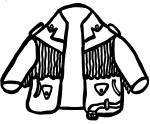
11. Deerskin Who doesn’t love a film about killer fashion? Between this & In Fabric, that may only be a subgenre of two (so far), but it’s a wonderful extension of the killer-objects horror of classics like Death Bed, Rubber, and Christine. Despite indulging in that ridiculous, high-concept genre, this is a surprisingly thoughtful film about the inadequacy that mediocre men face at middle age, and their psychotic efforts to overcome that deficiency. Jean Dujardin previously charmed American audiences in Best Picture-winner The Artist, but here he’s a sad, pathetic grifter who’s lost his job and his only meaningful relationship, now having to scam people just to hang out with him. It’s hilarious. Also, shoutout to Portrait of a Lady on Fire’s Adèle Haenel’s performance as his only accomplice; she’s a great audience surrogate in her amused fascination over the ongoing car wreck of his life.

12. Color Out of Space I always love attempts to modernize Lovecraft, bringing his mythology (but not his personal politics) into modern media. This is only the second most successful visualization of the original short story’s central threat in its visual effects, trailing behind the 2010 German film that better captured the impossibility of its adaptation. It’s much more effective in metaphor, crafting yet another horror of male inadequacy that examines the lengths that men will go to maintain their power & privilege. Nic Cage plays an absurdly silly man who fears his family is starting to rupture due to illness & emotional alienation. His desperate efforts to draw his nuclear family back into order only place them directly in the path of cosmic horror even further outside his control. A lot of critical focus has been around his over-the-top performance, but those antics aside this is a harrowing film about loss & cancer, fearing not just the disease but its emotional erosion of familial relationships, interpreted through the powerful medium of cosmic horror.
13. The Invisible Man Okay so it turns out the overriding theme of the year is the lengths that sad, pathetic men will go to maintain power & privilege. This one is a genuinely scary film that operates in a realm of traditional horror tropes. For a lot of its audience, it’s doubly scary because of its domestic violence aspect, capturing the feeling of the ground being pulled from under you when you realize your abusive relationship is not the loving one you initially pictured it to be. That realization happens before the film even opens, but we’re made to live through its terrifying aftermath.

14. The Twentieth Century This pseudo-biography of a real-life Canadian politician is also a highly-stylized farce about, again, a pathetic man’s foibles in his quest for power. History says its events are set in Canada, but what’s onscreen is some nowhere nether-reality of dry ice and gorgeous matte paintings, populated by caricatures rather than characters. Guy Maddin & David Lynch are obvious influences on its imagery, but it’s all filtered through a more vintage George Méliès patina. It resurrects the early-cinema Méliès tradition of the féerie play: crafting an artificial fantasy plot & spectacular visuals but anchoring them to a melodramatic morality play about the weaknesses of privileged men.

15. Extra Ordinary This goofy-not-scary Irish horror comedy shares a very particular sense of humor with titles like Housebound & What We Do in the Shadows, to the point that it’s shocking it’s not from New Zealand. A woman who is not yet middle aged but no longer young doesn’t know what to do with her life, mostly because she harbors unresolved guilt over her paranormal-expert father’s death. Luckily, she gets pulled into a zany adventure that saves her from her rut and resolves that leftover guilt. And surprise, the villain she faces is a sad, pathetic man desperate to hold onto his power & prestige – an aging rock star played by Will Forte with the same childish temper tantrums he threw in Last Man on Earth.
HM. Swallow Although this was my #1 film last year, when I saw it at the New Orleans Film Festival, I would be remiss if I didn’t include it again this year when it was more widely available. It’s a subtle but highly stylized psychological horror about bodily autonomy, class warfare, and trauma, illustrating the complete lack of control you have over your own body & destiny if you’re born on the wrong end of class & gender dynamics.

-CC Chapman

The NYC Art Gallery Concert Film

I recently found myself falling down a hyperspecific rabbit hole watching live performances of bands that meant a lot to me in high school. It started with the David Byrne concert film American Utopia, which I caught up with on HBO as part of the late-in-the-year hunt for potential Best of the Year list-toppers. Even more so than the landmark Talking Heads documentary Stop Making Sense, American Utopia is a unique specimen within the concert film genre. Unlike most rock concert docs, it doesn’t aim to energize or throttle the audience in any discernible way. It’s an upbeat but gentle work, staged with regimented, clinical precision within the rigid confines of a Broadway theatrical setting. Spike Lee directs the film with a controlled, observant formalism that only appears in flashes in his messier, more idiosyncratic works. As a movie, American Utopia is more like stumbling across a performance art piece in an NYC art gallery than attending a rock show or even a typical Broadway musical. It’s not the only concert film of that exact ilk, though, and I soon found myself seeking out more heady art gallery concert docs on its wavelength to keep the arty party going.

I was lucky enough to catch the traveling American Utopia show live at the 2018 Jazz Fest, but it was a lot more of a traditional rock performance than what’s captured in the movie version. Watching Byrne perform for the first time live in the afternoon sunshine, I found myself crying while dancing in a rare moment of ecstatic happiness – maybe the second time I’ve ever experienced such euphoria at a concert. That Jazz Fest set was an abbreviated version of the show, one that cut out a few songs and, more importantly, abbreviated the spoken monologues that act as the show’s thematic throughline. In the movie (and, presumably, most live performances of the act), Byrne’s parade of solo & Talking Heads hits are bookended by short lectures that examine the function & the soul of American culture from a distanced outsider perspective; it’s a kind of spiritual sequel to Byrne’s small-town America portrait True Stories in that way. It’s an honest but optimistic temperature check of where America is today, both acknowledging the horrors of racially-motivated police brutality that have long been a stain on this country’s honor and pointing to our current moment of change as a possibly transformative turning point towards a better future. Meanwhile, everything onstage is rigidly uniformed & regimented like a dystopian sci-fi film, with the traditional rock performers’ instruments & colorful costuming stripped away to mimic the minimalism of modern performance art.

American Utopia has earned plenty accolades as one of the best cinematic experiences of the year, but it’s not the only NYC Art Gallery Concert Film that was recently highlighted as a Cultural Event. In an effort to stay visible as a cultural institution despite ongoing COVID-lockdowns, the Brooklyn concert venue St. Ann’s Warehouse has been periodically broadcasting past shows on YouTube, free-to-the-public. A recent one that caught my eye (thanks to write-ups on sites like the New York Times) was a 2007 concert film version of Lou Reed’s Berlin. The follow-up to Reed’s cult solo record Transformer, Berlin was a critical & financial flop in 1973, a failure that broke the rock ‘n roller’s heart to the point where he refused to play songs from the album live. The 2007 performance at St. Ann’s Warehouse is a decades-in-the-making event, then, finding Reed performing the proggy concept album in its entirety with a sprawling backup band that included contributions from Sharon Jones, Antony, and a full children’s choir. It also translated Berlin into the world of Visual Art, layering in dramatic visualizations of the album’s loose “narrative” (as projections on the stage and interjections on the screen) as if they were fuzzy memories bubbling up to the surface of the songs. The film’s director, fine art painter Julian Schnabel, does his best to turn the concert film experience into an instillation piece, achieving an art gallery aesthetic in a much uglier, more somber way than Byrne’s work. Weirdly enough, both movies also happen to share a cinematographer in Ellen Kuras.

After watching Berlin & American Utopia in short succession, I caught myself wondering what the ultimate NYC Art Gallery Concert Film would be. The answer was immediately obvious, although I had not yet seen the film myself because of its limited availability. Laurie Anderson’s 1986 concert film Home of the Brave is a 90min distillation of her two-night concert piece United States I-IV. Having now only seen a fuzzy rip of the film that’s lurking on YouTube (as it unforgivably has never made the format leap from VHS & laserdisc to DVD), I’m fairly confident in calling it The Greatest Concert Film of All Time. I know that title has been communally bestowed upon Stop Making Sense, but Anderson’s piece certainly belongs in that conversation, if not only for highlighting how her work pioneered a lot of the more Conceptual Art elements that goes into Byrne’s stage shows. Anderson also observes the soul & structure of America in a series of abstracted, outsider-POV lectures the way Byrne does in American Utopia, but those monologues are interwoven into her avant-garde new wave songs to the point where there’s no boundary between them. Projectors, voice modulators, newly invented instruments, and guest appearances from William S. Burroughs of all people are prominently featured in her show as if they were the hallmarks of a rock ‘n roll music video instead of weirdo outsider-artist eccentricities. While American Utopia & Berlin evoke the mood & setting of an art gallery, Home of the Brave is an art gallery, and it’s a shame that it’s the only film of the three that you can’t currently access in Blu-ray quality.

Although she’s less of a household name elsewhere, Laurie Anderson was very much an equal & a contemporary alongside David Byrne & Lou Reed in NYC art snob circles (and Reed’s spouse in the final years of his life, a pain explored in the experimental essay film Heart of a Dog). Stop Making Sense might have preceded the concert film version of her United States I-IV act by a few years, but she was already pushing its more out-there ideas (especially its use of projectors) to their furthest extremes in her own stage work at that same time. If anything, American Utopia finds David Byrne leaning even further into the Laurie Anersonisms of his own work, to the point where it feels like it’s turning Home of the Brave‘s idiosyncrasies into a concert film subgenre all of its own. The only other concert doc I can name that approaches these films’ shared NYC art gallery aesthetic is Bjork’s Biophilia project, which is great company to be in. They might not be the most raucous or chaotic specimens of rock ‘n roll hedonism, but they collectively strive to elevate the concert film to new artistic highs; and Anderson clearly stands as the mastermind of the medium.

-Brandon Ledet

Brandon’s Top 20 Genre Gems of 2020

1. VHYES A sketch comedy anthology that mimics the uneven rhythms of a home-made VHS “mixtape,” combining spoofs of late-80s cable access garbage & a fictional home movie wraparound. It’s lean, strange, and amusingly absurd in all the ways I wanted it to be. Post-Adult Swim filmmaking at its finest.

2. The Berlin Bride Two reclusive 1980s Berliners split ownership over a mysterious mannequin; one uses her right arm to replace his own amputated one, the other treats the rest of her as his newlywed bride. Very funny & weirdly upsetting. Often feels like a surreally cheap riff on Peter Strickland’s work, which I mean as a high compliment.

3. Crazy World A Ugandan gang of kidnappers are thwarted by the unexpected Kung Fu skills of their pint-sized captives & their enraged parents. My first Wakaliwood experience was just as wildly entertaining & inspiringly low-fi as I had hoped. A total blast & a surprisingly heartwarming document of no-budget regional filmmaking.

4. Spree A grotesque satire about social influencer brain rot in the eternal search for likes, following a live-streaming ride share driver who becomes a serial killer in a desperate bid to Go Viral. I’m always a huge sucker for technophobic thrillers about how the Internet is going to kill us all, and this one was a worthy addition to the canon. It’s especially apt at pinpointing just how pathetic clawing for social media clout feels to an outside observer, even as a near-universal vice.

5. The Platform A nasty dystopian sci-fi pic that’s a lot like Snowpiercer & High Rise in its blatant illustration of wealth disparity, except that it’s so into Philosophy & economic theory that there’s room for little else. It’s almost 100% worldbuilding but it has more than enough Big Ideas & gory catharsis to pull that off.

6. Gretel & Hansel As beautiful & creepy as it is silly, and I kinda wish more movies were allowed to just dick around like this. The tension between conventional genre payoffs & Oz Perkins’s “elevated horror” tendencies is absolutely thrilling throughout this self-conflicted novelty. I don’t believe Perkins has it in him to make a genuine opening-weekend crowd pleaser, and this delightfully weird attempt at such a prospect is outright adorable.

7. Come to Daddy Elijah Wood stars as a hipster coward who finds himself sparring in a cramped isolated locale with his deadbeat alcoholic father. Written by the guy who penned The Greasy Strangler, it eventually turns into a Greasy mutation of a Jeremy Saulnier-type dark comedy as its violence escalates.

8. Bad Hair A Justin Simien horror comedy about a killer hair weave. A lot of people are going to ding this for taking its over-the-top premise too seriously in its first hour, but I think that’s its saving grace. If it were zanier and less politically purposeful it would’ve gotten old real quick; instead it really earns the campy B-movie payoffs of its climax by laying a lot of thematic groundwork and, against all odds, establishing a genuine sense of dread.

9. Weathering With You For its first hour this feels like an amusing-but-weak echo of Your Name., but the plot keeps pushing further & further into the weirdest direction possible until it ends at an absolutely stunning Choice of a conclusion that fully won me over. I really liked how Your Name. applied the Miyazaki reverence for Nature to Big City environments and this one goes even further in that respect by having Nature reclaim the City as part of itself.

10. She Dies Tomorrow Amy Seimetz’s dryly humorous chiller in which fear of impending Death is a communally transmitted disease. Rarely is cosmic horror so relatable. This feels like the darkly Funny existential crisis other people have been describing I’m Thinking of Ending Things as, but I didn’t experience. Whimsically bleak.

11. Sea Fever An eerily well-timed aquatic horror about a crew of deep-sea fishermen who have to quarantine themselves because a Cronenbergian parasite has infected their water supply. I was genuinely chilled by this once it got cooking, even if it borrows a well-worn story template from The Thing; it’s a much more impressive entry in the genre than this year’s so-so Underwater was, if nothing else.

12. Palm Springs I don’t know that this is the tip-top best of the recent string of post-Groundhog’s Day time-loop media (there’s been a lot of good’ns!), but I do like that it pushes the genre forward by acknowledging the audience’s familiarity with it and jumping into the flow of things way downstream. It doesn’t hurt that it’s really funny & charming throughout.

13. The Pool A bargain bin riff on The Shallows, in which a couple is stranded in a drained swimming pool with a killer crocodile. The CGI on the croc is so absurdly shoddy that the movie has no choice but to pave over its budgetary restrictions with a playful sense of humor. And then, just when you think it’s going to play Everything for cheap laughs, it gets shockingly fucked up. Fun, upsetting trash that’s willing to push its limited scenario to its furthest extreme. It also might be Pro-Life propaganda?

14. The Hunt It’s difficult to get too excited by another “Most Dangerous Game” riff the same year as the great Bacurau, but I enjoyed this far more than I expected to. Its both-sidesing makes it a little too timid to succeed as a satire, but I appreciated the way it treats modern American politics with the broad, ugly, unsubtle caricature of a pro wrestling angle. Feels accurate to the Moment as a cultural temperature check and packs plenty of cheap payoffs as an exploitative novelty.

15. His House Reinvigorates haunted house genre tropes with the same tactics that titles like Blood Quantum, Zombi Child, and The Girl With All the Gifts used on the similarly overworked tropes of the zombie genre: by shifting the cultural POV and the purpose of the central metaphor. You’ve seen these exact story beats & jump scares before, but never in this exact cultural context.

16. The Lodge This is not as solid as the directors’ breakthrough Goodnight Mommy but it covers a lot of the same ground: creepy kids with maternal resentment, a few chilling indulgences in dream logic, telegraphing its Twist but then following through in the grimmest way possible. Severin Fiala & Veronika Franz just seem to hit an icy sweet spot for me, even though they seem to disappoint a lot of people. And it turns out they’re an aunt-nephew duo? Weird.

17. Blood Quantum A zombie breakout among white urbanites reaches an isolated Indigenous reservation, and it appears that the Indigenous people are immune. It’s a solid genre entry, especially in how hard it leans into post-Romero gloom & gore. Outside its central conceit & cultural context it’s very much a straight-forward zombie movie, though, so it’s unlikely to win over many people with general zombie genre fatigue.

18. Spontaneous A post-Heathers high school black comedy about a spontaneous combustion pandemic, one that feels shockingly well-timed in a way the filmmakers could not have anticipated.

19. Capone Covers only the final year of the notorious gangster’s life, which he spent under house arrest while left senile by neurosyphilis at the age of 48. This is in the same genre as Venom, by which I mean it’s a tragically bland nothing of a movie that Tom Hardy’s bizarro performance transforms into a riotous good time through sheer force of will.

20. Tito First-time director Grace Glowicki casts herself as an impossibly timid geek who’s drawn out of his cowardly seclusion by an idiot stoner who barges into his life. Meanwhile, vaguely menacing demons attempt to invade the frame but never arrive. The central performance is consistently entertaining, grotesque, and frustrating, like watching Crispin Glover suffer a traumatically bad acid trip. The movie itself is much more difficult to pin down. It’s an arthouse-horror/stoner-comedy? I almost want to describe it as Josephine Decker’s Cheech & Chong, but that’s way overselling what it can deliver.

-Brandon Ledet

Britnee’s Top 20 Films of 2020

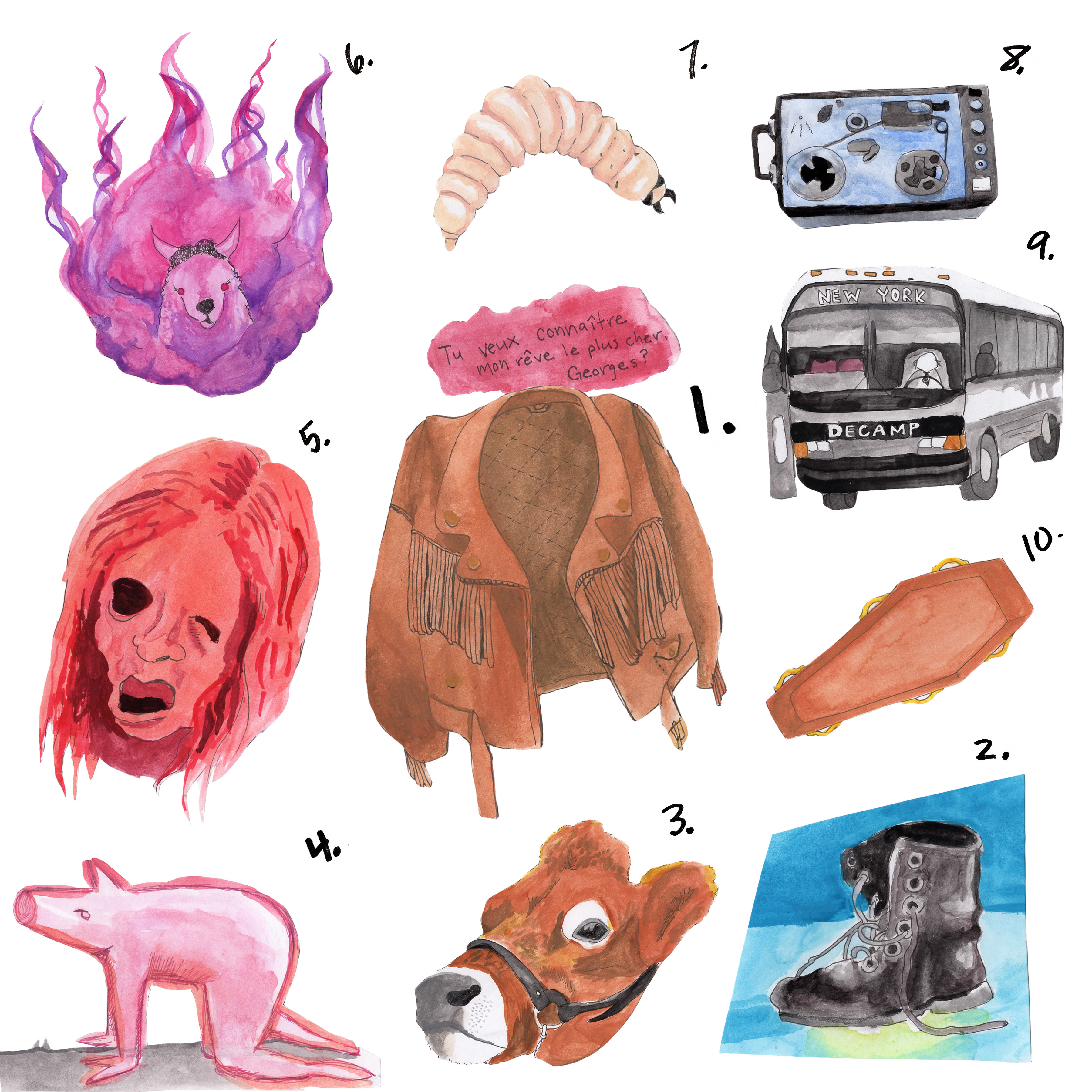
1. Deerskin Quentin Dupieux’s film about a man’s obsession with a used (yet very expensive) fringed deerskin jacket. It keeps its dark humor evenly distributed throughout its runtime, but don’t assume that this is not a horror movie because it most definitely is. There’s enough spine-chilling moments that will weigh heavy on your mind long after the movie is over. It’s obviously right up my alley.

2. Swallow This is a fun thriller about an unhappy housewife who finds great joy in challenging herself to swallow all sorts of foreign objects (marbles, tacks, etc.). Once she poops them out, she cleans them up and starts a small collection of her accomplishments. Don’t be surprised if you find yourself cheering her on as her collection grows.

3. The Painter and the Thief In a horrible year that truly exposed the horrors of humanity, it was nice to watch a documentary about compassion and forgiveness. The story of a painter who had two of her paintings stolen by a criminal who then becomes her muse and friend is told in a very interesting yet very straightforward way. It’s definitely some good medicine for the disease of 2020.

4. Bacurau A wonderful Brazilian film that’s a little bit sci-fi, a little bit western, and a little bit horror. As the fictional town of Bacurau is slowly being wiped off the map, wealthy white elites are hunting the townsfolk for sport. The film builds to a very intense blood bath that was shocking and memorable to say the least.

5. The Other Lamb This is perhaps the year’s best coming of age film. It just so happens to take place in a religious cult in the woods that’s filled with incest and misogyny. Also, I can’t go without mentioning how hauntingly beautiful its scenery is.

6. You Cannot Kill David Arquette The Swampflix crew did an entire podcast episode about this documentary of David Arquette’s return to the world of professional wrestling, and I was absolutely blown away by it. Not only did it spark my interest in wrestling, but it also got me interested in the life of David Arquette after years of just knowing him as Courtney Cox’s ex-husband who played a few goofy film roles.

7. Blow the Man Down I love films that take place in New England fishing towns, and I also love crime thrillers. Blow the Man Down is a perfect mix of both. The cherry on top is that the town full of dark secrets is quietly run by a group of sweet old ladies.

8. Come to Daddy Elijah Wood has been playing very interesting and strange roles in recent years, and he absolutely kills it in Come to Daddy. It’s constantly shocking from beginning to end. There aren’t many films that came out this year that were as entertaining as this one.

9. Relic This Australian emotional horror film about the horrors of dementia is in the same wheelhouse as Hereditary. Personally, I found it to be more sad than spooky, but that didn’t take away from it being a legitimate horror film.

10. The Berlin Bride An almost silent film about two quirky guys who are taken over by a mannequin. It’s very dreamlike and bizarre, and for some reason I felt like a total pervert when I was watching it.

11. Bad Hair A horror comedy about a killer weave. It’s a funny satire that stars one of my all-time favorite actresses: Vanessa Williams!

12. Color Out of Space The best body horror film of 2020! And as a bonus, it stars Nicolas Cage so you get all of that Cage-ian spice in an already insane movie.

13. The Invisible Man I honestly didn’t think that I was going to enjoy this as much as I did. This is everything that a good thriller should be with some sci-fi elements thrown in as a bonus.

14. Birds of Prey If you haven’t watched this yet, do yourself a favor and run to it. I made the mistake of associating it with Suicide Squad and run-of-the-mill superhero movies, so I didn’t watch it until very late in the year. It’s a blast!

15. The Rental Actor Dave Franco’s directorial debut explores that fear we all get when taking those first steps into an AirBnb. It’s a solid thriller with an awesome cast.

16. Capone This movie is a shit show, but Tom Hardy shows up and shows out in a very Nicolas Cage way. His over-the-top performance of an aged Al Capone is not to be missed.

17. Host I spent most of 2020 stuck on Zoom (mostly for work), and this fabulous Zoom horror movie came out when we needed it the most. This movie is COVID-19 AF.

18. Arkansas Funnyman Clark Duke made his directorial debut this year with this crime thriller, and it was surprisingly solid. Duke stars in the film alongside Liam Hemsworth. Both actors had really good chemistry in the film and made for a really fun duo.

19. His House A refugee couple flees Sudan and end up in the UK. They deal with the horror of being refugees in a new country that doesn’t treat them humanely while also dealing with a more literal horror that follows them from Sudan. It’s very heartbreaking and super scary all at the same time.

20. Rent-A-Pal This is a silly VHS based horror movie about a lonely guy taking care of his elderly mother while desperately seeking out a girlfriend through a dating VHS program. When he happens upon a Rent-A-Pal VHS that stars a really creepy Wil Wheaton, the VHS tape takes over his life (similar to the deerskin jacket in my top 2020 film, Deerskin) and turns him into a monster. I’m glad I was able to watch this one before the year was over.

-Brtinee Lombas

Episode #125 of The Swampflix Podcast: The Top Films of 2020

Welcome to Episode #125 of The Swampflix Podcast. For this episode, Brandon, James, and Britnee discuss their favorite films of 2020.

James’s Top 20 Films of 2020
1. Deerskin
2. First Cow
3. Another Round
4. Color Out of Space
5. Black Bear
6. The Twentieth Century
7. Possessor
8. Dick Johnson is Dead
9. Sound of Metal
10. Bloody Nose Empty Pockets
11. His House
12. You Cannot Kill David Arquette
13. Shit House
14. The Berlin Bride
15. American Utopia
16. The Wolf House
17. City Hall
18. Never Rarely Sometimes Always
19. The Invisible Man
20. Palm Springs

To hear everyone else’s picks, listen to the show . . .

You can stay up to date with our podcast through SoundCloud, Spotify, iTunes, Stitcher, TuneIn, or by following the links on this page.

– The Podcast Crew

Brandon’s Top 20 Films of 2020

1. Ask Any Buddy A post-modern mash-up of clips from 125 golden-era hardcore films, loosely constructing a morning-to-night day in the life of a post-Stonewall gay male archetype (one with an incredibly bustling sex life). Transgressive D.I.Y. outsider art that could easily be tediously academic or pointlessly provocative in the wrong hands, but instead comes across as a playful, genuinely loving catalog of tropes & narrative throughlines clearly assembled by a true fan of the supposedly low-brow, disreputable film genre.

2. We Are Little Zombies Four orphans meet at their parents’ simultaneous funerals and run away to form a surprisingly successful pop punk band. One of those movies where every single in-the-moment comedic gag & tangential flight of whimsy makes you shout “That’s so cool!” at the screen. Pushes the twee video game nostalgia aesthetics everyone drools over in Scott Pilgrim to much more exciting, surprising extremes; just absolutely overflowing with creativity.

3. The Wolf House A nightmare experiment in stop-motion animation that filters atrocities committed by exiled-Nazi communes in Chile through a loose, haunting fairy tale narrative. It’s a relentlessly grotesque display, one that fully conveys the hideous evils of its allegory’s real-life parallels even if you aren’t familiar with that particular pocket of fascism history.

4. The Twentieth Century A gorgeous, absurdist fantasy piece that retells the history of Canadian governance as “one failed orgasm after another.” It’s like Guy Maddin directing an especially kinky Kids in the Hall sketch, stumbling out into feature length in a dreamlike stupor. A German Expressionist farce that features tongue-in-cheek drag routines & ejaculating cacti; I couldn’t help but love it.

5. Birds of Prey My favorite superhero movie since Batman got deliriously horny in the 90s. All hyperviolent, hyperfemme slapstick from start to end; there can never be enough mainstream movies where obnoxious women gleefully misbehave. It also felt nice to finally enjoy a Deadpool movie for once (it helps that Margot Robbie is, unlike Ryan Reynolds, actually funny).

6. Possessor Apparently Brandon Cronenberg took note of the often-repeated observation that Andrea Riseborough loses herself in roles to the point of being unrecognizable, and built an entire fucked up sci-fi horror about the loss of Identity around it. A damn good one too.

7. Deerskin An absurdist thriller from Rubber director Quentin Dupieux about a vapid man whose obsessive love for his own deerskin jacket leads him to a life of crime, including serial murder. Consistently funny, but also incredibly vicious when it wants to be. Works as a macho counterpart to In Fabric, but more importantly it’s an excellent joke at the expense of Male Vanity (including the vanity of making an entire movie about a deerskin jacket).

8. Color Out of Space Richard Stanley returns to the director’s chair after decades of mysterious exile to adapt an H.P. Lovecraft short story about a meteor crash and an Evil Color. Genuinely just as upsetting as anything Stanley accomplished in Hardware, if not more so. I mostly saw it as a traumatic nightmare movie about cancer tearing a family apart, 80s throwback vibes & Nic Cage affectations aside.

9. Horse Girl A woman-on-the-verge mental illness drama filtered through a trippy sci-fi narrative. In my eyes, the most shamefully underrated movie of the year. It’s like watching the first half-hour of a mumblecore movie and then, bam, you’re in the third act of Bug . . . Then again, I always seem to enjoy Jeff Baena movies at least 30% more than everyone else and I don’t know why that is.

10. Emma. A basic appreciation of the Jane Austen source material is a requirement at the door, since it’s a super faithful adaptation, but this is coldly hilarious and gorgeously composed from start to end. The dips into thoughtless cruelty hit just as hard as the physical comedy, both of which are majorly enhanced by the buttoned-up tension of the setting. Each performance is aces; ditto the confectionery production design & the deviously playful costuming. Just a pure, icy delight.

11. Zombi Child A from-the-ground-up renovation of the zombie film, one that directly reckons with the genre’s racist, colonialist history onscreen and the untapped potential of its roots in genuine Voodoo religious practices. Somehow evokes both Michael Haneke’s cold, academic political provocations and Celine Sciamma’s emotionally rich coming-of-age narratives while still ultimately delivering the genre goods teased in its title.

12. Impetigore An Indonesian ghost story about the lingering evils of communal betrayal & inherited wealth (and horrific violence against children in particular, it should be said). This walks a difficult balance of being gradually, severely fucked up without rubbing your face in its Extreme Gore moments. Handsomely staged, efficiently creepy beyond the shock of its imagery, and complicated enough in its mythology that it’s not just a simple morality play.

13. Host Basically a kindler, gentler Unfriended with actually likeable characters (I don’t think that necessarily makes it an improvement, but it’s at least a different flavor). It’s also got a lot of COVID-lockdown specific details that make it extra eerie in a way that really leans into the of-the-moment documentary quality of these tech-driven horror novelties. Big fan of both the genre and this example of it.

14. Swallow An eerie, darkly humorous thriller in the style of Todd Haynes’s Safe, in which a newly pregnant woman is compulsively drawn to swallowing inedible objects, much to the frustration of her overly-controlling family & doctors. Appearing like a scared child in June Cleaver housewife drag, Hayley Bennett conveys a horrific lack of confidence & self-determination in every gesture. Her fragility & despondence under the control of her wealthy, emotionally abusive family make you want to celebrate her newfound, deeply personal path to fulfillment, even though it very well might kill her. As she snacks on fistfuls of garden soil while watching trash TV instead of obeying her family’s orders all I could think was “Good for her!”

15. Vivarium Imogen Poots & Jesse Eisenberg are a young couple in search of a suburban starter home to begin their life together, only to get trapped in a hellishly bland eternity of supernatural imprisonment in that very abode. I knew this was going to be grim & abrasive. I didn’t know that it was going to be so Funny. A humorously cruel sci-fi chiller about resenting your own spouse & child (one that I’m not surprised is so divisive, since the child is 1000x more shrill & frustrating than even the kid in The Babadook).

16. Bacurau A delicately surreal sci-fi take on “The Most Dangerous Game” that’s so gradually, subtly escalated that you don’t notice how truly batshit it is until you’re deep in the thick of it. Uses familiar tropes & techniques to tell a story we’ve all heard before in a new style & context that achieves something freshly exciting with those antique building blocks. In other words, it’s genre filmmaking at its finest.

17. The Invisible Man This was excellent, but Remake Culture is just getting so out of hand. Are we so out of ideas that we need the Upgrade guy remaking Unsane only two years after the Soderbergh original? Shameful.

18. You Cannot Kill David Arquette A documentary that chronicles Arquette’s recent self-destructive campaign to win over pissy wrestling fans who are somehow still mad about a silly angle from over 20 years ago. A really fun, surprisingly emotional watch. Reminded me a lot of the Andy Kaufman “documentary” I’m From Hollywood (one of my all-time fav wrestling movies) in how it mixes reality & self-mythology to become a wrestling angle & performance art project in itself.

19. The Shock of the Future Alma Jodorowsky stars as a fictional synthpop composer in late-70s Paris. This is almost 100% aesthetic posturing; its entire thesis is that synths sound cool-as-fuck and women didn’t get enough credit for pioneering their use. It’s not wrong; synths and the women behind them are incredibly cool and, apparently, endlessly watchable. There’s also something super relatable about watching someone work tirelessly alone in their apartment on art no one else in the world cares about; feels very of-the-moment even though it’s a nostalgia piece.

20. Dogs Don’t Wear Pants A Finnish drama about a widower who processes his grief by hiring a dominatrix to help him explore an emerging kink for breath play. Follows a plot template I’m always a sucker for: Our protagonist is obsessed with something they know is going to eventually kill them but they keep going back to it anyway because it makes them super horny.

-Brandon Ledet

A Sassyfrasser for Life

I typically don’t catch any films at the New Orleans Film Festival, mostly because my mind is all over the place around that time of year. This year was different. When I got word that there was a documentary about my favorite local musician being presented at the fest, I was on it. I immediately bought my digital pass and blocked off my calendar for its premiere date. The film that got me to dip my toes into the New Orleans Film Festival world was Nobody May Come, an independent documentary about the one and only Valerie Sassyfras.

Before I discuss the documentary, I want to talk a little about my experiences with the music and performances of Valerie Sassyfras over the past five years. Picture it: it’s the Siberia lounge in New Orleans on a Friday night in May of 2015. Underground puppeteer David Liebe Hart is getting ready to perform, so I stepped outside to bum a cigarette from a hipster (a bad habit I had when I was in my early-mid 20s while socially drinking). Across from me was a Trailblazer with a big magnet on the door that said “Valerie Sassyfras,” and I remember thinking to myself, “Wow, what a fun name.” Suddenly someone comes outside and yells, “Everyone get in now! She’s doing something called the Alligator Dance and it’s amazing!” I immediately go in to join the fun, and I see a small woman in glitzy garb walking around the bar with her arms clapping together like the mouth of an alligator, and there’s a conga line behind her. That was my first Val experience, and I was immediately obsessed and officially became a Sassyfrasser (a term for Val fans). She was the opener for David Liebe Hart and gave one of the best opening performances I’ve ever seen. After the show, I found her website (www.valeriesassyfrass.com – go to it now and I promise you won’t be disappointed) and searched for her upcoming shows. I called one of my best friends to tell him about this amazing woman and invited him to go with me to St. Roch Tavern, and that was the beginning of us trying to see as many Valerie Sassyfras shows as possible.

I’ve seen Val perform in lots of different venues: Live Oak, Morning Call in City Park, Tipitina’s, Trader Joe’s, and Lebanon’s, just to name a few. I have also randomly run into Val performing on Oak Street and at a couple of art markets. You never know when you’ll catch a Val show! My favorite place to watch her perform is St. Roch Tavern. Most of the performances I’ve seen there have small crowds, which sometimes were just made of up of me, my Sassyfrasser friend, and the bartender; but Val performs as though she was playing a sold-out stadium. She’s a one woman show, so the stage included her scrim, which she dances behind provocatively (it’s the best!), her variety of instruments (accordion, keyboard, washboard, mandolin, etc.), and all of her props (leather whip, feather fan, etc.). Those St. Roch shows made for some of my most fond memories. The feeling of just being myself and having a good time without a care in the world would take over my body, and for just those few hours, I was so damn happy. I also really enjoyed her mandolin performances outside of my very favorite restaurant ever, Lebanon’s Cafe. One night, my Sassyfrasser pal and I (we both lived super close to Lebanon’s) went over for dinner and a show. I mentioned to Val that I was a down-the-bayou Cajun, and she played one of my favorite Cajun tunes, “Jolie Blonde,” for me. It was more of an acoustic performance without all of the fun stage props, and it was just as fabulous.

After following her shows for well over a year, I started to realize that there was a great Sassyfrasser community in existence. Val opened for local female rapper Boyfriend at Tipitina’s in August of 2016, and while at the show, there was a group of folks in the crowd who were singing along to a Val classic called “Hide the Pickle”. I joined in and they told me that they loved Val’s music and always go to her Old Point Bar shows in Algiers. There are so many groups and folks that I’ve run into at Val shows over the years who adore her as an artist and a musician.

When I sat down to watch Nobody May Come at this year’s New Orleans Film Fest, I expected the documentary to be just as upbeat and exciting as a Valerie Sassyfras performance, but it didn’t really go in that direction. Directors Ella Hatamian and Stiven Luka focused more the Val’s personal struggles with her family issues and her experiences after being featured on The Ellen DeGeneres Show and America’s Got Talent. The documentary did a great job of allowing everyone to see what Val’s life is like behind all of the glitz and glam, but to my surprise, there really wasn’t much focus on how much the New Orleans locals value Val and her artistry. It could be that the directors are not from New Orleans (although I believe one of them lived here for a bit), and that’s why the doc is missing that element. There is this great moment at the very end of the documentary where Val is performing in front of an audience made up of a few people eating at some event in Kenner’s Rivertown and not really paying attention to her performance, and one of her fans shows up with her kids specifically to see Val. That is what Val fans do. We seek her out, even if she’s in Kenner, and we bring our family and friends with us to expose them to the Valerie Sassyfras experience. I just wish that the documentary featured more of those moments. Although the film is a bit on the grim side, it at least does a great job on focusing on its main character: Val.

There will be folks watching this documentary who only know Val through her viral televised performances, and I just want it to be known that there are many of her fans who truly appreciate her as an artist. Val is not just a viral video or an off-beat audition in a TV talent competition; she’s a local New Orleans legend.

If you’re interested in getting into Valerie Sassyfrass’s music, here is a list of my top 10 favorite songs:

1. “Babysitter” (Sassquake!)

2. “Pivot and Pose” (Sassquake!)

3. “Mean Sassy Queen” (Got Zydeco?)

4. “The Bastard Snake” (Sassquake!)

5. “Hide the Pickle” (Sassquake!)

6. “Somethin’s Brewin’” (Got Zydeco?)

7. “Girl’s Night Out” (Crazy Train)

8. “It Ain’t My Job” (Got Zydeco?)

9. “Mighty Mississippi” (Sassquake!)

10. “Truth is Stranger Than Fiction” (Blast Off! A Cosmic Cabaret)

She also has a fabulous Christmas album called Christmas with Valerie that would make a great addition to any holiday celebration this year!

-Britnee Lombas

Bonus Features: Salome’s Last Dance (1988)

Our current Movie of the Month, Ken Russell’s lurid living-tableau Salome’s Last Dance, is a metatextual adaptation of Oscar Wilde’s banned stage play, Salome. It’s a wonderful clash of high art pretension and broadly comedic, hyper-horny trash: Russell’s specialty. His metatextual approach to Salome allows for an overlap between Wilde’s rapidfire dry humor (as the jeering audience for a brothel-staff production of his own play) and the director’s sopping wet everything else. It’s an example of a provocateur artist lovingly tipping his hat to an even more infamous provocateur artist from our literary past, and not the only example from Russell’s own catalog.

Here are a few recommended titles if you loved our Movie of the Month and want to explore similar instances of Ken Russell paying homage to the over-the-top weirdo artists who inspired him.

Gothic (1986)

The only other literary figure in Ken Russell’s collection of provocateur homages is the poet Lord Byron, who looms large as a horndog villain in the hallucinatory horror-drama Gothic. In Gothic, Russell dramatizes Byron’s infamously sweaty night swapping ghost stories & hallucinations with fellow writers Mary & Percy Shelley while growing increasingly mad with horniness (and laudanum!). It’s a historic event that’s been made legend by teenage lit nerds & Kate Beaton comics, if not only for inspiring Mary Shelley to pen her novel Frankenstein and, thus, effectively inventing the genre of science fiction. When seen through Russell’s eyes, however, it’s an event most interesting for its unhinged social chaos and the monstrous behavior of the evening’s host, Byron, in particular.

Whereas Salome’s Last Dance turned Oscar Wilde’s play into a series of outrageous living tableaus, Gothic reinterprets an infamous moment in literary history as a cheap haunted house chiller. After a group séance conjures a demon that disrupts their ghost story trading with some “real” (i.e. hallucinated) scares, the story that inspired the film mostly devolves into manic haunted house gags that Byron lords over in hopes of isolating every last one of his guests for an intimate sexual encounter. Like with Salome, this event is also presented through a metatextual framing device, with modern tourists snapping photographs of the estate where Byron’s horned-up antics tortured two fellow literary geniuses for his own amusement – something Russell himself can’t help but gawk at in admiration.

Gothic is Ken Russell striving to be on his worst behavior despite an unusually tight budget. It’s the exact kind of maniacally perverse spectacle you always hope for from him, staged with the resources of a Kate Bush music video stretched out to feature length. The way it depicts the Shelleys’ romantic dynamic is also surprisingly on-point about the misogyny at the core of Free Love politics, but it’d be a lie to suggest that’s the #1 issue on its mind. Mostly, the film is presented as an amoral appreciation of Lord Byron’s laudanum-fueled prurient villainy.

Lisztomania (1975)

If Gothic finds Ken Russell’s wildest impulses restrained by a 1980s music video budget, his mid-70s rock opera Lisztomania is a glimpse of what he could do when fully allowed to run wild & torch piles of studio money. Hot off his sole mainstream hit with Tommy, Russell cast The Who frontman Roger Daltry as Hungarian composer Franz Liszt in an even more obnoxious, unwieldy exercise in pure style. Lisztomania is all shrill, gleefully vapid, dialed-to-11 excess from start to tend – a Pure Sinema indulgence that’s just as obnoxious as it is magnificent. It’s essentially Ken Russell’s Beyond the Valley of the Dolls, with all the triumphs, sleaze, and annoyances that descriptor implies.

In a proto-Velvet Goldmine meltdown between reality & fantasy, Russell positions Liszt as a glam rockstar heartthrob more befitting of the 1970s than the 1800s. The film opens backstage at a wild orgiastic party preceding one of his concerts, where hundreds of squealing teen girls demand that he play “Chopsticks” on loop in a fit of 19th Century Beatlemania. Liszt truly was a Teen Beat heartthrob in his time, and the movie remains “true” to the bullet points of his life in that way as he pursues his “art” at the expense of his his family & comrades. It’s impossible to claim that a movie where Listz’s friend/rival Richard Wagner is a literal Nazi vampire whom Liszt must smite in order to save the planet is historically accurate, but the film is at least spiritually accurate in touching on the broader details. Lisztomania is mainly a celebration of Franz Liszt as a himbo partyboy pop icon, with very little energy put into tempering or contextualizing that indulgence.

I don’t know that this registers as one of my very favorite Ken Russell pictures, but it does feel like one of the most Ken Russell pictures. If you think watching a series of films wherein a 1970s British auteur pays homage to composers, artists, and literary giants of the past sounds stuffy or pretentious, I offer this horned-up nightmare as a counterpoint. It’s an anti-Nazi glam rock opera that features vampires, Frankenstein monsters, forced-femme fantasies, paper mâché dicks, and Ringo Starr as the goddamn pope. What a beautiful, cacophonous mess.

The Music Lovers (1971)

This manic love letter to a provocateur artist of the past is aimed at 19th Century Russian composer Pyotr Ilyich Tchaikovsky, whose violent compositions & barely-closeted homosexuality lands him firmly under the Misunderstood Mad Genius umbrella where Russell loved to play. It’s a lewd, lurid joy as always, but it’s one that smartly saves its most over-the-top indulgences for well-timed bursts. As a result, it very well might be my personal favorite film of this bunchSalome’s Last Dance includedif not only for knowing how to choose its Moments wisely. If the dialed-to-11 zaniness of titles like Gothic & Lisztomania test your patience as if you were babysitting a hyperactive child, I highly recommend giving The Music Lovers a look so you can experience those same manic highs in small, manageable doses.

The Music Lovers mostly focuses on Tchaikovsky’s marriage to Antonina Miliukova, whom Russell portrays in the film as an insatiable, fantasy-prone nymphomaniac. Unable to copulate with his wife due to his strongly queer sexual preferences, Tchaikovsky becomes increasingly volatile as a person and unproductive as an artist. Although he’s solely attracted to men, he finds himself torn in all directions by a small coven of women: his horndog wife, her grifter mother, his overly adoring sister, his stalker/patron, etc. At the time when he was working, being officially outed as gay would have ruined his career as a composer. In a modern context, it makes him Cool as Hell, the perfect subject for a Ken Russell film – especially as his repressed desires drive him into a drunken, sweaty mania. When his closeted relationship reaches its violent breaking point, Russell’s usual erotic funhouse nightmares spill onto the screen in spectacular ways, matching the explosively violent piano stabs that typify Tchaikovsky’s music. I’m particularly fond of a drunken train ride where his wife fails to seduce him in the sloppiest, most explicit maneuvers she can manage and the final sequence where the composer’s pent-up creativity floods onto the screen and washes away the last semblance of reality holding the entire picture together.

Watching this particular batch of Ken Russell films was an extremely rewarding exercise for me. I expected these titles to be some of Russell’s stuffiest and best-behaved, given the high-art pedigree of their historic subjects, but they turned out to be just as wild as his no-fucks-given 80s frivolities like Altered States & The Lair of the White Worm. Even The Music Lovers can be wildly over-the-top when it chooses to be, an occasional self-indulgence that landed the film fiercely negative contemporary reviews for its historical inaccuracies. As someone who cares way more about cinematic hedonism & over-the-top artifice than faithfulness to source material or historical fact, that self-pleasing blasphemy pandered directly to what I love about movies. I’m now starting to consider Ken Russell one of my very favorite directors (as opposed to just the director of Crimes of Passion, one of my very favorite movies).

-Brandon Ledet

#NOFF2020 Ranked and Reviewed

When reviewing the few feature films I caught at this year’s (mostly virtual) New Orleans Film Festival, I found myself constantly writing about how the context of the COVID-19 pandemic shaped my experience with them. It’s been a long nine months since I last attended a film festival in person (French Film Fest, which was snugly slotted in between Mardi Gras and the city’s initial coronavirus lockdown orders), so it was impossible to not compare & contrast this year’s NOFF with similar events in the past.

To the festival’s credit, the programmers addressed this unavoidable preoccupation head-on, platforming a wealth of short films that directly commented on COVID-era New Orleans culture. They also adjusted the scope & structure of the festival to offer as safe of an experience as possible, including an online streaming option for most of their selections as well as a few outdoor, socially distanced screenings for in-person events.

COVID undeniably reshaped my usual New Orleans Film Festival experience this year, at the very least in how it limited the range & volume of movies I could make time for during the fest’s short window. It didn’t halt the ritual entirely; it just hung over it as an unignorable dark cloud.

Here’s a list of the four features I’ve reviewed from this year’s New Orleans Film Festival. CC & I will record a more fleshed-out recap of our COVID-era festival experience on an upcoming episode of the podcast, in case you’re interested in hearing about our favorite shorts from the line-up or our thoughts on the ways the fest had to adapt to the constrictions of a pandemic. This list is a more bare-bones kind of recap: a best-to-least-best ranking of the features we managed to catch at this year’s NOFF.

Each title includes a link to a corresponding review. Enjoy!

To Decadence with Love, Thanks for Everything

A local documentary that captures how drastically different the New Orleans drag scene is now vs. the traditional Southern Pageant Drag scene I remember growing up with. It was great to see a community I love (including a couple friends who perform) documented for posterity, but also bittersweet because the very last in-the-flesh social event I attended was a drag show in March and I miss it very much.

Nobody May Come

A local documentary about avant garde zydeco-turned-new-wave musician Valerie Sassyfras, who’s a very specific kind of New Orleans eccentric. It’s a jarring mix of fun outsider-art punk aggression and severely upsetting social & mental dysfunction; the exact kind of niche-interest no-budget filmmaking you only see at festivals.

The Giverny Document (Single Channel)

A conceptual art piece about Black women’s relationships with their own bodies and the meaning of “feeling safe.” It’s a little impenetrable the way a lot of experimental essay films can be, but it also packs a powerful wallop when it feels like going for the jugular. There’s also some incredible Nina Simone footage interspersed throughout.

Undine

Christian Petzold’s latest is Good, but not entirely My Thing. I can’t imagine being the kind of person who watches The Lure and thinks “What if this was a quiet, understated drama instead?” but apparently that kind of person is out there.

-Brandon Ledet