Divine Art Commissions in the Time of COVID-19

As you likely already know, there are a ton of people who are currently out of work as a result of the ongoing COVID-19 crisis. You’re likely already seeing pleas from service industry folks, independent arts spaces, and all other sorts of communities in need for donations & contributions of income. If you live in New Orleans, for instance, it’s worth noting that the indefinitely-closed Broad Theater is currently donating 25% of their gift card sales to their staff, paid out weekly. It’s also a great time to reach out to individual artists you appreciate to pay direct support, as they often survive by very thin margins on a good week.

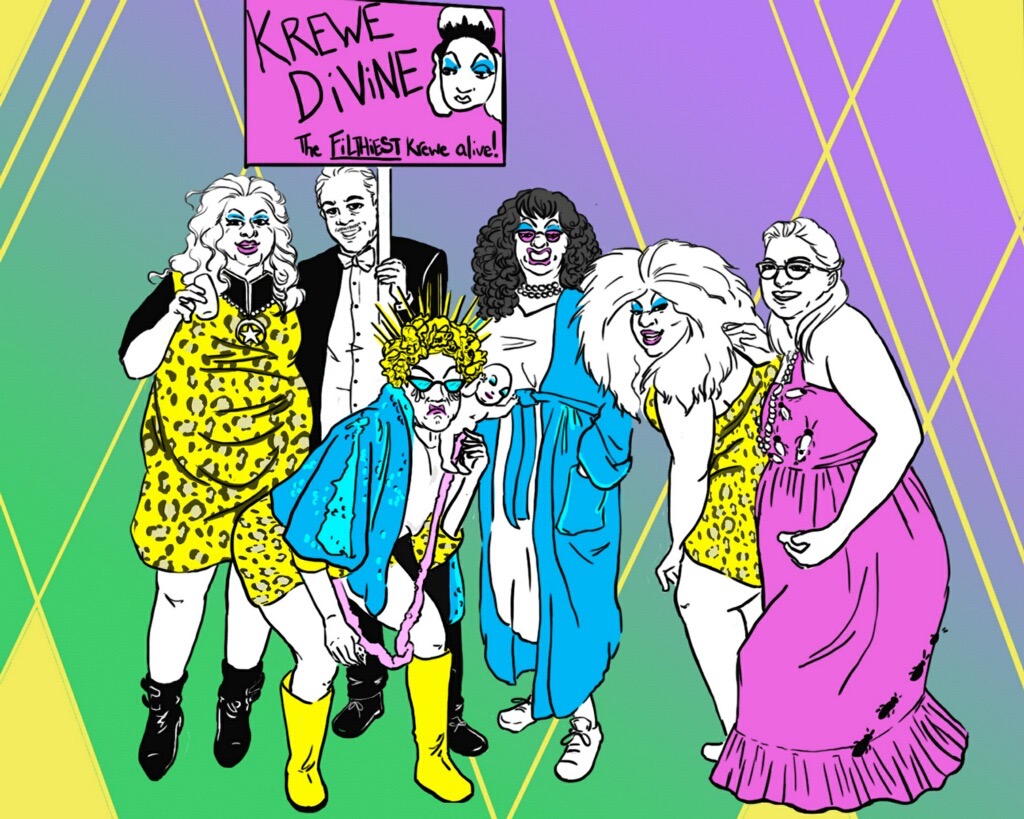
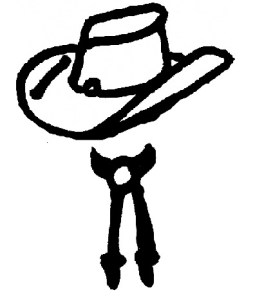
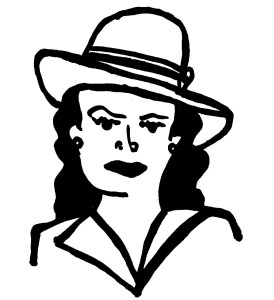
In that spirit, here’s a spotlight on two artists who could use an increase in commissions & donations in these increasingly dark helltimes. As examples of their work, I’m including portraits they’ve recently done of our Krewe Divine looks from this year and links to their personal websites where you can contact them directly. Check out their divine art, consider sending support, and let’s continue to take care of each other as best as we can.

Jennifer works as a PA in Los Angeles, where practically all productions are effectively coming to a halt. They’re currently taking commissions for digital art through their Instagram account.

Liz Yerby makes comics in Portland, Oregon, and is looking for an increase in paid work to help stay afloat. You can check out more of their art on their website and contact them directly by email for commissions.

-Brandon Ledet

New Orleans French Film Fest 2020, Ranked & Reviewed

Of the two local film festivals operated by the New Orleans Film Society, New Orleans Film Fest is both the longest-running and the most substantial. The 30th Annual NOFF, for instance, screened hundreds of films all over downtown New Orleans last October, of which we were able to cover 10 features (and a few shorts). We’re only seeing an insignificant fraction of the films screening NOFF every year, making a festival-wide recap something of a Sisyphean task as amateur bloggers.

NOFS’s annual New Orleans French Film Fest is a different matter entirely. The entirety of French Film Fest is located at a single, beautiful venue: The Prytania, Louisiana’s oldest operating single-screen cinema. All films are at least partially French productions, all are shown in subtitled French language, and the large majority of them never see domestic big screen distribution outside of the festival. I see some of my favorite releases of the year at French Film Fest too; 2018’s Double Lover ranked near the top of my favorite films of the 2010s . There are also typically at least two screenings a year that I’d comfortably call all-time favorites after just one viewing, especially in retrospective screenings from auteurs like Agnès Varda & Jacques Demy. New Orleans French Film Fest is the smaller, more intimate festival on the NOFS calendar, but its manageability is more of a charm than a hindrance and I’m starting to look forward to it more every year.

We will be doing a more exhaustive recap of our experience at the festival on an upcoming episode of the podcast, featuring a more fleshed out review of 1945’s Children of Paradise. For now, here’s a ranking of the few films we’ve seen that screened at the 2020 New Orleans French Film Fest. Each title includes a blurb and a link to a corresponding review. Enjoy!

1. Mr. Klein (1976) – “It’s clear from the start where the story is headed, as the movie largely functions as a Twilight Zone-style morality tale, but the point is less in the surprise of the plot than it is in the ugly depths of Klein’s authoritarian, self-serving character. This is a damn angry film about the evils of Political Apathy, and a damn great one.”

2. Deerskin (2020) – “Damn funny from start to end. Not only is the idea of a jacket being so fashionably mesmerizing that it leads to a life of crime hilarious even in the abstract, but the overqualified Jean Dujardin’s straight-faced commitment to the bit sells each gag with full inane delight.”

3. Varda by Agnès (2019) – “It may not be as kinetic or as aggressively stylistic as her career’s greatest triumphs (a contrast that’s unignorable, given those films’ presence on the screen), but it’s still incredibly playful & thoughtful in its own construction, especially considering the limitations of its structure as an academic lecture.”

4. Children of Paradise (1945) – Given this one’s accolades as one of the greatest films of all time, I expected a shift into outright Movie Magic surrealism during its stage pieces that never came. Instead, it’s just a well constructed, stately four-way melodrama with a dark sense of humor and an exceptionally grand budget considering it was partially made under Nazi occupation. It’s really good, but I was prepared to be totally floored (which is my fault, not the movie’s). Looking forward to diving further into it on the podcast.

5. Sibyl (2020) – “Its only major fault is that you could name several movies that push its basic elements way further into way wilder directions; Double Lover & Persona both come to mind. Otherwise, it’s an admirably solid Movie For Adults, the kind of thoughtfully constructed erotic menace that used to be produced by Hollywood studios at regular intervals but now only seeps quietly through European film festivals.”

6. Matthias & Maxime (2020) – “Incredibly observant about macho bonding rituals & typical group dynamics among basic bros – especially when parsing out what’s considered Normal male-on-male touching vs. what’s considered Gay. It’s just a shame that same thoughtful consideration didn’t extend to knowing how to trim the movie down to its best, most efficient shape.”

7. House of Cardin (2020) – “Not at all interested in matching the avant-garde artistry of its subject in any formal way; it’s about as forward-thinking in its filmmaking style as an I Love the 60s special on VH1. However, the vibrant, playful art of Pierre Cardin more than speaks for itself, and stepping out of that portfolio’s way read to me like a great sign of respect.”

8. Celebration (2019) – “Without any contextual info about how this late-career misery differs from YSL’s earlier, more youthful fashion shows, this behind-the-scenes glimpse fails to communicate anything coherent or concrete. Like the worst of the ‘elevated horrors’ of recent years that it stylistically emulates (if not only in its spooky score), it’s all atmosphere and no substance.”

-Brandon Ledet

Emma. (2020) is a Major Work, Goddamnit

When Boomer reviewed Autumn de Wilde’s recent adaptation of Jane Austen’s Emma, he approached it from a state of deep genre fatigue. He wrote, “Its biggest weaknesses are not in the film itself, but in its timing. If it wasn’t nipping at the heels of Little Women and Portrait of a Lady on Fire, I’d be spending a lot more time gushing over its color palette and period costumes, but despite the vibrancy and the spectacle of virtually every piece of clothing, I wasn’t as blown away as I would have liked to be.” This is certainly a valid POV in approaching the film. At least, it’s one I’ve seen validated by many other critics’ & audiences’ response to the movie – citing it as one of this season’s lesser specimens of its “genre” or, worse, an admirably solid adaptation of a book & character most people don’t seem to like to begin with. No matter how many times I see this sentiment repeated, though, it’s one I cannot match in my own, much more enthusiastic appreciation of Emma. It’s somewhat embarrassing to admit, but I found a stronger personal connection to Emma. than I did with any one of the more Prestigious films of recent years on a similar wavelength: The Favourite, Little Women, Love & Friendship, etc. I liked all those movies a great deal and understand that any one of them would be a more respectably Intellectual choice as a personal favorite, but I really can’t help it. In my eyes, Emma. is a great work of that same caliber, if not higher.

Even from Emma.’s (admittedly mild) detractors who might dismiss it as a decent 3-star frivolity, you’ll hear concessions that it looks great. Its confectionery production design and deviously playful costuming are too intoxicating to ignore, even if you find the comedy of manners they service to be a bore. That visual achievement is no small, ancillary concern in my estimation. Its confectionery aesthetic is a significant aspect of its substance as a work of art, not least of all because cinema is an inherently visual medium. Director Autumn de Wilde is primarily known as a portrait photographer – making a name for herself shooting musicians’ album covers before transitioning into filmmaking through the music video. A strong, precisely defined visual style is essential for an artist of that background (consider the stylistic hyperbole of Hype Williams’s Belly) and it’s a genuine thrill to see that crisp, modern formalism applied to a period piece (consider Sophia Coppola’s Marie Antoinette), given how stuffy & buttoned up the costume drama can feel at its laziest. There’s a tendency to devalue the visual artistry of fashion design & carefully curated color palettes as secondary concerns in cinema, as if they only exist to serve more Important criteria like performance & plot. Personally, I often find them far more exciting than those more frequently discussed concerns – especially in the “costume drama,” where costuming is emphasized right there in the name. When, for instance, Emma wears a free-floating lace collar as if it were an S&M-inspired choker or wears an overly frilly perfumed ornament that dangles from her hair like a mace, it’s more thrilling to me than any action sequence in Fast & Furious or Mad Max: Fury Road could ever be.

Of course, Autumn de Wilde’s precise eye for visual composition extends from what her characters are wearing to how they are positioned in the frame. Emma. is largely a story about the politics of social hierarchy among wealthy 19th Century fops (dressed up as a tittering rom-com about a misguided matchmaker), so much of its minute-to-minute conflicts are hinged on microscopic social cues in both spoken dialogue & performed body language. The film dutifully allows Austen’s dialogue to speak for itself on this highly stylized stage, but it does add its own spin to the source material by paying careful attention to blocking. Characters are constantly maneuvering their bodies in private parlors & public spaces to communicate unspoken dominance & conflict with their social adversaries. Emma Woodhouse herself has more perceived adversaries than most, as someone who constantly plays with social configurations as an idle pastime, so she’s the most obvious example of this purposeful body language display. When she spies through a store window that a new person is entering the room, she prepares by positioning her body in the most advantageous position she can manage, like a war general seeking higher ground. When she greets a potential beau who she finds romantically intriguing in her private greenhouse, she shifts her position to where the glass pane with the best lighting hits her just right with an artificially warm glow. Seemingly simple conversations in the film visually play out like complicated dances as characters mechanically shift around each other in closed-off rooms, an attention to blocking that’s emphasized by an elaborate ballroom scene where those body language politics become unavoidably explicit. It’s framed as being deliberate choices made by the characters themselves, but I think it also reflects the film being the vision of a director with an eye for how figures are arranged in photographic compositions.

As sharp as de Wilde’s visual compositions are in this debut feature, I can see how detractors could believe the movie falls short as an adaptation in its unwillingness to tinker with the source material. Emma. will not win over any naysayers who were already displeased with Austen’s novel or Emma Woodhouse as a character. This is a faithful translation from page-to-screen in terms of narrative content, only asserting its own voice on the material through visual style & comedic performance. It works for me, but I was already a fan of the novel before I arrived. Emma Woodhouse is a deeply flawed brat whose lifelong idleness in comfort & wealth has trained her to treat people’s private lives like playthings. Anya Taylor-Joy was perfect casting for the role in that she’s already been walking a tightrope between quietly sinister & adorably sweet since her breakout performance in The Witch. Her dips into thoughtless cruelty at the expense of her social inferiors hit just as hard as the physical comedy of the goofier subordinates she’s adopted as pets (the MVPs in those roles being Mia Goth as her absurdly naive protégée & Bill Nighy as her hypochondriac father). Both Emma’s icy manipulations of her social circle’s hierarchy (disguised as playful “matchmaking”) and her closest family & friends’ pronounced goofiness are majorly enhanced by the buttoned-up tension of the setting, where the smallest gesture or insult can mean The World. The laughs are big; so are the gasps when Emma fucks up by allowing her games to hurt “real” people’s very real feelings. When Clueless modernized the character for the 1990s, it softened the blow of these thoughtless miscalculations by making Emma something of an oblivious Valley Girl ditz. De Wilde’s film makes no such accommodations, sketching her out as a very smart, sharply witted person who should know better (and ultimately learns from her mistakes). Continuing to like her in that context is a bigger leap than some audiences are apparently willing to make.

I really like Emma., both the movie and the character. Autumn de Wilde seemingly likes her as well, even if she can’t resist ribbing her for not being half as smart or talented as she believes herself to be (most hilariously represented in her limitations as a painter & musician). I wish I could fully hinge my appreciation for this movie on its exquisite visual artistry or its shrewdness as a page-to-screen adaptation, but the ultimate truth is that it’s a comedy that I happened to find very, very funny from start to end. Whether that’s because the physical humor hit me just right in its stuffy setting or because I just happen to generally get a kick out of Women Behaving Badly is anyone’s guess. Similarly, I wonder if critics who were underwhelmed by the film in comparison with fellow costume dramas of its artistic caliber just simply didn’t find it humorous, as there’s no rationale that can intellectually save a comedy you simply don’t find funny. No one seems willing to argue that Emma. isn’t accomplished as a visual feat, so I suspect it’s the specificity of the humor or the thorniness of Emma Woodhouse as a character that’s weighing down its initial reputation. Personally, both the quirky character humor and the thoughtless dips into ice-cold cruelty worked for me, and I consider Emma. to be a major work. I doubt I’m the only one.

-Brandon Ledet

Movie of the Month: True Stories (1986)

Every month one of us makes the rest of the crew watch a movie they’ve never seen before and we discuss it afterwards. This month Boomer made Britnee, Brandon, and Hanna watch True Stories (1986).

Boomer: “Look at it. Who can say it’s not beautiful?”

On tour, Talking Heads frontman David Byrne used to keep clippings and cutouts from various tabloids, and imagined a place where all the stories from them were true. Out of that thought experiment, True Stories was born. Starring David Byrne as a visitor to the fictional small Texas town of Virgil, True Stories is (technically) a musical featuring nine new songs written by the Talking Heads, performed in-story by various eccentric characters in and around the utterly banal Virgil as they gear up for the town’s sesquicentennial, to be marked by a “Celebration of Specialness” that includes a parade and culminating in a stage show.

There’s not really much of a narrative here, but the closest thing to a traditional story is the arc of Virgil citizen Louis (John Goodman in his first feature role), a consistently panda bear-shaped man seeking matrimony. Louis is a clean room technician at Varicorp, the computer manufacturing corporation that employs most of the town (housed in “an all-purpose shape,” Byrne’s narrator observes, “a box”). Over the course of the film, he finds himself on dates with some of the town’s eligible women, including The Cute Woman (Alix Elias), who loves and adores cute things and can’t bear sadness, even for a moment, as well as The Lying Woman (Jo Harvey Allen), who attributes her nonexistent psychic powers to the vestigial tail she was born with and claims to be responsible for both the death of JFK and the writing of “Billie Jean;” none are a good fit. Other citizens we encounter include a conspiracy theorist preacher (John Ingle), a woman who got so rich from Varicorp stock that she no longer gets out of bed (Swoosie Kurtz, making her second MotM appearance after previously being seen in Citizen Ruth), and Varicorp founder Earl Culver (monologuist Spalding Gray) and his wife Kay (Annie McEnroe), who no longer speak directly to one another despite being perfectly civil.

Years ago, when Lindsay Ellis did her review of Freddy Got Fingered under the Nostalgia Chick banner, she dismissed that film with the following: “See film students? You want your auteur theory? It’s right […] here: Fellini’s 8 1/2, Godard’s Contempt, Green’s Freddy Got Fingered: all shocking insights into the souls of their creators.” I think that this applies to True Stories and David Byrne as well: a fearless peeling back of Byrne’s public persona (as unobtrusive as it is) to lay bare the core of this being called “David Byrne.” It’s truly a celebration of the specialness of the mundane, and even the specialness of something as ugly as suburban tract housing. Who can say it’s not beautiful? There ought to be a law.

Hanna, infamously the studio forced the Talking Heads to re-record the songs written for this film as a band, and a lot of the meaning gets lost in that translation. Like, the Heads version of “Dream Operator” is great, but it’s missing some of the magic that comes from the inherent sweetness in McEnroe’s version, which didn’t exist separate from the fashion show sequence until the soundtrack got an actual release in 2018. Which songs, if any, do you think would actually benefit from being sung by Byrne, outside of the context of True Stories? Which do you think would lose all meaning divorced from the context of the film?

Hanna: I’m probably not the right person to answer this question. I love David Byrne and Talking Heads, but I am embarrassingly late to the party; I saw Stop Making Sense for the first time within the last year, and I literally just learned that the band is not called “The Talking Heads.” I think the soundtrack works best as a delightful little showcase for each surreal voice of Virgil (I especially enjoyed “Dream Operator”, “Puzzlin’ Evidence”, and “People Like Us”); the Talking Heads re-recordings take the individuality out of those voices. I have more investment in those characters’ stories than I do in hearing the Talking Heads record the songs, so I think it’s a shame that it took so long (34 years!) to release the soundtrack as it was originally recorded, and I’m glad David Byrne eventually got to put out the version he envisioned from the beginning.

The cast of lovingly painted, idiosyncratic characters was my favorite part of this movie. Last summer I visited the Texas State Fair, which housed the winning entries of Texas’s Creative Arts contest in a large gymnasium. The walls were lined with glass cases overflowing with hundreds of Texas oddities, which were neighbors by virtue of their proximity and their shared point of origin. Yards of quilted cotton pastures meticulously embroidered with lowing longhorns was draped two cases away from a demented carving of a hand, crudely sculpted from pure Texas butter; on the opposite wall, a doomsday-proof abundance of canned pickles, jams, and relishes loomed over ceramic souvenir plates. The haphazard collection of crafted artifacts embodied a particular kind of tender strangeness that never fails to delight me; that same feeling is threaded throughout True Stories.

The citizens of Virgil (including the aforementioned rich woman and Mr. Culver, who bursts into an ecstatic dinner demonstration of the spiritualization of capitalism, among other things) coexist in intimate isolation, seeking recognition from one another through brief encounters in well-worn public spaces—the one mall, the one bar, the one factory floor—without any real expectations, because everybody inevitably believes they already know everything there is to know about every other person. Louis is an especially sad character, and especially isolated; he works in Varicorp’s clean room, which is totally shut off from the friendly bustle of the assembly line floor. He goes to great lengths to find a wife for himself, including installing a marquee indicating his bachelorhood outside his home and taping a two-minute personal ad on a local TV station. Despite his unfortunate circumstances, he seems to be immune to any negative emotional state beyond hapless ennui; he doesn’t take it too personally when his dates don’t go well, and he is absolutely unflappable in his quest for love. This appearance of stability belies a disturbing loneliness that’s reaches its zenith at the Specialness showcase, where he sings “People Like Us”, a jaunty country-western tune that is terrifying in its desperation for human connection; he happily throws away any claim to freedom and justice for the chance to be loved by someone. This display of vulnerability pays off big time for Louis, but the expectations for his existence and his estimated self-worth are so cruelly distorted that it still feels like a loss, a reminder that things are very often nice and bad at the same time.

Tell me, Britnee: what did you think of the characters? Who stood out to you, and who faded into the background? Did you think they formed a cohesive picture of Virgil, Texas?

Britnee: There are quite a few eccentric characters in True Stories, which isn’t a rarity among films of this sort. There’s just something about this particular gaggle of wacky characters that set them apart from other similar casts. The unique folks of Virgil really make the town feel like its own universe, and each individual is an important piece of the town’s puzzle, no matter how big or small their role may be. Everyone was such a pleasure to watch, and each character brought something special to the film. Specifically, there are two characters that I would get super excited about whenever they graced the screen: Miss Rollings and Ramon. Miss Rollings is everything. She’s glamorous in a very psychobiddy way, and she has rigged up her bedroom with all sorts of gadgets to make her life as easy as possible. This includes a robot, a feeding machine, and a mechanical page turner. She would own so many Alexas if this film was set in modern times. Her sloth was so over-the-top, and I loved every minute of her screentime. As for Ramon, his smile and zest for life was so contagious. Not only does he gift of reading people’s tones, but he is a super passionate musician. I loved watching him do anything.

Something that I really admired about True Stories was how its bizarre events clashed against such a bland setting. Take for instance the shopping mall fashion show. In a very basic mall, there’s an audience of very basic people awaiting what one would expect to be a very basic fashion show. Well, as time progresses, the fashion becomes more and more insane. Astro turf dresses, oversized suits, loofah dresses, and mile-high headpieces grace the runway while “Dream Operator” is being sung by the soft voice of Mrs. Culver. Another example would be the family dinner at the Culver residence where the upper-middle class table setting includes oddities such as raw bell peppers stuffed with raw mushrooms and Japanese fish cakes atop sliced cucumbers surrounding a lobster. Mr. Culver proceeds to use the raw vegetables from the spread to explain the future of microelectronics in Virgil. It’s like the suburban American version of the Mad Hatter’s tea party.

Brandon, how important is it for the fictional town of Virgil to exist in Texas? Would this film still carry on the same if it were to take place in, for instance, a suburban town in the Mid-West?

Brandon: I absolutely believe Virgil’s Texan setting is essential to the movie’s abstracted portrait of American culture, as Texas is maybe the most stereotypically American state in the union. When other countries mock American sensibilities from an outsider’s perspective, it’s usually a parody expressed through explicitly Texan iconography. The cowboy costuming, Southern drawl, and Conservative Values of Texas are a perfect distillation of American culture at large, even though this is a vastly sprawling country with endless localized quirks. David Byrne is himself an American, but he’s studying our peculiar ideology & social rituals here as if he were a total outsider – which he kind of is, considering that he’s an art school weirdo who was born in Scotland and accidentally made it big with an NYC punk band in his 20s. It’s outright alarming when the citizens of Virgil start interacting with his onscreen narrator as if he were just a normal person just walking among them, as he initially reads as an omnipotent spirit who exists in an ethereal realm outside their earthly existence. Watching the aww-shucks, panda bear-shaped John Goodman directly interact with the strange, alien spirit of David Byrne is like watching Fred Flintstone chat with the Great Gazoo. He’s so far outside their quaint, small-town American way of living that he’s practically a figment of their imagination. Yet, he seems to have a genuine affection for Virgil even though he finds their ways deeply strange, and the movie functions almost like a love letter to the surrealism of Americana through that abstracted outsider’s lens.

I was impressed that this awestruck outsider’s portrait of American culture doesn’t shy away from our country’s more brutal history. Before the modern American absurdism of the shopping mall & channel surfing sequences light up the screen, the film opens with a crash history in the state of Texas’s establishment. We watch in a blur how the land was seized from Native cultures by white colonialists, which is an ugly undercurrent that colors the more frivolous parking lot hangouts & talent show frivolities later staged on the same land. Byrne manages to find beauty & wonder in the modern American consumer culture that replaced Native people’s own lifestyles & customs before they were ransacked. Supposedly, the occasion for the film’s celebration of Americana (through the climactic talent show) is the 150th anniversary of the founding of the state of Texas, but it’s really an abstracted portrait of America at large. The effort wouldn’t be a complete picture without that ugly colonialist history, and I admired the film for starting there before gushing over our more adorable eccentricities.

Lagniappe

Hanna: I was disturbed by my soul’s unequivocal resonation with The Lazy Woman; her slowly reclining bed, sumptuous silk sheets in pastel pink, and little robot dutifully spooning scrambled egg into her mouth filled me with wonder and vicarious ennui. I don’t think I’ve seen a clearer representation of my deepest desires.

Boomer: If you’ve been driving yourself crazy trying to figure out where you’ve seen the fantastic preacher from the “Puzzlin’ Evidence” sequence before, put your mind at ease: John Ingle was the principal in Heathers.

Brandon: Boomer’s dead-on about the overwhelming auteurism of this picture. True Stories is part sketch comedy, part music video, part essay film, and part experimental video art, but it’s mostly just a 90-minute visit inside David Byrne’s wonderful brain as he puzzles at the basic nature of rural Texas and, by extension, America. He has a childish, exuberant sense of wonder for the world that I very much wish I had left in my own dull, jaded POV. Decades later, we’re still surrounded by this same iconography every day, but we rarely prompt ourselves to consider its basic nature or value. I wish I could live in David Byrne’s America, and the only thing really stopping me is my own mental roadblocks.

I specifically wish I could live in the America depicted in the “Wild Wild Life” karaoke dance party sequence, where every member of our local communities has a chance to share the stage and be celebrated for their unique personality & sense of personal fashion. I’m afraid that I instead live in the America of the fire & brimstone pulpit sermon “Puzzlin’ Evidence”: an increasingly insular, reactionary pitchfork brigade rife with paranoid conspiracy theories & fear of the unknown. In either instance, I’m sure I’d find more joy & adoration for the sprawling concrete monstrosity we’ve built if I could just better absorb some of Byrne’s abstracted, endlessly delighted worldview.

Britnee: Usually, when famous musicians make movies, they tend to be vanity projects or just sucky failures with the only redeeming quality being the musician’s contribution. I was delighted at how David Byrne did not make this film to glorify himself. It is heavily influenced by his style, but one doesn’t need to be a David Byrne fan or even know of his existence to enjoy True Stories.

Upcoming Movies of the Month
April: Britnee presents Fried Green Tomatoes (1991)
May: Hanna presents Playtime (1967)
June: Brandon presents Funeral Parade of Roses (1969)

-The Swampflix Crew

Swampflix’s Top 10 Films of the 2010s

1. Mandy (2018) – The most Metal movie of all time. When Nicolas Cage axe-murders biker demons & religious acid freaks in an alternate dimension 1980s, Mandy is headbanging party metal, a blood-splattering good time. In its quieter moments it also captures a stoned-and-alone, crying over past trauma to doom riffs version of metal, where the flashes of fun & cosmic absurdity are only reminders of how cruelly uncaring & meaningless it can feel to be alive.

2. Black Swan (2010) – Darren Aronofsky amplifies the supernatural horror undertones of the classic ballet industry melodrama The Red Shoes to a giallo-esque fever pitch. A terrifying (even if familiar) tale of a woman who’s controlled & infantilized in every aspect of her life to the point of a total psychological break, confusing what’s “real” and what’s fantasy onscreen in the most unsettling way.

4. Raw (2017) – The debut feature from director Julia Ducournau is one of the more wonderfully gruesome horror films of the decade, but it’s also much more tonally & thematically complex than what its grindhouse marketing would lead you to believe. A coming-of-age cannibal film about a young woman discovering previously undetected . . . appetites in herself as she enters autonomous adulthood, Raw is incredibly delicate & subtle, especially for a remnant of the New French Extremity horror movement.

4. Knife+Heart (2019) – This is fantastic smut, especially if you happen to enjoy classic slashers & gialli. Picture Dario Argento’s Cruising. Set against a gay porno shoot in 1970s Paris, Knife+Heart really turns the usual male gaze & female victim empathy of those genres on their head in a fascinating way. And it only improves on repeat viewings as its psychedelic flashback imagery and its Goblin-inspired synth soundtrack from M83 sink further into your subconscious.

5. The Witch (2016) – Simultaneously acts like a newly-discovered Nathaniel Hawthorne short story, a “Hansel & Gretel” type fairy tale about the dangers of the wild, a slice of Satanic Panic folklore, and an impressively well-researched historical account of witchcraft unmatched in its eerie beauty since at least as far back as 1922’s Häxan. Despite its academic nature and Puritan setting, this film will make your skin crawl with dread. Every frame is elegant and haunting, transporting the audience back to the 17th Century and tempting those along for the ride to question their sanity.

6. Upstream Color (2013) – Shane Carruth’s mind-control whatsit might be the most impressively edited film of the decade, considering how it communicates an exponentially intricate sci-fi narrative through a jumble of disjointed imagery and yet its basic outline is crystal clear for every minute you afford it your full attention. Its closed loop of human connection & subhuman exploitation is a deeply weird trip for as long as you allow yourself to remain under its spell.

7. The Florida Project (2017) – Captures a rebellious punk spirit that laughs in the face of all authority & life obstacles among the children who run wild in the extended-stay slum motels just outside the Disney World amusement parks. The Florida Project doesn’t dwell on or exploit the less-than-ideal conditions its pint-sized punks grow up in, even when depicting their most dire consequences; it instead celebrates the kids’ anarchic energy and refusal to buckle under the false authority of adults.

8. We Need to Talk About Kevin (2011) – Tilda Swinton & Ezra Miller square off as a combative mother-son duo in a cerebral chiller about the scariest, least noble crises of parenting. A convincing argument could be made that any one of Lynne Ramsay’s movies are her career-best, but this remains the clear stand-out for us. One of the great works about the horrors of motherhood.

9. The Favourite (2018) –It turns out an 18th Century royal court is the exact right setting for Yorgos Lanthimos’s buttoned-up, emotionally distanced mockery of “civility,” whereas it often feels alien or robotic in his more modern settings. The jokes fly faster & with a newfound, delicious bitchiness. The sex & violence veer more towards slapstick than subhuman cruelty. The Favourite is Lanthimos seeking moments of compromise & accessibility while still staying true to his distinctly cold auteurist voice – and it’s his best film to date for it.

10. Annihilation (2018) – A beautifully terrifying tale of life, death, rebirth, and the trauma that haunts us throughout it all. On one level, Annihilation is just a visually gorgeous, weirdo monster movie that reimagines Tarkovsky’s Stalker with a pastel color palette & more traditional genre thrills. On a deeper level, it’s a powerful reflection on how grief & trauma transform us into entirely different people, to the point where that change becomes physical & irreversible.

Read Boomer’s picks here.
Read Brandon’s picks here.
Read Britnee’s picks here.
See Hanna’s picks here.
Hear James’s picks here.

-The Swampflix Crew

Movies to See in New Orleans This Week (French Film Fest Edition) 2/27/20 – 3/4/20

New Orleans is stilly groggily recovering from this year’s Mardi Gras mayhem right now, but there truly is no rest for the wicked (or the festive, apparently). The 23rd annual New Orleans French Festival is here to shake us out of the Ash Wednesday fog and back into the routine of watching challenging Art Films in public, even though this period of post-Mardi Gras sloth seems better suited for binge-watching Trash TV on the couch. Wake up that Carnival-addled brain of yours before you get lost forever in an endless flood of Love is Blind episodes . . .

There are over a dozen titles screening at The Prytania in the coming week for the New Orleans French Film Festival (and tracking any goings on beyond that event sounds absolutely exhausting), so we’re going to keep this week’s local screenings round-up as simple as possible. Here are some recommendations for movies to see at one the city’s most consistently rewarding film fests, with blurbs lifted from the New Orleans Film Society‘s own listings for the lineup.

French Film Fest Screenings at The Prytania

Children of Paradise (1945) – “Poetic realism reached sublime heights with Children of Paradise, widely considered one of the greatest French films of all time. This nimble depiction of 19th-century Paris’s theatrical demimonde, filmed during World War II, follows a mysterious woman (Arletty) loved by four different men (all based on historical figures): an actor, a criminal, a count, and, most poignantly, a mime (Jean-Louis Barrault, in a performance for the ages). Thanks to a major new restoration, this iconic classic looks and sounds richer and more detailed than ever.” Friday, Feb 28, 2:15 pm

Umbrellas of Cherbourg (1964) – “Demy’s 1964 masterpiece of music and romance stars Catherine Deneuve as an umbrella shopkeeper who is separated from her mechanic boyfriend (Nino Castelnuevo) when he is called for military service. The film was fully restored in breathtaking color in 1992 under the supervision of Demy’s widow, filmmaker Agnès Varda. Umbrellas won the Grand Prize at the 1964 Cannes Film Festival and was nominated for five Academy Awards. The restored soundtrack features Michel Legrand’s unforgettable score remixed in stereo.” Sunday March 1 & Wednesday March 4, 10:00 am

Mr. Klein (1976) – “In Occupied France, Mr. Klein (played with perfection by Alain Delon) exploits the situation of the Jews by buying and selling their works of art. When a Jewish man of the same name surfaces in Paris, Klein comes under suspicion and experiences the persecution of his countrymen firsthand. Also starring Jeanne Moreau, this rare and celebrated film from 1976 was blacklisted American director Joseph Losey’s first film in French, and it won the coveted César Awards for Best Film and Best Director. This restored version has finally arrived in theaters to ecstatic praise from major critics.” Sunday March 1 & Monday March 2, 12pm

Varda by Agnès (2019) – “The final film from the late, beloved Agnès Varda is a characteristically playful, profound, and personal summation of the director’s own brilliant career.  At once impish and wise, she acts as our spirit guide on a free-associative tour through her six-decade artistic journey, shedding new light on her films, photography, and recent installation works while offering her one-of-a-kind reflections on everything from filmmaking to cats to feminism to aging. A warmly human, touchingly bittersweet parting gift from one of cinema’s most luminous talents.” Sunday March 1, 5pm + Wednesday March 4, 12pm

Deerskin (2020) – “The latest from Quentin Dupieux (the brains behind the delightfully outrageous Rubber, about a sentient tire on a killing spree), Deerskin follows amateur filmmaker Georges, who becomes obsessed with his new deerskin jacket. Convinced that his jacket must be the only one in the world, Georges is led down a Tarantino-esque path to rid the world of all competition. Played with total commitment by Academy Award® winner Jean Dujardin (The Artist), the film premiered at the Cannes Film Festival and also stars Adèle Haenel (Portrait of a Lady on Fire).” Saturday, Feb 29, 8:30 pm

Sybil (2020) – “Premiered at the most recent Cannes Film Festival, French director Justine Triet’s Sybil brings together an all-star cast with Virginie Efira (Elle, Victoria), Adèle Exarchopoulos (Blue Is The Warmest Color), and Sandra Hüller (Toni Erdmann).” Thursday Feb 27, 7:45pm + Tuesday March 3, 12pm

Matthias & Maxime (2020) – “The latest feature from the 30-year-old French-Canadian auteur Xavier Dolan, who premiered six films in Cannes and received too many jury awards and prizes to mention. Matthias and Maxime stars Dolan and Gabriel D’Almeida Freitas in the lead roles, with longtime Dolan muse Anne Dorval playing his ailing mother.” Wednesday, March 4, 7:45 pm

-Brandon Ledet


Hanna’s Top 20 Films of the 2010s

1. The Florida Project (2017)
2. Mother! (2017)
3. Raw (2017)
4. Dogtooth (2010)
5. Marjorie Prime (2017)

6. The Favourite (2018)
7. Black Swan (2010)
8. Ex Machina (2015)
9. Arrival (2016)
10. The Act of Killing (2013)
11. The Lighthouse (2019)
12. Annihilation (2018)
13. Sorry To Bother You (2018)
14. Upstream Color (2013)
15. The One I Love (2014)
16. We Need To Talk About Kevin (2011)
17. Moonlight (2016)
18. My Life as a Zucchini (2016)
19. Melancholia (2011)
20. Mandy (2018)

Click through the image for a full-size scan. And listen to our Top Films of the 2010s podcast to hear reviews of the films illustrated.

– Hanna Räsänen

Krewe Divine 2020

In 2017, a few members of the Swampflix crew decided to finally grow up and get serious about Mardi Gras. We collectively shed our annual personal crises about what themes to include in our Fat Tuesday costuming by pooling our resources to pray at the altar of a single cinematic deity: Divine. Arguably the greatest drag queen of all time, Divine was the frequent collaborator & long-time muse of one of our favorite filmmakers, John Waters. Her influence on the pop culture landscape extends far beyond the Pope of Trash’s Dreamlanders era, however, emanating to as far-reaching places as the San Franciscan performers The Cockettes, the punkification of disco, RuPaul’s Drag Race, and Disney’s The Little Mermaid. Our intent was to honor the Queen of Filth in all her fabulously fucked-up glory by maintaining a new Mardi Gras tradition in Krewe Divine, a costuming krewe meant to masquerade in the French Quarter on every Fat Tuesday into perpetuity.

Our initial krewe was a small group of Swampflix contributors: site co-founders Brandon Ledet & Britnee Lombas, regular contributor CC Chapman, and repeat podcast guest Virginia Ruth. We were later joined by local drag performer Ce Ce V DeMenthe, who frequently pays tribute to Divine in her performances. There’s no telling how Krewe Divine will expand or evolve from here as we do our best to honor the Queen of Filth in the future, but for now, enjoy some pictures from our 2020 excursion, our fourth year in operation as Swampflix’s official Mardi Gras krewe:

Eat shit!
❤ Krewe Divine ❤

Krewe Divine Prayer Cards

Happy Mardi Gras, y’all!

Today marks the fourth outing of Krewe Divine, Swampflix’s official Mardi Gras krewe.  As part of our continued effort to pay tribute to the filthy divinity of John Waters’s own Dreamlanders crew with our annual costuming excursions, I made these “Catholic” prayer cards as this year’s throws.  Feel free to print & laminate them yourselves to pass around.  Spread the good word of Filth.  And, as always, eat shit!

Click through the images for full-size scans.

Creative Commons License
This work is licensed under a Creative Commons Attribution-NonCommercial 4.0 International License.

-CC Chapman

Boomer’s Top 15 Comic Book Movies of the 2010s

I had to do it, guys. I had to put my top comic book movies into one list. Why? Well, I couldn’t in good conscience rank Winter Soldier over The Favourite or spend the rest of my natural and unnatural life debating the artistic merits and differences between Batman: Under the Red Hood and Phantom Thread. I didn’t want to live that way. So here they are, my favorite 15 comic book movies of the 2010s.  You can check out my other 100 favorite films of the decade here.

15. Ant-Man and the Wasp (2018). From my review: “Like the first film, Ant-Man and the Wasp prioritizes fun shenanigans over the more superheroics of its MCU brethren. 2015’s Ant-Man was following in the footsteps of what was arguably the franchise’s first true comedy outing in Guardians of the Galaxy, but by foresaking that film’s space operatics for the more terrestrial mundanity of a heist film, it cemented a move that has come to be one of the motivating forces of why people love these movies and keep forking over money for them: humor, plain and simple. This is not a heist film, however, and unlike other outright comedic entries in the MCU (Thor: Ragnarok = synth-heavy 80s-style gladiator opera, Guardians 2 = manchild coming-of-age narrative, Spider-Man: Homecoming = John Hughes-style eighties high school flick), there’s not an easily-identifiable genre or style that director Reed has grafted the Ant-Man team onto this time around. There’s a little bit of Ferris Bueller energy floating around here, especially with Scott constantly having to return home before the FBI (herein acting with the same vaguely-menacing but largely bumbling inefficiency as Ferris’s principal), and while that’s central to the narrative, it’s not the central plot.”

14. Ant-Man (2015). From my review (my first writing for Swampflix!): “My initial skepticism about this movie mirrored my early skepticism for Guardians of the Galaxy: “Sure, expand the scope of the franchise–but why this property?” Ant-Man couldn’t possible live up to the standard of a movie that turned schlubby everyman Chris Pratt into a legitimate movie star, but the hype for Rudd’s vehicle doesn’t oversell the inarguably fun, likable, watchable movie that Ant-Man is. As a CGI-heavy flick, it had the potential to look like computer generated garbage (again, see also: Jurassic World), but at no point did the imagery take me out of the moment the way other recent movies have. Although Lilly is underutilized, the groundwork for her larger future involvement in the franchise is laid well (comic book fans will probably guess in what capacity, but I won’t spoil that here), and Peña works well as a character suited both for comic relief and surprising heroism. An extended cameo from the Falcon (Anthony Mackie) seems somewhat tacked on, but does well to remind us that this relatively grounded entry in the Marvel Cinematic Universe is still part of a larger narrative, and Mackie is always a welcome screen presence. Unlike gloating trillionaire Tony Stark, Scott Lang is a much more identifiable, sympathetic, and likable character, which makes for a more interesting and compelling character. And, as cited above, the sequences that feature tiny Scott navigating the normal world, but magnified, are a treasure—Scott flying around on the back of his flying ant steed, Antony, was a particular highlight.”
13. Iron Man 3 (2013). From our Agents of S.W.A.M.P.F.L.I.X. discussion: “A lot of people really disliked this movie when it came out, citing the appearance of a kid sidekick character and the purported ruination of The Mandarin. Personally, however, I have to say that this is probably my favorite of the Iron Man flicks. I’ll admit that the kid sidekick character doesn’t really bother me in the slightest (and he appears onscreen for such a short period of time that his presence is virtually negligible). As for the way that the film used The Mandarin … I actually think that it was a bit of an ingenious move. I understand that this is a character into whom a lot of people have invested time and emotional energy, and I can understand the outrage because I felt much the same way when Star Trek Into Darkness sprang a whitewashed terrible Khan on the audience. The difference, however, is that the fact that Benedict Cumberbatch’s character is Khan contributes nothing to the film other than a familiar name, whereas the Mandarin reveal in Iron Man 3 actually serves to further the plot in an interesting way, and the film does well to play that reveal close to the chest up to the point where we finally meet Trevor Slattery. This was a neat twist that played on expectations of comic book fans and mainstream filmgoers alike, and I think a lot of people were simply caught off guard by the revelation and overreacted to it.”
12. Shazam! (2019). From my best of 2019 list: “Zachary Levi makes a star turn as DC’s Big Red Cheese, the Shazam formerly known as Captain Marvel, one of the oldest comic book superheroes in existence (fun fact: while home from work on Christmas Eve, I watched an episode of The Donna Reed Show in which the lead visited a bunch of children in the hospital and one of them was reading a comic book featuring this very character). A surprisingly good flick coming out of the DC film house, this one takes all the wish fulfillment that has long been a part of this character’s nature—a child becomes an adult superhero when he speaks the titular magic word—and crafts a narrative about two separate people whose home lives leave much to be desired and how each charts their own path, a narrative of choosing to let go of resentment and naïveté to embrace hope or hopelessness. All that, and it’s a throwback to the kids movies of the eighties, films that understood that children want to be scared sometimes, and embraces that paradigm, balancing fright and fun in equal measures. Read my review here.”

11. Avengers (2012). From our Agents of S.W.A.M.P.F.L.I.X. discussion: “The Avengers is a fun ride, and although the Battle of New York—as the final action sequence would come to be called in later MCU media—admittedly experienced a series of diminishing returns, most of the myriad of other high-octane set-pieces were genuinely thrilling and engaging. It was a smart move to start the film with an action sequence that was largely Avenger-free and which instead focused on Fury, Coulson, and Maria Hill before following that up with a series of smaller scenes that reintroduce each of the key players with varying degrees of bombasity. Other checkmarks in the “good idea” column include the decision to have characters express reluctance and hesitance to commit to the idea of a full-on superhero team, and to introduce the seeds of discord early on. As a result, when the temporary falling out occurs at the end of Act Two, it feels properly earned and not as forced as it so easily could have.”

10. Logan (2017). From my review: “My apathy and weariness about Wolverine aside, this is a good movie. Sure, it makes no logical sense within the confines of the different timelines that the other films in this franchise have provided without a conspiracy theory board of newspaper clippings, post-it notes, and red string, but 20th Century Fox doesn’t care anymore, so why should you? The one problem I’ve never had with the film version of Wolverine is Hugh Jackman’s consistently strong performance regardless of the variable quality of the material available, and this is his best work as the character to date. This is despite (or perhaps because of) the fact that, for once, we’re not reflecting back on his mysterious past as we have in literally every movie in which he appeared in this franchise and are instead seeing a man at the end of his career and, perhaps, his life. Logan deals with the more mundane aspects of growing old, like obsolescence in a changing world, the dementia of an elderly father (figure), and the betrayal of his own aging body and the disease thereof, despite his much-touted healing factor. This is not a character who is obsessed with learning about (or altering) his past, but one for whom the past is prologue to a slow, painful existence in an all-too-real dystopian future.”

9. Thor: Ragnarok(2017). From my review: “Here, however, everyone is totally committed to the job, which is probably easier under the guiding hand of the bombastic and colorful Taika Waititi, who seems to be the embodiment of Mr. Fun, than it was in a film helmed by Alan Taylor, whose work tends to be more grim, if not outright melancholy. This is a movie with setpiece after setpiece, all in different realms and on various planets with their own palettes and aesthetic principles, which lends the film a verisimilitude of scope, even though each conflict (other than the opening fight sequence) comes down to something much more intimate and personal: the friction between selfishness and the responsibility to something greater than oneself. The wayward Valkyrie forsakes her desire to drink herself to death while running from the past in order to defend her home once again, Bruce Banner risks being completely and permanently subsumed by the Hulk in order to lend a hand when Asgard calls for aid, Skurge finds a strength he didn’t know he had when faced with the extermination of his people, and even Loki ends up making a decision that helps others with no apparent direct or indirect benefits to himself. The oldest being in the film, Hela, has never learned this lesson despite having nearly an eternity to do so, and it is her ultimate undoing (maybe), and it’s a strong thematic element that comes across clearly in a way that a lot of films from the MCU do not.”
8. Wonder Woman (2017). From my review: “For a tale that takes place with WWI as a backdrop, this film’s not that gritty. Thanks goodness for that, because it could have easily been another gray, dull action movie about the horrors of war. That’s not to say that the horrors of war aren’t present here, especially since World War I was a particularly savage example of carnage and loss of life. The main villains are still an evil general and his mad scientist lover/sidekick, who are developing a particularly lethal form of mustard gas. Despite this, there’s a tone of hope. We believe in our seriously scarred and flawed heroes. Diana is a source of justice and light in the darkness. War is still hell, but in the end we know Diana is going to succeed. There’s no way she can’t. She’s Wonder Woman. The movie really sells us on the idea that she can do anything, and that’s not a bad thing at all.”

7. Spider-Man: Homecoming (2017). From my review: “While recently watching The 3% on Netflix with my roommate, he remarked that he found the show to be “effortlessly Tumblr friendly,” which is also true of this film. One thing you may notice about the cast list above is that, other than Holland, all of the actors listed are people of color. This is a great step forward as far as diversity goes in the Marvel Cinematic Universe, which is something that I have written about here before, especially in regards to the largely white-washed and underwhelming Doctor Strange. More admirable than that, however, is the fact that the film has largely cast actors with strong comedic ability beyond any arguable (or marketable) “tokenism”  in what is probably the funniest film that the MCU has produced outside of the Guardians movies so far. Other notable comedians in the adult cast include comedic actors like Hannibal Buress as Coach Wilson (who has some of the film’s best lines), my beloved Donald Glover as two-scene wonder Aaron Davis, and Orange is the New Black‘s (admittedly underutilized) Selenis Levya, making her the second actress to break free from that program into a superhero film after Elizabeth Rodriguez’s appearance in Logan earlier this year.”

6. Guardians of the Galaxy: Volume 2 (2017). From my review: “There’s no Infinity Stone MacGuffin here, and it’s a real break from the MCU’s usual storytelling machine that the narrative of GotG 2 isn’t motivated by set pieces, action sequences, or even plot, but by character. The only real example of this in the franchise thus far has been Winter Soldier, which was motivated by Cap’s desires to save one friend and avenge another, but even that film was organized around the plot of a conspiracy thriller as much as (if not more than) character motivation. Here, however, every choice and conflict is about character. The conflict between Peter and Rocket centers around Rocket’s insecurities about whether or not he deserves to be part of a family, even if that family is a group of outlaws who found each other. The violence Nebula seeks against Gamora comes from an obsession with besting her sister out of misplaced jealousy and rage, without realizing that they are both survivors of the same abuse but who have allowed that past to push them in different directions. The interaction between Peter and his father gives rise to the film’s climax (although it feels the weakest to me, despite being the primary conflict). Yondu’s desire to right the moral failings of his past give him the longest character arc of the film, and even the comedy bits between Mantis and Drax, both fish out of water but from very different worlds, is display of character, rather than the needs of pushing the narrative forward.”

5. Batman: Under the Red Hood. From our Movie of the Month discussion: “Cards on the table: Under the Red Hood is my favorite Batman movie. OThis may not be my favorite version of Batman, but it’s the best self-contained feature that both feels like a true standalone while also addressing the character’s long history. There’s no origin story, no belabored backstory showing how and why Bruce Wayne came to be the Batman, no attempts to make the character feel like he fits in a modern context or make the gadgets and gizmos seem “realistic,” and no damned pearls in an alley. This is a grim story, with a bleak ending that gives me chills every time [as] we fade out on [an] image of the hopeful, blindingly optimistic beginning of a journey that we as the audience have just seen come to a brutal, bitterly violent end; it’s a closed, nihilistic loop.

4. Guardians of the Galaxy (2014). From our Agents of S.W.A.M.P.F.L.I.X. discussion: “It was a smart move on Marvel’s part to follow up a somber MCU installment with a film that was exhilarating in a different way and for different reasons, but Guardians has a problem that the other films don’t have.Whereas the previous ensemble in The Avengers had the luxury of multiple individual films to flesh out the members of the team (minus the characters who were supporting players in previous installments, with Hawkeye never being fully realized as a character until Age of Ultron), Guardians has the unenviable task of introducing all five of its mains as well as their world and the ramifications thereof in a very short amount of time [but] The script is excellent [and] the film doesn’t feel overloaded.”

3. Avengers: Endgame (2019). From my best of 2019 list: “Unlike in past years, I’m not just going to stick all of the Marvel movies in one slot, because really, only one of them really and truly stood out to me this year. Captain Marvel was good, and Alison Brie is always cool, but I haven’t felt the need to revisit it at all, and its position as the first Marvel flick to end up solely on Disney+ instead of Netflix has put it out of my reach (I’m at once disappointed in all of you for not boycotting the announcement of yet another streaming service in order to force Disney to put its material back on one of the existing services while also recognizing that we are all but ants in the House of Mouse’s shadow). Tom Holland’s latest outing was also nothing to write home about, either, other than some pretty good Mysterio illusions and that scene where everybody talks shit about dead Tony Stark. Love it or hate it, the MCU is here to stay, but if it weren’t (and even I have argued that a break would be a good idea, as I did in my Spider-Man’s European Vacation review), this would be a loving and lovely finale to the end of the first “volume” of a franchise that is going to either peter out in the next few years or outlive us all (see also: Star Wars). As I said in my review, this is the “All Good Things” of the Marvel film franchise, and I loved it, no matter what comes next. But I’d be surprised to find an MCU movie in my list next year, if we’re being honest. Also, Peggy‘s in it!

2. Black Panther (2018). From my review: “Black Panther is as fantastic as we were all hoping, and I’m super excited that Marvel Studios finally started using the privilege of being this generation’s premiere film franchise (for better or worse) to finally push forward with an explicit intersectional, anti-colonialism, and afro-positive message. I’m here for this, and you should be too. […] It’s beautiful. As excited as I was to see this movie, I’m glad that I waited until it was in its second weekend, and that we’re going to be pushing back the publication of this review. As I was reading Shoshana Kessock’s essay “The Feminism of Black Panther vs. Wonder Woman” this morning while waiting for the bus, she perfectly encapsulated my feelings about this: “[T]here are other voices than mine which should take precedent [sic] in a conversation about a film so strongly impacting people of color right now. There are so many writers of color putting out thoughtful, insightful articles about Black Panther that I felt it was important for me […] to sit back and listen without stepping in and having my say.” I have so much more that I want to say about the movie, but it’s important now for me to stop taking up your time with this writing and send you forth into the world to see the movie, read the brilliant discourse that the film has created (here, here, here, and here are good places to start, and this is a counterpoint that raises interesting issues), and be excellent to each other.”

1. Captain America: Winter Soldier (2014). From mine and Brandon’s “Agents of S.W.A.M.P.F.L.I.X.” discussion: “I love this movie. It’s the MCU picture that I’ve watched and rewatched the most and the one that I find the most enduring, thoughtful, and well-paced; for my money, it’s the best of them all. I’m not ever sure where to start with all the things that make this film work for me. I’m a sucker for a good conspiracy flick (and even some bad ones), and the tonal similarities between Winter Soldier and things like Enemy of the State, The Manchurian Candidate, and most obviously (and explicitly) Three Days of the Condor hit all the right buttons for me. [It] features [a] great and historical hero who finds himself framed and caught up in political machinations, dealing with strategic espionage maneuvering which is far outside of his control but in which he has a vested personal stake.”

-Mark “Boomer” Redmond