Episode #101 of The Swampflix Podcast: The Top Films of the 2010s

Welcome to Episode #101 of The Swampflix Podcast. For this episode, the entire podcast crew assembles to discuss their favorite films of the 2010s.

You can stay up to date with our podcast through SoundCloud, Spotify, iTunes, Stitcher, TuneIn, or by following the links on this page.

James’s Top 25 Films of the 2010s
1. mother! (2017)
2. Certified Copy (2010)
3. Upstream Color (2013)
4. We Need to Talk About Kevin (2011)
5. Shoplifters (2018)
6. The Florida Project (2017)
7. Moonlight (2016)
8. Uncut Gems (2019)
9. The Favourite (2018)
10. Burning (2018)
11. Mandy (2019)
12. Enemy (2014)
13. First Reformed (2018)
14. Annihilation (2018)
15. Arrival (2016)
16. Paddington 2 (2018)
17. Nocturnal Animals (2016)
18. Force Majeure (2014)
19. Inside Out (2015)
20. Phantom Thread (2017)
21. Girlhood (2014)
22. A Separation (2011)
23. Sorry to Bother You (2018)
24. Personal Shopper (2017)
25. The Act of Killing (2012)

Enjoy!

-James Cohn, Hanna Räsänen, Britnee Lombas, and Brandon Ledet

Laura Dern’s Oscar Story

Back when we covered Alexander Payne’s abortion-themed political satire Citizen Ruth as a Movie of the Month, it occurred to me that it’s dispiritingly rare to see the great Laura Dern in a genuine leading role. Between Citizen Ruth, Rambling Rose, and Inland Empire, I could only find three feature films in which Dern was top-billed as the lead actor, despite decades of fine work on the big screen. Unfortunately, that means the full power of her consistently compelling screen presence largely goes unnoticed & unrewarded, relegated only to her value as a supporting player. Last year, Dern was at least utilized as a potent supporting actor in two major Oscar contenders: Marriage Story & Little Women – which were, interestingly enough, directed by both partners in a married couple (Noah Baumbach & Greta Gerwig, respectfully). Dern’s efforts have been rewarded with a nomination for Best Supporting Actress for Marriage Story in particular, her first nomination since she was recognized as a potential Best Supporting Actress for Wild in 2015 (a statue she lost to Patricia Arquette for Boyhood). What I find interesting about this year’s Dern nomination is how it’s been framed in some online criticism circles as a career-merit award or somehow just Industry recognition for Dern’s recent work on popular television programs like Big Little Lies & Twin Peaks: The Return. The nomination is being discussed as if Dern’s performance in Marriage Story isn’t especially awards-worthy, that she’s being recognized for her contributions to cinema at large. That’s bullshit.

Laura Dern is genuinely fantastic in Marriage Story, totally reshaping the texture of the entire film with just a few scenes of onscreen dialogue. In the film, she plays a high-priced divorce lawyer who escalates the stakes & tone of the central couple’s painful separation. As the films’ two leads, Adam Driver & Scarlet Johansson are allowed to really pick apart the emotional textures of that separation at length (for which they’ve both been nominated as Best Leads). It’s Dern’s thankless task to establish the much harsher, colder tone of the legal arena where that separation will reach its fever pitch. It’s a world that relies on calm doublespeak & practiced artifice, which clashes spectacularly against the raw, confessional emotions of the star combatants. Other lawyer characters played by Ray Liotta & Alan Alda in the film help sketch out the extreme boundaries of that legal hell world, but it’s Dern’s job to welcome Driver & Johansson’s leads through the hell’s front gates, opening up their intimate detangling to a Kafkaesque legal labyrinth that stretches the entire length of the country. Marriage Story is just as much about the cruelty & confusion inherent to navigating the legal system in the process of divorce as it is an intimate drama about a romantic meltdown. In that way, Dern’s supporting role as the first & most prominent lawyer featured onscreen greatly affects our perception of the battlefield where the central conflict unfolds.

Dern’s self-confident power lawyer enters the film by apologizing for her “schleppy” appearance, despite being dressed to the nines in designer jeans & drastic heels. We’re immediately aware that her words & her body language are expressing an entirely different sentiment than what she’s actually communicating. When she offers Johansson, a potential client, to take home cookies from her office, it’s a sly advertisement for her services, as Johansson will continue to keep her in mind long after she leaves the office as she snacks on those treats. When Dern quotes a Tom Petty song in casual conversation, it’s only so she can advertise that she negotiated his ex-wife’s divorce from the singer for a large sum. Of course, these textual subtleties are largely a result of Baumbach’s sharply written screenplay, but Dern is visibly having fun with the material onscreen, selling the full impact of the role in a way few other performers could. Her performative version of active “listening” while Johansson is recounting the details of her failing marriage is as tense as watching a snake coil in grass, waiting to strike at a potential meal. One of the film’s most outrageous moments is when Dern removes her blazer in court as if she’s overheated, entirely just to distract from the opposing counsel’s arguments by showing some skin. She warns her client that “This system rewards bad behavior,” and over time proves to exhibit most of that bad behavior herself, proudly. Laura Dern makes a spectacle out of this seemingly minor role, drawing subtle contrast between the meaning of her body language and the meaning of her spoken dialogue that only becomes more exponentially significant the longer you dwell on its details.

It might be easy to reduce Laura Dern’s Oscars attention for Marriage Story to a glib assumption that it’s a lifetime achievement award rather than recognition for this performance in particular. Between her limited screen time and her highlight-reel monologue where she rants about how “God is absent father” while the Virgin Mary is unfairly upheld as a maternal ideal, there’s plenty of fuel to feed that kind of cynicism. I just don’t think it’s fair to downplay the impact Dern’s presence has on the film at large. She is a gussied-up power lawyer who shapes audience perception on both the communal vanity of Los Angeles and the cutthroat mind games of courtroom etiquette: two major factors in how the marital drama in the forefront develops. The only truth to the argument that she would have gotten this same nomination for any role (say, her interpretation of a silently angry Marmee in Little Women) based on her career’s work at large is that Laura Dern would have killed any role Hollywood tossed her way. She always delivers. The true shame about her nomination this year is that wasn’t for a Best Leading Performance, since Hollywood so rarely affords her top-bill opportunities that she never really has a chance to earn that accolade. If we’re relegating Laura Dern’s powerful screen presence to Supporting Player status only, she might as well earn her first Oscar for her movie-stealing role in Marriage Story. Hopefully she’ll win, and more prominent lead roles will follow.

-Brandon Ledet

The Swampflix Guide to the Oscars, 2020

There are 38 feature films nominated for the 2020 Academy Awards ceremony. We here at Swampflix are conspicuously more attracted to the lowbrow & genre-minded than we are to stuffy Awards Season releases, so as usual we have reviewed fewer than half of the films nominated (so far!). We’re still happy to see so many movies we enjoyed listed among the nominees, though, including four titles from our own Top 10 Films of 2019 list. The Academy rarely gets these things right when actually choosing the winners, but as a list this isn’t too shabby in terms of representing what 2019 cinema had to offer.

Listed below are the 16 Oscar-Nominated films from 2019 that we covered for the site, ranked from best to . . . least-best, based on our star ratings. Each entry is accompanied by a blurb, a link to our corresponding review, and a mention of the awards the films were nominated for.

1. Parasite, nominated for Best Picture, Best Director, Best Original Screenplay, Best Editing, Best International Feature Film, and Best Production Design

“Money is an iron. For the Parks, it is the metaphorical iron that makes life smooth and effortless, and the iron strength of the walls that separate them from the riffraff below. For the Kims, it is the iron of prison bars that keep them in a metaphorical prison of society and, perhaps, a literal one; it is the weight that drags them down, a millstone to prevent them from ever escaping the trap of stratified social classes.”  – Boomer

2. Avengers: Endgame, nominated for Best Visual Effects

“This is the perfect capstone for this franchise. If there were never another MCU film, it would be totally fine, because as a finale, this is pitch perfect. Every important and semi-important character gets a moment to shine, as the Snap is undone (come on, you knew it would be). There’s even a moment where every living lady hero from the entire MCU is onscreen at once, and it is delightful, although I’m sure the internet is already full of comments about how it was ‘forced’ or ‘cheesy,’ but I don’t feed trolls and I try not to cross the bridges that they live under, so I wouldn’t know.” – Boomer

3. Knives Out, nominated for Best Original Screenplay

“I’ve long been a fan of comedy pastiches and homages of genres that function perfectly as examples of those genres despite humorous overtones; my go-to example is Hot Fuzz, which I always tout as having a more sophisticated murder mystery plot than most films than most straightforward criminal investigation media (our lead comes to a logical conclusion that fits all of the clues, but still turns out to be wrong). Knives Out is another rare gem of this type, a whodunnit comedy in the mold of Clue that has a sophisticated and winding plot.” – Boomer
4. Little Women, nominated for Best Picture, Best Actress (Saiorse Ronan), Best Supporting Actress (Florence Pugh), Best Adapted Screenplay, Best Costume Design, and Best Original Score

“This is a beautiful film, a timeless piece of literature made fresh once more with a cast overbrimming with talent and filmed with an eye for chromatic storytelling and such beautiful Northeast scenery that when I tell you I was there, I was there. This is also such a talented cast that they breathe a new life into characters that, in the original text and in previous film incarnations, were at times sullen, unlikable, or intolerable.” – Boomer

5. The Lighthouse, nominated for Best Cinematography

“Packed to the walls with more sex, violence, and broad toilet humor than you’d typically expect from high-brow Cinema. If you can push past the initial barriers of Eggers’s patient pacing & period-specific dialogue, the movie is a riot.” – Brandon
6. I Lost My Body, nominated for Best Animated Feature Film

“This is two films for the price of one. And it’s a very low price at that, considering its 80min runtime. As with all two-for-one bargains, however, one of the two complimentary films on this simultaneous double bill is far more satisfying & impressive than the other. To fully appreciate I Lost My Body, then, you have to appreciate its two dueling narratives as a package deal. The stronger movie in this combo pack carries the lesser, even if just by the virtue of their pairing.” – Brandon

7. Marriage Story, nominated for Best Picture, Best Actor (Adam Driver), Best Actress (Scarlett Johannson), Best Supporting Actress (Laura Dern), Best Original Screenplay, and Best Original Score

“A superb breakup story about how you can love somebody so much, and create a life with them that you love, and it still has to dissolve. It specifically illustrates how hard it can be for parents when their child arbitrarily prefers one over the other. The way those formative childhood phases affect permanent legal repercussions is devastating, as is the realization that you might not actually be best parent for your own child.” – The Podcast Crew

8. Joker, nominated for Best Picture, Best Director, Best Actor (Joaquin Phoenix), Best Adapted Screenplay, Best Cinematography, Best Costume Design, Best Editing, Best Makeup and Hairstyling, Best Original Score, Best Sound Editing, and Best Sound Mixing

“None of the endless months of vitriolic complaints against its honor resonated with me in the theater, where I mostly just saw a creepy character study anchored by an effectively chilling performance. If anything, the fact that a movie this unassuming and, frankly, this trashy was somehow causing chaos in the Oscars discourse only made it more perversely amusing.” – Brandon

9. Missing Link, nominated for Best Animated Feature Film

“Very cute in its slapstick humor, and often stunning in its visual artistry. It’s about on par with The Boxtrolls all told, which is to say it’s mediocre by Laika standards but still on a level far above most modern children’s cinema.” – Brandon

10. 1917, nominated for Best Picture, Best Director, Best Original Screenplay, Best Cinematography, Best Makeup and Hairstyling, Best Original Score, Best Production Design, Best Sound Editing and Sound Mixing, and Best Visual Effects

“The video game mission plot might not make for especially complex drama between its solider protagonists, but the way those babyfaced boys contrast against the unearthly gore, rot, and decay of the war-torn earth beneath them is viscerally upsetting. There are many ways in which the long-take gimmick is a distracting technical exercise, but it does force you to stew in that discomfort for long, uninterrupted stretches. It’s surprisingly brutal in that way.” – Brandon
11. Once Upon a Time . . . In Hollywood, nominated for Best Picture, Best Director, Best Actor (Leonard Dicaprio), Best Supporting Actor (Brad Pitt), Best Original Screenplay, Best Cinematography, Best Costume Design, Best Production Design, Best Sound Editing, and Best Sound Mixing

“I appreciate this movie most as a passionate argument for a sentiment I could not agree with less. I have no love for the traditional machismo & endless parade of cheap-o Westerns that clogged up Los Angeles in these twilight hours of the Studio Era. Still, it was entertaining to watch an idiosyncratic filmmaker with niche interests wax nostalgic about the slimy, uncool bullshit only he cares about.” – Brandon
12. The Irishman, nominated for Best Picture, Best Director, Best Supporting Actor (Al Pacino and Joe Pesci), Best Adapted Screenplay, Best Cinematography, Best Costume Design, Best Editing, Best Production Design, and Best Visual Effects

“Finds plenty more to say about the corruption & violence of organized crime that Scorsese has not addressed in previous efforts. Unfortunately, it allows that new material to be drowned out by an overwhelming flood of the same-old-same-old.” – Brandon

13. Jojo Rabbit, nominated for Best Picture, Best Actress (Scarlett Johannson), Best Adapted Screenplay, Best Costume Design, Best Editing, and Best Production Design

“Works best as a maternal parallel to the paternal drama of Boy. The difference is that I left Boy marveling at how he pulled off such a delicate tonal balance with such confident poise, whereas I left Jojo Rabbit wondering if I had just seen him lose his balance entirely and tumble to the floor for the first time.” – Brandon

14. Star Wars: The Rise of Skywalker, nominated for Best Original Score, Best Sound Editing, Best Visual Effects

“Look, Rise of Skywalker is good. It’s not great like The Force Awakens or passable like The Last Jedi, but it’s also not that spectacular either. It doesn’t take the chances that TLJ took, and I was glad that the return of JJ Abrams meant that we went back to mostly practical FX for the aliens (those stupid chihuahua horses from TLJ will haunt me to my goddamned grave) even if the resultant film felt like he was trying to railroad the ending back to his original concepts after not liking how another director played with his toys.” – Boomer

15. Ad Astra, nominated for Best Sound Mixing

“Has all the building blocks needed to achieve something great; they’re just arranged in a confoundingly dull configuration. Worse, there’s literally not one thing about its combination of vintage sci-fi pulp & faux-philosophical melodrama that Interstellar didn’t already achieve to greater success, so there’s constantly a better viewing option hanging over its head.” – Brandon

16. Rocketman, nominated for Best Original Song

“The narration continually reassures the audience that Elton John’s life was ravaged by sex, drugs, and rock n’ roll, but everything we see onscreen is musical theatre kids playing dress-up in squeaky clean sound stage environments.” – Brandon

-Brandon Ledet & Mark “Boomer” Redmond

Swampflix’s Top 10 Films of 2019

1. Midsommar – A cathartic breakup drama disguised as a gruesome daytime horror. This traumatic nightmare-comedy about a toxic romance that’s far outstayed its welcome is distinguished by its morbid sense of humor, its detailed costume & production design, its preference for atmospheric dread over traditional jump scares, and its continuation of occultist, Wicker Man-style folk horror into a new generation of genre nerdom.

2. Parasite – Bong Joon-ho’s masterpiece is a twisty, crowd-pleasing thriller about class resentment, with a particular focus on how Capitalism forces its lowliest casualties to fight over the crumbs that fall from on high. It’s a genuine phenomenon that such a savage commentary on class politics has become so universally popular, earning sold-out screenings & ecstatic critical praise for months on end as its distribution exponentially spreads. When was the last time such a wide audience embraced a movie that features *gasp* subtitles, much less such a tonally explosive expression of economic anger?

3. Knife+Heart – This is fantastic smut, especially if you happen to enjoy classic slashers & gialli. Picture Dario Argento’s Cruising. Set against a gay porno shoot in 1970s Paris, it really turns the usual male gaze & female victim empathy of those genres on their head in a fascinating way. And it only improves on repeat viewings as its psychedelic flashback imagery and its Goblin-inspired synth soundtrack from M83 sink further into your subconscious.

4. In Fabric – A tongue-in-cheek anthology horror about a sentient killer dress. Fully indulging in the Theatre of the Absurd, it’s a fun watch, but it also makes fashion photography, corporate employment, and romantic loneliness legitimately menacing. Especially recommended for anyone who’d be enticed by an arthouse remake of Death Bed: The Bed That Eats, as it could easily be read as both over-the-top camp and a deadly serious creep-out.

5. Knives Out – A modernized Agatha Christie-style whodunnit comedy in the mold of Clue that manages to deliver both a sophisticated, winding plot and pointed class politics. Like Get Out before it, it mocks a specifically Left version of political ignorance vis-à-vis latent and uninspected racism among the privileged class. Stumbling upon something this fun and this fiercely political feels like finding a rare gem in the cinematic wilderness.

6. The Lighthouse – Willem Dafoe & Robert Pattinson costar as a lighthouse-keeper odd couple who gradually grow insane with hate & lust for each other. A black & white period drama crammed into a squared-off aspect ratio, this functions as an unholy, horned-up mashup of Guy Maddin & HP Lovecraft as well as a seafaring, swashbuckling mutation of Persona. It pushes the basic tenets of traditional masculinity and macho bonding rituals into the realm of a hallucinatory fever dream.

7. Us – A surreal reimagining of C.H.U.D. that reflects & refracts ugly, discomforting truths about modern American class divides – mostly in the way that escaping the darkness of poverty is often impossible, and that those who manage to somehow embody the mythological idea of social mobility must do so at the expense of others. It also commands a nightmare-logic looseness throughout that was only hinted at in Peele’s debut, leaning heavily into the horror of The Uncanny. It’s like getting an extra hour to poke around in The Sunken Place.

8. The Beach Bum – An abrasive stoner-bummer in which Matthew McConaughey plays a Florida-famous poet named Moondog. Harmony Korine always works best when he reins his indulgences in with a little guiding structure, and this one does so by riffing on 90s Major Studio Comedy tropes to hideous success. It’s basically Korine staging Billy Madison on the lower decks of a Jimmy Buffett pleasure cruise, a perfect continuation of the Floridian hellscape he previously sketched out in Spring Breakers.

9. Uncut Gems – Another Good Time-style panic attack from the Safdie Brothers, in which New York City is just as loud, chaotic, and crowded as it feels irl. Adam Sandler’s manic performance of gambling addiction & familial regret toys with audiences’ empathy, and its larger story of international jewelry trade emphasizes upsetting truths about the exploitation & suffering that’s behind all the world’s beautiful stones.

10. The Irishman – A late-career mafia epic from Martin Scorsese, the undisputed master of that genre. It’s a beautiful yet tragic story about obsoletion and the emptiness of a life spent mired in sensationalist violence, one with a metatextual significance in the life of its aging, self-reflective filmmaker.

Read Boomer’s picks here.
Read Brandon’s picks here.
Read Britnee’s picks here.
Read CC’s picks here.
See Hanna’s picks here.
Hear James’s picks here.

-The Swampflix Crew

Movies to See in New Orleans this Week 1/23/20 – 1/29/20

Here are the movies we’re most excited about that are playing in New Orleans this week, including a few major Oscar contenders.

Best Picture Oscar Nominees

Parasite – The latest from Bong Joon-ho (director of Okja and Swampflix’s favorite movie of 2014, Snowpiercer) is a twisty, crowd-pleasing thriller about class resentment that’s been selling out screenings & earning ecstatic critical praise for months as its distribution exponentially spreads. Don’t miss your chance to see one of 2019’s universally beloved genre gems big, loud, and with an enraptured crowd. Playing at AMC Elmwood and Zeitgeist Theatre & Lounge.

Little Women – Greta Gerwig’s directorial follow-up to Lady Bird is an ambitious literary adaptation that scrambles the timelines & narrative structure of its source material to break free from the expectations set by its cultural familiarity. Major bonus points: yet another featured role for 2019 MVP Florence Pugh, who had a legendary year between this, Midsommar, and Fighting with my Family. Playing at AMC Elmwood.

Once Upon a Time . . . In Hollywood! – I enjoyed Tarantino’s latest overwritten provocation despite it communicating a sentiment I couldn’t agree with less. Do I wish the macho drunkards & Westerns of Old Hollywood kept clogging up LA with their mundane traditionalism forever and ever? Not at all, but it’s still amusing to watch an idiosyncratic filmmaker with niche interests passionately wax nostalgic about the gross bullshit only they care about. Playing at AMC Elmwood.

Other Movies

Paper Moon (1973) – Peter Bogdanovich’s classic roadtrip dramedy about a conman’s unlikely friendship with a young child (who may or may not be his daughter).  One of the true gems of the New Hollywood era. Screening Sunday 1/26 and Wednesday 1/29 as part of The Prytania’s regular Classic Movies series.

Gretel and Hansel– Oz Perkins warps the age-old fairy tale into one of those new-fangled “elevated,” Atmospheric Horrors everyone loves to rattle on about.  Given the director’s past work on The Blackcoat’s Daughter & I Am the Pretty Thing that Lives in the House, it promises to be a total creep-out with detailed attention paid to eerie, immersive sound design. Playing wide.

The Turning – Another Atmospheric Horror literary adaptation, this one tackling Henry James’s 19th Century ghost story The Turn of the Screw.  Of particular interest to anyone who’s interested in following the career of the young Brooklynn Prince after her whirlwind debut in The Florida Project. Playing wide.

-Brandon Ledet

Episode #100 of The Swampflix Podcast: Au Hasard Balthazar (1966) & The Sight and Sound Top 100

Welcome to Episode #100 of The Swampflix Podcast.  To celebrate our 100th episode, we attempt to tackle the modest topic of The Greatest Films of All Time.  We look to The Sight & Sound Top 100 list to help us with this endeavor, starting with Robert Bresson’s Au Hasard Balthazar (1966).

Enjoy!

You can stay up to date with our podcast through SoundCloud, Spotify, iTunes, Stitcher, TuneIn, or by following the links on this page.

-James Cohn, Hanna Räsänen, Britnee Lombas, and Brandon Ledet

CC’s Top 10 Films of 2019

1. Swallow – Although this will not get a wide release until later this year, I was so impressed with it at 2019’s New Orleans Film Fest that I feel like I need to gush about it now. It’s a horror film that perfectly captures the female experience, illustrating the complete lack of control you have over your own body & destiny if you’re born on the wrong end of class & gender dynamics.

2. Midsommar – Ever dated an absolute asshole? Ever dated someone you knew wanted to break up with you, but stuck around because you wanted to see how they’d end it, so you wait for them to do something as months & months go by? If so, this is the cathartic breakup horror you need in your life.

3. In Fabric – A bleak, surrealistic story about a murderous dress that fully indulges in the Theatre of the Absurd. It’s a fun watch, but it also makes both fashion photography and corporate employers legitimately menacing.

4. The Last Black Man in San Francisco – A powerful debut feature brimming with beautiful cinematography and compelling performances from distinctive non-professionals. Its broader themes touch on gentrification & race politics, but it also makes room to emphasize the power of storytelling & nostalgia. It’s a beautiful tale of an unlikely friendship, one that explores how the stories we tell about ourselves sustain us.

5. Parasite – It’s a genuine phenomenon that such a savage commentary on class politics became so universally popular, packing theaters for months on end. Usually when filmmakers tackle class so furiously (like Boots Riley with Sorry to Bother You), they earn strong critical attention but not such widespread popularity. It’s been amazing to see.

6. Knife + Heart – This is great smut, especially if you enjoy slashers. It really turns the usual male gaze & female victim empathy of that genre on its head in a fascinating way.

7. Come to Daddy – A darkly fun, weirdly plotted film that went in totally surprising directions I did not expect. It also doesn’t hurt that Elijah Wood is super cute.

8. Aniara – Based on a Swedish-language epic poem from the Golden Age of Science Fiction, Aniara explores the futility of being alive and trying to build anything in the face of the vast emptiness of space and time. It’s deeply sad, but also deeply relatable.

9. Little Women – Previous adaptations of Little Women (and even the novel itself) have been criticized for weighting their drama too heavily on the story’s opening childhood half, so that the adulthood drama of the second volume feels like a rushed afterthought. The remixed timelines of this adaptation allow director Greta Gerwig to draw beautiful parallels between both halves of the story and to highlight powerful moments & lines of dialogue that other adaptations tend to skip over. It’s the best version of the story to reach the screen yet.
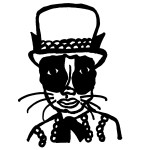
10. Violence Voyager – I’ve never seen anything animated quite like this before. The way it uses such a cute, handmade, feminine animation style to tell such a nasty story makes for a haunting juxtaposition. It’s beautiful, unique, and original, but its artistry also makes for a discordant clash with its grotesque subject matter. That accomplishment deserves more attention than what it’s getting. At the very least we should be keeping an eye on the filmmaker, who genuinely seems like a potential danger.

-CC Chapman

Little Modern Women

It used to be a matter of course that a new big-screen adaptation of Louisa May Alcott’s beloved novel Little Women would go into production every few years. As cinema jumped from silence to sound, from black & white to color, a new version of the same story would grace the screen – ensuring that each new generation of young readers in love with Alcott’s setting & characters could experience them in the flesh. Sadly, that tradition dried up after the 1940s version (featuring Elizabeth Taylor as an overgrown Amy, the littlest woman), leaving a forty-five-year gap before Little Women would be refreshed in adaptation for a new generation. The two major productions that ended that drought—1994’s Gillian Armstrong adaptation and the 2019 Greta Gerwig remix—had a lot of catching up to do, then. It wouldn’t be enough to just revive the same story with the updated stars & filmmaking tech of the modern day. Armstrong & Gerwig instead had to overhaul the material in a drastic display to make up for all the lost time. Both resulting films are great works in their own respects, but only one of the pair truly swung for the fences in its attempt to launch Little Women into the modern world.

On its surface, the 1994 version of Little Women appears to play it safe in its duties as a literary adaptation. Like the Old Hollywood adaptations that came before it, it tells the story of the fictional March sisters’ coming-of-age during the leanest years of the Civil War (an apparently autobiographical account of Alcott’s own youth) in a traditional, linear narrative. The will-they/won’t-they drama of its protagonist’s potentially romantic friendship with the wealthy boy next door drives the heart of the story. Meanwhile, the incidental episodes amongst her sisters that make the novel such a recognizably genuine depiction of childhood (which is almost entirely a series of incidental episodes, at least in memory) fill out the frame around that structural romantic storyline, so that Amstrong’s take on the material is practically a hangout film as much as it is a costume drama. Like in the previous routine of adaptations, the major overhaul in Armstrong’s picture was in seeing up-to-date actors breathe fresh air into iconic scenes from the long-familiar source material. The star-power appeal of 90s-specific heavy-hitters like Winona Ryder, Claire Danes, Susan Sarandon, Kirsten Dunst, and baby-faced newsie Christian Bale is the major update to the source material in Armstrong’s adaptation, same as in the previous revisions. The only difference (besides sound & color no longer being new inventions) is in just how much that youth-culture casting was allowed to reshape the text.

In particular, Winona Ryder’s starring role as Jo March is the casting choice that really jolts Alcott’s writing into a 90s era sensibility. As a hopeless 90s Kid™ myself, my love for Winona Ryder as a screen presence predates even my earliest childhood memories – thanks largely to her collaborations with Tim Burton in Beetlejuice & Edward Scissorhands. I still wouldn’t exactly call her approach to acting “versatile,” though. Like fellow Gen-X icons Keanu Reeves, Christina Ricci, and Jeanine Garofalo, Ryder more or less always gives the same performance no matter the project; the trick is just casting her in the exact right role. The brilliance of casting Ryder as Jo March is that her schtick fits both the original profile of the character (a powder keg mix of dorky enthusiasm within her home & righteous disgust with the ways of the world at large) and is distinctly of her own time – effortlessly conveying a sardonic wit central to Gen-X cynicism. If nothing else, the way she rants about the ills of the outside world and indulges in oddball slang like “Capital!” & “Christopher Columbus!” from her writing desk can’t help but recall the parallel narration of Ryder’s career-defining role in Heathers. If Armstrong’s Little Women were made just a few years later it might have updated the setting around Ryder to 1990s suburbia, the way Emma was transformed into Clueless or The Taming of the Shrew became 10 Things I Hate About You. As is, Ryder is doing all of that modernization work herself, performing Alcott’s century-old text with a 90s attitude & inflection.

Greta Gerwig’s more recent, currently Oscar-nominated take on Little Women was much more stylistically aggressive in its attempts to modernize Alcott’s novel. At the very least, it doesn’t rely entirely on the 2010s indie darlings of its cast (Saoirse Ronan, Florence Pugh, Laura Dern, Timothée Chalamet) to do all of its heavy lifting in refreshing the material. Instead, Gerwig violently shakes the story loose from the page – assuming that audiences are familiar enough with the source material to appreciate it scrambled out of sequence. In her version, the audience is informed up-front that Jo turned down the well-off heartthrob next door, essentially stripping the story of its will-they/won’t-they drama to push through to other concerns. Instead of following a linear retelling of the entire novel, we watch an adult Jo from the second volume reflect on childhood memories from the first. Meanwhile, debates between Jo and her publisher in New York City prompt metatextual speculations on how, exactly, Little Women relates to Louisa May Alcott’s actual life and what biographical events may have been altered to please her own Male publishers’ demands – forever reshaping how the original text will be interpreted for the screen in the future. In many ways, this recent adaptation of Little Women is about the very act of adapting Little Women – a much headier, more exclusively cinematic approach to the material than the versions that preceded it.

The major narrative innovation of Gerwig’s take on this story is in how it makes the adult half of Jo’s story more compelling by drawing direct parallels to the childhood half. The most iconic, memorable episodes of Little Women tend to fall in its first volume, which captures an enduring portrait of girlhood that allows the work to resonate & reverberate from generation to generation. Centering this adaptation on the adult end of the book is a bold choice, then, but it unlocks a lot of the untapped power of that second half by making direct in-the-moment connections to events from the first. As Jo returns home from New York City to care for a sister who’s taken ill, the familiar sights & personalities of her hometown trigger memories of the book’s most iconic childhood moments, revealing the power of the novel’s bifurcated structure. It also frees Gerwig to pick & choose what parts of the story she wants to emphasize thematically. Gerwig shifts the core story from focusing on Jo’s possible romance with her neighbor to instead exploring her combative relationship with her youngest, brattiest sister. Gerwig also searches for the border between truth & artifice in Alcott’s source material and interrogates how outside influences may have distorted the author’s original vision. While most adaptations lovingly stage Alcott’s exact narrative for the screen, Gerwig’s actively interprets it and its legacy.

There’s a brief image of young children playing pretend as pirates in the March sisters’ attic that flashes in the last minute or so of Gerwig’s Little Women that I cannot stop thinking about. After Jo’s debates with her publisher call into question what “really” happened in her story vs. what literary tastes of the time dictated should happen, I couldn’t help but puzzle over what that image was implying. Was it merely a memory from earlier in Jo’s childhood play than what the book or its resulting movies cover? Was it an implication of how Jo’s published memoir would influence the childhood play of her readers? Or was it a vision of How Things Really Were, as opposed to the distorted version of Jo’s memory that we had been watching the entire film? I don’t really want an Answer to this query. The more important thing is just appreciating how the film’s metatextual self-examination had my mind racing in its final minutes to the point where I got hung up on what, like, three seconds of footage “meant” within the larger story. I really liked how Gillian Armstrong updated Little Women for Generation X by handing the source material over to one of the era’s most distinct personalities (namely, Veronica Sawyer). This latest adaptation from Gerwig is far more adventurous in its own modernization efforts, though. There’s no single image in the 90s version of Little Women that incites personal interpretation or extrapolation the way Gerwig’s film does, which makes the newer film not only more modern but also more outright cinematic.

-Brandon Ledet

Brandon’s Top 20 Genre Gems & Trashy Treasures of 2019

1. Fighting With My Family – This melodramatic biopic about WWE wrestler Paige does an excellent job conveying the appeal of pro wrestling as an artform, offers empathy to every character its story touches without shying away from their faults, and properly sketches out how much respect for women’s wrestling has evolved in the last decade (and how influential Paige was in that sea change). It’s also way dirtier than I expected, often playing like an R-rated Disney Channel Original.

2. Ma – Octavia Spencer slums it as an unassuming small-town vet tech who parties with neighborhood teens in order to enact revenge for their parents’ past wrongs. It’s at first baffling to learn that Tate Taylor, the doofus responsible for The Help, also directed this deliciously over the-top schlock, but it gradually becomes obvious that the goon simply loves to watch Spencer devour scenery and it just took him a while to find the proper context for that indulgence – the psychobiddy.

3. Child’s Play – An in-name-only, shockingly fun “remake” of the classic killer doll thriller by the same name. Much like the original, this is the exact kind of nasty, ludicrous horror flick kids fall in love with when they happen to catch them too young on cable, and it directly pays homage to that very canon in references to titles like Killer Klowns From Outer Space & Texas Chainsaw Massacre II.

4. Paradise Hills – An impressive coterie of young actors (Emma Roberts, Awkwafina, Danielle McDnonald, Eiza Gonzalez) square off against veteran badass Milla Jovovich in a near-future Patriarchal hell. It’s essentially Guillermo del Toro’s Stepford Wives staged on the set of the rose garden from the animated Alice in Wonderland. A femme fairy tale that takes its over-the-top, Literotica-ready premise refreshingly seriously despite the inherent camp of its (sumptuous) costume & production design.

5. Read or Not – A list of things that make this Clue & You’re Next genre mashup immensely enjoyable: the careful attention to costume design, the Old Dark house sets, Samara Weaving, Aunt Helene, that “Hide & Seek” novelty record and, most importantly, the rapid escalation of its final ten minutes into full unrestrained delirium. Great nasty fun.

6. Saaho – A Indian action blockbuster that opens as a fairly well-behaved Fast & Furious rip-off in its first hour, then pulls an outrageous twist I’ve never seen in an action film before, and finally reveals its title card and the announcement “It’s showtime!” The next two hours are then a throw-it-all-in-a-blender mix of Mission: Impossible, Fast & Furious, The Matrix, John Wick, Iron Man, Fury Road and practically every other action blockbuster in recent memory you can name. Pure maximalism.

7. Pledge – A nasty little VOD horror about a fraternity rush week from Hell. The dialogue and performances are alarmingly good for something on its budget level, which makes it all the more horrifying when characters you kinda like are tortured in extreme gore by frat bro monsters for a solid hour of “hazing.” It also sidesteps a lot of the usual misogyny of the torture porn genre by making both the victims & villains All-American macho types.

8. Good Boys – Superbad is often praised for its final emotional grace notes shared between teen-boy BFFs who’ve struggled to maintain a tough masculine exterior throughout their entire preceding gettin’-laid adventures, to the detriment of their relationship. Here, the earnest vulnerability & emotional grace notes are constant & genuine from frame one, providing some much-needed hope for the men of the future. These are very good boys.

9. Braid – Two amateur drug dealers escape police scrutiny by returning to the childhood home of a mentally unwell friend who’s trapped in a never-ending game of violent make-believe. A total mess but also a total blast. Gorgeous costumes & sets, gloriously self-indulgent film school cinematography, and genuinely shocking over-the-top turns in the “plot” every few beats. Think of it as Heavenly Creatures for the Forever 21 era.

10. War – Between this & Saaho, my two favorite action movies of the year are both big budget, Twisty blockbusters from India. This one is basically a beefcake calendar as directed by Michael Bay. It’s 70% abs & pecs, 20% stadium guitar riffs, 10% homoerotic eye contact, and I guess somewhere in there is a plot about a super soldier’s mentor who’s “gone rogue.”

11. Glass – M. Night Shyamalan explodes his small-scale women-in-captivity thriller Split into an MCU-scale superhero franchise, but hilariously dodges all the accompanying genre spectacle that his budget can’t afford. I am very late to the table as a Shyamalan apologist, but by the time I was the only person in the theater cackling at his attempt to connect the mythology of his own cameos in Split & Unbreakable into a cohesive narrative arc, I was converted for life. What an adorable nerd.

12. Crawl – A lean, mean, single-location creature feature in which a father-daughter duo fights off killer CG alligators during intense hurricane-related flooding. Only could have been improved by an alternate ending where they survive the storm only to discover that the entire planet has been taken over by gators while they were trapped inside. Should have ended with gators piloting the “rescue” choppers.

13. Escape Room – Basically the ideal version of Saw, with all the nasty torture porn & (most of) the nu-metal removed for optimal silliness. All storytelling logic & meaningful dialogue/character work are tossed out the window in favor of full, head-on commitment to an over-the-top, truly preposterous gimmick: an escape room, except For Real.

14. The Head Hunter – A medieval monster slayer seeks to add the head of the beast that killed his daughter to his trophy collection. An impressive feat in low-budget filmmaking that knows it can’t convincingly stage battle scenes on its production scale, so it makes up for it by leaning into what it can do well – mostly delivering grotesque creature designs & a nihilistic mood.

15. Booksmart – Maybe not always the most hi-larious example of the modern femme teen sex comedy (in the recent The To Do List/Blockers/Wetlands/Slut in a Good Way tradition) but one with an unusually effective emotional core and more Gay Stuff than the genre usually makes room for. If nothing else, it felt good to know that the kids of Gen-Z are more than alright.

16. Greener Grass – A warped Adult Swim-style comedy of manners about overly competitive soccer moms, featuring performances from D’arcy Carden, Mary Holland, Janicza Bravo, Beck Bennett, and similar Los Angeles comedy folks. Total illogical chaos and menacing irreverence from start to finish, with a particular debt owed to John Waters’s post-Polyester suburban invasion comedies.

17. The Breaker Upperers – A New Zealand comedy about professional break-up for hire artists, a premise that’s pretty much a wholesome 2010s update to Dirty Work by way of Taika Waititi. Zings quickly & efficiently with incredibly well-defined characters, like a The Movie adaptation of a sitcom that’s already been going for years & years.

18. The Banana Splits Movie – A SyFy Channel Original that’s somehow a genuine delight? It imagines a world where its eponymous Hanna-Barbera children’s show starred killer animatronic robots instead of failed actors in mascot costumes. Goofy & violent enough to be worthwhile despite how thin its character work is (with some especially nasty practical gore gags), which is more than you can say for most of the originals that network broadcasts.

19. Countdown – Beyond just appreciating that there was a mainstream horror about a killer smartphone app in megaplexes this past Halloween, I admired this for adding three very distinct angles to the technophobic Killer Internet subgenre: the eerie unknown of user agreement text that no one reads; the startling menace of app notifications that unmute themselves every phone update; and car backup cam jump scares.

20. CATS – Tom Hooper’s deranged stage musical adaptation is the exact horned-up, ill-advised CGI nightmare that Film Twitter has been shouting about for months on end and I’m happy it’s been celebrated as such. Admittedly, though, I was absolutely exhausted by pro film critics’ competition to see who could dunk on the film online with the loudest or the funniest zingers, which tempered my enthusiasm before I got to enjoy its spectacular awfulness for myself (opening week!). As such, I suspect this is the camp gem of 2019 that will improve the most in years to come, once the hyperbolic discourse around it settles and it remains just as bizarre as ever.

-Brandon Ledet